

As a global fabric supplier with over two decades of experience, I’ve helped countless American clients navigate California’s Proposition 65. This regulation often appears daunting to importers who fear costly delays and compliance issues. However, understanding Prop 65 doesn’t need to be overwhelming when you have the right partner guiding you through the process.
Successfully managing Proposition 65 compliance requires a systematic approach involving three key elements: comprehensive testing for over 900 listed chemicals, proper warning labels when chemicals exceed safe harbor levels, and complete supply chain transparency. At Fumao Textiles, we’ve integrated these compliance measures directly into our production workflow, ensuring our partners can confidently import textiles into California markets.
What are the key steps for Prop 65 textile testing?
Establishing a reliable testing protocol forms the foundation of Prop 65 compliance. The process begins by identifying which specific chemicals from the extensive Prop 65 list are relevant to your textile products. Common concerns in fabrics include heavy metals like lead and cadmium, phthalates in printed designs, and formaldehyde in finishing treatments.
Effective testing requires submitting fabric samples to accredited laboratories for targeted screening against the Prop 65 chemical list. This isn’t a one-time activity but an ongoing commitment, as California regularly updates the listed chemicals. For example, testing a cotton-polyester blend typically involves separate screenings for heavy metals in dyes and phthalates in any printed elements. Our CNAS-certified laboratory conducts preliminary testing to identify potential issues before proceeding with formal third-party certification.
Why is supply chain mapping essential for accurate testing?
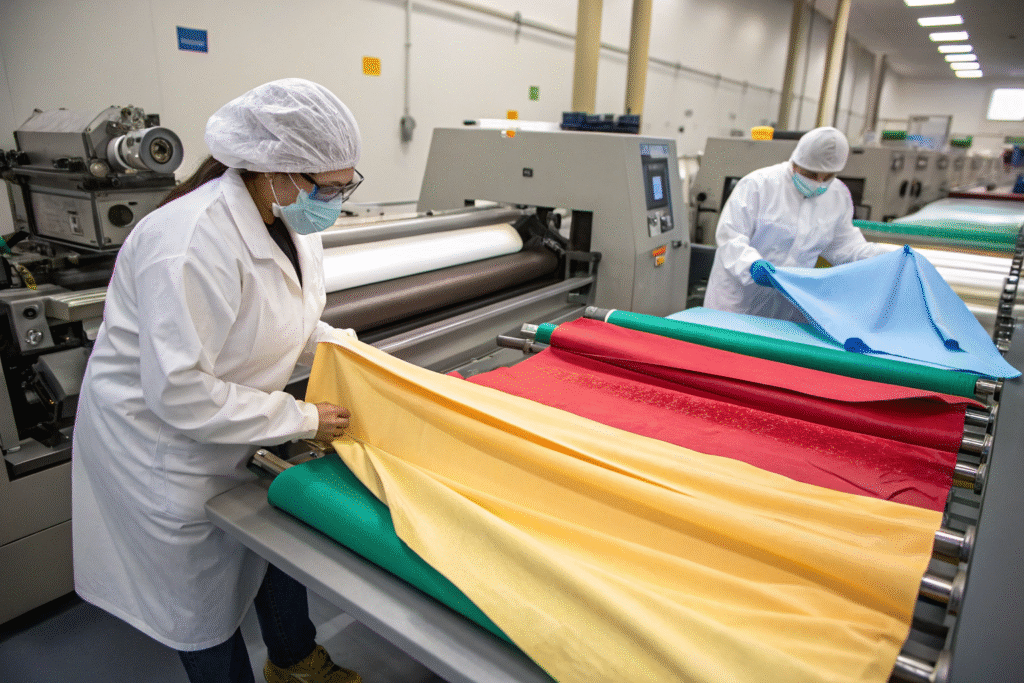
Complete supply chain visibility ensures that every component meets compliance standards. Even if your primary fabric tests clean, a single non-compliant component—such as a specific dye batch or accessory—can jeopardize your entire product line. We implement digital QR code tracking that monitors materials from yarn sourcing through weaving, dyeing, and finishing. This comprehensive supply chain management allows for targeted testing and significantly reduces contamination risks.
How can importers streamline the testing process?
Strategic prioritization simplifies the testing procedure. Focus initially on chemicals most commonly associated with your specific fabric type. For synthetic performance fabrics, prioritize testing for antimony trioxide, while natural fibers may require different chemical screenings. Our advanced analytics systems help predict regulatory trends and enforcement priorities, while our established relationships with dyeing and finishing partners ensure chemical consistency throughout production.
What are the labeling requirements for Prop 65?
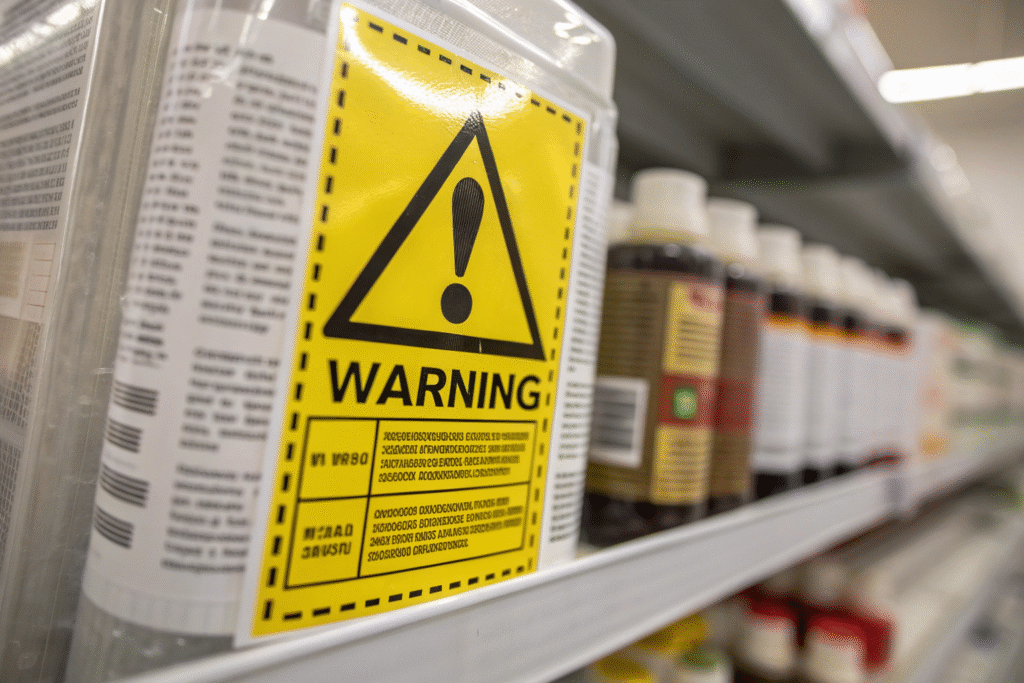
Clear communication through proper labeling represents the next critical compliance phase. When testing reveals chemicals exceeding safe harbor levels, California law mandates specific warning labels to inform consumers before purchase. The recognizable yellow triangle with a black exclamation mark serves as the standard warning symbol, though exact formatting requirements may vary.
California law requires "clear and reasonable" warnings on product labels, packaging, or at point of sale when exposures exceed safe harbor levels. These warnings must identify at least one listed chemical present in the product. A typical label might state: "WARNING: This product contains lead, a chemical known to the State of California to cause cancer and birth defects or other reproductive harm." We incorporate compliant labeling directly into our packaging services for clients requiring this support.
When should products carry physical labels versus point-of-sale warnings?
Labeling requirements depend on exposure type. Most consumer textiles like clothing and home furnishings require physical labels or packaging warnings that consumers see before use. Point-of-sale signage typically applies to environmental exposures within business establishments. For our business clients, we provide complete documentation and label specifications that can be applied to final products during manufacturing. Our professional packaging services ensure accurate label implementation.
How do safe harbor levels differ from no significant risk levels?
Understanding these distinctions proves crucial for compliance. Safe harbor levels represent numerical thresholds that trigger warning requirements, while No Significant Risk Levels (NSRL) define cancer risk thresholds, and Maximum Allowable Dose Levels (MADL) set limits for reproductive toxins. Proper interpretation of laboratory results against these state-established values determines whether your product requires warnings.
How can I mitigate Prop 65 risks in my supply chain?
Proactive risk management through careful supplier selection and material choices provides the most effective compliance strategy. Building a "clean by design" approach into your sourcing decisions prevents problems before they occur, saving time and resources compared to reactive compliance measures.
Strategic supplier selection with verified green chemistry programs offers the most reliable Prop 65 risk reduction. Partners using pre-approved compliant dyes and chemical management systems significantly lower compliance risks. Our substantial investments in sustainable textile innovations, including GOTS-certified organic cotton and bluesign® approved dyes, inherently minimize Prop 65 concerns from the earliest production stages.

What value do supplier certifications provide?
Independent certifications serve as crucial verification tools. Seek suppliers holding certifications with strict chemical criteria that automatically restrict many Prop 65-listed substances.
| Certification | Primary Focus | Prop 65 Risk Mitigation |
|---|---|---|
| OEKO-TEX® STANDARD 100 | Finished product safety | Comprehensive screening for regulated and unregulated harmful substances |
| Global Organic Textile Standard (GOTS) | Organic fiber processing | Prohibits hazardous chemicals throughout production chain |
| bluesign® | Sustainable manufacturing | Approves chemical inputs and production methods for safety |
Sourcing certified materials effectively transfers compliance verification to specialized third parties, streamlining your due diligence process.
How does vertical integration support compliance?
Controlled manufacturing processes significantly reduce compliance variables. Unlike fragmented supply chains where materials change hands multiple times, our integrated approach maintains consistent chemical management policies across production stages. This vertically integrated model ensures compliance from raw materials through finished fabrics, eliminating unexpected chemical introductions during production transitions.
Who is responsible for Prop 65 compliance?
Understanding liability distribution throughout the supply chain proves essential for risk management. Proposition 65 imposes responsibility across the entire commercial chain, meaning manufacturers, importers, distributors, and retailers all share potential liability for violations.
Primary responsibility falls on businesses with ten or more employees that manufacture, import, or sell products requiring warnings in California. As a U.S. importer, you face direct liability, though proper contractual protections can help manage this risk. We provide comprehensive test reports and compliance documentation to support our clients’ legal positions and honor our warranty commitments.

Can contractual agreements redistribute liability?
Well-structured contracts provide important risk management tools. Indemnity clauses requiring suppliers to cover losses from Prop 65 violations caused by their materials shift financial responsibility to the party controlling production. We stand behind our products with strong contractual protections, reflecting our confidence in rigorous quality assurance systems.
What penalties might non-compliant businesses face?
Enforcement consequences can be severe. Private plaintiffs can initiate lawsuits resulting in penalties up to $2,500 per violation per day, plus requirements to fund environmental projects and pay legal fees. These substantial financial risks make proactive compliance essential for any business operating in California markets.
Conclusion
Managing Proposition 65 compliance requires careful attention to testing, labeling, and supply chain management, but these challenges become manageable with experienced guidance. By implementing systematic compliance strategies and partnering with knowledgeable suppliers, you can transform regulatory requirements into competitive advantages that build consumer trust and market access.
The most successful importers recognize that robust compliance practices not only prevent legal issues but also demonstrate commitment to product safety and quality. If you’re seeking a fabric partner who combines quality materials with comprehensive compliance support, we invite you to explore how our integrated approach can streamline your California market entry. For personalized assistance with your compliance needs, please contact our Business Director, Elaine, at elaine@fumaoclothing.com. Let us help you build a compliant, successful textile business in the U.S. market.









6 Responses
I constantly spent my half an hour to read this web site’s articles or reviews all the time along with a cup of coffee.
A motivating discussion is worth comment. I do think that you ought to publish more on this subject, it might not be a taboo
subject but generally folks don’t speak about such subjects.
To the next! Many thanks!!
If you desire to obtain a good deal from this piece of writing then you
have to apply these techniques to your won weblog.
I’d like to find out more? I’d care to find
out more details.
My developer is trying to persuade me to move to .net from PHP.
I have always disliked the idea because of the expenses. But
he’s tryiong none the less. I’ve been using WordPress on various websites for
about a year and am concerned about switching to another platform.
I have heard excellent things about blogengine.net.
Is there a way I can transfer all my wordpress posts into it?
Any help would be really appreciated!
Hello to all, it’s in fact a good for me to go to see this web site, it contains useful Information.