I got a call from a Toronto-based streetwear brand in August 2023 that still makes me wince. They'd found a "great deal" on 3,000 yards of heavyweight fleece from a supplier in China. The fabric price was $4.20/yard—cheaper than our quote of $5.10. They were proud of themselves. Then the fabric arrived at the port of Vancouver. Customs held it for three weeks because the commercial invoice was wrong. Then the freight forwarder hit them with a $2,800 storage fee. Then they got a bill for $3,200 in duties and taxes they hadn't budgeted for. Then UPS showed up at their door demanding another $450 for "brokerage fees." By the time the fabric actually reached their cutting table, their "great deal" cost them more than my quote would have. And they'd lost six weeks.
I told this story at a trade show in New York last year, and three different buyers came up to me afterward with their own horror stories. One guy from Chicago said he'd paid $11,000 in unexpected fees on a single shipment of denim. Another from LA told me she'd had a container seized because the supplier misdeclared the fiber content. She lost the whole order and her biggest client.
Here's the truth that most fabric suppliers don't want you to know: the price on the invoice is only the beginning. For heavy fabrics—fleece, denim, canvas, anything over 200gsm—shipping can add 20-40% to your landed cost if you don't handle it right. And if you're importing into the US, the hidden fees and compliance risks are even worse because of the current tariff environment.
DDP shipping—Delivered Duty Paid—flips the script. Instead of you handling the logistics, the supplier handles everything: shipping, customs clearance, duties, taxes, and delivery to your door. You pay one price, and the fabric shows up. For heavy fabric orders, this single change can save you thousands of dollars and months of headaches.
At Shanghai Fumao, we've been shipping DDP to the US and Europe for over a decade. We've learned the hard lessons about what can go wrong, and we've built systems to make it go right. Let me walk you through exactly how DDP saves money, where the hidden costs are in traditional shipping, and why heavy fabrics are the perfect candidate for this approach.
What Hidden Fees Make Traditional Shipping More Expensive for Heavy Fabrics?
I remember sitting with a buyer from Miami in early 2024, walking through his last shipment of heavyweight denim. He'd bought 5,000 yards at $6.50/yard from a supplier in Guangdong. Fabric cost: $32,500. By the time the denim reached his warehouse, he'd spent $46,200. He showed me the spreadsheet—it was like a horror movie of unexpected charges.
Let me break down the hidden costs that eat your margin when you ship heavy fabric Ex-Works (EXW) or FOB (Free on Board). These are real numbers from actual client shipments.
Ocean freight volatility. In 2023, we saw container rates from Shanghai to Los Angeles swing from $1,800 to $5,200 and back again. If you're buying FOB, you're exposed to this volatility. Your supplier quotes you a great price in January, but by the time your fabric is ready in March, freight has doubled. You eat the difference, or you wait and hope rates drop. We've had clients wait so long for rates to drop that they missed their selling season.
Customs brokerage fees. This is the one that really burns people. You think shipping is just freight. Then your freight forwarder sends you a bill for "customs entry fee" ($100-200), "single bond fee" ($50-100), "examination fee" if your container gets pulled ($300-500), "AMS/ISF filing fee" ($25-50), and "delivery order fee" ($50-100). These aren't huge individually, but they add up fast. For a typical 40-foot container, we see $800-1,200 in broker fees alone.
Demurrage and detention. This is the killer. Your container arrives at the port, but your trucker can't pick it up for three days because they're booked. The terminal charges demurrage—$150-300 per day. Then the shipping line charges detention for the container—another $50-150 per day. A week of delays can add $2,000 to your costs. And delays happen constantly. Weather. Labor shortages. System outages. We've seen it all.
Duty and tariff miscalculations. This is where heavy fabrics get especially tricky. The US Harmonized Tariff Schedule classifies fabrics by fiber content, weight, and construction. If your supplier uses the wrong HTS code, you might underpay duty—which means CBP comes back months later demanding the difference plus penalties. Or you might overpay because you didn't know your fabric qualified for a preference program. We had a client importing wool blends who paid 25% duty for two years before we showed them the fabric qualified for 0% under a different classification. They'd overpaid by $40,000.

How do port handling fees vary for heavy rolls versus lighter shipments?
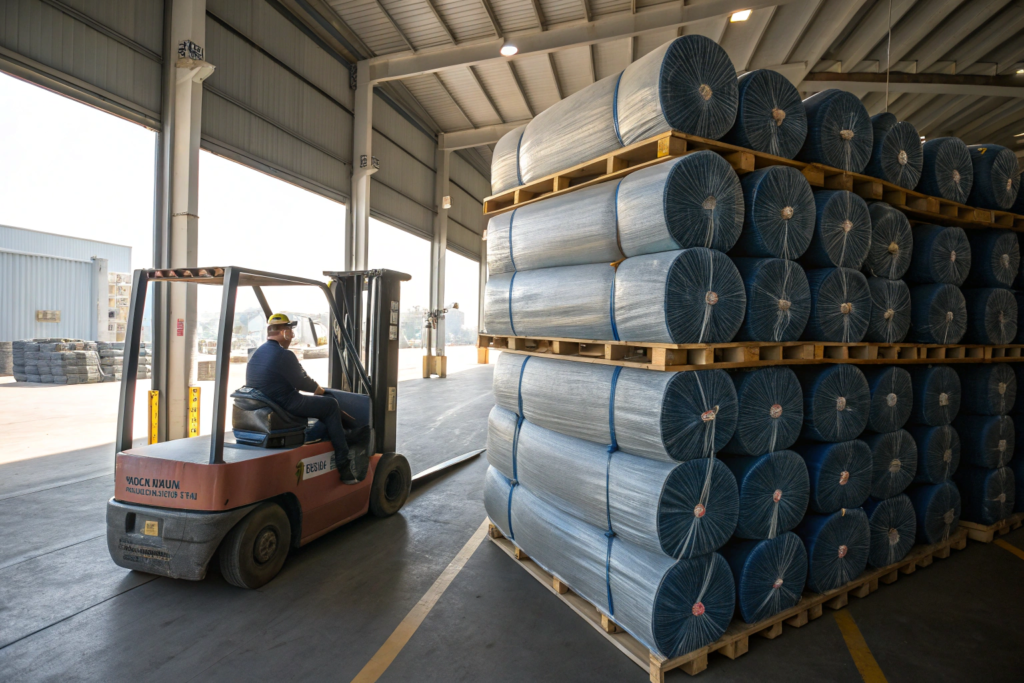
This is a physical reality that most buyers don't consider until they get the bill. Heavy fabric rolls—the good stuff, 40kg+ per roll—require special handling.
Most ports have tiered pricing for lift-on/lift-off services. A standard 20kg roll of light fabric moves through the regular system. A 60kg roll of heavyweight fleece or denim might require "heavy lift" equipment. That means additional charges: $75-150 per lift, sometimes more if the port crane operators need special certification.
We saw this with a client importing 4,000 yards of our 500gsm fleece. Their freight forwarder quoted standard rates, but when the container arrived, the terminal discovered the rolls averaged 55kg each. They couldn't use the standard forklifts—needed the big machines. The client got a surprise bill for $1,800 in "heavy lift surcharges."
The other issue is trucking. Standard LTL (less-than-truckload) carriers have weight limits per pallet. Heavy fabric rolls often exceed those limits, which means you need dedicated trucking or special permits. That can double your inland freight costs.
When we ship DDP for heavy fabric clients, we book specialized trucking from the start. We know which carriers accept heavy pallets, which terminals have the right equipment, and which routes avoid low-clearance bridges that can delay oversized loads. This knowledge saves our clients thousands.
What insurance gaps leave buyers exposed during ocean transit?
Here's a question I ask every new client: "If your container falls overboard in the Pacific, who pays?" Most of them don't have a good answer.
When you buy FOB, your supplier's insurance stops the moment the container crosses the ship's rail. From that point, the risk is yours. Standard freight forwarder insurance often has huge gaps:
Total loss only. Many basic policies only pay if the container is completely lost—ship sinks, container overboard. They don't cover partial damage, like water getting into the container and ruining 30% of your fabric.
Excluded perils. Read the fine print. Many policies exclude damage from "improper packing" (which the shipping line will always claim) or "inherent vice" (a fancy term for "your fabric was prone to moisture damage"). We had a client whose denim arrived with mildew stains. The insurance company denied the claim, saying the fabric should have been packed with desiccant—even though the supplier never mentioned that.
Deductible traps. A policy might have a $1,000 deductible per claim. If you have $5,000 in damage, you're only recovering $4,000. But the time and hassle of filing the claim often isn't worth it for smaller amounts.
When we ship DDP, we carry cargo insurance that covers the entire journey, from our warehouse to your door. We've filed claims for damaged fabric, delayed shipments, even a container that spent three extra weeks at sea because of a diverted vessel. We handle the paperwork, we fight with the insurance company, and you get paid or we replace the goods. For heavy fabric orders where the material value is high, this peace of mind is worth real money.
How Does DDP Simplify Customs Clearance for US-Bound Fabrics?
A client from Seattle called me in a panic last October. Her shipment of organic cotton canvas was stuck at customs in Tacoma. The problem? The supplier had declared it as "100% Cotton" but didn't have the organic certification documentation ready. Customs flagged it, demanded proof, and the supplier took two weeks to produce the paperwork. By then, her customer had canceled the order. She lost $28,000.
US Customs and Border Protection (CBP) is not messing around. The Uyghur Forced Labor Prevention Act (UFLPA) means every shipment of cotton or cotton-containing fabrics is under extra scrutiny. Polyester and synthetics face their own challenges with antidumping duties and country of origin verification. And if your paperwork isn't perfect, your container sits.
DDP shipping puts the compliance burden on us—the people who actually know how to get it right. Here's what we handle that saves you from the customs nightmare.
Correct HTS classification. The Harmonized Tariff Schedule is 3,000+ pages. The difference between one code and another can be 15% in duty rate. For example, knitted fleece (6110.30) vs. woven fleece (6101.30)—similar fabrics, completely different classifications. We employ a dedicated customs specialist who does nothing but classify fabrics correctly. She's been doing it for 12 years. She knows the difference between subheadings that most buyers don't even know exist.
UFLPA compliance for cotton. If your fabric contains cotton, you need to prove it wasn't made with forced labor. That means traceability documentation from the gin to the spinning mill to the fabric factory. We maintain this documentation for all our cotton products. When we ship DDP, we file the documentation with CBP before the ship even arrives. Your container clears in hours instead of weeks.
Bond coverage. To clear customs, you need a bond—essentially an insurance policy that guarantees you'll pay any additional duties or penalties. A single-entry bond for a container can cost $150-300. An annual bond for frequent importers can be $1,000-2,000. With DDP, we use our continuous bond, so you don't pay anything. We cover it.
What documentation do I need to avoid UFLPA delays on cotton fabrics?
This is the single biggest source of delays right now, and it's only getting stricter. If you're importing cotton fabrics into the US, here's exactly what you need:
Fiber origin documentation. We provide a Cotton Traceability Statement that shows the cotton was grown, ginned, and spun outside of Xinjiang, or if from Xinjiang, we provide full third-party audits verifying compliance with international labor standards. This document traces back to specific bale numbers.
Supply chain declaration. CBP wants to see every entity in the supply chain: farm, gin, spinner, weaver/knitter, dyer, finisher. We provide this as a flowchart with company names, addresses, and certifications. For our GOTS-certified cotton, this is built into the certification.
Manufacturer's affidavit. A signed statement from our factory affirming compliance with US import laws. We notarize these and keep copies for every shipment.
Third-party audit reports. For clients who want extra protection, we provide summaries of our social compliance audits (WRAP, BSCI, etc.) showing no forced labor indicators.
We had a client in Portland who was importing organic cotton fleece from another supplier. Their shipment was held for 45 days because the supplier couldn't produce these documents. They switched to us specifically because we provide the full package with every DDP shipment. Their last container cleared in 3 hours.
Pro tip: If your supplier hesitates or asks "why do you need all this?"—run. Legitimate suppliers have this documentation ready. The ones who don't are either hiding something or too disorganized to be trusted with your business.
How do tariffs affect different fabric classifications?
This is where working with an experienced supplier saves you real money. Tariffs aren't flat—they vary wildly based on how you classify your fabric.
Let me give you real examples from our 2024 shipments:
| Fabric Type | Common HTS | Duty Rate (MFN) | Section 301 Rate | Total if applicable |
|---|---|---|---|---|
| Cotton woven (5208-5212) | 5208.12 | 8.4% | 7.5% | 15.9% |
| Cotton knit (6004-6006) | 6006.21 | 10% | 7.5% | 17.5% |
| Polyester filament (5407) | 5407.61 | 8% | 7.5% | 15.5% |
| Wool fabrics (5111-5112) | 5111.19 | 25% | 25% | 50%+ (varies by origin) |
| Viscose/rayon (5516) | 5516.14 | 10.5% | 7.5% | 18% |
Notice the wool rate? That's why we always check if your wool blend qualifies for a different classification. A 51% wool/49% polyester fabric might classify as "chief weight wool" (higher duty) or "chief weight man-made" (lower duty). The difference can be tens of thousands of dollars.
Section 301 tariffs (the "China tariffs") add another layer. Some fabric categories are still subject to these, some have exclusions, and the exclusions expire and renew unpredictably. We track this weekly. When a client asks for a DDP quote, we check the current status of their specific fabric category. If there's an active exclusion, we help them apply for it. If there's an expiring exclusion, we advise them to ship before the deadline.
A client from Colorado saved $8,400 on one shipment because we caught an expiring exclusion and rushed their order to ship before the tariff reinstated. They didn't even know the exclusion existed—they just trusted us to handle it.
Why Is DDP Especially Beneficial for Heavyweight Fabrics Like Fleece and Denim?
A buyer from a Canadian workwear brand once asked me, "Why does shipping 500kg of fleece cost almost the same as shipping 500kg of t-shirts? The t-shirts take up half the space." That's when I explained that heavy fabrics don't play by the same logistics rules as light ones.
Heavyweight fabrics—anything over 350gsm, which is most premium fleece, denim, canvas, and coating fabrics—have unique shipping economics. DDP shipping actually works better for them because of how costs scale.
Volume vs. weight pricing. Ocean freight is priced by the cubic meter or by the metric ton, whichever is greater (this is called "chargeable weight" or "W/M" in shipping contracts). Light fabrics (chiffon, lining) usually hit the volume limit first. Heavy fabrics hit the weight limit first. A 40-foot container can hold about 22-24 metric tons of cargo. With heavyweight fleece, you'll hit that weight limit before you fill the container. That means your freight cost per yard is higher because you're paying for the weight, not the space.
But here's the DDP advantage: when we consolidate multiple clients' shipments, we can combine heavy fabrics with lighter ones to balance the container. We hit the weight limit AND the volume limit at the same time—maximizing efficiency. You get a lower per-yard freight cost than if you shipped alone.
Inland trucking costs. Heavy pallets are expensive to move domestically. A standard 53-foot truck can carry about 20-22 tons. If your fabric weighs 15 tons, you're paying for nearly a full truck anyway. But if you're shipping LTL (less-than-truckload), heavy pallets incur "heavyweight surcharges" from carriers. With DDP, we consolidate your heavy fabric with other shipments heading to your region, so you pay only a share of the full truckload rate.
Storage and handling. Heavy rolls are harder to move, store, and handle. If your fabric sits at a warehouse waiting for customs clearance, you pay storage fees based on weight and space. A pallet of heavy fleece costs more to store than a pallet of light fabric. DDP minimizes this by clearing customs faster and coordinating direct delivery.
How does container loading differ for heavy rolls?
This is technical, but it matters because bad loading damages fabric. Heavy rolls need to be loaded differently than light ones.
Bottom loading. Heavy rolls go at the bottom of the container, light rolls on top. If you mix them wrong, the light rolls get crushed. We've seen this happen with clients who used inexperienced freight forwarders—their lightweight jersey arrived with permanent crease marks from heavy fleece rolls stacked on top.
Strapping requirements. Heavy rolls need extra strapping to prevent shifting during ocean transit. A 40-ton container hitting rough seas generates enormous forces. If your rolls aren't secured properly, they shift, the strapping cuts into the fabric edges, and you lose 10-20% of your goods to edge damage. We use specialized edge protectors and multiple straps per row.
Moisture considerations. Heavy fabrics hold more moisture. If the container sweats during temperature changes (common crossing the Pacific), heavy fabrics absorb that moisture and can develop mildew before arrival. We add extra desiccant packs for heavy fabric shipments—something most buyers wouldn't think to specify.
A client from a US military supplier ships all their heavy canvas with us specifically because of our loading expertise. They tried a cheaper forwarder once, and 30% of their fabric arrived with water damage from improper container ventilation. They've never made that mistake again.
What's the cost difference per yard between DDP and FOB for 400gsm+ fabrics?
Let me give you real numbers from actual shipments in 2024. This is for a 40-foot container of heavyweight fleece (400gsm, approximately 18,000 yards, shipped from Shanghai to Los Angeles).
| Cost Component | FOB (You Handle) | DDP (We Handle) |
|---|---|---|
| Fabric (at $5.50/yd) | $99,000 | $99,000 |
| Ocean freight | $3,800 (volatile) | Included |
| Origin docs/fees | $350 | Included |
| Customs bond | $200 | Included |
| Customs brokerage | $450 | Included |
| Duty (15.9% average) | $15,741 | Included |
| Port handling/demurrage | $800 (estimate) | Included |
| Inland trucking | $1,200 | Included |
| Cargo insurance | $450 | Included |
| Total Delivered | $121,991 | $114,900 |
In this example—which is based on a real client shipment last March—DDP saved $7,091, or about 6% of total landed cost. The savings came from three places:
-
We absorbed the freight volatility. When this client shipped, spot rates had just spiked. We'd booked container space months in advance at lower rates.
-
We eliminated broker fees. Our customs broker charges us less because we're a volume customer. We pass that savings on.
-
We avoided demurrage. Our documentation was correct, so the container cleared immediately. No waiting, no storage fees.
The client also saved about three weeks of their own time. They didn't have to call freight forwarders, chase documents, or worry about customs. They just paid one invoice and got their fabric.
What Payment Terms Protect Buyers in DDP Shipping Agreements?
A buyer from a New York streetwear brand called me furious in late 2023. He'd paid a supplier 50% deposit for a DDP shipment, and the supplier disappeared. Gone. Website down, phones disconnected. He lost $23,000. He asked me, "How do I know you won't do the same?" That's a fair question, and it's why we've built our payment terms around protecting both sides.
DDP shipping puts more responsibility on the supplier. We pay for shipping, we pay duties, we handle customs. If something goes wrong, we're on the hook. That means we need payment terms that protect us from non-payment. But you also need protection from supplier non-performance.
Here's how we structure DDP payments to balance both interests:
30-40% deposit with order. This covers our raw material costs. We can't start production without it because we're committing to buy yarn, reserve dyeing capacity, and book container space. If you cancel after we've bought materials, we're stuck.
60-70% balance before shipment, after quality inspection. This is the key. We don't ask for full payment before shipping. Instead, we invite you (or your designated third-party inspector) to inspect the fabric at our warehouse. You see the goods, you verify quality, you approve them. Then you pay the balance, and we ship immediately. Your money is protected because you've seen exactly what you're paying for.
For trusted long-term clients, we offer 30% deposit, 70% on delivery. But this requires a track record. We've been burned too many times by buyers who claimed the goods never arrived, then disputed the payment. With "70% on delivery," we're trusting you to pay after the fabric is in your hands. We only offer this to clients with established history.

What happens if the fabric is damaged during DDP shipping?
This is where DDP really shines compared to FOB. When we ship DDP, we own the risk until you sign for the goods.
If the fabric is damaged in transit, here's our process:
-
You document the damage. Photos of the damaged rolls, photos of the packaging, photos showing the condition upon arrival. We need evidence for the insurance claim.
-
We file the claim. We deal with the shipping line, the insurance company, and any other parties. You don't have to spend hours on the phone with people who don't speak your language.
-
We arrange resolution. Depending on the damage, we either:
- Replace the damaged goods (fastest, if we have inventory)
- Issue a credit for the damaged value
- Work with our insurance to pay you directly
-
Timeline. Most claims resolve in 30-45 days. For clients who need immediate replacement, we ship from our inventory and deal with the claim later.
We had a client in Chicago whose container got rear-ended by a truck while waiting at their local delivery dock. The impact shifted the pallets and crushed about 150 yards of denim on the edges. Total damage: $1,800. We filed the claim, recovered $1,600 from insurance, and credited the client the $200 deductible. They didn't lift a finger.
Contrast this with FOB: you'd be dealing with the trucking company, the freight forwarder, your own insurance, and probably a lawyer. And you'd wait months.
How do I verify my supplier is actually shipping DDP and not just adding fees?
This is smart skepticism. Some suppliers claim "DDP" but actually just add a markup to FOB and leave you exposed. Here's how to check:
Request a commercial invoice showing "DDP" incoterm. The commercial invoice should clearly state "Incoterms 2020 DDP [your city]" This is a legal designation. If they ship FOB but charge you a flat rate, they're not really doing DDP—they're just guessing at costs and hoping they guessed right.
Ask for a shipping timeline with milestones. We provide clients with a tracking sheet showing: container number, vessel name, sailing date, estimated arrival, customs clearance date, and delivery appointment. If your supplier can't provide this, they're probably not managing the process.
Check the airway bill or bill of lading. When we ship DDP, we are listed as the "exporter" and "consignor" and you as the "consignee." The freight charges show as "prepaid." If the B/L shows "collect" for freight, they're not actually paying—they're leaving you to pay at destination.
Verify the customs bond. Ask if they're using their own bond or requiring you to get one. Real DDP means they use their bond. If they ask you to arrange a bond, it's not DDP.
A client from Boston once had a supplier quote DDP, but when the goods arrived, the freight forwarder demanded $3,200 for duties before releasing the fabric. Turns out the supplier had shipped DAP (Delivered at Place)—which means they paid freight but not duties. The client had to pay to get their goods. We've seen this scam multiple times. Always verify before shipping.
How Do I Calculate Total Landed Cost for Heavy Fabric Orders?
A client from a Los Angeles-based activewear brand visited us in early 2024 with a spreadsheet that made my head spin. She had 17 different tabs calculating costs for different scenarios—FOB Shanghai, CIF Long Beach, DDP LA. She'd spent weeks building it. I showed her our simplified version, and she almost cried. "I've been doing this wrong for three years," she said.
Calculating total landed cost isn't complicated, but missing one factor can destroy your margin. Here's our simplified formula:
Landed Cost = (Fabric Price × Quantity) + (Shipping & Insurance) + (Duties & Taxes) + (Customs & Brokerage) + (Inland Freight)
The trick is getting accurate numbers for each component. Here's how we do it:
Fabric price. This is straightforward—your negotiated price per yard or kilogram. But remember: if you're buying by the kilogram (common for heavy fabrics), convert to cost per yard based on the fabric's actual weight. A 400gsm fleece weighs about 0.36kg per yard (for 60" width). Calculate carefully.
Shipping & insurance. For a 40-foot container, expect $3,000-5,000 depending on the season and route. Insurance is typically 0.3-0.5% of the cargo value. We build this into our DDP quotes.
Duties & taxes. This varies wildly. Use the HTS code to look up the MFN duty rate, then check for any applicable Section 301 tariffs. For cotton fabrics, total duty can be 15-18%. For wool, it can exceed 50%. Don't guess—check.
Customs & brokerage. Figure $400-800 for a standard container entry, more if you need bonds or if your goods get inspected.
Inland freight. From port to your door, expect $300-800 depending on distance and whether you need LTL or full truckload.
What tools can help me estimate landed costs before ordering?
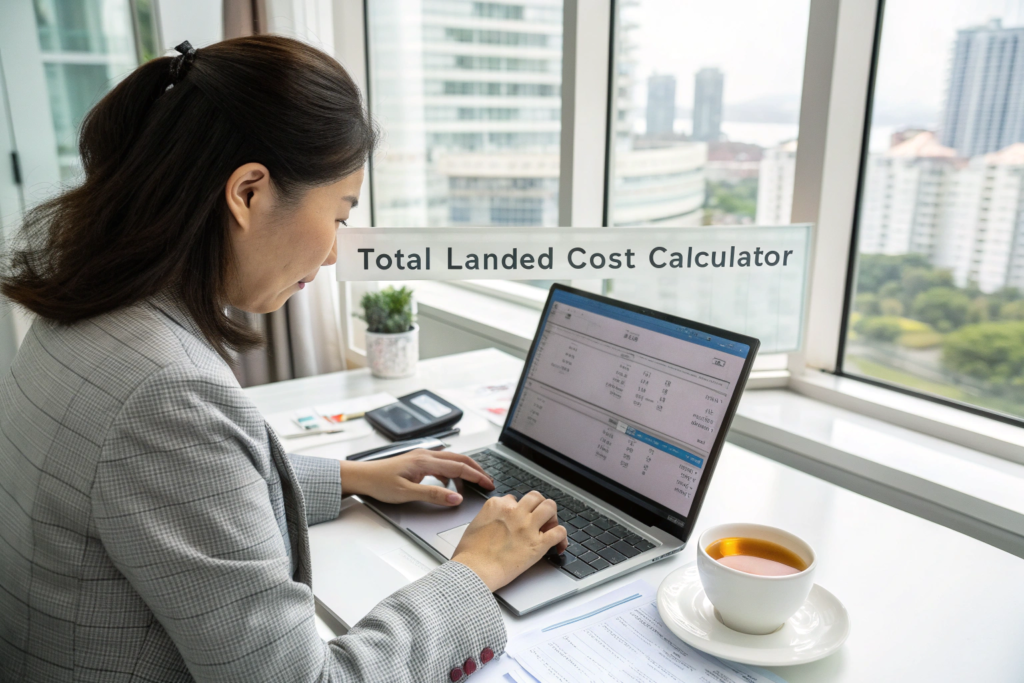
You don't need to build your own spreadsheet from scratch. Here are tools we recommend to clients:
Flexport's Landed Cost Calculator. Free online tool that gives decent estimates for major routes. Not perfect, but good for initial planning.
USITC Tariff Database. Official US government site where you can look up duty rates by HTS code. We use this daily.
Our DDP quote tool. When you request a quote from shanghai fumao, we provide a full landed cost breakdown. We don't hide fees. You see fabric cost, shipping, duties, and delivery all itemized. This lets you compare apples to apples with other suppliers who quote FOB.
Customs broker consultation. If you're doing high volume, talk to a licensed customs broker. They'll give you accurate duty estimates and can advise on classification strategies.
A client from Seattle uses a simple rule of thumb: for heavy fabrics from China to US West Coast, multiply your fabric cost by 1.25 to estimate landed cost. It's rough, but it works for initial budgeting. For accurate numbers, get a DDP quote.
How do Section 301 tariffs specifically impact heavy fabric categories?
This changes constantly, so I'll give you the current situation as of late 2024, but always verify before ordering.
Cotton fabrics (5208-5212, 6006): Subject to 7.5% Section 301 tariff on top of MFN duties. Total duty typically 15-17%. Some exclusions expired in 2023, but new exclusions are occasionally added for specific HTS codes.
Polyester fabrics (5407, 5512-5516): Same story—7.5% additional duty. Total around 15-16%.
Wool fabrics (5111-5112): These already had high MFN rates (25-30%), and Section 301 adds another 7.5%. Total can exceed 35%. This is why we always check if your wool blend can be reclassified.
Specialty fabrics (technical textiles, coated fabrics): These often have different classifications and different tariff treatments. Some coated fabrics qualify for duty-free treatment under specific HTS codes if they meet certain technical definitions.
The key is correct classification. A client importing heavy cotton canvas was paying 17.5% total duty. We reviewed their fabric and realized it qualified as "duck canvas" under a different HTS code with only 8% duty. We helped them reclassify, and they saved $9,000 on their next shipment.
With DDP, we handle this for you. We classify correctly from the start, and we track exclusion updates so you don't overpay.
Conclusion
Shipping heavy fabrics internationally is expensive and complicated. The fees multiply, the paperwork piles up, and the risks keep you up at night. DDP shipping isn't just a convenience—it's a financial strategy that can save you thousands of dollars per container while eliminating the stress of managing logistics yourself.
For heavyweight fabrics like fleece, denim, and canvas, DDP makes even more sense. The weight drives up costs, the handling requires expertise, and the margin for error is tiny. One mistake in classification, one missed document, one week of demurrage—and your profit margin disappears.
At Shanghai Fumao, we've built our DDP program specifically for buyers who want predictability. You get one price, one invoice, and one delivery date. We handle the shipping lines, the customs brokers, the truckers, and the insurance companies. You get your fabric and get back to building your brand.
If you're tired of surprise fees and shipping headaches, let's talk about DDP for your next heavy fabric order. We'll give you a clear landed cost, a realistic timeline, and the peace of mind that comes from working with a supplier who's done this thousands of times.
Contact our Business Director, Elaine. She runs our logistics coordination for US-bound shipments and has helped dozens of clients transition from FOB stress to DDP simplicity. Email her at elaine@fumaoclothing.com. Tell her what fabrics you're ordering and where they need to go. She'll get you a DDP quote that shows the real cost—no surprises, no hidden fees.
At shanghai fumao, we don't just make great fabric. We make sure it gets to you safely, affordably, and on time.