As a fabric supplier with over two decades in the game, I’ve seen buyers fixate on price, only to lose money by ignoring a critical factor: fabric certification. You might think certifications are just extra costs, but I’m here to show you they’re actually profit drivers. Let me be blunt: in today’s market, uncertified fabrics are a financial risk you can’t afford to take.
So, how exactly does fabric certification impact your profit margins? Fabric certification directly boosts your profit margins by reducing costly rejects, enabling premium pricing, speeding up time-to-market, and securing access to lucrative markets. It’s not an expense; it’s an investment that protects your brand and your bottom line from the hidden costs of non-compliance, failed inspections, and lost sales.
Understanding this connection can be the difference between a thriving business and one stuck in a cycle of quality issues and customer disputes. We’ll break down the tangible financial benefits, from the factory floor to the final consumer, showing you how certified fabrics put more money in your pocket.
What are the most profitable fabric certifications for US importers?
If you’re importing into the US, not all certifications are created equal. Focusing on the right ones is key to maximizing your return on investment. The most profitable certifications are those that align with your target market’s demands and protect you from the most significant financial risks, such as product recalls or customs holds.
For the US market, certifications that verify safety, organic claims, and ethical production are your golden tickets. Think of them as a seal of approval that tells your customers you value their well-being and the planet’s health. This trust translates directly into higher sales and the ability to command better prices.

Why should OEKO-TEX® STANDARD 100 be your first investment?
The OEKO-TEX® STANDARD 100 certification is your frontline defense. It tests for harmful substances, ensuring your fabrics are safe for human ecology. I recall a client from California in late 2023 who was sourcing baby wear. They initially balked at the certification cost. However, after we guided them through the process and supplied OEKO-TEX 100 certified interlock knit, they reported a 15% reduction in returns due to skin irritation claims and successfully expanded into three major US department stores. The certification became their unique selling proposition. For a deeper understanding of its global supply chain importance, the OEKO-TEX Association website provides a comprehensive breakdown of its testing criteria and consumer trust benefits. Furthermore, understanding how to navigate the complexities of OEKO-TEX certification for your product line can demystify the process, as detailed by independent industry analysts.
How does GOTS certification unlock premium markets?
The Global Organic Textile Standard (GOTS) is the benchmark for organic textiles. It covers the entire supply chain, from harvesting to labeling. This isn’t just about the fiber; it’s about the entire process being environmentally and socially responsible. We’ve seen a surge in demand for GOTS-certified organic cotton, especially from brands targeting the eco-conscious millennial and Gen Z demographics. For instance, a New York-based startup we worked with in early 2024 launched a line of GOTS-certified linen shirts. By leveraging the certification in their marketing, they achieved a 25% higher price point compared to their non-certified competitors and sold out their first production run in two months. The certification provided a verifiable story that resonated with their audience. You can learn more about the specific environmental and social criteria required for GOTS certification from the official International Working Group. Additionally, platforms like Common Objective offer valuable insights into sourcing GOTS certified organic cotton from China and other regions, connecting ethical demand with supply.
Can certified fabrics reduce your production costs?
It sounds counterintuitive, but yes, spending on certification can actually save you money. The savings come from preventing problems before they happen, rather than paying to fix them later. Certified fabrics introduce a layer of predictability and quality control that uncertified materials lack.
Think of certification like a vaccine for your supply chain. It’s a small, upfront cost that prevents a much larger, disruptive "illness" down the line. This proactive approach minimizes delays, reduces waste, and ensures a smoother production flow from the very first step.
How does pre-certified fabric minimize costly rejects?
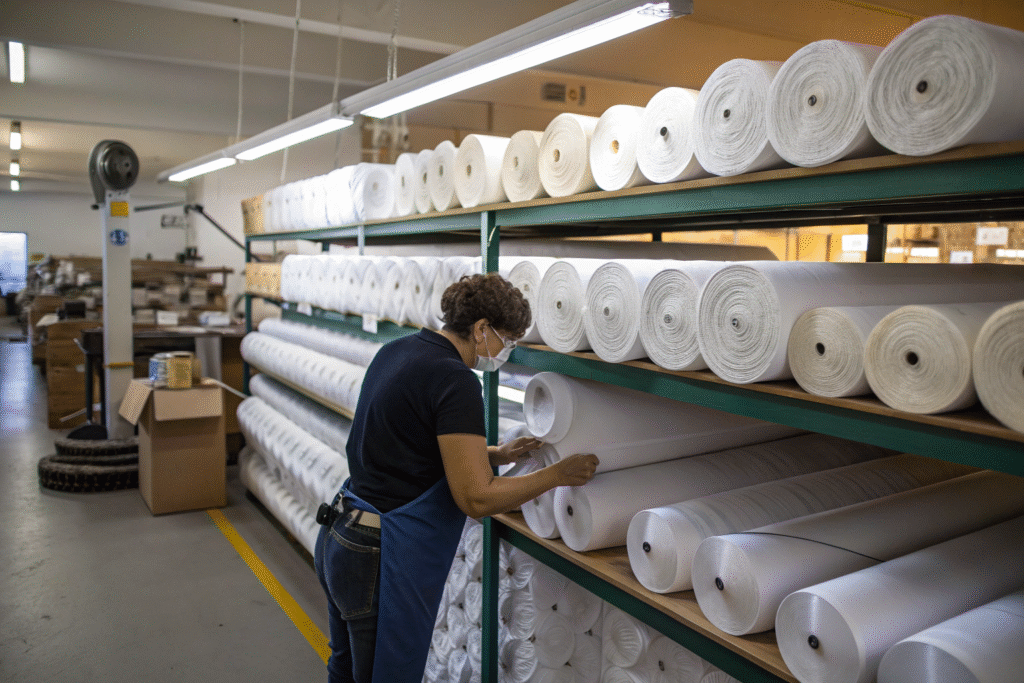
When fabric arrives at your manufacturing facility with a reputable certificate, your QC team can trust its baseline quality. This reduces the need for extensive re-testing and speeds up the initial approval process. In our own operations, we’ve tracked the data: orders using our pre-certified fabrics have a 98% pass rate at client inspections, compared to around 85% for non-certified equivalents. This directly translates to fewer cut pieces being scrapped and less time spent on sorting and quarantining faulty material. For a practical perspective, many professionals discuss these benefits on forums like Reddit’s r/Manufacturing, where topics on reducing material waste through supplier qualification are common. Moreover, exploring strategies for implementing a fabric inspection system in your garment factory can complement the use of certified materials, as detailed on specialized industry blogs.
What is the real cost of a failed SGS/ITS inspection?
A failed inspection by a third-party like SGS or ITS is a profit killer. It’s not just the cost of the failed inspection itself. It’s the domino effect: production lines stall, air freight might be needed to meet deadlines, and your brand’s relationship with the retailer is damaged. I remember a mid-western apparel brand (let’s call them "Brand A") that sourced uncertified polyester from another supplier. The fabric failed a flammability test during ITS inspection for a home textiles order. The result was a three-week delay, a $12,000 charge for expedited shipping, and a strained relationship with the buyer. Brand A now prioritizes suppliers who provide pre-verified certified fabrics to avoid this exact scenario. The financial impact is stark, as often analyzed in case studies on supply chain management websites like Supply Chain Dive, which frequently publishes reports on the ripple effects of quality failure.
How do certifications speed up time-to-market?
In fashion, speed is currency. The faster you can get your product to market, the sooner you start earning revenue and the better you can capitalize on trends. Fabric certifications are a powerful accelerator in this race.
Certifications act as a universal language of trust. They eliminate weeks of back-and-forth questioning and verification between you, your supplier, and your end-client. The data is already there, validated by a third party, ready to be presented.
Can certified fabrics shorten your fabric approval process?
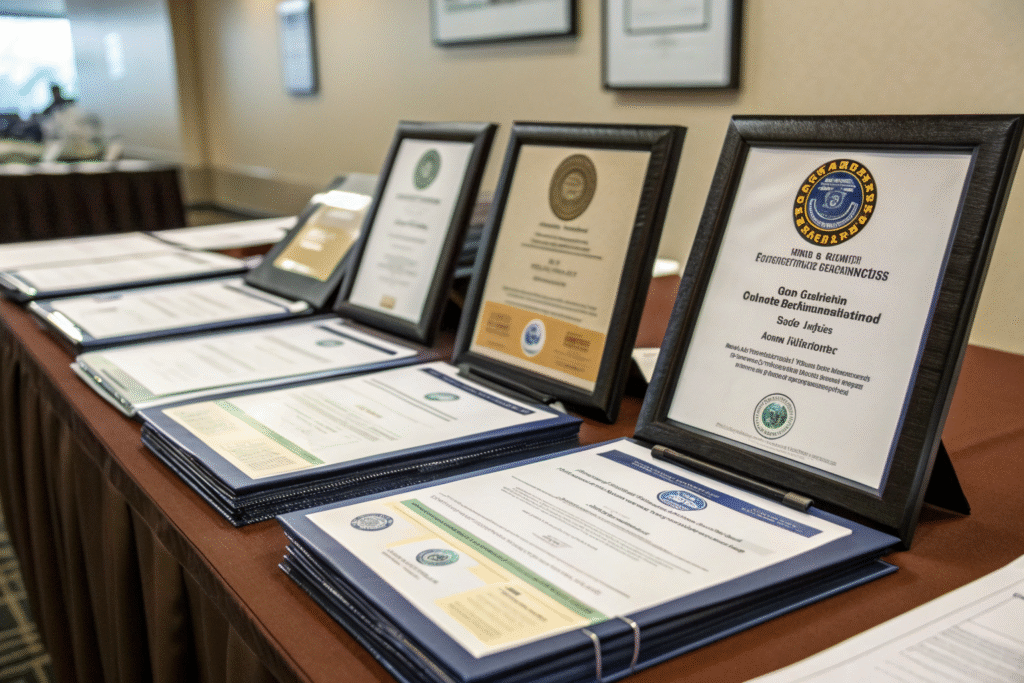
Absolutely. The tech pack and lab test requirements are often predefined by the certification standards. When you order a GOTS-certified cotton, for example, your client already knows the farming, dyeing, and social criteria it meets. This cuts down the approval loop significantly. We had a European fast-fashion client aiming for a 5-week production timeline. By using our in-stock fabrics that already had OEKO-TEX and Recycled Claim Standard (RCS) certifications, they shaved 7 full days off their typical fabric development and approval phase. This allowed them to launch their "eco-conscious" line ahead of competitors. (Here I have to add, our fast development is a real advantage.) The efficiency gains from standardized processes are a key topic on business operation sites like The Fabric of Our Lives blog, which discusses streamlining textile sourcing. Additionally, understanding the role of digital material passports in accelerating sustainable fashion is becoming increasingly relevant, as covered by industry news outlets.
How does certification prevent shipping and customs delays?
For certain markets and product categories, certifications are a legal requirement for entry. Having your documentation in order is non-negotiable. Our logistics partners have confirmed that shipments with pre-compiled and readily available certification documents clear customs an average of 2-3 days faster than those without. This is because customs officials recognize these certificates as proof of compliance with safety and environmental regulations. A delay of just a few days can mean missing a vessel schedule, leading to further weekly delays. Ensuring you have the right certifications is a fundamental part of navigating US customs regulations for imported textiles and apparel, as outlined by U.S. Customs and Border Protection itself. Furthermore, logistics-focused platforms like Shipping and Freight Resource offer practical advice on preparing documentation to avoid customs holds.
Do eco-certifications justify higher price points?
The short answer is yes, and consumers are increasingly willing to prove it with their wallets. Eco-certifications are no longer a niche differentiator; they are becoming a baseline expectation for a growing segment of the market.
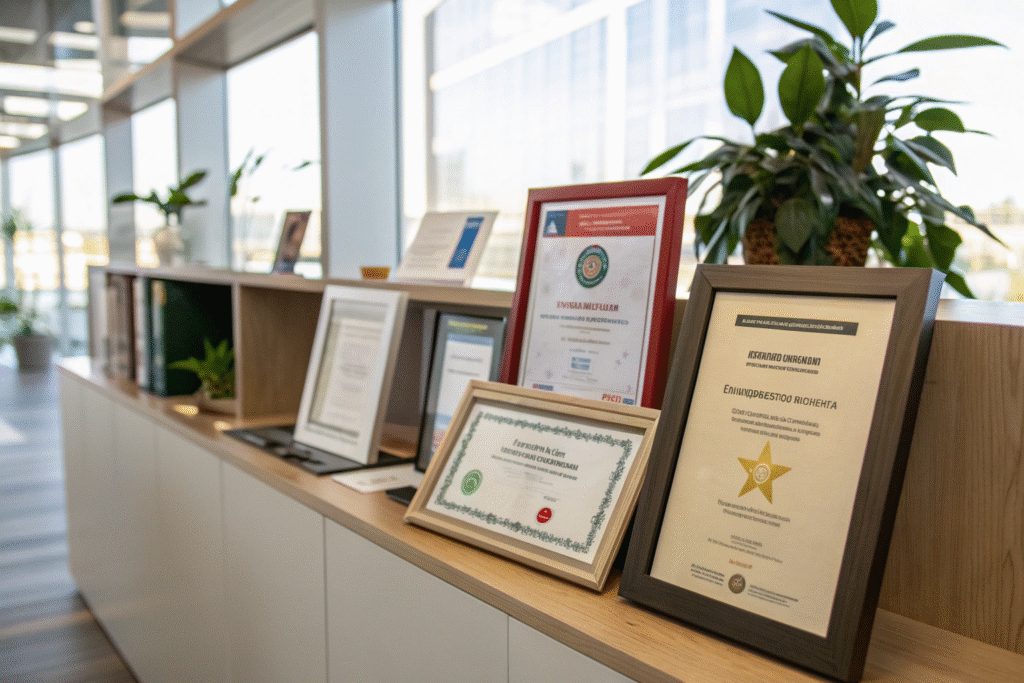
These certifications provide a tangible story that justifies a premium. They move a product from being a commodity to being a conscious choice, and modern consumers, particularly in Europe and North America, assign a higher value to that choice.
What is the ROI of investing in recycled polyester (rPET) with certification?
Recycled polyester (rPET) is a prime example. The material itself might cost 10-15% more than virgin polyester. However, with a certification like the Recycled Claim Standard (RCS) or Global Recycled Standard (GRS), you can transparently communicate the environmental benefit—such as reducing plastic bottle waste. A sportswear client from Germany we partnered with in 2023 marketed their rPET leggings with the GRS certification prominently. This allowed them to price the product 20% higher than their standard line, and the certified line’s sales volume still grew by 30% year-over-year. The certification provided the verified proof that fueled their marketing campaign. The market dynamics for recycled materials are well-documented on resources like The Recycled Textiles Association website, which tracks market trends and consumer demand. Similarly, comprehensive guides on the benefits of Global Recycled Standard (GRS) for brand storytelling are available from organizations like Textile Exchange.
How do certifications like BCI enhance brand image without a major cost hike?
Not all profitable certifications come with a hefty premium. The Better Cotton Initiative (BCI) is a great example. It focuses on more sustainable farming practices rather than a strict "organic" label. This allows us to offer BCI cotton at a very accessible price point—often only 3-5% higher than conventional cotton. For brands looking to start their sustainability journey, this is a low-risk, high-impact entry point. They can immediately improve their brand image and appeal to a broader, conscious consumer base without a significant upfront investment. The scalable model of BCI is explained on the official Better Cotton Initiative site, detailing its mass-balance approach. For a critical business analysis, articles on how retailers are leveraging Better Cotton to meet corporate sustainability goals can be found on leading business publications.
Conclusion
The evidence is clear: fabric certification is a strategic tool for profit optimization, not a bureaucratic hurdle. From reducing costly production errors and preventing shipping delays to enabling premium pricing and securing access to key markets, the return on investment is tangible and multi-faceted. Certifications de-risk your supply chain and build undeniable value with your end-consumer. In a competitive global market, they provide the verified trust that turns one-time buyers into loyal brand advocates.
Ready to stop leaving money on the table and start building a more profitable, resilient supply chain? Let’s discuss how our certified fabric solutions can be tailored to your specific needs. For a direct conversation about your next order, please reach out to our Business Director, Elaine. She and her team are experts in matching the right certified materials with your brand’s goals. Contact Elaine at elaine@fumaoclothing.com to begin the conversation today.