There’s nothing more frustrating than seeing beautiful embroidery ruined by dirt, oil, or discoloration on luxurious pile fabrics. You invest in intricate designs only to watch them degrade during production, shipping, or customer use. This isn’t just about aesthetics—it directly impacts your product’s perceived value and customer satisfaction. At Fumao, we’ve developed specialized processes to protect embroidery on delicate pile surfaces for clients worldwide.
Keeping embroidery clean on pile fabrics requires a proactive approach spanning pre-production planning, in-process controls, and proper finishing techniques. The key lies in understanding the unique challenges of pile fabrics and implementing targeted solutions at each stage. From specialized stabilizers to controlled environments and gentle cleaning methods, multiple strategies work together to maintain pristine embroidery.
If you’re tired of rejected shipments and customer complaints about soiled embroidery, understanding these specialized techniques is essential. Let’s examine the specific methods that preserve embroidery beauty on challenging pile fabrics.
What Pre-Production Preparations Prevent Contamination?
The battle for clean embroidery begins long before the first stitch. Proper fabric preparation and handling set the foundation for success. Pile fabrics like velvet and terry act like magnets for dust, lint, and oils, so controlling the production environment is crucial. We maintain separate clean rooms for pile fabric embroidery with positive air pressure, HEPA filtration, and strict access controls. This prevents airborne contaminants from settling on fabrics before and during embroidery.
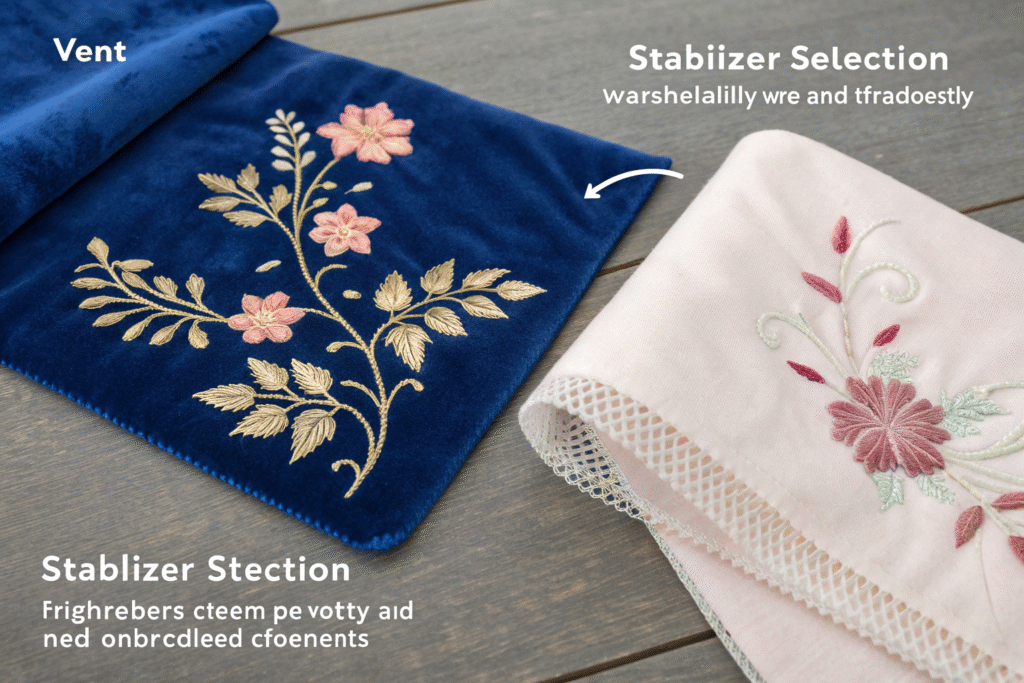
Stabilizer selection dramatically affects cleanliness. For velvet, we prefer lightweight, tear-away stabilizers that minimize residue, while for terry cloth, we often use specialized mesh backings that provide support without trapping debris. The wrong stabilizer can leave behind fuzzy particles or adhesive residues that attract and hold dirt. We also pre-wash certain pile fabrics to remove manufacturing residues and minimize subsequent shrinkage that could distort embroidery.
How Does Environment Control Impact Embroidery Cleanliness?
The embroidery environment significantly influences final cleanliness. Dust particles settling on fabric during production become permanently trapped under stitches. Oil mist from machinery can create invisible spots that later attract more dirt. Even operator handling introduces skin oils and contaminants. Our controlled environments maintain temperature at 22±2°C and humidity at 55±5% RH to minimize static electricity that attracts dust. We use dedicated embroidery machines for pile fabrics with enclosed stitching areas and regular maintenance to prevent oil leaks. A German luxury home textiles manufacturer reduced their embroidery rejection rate from 12% to under 2% after implementing our environmental control recommendations, including installing local exhaust ventilation at each machine.
What Stabilizer and Backing Combinations Work Best?
Choosing the right stabilizer-backing combination is critical for clean results on pile fabrics. For velvet embroidery, we typically use a medium-weight tear-away stabilizer with a temporary spray adhesive to prevent shifting without leaving residue. For terry cloth, a water-soluble topping film protects the pile from needle penetration damage and prevents thread from sinking into the loops. The table below shows our preferred combinations:
| Fabric Type | Stabilizer Type | Topping | Special Considerations |
|---|---|---|---|
| Velvet | Lightweight tear-away | None | Avoid adhesives that leave residue |
| Terry Cloth | Cut-away mesh | Water-soluble film | Prevents thread sinking into loops |
| Velour | Medium tear-away | Temporary spray adhesive | Minimizes shifting during embroidery |
| Faux Fur | Heavy cut-away | Water-soluble plastic | Protects pile from crushing |
We always test stabilizer combinations with specific thread types before production. In early 2024, a US fashion brand avoided potential disaster when our testing revealed their preferred stabilizer left a visible residue on black velvet that only appeared after steaming.
What In-Process Techniques Maintain Cleanliness?
During embroidery, several techniques prevent contamination while ensuring quality results. Needle selection significantly impacts cleanliness—we use specialized chrome-plated or titanium needles that run cooler and minimize needle gumming from thread lubricants. For dense designs on velvet, we sometimes use needle coolers to prevent overheating that can cause discoloration and attract dirt.
Thread management is equally important. We prefer silicone-free thread lubricants that don’t attract dust, and we maintain proper thread tension to prevent loose stitches that can trap debris. For white and light-colored embroidery on dark pile fabrics, we implement strict changeover procedures to prevent color contamination from previous jobs. This includes cleaning machine surfaces, changing needles, and using fresh thread cones from sealed packaging.
How Can Proper Handling Prevent Oil and Soil Transfer?
Human contact is a major source of embroidery contamination. We train operators to wear fresh cotton gloves when handling pile fabrics, changing them frequently throughout shifts. We’ve implemented "no-touch" systems where possible, using vacuum transport and automated positioning to minimize fabric contact. Machine maintenance follows strict schedules with food-grade lubricants applied sparingly to prevent overspray. When we identified operator hand oils as the source of mysterious yellow spots on white terry cloth embroidery, switching to nitrile gloves and implementing mandatory glove-changing every two hours completely eliminated the problem. Regular hand washing stations and prohibiting food/drinks in production areas further reduce contamination risks.
What Stitching Parameters Reduce Debris Accumulation?
Optimizing stitch parameters significantly affects cleanliness. Dense stitch patterns trap more debris, so we recommend slightly longer stitches and appropriate densities for pile fabrics. For velvet, we reduce stitch density by 10-15% compared to standard fabrics to minimize needle holes that can wick in contaminants. We also use smaller needle sizes (70/10 instead of 75/11) to create smaller perforations. For terry cloth, we increase top tension slightly to ensure stitches sit on top of loops rather than sinking in where they can trap dirt. A Canadian towel manufacturer improved their embroidery cleanliness dramatically by simply adjusting their stitch length from 2.0mm to 2.3mm and reducing density from 0.4mm to 0.45mm between rows. Understanding how to optimize embroidery parameters for different fabrics is essential for preventing contamination issues.
What Post-Embroidery Cleaning Methods Are Safe?
After embroidery completion, careful cleaning removes production residues without damaging stitches or fabric. For most pile fabrics, we prefer gentle vacuuming with soft brush attachments followed by low-temperature steaming rather than washing. This removes surface debris without risking color bleeding or distortion. When washing is necessary, we use specialized detergent formulations without optical brighteners that could create uneven appearance around embroidery.
For spot cleaning, we’ve developed targeted methods using mild solvents applied with precision tools rather than spraying entire pieces. Dry cleaning, while effective for some fabrics, can leave chemical residues on embroidery threads, so we prefer controlled wet cleaning when necessary. The key is testing cleaning methods on sample pieces before treating entire production runs to ensure colorfastness and stitch integrity.

Which Cleaning Solutions Work Without Damaging Embroidery?
Not all cleaning solutions are safe for embroidered pile fabrics. We avoid alkaline cleaners that can degrade thread coatings and instead use pH-neutral detergents specifically formulated for delicate textiles. For oil-based stains near embroidery, we use citrus-based solvents that effectively remove grease without damaging threads or dyes. For water-based stains, we prefer oxygen-based bleaches over chlorine products that can yellow white threads and damage fiber structures. A French luxury brand saved their entire collection of embroidered velvet cushions when we developed a custom cleaning solution using deionized water with a drop of mild surfactant that removed production marks without affecting the delicate metallic threads.
How Can Proper Drying and Finishing Preserve Cleanliness?
Drying methods significantly impact final cleanliness. We avoid high-heat drying that can set stains and instead use controlled air drying at room temperature. For terry cloth with embroidery, we use centrifugal extraction rather than wringing, which can distort stitches. Finishing includes gentle brushing to restore pile orientation without damaging embroidery, followed by immediate packaging in clean polyethylene bags to prevent recontamination. We’ve implemented final inspection under multiple light sources (daylight, fluorescent, and LED) to identify any cleanliness issues before packaging. A UK retailer eliminated customer returns for soiled embroidery by implementing our recommended drying and packaging protocols, including using lint-free tissue paper between folds and sealed plastic bags for transport.
What Packaging and Shipping Methods Prevent Soiling?
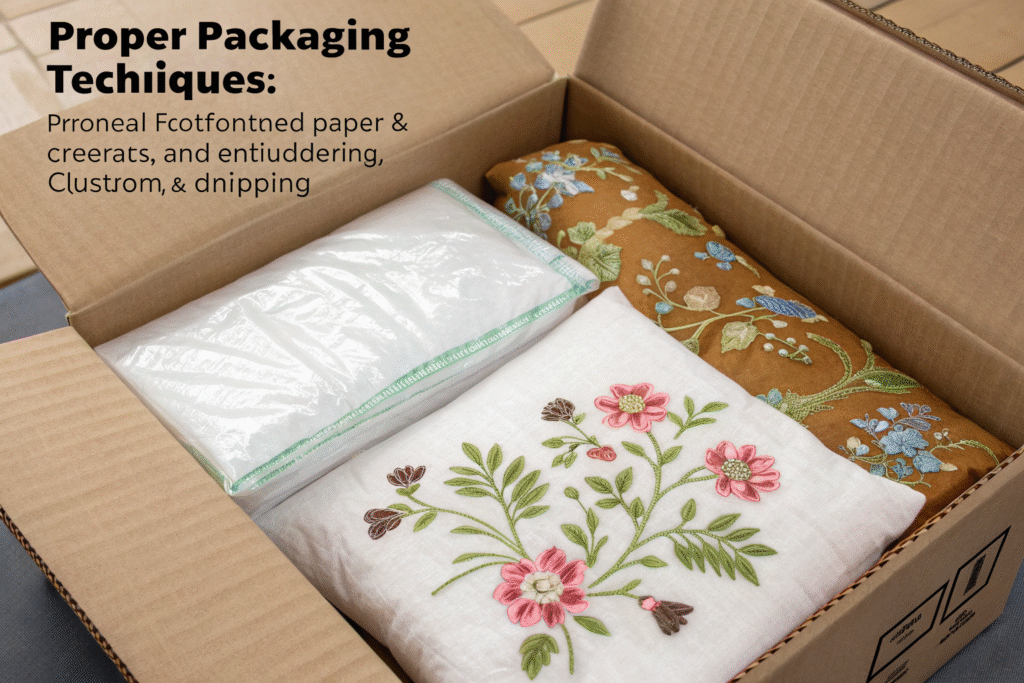
Proper packaging is your final defense against contamination during storage and shipping. We use pH-neutral tissue paper as a barrier between embroidery and outer packaging, preventing direct contact that could transfer dyes or finishes. For velvet with raised embroidery, we use custom molded inserts that protect designs from crushing while allowing air circulation.
Shipping containers must be clean and dry—we’ve rejected shipping cartons that showed signs of previous water damage or visible soiling. Temperature control during shipping is also important, as condensation can form during temperature changes, creating moisture that attracts dirt and can cause mildew. We include silica gel packets in packages to control humidity during transit, especially for sea shipments.
What Packaging Materials Prevent Transit Soiling?
Choosing the right packaging materials prevents many transit-related soiling issues. We avoid recycled cardboard for direct packaging as it can contain contaminants and instead use acid-free paper wraps and virgin cardboard cartons. Polyethylene bags provide excellent protection but must be vented to prevent moisture buildup. For high-value items, we use anti-static bags that prevent dust attraction. When an Australian client complained about gray marks appearing on white terry cloth embroidery during shipping, we traced the problem to recycled cardboard inserts. Switching to white, clay-coated cardboard eliminated the issue completely. We also avoid colored tapes and labels that could transfer dyes onto fabrics during prolonged contact.
How Can Supply Chain Coordination Maintain Cleanliness?
Cleanliness requires coordination across your entire supply chain. We establish clear handling protocols with logistics partners, including temperature requirements, stacking limitations, and moisture protection. We use GPS-tracked shipping with temperature and humidity monitoring for high-value shipments. Perhaps most importantly, we educate everyone in the supply chain about the special handling requirements of embroidered pile fabrics. This includes training warehouse staff on proper handling and storage methods. Creating a comprehensive guide to textile packaging standards for your suppliers and partners ensures consistent cleanliness throughout the journey from factory to customer.
Conclusion
Keeping embroidery clean on pile fabrics like velvet and terry requires a comprehensive approach addressing every stage from production planning through final delivery. Success depends on controlling the environment, optimizing embroidery parameters, implementing careful handling procedures, and using appropriate cleaning and packaging methods. There’s no single solution—rather, multiple layers of protection work together to preserve embroidery beauty.
The complexity of maintaining embroidery cleanliness on delicate pile fabrics shouldn’t discourage you. With systematic attention to these technical details and consistent quality controls, you can achieve pristine results that enhance product value and customer satisfaction. If you’re struggling with embroidery soiling issues and want to implement proven solutions for your specific fabrics and designs, our technical team is ready to assist. We bring decades of specialized experience solving exactly these challenges for global clients. For personalized recommendations and technical support, contact our Business Director, Elaine, at elaine@fumaoclothing.com. Let us help you achieve the flawless embroidery results your luxury products deserve.