Last quarter, one of our Dallas-based denim clients discovered critical weaving defects in their final packed fabric that should have been caught at the greige stage. The result was a 40,000-yard shipment rejection that cost them $280,000 in replacement fabric and production delays. The root cause? Missing inspection checkpoints between loom and finishing. This painful experience taught us that inspection isn’t just about checking quality—it’s about building quality through systematic verification at every transformation stage.
Setting effective inspection checkpoints requires mapping the entire fabric journey and identifying critical control points where defects can be detected, measured, and prevented from propagating downstream. A well-designed inspection system acts as a quality funnel, catching issues early when they’re cheapest to fix. Our data shows that defects caught at greige stage cost 90% less to rectify than those discovered in finished fabric.
The inspection philosophy has evolved from traditional "sorting out bad products" to modern "building in quality through process control." This means inspection points aren’t just passive checking stations but active process control mechanisms that feed data back to production operations. The most effective systems combine human expertise with digital monitoring to create a closed-loop quality ecosystem.
What greige goods inspection prevents downstream defects?
Greige goods inspection forms the foundation of fabric quality, catching issues before value-added processing makes them more expensive to address. This initial checkpoint focuses on identifying weaving or knitting defects that would become magnified or unfixable during subsequent dyeing and finishing. Our analysis shows that comprehensive greige inspection reduces finishing defects by 65% and eliminates 80% of customer returns for construction issues.
The greige inspection process examines fabric in its raw state, focusing on construction integrity rather than appearance. This stage utilizes backlit inspection frames to reveal minute holes, tension variations, and yarn inconsistencies that would be invisible after dyeing. The most effective systems combine automated optical inspection with trained human verification to balance speed and accuracy.
How do you identify critical weaving and knitting flaws?
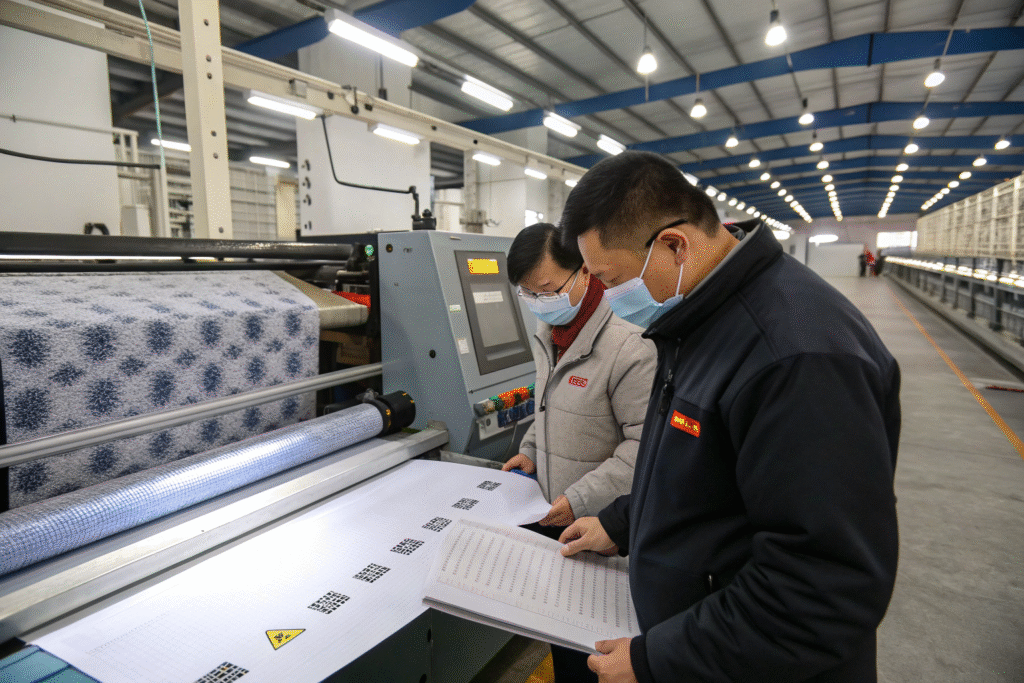
Weaving and knitting inspection requires systematic examination along both length and width dimensions, focusing on pattern consistency and structural integrity. The inspection follows standardized defect classification systems, with particular attention to recurring defects that indicate machine issues. We implement a four-point grading system for greige fabric that quantifies defect severity and determines whether fabric can proceed to finishing or requires mending.
Critical greige defects to catch include:
- Weaving Defects: Missing picks, double ends, reed marks, and loose threads
- Knitting Defects: Drop stitches, barré effect, holes, and course variations
- Yarn Defects: Slubs, thick/thin places, and contamination
- Construction Issues: Width variations, selvedge problems, and skew/bow
- Tension Problems: Wrinkles, creases, and distortion from improper let-off
- Contamination: Oil stains, rust marks, and foreign fibers
What measurements establish greige quality baselines?
Quantitative measurements at greige stage establish the foundation for all subsequent processing. These include precise width verification, threads-per-inch or courses-per-inch counts, weight per unit area, and yarn density measurements. Our standard protocol requires recording these measurements at three points across the fabric width and every 500 yards lengthwise to create a quality baseline that finishing operations can reference.
Essential greige measurements include:
- Width Consistency: Measured at 5 points across the roll
- Thread Count: Warp and weft density verification
- Fabric Weight: GSM/square yard accuracy confirmation
- Yarn Size: Verification against specification requirements
- Stretch Properties: For elastic fabrics, pre-finishing tension tests
- Moisture Content: Critical for natural fiber processing consistency
What dyeing and finishing checkpoints ensure color consistency?
The transformation from greige to finished fabric introduces multiple quality variables that require systematic monitoring. Dyeing and finishing checkpoints focus on color accuracy, hand feel, dimensional stability, and performance characteristics. This phase typically has the highest defect potential, with our data showing 60% of quality issues originate in dyeing and finishing operations.
Effective dyeing inspection employs both instrumental measurement and visual assessment under multiple light sources. The checkpoint system must account for batch-to-batch consistency while accommodating the natural variations inherent in textile wet processing. The most robust systems combine real-time monitoring with post-process verification to create a comprehensive quality picture.

How do you verify color accuracy and fastness?
Color verification requires both instrumental measurement and visual assessment to account for metamerism and subjective appearance factors. We implement a dual-approach color quality system using spectrophotometers for numerical color difference (dE) measurement alongside visual evaluation by trained staff under D65, TL84, and UV light sources. Color fastness testing begins with laboratory simulations of real-world conditions the fabric will encounter.
Comprehensive color verification includes:
- Color Matching: dE < 0.8 for solid shades, < 1.2 for patterns
- Batch Consistency: Shade band establishment and maintenance
- Light Fastness: AATCC 16 testing with 20+ AFU exposure
- Rub Fastness: Dry and wet crocking tests per AATCC 8
- Wash Fastness: AATCC 61 testing for number of wash cycles
- Perspiration Fastness: Acid and alkaline solution testing
What finishing quality parameters require monitoring?
Finishing processes impart critical performance characteristics that must be verified before approval. These include dimensional stability, hand feel, functional properties, and appearance qualities. The inspection checkpoints measure both the presence of desired characteristics and the absence of finishing defects such as chalk marks, roller marks, or uneven application.
Key finishing verification points:
- Dimensional Stability: shrinkage/expansion after washing
- Hand Feel: Objective measurement and subjective assessment
- Functional Properties: Water resistance, wrinkle recovery, flame resistance
- Surface Appearance: Even finishing, absence of defects
- Odor Testing: Freedom from chemical residues
- pH Verification: Neutral range for skin contact fabrics
How do packing inspection points prevent shipping damage?
Packing inspection represents the final opportunity to catch quality issues before fabric reaches customers, making it a critical control point for preserving all previous quality efforts. This stage verifies that packing methods align with fabric requirements and that no damage has occurred during the packing process itself. Our implementation of systematic packing inspection reduced shipping damage claims by 75% within six months.
The packing inspection focuses on both protection verification and administrative accuracy. This includes checking that packing materials are appropriate for the fabric type, that labeling is correct and complete, and that the packed units can withstand anticipated shipping conditions. The most effective systems include pre-shipment mock handling tests to validate packing integrity.

What packing integrity factors require verification?
Packing integrity verification ensures that the chosen packing method will protect the fabric throughout its journey. This includes checking compression resistance, moisture protection, handling convenience, and identification clarity. Our standard protocol involves destructive testing of sample packed units to validate protection levels before full shipment packing begins.
Critical packing verification elements:
- Compression Testing: Stacking strength validation
- Moisture Protection: Water resistance verification
- Vibration Testing: Simulated transit condition assessment
- Edge Protection: Selvedge and corner safeguarding
- Identification Accuracy: Label and documentation verification
- Handling Safety: Weight distribution and grip points
How do you implement final quality assurance?
Final quality assurance represents the last line of defense before fabric leaves the facility, combining random audits with specific checks based on the fabric’s risk profile. This stage includes verification that all previous inspection points have been completed, that any identified issues have been properly addressed, and that the shipment meets all customer specifications.
Final assurance protocols include:
- Documentation Review: Complete inspection record verification
- Random Sampling: AQL-based final inspection
- Specification Compliance: All requirements cross-checked
- Traceability Confirmation: Lot numbers and tracking established
- Customer Requirements: Special instructions verification
- Continuous Improvement: Defect data captured for process enhancement
What documentation creates an inspection trail?
Comprehensive documentation transforms inspection from isolated checking points into a continuous quality narrative that provides traceability and supports continuous improvement. The inspection trail should document not just what was checked and the results, but also the conditions under which inspections occurred and the personnel involved. Our digital inspection system reduced documentation time by 60% while improving data accuracy and accessibility.
The documentation system serves multiple stakeholders: production teams use it for real-time process adjustment, quality managers use it for trend analysis, and customers use it for quality verification. The most effective systems balance comprehensive data capture with practical usability for frontline inspectors.

What real-time data collection enhances inspection value?
Real-time data collection transforms inspection from a quality gate to a process improvement tool by enabling immediate corrective action and trend identification. Modern systems utilize mobile devices for data entry, automated measurement instruments that feed directly into quality databases, and visual defect mapping that pinpoints recurring issue locations. This approach reduced our defect recurrence rate by 45% through faster problem identification.
Real-time data elements include:
- Defect Mapping: Digital fabric maps with defect locations
- Measurement Logging: Automated data capture from testing equipment
- Photo Documentation: Visual evidence of defects and resolutions
- Trend Alerts: Automated notification of emerging patterns
- Performance Metrics: Real-time dashboard of quality KPIs
- Corrective Action Tracking: Resolution status monitoring
How does inspection data drive continuous improvement?
Inspection data becomes most valuable when analyzed for patterns that reveal underlying process issues rather than just individual defects. Systematic analysis identifies whether defects are random or systematic, localized or widespread, and whether they correlate with specific machines, shifts, or raw material batches. This analytical approach enabled us to reduce overall defect rates by 35% over two years through targeted process improvements.
Continuous improvement applications:
- Root Cause Analysis: Defect pattern identification
- Process Capability Studies: Statistical process control implementation
- Supplier Quality Management: Raw material issue tracking
- Training Effectiveness: Correlating defects with operator training
- Equipment Maintenance: Linking defects to machine condition
- Cost of Quality: Quantifying inspection and defect resolution costs
Conclusion
Establishing effective inspection checkpoints from greige to final packed fabric requires a systematic approach that views quality as a journey rather than a destination. Each inspection point serves both to verify current quality and to prevent future defects by feeding information back to production processes. The most successful systems balance comprehensive coverage with practical efficiency, ensuring that inspection adds value without becoming a bottleneck.
The inspection framework should evolve based on data analysis and changing requirements, with checkpoints regularly evaluated for effectiveness and efficiency. As fabric technologies and customer expectations advance, inspection systems must adapt to address new quality challenges while maintaining vigilance over traditional concerns. This dynamic approach transforms quality control from a cost center to a competitive advantage.
If you’re designing or optimizing a fabric inspection system, our quality engineering team can help develop a checkpoint framework tailored to your specific fabric types and quality requirements. We’ve implemented inspection systems across multiple manufacturing environments with proven results in defect reduction and customer satisfaction. Contact our Business Director, Elaine, at elaine@fumaoclothing.com to schedule a quality system assessment.