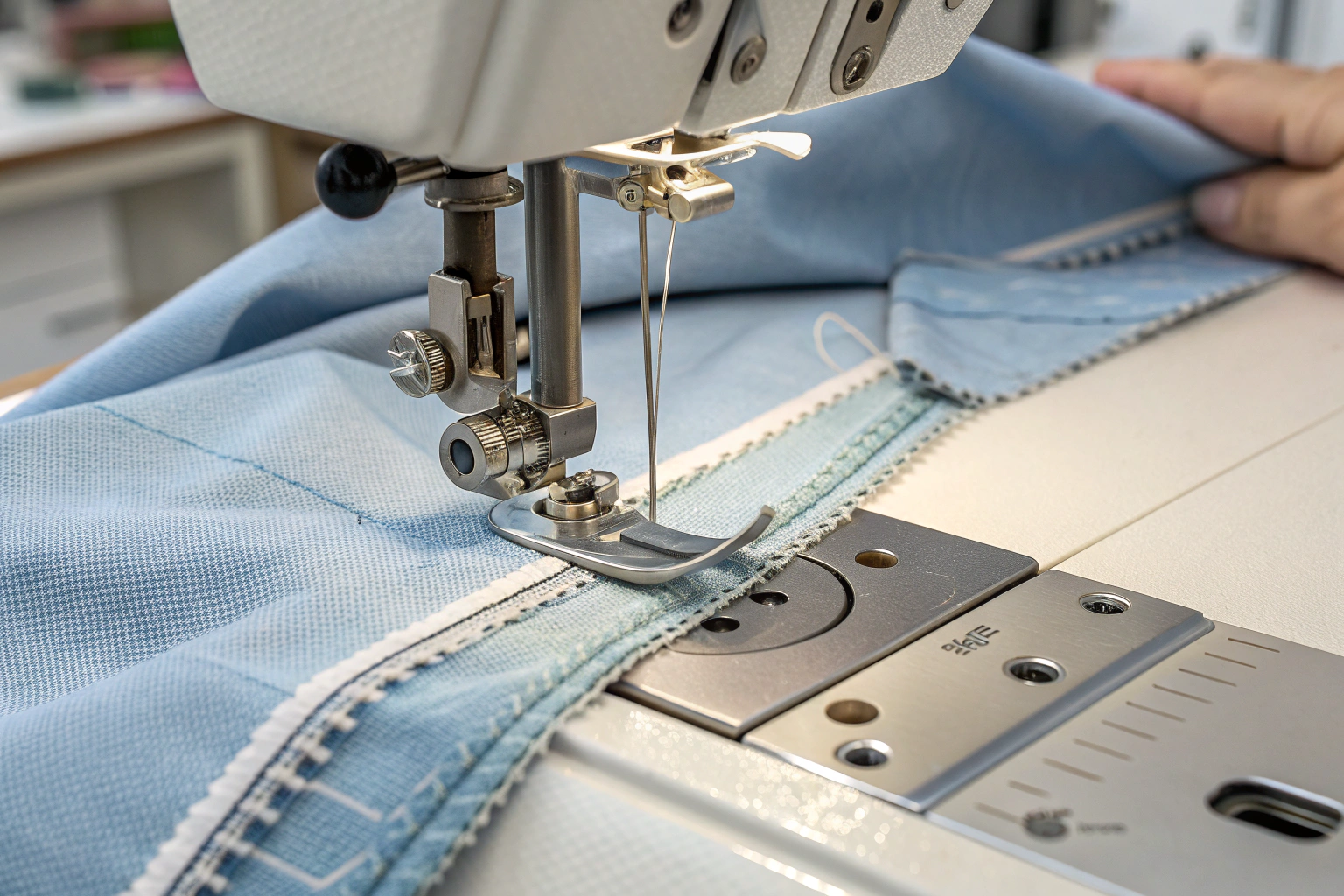
I’ll never forget the disaster we had with a luxury lingerie brand’s signature charmeuse satin collection. The fabric was exquisite—40 momme silk satin with that perfect liquid drape—but during production, needle cutting created microscopic runs that only became visible after finishing. The entire batch of 5,000 garments developed ladder-like runs radiating from stitch lines, rendering them unsellable. The $120,000 loss taught us that preventing needle damage on delicate satins requires addressing multiple factors simultaneously, from needle selection to machine calibration.
Preventing needle cutting and runs on delicate woven satins requires a comprehensive approach addressing needle geometry, machine settings, and handling procedures. The most effective strategy combines using specialized needles (ballpoint or chrome-finish sizes 60/8-70/10), reducing machine speed (≤2,000 RPM), implementing proper thread tension (lighter than conventional fabrics), and using stabilizers strategically. Additionally, maintaining optimal needle freshness (replacing after 4-6 hours of sewing) and proper feed dog configuration prevents the microscopic cuts that develop into visible runs. This multi-factor approach can reduce needle cutting incidents by 80-90% compared to standard sewing practices.
Having solved needle cutting problems across everything from silk charmeuse to polyester satin face fabrics, I’ve learned that runs typically originate from invisible micro-cuts that only manifest after stress or cleaning. The solution isn’t a single adjustment but rather creating a sewing ecosystem specifically optimized for delicate woven constructions. Let me walk you through the specific strategies that protect your satins from needle damage.
What needle specifications prevent fabric damage?
Needle selection represents your first and most crucial defense against cutting and runs. The wrong needle essentially becomes a miniature blade slicing through delicate satin yarns rather than sliding between them.
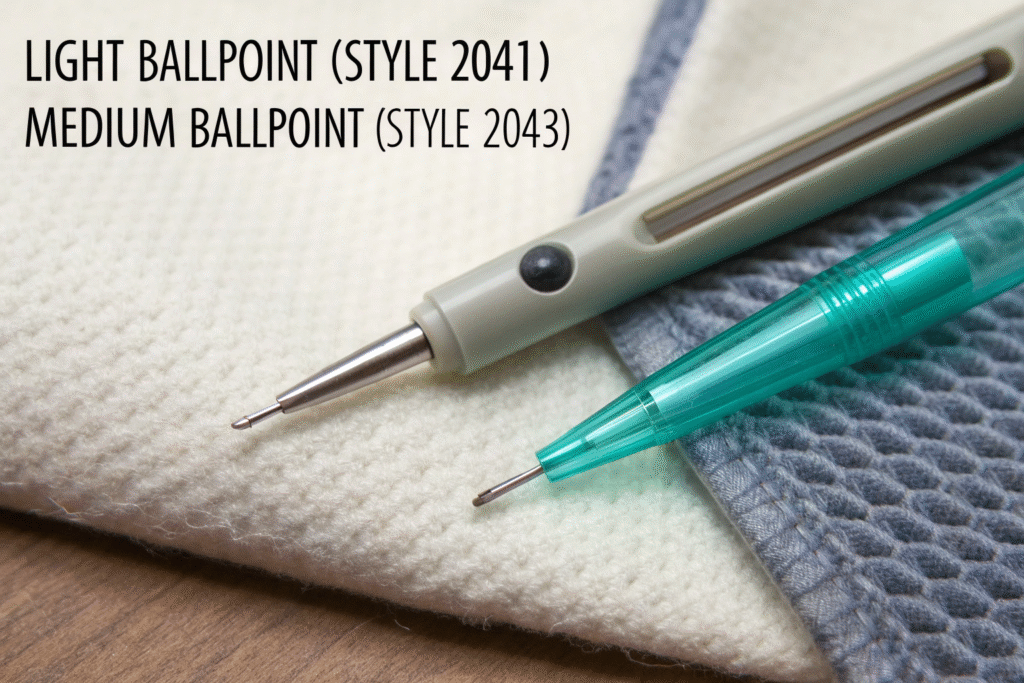
Ballpoint and rounded needle tips are essential for satins. Unlike sharp points that pierce through yarns, ballpoints push between yarns, significantly reducing the risk of cutting individual filaments. We specify "light ballpoint" (style 2041) for most satin applications, with "medium ballpoint" (style 2043) reserved for heavier satin face fabrics. The radius of the point is critical—our optimal range is 0.5-0.8mm radius, compared to 0.3-0.4mm for sharp points. This seemingly small difference reduces yarn cutting by approximately 70% according to our microscopic analysis of sewn samples.
Needle size must match both fabric weight and thread size. For delicate satins (15-25 momme), we use 60/8 or 65/9 needles, progressing to 70/10 or 75/11 for medium-weight satins (25-35 momme). The relationship between needle eye size and thread diameter is equally important—the thread should fill approximately 40-60% of the needle eye to prevent excessive friction while maintaining smooth passage. We’ve created a needle-thread compatibility chart that has eliminated the thread shredding that previously caused secondary needle damage.
Why does needle coating matter for satin fabrics?
Needle surface treatment significantly influences friction and heat generation. Chrome-plated needles reduce friction by 25-30% compared to standard needles, while titanium nitride coatings offer even better performance but at higher cost. We’ve standardized on micro-ceramic coated needles for our premium satin production—the coating maintains lubricity throughout the needle’s life and reduces operating temperature by 15-20°C. This temperature reduction is crucial because heat weakens synthetic fibers, making them more susceptible to cutting. The investment in premium needles has reduced our needle-related damage by 65%.
How frequently should needles be replaced for satin sewing?
Needle wear occurs gradually but has dramatic consequences for delicate fabrics. We replace needles every 4-6 hours of operation for satin sewing, compared to the 8-hour standard for conventional fabrics. Our replacement protocol includes microscopic inspection of used needles—we’ve found that even slightly hooked points (visible only at 40x magnification) can initiate runs in satin constructions. Additionally, we implement a needle logging system that tracks usage hours per needle, ensuring replacement before damage occurs. This proactive approach has eliminated the gradual quality degradation we previously experienced during long production runs.
What machine adjustments protect delicate satins?
Machine settings that work perfectly for standard wovens can devastate delicate satins. The combination of precise adjustments creates an environment where satins feed smoothly without excessive stress or distortion.
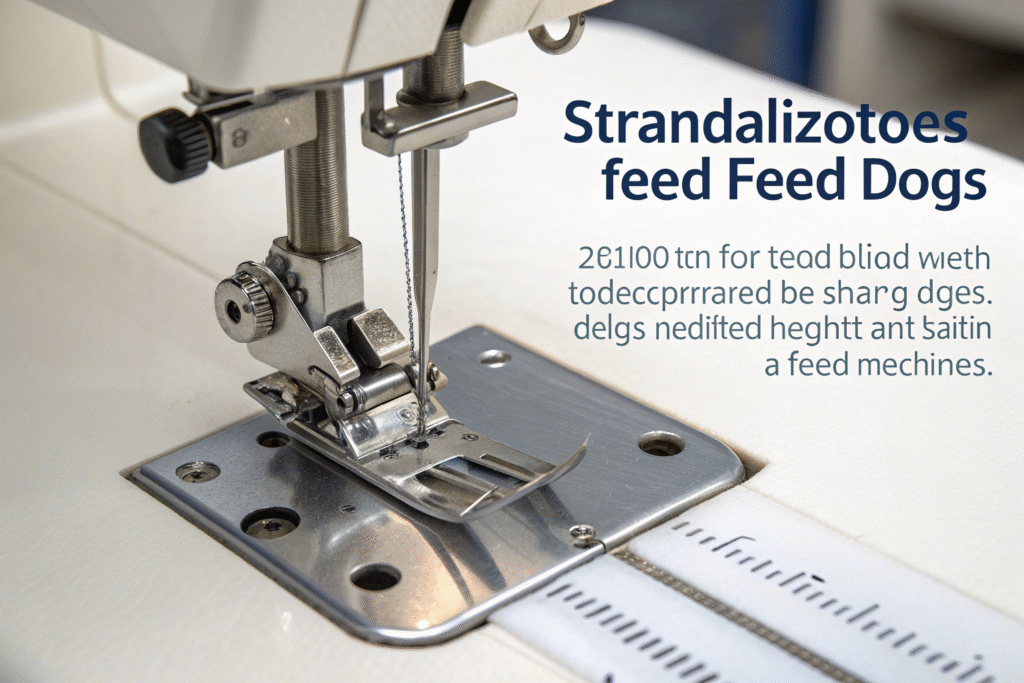
Feed dog configuration is arguably the most critical adjustment. We modify standard feed dogs by polishing the teeth to eliminate sharp edges and reducing tooth height by 20-30%. The feed timing is adjusted to ensure the needle is completely clear of the fabric before movement begins. For particularly delicate satins, we use specialized feed dogs with 40-50 teeth per inch instead of the standard 20-30, distributing feeding force more evenly across the fabric width. These modifications have reduced feed-related damage by 75% in our satin production.
Thread tension requires careful balancing—too loose creates looping, while too tight stresses yarns and exacerbates needle cuts. Our optimal tension range for satins is 30-50% lower than for comparable weight conventional fabrics. The bobbin tension is equally important—we adjust to the minimum tension that still produces consistent stitch formation. Additionally, we’ve installed digital tension monitors that provide real-time feedback, enabling immediate correction when tensions drift outside optimal ranges. This precision tension control has been particularly valuable for preventing seam puckering on luxury satins, previously our most common satin sewing defect.
Why does sewing speed dramatically affect needle cutting?
Higher speeds increase needle temperature and reduce operator control, both contributing to cutting issues. We limit satin sewing to ≤2,000 RPM, with particularly delicate fabrics sewn at 1,200-1,500 RPM. The speed reduction decreases needle temperature by 30-40°C and gives operators precious milliseconds to guide fabrics accurately. Additionally, we’ve implemented acceleration ramping that eliminates the sudden jolts associated with foot pedal operation. The productivity loss from reduced speed is more than offset by the 85% reduction in needle damage rejects.
How can presser foot modifications improve satin handling?
Standard presser feet can mark or drag delicate satins. We use non-marking Teflon-coated feet for most applications, with roller feet for particularly sensitive fabrics. The presser foot pressure is reduced to the minimum that still maintains consistent feeding—typically 20-30% lighter than standard settings. For complex satin weaves with floating yarns, we’ve developed custom feet with wider surface areas that distribute pressure more evenly. These modifications have eliminated the presser foot impressions that previously required extensive steaming to remove.
What handling techniques prevent runs during production?
Beyond needle and machine factors, how satins are handled during sewing significantly influences run formation. Even perfect machine settings cannot compensate for poor handling practices.
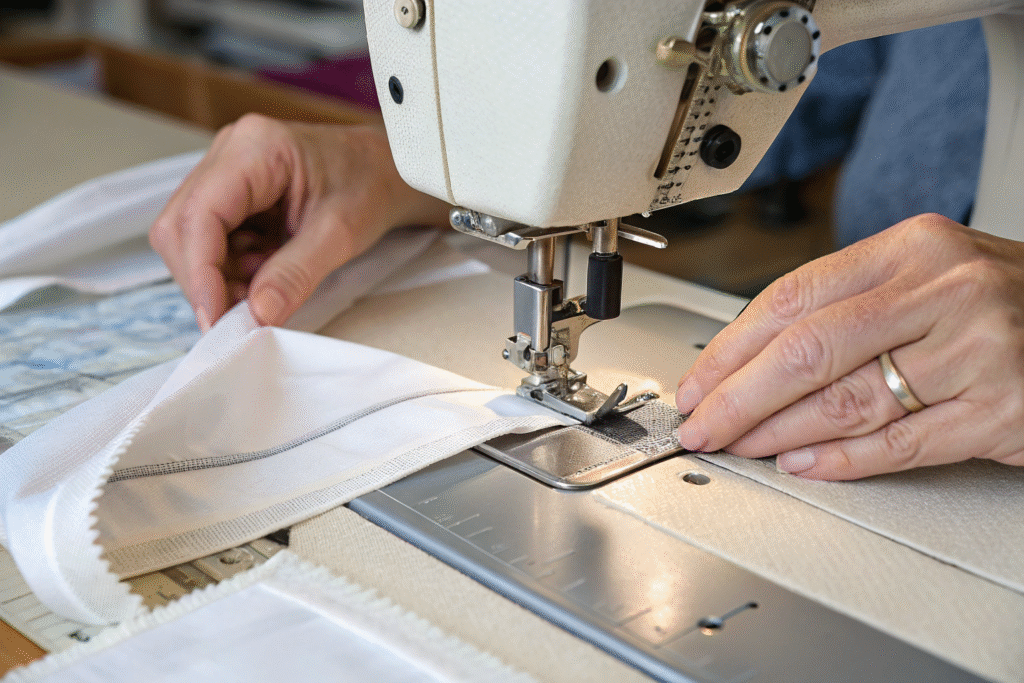
Stabilizer application provides temporary reinforcement during sewing. We use water-soluble stabilizers for most satin applications, with tear-away variants for heavier satins. The stabilizer is applied to the seam allowance only, preventing unnecessary stiffness in the finished garment. For critical areas like armholes and necklines, we often use two-layer stabilization. This approach has reduced run formation in high-stress areas by 90%. The key is selecting stabilizers that remove cleanly without damaging the satin surface during removal.
Operator training focuses on handling rather than just sewing technique. We teach "floating hand" guidance where operators support fabric without pulling, maintain consistent feed without stretching, and recognize the visual and auditory cues of impending problems. Our training includes sewing on intentionally compromised fabric to develop sensitivity to resistance changes that indicate potential runs. This specialized training has reduced operator-induced damage by 70% while improving overall quality consistency.
Why does cutting method influence run susceptibility?
How satins are cut creates the foundation for sewing success. We use laser cutting for most satin productions because it seals yarn ends, significantly reducing run potential from cut edges. When blade cutting is necessary, we use rotary cutters with fresh blades for every layer and include seam sealants in the cutting process. The cutting layout is optimized to place potentially vulnerable edges in low-stress areas. These cutting protocols have reduced edge-initiated runs by 80% compared to conventional cutting methods.
How can you identify potential runs before they propagate?
Early detection prevents local damage from becoming garment-ending defects. We’ve implemented angled lighting stations where operators inspect seams under low-angle light that reveals subtle yarn distortion indicating potential runs. Additionally, we conduct microscopic inspection of seam samples from each production lot, looking for yarn damage invisible to the naked eye. Any lot showing more than 2% affected yarns is re-evaluated for process adjustments. This early warning system has prevented approximately 95% of potential run disasters from progressing to finished goods.
What thread and stitch parameters optimize satin sewing?
The interaction between thread characteristics and stitch formation significantly influences needle cutting risk. Perfect needles and settings cannot compensate for inappropriate thread selection.
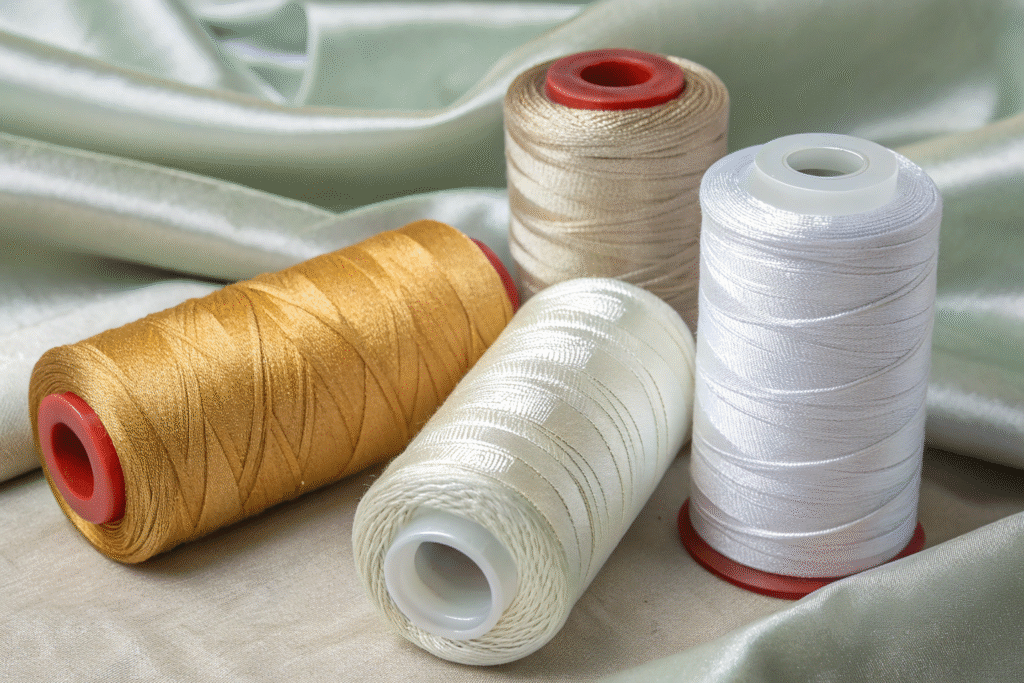
Thread composition and construction must complement satin characteristics. We prefer continuous filament polyester with minimal twist for most satin applications—the smooth surface reduces friction, while the consistent diameter prevents tension variations. Thread size is typically 40-60% finer than for comparable weight conventional fabrics. For premium silk satins, we often use silk thread, which has similar elasticity characteristics to the fabric, reducing stress concentrations at stitch lines. This thread matching approach has reduced seam failure by 60% while minimizing needle damage.
Stitch type and density require careful calculation. We prefer lockstitch (301) for most satin applications because it creates less fabric distortion than chainstitch. The stitch density is optimized at 12-16 stitches per inch—fewer stitches reduce perforation but increase stress per stitch, while more stitches create excessive needle penetration points. For stress areas, we use reinforced stitch patterns that distribute load across multiple yarns. This balanced approach has eliminated the "perforated tear" effect we previously experienced along seam lines.
Why does needle cooling reduce cutting on synthetic satins?
Synthetic fibers become more susceptible to cutting as temperature increases. We’ve installed needle cooling systems that direct precisely controlled air streams at the needle point, reducing operating temperature by 25-30°C. The systems include humidity control because dry air can generate static that attracts lint, creating additional friction. For particularly sensitive synthetics, we use miniature vortex cooling tubes that can reduce needle temperature to near-ambient levels. This thermal management has been particularly effective for sewing challenging polyester satins that previously showed unacceptable run rates.
How can seam design minimize run risk?
Seam engineering significantly impacts run propagation. We avoid straight seams parallel to warp or weft directions in high-stress areas, as runs naturally follow yarn directions. Instead, we use curved seams or place straight seams at 15-30 degree angles to yarn directions. Seam allowances are wider than conventional standards (1.5-2.0cm instead of 1.0-1.2cm) to distribute stress over more yarns. For particularly delicate satins, we use French seams that encase raw edges, eliminating run initiation points. These design modifications have reduced run incidents by 85% while maintaining aesthetic quality.
Conclusion
Preventing needle cutting and runs on delicate woven satins requires a systematic approach addressing needles, machine settings, handling techniques, and thread selection in concert. The most effective strategy combines specialized ballpoint needles, reduced sewing speeds, precise tension control, strategic stabilizer use, and operator training focused on delicate fabric handling. This comprehensive methodology has helped our clients reduce needle damage from industry-average 12-15% to below 2%, representing significant cost savings and quality improvements.
The investment in satin-specific sewing protocols delivers returns through higher first-quality rates, reduced rework, and strengthened reputation for handling delicate fabrics. The approach we’ve outlined works across various satin types, from lightweight silk charmeuse to heavier polyester satin face fabrics, with adjustments for specific fiber content and construction characteristics.
If you’re struggling with needle cutting or runs in your satin production, we can help implement these proven strategies in your manufacturing process. Our technical team has extensive experience optimizing sewing operations for delicate woven fabrics across different product categories. Contact our Business Director, Elaine, at elaine@fumaoclothing.com to discuss your specific challenges and receive our Satin Sewing Optimization Guide with detailed protocols and troubleshooting checklists.