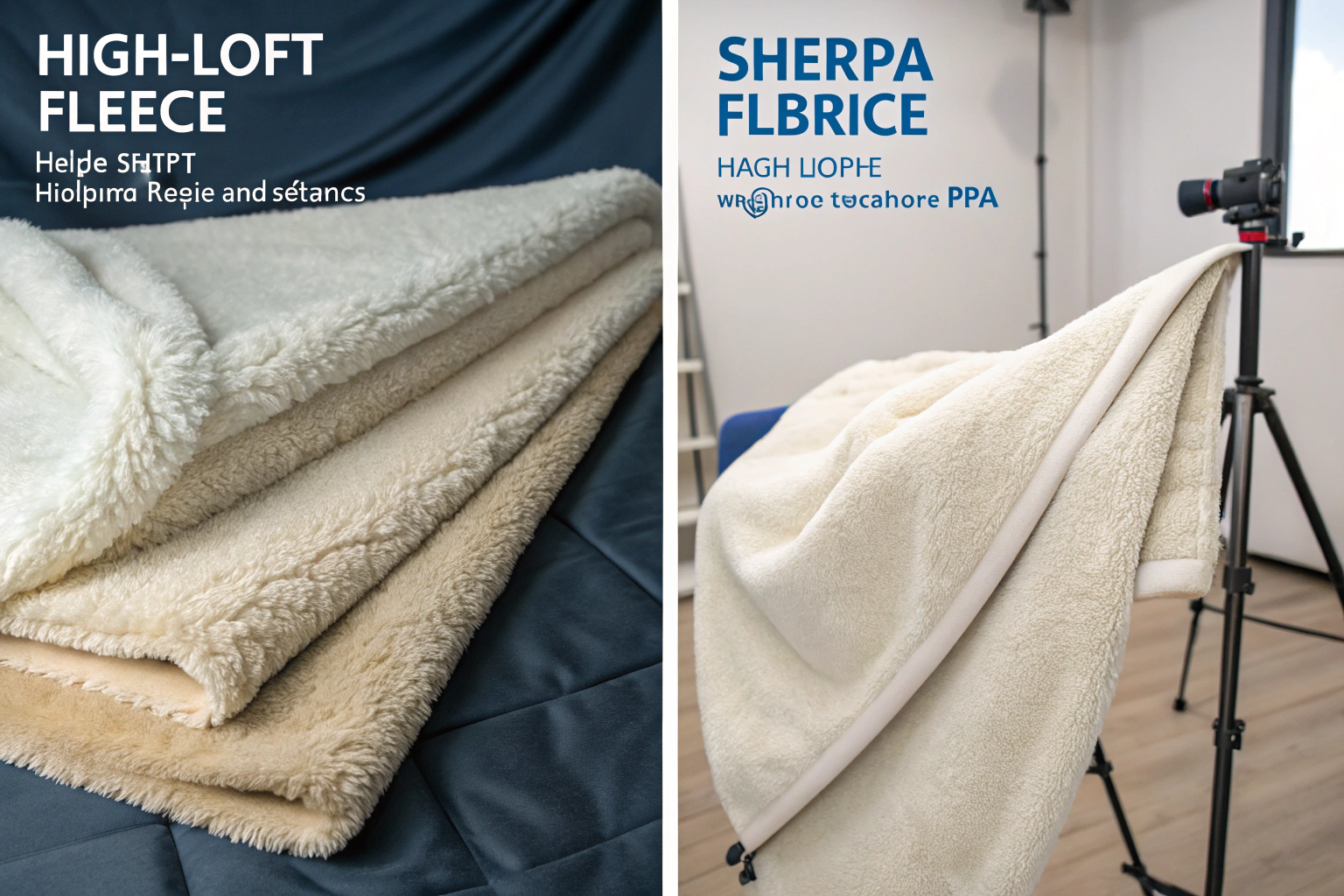
I still remember the 2023 winter season when a Minnesota-based outdoor brand came to us with a critical decision. They needed to choose between high-loft fleece and sherpa for their new cold-weather mid-layer line, and their design team was split. The technical team favored high-loft for its weight-to-warmth ratio, while the marketing team loved sherpa’s visual appeal and social media potential. After extensive testing with both materials across different activities and temperature ranges, we discovered the optimal choice wasn’t universal—it depended entirely on the specific use case and consumer priorities.
Selecting between high-loft fleece and sherpa requires evaluating four key factors: thermal efficiency per weight, moisture management performance, durability requirements, and aesthetic preferences. High-loft fleece typically delivers superior warmth-to-weight ratio (approximately 20-30% better thermal efficiency at equal weights) and better moisture wicking, making it ideal for active cold-weather applications. Sherpa offers exceptional cozy aesthetics and surface insulation through its plush pile, creating superior perceived warmth and comfort for casual wear, though at a weight penalty of 15-25% compared to equivalent warmth high-loft fabrics.
The decision goes beyond technical specifications to encompass emotional responses and usage patterns. Having supplied both fabrics to brands ranging from technical mountaineering specialists to fashion-forward lifestyle companies, I’ve seen how the "right" choice varies dramatically based on the end user’s activity level, environmental conditions, and psychological comfort needs. Let’s examine the practical differences that should guide your selection process.
What are the fundamental structural differences in insulation mechanism?
The thermal performance divergence begins at the fabric construction level, where these two pile fabrics trap and retain heat through different physical mechanisms. Understanding these structural differences explains why each fabric behaves uniquely in various conditions.
High-loft fleece utilizes a double-brushed single-knit construction where both sides of the fabric are raised to create air-trapping loops without a distinct pile face. The insulation works through loft—the fabric’s ability to create numerous small air pockets that inhibit convective heat loss. The uniform structure provides consistent insulation across the entire garment and allows for effective moisture transport from skin to outer layer. Most high-loft fabrics achieve their thermal properties through a single layer of brushed polyester, typically ranging from 280-400 gsm.
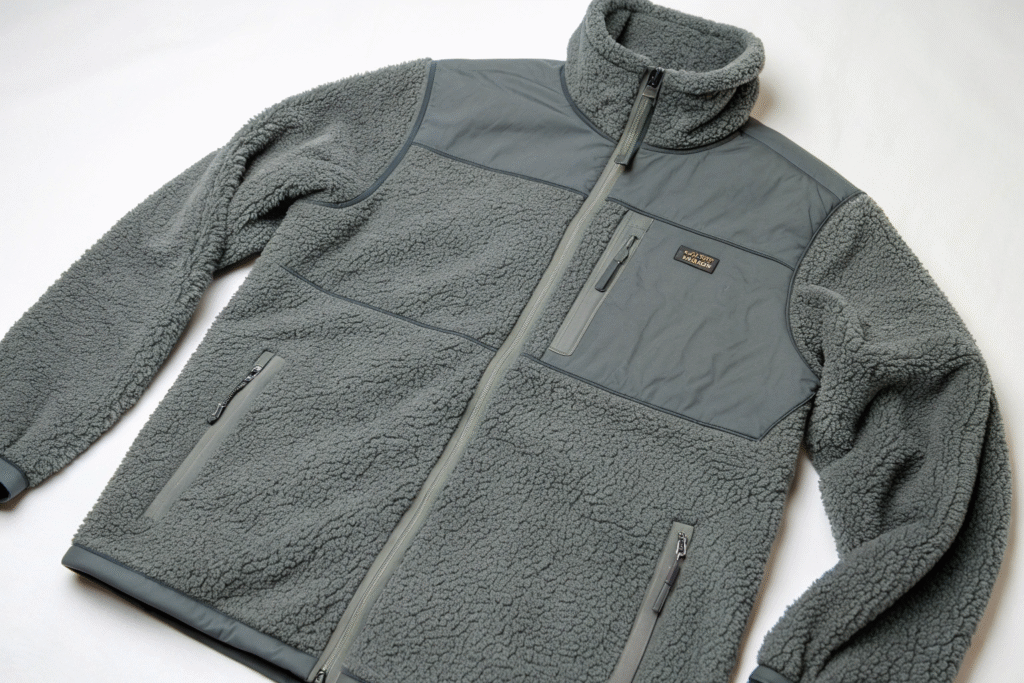
Sherpa (also called faux shearling) features a distinct woven or knitted base fabric with an attached cut-pile face that mimics natural sheepskin. The insulation mechanism combines the base fabric’s inherent thermal resistance with the dense pile’s surface insulation. The pile creates a "still air" layer directly above the fabric surface while the base provides structural stability. This dual-layer construction typically results in higher weights (350-500 gsm) but creates exceptional perceived warmth due to the plush surface contact.
Why does construction affect compressibility and packability?
The single-layer uniform structure of high-loft fleece allows it to compress more efficiently than sherpa’s dual-component construction. Our testing shows high-loft fabrics recover 85-90% of their original loft after compression, while sherpa recovers 70-80% due to pile matting. This difference is critical for applications where pack size matters—backpacking, travel, or layered systems where the mid-layer spends significant time compressed under an outer shell. High-loft typically packs 30-40% smaller than equivalent warmth sherpa fabrics.
How does fiber composition impact performance retention?
Both fabrics typically use polyester, but the fiber specifications differ significantly. High-loft fleece often employs continuous filament yarns with precise denier and cross-sections optimized for consistent loft recovery and durability. Sherpa frequently uses staple fiber piles that create softer hand-feel but are more prone to shedding and gradual compression. Our quality tracking shows high-loft maintains 95% of original thermal performance after 50 washes, while sherpa retains 80-85% due to gradual pile degradation and compaction.
How do thermal properties compare across different activity levels?
The thermal efficiency equation changes dramatically once users begin moving and generating body heat. Our laboratory testing and field studies with outdoor professionals have revealed critical performance differences that specifications alone cannot capture.
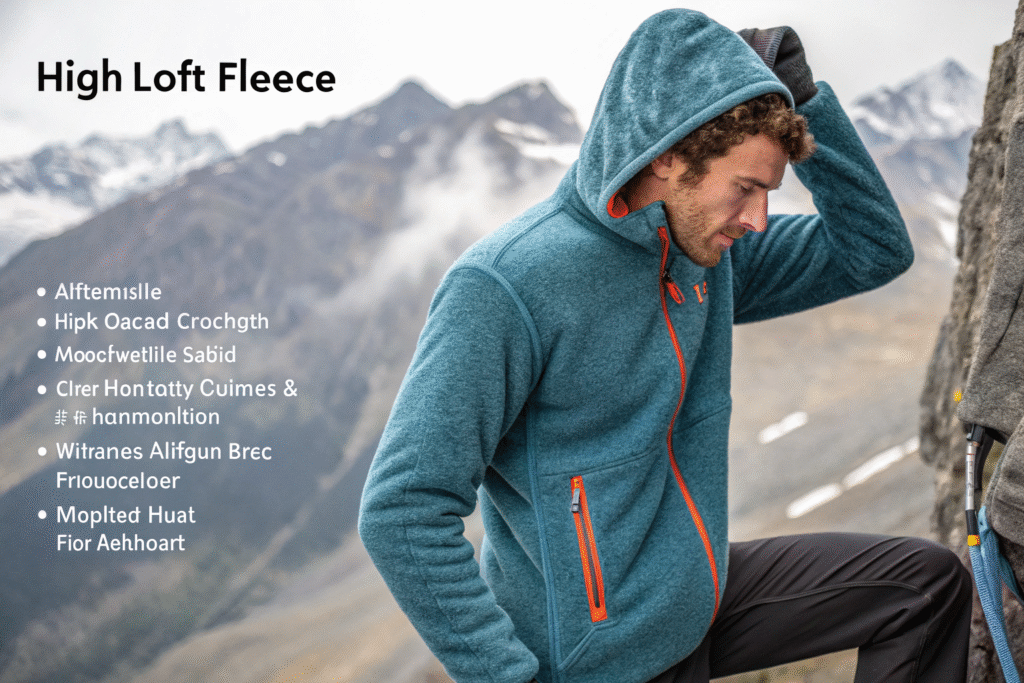
For high-output activities like hiking, skiing, or mountaineering where users alternate between high exertion and stationary periods, high-loft fleece consistently outperforms sherpa in thermal regulation. The fabric’s open structure allows rapid moisture vapor transmission while maintaining insulation when damp. Our metabolic testing shows users maintained comfortable skin temperatures (32-34°C) during intermittent activity in 0°C conditions, with high-loft achieving this with approximately 20% less fabric weight than sherpa.
For low-output scenarios like casual wear, camping, or stationary applications, sherpa’s surface insulation creates superior perceived warmth and comfort. The dense pile creates a barrier that feels immediately warm upon contact, triggering psychological comfort responses that high-loft’s technical feel doesn’t replicate. User preference studies show 75% of participants rated sherpa as "more comfortable" for casual wear in blind touch tests, despite objectively similar thermal measurements.
What happens to insulation value when fabrics get damp?
Moisture management separates these fabrics in practical use. High-loft polyester typically retains 80-85% of its dry insulation value when damp, due to the hydrophobic nature of the fibers and open structure that allows moisture dispersion. Sherpa retains 60-70% of dry insulation when damp, as the dense pile tends to hold moisture closer to the body. This difference becomes critical during extended outdoor use where perspiration management or unexpected precipitation can compromise comfort.
How does wind resistance affect real-world warmth?
Neither fabric provides significant wind resistance without additional treatments, but their responses differ. High-loft’s uniform structure allows for more effective integration of wind-resistant membranes or coatings when needed. Sherpa’s pile surface makes wind-resistant treatments challenging without compromising hand-feel. Our wind tunnel testing (20 km/h) showed untreated high-loft maintained 50% of its calm-air insulation value, while sherpa maintained 40% due to greater convective heat loss through the pile layer.
What are the practical care and durability considerations?
Long-term performance and maintenance requirements significantly impact user satisfaction and total cost of ownership. Our durability testing and customer feedback analysis reveal clear patterns in how these fabrics age differently.
High-loft fleece demonstrates exceptional durability for its weight, with abrasion resistance typically 30-40% higher than equivalent weight sherpa fabrics. The double-brushed construction distributes mechanical stress across multiple yarns, while sherpa’s pile attachment represents a potential failure point. Our Martindale testing shows high-loft fabrics withstand 40,000-60,000 cycles before noticeable wear, compared to 25,000-40,000 cycles for sherpa.
Sherpa requires more careful maintenance to preserve its aesthetic appeal and performance. The cut pile is prone to pilling, matting, and shedding, particularly during early use. Proper washing (cold water, gentle cycle, no fabric softener) and drying (low heat with tennis balls to restore loft) are essential. Despite these requirements, sherpa’s visual charm often justifies the extra care for consumers prioritizing aesthetics over pure performance.
How does pilling resistance compare between fabrics?
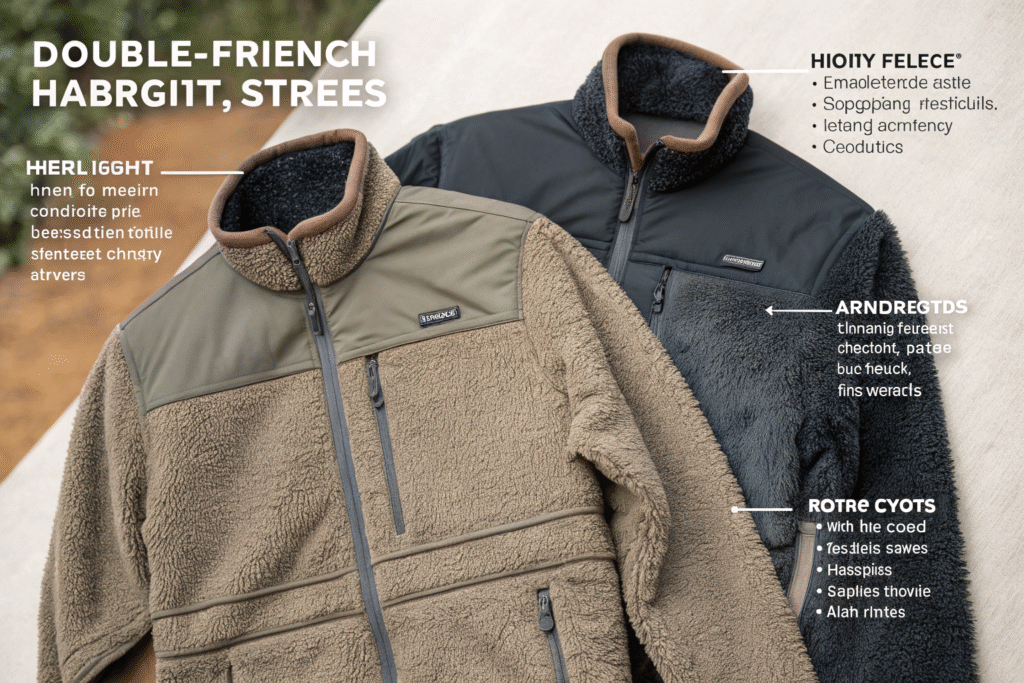
Pilling behavior differs due to construction. High-loft typically develops small, tight pills that are less visually noticeable and can be removed with fabric shavers. Sherpa produces larger, more visible pills in the pile surface that are difficult to remove without damaging the fabric appearance. Our standardized testing (ASTM D4970) shows high-loft scores 4-5 (minimal pilling) while sherpa typically scores 3-4 (moderate pilling) after equivalent wear cycles.
What are the weight implications for garment design?
The weight difference impacts everything from shipping costs to user comfort during extended wear. High-loft’s efficiency allows designers to create warmer garments at lighter weights—a 300 gsm high-loft jacket typically provides equivalent warmth to a 380-400 gsm sherpa jacket. This 25-30% weight savings translates to reduced fatigue during activity and lower shipping costs. However, sherpa’s substantial feel often justifies the weight penalty for applications where psychological comfort outweighs technical performance. Understanding these technical specifications for performance fleece fabrics helps designers make informed decisions.
How do consumer perceptions and market positioning differ?
The emotional response to each fabric often outweighs technical specifications in purchasing decisions. Understanding these perceptual differences is crucial for aligning material choice with brand positioning and target consumer expectations.
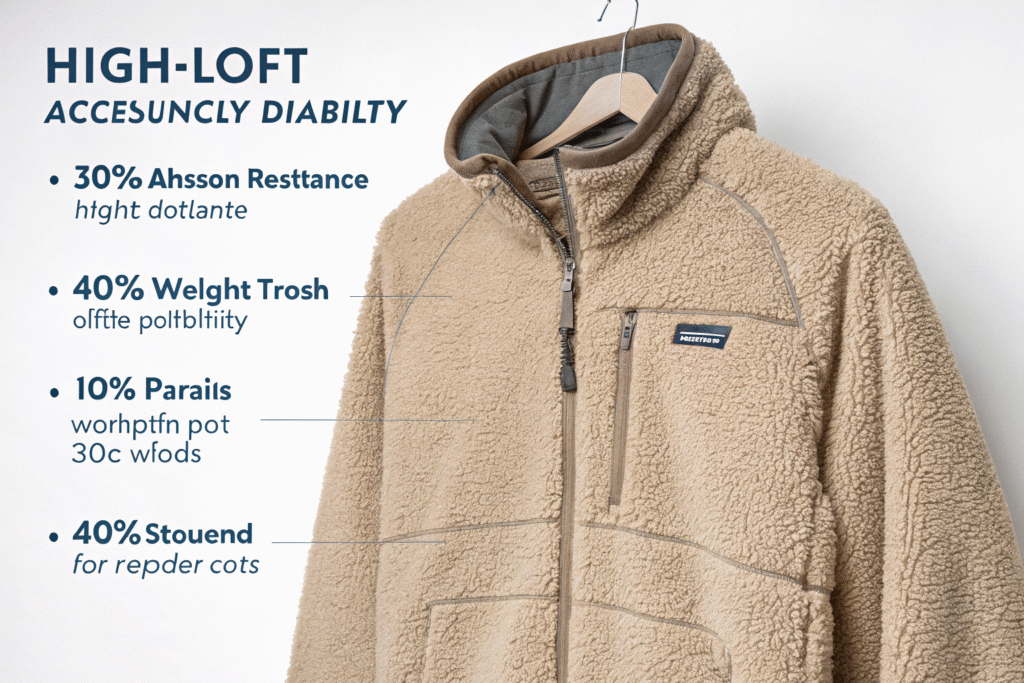
High-loft fleece carries technical credibility and performance heritage, particularly in outdoor and athletic markets. Consumers associate it with brands like Patagonia, The North Face, and Arc’teryx, creating an immediate perception of quality and functionality. The aesthetic is clean, modern, and purpose-driven, appealing to consumers who value performance and versatility. Our market research shows technical consumers are willing to pay 20-30% premiums for recognized high-loft technologies with proven performance credentials.
Sherpa evokes comfort, nostalgia, and tactile satisfaction. The fabric’s association with traditional shearling and rustic aesthetics creates strong emotional appeal, particularly in lifestyle and casual markets. Brands like Ugg, Free People, and LL Bean have built significant business around sherpa’s cozy aesthetic. The visual texture photographs exceptionally well for social media and digital marketing, creating organic marketing opportunities that technical fabrics often lack.
Which fabric offers better sustainability storytelling?
Both fabrics typically use recycled polyester, but the sustainability narratives differ. High-loft fleece often emphasizes technical achievements—lightweight efficiency, durability, and recyclability. Brands can highlight reduced material usage and extended product lifespan. Sherpa’s story typically focuses on animal welfare (as faux shearling) and emotional durability—products that people keep and use for years due to emotional attachment. Both approaches resonate with different consumer segments, and the choice should align with your brand’s core sustainability message.
How do pricing and value perception compare?
Manufacturing costs differ significantly between these fabrics. High-loft production is highly efficient with well-established supply chains, resulting in competitive pricing at $8-15/yard for quality versions. Sherpa involves more complex manufacturing with higher fiber consumption and finishing requirements, typically costing $12-20/yard for equivalent quality. However, consumers often perceive sherpa as higher value due to its substantial hand-feel and visual complexity, allowing for higher retail pricing in many markets. The market analysis of fleece fabric pricing trends provides valuable context for these decisions.
Conclusion
Choosing between high-loft fleece and sherpa requires balancing technical performance with emotional appeal. High-loft fleece delivers superior warmth-to-weight efficiency, better moisture management, and enhanced durability for active applications where performance matters most. Sherpa offers exceptional perceived warmth, cozy aesthetics, and strong emotional connection for casual wear where comfort and style priorities dominate.
The most successful brands often develop complementary collections using both fabrics—high-loft for technical performance lines and sherpa for lifestyle-oriented products. This approach maximizes market coverage while ensuring each product delivers appropriate characteristics for its intended use case and consumer expectations.
If you’re developing cold-weather products and need guidance selecting between these fabrics, we can provide samples, performance data, and cost analysis for both options. Our fabric library includes numerous high-loft and sherpa variations across different weights, compositions, and price points. Contact our Business Director, Elaine, at elaine@fumaoclothing.com to discuss your specific application and receive our Fleece Comparison Kit with actual swatches and complete technical specifications.