I feel your frustration. You’ve probably had this happen: you receive a shipment of t-shirts, and the neckbands are already warped or loose. Or maybe the cuffs on your premium hoodies lost their shape after just a few washes. Your customers notice this stuff. It screams "low quality." I’ve been in the fabric business for over two decades, and I can tell you that the choice between rib and interlock knit for trims like neckbands and cuffs is one of the most common, yet critical, decisions that directly impacts your product’s perceived quality and longevity. Getting it wrong costs you money and reputation.
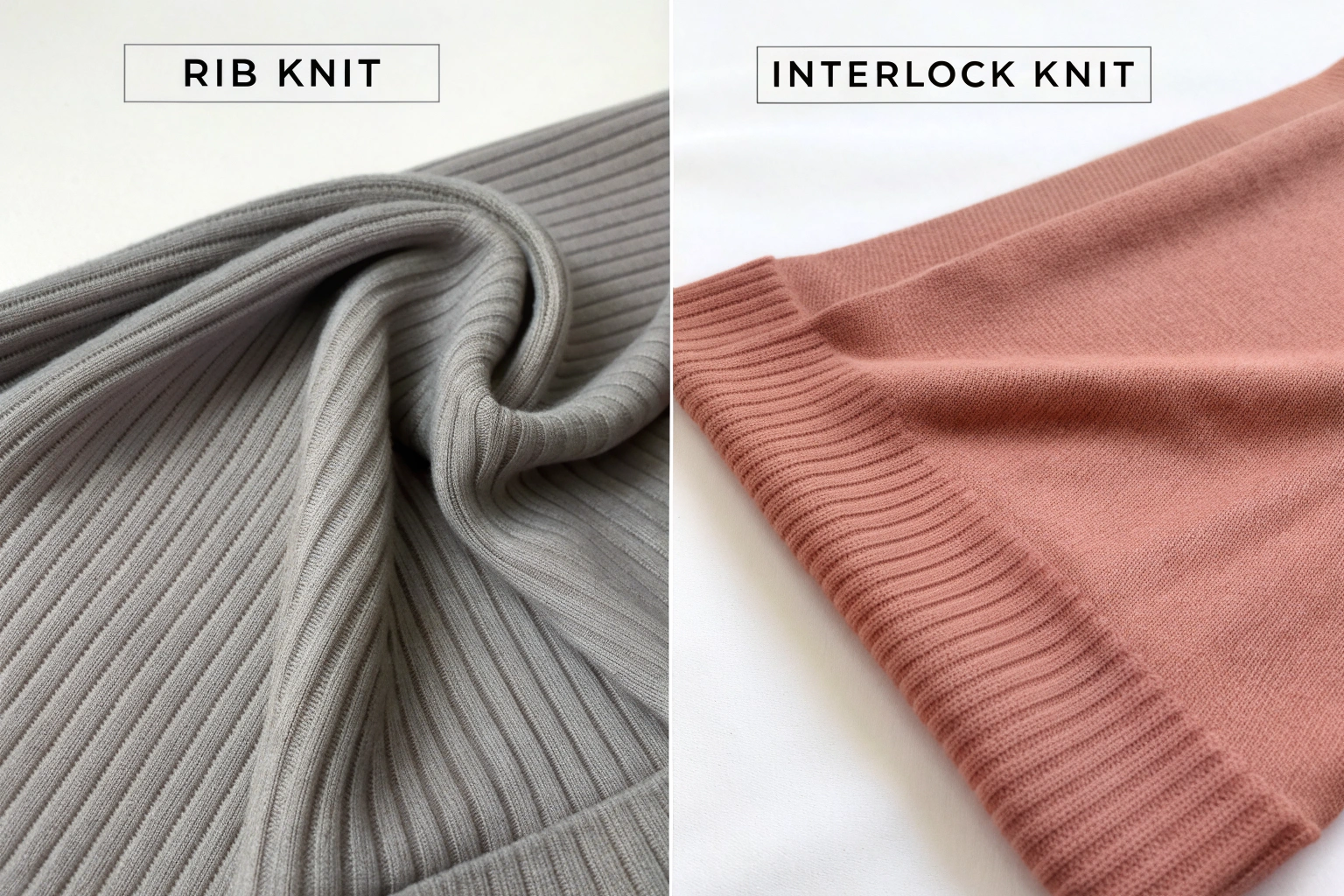
So, how do you choose? The core decision boils down to your priority: maximum recovery and a snug fit (choose rib) versus a smoother, softer, and more stable surface (choose interlock). Rib knit, with its distinctive vertical ridges, is highly elastic crosswise and offers excellent recovery, making it ideal for form-fitting neckbands and cuffs that need to bounce back. Interlock knit, a double-knit fabric, is thicker, smoother on both sides, and more dimensionally stable, making it better for a premium, heavyweight feel where extreme stretch is not the primary goal. It’s like choosing between a bungee cord (rib) and a sturdy, flexible rope (interlock).
But that’s just the 30,000-foot view. To truly master this selection and avoid costly production mistakes, we need to dive into the specific properties, production nuances, and real-world applications of each knit. Let’s break down the science behind the stretch so you can specify your trims with confidence.
What is the fundamental structural difference between rib and interlock knit?
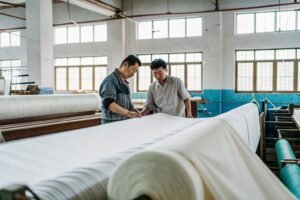
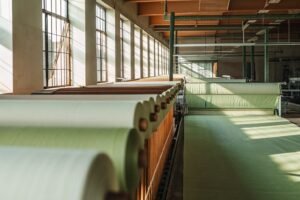
The biggest confusion starts right at the knitting machine. I’ve walked countless clients through our factory, and the "aha!" moment always comes when they see how these fabrics are born. Rib knit is made on a circular knitting machine with alternating sets of needles. It creates a fabric where wales (the vertical lines of loops) alternate between the technical face and the technical back on the same side of the fabric. This is what gives rib its classic ridged appearance and its signature crosswise stretch. A 1×1 rib has one wale of knit stitch followed by one wale of purl stitch. A 2×2 rib has two of each, and so on.
Interlock, however, is a different beast. It’s essentially two 1×1 rib fabrics knitted together, back-to-back. Think of it as a Siamese twin of rib knits. This structure is produced on a special circular machine with two sets of needles, arranged in a dial and cylinder, which create two layers of fabric that are interlocked. The result? The familiar ridges of the rib are hidden inside the fabric, leaving both outer surfaces smooth, resembling the face of a single jersey but much more stable. This is why interlock doesn’t curl at the edges like single jersey and is inherently thicker and heavier. For a deeper dive into these knitting mechanisms, I recommend reading this guide on how circular knitting machines create different fabric structures. Understanding this is key to mastering the basics of weft knitting for apparel manufacturing.

Why does rib knit offer superior stretch and recovery?
The magic of rib’s stretch lies in its structure. Those alternating knit and purl wales act like columns of coiled springs. When you stretch the fabric, these "springs" extend, and when you let go, the inherent memory of the yarn and the loop structure pulls them back into place. This recovery is phenomenal. We measure recovery rates in our lab, and a good quality cotton rib can have a crosswise stretch of over 150% with a recovery rate of 95% or better after multiple washes. This is non-negotiable for a neckband on a fitted t-shirt. The neckband must stretch to let the head through and then immediately snap back to hug the neckline snugly. If it doesn’t, the garment looks sloppy. (Here I have to add, our rib fabric’s recovery is something we’re really proud of – we achieve this through precise control of yarn twist and knit density.)
How does interlock’s double-layer construction enhance stability?
Interlock’s stability is a direct result of its double-thick, intermeshed structure. Because the two layers are locked together, they resist the forces that would cause a single-layer knit to distort. Imagine a bridge built with a double-layered arch versus a single layer—the double layer is inherently more robust. This makes interlock far less prone to the "rolling" or "curling" that plagues single jersey fabrics. It also has less crosswise stretch than rib. While a 1×1 rib might stretch 150-200%, a standard interlock might only stretch 40-60%. This limited, but stable, stretch is perfect for applications where you want a clean, heavyweight finish without a tight, constricting feel. It’s the reason why high-end polo shirt plackets or the cuffs on a luxury sweater often use interlock.
How do weight, composition, and finish impact performance for necklines and cuffs?
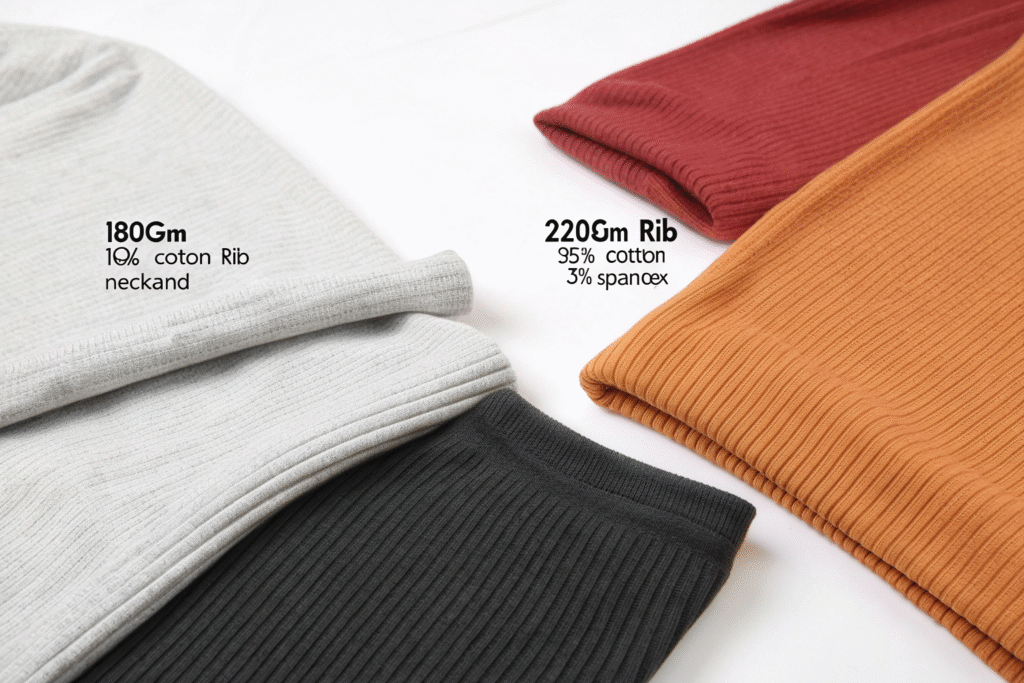
You can’t just say "I want rib" and be done with it. The raw knit is just the canvas. The real art is in specifying the weight, the fiber blend, and the finishing treatment. I had a client from Germany in early 2023 who ordered a batch of rib neckbands for their organic cotton t-shirts. They specified a standard 180gsm 100% cotton rib. The result? The neckbands stretched out after a few wears. The problem wasn’t the rib structure, but the weight and the lack of synthetic fiber for recovery. We switched them to a 220gsm rib with 95% cotton and 5% spandex, and the problem was solved completely. The weight and the spandex gave the structure the necessary "muscle" and "memory" to hold its shape.
Let’s break down the key specifications:
| Specification | Rib Knit (for trims) | Interlock Knit (for trims) |
|---|---|---|
| Typical Weight | Lighter to Medium (160-220 gsm) | Medium to Heavy (200-300 gsm) |
| Common Composition | Cotton/Spandex (e.g., 95/5, 98/2) | Cotton, Cotton/Polyester, Cotton/Modal |
| Key Finishing | Relaxation, Compaction | Brushing, Softening |
| Primary Feel | Elastic, Snug, Textured | Soft, Smooth, Substantial |
What is the role of spandex in achieving optimal recovery?
Spandex (or elastane) is the secret weapon for recovery. Even a small percentage, like 3-5%, makes a monumental difference. The spandex filaments are plated during the knitting process, meaning they are incorporated into the structure as a core, often covered by cotton or other fibers. This provides the chemical-based, powerful recovery that complements the mechanical recovery of the rib structure. For any neckband or cuff that needs to maintain its shape over the long haul, a cotton-spandex blend rib is the industry standard for a reason. It’s the difference between a neckband that lasts 20 washes and one that lasts 50+. For brands focused on sourcing high-quality cotton spandex blend fabrics for activewear, this is a critical consideration.
How does fabric weight (GSM) dictate durability and hand-feel?
GSM (Grams per Square Meter) is your best friend when specifying trim fabrics. A heavier GSM means more yarn per square meter, resulting in a denser, more durable, and more opaque fabric. For a rib neckband on a standard t-shirt, you might use a 180-200gsm. For a heavyweight sweatshirt cuff, you might go up to 220-240gsm to match the bulk of the body fabric. For interlock, which is naturally heavier, using a 240gsm interlock for a polo shirt collar gives it that premium, substantial feel that doesn’t flop over. Choosing a weight that is too light is one of the most common mistakes we see; it saves a few cents per garment but sacrifices the entire product’s integrity. It’s crucial to understand the relationship between fabric GSM and garment durability in knitwear to avoid this pitfall.
What are the common pitfalls in production and quality control?
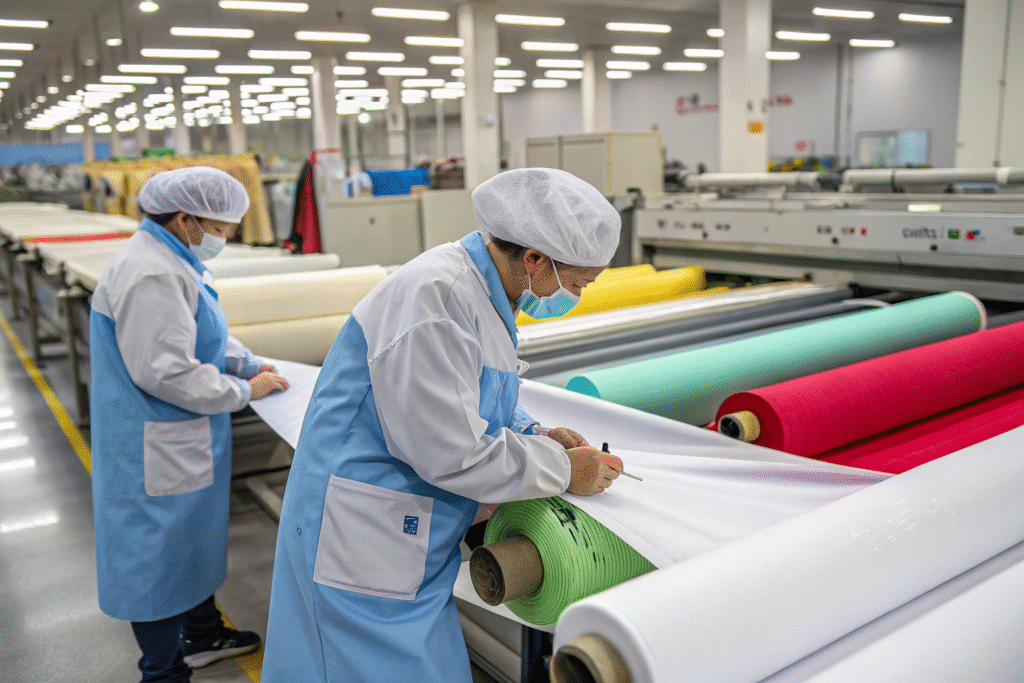
Production isn’t just about making fabric; it’s about making it right, consistently. One of the most vivid examples I have is from a large US-based brand we worked with in late 2022. They sourced interlock cuffs from another supplier for their fleece collection, and the entire batch had inconsistent shrinkage. The cuffs became too tight after the first wash, rendering thousands of units unsellable. The root cause? The dyeing and finishing process wasn’t controlled properly. The fabric wasn’t relaxed and compacted to pre-shrink it. At Fumao, our CNAS-accredited lab tests for shrinkage, skew, and colorfastness on every batch before shipment. We’ve gotten our pass rate for clients up to 98% by being obsessive about this.
Another frequent issue is "needle line" or "barre" in rib fabrics – visible horizontal lines that are a dyeing defect. This often stems from using yarn from different lots or improper tension settings on the knitting machine. Our QC team is trained to spot these under specific lighting conditions before the fabric even goes to dyeing.
How can improper finishing lead to shrinkage and distortion?
The journey from a greige (undyed) knit to a finished fabric is where the magic—or the disaster—happens. If the fabric isn’t properly relaxed, heat-set, and compacted during finishing, latent stresses from the knitting process will release later, during your customer’s first wash. This causes shrinkage and distortion. For rib knits, we use a process called compaction, where the fabric is overfed through a calendar and steamed, which helps pre-shrink it and set the loops in a relaxed state. For interlock, a controlled stentering process ensures dimensional stability. Skipping or rushing these steps is a false economy.
Why is consistent color matching critical for trim applications?
This might seem obvious, but it’s a huge pain point. The neckband or cuff is often cut from a different piece of fabric than the body, and sometimes even from a different production batch. If the color isn’t matched perfectly, you get a mismatched trim that looks like a flaw. We had a client from the UK who struggled with this for years. We solved it for them by implementing a digital color management system and storing standard lab dips for every order. Every subsequent batch is matched against the original standard under controlled lighting (D65). This ensures that the deep navy of your cuff is exactly the same deep navy as your body fabric, order after order.
Rib vs Interlock: When should you use which for specific garments?
So, let’s get practical. After all the theory and quality talk, here’s my simple rule of thumb, forged from 20 years of supplying brands worldwide. Use Rib when the primary requirement is functional stretch and recovery. Use Interlock when the primary requirement is aesthetic stability, a smooth surface, and a premium hand-feel.
Choose Rib Knit For:
- Fitted T-Shirt Neckbands: This is the classic application. The rib must stretch for the head and recover to hug the neck.
- Sweatshirt Cuffs and Waistbands: They need to hold their shape against the heavier fleece body and provide a snug fit.
- Sportswear Trims: For sleeves and leggings where compression and fit are key.
- Henley Plackets: The buttons need a stable, yet stretchy, base fabric.
Choose Interlock Knit For:
- Polo Shirt Collars and Plackets: Interlock provides the structure and smoothness needed for a collar that stands up neatly and lies flat.
- Baby and Children’s Wear: Its non-curling, soft-on-both-sides nature is ideal for sensitive skin and frequent washing.
- Premium Loungewear Cuffs: When you want a soft, bulky feel without the high tension of a rib.
- T-Shirt Neckbands (for a relaxed fit): Some brands aiming for a looser, more casual neckline use interlock for a sturdier, roll-free finish.

What are the best practices for combining rib and interlock in one garment?
Don’t be afraid to mix and match! The most sophisticated garments often do. A common and highly effective combination is using a sturdy interlock for a polo shirt’s collar and placket, while using a robust rib for the cuffs. This gives structure where you need it (collar) and recovery where you need it (cuffs). The key is to ensure the weights and colors are perfectly harmonized so the garment looks and feels cohesive. It’s like building a sports car with a carbon fiber body (interlock collar) and high-performance rubber tires (rib cuffs) – each material is chosen for its specific superior property.
How does fabric choice impact cost and lead time?
Generally, interlock is more expensive than rib on a per-kilogram basis because its double-knit structure requires more yarn and runs slower on the knitting machines. However, this is a simplified view. The final cost is driven by composition (spandex adds cost), weight (higher GSM = higher cost), and finish. A 220gsm cotton-spandex rib might cost more than a 200gsm 100% cotton interlock. In terms of lead time, both are standard knits with similar production timelines in our system. Our advantage in Keqiao is the local dyeing and finishing partnerships, which allow us to turn around sampled and bulk orders quickly, often mitigating any minor differences in knitting speed.
Conclusion
Selecting between rib and interlock isn’t about finding a universal "best" fabric; it’s about matching the right tool to the job. Rib is your champion for elasticity and recovery, essential for snug neckbands and cuffs that need to bounce back relentlessly. Interlock is your go-to for stability and a premium, smooth hand-feel, perfect for structured collars and soft, durable trims. The decision hinges on your garment’s design, target market, and quality expectations. Remember to specify beyond just the knit type—pay close attention to weight, composition (never underestimate the power of a little spandex), and ensure your supplier has rigorous quality controls for shrinkage and color consistency.
If you’re tired of dealing with wavy necklines or distorted cuffs, and you want to work with a partner who understands these critical details from the ground up, let’s talk. We at Fumao don’t just sell fabric; we provide solutions. We can guide you through these material selections to ensure your next production run is your best one yet. For a direct conversation about how we can support your specific garment needs, from fabric development to final inspection, please reach out to our Business Director, Elaine. She and her team are ready to help you co-create value. Contact Elaine at elaine@fumaoclothing.com to start the conversation.