As someone who’s run a fabric business for over twenty years, I can tell you nothing hurts more than getting a complaint about quality issues that could have been caught early. You’re managing tight production schedules, and the last thing you need is a shipment rejection because of defects that slipped through. I’ve been there, and that’s exactly why we’ve built a multi-stage inspection system that acts as a safety net from the very first stage of raw fabric to the moment it’s sealed for shipping.
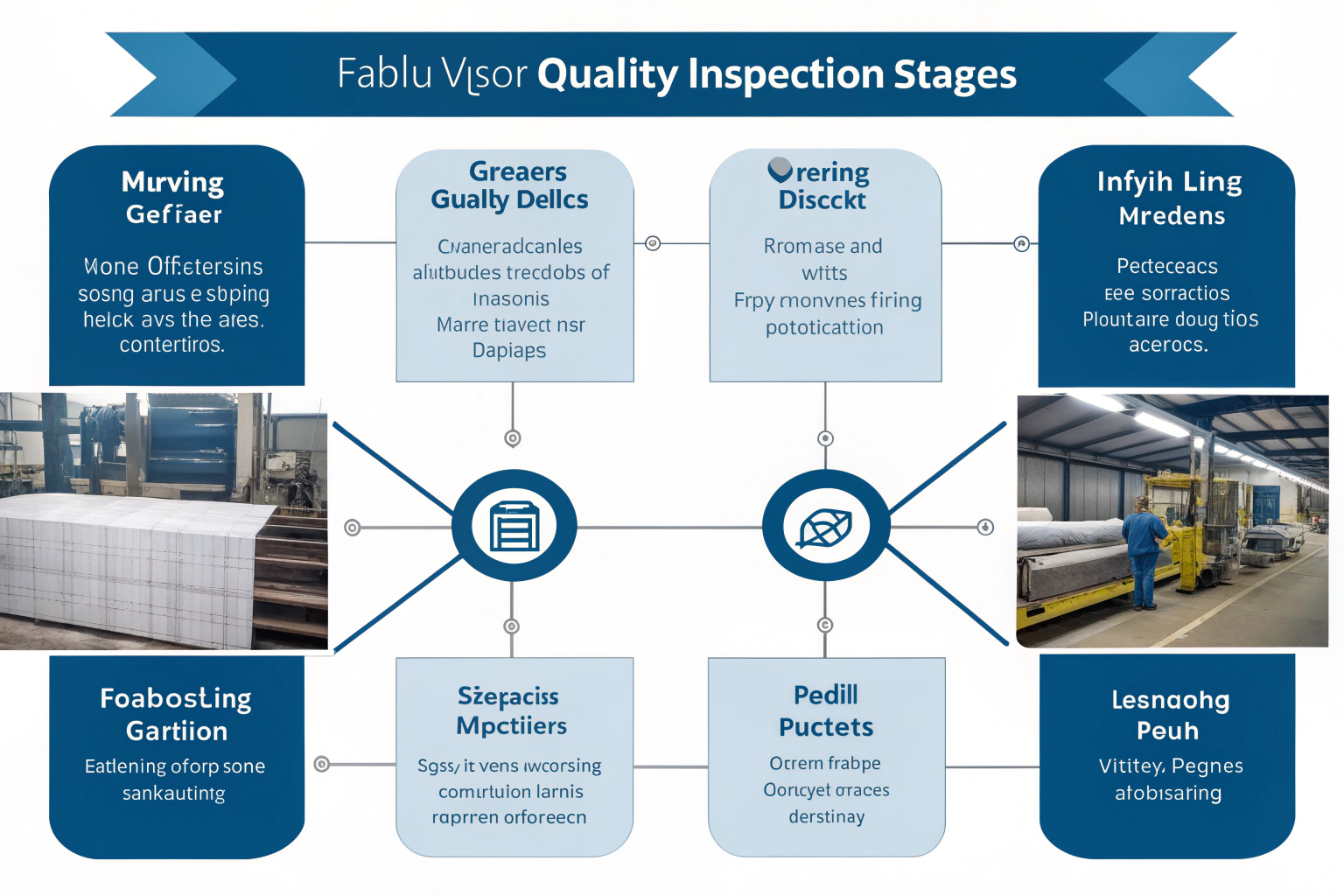
The most effective approach involves establishing four critical inspection checkpoints: greige goods inspection after weaving, post-dyeing/finishing quality control, pre-shipment fabric auditing, and final packing verification. Each checkpoint serves a distinct purpose and catches specific types of defects. You don’t just look for flaws at the end; you build quality layer by layer, verifying at each major process transformation. This systematic method prevents major losses by catching issues early, when they are cheapest and easiest to correct.
Selecting the right checkpoints isn’t just about having a QC team; it’s about placing them at the precise stages where the fabric’s fundamental characteristics are defined and can be compromised. It’s the difference between spotting a weaving defect on a loom and discovering it only after the fabric has been dyed, finished, and packed—saving up to 90% of the potential rework cost. Let me walk you through the specific gates we use to ensure nothing goes wrong.
Why is greige goods inspection the most critical checkpoint?
If you miss defects at the greige stage, you’re essentially building your entire production on a flawed foundation. Greige goods inspection is your first and best opportunity to catch weaving and yarn-level issues before you add the considerable costs of dyeing and finishing. I consider this the most cost-effective quality investment you can make.
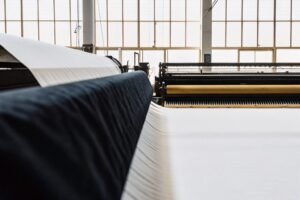
The greige goods inspection must check for weaving defects, yarn inconsistencies, and dimensional stability. This happens right after the fabric comes off the loom, before it goes to the dyeing or finishing department. We run the fabric over an illuminated inspection frame to backlight every centimeter. Our inspectors, who are trained with our internal defect catalog, look for critical flaws like broken warp ends, weft bars, slubs, holes, and oil stains. They also verify the basic construction—ends per inch (EPI) and picks per inch (PPI)—against the tech pack specifications. Catching a recurring weaving fault here allows us to immediately alert the weaving factory and correct the loom setting, preventing thousands of meters of defective material from being produced.

What specific defects can only be caught at the greige stage?
Many defects become masked or permanently set after dyeing and finishing. The raw, untreated state of greige fabric reveals problems that are impossible to see later. The most critical ones are:
- Weaving Omissions: A missing warp thread is glaringly obvious on a grey loom state. Once the fabric is dyed a dark color like black or navy, that same missing thread becomes virtually invisible to the naked eye until the fabric is put under tension in cutting, where it then leads to a tear.
- Yarn Quality Issues: Thin or thick places in the yarn, called slubs, are clear to see in greige goods. In a finished fabric, especially a textured one, these can be mistaken for a style feature rather than a defect. We once had a client who wanted a uniform poplin; our greige inspection caught a recurring thick slub every five meters, which traced back to a faulty spinning ring. We sorted it before dyeing.
- Loom-Related Defects: Issues like starting marks, shuttle flies, and reed marks are most visible at this stage. For instance, a starting mark from a loom stop would create a dense band that dyes darker. By flagging it early, we can often assign that portion of the fabric for a lower-grade order or rework it, saving the majority of the piece. Understanding these requires knowledge of common weaving defects and their root causes in textile production.
How do you establish acceptance criteria for raw fabric?
You cannot inspect effectively without a clear, quantified standard. We don’t use vague terms like "good quality." We use a customized 4-Point System for greige goods, which is the global standard for assigning penalty points to defects. Here’s a simplified breakdown:
| Defect Length (in inches) | Penalty Points |
|---|---|
| 3 inches or less | 1 Point |
| Over 3 inches, up to 6 | 2 Points |
| Over 6 inches, up to 9 | 3 Points |
| Over 9 inches | 4 Points |
The total penalty points per 100 square yards are calculated. For most of our clients, the acceptance limit is ≤ 40 points per 100 square yards. However, we make it even stricter: any single defect that is 4 points (e.g., a large hole or stain) is automatically a major defect, and we flag the entire piece for immediate review. This objective system eliminates arguments with our weaving partners and gives our team a clear pass/fail criterion. The application of this system is detailed in resources like ASTM D5430 standard for fabric inspection, which we use as a baseline.
What must you verify after dyeing and finishing?
Dyeing and finishing are where the fabric gets its color, hand-feel, and functional properties. This is also where new and costly defects can be introduced. Your inspection here shifts from structural flaws to surface and performance issues.
Post-dyeing and finishing inspection must verify color accuracy, shading, surface flaws from processing, and key performance properties. This checkpoint happens after the fabric has been through the jet/dyeing machine and any finishing processes like brushing, coating, or calendering. We check for color matching against the approved lab dip under standard D65 lighting. We look for dyeing defects like side-to-side shading (listing), end-to-end shading, streaks, and spots. We also test for key performance metrics like colorfastness to rubbing and washing, and for functional finishes, we verify water repellency or UV resistance in our lab.

How can you prevent color-related rejections?
Color issues are the number one cause of rejection in the garment industry. To prevent this, we’ve integrated a three-step verification process that goes beyond a simple visual check.
First, we use a spectrophotometer to get numerical LAB values for the bulk fabric and compare them to the approved lab dip. We have a strict tolerance of ΔE ≤ 1.0 for solid shades, which is nearly imperceptible to the human eye. Second, we conduct a visual inspection under a light box to check for metamerism—where the color looks different under another light source, like store lighting versus daylight. Third, we run colorfastness tests immediately. I remember a case in 2023 with a German activewear brand: our post-dyeing inspection caught a poor wet rub fastness on a black polyester fabric. We identified the issue as insufficient fixation and were able to re-process the entire batch before it was cut, saving a claim that would have exceeded $50,000. Learning about managing color consistency in global textile supply chains is essential for any serious supplier.
Which performance tests are non-negotiable before shipping?
Relying on a hand-feel or a visual check for performance is a recipe for disaster. We mandate a set of core lab tests based on the fabric’s end-use, and the results are attached to the final inspection report.
For all fabrics, we test:
- Colorfastness to Crocking (Rubbing): Both dry and wet.
- Colorfastness to Washing: Using the test method specified by the client.
- Dimensional Stability: After one wash, we measure shrinkage.
For specific categories, we add:
- Functional Fabrics: Water resistance, moisture-wicking rate, UV protection factor (UPF).
- Knits: Spirality (twisting after wash).
- Children’s Wear: Flame retardancy (if required).
These tests are done in our CNAS-certified lab, and the data is shared with the client. This isn’t just for them; it’s our proof that the fabric performs as promised. The standards for these tests, such as AATCC test methods for colorfastness, form the backbone of our lab’s protocols.
How do you design an effective pre-shipment audit?
The pre-shipment audit is your final chance to catch any issues before the fabric leaves your control. It’s a comprehensive review that simulates what the client will see when they open the first carton.
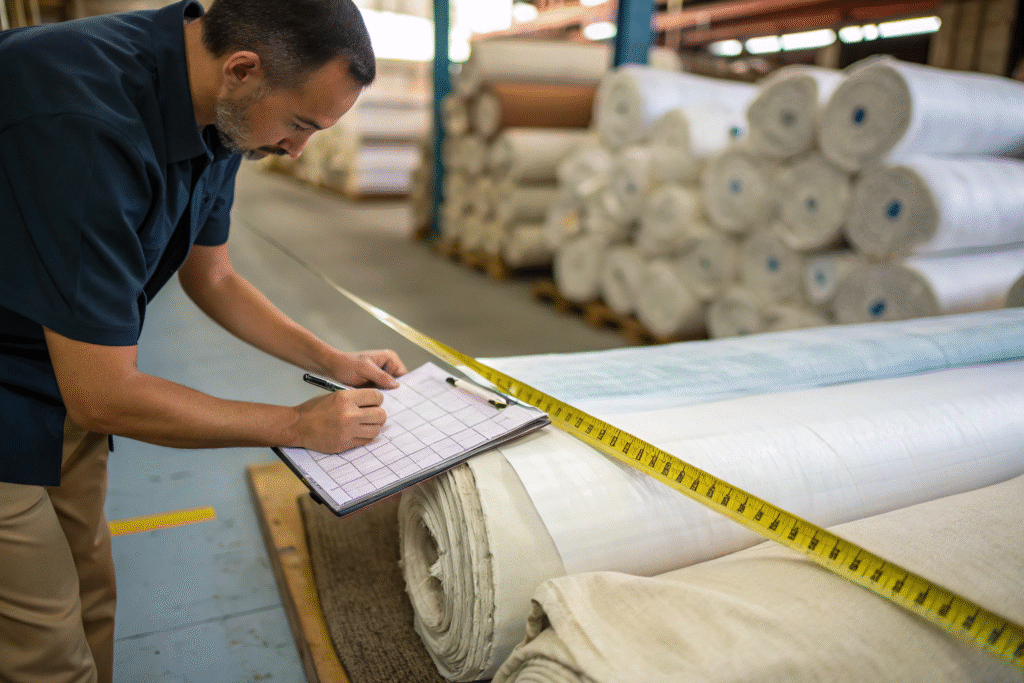
An effective pre-shipment audit involves a randomized sampling of 10-20% of the total shipment quantity, checked against the original purchase order specifications for grade, color, weight, width, and visual defects. This is not another full inspection of every meter. Instead, it’s a verification audit. We randomly select rolls or pieces from different production batches and cartons. We re-measure the width and weight, re-check the color, and unroll at least 3-5 meters from each selected roll to look for any surface issues that may have occurred during handling or storage. (Here’s a secret: we also check the roll length against what’s stated on the label to prevent short-length issues.)
What sampling method gives you the highest confidence?
Inspecting 100% of a 50,000-meter shipment is impractical. Using a statistically valid sampling plan gives you a high level of confidence without checking every single meter. We use the ANSI/ASQ Z1.4 standard for sampling.
This standard defines the sample size based on the lot size and the Acceptable Quality Limit (AQL). For general fabric inspection, we use an AQL of 2.5 for major defects and 4.0 for minor defects. This means:
- For a shipment of 5,000 meters (lot size), we inspect 200 meters from randomly selected rolls.
- We find the number of defects and compare it to the AQL table.
- If the defects are below the limit, the lot passes. If they exceed it, the lot fails, and we may then do a 100% inspection.
This method is scientific and defensible. When a client questions our inspection results, we can show them the AQL standard we applied, which is often the same one their own QC teams use. It removes subjectivity. You can find more on how to implement AQL sampling in textile and apparel quality control.
Why is verifying packaging part of the quality process?
The packaging is the first thing your client sees. If it’s damaged or incorrect, it creates an immediate impression of poor quality, even if the fabric inside is perfect. Verifying packaging is the final step of the pre-shipment audit.
We check that:
- The cartons are the correct strength and not crushed.
- The labeling is 100% accurate with PO number, article, color, and length.
- The rolls are properly wrapped and the cores are intact.
- The packing list matches the physical contents.
A US client once told me that a supplier shipped them the correct fabric but labeled all the rolls with the wrong article number. It took their warehouse a week to sort it out, costing them thousands in labor. We’ve since made packaging verification a mandatory sign-off step for our logistics team. Ensuring proper packaging and labeling for international textile shipments is a simple step that prevents massive headaches.
What does final packing inspection guarantee?
This is the last gate. The fabric has passed all quality checks, but mistakes can still happen in the final consolidation and loading. The final packing inspection is a process verification, not a product verification.
The final packing inspection guarantees that the correct goods, in the correct quantities, with the correct documentation, are loaded into the correct container. It’s a reconciliation process. Our team physically supervises the loading of the container at the warehouse. They cross-check the carton marks and quantities against the packing list and the Bill of Lading. They ensure the container is clean, dry, and free of any structural damage that could compromise the goods during transit. They also take photos and videos of the loaded container before the doors are sealed, providing a final piece of auditable evidence.

How do you ensure documentation accuracy for customs?
Incorrect documentation doesn’t just cause customs delays; it can lead to seized shipments and fines. Our final check includes a meticulous review of all export documents.
We have a checklist for the "Holy Trinity" of shipping documents:
- Commercial Invoice: Must accurately describe the goods, quantity, and value.
- Packing List: Must match the physical packing and carton numbering.
- Bill of Lading: Must have the correct consignee and notify party details.
We also verify any special certificates, like the Certificate of Origin or OEKO-TEX® certificates, are included and valid. This process is managed by our export team, who are trained in the latest INCOTERMS 2020 rules and their impact on documentation.
What is the role of loading supervision?
Supervising the loading is a physical control to prevent damage and mixing. It ensures that all the hard work done in the previous inspections isn’t undone in the last hour.
Our supervisor ensures:
- Cartons are not dragged or thrown.
- The container is loaded evenly to prevent toppling during transit.
- No unauthorized or non-conforming goods are added to the shipment.
- The container doors are securely sealed, and the seal number is recorded.
This hands-on approach saved us with a Middle Eastern client last year. Our supervisor noticed that a pallet jack had punctured several cartons during loading. We immediately offloaded the damaged cartons, replaced the fabric, and repacked them—all before the container left our yard. The client never knew there was an issue, and their goods arrived perfectly. This aligns with best practices for preventing damage during container loading and transit.
Conclusion
Selecting fabric inspection checkpoints isn’t about adding bureaucratic steps; it’s about building a robust quality infrastructure. From the raw greige goods to the sealed container, each checkpoint is a strategic defense layer that protects your investment, your timeline, and your reputation. By implementing this multi-stage system, you move from reactive problem-solving to proactive quality assurance. You stop defects at the point of origin, not at the point of no return.
This systematic approach is what allows us to guarantee a 98% client pass rate. We don’t just hope for the best; we verify at every critical juncture. If you’re looking to eliminate quality surprises and establish a transparent, reliable supply chain for your fabrics, let’s put this system to work for you. Contact our Business Director, Elaine, at elaine@fumaoclothing.com to discuss how we can tailor our inspection protocols to your specific product needs.