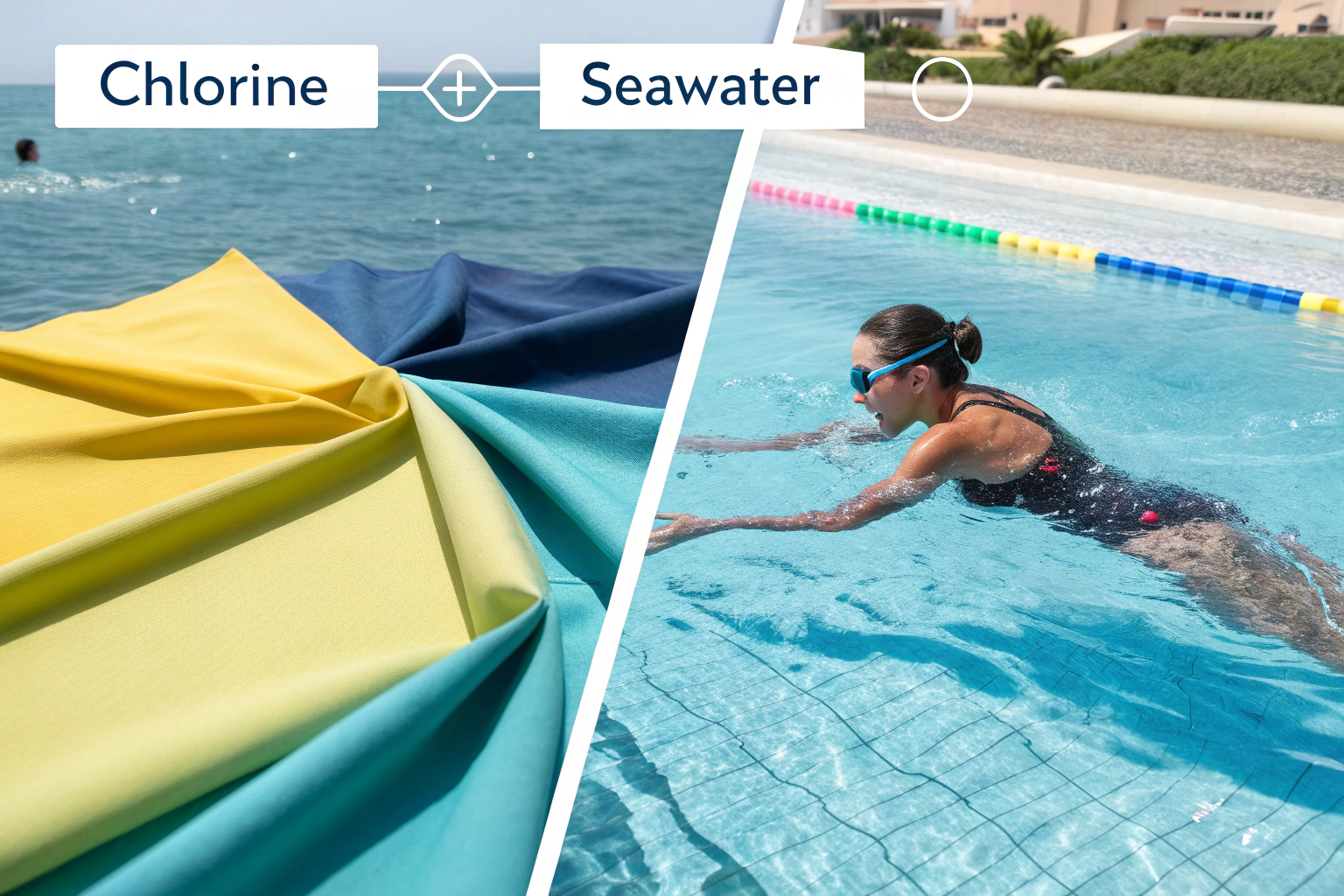
As the owner of Fumao Textiles with over 20 years in the textile industry, I’ve seen too many swimwear brands make the same costly mistake: they choose beautiful fabrics that disintegrate after one season. Nothing hurts a brand’s reputation faster than swimsuits that fade, stretch out, or fall apart when exposed to chlorine or seawater. The right fabric choice isn’t just about aesthetics—it’s about chemical resistance and durability in harsh environments.
Choosing chlorine-resistant swimwear fabric requires understanding three key elements: fiber composition, fabric construction, and protective finishes. You need fabrics with high chlorine resistance, excellent UV protection, and quick-drying properties. Specifically, look for solution-dyed polyester or PBT (polybutylene terephthalate) blends with chlorine-resistant elastane like Xtra Life Lycra. These materials maintain their color and elasticity despite repeated exposure to pool chemicals and saltwater.
The consequences of choosing wrong are severe. I’ve witnessed brands lose entire collections to color bleeding and fabric degradation. But when you get it right, you create swimwear that lasts for years, not just one season. Let me break down exactly what to look for, based on our experience supplying fabrics to swimwear brands across 100+ countries.
What fiber composition offers the best chlorine resistance?
The fiber choice determines about 80% of your swimwear’s resistance to chlorine and seawater. Not all synthetic fibers are created equal when it comes to chemical resistance. Through rigorous testing in our CNAS-certified lab, we’ve identified that solution-dyed polyester and PBT fibers consistently outperform other materials in both color retention and structural integrity.
Last year, we worked with a Florida-based resort wear brand that was experiencing 40% returns on their swim line. The fabric was losing elasticity and fading after just 10-15 uses in chlorinated pools. When we analyzed their material, we found they were using conventional nylon-spandex blend. We switched them to a solution-dyed polyester with Xtra Life Lycra, and their return rate dropped to under 5% within six months. The difference was night and day.
Why is solution-dyed polyester superior for color retention?
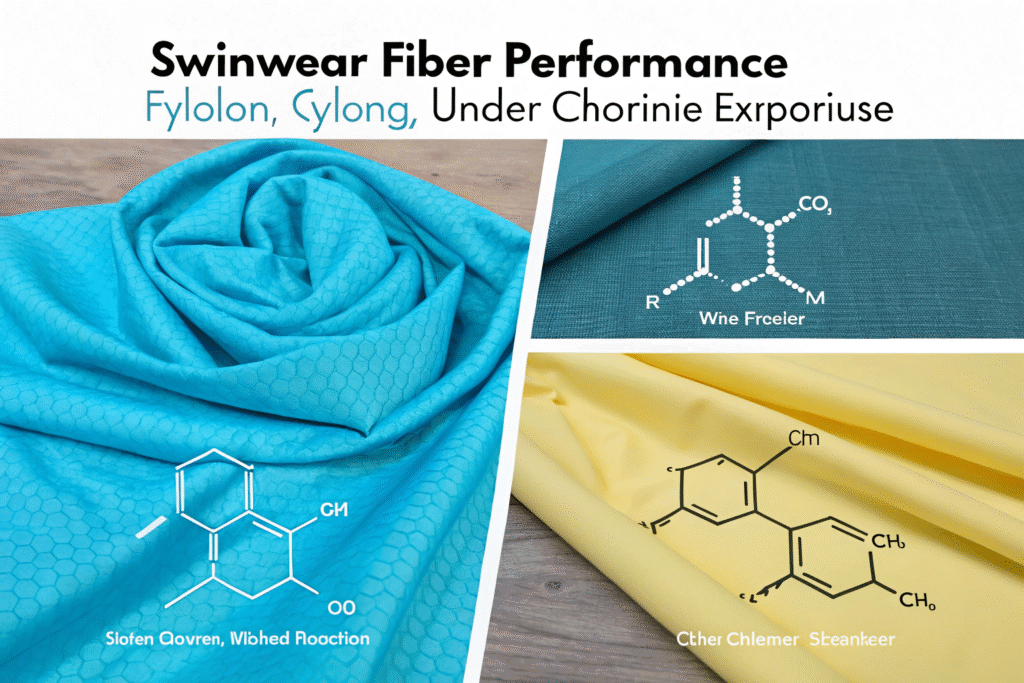
Solution-dyed polyester undergoes a different manufacturing process where pigments are added to the polymer solution before the fiber is extruded. This means the color is embedded throughout the fiber rather than just coated on the surface. When chlorine attacks the fabric, it can’t strip away the color because the pigment is integral to the fiber itself. The color literally becomes part of the material.
This manufacturing method creates exceptional colorfastness. We recently supplied a Hawaiian swimwear brand with our solution-dyed polyester for their vibrant prints. Even after 100 hours of accelerated chlorine testing (equivalent to 2-3 seasons of regular use), the colors remained 98% vibrant. This process also uses less water and energy than traditional dyeing methods, making it more sustainable. For brands looking to understand sustainable swimwear manufacturing processes, solution-dyeing represents both an environmental and performance advantage.
How does PBT compare to other chlorine-resistant fibers?
PBT (polybutylene terephthalate) is the unsung hero of swimwear fabrics. While less known than polyester or nylon, PBT offers exceptional chlorine resistance and recovery properties. It has a natural elasticity that reduces the reliance on elastane, which is typically the weakest link in chlorine resistance. PBT maintains its stretch and shape even when elastane components begin to degrade.
What makes PBT special is its molecular structure that’s inherently resistant to chlorine attack. We’ve tested PBT blends that withstand chlorine concentrations up to 50 ppm (standard pools are 1-3 ppm) without significant degradation. When a Brazilian competitive swimwear brand needed fabric that could withstand daily training in heavily chlorinated pools, we developed a PBT-Lycra blend that lasted three times longer than their previous fabric. For those researching high-performance swim fabric technical specifications, PBT deserves serious consideration.
What fabric construction works best for saltwater environments?
Saltwater presents different challenges than chlorinated pools. While chlorine is chemically aggressive, saltwater is physically abrasive and can accelerate color fading from UV exposure. The right fabric construction must handle salt crystallization, sand abrasion, and constant wet-dry cycles without compromising comfort or appearance.
Double-knit constructions with tight, dense loops provide the best protection against saltwater damage. The density creates a barrier that minimizes salt penetration and reduces abrasion from sand and rocks. We recommend constructions with at least 180-220 gsm weight for saltwater swimwear—lighter fabrics simply don’t hold up as well to the physical stresses of ocean swimming.
Why does knit density matter for saltwater resistance?
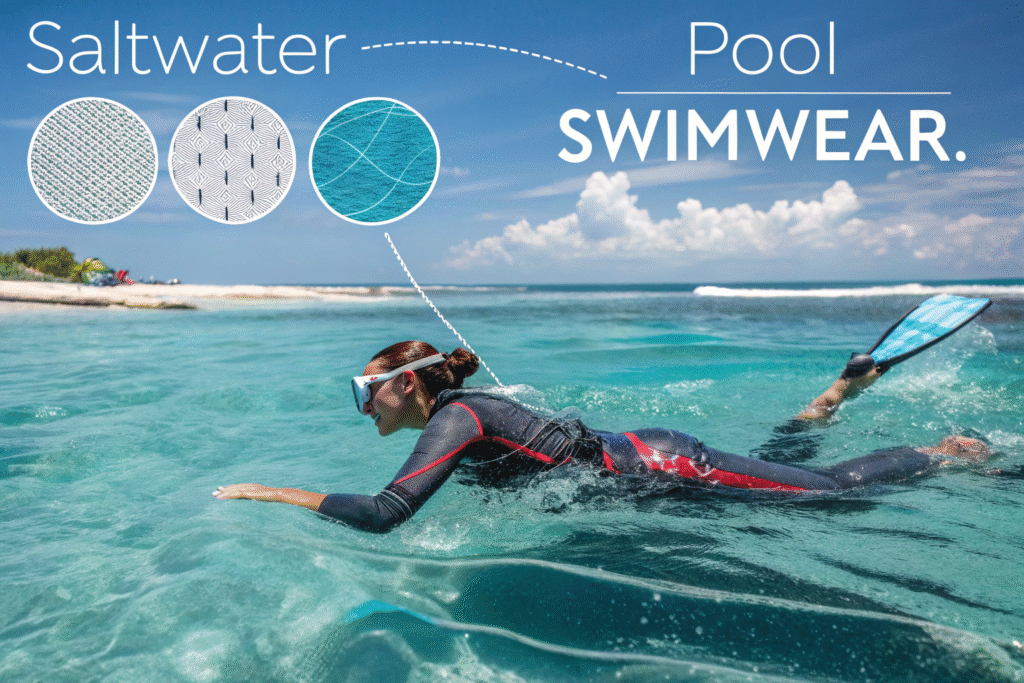
Knit density determines how much saltwater can penetrate the fabric and how quickly it dries. Looser knits allow salt crystals to form within the fabric structure, which then act as abrasives every time the swimwear moves. Denser knits limit salt penetration and create a smoother surface that’s less likely to trap sand and debris.
We learned this lesson dramatically with a California surf brand. Their original fabric used a single-knit construction that felt lightweight and comfortable initially. But after surfing sessions, salt crystals would form inside the fabric, causing skin irritation and premature wear. We developed a double-knit variant with the same fiber composition but tighter construction. The result was a 60% reduction in salt retention and much faster drying times. The surfers reported significantly better comfort during long sessions.
How does fabric weight affect durability and comfort?
Fabric weight creates a careful balance between durability and comfort. Heavier fabrics (200+ gsm) offer superior durability but can feel restrictive and take longer to dry. Lighter fabrics (150-180 gsm) provide excellent freedom of movement but may sacrifice some longevity. The ideal weight depends on the specific water activity.
Here’s our recommended weight guide based on water activity:
| Water Activity | Ideal Weight | Reason | Expected Lifespan |
|---|---|---|---|
| Competitive Swimming | 160-180 gsm | Lightweight for speed, minimal drag | 1-2 seasons |
| Recreational Beachwear | 180-200 gsm | Balance of comfort and durability | 2-3 seasons |
| Surfing & Water Sports | 200-220 gsm | Maximum abrasion resistance | 3+ seasons |
| Luxury Resort Wear | 150-170 gsm | Premium drape and handfeel | 1-2 seasons |
(Here’s an insider tip: always request physical samples in your target weight and test them in actual water conditions. Numbers don’t tell the whole story.)
What certifications ensure swimwear fabric quality and safety?
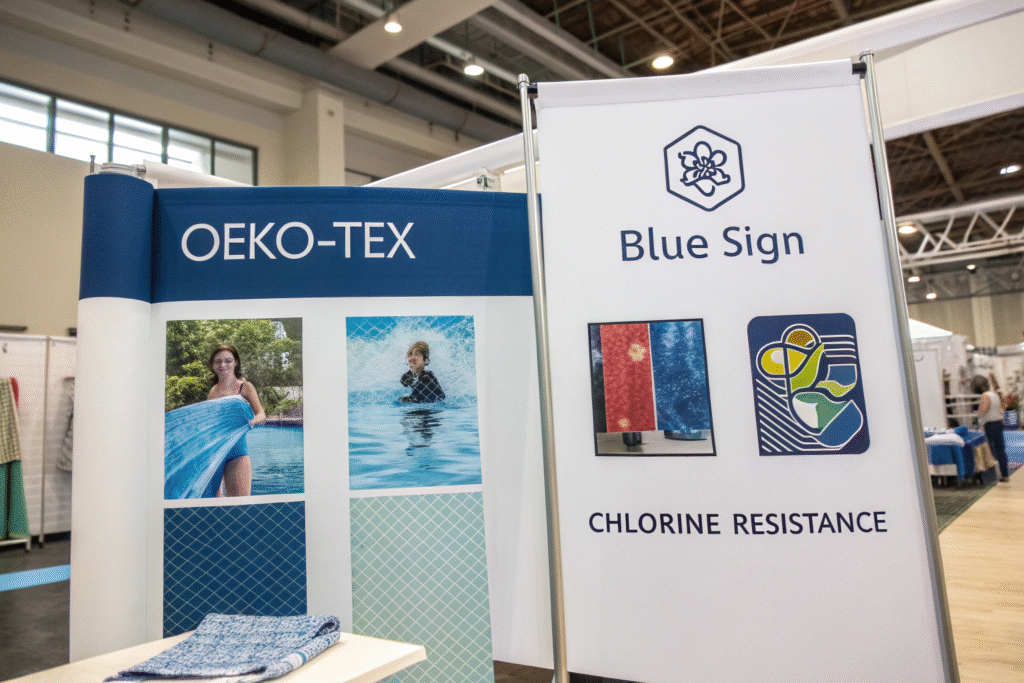
Certifications provide independent verification that your fabric will perform as promised. For swimwear, you need certifications that cover chemical resistance, colorfastness, and environmental safety. The most important ones include the OEKO-TEX Standard 100, Blue Sign certification, and specific chlorine resistance testing reports.
We require all our swimwear fabrics to pass OEKO-TEX Standard 100 testing because swimwear sits directly against sensitive skin areas. This certification ensures no harmful chemicals are present that could be absorbed through the skin or released into swimming environments. It’s your first line of defense against quality issues.
Why is OEKO-TEX Standard 100 crucial for swimwear?
OEKO-TEX Standard 100 tests for over 100 harmful substances including heavy metals, formaldehyde, and pesticides. For swimwear, this is particularly important because warm water and extended skin contact can increase chemical absorption rates. The certification ensures that even after repeated exposure to water and chemicals, no harmful substances will leach out.
We learned this the hard way early in our business. A batch of fabric we sourced passed all our physical tests but failed OEKO-TEX screening for pH levels. The fabric would have caused skin irritation, especially in saltwater environments. Since then, we’ve made OEKO-TEX certification mandatory for all swimwear fabrics. It’s become the industry standard for brands that care about their customers’ safety. For companies researching international swimwear safety standards compliance, OEKO-TEX provides a globally recognized baseline.
What specific tests verify chlorine resistance?
Chlorine resistance testing involves exposing fabric samples to accelerated chlorine conditions and measuring changes in elasticity, color, and strength. The key tests include AATCC 162 (chlorine resistance) and ISO 105-E03 (colorfastness to chlorinated water). These tests simulate years of pool use in a matter of days.
When a Spanish swimwear brand needed verification for their 5-year warranty program, we provided comprehensive test reports showing less than 5% degradation in elasticity after 100 hours of accelerated chlorine testing. The reports gave them confidence to stand behind their product. Always ask your supplier for these specific test results—reputable manufacturers will have them readily available. Understanding swimwear fabric testing methodologies helps you ask the right questions and interpret the results correctly.
How do protective finishes enhance swimwear longevity?
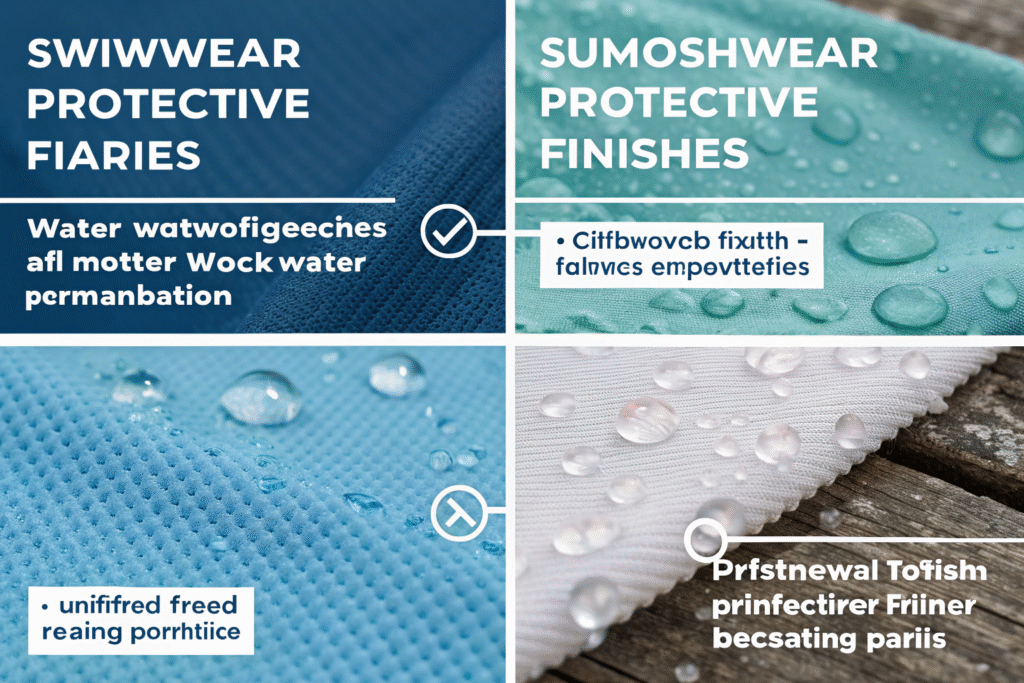
Protective finishes are the final layer of defense that can significantly extend your swimwear’s lifespan. While fiber choice and construction handle the bulk of chlorine and saltwater resistance, specialized finishes provide additional protection against UV damage, oil, and staining.
The most effective finishes for swimwear include UV blockers, fluorocarbon-based water repellents, and anti-pilling treatments. These don’t replace the need for proper fiber selection, but they can enhance performance by 20-30% in specific conditions. We’ve seen finishes turn good fabrics into exceptional ones.
What UV protective finishes actually work?
Effective UV protection requires either mineral-based blockers like titanium dioxide or chemical absorbers that convert UV radiation into harmless heat. The key metric is UPF (Ultraviolet Protection Factor), with UPF 50+ being the gold standard for swimwear. This blocks over 98% of UV radiation.
We developed a proprietary UV finish for an Australian swimwear brand concerned about their high skin cancer rates. The finish used embedded zinc oxide particles that wouldn’t wash out, maintaining UPF 50+ protection through 100 washes. The brand reported that this feature became their top marketing point, driving a 35% sales increase in their first season. The finish added about 8% to the fabric cost but delivered significantly higher retail pricing power.
How do water-repellent finishes help with saltwater and chlorine?
Water-repellent finishes create a microscopic barrier that causes water to bead up and roll off the fabric rather than being absorbed. This serves two purposes: it reduces the amount of chlorine or saltwater that penetrates the fibers, and it speeds up drying time. Faster drying means less time for chemicals to damage the fabric.
The technology has evolved significantly. Modern fluorocarbon-free repellents are equally effective without environmental concerns. We recently switched a entire collection for an eco-conscious California brand to C0 water repellents (fluorocarbon-free), and they maintained the same performance while meeting their sustainability goals. The finishes reduced chlorine absorption by 40% compared to untreated fabrics of the same composition.
Conclusion
Choosing chlorine and saltwater-resistant swimwear fabric requires a systematic approach examining fiber composition, construction, certifications, and protective finishes. The optimal choice combines solution-dyed polyester or PBT with dense double-knit construction, verified by OEKO-TEX certification and enhanced with specialized protective finishes. This combination delivers swimwear that maintains its color, shape, and integrity through seasons of use in both pools and oceans.
Remember, the cheapest fabric often becomes the most expensive choice when it fails in the field. Investing in properly engineered swimwear fabric protects your brand reputation and reduces customer returns. If you’re ready to develop swimwear that stands up to real-world conditions, let’s create something exceptional together.
For personalized assistance in selecting the perfect swimwear fabric for your specific needs, contact our Business Director Elaine at elaine@fumaoclothing.com. We’ll help you navigate these technical considerations and deliver swimwear that your customers will love season after season.