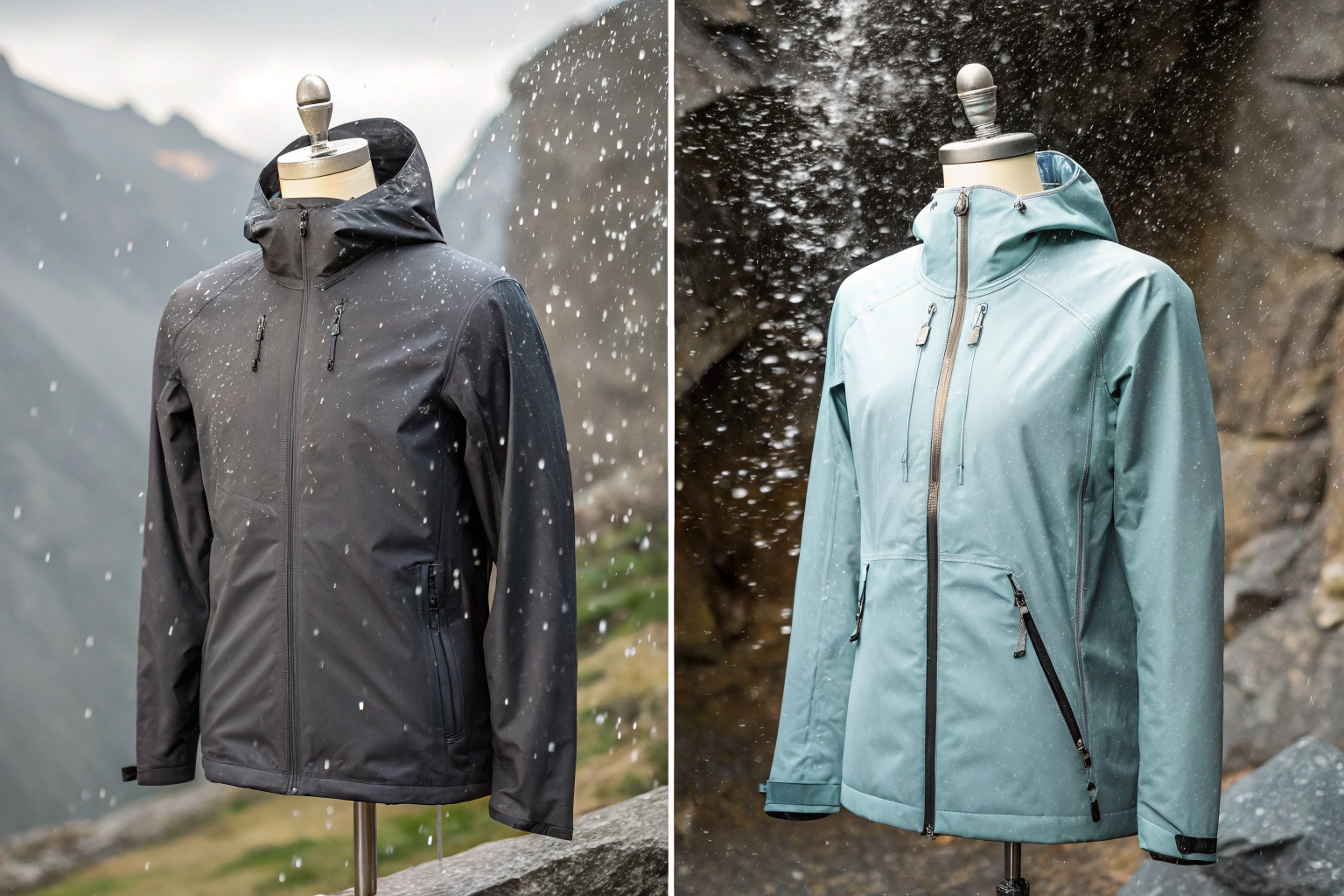
Choosing the right fabric for your jacket line can be tough. You hear terms like "softshell" and "hardshell" all the time. But what do they really mean for your business and your customers? Getting this wrong can lead to unhappy customers and returned orders. As a fabric supplier, I see this confusion often with our international clients.
The fundamental difference lies in protection versus breathability. Hardshell fabrics are your first line of defense against wind and rain, prioritizing waterproof protection. Softshell fabrics focus on breathability and stretch, offering comfort and mobility during high-exertion activities. Understanding this core distinction is key to selecting the perfect material for your specific garment application and target market.
Let’s break down these two fabric technologies. We will explore their unique properties, ideal uses, and how our manufacturing expertise at Fumao ensures you get the right fabric for your brand’s needs.
What is a hardshell fabric?
Hardshell fabrics are the ultimate shield for outerwear. They are engineered to be your customer’s primary defense against harsh weather conditions like heavy rain, strong wind, and snow. When you need guaranteed protection, hardshell is the answer. These fabrics are typically thin, lightweight, and have a characteristically crisp or slick hand-feel.
The primary goal of a hardshell is to create an impermeable barrier. This is achieved through a combination of a durable outer face fabric, a waterproof and breathable membrane like those used in performance apparel, and a protective interior coating. The result is a fabric that rigorously blocks wind and water while allowing minimal vapor to escape, keeping the wearer dry from the outside in.

How is waterproofness measured in hardshell fabrics?
Waterproofness is scientifically measured using a hydrostatic head test. This test measures how much water pressure a fabric can withstand before it starts to leak. The result is given in millimeters (mm). For example, a rating of 10,000mm means the fabric can support a 10,000mm column of water on it before failing. Fabrics with a higher rating are more waterproof. For most hardshell jackets intended for skiing or mountaineering, a minimum of 20,000mm is recommended. Our CNAS-accredited lab rigorously tests all our performance fabrics to these international standards, ensuring you receive reliable data for your product specifications.
What are the main layers in hardshell construction?
Hardshell fabrics are built using a layered construction system. The most common types are 2-Layer, 2.5-Layer, and 3-Layer constructions. A 2-Layer system has the outer fabric and the membrane, with a separate loose liner inside for protection. A 3-Layer construction bonds the outer fabric, the membrane, and an interior scrim backer into a single, more durable, and often lighter-weight package. The 2.5-Layer is a lighter version where a half-layer of protective print or coating is applied to the inside of the membrane, saving weight but sometimes sacrificing some durability and comfort. We specialize in supplying fabrics for all these constructions, giving you the flexibility to choose the right balance of weight, durability, and cost for your jacket line.
What is a softshell fabric?
Softshell fabric is the flexible and comfortable cousin of the hardshell. It is designed to provide warmth, breathability, and freedom of movement during active pursuits where total waterproofing is not the primary concern. Think of it as a versatile, all-in-one solution that often combines a soft inner face for comfort with a weather-resistant outer face.
The core philosophy of softshell is mobility and comfort. These fabrics are woven or knitted to be inherently stretchy, allowing for a greater range of motion. They are typically made from polyester or nylon and often include a significant amount of spandex for elasticity. The outer surface is usually treated with a DWR (Durable Water Repellent) finish to shed light rain and snow, but they are not fully waterproof like a hardshell. Their standout feature is exceptional breathability, making them ideal for high-output activities like hiking, climbing, or trail running.

When should you choose a softshell jacket?
You should choose a softshell jacket for activities that prioritize breathability and mobility over absolute waterproof protection. It is the perfect mid-layer or outer layer for dry, cold, and windy conditions. If your customers are engaged in climbing, fast-paced hiking, ski touring, or any urban activity where they need to stay warm and active without overheating, a softshell is an excellent choice. Its stretch and soft hand-feel also make it a favorite for fashion-forward urban outerwear that requires a comfortable, flexible fit. We support many of our clients in developing these versatile garments with our extensive range of knitted and woven stretch fabrics.
How does softshell fabric provide insulation?
Softshell fabric provides insulation through its construction and material composition. Many softshells feature a brushed or fleeced interior that traps a layer of warm air close to the body, creating thermal insulation. The fabric itself is often denser and heavier than a typical hardshell, which also helps to block wind and retain heat. Some advanced softshells may even integrate lightweight insulating synthetic fibers into their weave. This built-in warmth, combined with its breathability, prevents the clamminess that can occur with less breathable, waterproof shells during exercise. Our R&D team is constantly innovating new blends to enhance this thermal regulation without adding bulk.
Hardshell vs Softshell: A direct comparison
Putting hardshell and softshell side-by-side reveals their specialized roles. It’s not about which one is better, but about which one is right for the specific job. The best choice depends entirely on the intended use case and the environmental conditions the garment will face. Making the right selection is crucial for your product’s success.
To make it easier, let’s look at a direct comparison of their key characteristics. This will help you, as a buyer, make an informed decision for your next collection.
| Feature | Hardshell Fabric | Softshell Fabric |
|---|---|---|
| Primary Function | Waterproof & Windproof Protection | Breathability, Stretch & Comfort |
| Water Resistance | Fully Waterproof (High HH rating) | Water-Resistant (DWR finish) |
| Breathability | Moderate to High (varies by membrane) | Very High |
| Weight & Packability | Lightweight & Highly Packable | Heavier & Less Packable |
| Durability | Highly Durable Abrasion Resistance | Good, but can be less than Hardshell |
| Typical Construction | 2L, 2.5L, 3L Laminates | Woven/Knitted with Stretch |
| Best For | Heavy Rain, Snow, Severe Weather | Active Use, Dry & Cold, Windy Conditions |
Which fabric offers better breathability?
Softshell fabric almost always offers better overall breathability than hardshell fabric. Because softshells lack a continuous waterproof membrane, water vapor from sweat can escape much more freely. This makes them far more comfortable during continuous, high-energy activities. While modern hardshell membranes are engineered for breathability, they can still trap heat and vapor during intense exertion, potentially leading to condensation inside the jacket. For activities like trail running or uphill skiing, the superior moisture management of a softshell is a significant advantage.
How do durability and weight compare?
Hardshell fabrics generally offer superior durability in terms of abrasion resistance and tear strength, especially in 3-layer constructions. They are designed to withstand rough rock faces, sharp ski edges, and heavy backpack straps. However, this often comes at the cost of being noisier and less comfortable against the skin. Softshells are typically heavier and bulkier due to their multi-functional, often insulated, design. While durable, their brushed interior and focus on softness can make them slightly more susceptible to pilling or snagging compared to the tough face of a hardshell. The choice is a trade-off: ultimate protection versus ultimate comfort.
How to choose the right fabric for your line?
Your choice between hardshell and softshell should be driven by your target customer’s lifestyle and the core purpose of your garment. It’s a strategic decision that impacts design, marketing, and sales. A deep understanding of your end-user is the most critical factor in getting this right.
Start by asking key questions. Will the jacket be used for extreme alpine ascents or for casual city wear? Is the priority staying dry in a downpour or staying comfortable during a brisk walk? The answers will point you in the right direction. Many brands now also develop "hybrid" jackets that combine both fabrics, placing hardshell material in high-wear or high-rain areas (shoulders, hood) and softshell elsewhere for enhanced mobility.

What questions should you ask your fabric supplier?
You should ask your fabric supplier detailed questions about performance and compliance. Key questions include: "What is the fabric’s hydrostatic head and breathability (MVTR) rating?" and "Can you provide certified test reports from your lab?" Also ask, "Do you have experience with the specific construction (2L, 3L, knitted) I need?" and "What are the minimum order quantities and lead times for development and bulk production?" At Fumao, we provide transparent data from our CNAS-certified lab and guide you through every step, ensuring your fabric choice is backed by solid evidence and a reliable supply chain.
Can hardshell and softshell fabrics be combined?
Yes, hardshell and softshell fabrics can be strategically combined in a single garment to leverage the benefits of both. This hybrid approach is becoming increasingly popular in technical apparel design. For example, a jacket might use hardshell fabric across the shoulders, hood, and sleeves for maximum weather protection, while integrating softshell panels under the arms and on the sides for improved ventilation and flexibility. This innovative construction requires precise pattern making and a supplier with strong technical expertise to ensure the different materials are assembled correctly. Our product development team has extensive experience in helping brands execute these complex, high-performance designs efficiently.
Conclusion
Understanding the distinct roles of hardshell and softshell fabrics is fundamental to creating successful outerwear. Hardshell offers uncompromising protection from the elements, while softshell delivers unparalleled comfort and breathability for active use. There is no single winner; the right choice is dictated by the specific needs of your customer and the intended application of the garment. By carefully considering factors like weather conditions, activity level, and desired features, you can select the perfect fabric to make your next jacket line a hit.
Ready to move from concept to production with the right fabric? Partner with a supplier that understands both the technology and the business of textiles. Let’s collaborate to create high-performance jackets that your customers will love. For a personalized consultation on your specific garment needs, please contact our Business Director, Elaine, at elaine@fumaoclothing.com. We are here to help you weave your vision into reality.