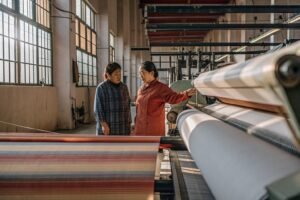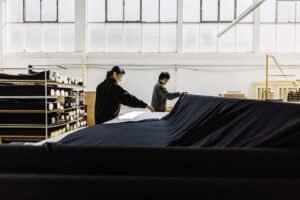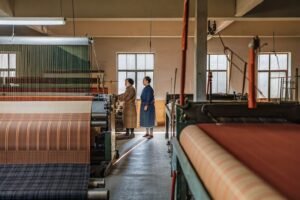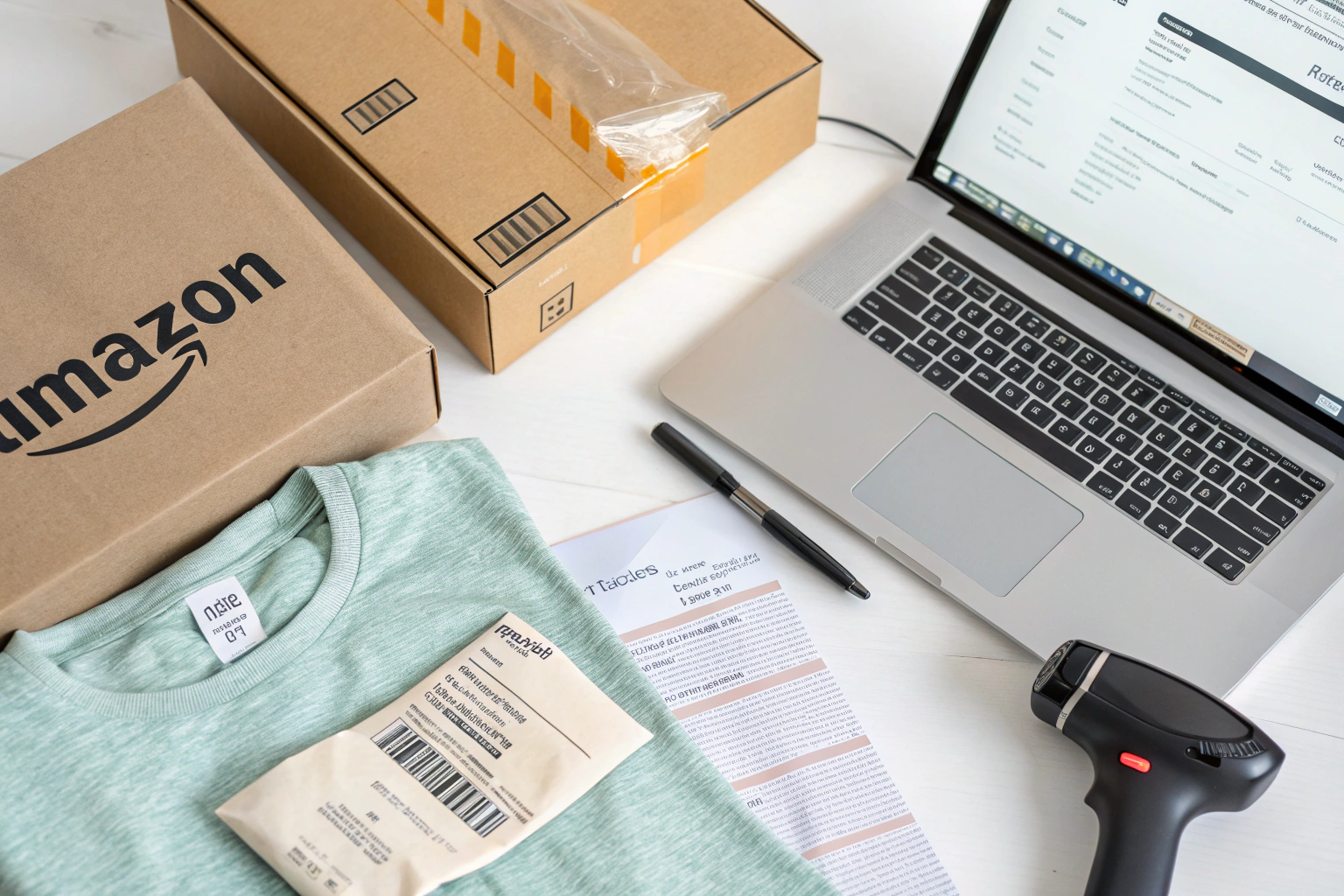
A lot of sellers see Amazon FBA as a magic button. You ship your products to their warehouse, and they handle the rest. But for textiles, and specifically for premium cotton linen fabric by the yard, FBA has a hidden minefield of fees, prep requirements, and listing restrictions that can blow up your profit margin before you even sell your first roll. I’ve watched enthusiastic fabric sellers get their inventory stranded in an Amazon fulfillment center because the poly bag wasn’t suffocation-warned, or get their margins eaten alive by dimensional weight fees because they folded the fabric instead of rolling it. The pain is real, and it’s usually discovered too late.
The honest answer is yes, you absolutely can sell our cotton linen fabric on Amazon FBA without issues—but only if you play by Amazon’s very specific rules from day one. The fabric itself is not the problem. Our cotton linen is OEKO-TEX certified, fully compliant with US import regulations, and consistently high-quality, which means you won’t get hit with product quality complaints. The issues that trip sellers up are logistical and procedural: incorrect packaging, poor listing optimization, and a failure to understand Amazon’s fee structure for soft goods. If you master those three things, our fabric gives you a massive competitive advantage because the hand-feel and the premium texture translate into glowing reviews and low return rates.
I’ve been shipping fabric from Keqiao to American sellers for two decades. The ones who win on Amazon are the ones who treat the platform not as a flea market, but as a logistics machine with a strict rulebook. They buy our cotton linen in bulk, ship it into FBA in perfectly prepped units, and let the quality of the ring-spun texture and the natural linen slub do the selling. The review photos do the marketing for them. Let me walk you through the exact steps to make FBA work for your cotton linen business, from packaging hacks to listing strategies that trigger the Amazon algorithm in your favor.
What Are Amazon’s Strict Packaging Rules for Fabric Sold by the Yard?
Amazon treats fabric as a "soft good," and that classification triggers a specific set of packaging mandates. If you ignore them, your inventory will be received, flagged as "unfulfillable," and you’ll pay penalty fees to have it corrected or returned. The first rule is that all fabric yardage must be in a sealed, transparent poly bag. No paper envelopes. No cardboard tubes left exposed. The poly bag must be at least 1.5 mils thick, and it must have a suffocation warning printed directly on the bag or affixed as a sticker. This is non-negotiable and is a federal requirement under the Child Safety Protection Act, which Amazon enforces aggressively.
The second rule is that your fabric must be folded or rolled in a way that protects it from damage but also minimizes the dimensional weight. Dimensional weight is the enemy. Amazon charges FBA storage and fulfillment fees based on the greater of the actual weight or the dimensional volume of your package. If you fold your fabric into a thick, puffy square, you’re paying for air. The smart way to package fabric yardage is to roll it tightly around a slim, rigid insert card—not a heavy tube—and seal it in a snug, flat poly bag. This creates a package that is long and slim, closer to a large envelope than a box. The dimensional footprint stays small, and your fulfillment fees stay in the "Small Standard" or "Large Standard" tier instead of jumping into the "Bulky" tier where margins go to die.
You also need to apply a single scannable barcode—an FNSKU label, not the manufacturer UPC—on the outside of the poly bag. Place it on the flat side where it’s easily scannable, not wrapped around a curved edge. If the barcode can’t be scanned at the fulfillment center, your inventory stalls, and your listing goes out of stock while the units sit in limbo. We help our FBA sellers by offering FBA-ready packaging as a value-added service at our packing factory in Keqiao. We can roll, poly-bag, suffocation-warn, and FNSKU-label your fabric before it even ships. It arrives at the Amazon fulfillment center ready to be scanned and shelved.

How Do Poly Bag Suffocation Warnings Affect Your FBA Inventory Acceptance?
A missing suffocation warning is the single most common reason textile shipments get rejected at the Amazon receiving dock. It sounds trivial. It’s not. Amazon’s automated receiving system checks for the warning label on every poly bag with an opening larger than 5 inches. If the scanner or the human receiver doesn’t see it, the unit goes straight to "Unfulfillable" status. You then have to create a removal order, pay Amazon to ship the units back to you or to a third-party prep center, get them re-bagged correctly, and ship them back in. That round trip can cost you $1.50 per unit and delay your launch by three weeks.
The warning text must be in English, prominently visible, and in a font size appropriate to the bag. The exact wording Amazon expects is: "WARNING: To avoid danger of suffocation, keep this plastic bag away from babies and children. Do not use this bag in cribs, beds, carriages, or playpens. This bag is not a toy." You can buy pre-printed poly bags with this warning in bulk from packaging suppliers, or you can use a clear adhesive sticker printed with the warning. If you’re using a sticker, place it on the front face of the bag, not on the back crease where it can fold and become unreadable.
I had a client in Florida in early 2024 who launched a beautiful cotton linen fabric line on Amazon. He shipped 600 units to FBA, all in clear poly bags. Beautiful, clean presentation. But he forgot the suffocation warnings. Every single unit was flagged. He spent $900 on removal orders and re-prep, and his listing was out of stock for four weeks during the peak spring sewing season. His organic ranking tanked. He called me frustrated, and we switched his re-order to our FBA-prep service. The next shipment sailed through receiving without a single rejection. For a definitive reference, Amazon’s own Prep Requirements for Textiles and Fabrics on Seller Central outlines every poly bag specification in detail, and it should be your checklist before every shipment.
Why Does Fabric Folding vs. Rolling Decide Your Dimensional Fee Tier?
Let me explain dimensional weight because it’s where your profit goes to die if you’re not paying attention. Amazon calculates your fulfillment fee based on whichever is greater: the actual scale weight of your package, or the dimensional weight. The dimensional weight is calculated as (Length x Width x Height) divided by 139. If your poly-bagged cotton linen folds up into a 14-inch by 10-inch by 4-inch thick rectangle, your dimensional volume is 560 cubic inches. Divided by 139, your dimensional weight is 4.03 pounds, even if the fabric itself only weighs 8 ounces.
Now, Amazon charges you fulfillment fees as if that package is a 4-pound box. If you instead roll that same fabric into a tight cylinder and flatten it into a 14-inch by 8-inch by 1-inch package, your dimensional volume drops to 112 cubic inches. Divided by 139, the dimensional weight is 0.8 pounds. The actual weight of the fabric is the same. But your fulfillment fee just dropped from the "Large Standard" 4-pound tier into the 1-pound tier. That could be a difference of $2.50 per unit in fees.
Multiply that $2.50 by 1,000 units sold per month, and rolling instead of folding saves you $2,500 a month in pure fulfillment cost. That savings goes straight to your bottom line. This is the kind of operational detail that separates a profitable Amazon FBA business from one that breaks even despite strong sales. Rolling around a rigid card insert also prevents the fabric from developing deep creases during storage, which means the customer receives a pristine product they can use immediately. This reduces "item arrived damaged" complaints and returns. A very practical discussion on a seller forum about how to reduce Amazon FBA dimensional weight fees for soft goods and fabric products has sellers sharing their exact packaging dimensions and the fee tier jumps they’ve observed.
How Can You Optimize an Amazon Listing for Premium Cotton Linen Fabric?
An Amazon listing for fabric is not a product page. It’s a decision engine. Your customer—a home sewist, a small brand owner, or a designer—cannot touch the fabric. Your listing must therefore simulate the tactile experience through photography and language, while also feeding the Amazon A9 algorithm the exact keywords it needs to rank you above the generic, low-quality competition. Most fabric listings on Amazon are terrible. They have dark, wrinkled photos, a one-line description that says "soft cotton linen," and zero technical data. You can crush these competitors with a listing that answers every question before the customer asks it.
Your main image must be a high-resolution, brightly lit, macro-level shot of the fabric texture. Show the weave. Show the slub. Show the drape. Use a folded edge to demonstrate the weight. Lifestyle images are essential—show the fabric made into a beautiful garment, draped on a dress form, or styled in a sunlit sewing room. These images build the perceived value that justifies your premium price point. Your title must be keyword-rich but readable: "Premium Ring-Spun Cotton Linen Blend Fabric by The Yard | 55% Linen 45% Cotton | 200 GSM | Soft Natural Slub Texture | Ideal for Dressmaking, Shirts, and Lightweight Upholstery | 57 Inch Wide." That title covers the fiber content, the weight, the texture, the end-use, and the width—every major search query a fabric buyer types.
Your bullet points must sell technically. Don’t say "high quality." Say "Ring-spun yarn construction for a smoother hand-feel with zero prickly linen ends." Don’t say "breathable." Say "Naturally thermoregulating flax fibers wick moisture and keep you cool in humid conditions." This language signals to the professional buyer that you know textiles, and you’re not just dropshipping from a random catalog. Our QR-code traceability is also a powerful listing feature. You can include a bullet that says: "Scan the QR code on your fabric label to view the live CNAS-certified test report for this exact batch." No competitor is doing that. It’s an instant trust signal.

What Keywords Do Home Sewists and Small Brands Actually Search on Amazon?
You have to think like a sewist standing in front of a fabric wall, not like a textile manufacturer. They don’t search for "55% linen 45% cotton ring-spun woven textile." They search for "linen cotton fabric for dressmaking," "summer fabric by the yard," "breathable fabric for shirts," "soft linen blend for skirts," or "natural textured fabric for home decor." The keyword strategy must center on the end-use and the sensory experience, with the technical specs as supporting filters.
Use Amazon’s own search bar to research. Type "cotton linen" and see what auto-completes. "Cotton linen fabric by the yard," "cotton linen blend dress fabric," "cotton linen for curtains," "cotton linen summer." These auto-complete suggestions are Amazon’s crowdsourced keyword research, telling you exactly what the majority of shoppers are looking for. You need to embed these phrases naturally in your title, your bullet points, and especially in your back-end search terms field in Seller Central.
But don’t stop at the obvious. Think about the problem the customer is solving. They’re tired of sweaty polyester dresses. They search for "breathable natural fabric summer." They’re making a child’s garment and need safety. They search for "OEKO-TEX certified fabric for baby clothes." They’re a small brand making a capsule collection and need consistency. They search for "wholesale quality fabric for boutique clothing." These long-tail, problem-oriented keywords have lower search volume but extremely high purchase intent. If you rank for "OEKO-TEX certified cotton linen for children’s wear," you’re capturing a buyer who is ready to purchase and less price-sensitive. A comprehensive guide on Amazon keyword research for niche craft and fabric categories provides a step-by-step methodology for mining these golden long-tail terms from search term reports and competitor analysis.
How Can You Use A+ Content to Tell Your Keqiao Origin and Quality Story?
Basic Amazon listings have plain text descriptions. A+ Content—also called Enhanced Brand Content—allows registered brand owners to add rich images, comparison charts, and narrative modules to the description section. For a premium fabric like ours, A+ Content is not a luxury. It’s a conversion multiplier. It lets you tell the story of the fabric’s origin in Keqiao, the 20-year expertise behind our mill, the ring-spinning process that creates the smooth hand-feel, and the CNAS-certified testing that guarantees the quality.
Your A+ Content should include a module titled "From Fiber to Fabric: Our Process." Show a visual flow chart or a series of images. Step 1: Long-staple flax fields. Step 2: Ring-spinning in our partner mills. Step 3: Precision dyeing and finishing in our Keqiao facility. Step 4: Final inspection under our four-point quality system. Step 5: The fabric arrives at your doorstep. This educates the customer. They’re not just buying a piece of cloth; they’re buying a story of craftsmanship. This justifies a price premium over a generic "cotton linen" listing with no provenance.
Add a comparison chart module. On the left, show "Generic Cotton Linen." On the right, show "Shanghai Fumao Premium Ring-Spun Cotton Linen." Compare the fiber length ("short staple, prone to pilling" vs. "long staple, ringspun for smoothness"), the finish ("stiff, requires multiple washes to soften" vs. "enzyme-washed, ready-to-use softness"), and the consistency ("variable width and shrinkage" vs. "CNAS-certified width and pre-shrunk finish"). This direct comparison helps the customer understand why your price is higher and makes the competitor’s cheaper alternative feel risky. A detailed tutorial on how to structure A+ Content comparison charts to increase premium product conversion on Amazon shows that this module type consistently lifts conversion rates by 5-10% for products with a clear quality differentiation.
How Do You Manage FBA Storage Fees with Seasonal Cotton Linen Inventory?
Cotton linen is a seasonal fabric. Demand spikes from March through July for spring and summer sewing, and again in December for holiday gift-making. The rest of the year, sales slow down, but Amazon’s storage fees don’t. If you treat FBA like a "set it and forget it" warehouse, you’ll pay punishing monthly storage fees on slow-moving inventory during the off-season. Amazon charges a base monthly storage fee per cubic foot, and it doubles during the October-to-December peak quarter. A pallet of cotton linen rolls sitting in an FBA center from August to February can accrue enough storage fees to erase the profit from the previous summer’s sales.
The profit-first approach to FBA is to treat it as a just-in-time replenishment system, not a long-term storage solution. You use our flexible supply chain to send smaller, more frequent shipments timed to the seasonal demand curve. In late February, you send a pre-season stock-up shipment. In April and May, you send replenishment shipments as demand peaks. In July, you let inventory naturally deplete through sales, and you avoid sending more. By August, your FBA stock of cotton linen should be minimal, with just a few units available for late-season shoppers. The bulk of your off-season inventory stays in your own lower-cost storage, or better yet, in our Keqiao warehouse as greige fabric, ready to be finished and shipped when the next season begins.
This requires a tight partnership with your supplier. We help our FBA sellers by offering "staged inventory" services. You buy the fabric in bulk to secure a great price, but we hold it in our warehouse. You give us a monthly shipping plan, and we send exactly what you need, prepped and FBA-ready, to the fulfillment center every four weeks. You get the volume discount without the FBA storage penalty.

How Can You Avoid Long-Term Storage Fees on Off-Season Cotton Linen Stock?
Amazon’s long-term storage fees kick in when inventory has been sitting in a fulfillment center for more than 181 days. And it’s a steep charge. The fee is currently around $6.90 per cubic foot or $0.15 per unit, whichever is greater. If you have a slow-selling bolt of cotton linen that’s been sitting since last summer, that fee hits your account on the 15th of the month, and it can wipe out your net margin on that unit entirely. Amazon also runs regular "automated removal" events where they liquidate aged inventory if you don’t take action. You lose the goods and the money.
To avoid this, you need to set up automated removal orders in Seller Central for any inventory that reaches 150 days in stock. Have it sent back to you before the 181-day mark. You can then sell this inventory on other channels—Etsy, your own Shopify store, or a fabric destash group on Facebook—without the FBA fee penalty. Alternatively, you can run a "Limited Time Sale" on Amazon when your inventory hits the 150-day mark, using a coupon or a Lightning Deal to liquidate it before the fees kick in.
The smartest strategy is to avoid the problem altogether through precise inventory planning. Don’t send 1,000 yards of a seasonal color to FBA. Send 200. Replenish based on sell-through velocity data from your Amazon Business Reports. If a specific cotton linen SKU sells 40 units per week in May, keep three weeks of cover in FBA—120 units—and reorder from us when you dip below 60. This keeps your Inventory Performance Index (IPI) score high, which increases your FBA storage limits and lowers your overall storage costs. An Amazon inventory management guide for how to avoid FBA long-term storage fees using seasonal inventory planning and automated removal settings is essential reading for any textile seller.
What Is the Best "Restock Cadence" Using Fumao’s Flexible Small-Batch Supply?
Your restock cadence is the heartbeat of your FBA business. Beat too fast—restock every week—and you pay excessive inbound shipping costs. Beat too slow—restock every three months—and you either stock out and lose organic ranking, or you overstock and pay storage fees. The sweet spot for a seasonal fabric like our cotton linen is a four-week restock cadence during the peak selling season.
Here’s the math. Our lead time from order to FBA-ready shipment from Keqiao is approximately 3 weeks for stock colors, and 4-5 weeks for custom-dyed colors. Sea freight transit to a US West Coast fulfillment center is approximately 2 weeks. Amazon receiving and check-in can take 1 week. Total pipeline from order to "available for sale" is roughly 6 to 7 weeks. You cannot wait until you’re at zero stock to reorder. You must place your reorder when you have at least 7 weeks of cover remaining at your current sales velocity.
During the peak March-to-July season, we recommend our FBA sellers check their inventory levels every Monday morning and compare to their trailing 4-week average daily sales. If you have less than 8 weeks of cover, place a reorder that day. Our small-batch flexibility means you’re not forced to order a massive container load to get a good price. You can order 300 meters of a cotton linen color that’s performing well, and another 200 meters of a new color you want to test. We’ll ship them together, FBA-prepped, and you can keep your inventory lean and your risk low. This steady, small-batch inflow keeps your IPI score high, your storage fees low, and your cash flow predictable. A supply chain optimization resource explaining how to use supplier flexibility to create a lean FBA restock model for seasonal products provides excellent templates for calculating exact reorder points.
How Can You Protect Your Brand from Counterfeit Cotton Linen Sellers on Amazon?
Amazon is an open marketplace. The moment your premium cotton linen listing gains traction and positive reviews, counterfeiters and low-quality hijackers will take notice. They’ll list a cheap, inferior polyester-linen blend under your ASIN, undercut your price by 30%, and leech off your reviews. Your return rate will spike, your star rating will drop, and your brand reputation will be damaged—all because a bad actor’s counterfeit product got commingled with your authentic inventory in Amazon’s fulfillment network.
The most critical step to protect yourself is Amazon’s Brand Registry. You must register your brand trademark with the USPTO, and then enroll it in Brand Registry. This gives you access to powerful tools: the "Report a Violation" tool to quickly remove hijackers, Transparency codes to serialize your products, and Project Zero to automatically block counterfeit listings before they go live. These are not optional luxuries. They are the moat around your castle.
We also help our FBA partners by embedding unique, hard-to-replicate identifiers directly into the fabric. Our cotton linen can be produced with a custom-woven selvedge edge that includes your brand name. This is a physical authenticity marker that is extremely difficult and expensive for a counterfeiter to replicate. Your A+ Content and product images can highlight this selvedge detail, training customers to recognize it as the hallmark of genuine product. Additionally, every roll or bolt can carry our QR code, which links to a blockchain-verified batch certificate. A customer who scans the code and sees a verified test report knows they have authentic Shanghai Fumao fabric, not a cheap knockoff.

How Does Amazon Brand Registry and Transparency Code Block Fabric Hijackers?
Amazon Brand Registry is your legal shield. It gives Amazon’s automated systems a blueprint of your brand’s intellectual property—your logos, your product images, your packaging design. When a potential hijacker tries to create a listing using your brand name or selling on your ASIN, the system flags the attempt for review. Without Brand Registry, you’re just another seller pleading with Seller Support to remove an unauthorized seller. With Brand Registry, you’re an empowered rights owner with a direct line to the Brand Registry support team, which resolves cases significantly faster.
The Transparency program takes this a step further. Amazon generates unique, serialized 2D barcodes for each unit of your product. You affix these codes to every poly bag before shipping to FBA. When the inventory arrives at the fulfillment center, Amazon scans the Transparency codes to verify authenticity. If a counterfeiter attempts to ship a counterfeit product into FBA under your ASIN, their units will lack valid Transparency codes, and Amazon will reject the shipment at the dock. The counterfeit product never enters the fulfillment network and never reaches a customer.
This is a game-changer for fabric sellers because it prevents the commingling problem entirely. Normally, if you and a hijacker both sell "Cotton Linen Fabric By The Yard," Amazon commingles the inventory for efficiency. A customer ordering from your listing might receive the hijacker’s counterfeit product. With Transparency, only your authentic, code-verified units can fulfill orders under your ASIN. The hijacker is locked out at the warehouse level. The investment in Transparency codes is approximately $0.05 per unit, and it is the cheapest brand insurance you can buy. More details are available in Amazon’s official Transparency program guide for Brand Registry sellers, which outlines the onboarding process and the specific labeling requirements.
Why Do Custom Selvedge Labels and QR Codes Deter Online Copycats?
Physical deterrence is as important as digital deterrence. A counterfeiter on Amazon is a fast follower. They look for profitable listings, source a cheap look-alike fabric from a low-cost market, and list it. Their entire business model relies on speed and minimal upfront investment. A custom selvedge label with your brand woven directly into the fabric destroys that model. To copy it, the counterfeiter would need to commission custom weaving, set up a new selvedge loom setup, and pay for sampling. The cost and time eliminate their margin advantage.
We produce custom selvedge fabric for many of our brand partners. The selvedge can carry your brand name, a logo pattern, or a specific color identification thread. This physical marker is impossible to remove and impossible to duplicate without our specific weaving specifications. When your Amazon listing prominently features this selvedge in the product images and A+ Content, you train customers to look for it. An authentic product has the woven signature. A counterfeit does not. The customers become your enforcement army, reporting counterfeit sellers who ship fabric without the expected selvedge.
The QR code is the digital twin of the physical selvedge. When a customer scans the code on their fabric and sees their specific batch’s lab test report—with our Shanghai Fumao name, CNAS accreditation number, and the date of production—they have instant, verifiable proof of authenticity. No counterfeit operation can replicate a live, dynamic QR code that calls back to our secure server. This dual-layer protection—physical selvedge and digital QR traceability—creates a defense that makes your brand commercially unattractive to copycats. They’ll move on to an easier, unprotected listing. A brand protection industry article on how physical and digital product authentication features reduce Amazon counterfeits demonstrates the effectiveness of this layered approach.
Conclusion
Selling our premium cotton linen fabric on Amazon FBA is not only possible; it’s a genuine profit opportunity if you approach the platform with the same rigor you’d apply to a B2B wholesale contract. The keys are packaging discipline to control dimensional fees, listing optimization that translates our textile quality into searchable, high-conversion language, seasonal inventory management that avoids punishing long-term storage fees, and robust brand protection that keeps counterfeiters off your ASIN.
Our fabric does the heavy lifting on quality and customer satisfaction. The ring-spun texture, the natural linen slub, and the OEKO-TEX certification generate the kind of reviews that sell fabric. Your job is to remove every logistical friction point between our Keqiao warehouse and the Amazon customer’s doorstep. We support that mission with our FBA-ready prep service, our small-batch production flexibility, and our custom selvedge and QR-code authentication options.
If you’re ready to launch or scale an Amazon FBA fabric business built on genuine quality, let’s get you set up the right way. Contact our Business Director, Elaine, and ask for our "FBA Seller Starter Kit." She’ll include a cost breakdown of our FBA-prep packaging, a sample of our custom selvedge option, and a guide to Amazon’s textile compliance requirements. Reach out to elaine@fumaoclothing.com with the subject line "Amazon FBA Launch." Let’s build a brand that dominates the premium cotton linen category.