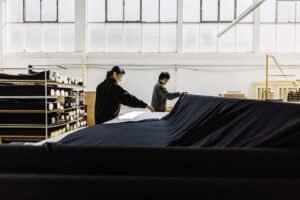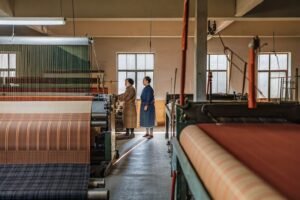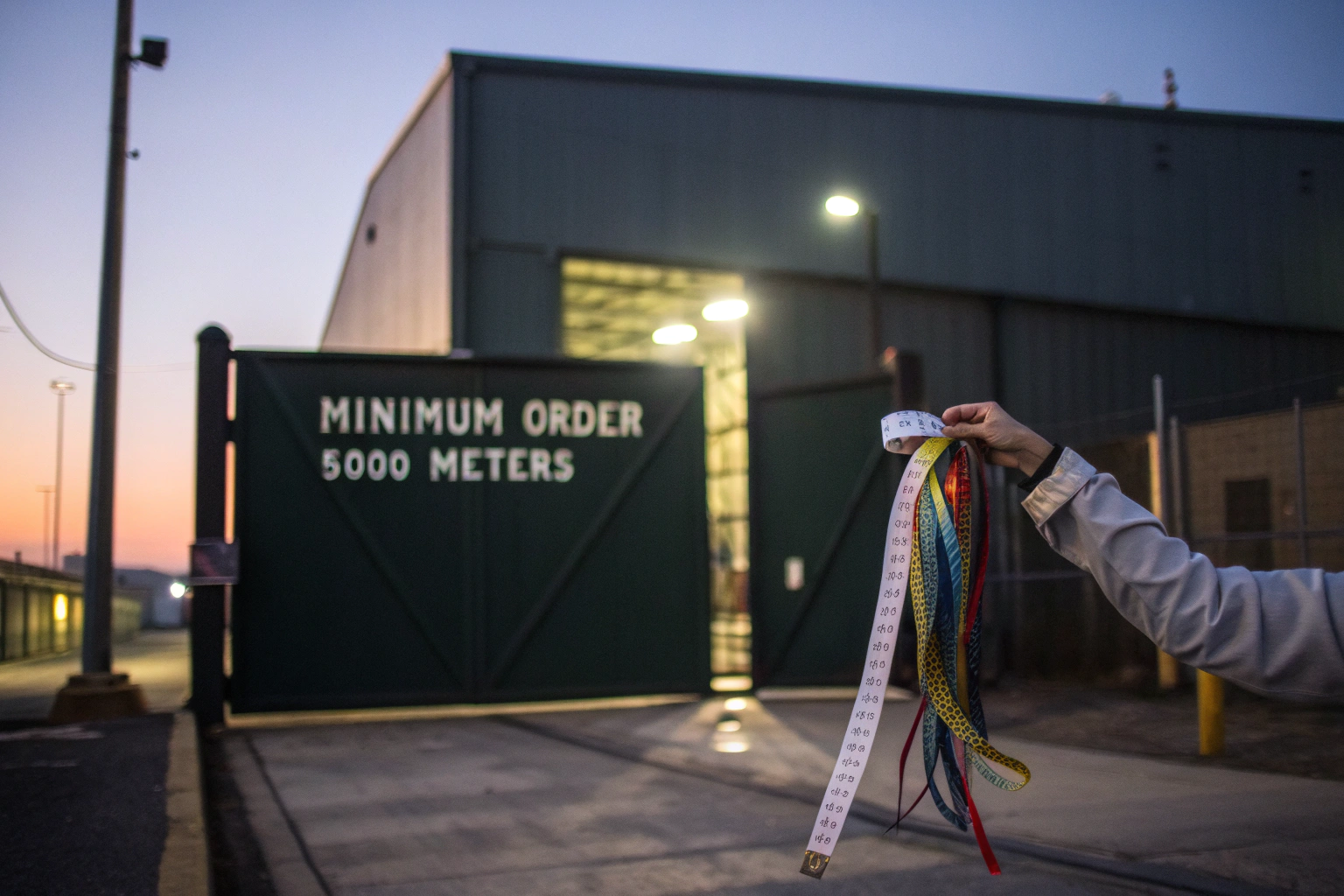
I’ve been watching a quiet revolution happen in the textile supply chain over the last three years. Distributors who used to be the lifeblood of the big, traditional mills are walking away. They’re tired of being treated like order-takers for 5,000-meter minimums, tired of financing massive inventory that takes six months to sell, and tired of losing deals because a mill refuses to run a custom color for less than a full container. The pain point is no longer just about price per meter. It’s about the cash flow strangulation that rigid, high-MOQ mills impose on businesses that need to move fast and stay nimble. These distributors are bleeding money on storage, fire-selling dead stock, and watching smaller, more agile competitors eat their lunch.
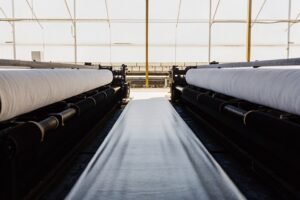
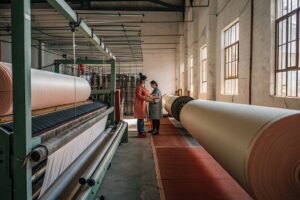
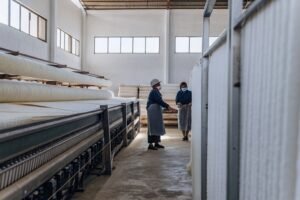
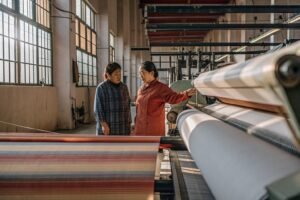
They’re switching to us because Shanghai Fumao has re-engineered the supply chain around flexibility. We don’t just talk about "small batch." We built our entire Keqiao operation—from our weaving factory to our cooperative dyeing and finishing plants—to make low-minimum customization profitable for us and affordable for you. We hold massive greige inventory of our most popular cotton, linen, and blended qualities. When a distributor needs 300 meters of a specific navy blue ring-spun cotton for a boutique client, we don’t groan. We pull the greige fabric from stock, push it through our partner dyeing factory’s rapid sampling line, and ship it. The distributor doesn’t need to gamble on 3,000 meters of a trend color. They order what they sell, re-order what works, and let their warehouse breathe again.
I’ve spent two decades in Keqiao watching mills that worship volume slowly lose their grip on the market. The modern distributor, whether they’re in Los Angeles, Hamburg, or Melbourne, faces a fragmented retail landscape. Their customers—small brands, boutique chains, online sellers—demand variety, speed, and zero inventory risk. A mill that demands a 5,000-meter MOQ is asking the distributor to absorb all that risk. We flip that equation. We absorb the raw material risk so the distributor can focus on selling, not warehousing. That’s the new deal, and it’s why the phone in our sales office keeps ringing.
What Makes High-MOQ Mills a Financial Trap for Modern Distributors?
A high minimum order quantity isn’t just a number. It’s a financial anchor tied to your balance sheet. When a distributor in the USA or Europe commits to a 4,000-meter run of a single cotton quality in a single color from a traditional mill, they are not just buying fabric. They are buying a storage problem, an interest expense, and a ticking time bomb of fashion obsolescence. The mill gets paid and moves on. The distributor is left holding the bag, hoping the market doesn’t shift before they can move the last roll.
The math is brutal. Let’s say a distributor buys 4,000 meters of a premium cotton twill from a traditional Turkish or Indian mill at $4.20 per meter. That’s $16,800 in cash tied up in one color. They put it in their warehouse. The carrying cost—rent, insurance, labor, and the cost of capital—is roughly 2% to 3% of the inventory value per month. If the fabric sits for five months before the last meter is sold, the carrying cost has eaten $2,100 in profit. That assumes it all sells at full price. If the color turns out to be a seasonal miss and 1,000 meters go to clearance at a 40% discount, the loss on that dead stock wipes out the profit from the 3,000 meters that sold well. The distributor worked for a year to break even or lose money, all because the mill’s MOQ forced them to overbuy.
At Shanghai Fumao, we designed our model around the exact opposite philosophy. Our distributors order 500 meters. They sell it in eight weeks. They re-order. The carrying cost is a rounding error. The clearance risk is zero. This is why the modern distributor is fleeing the high-MOQ mill. They’ve done the math, and they realize that the slightly lower price per meter is a mirage that disappears the moment you factor in the true cost of forced overstock. I’ve seen a mid-sized Canadian distributor in 2023 nearly go bankrupt because of a single bad bet on a "Millennial Pink" cotton poplin that a European mill forced him to take in a 3,500-meter minimum. He sold 600 meters. The rest sat in his Toronto warehouse for 18 months before he paid a liquidation company to haul it away. He called me right after and said, "Never again."
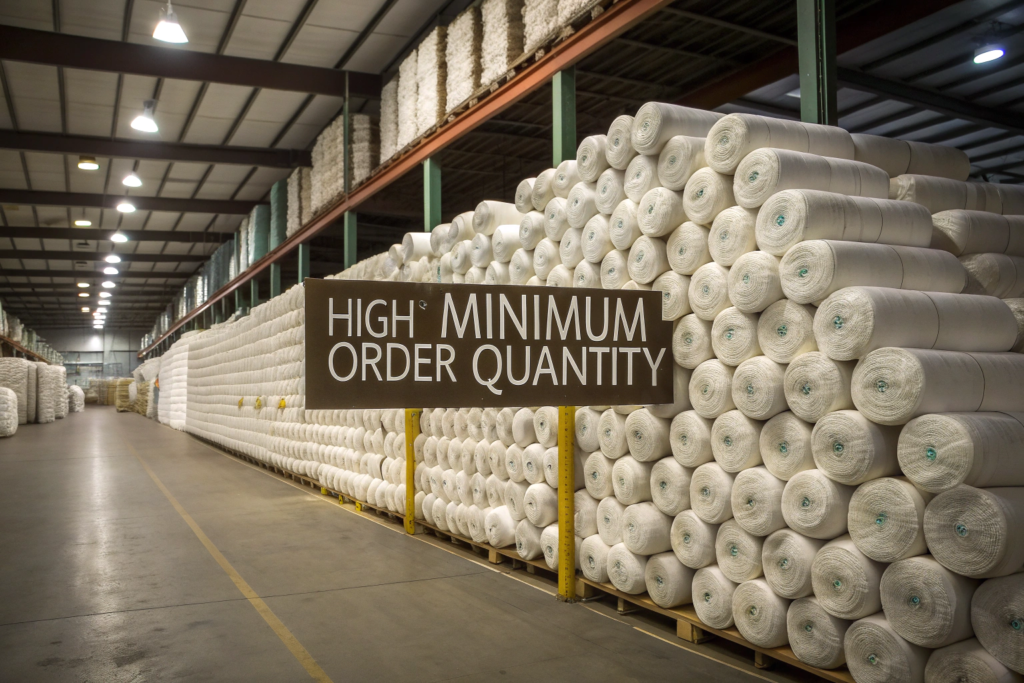
How Does Forced Overstocking Destroy Your Working Capital and Warehouse Space?
Working capital is the oxygen of a distribution business. It’s the cash you use to pay your team, fund your credit terms to your best customers, and seize opportunities when a hot brand calls you with a rush order. When a high-MOQ mill forces you to buy 12 months’ worth of inventory in a single shot, you’re suffocating your own business. That $20,000 wire transfer for a single order could have been used to buy ten different fabrics in smaller quantities, each matched to a specific, confirmed customer demand. Instead, it’s all-in on one color, one quality.
Warehouse space is the second choke point. A roll of woven cotton takes up physical room. A pallet of 4,000 meters is a significant footprint. Distributors tell me all the time: "I had to rent an external storage unit just for the excess inventory from XYZ mill." That’s a fixed monthly cost that adds zero value. It’s a penalty for inflexible sourcing. Worse, that overstocked fabric physically blocks the fast-moving inventory. Your warehouse crew is moving the same sad pile of unsold "Season 23 Olive" out of the way every day to reach the new arrivals. It slows down your entire operation.
By contrast, distributors who switch to our model turn their warehouse into a dynamic, just-in-time hub. They keep core basics from us in steady, predictable re-order cycles, and they use our rapid turnaround to bring in small, trend-driven colors that they never physically stock. They buy it for a specific customer order, it arrives, they cross-dock it immediately, and it’s out the door in a week. Their warehouse becomes a flow-through center, not a storage tomb. This is the new paradigm of textile distribution, and it’s why the old mills are losing market share so quickly. A detailed article on how to calculate inventory carrying cost percentage for textile wholesalers lays bare the reality that storage costs routinely exceed 20% of inventory value annually. Distributors are finally waking up to this hidden tax.
Why Are "Economies of Scale" a Lie When Cotton Trends Shift Rapidly?
Economies of scale—the idea that bigger production runs are always cheaper—is the favorite argument of the high-MOQ mill. And in a world of stable, predictable demand for generic commodities, it’s true. But the cotton apparel market is not that world. Trends now shift with a TikTok video. A specific shade of butter yellow can be the hottest color on the internet for six weeks and then vanish overnight. A fabric texture, like seersucker or a specific slub, can go from "must-have" to "last season" in the blink of a Gen Z influencer’s eye. In this environment, the economy of scale becomes the economy of obsolescence.
The traditional mill’s "discount" for a large run is, say, $0.30 per meter. You save $900 on a 3,000-meter order. But if the trend dies and you have to liquidate just 500 meters at a $2.00 per meter loss, that’s a $1,000 loss. Your "savings" just evaporated, and you’re in the red. The mill profited from the production efficiency. You absorbed the market risk. The economy of scale worked for them, not for you.
Our flexibility at Shanghai Fumao is designed for this new reality. We don’t force you to forecast a trend six months in advance. We let you test a trend with a 200-meter order. If it sells out in three days, you re-order 500 meters. If it flops, you’ve lost almost nothing. You can then pivot to the next trend without the corpse of the last one rotting in your warehouse. I saw this play out in real-time with a distributor from Los Angeles in early 2024. He caught the "coastal grandmother" linen trend early. A traditional mill wanted a 2,500-meter MOQ for the specific oatmeal-colored linen. He bought 300 meters from us instead. He sold out to his boutique clients in two weeks, re-ordered 600 meters, sold out again, and by the time the trend peaked, he had moved 2,500 meters total—all without ever holding more than 600 meters of inventory at once. He captured the entire trend profit with a fraction of the risk. That’s not an economy of scale; that’s an economy of intelligence.
How Does Fumao’s "Small-Batch Customization" Actually Work for Distributors?
When distributors first hear "small-batch customization from China," they’re skeptical. The old model taught them that Asian mills only want container-sized orders. They assume that a low MOQ means a massive price premium. I enjoy shattering that assumption. Our small-batch system works because we’ve vertically integrated the risk-sharing across our own network in Keqiao. We don’t just own a weaving factory; we have deep, exclusive partnerships with dyeing houses, printing units, and finishing plants within a 50-kilometer radius. This allows us to batch small orders from multiple distributors into a combined production run that keeps the machines efficiently loaded.
Here’s how it works on the ground. We maintain a massive, constantly replenished greige inventory of our top 50 cotton and cotton-linen qualities. A distributor in Germany emails our sales team: "I need 350 meters of your 200 GSM ring-spun cotton twill in Pantone 19-4052 Classic Blue." We check the greige stock. It’s there. We cut 380 meters (allowing for process loss), and we send it to our partner dyeing lab. They don’t run it in a massive, 500kg jumbo dyeing vessel. They run it in a smaller, precisely controlled sample-to-bulk jet dyeing machine that handles 50-100kg loads efficiently. Because we’ve pre-negotiated weekly capacity slots in this dye house, we’re not fighting for space with a 10,000-meter order from a mega-brand. Our pre-booked "small batch" slots guarantee a 7-10 day dyeing turnaround.
The finishing is equally streamlined. Once dyed, the fabric goes to our finishing partner for drying, width setting on a stenter frame, and a softening or functional finish as specified. Our quality control team then inspects every meter under our four-point system, and we ship it. The distributor gets a custom, on-trend color, produced to the exact same quality standard as a bulk order, without ever touching the MOQ that traditional mills demand. This is the operational backbone of Shanghai Fumao‘s value proposition to distributors worldwide.
How Do You Access 30,000+ Stock Designs Without Paying Bulk Penalties?
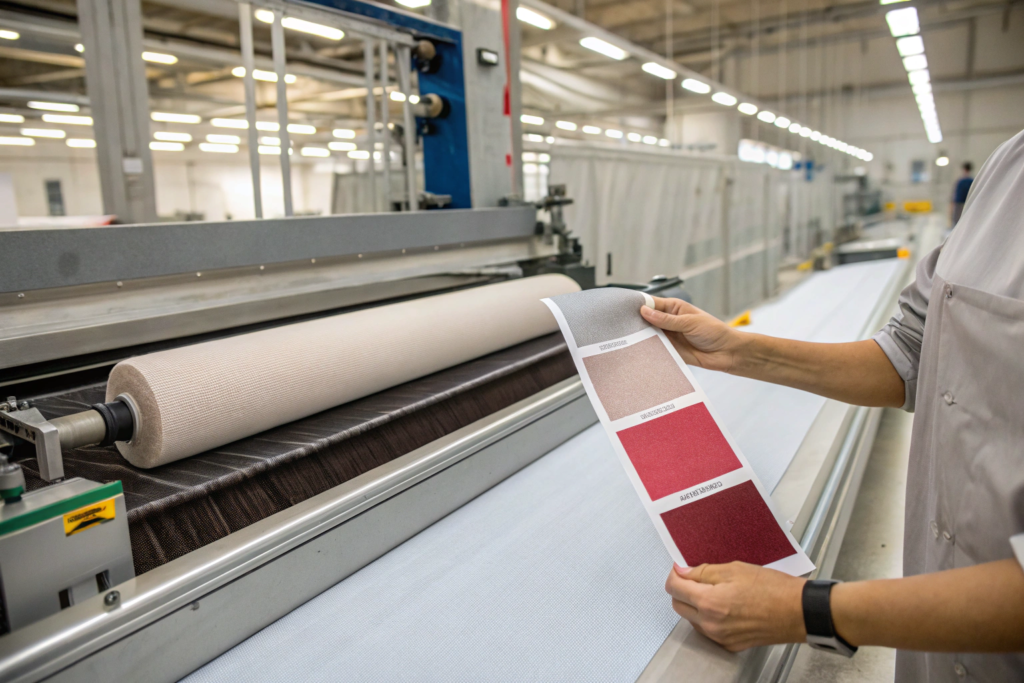
"Our stock design library is a distributor’s secret weapon." We develop and catalog over 30,000 seasonal designs across wovens, knits, jacquards, and special finishes. These are not just stale, leftover fabrics. They are actively curated designs that our 20-plus R&D experts develop each season based on trend forecasts, AI-driven analysis of global runway data, and direct feedback from our best clients. For a distributor, this library is a goldmine of differentiation.
A traditional mill asks you to commit to a design 6 months before the season and buy 4,000 meters of it. If your customers don’t like it, tough luck. We allow distributors to browse our active design library and order any stock-supported design at a low minimum, often 200 to 300 meters. Because we’ve already developed the design—the yarn type, the weave structure, the base finish—the R&D cost is already amortized. You don’t pay a "custom design fee." You pay the stock price, even though you’re ordering a boutique-sized quantity.
This allows a distributor to offer their clients an almost infinite variety. A small boutique brand can come to a distributor and say, "I need a unique, textured cotton for my autumn blazers, something that isn’t in every other showroom." The distributor can pull out our digital catalog, show the brand 20 relevant options with physical swatch cards we’ve already provided, and the brand feels like they’re getting a custom-developed fabric. In reality, the distributor is accessing the depth of our Keqiao R&D engine without paying a penny in development costs. This completely changes the distributor’s value proposition from "guy with a warehouse of basics" to "curator of global textile innovation." A detailed case study on how SME textile distributors use Chinese mill stock services to increase SKU variety without inventory risk demonstrates this shift perfectly.
What Dyeing and Finishing Turnarounds Can Distributors Actually Expect?
Speed is the currency of modern distribution. If you can promise a brand a custom-colored fabric in three weeks while the traditional mill is quoting 10 to 12 weeks, you win the business. Period. Our dyeing and finishing turnaround for a standard small-batch order (200 to 800 meters) is 10 to 14 working days from lab-dip approval to shipment-ready. For a repeat color that’s already in our recipe database, we can shave that to 7 working days.
Here’s the realistic timeline we train our distributors to quote their clients. Day 0: The distributor sends us the Pantone reference and the fabric quality code. Day 1-3: Our lab prepares the lab dip (a small dyed swatch for color approval) and emails a digital photo, followed by a physical swatch via express courier. Day 4: The client approves the lab dip, or we adjust and re-submit (this is the only variable). Day 5-12: Bulk dyeing and finishing. The fabric goes through the dyeing cycle, the stenter for width and shrinkage control, and the final softening or functional finish. Day 13-14: Our QC inspection, packing, and handover to the forwarder.
That’s two weeks from color approval to dock. Compare that to the old model: a high-MOQ mill takes 3-4 weeks just to schedule the dyeing, another 2-3 weeks for bulk production, and often batches your small-ish order with a larger run, adding further delay. Our speed comes from our pre-booked small-batch capacity and our refusal to treat low-meterage orders as second-class citizens. I had a distributor from the UK in early 2025 who won a major contract with a boutique hotel chain for custom-colored cotton linen bedding. The chain needed 15 different colors, 400 meters each. A traditional mill quoted a 14-week lead time and a 3,000-meter MOQ per color. We did it in 4 weeks, hitting all 15 colors within the distributor’s budget. The distributor secured a $200,000 contract because our dyeing turnaround made the impossible possible. He told me, "Your speed is my only competitive advantage."
What Global Logistics Advantages Do Distributors Gain by Partnering with Fumao?
Logistics is where the hidden margin lives. A distributor can source the best fabric in the world, but if the shipping is unreliable, the customs clearance is a mess, and the landed cost is unpredictable, the business model collapses. One of the key reasons distributors are switching to us is that we de-risk the logistics chain. We’re not just a mill that hands off your fabric to a random forwarder at the dock. We own the logistics conversation from our packing factory in Keqiao to your warehouse door.
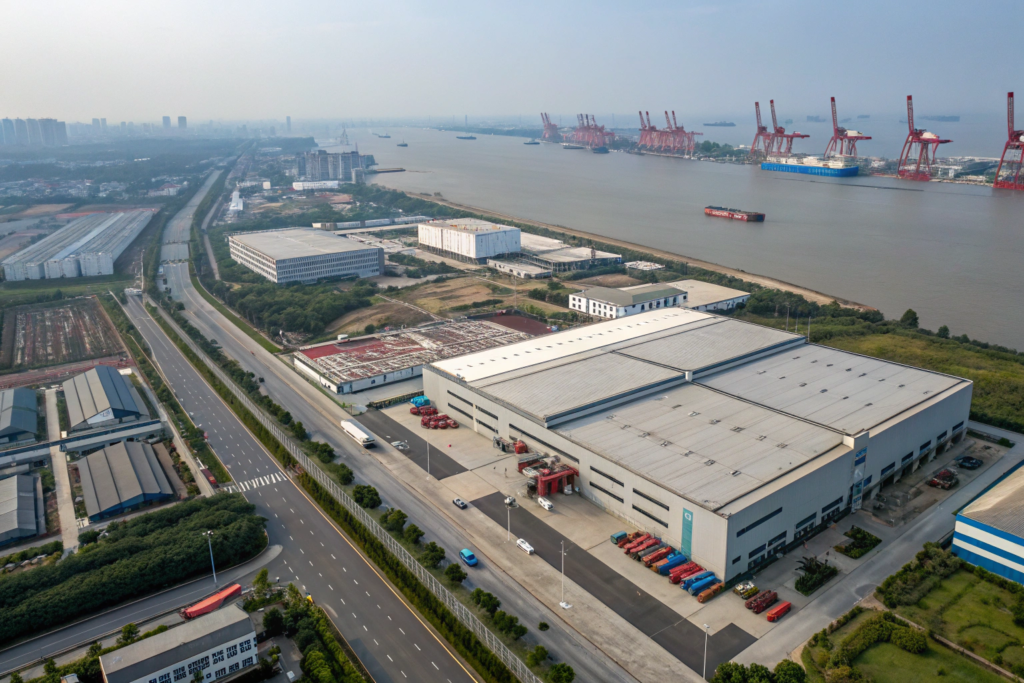
Our location in the heart of the world’s largest textile cluster gives us an inherent advantage. Keqiao is not a remote village; it’s a logistics powerhouse with dedicated "Silk Road Keqiao" initiatives that streamline customs clearance and offer multimodal transport options. We use the Ningbo-Zhoushan and Shanghai ports, some of the most connected ports on the planet. But the real advantage is our internal logistics team. They don’t just book a container; they analyze real-time port congestion data, predict delays during the August-to-October peak, and offer distributors route alternatives. Need to split a shipment between Los Angeles and New York without paying double freight? We can do that. Need your goods to bypass a congested West Coast port and enter via a Gulf Coast hub? We can analyze that cost-benefit with you. This is a level of logistics sophistication that a traditional, production-obsessed mill rarely offers, and it’s a direct profit-protection tool for our distributors.
How Does "Silk Road Keqiao" Streamline Customs Clearance for Your Orders?
The "Silk Road Keqiao" isn’t a tourist campaign; it’s a government-backed trade facilitation program designed to make textile exports from our region frictionless. Because we operate within this framework, our export documentation is digitized and pre-verified. We use certified customs brokers who specialize exclusively in textiles and are physically stationed within the export processing zones. This means our declarations are accurate, our HS codes are bulletproof, and our shipments are rarely flagged for physical inspection.
For a distributor importing into the USA or the EU, this is a huge relief. A customs hold at a US port costs money—demurrage fees, storage charges, and the dreaded "exam" fees if Customs and Border Protection (CBP) decides to crack open your container. Because our documentation is consistently flawless, our containers tend to slide through customs with minimal friction. We also provide all the necessary certification upfront—the GOTS certificates for organic fibers, the OEKO-TEX certificates for chemical safety, and the detailed fiber composition breakdowns. This proactive documentation prevents the back-and-forth emails with customs brokers that kill days and add costs.
I recall a British distributor in late 2024 who switched to us after a nightmare customs experience with a high-MOQ South Asian mill. The mill had misclassified a cotton-linen blend, and his container was held at Felixstowe for three weeks while his broker fought with HMRC. The demurrage alone was £2,800. He switched to us, and his first two shipments cleared customs in under 48 hours. He told me, "The customs clearance speed is worth the price of admission alone." An excellent resource on how Chinese textile export facilitation programs like Silk Road Keqiao reduce customs bottlenecks for EU importers explains the mechanics behind this streamlined process in detail.
Can Fumao Ship Directly to Your Client’s Boutique and Bypass Your Warehouse?
This is the ultimate cash-flow hack for distributors: virtual inventory. You sell the fabric to a boutique client. You collect their payment. We ship the fabric directly from Keqiao to the boutique’s doorstep in Paris or Portland, with your company name on the shipping documents, not ours. The fabric never touches your warehouse. You never pay for receiving, storing, picking, or re-shipping. You just profit on the transaction. We call this "blind shipping" or "drop shipping" for wholesale.
This completely transforms a distributor’s business model. You become a design curator and a relationship manager, not a logistics company. Your overhead plummets because you don’t need to rent a warehouse large enough to hold all the inventory you offer. You can scale your catalog to include hundreds of our stock fabrics and thousands of our design variations, all sold as "Available for Immediate Order," without owning a single meter of it. You sell it, we ship it, and the boutique thinks it came from your warehouse because the branding on the packing slip is yours.
We set up a specific operational workflow for our distribution partners who want blind shipping. We create custom carton labels, packing slips, and even branded selvedge tape (for larger contracts). The fabric is shipped under your company’s shipper name. The boutique receives a beautifully packed, branded package from their trusted local distributor, never knowing it was drop-shipped from China. This service is a massive competitive moat. A distributor using this model can win business from a brand that a traditional, warehouse-dependent competitor can’t touch because they don’t have the cash flow to stock a new fabric. I have a distributor in the Midwest USA who runs his entire six-figure business from a home office using this model. He sells our fabric to 40 boutique accounts, we ship it, and he never touches a roll. He’s the most relaxed, profitable distributor I know. This strategy is detailed in various supply chain guides on how fabric wholesalers can use drop shipping to scale without inventory expansion, and it’s quickly becoming the gold standard for agile distributors.
How Can Distributors Use Flexibility to Win High-Margin Boutique Contracts?
Boutique brands are the most profitable clients a distributor can have, and they are the most demanding. They don’t want a warehouse shelf full of commodity black twill. They want a partner who can help them differentiate. They want exclusive textures, custom-dyed colors that match their seasonal mood board, and the ability to order 150 meters instead of 1,500 meters. Traditional mills ignore these boutiques because the volumes are too low. That’s where a flexible distributor, armed with our supply chain, walks in and takes the business at a premium margin.
When you partner with Shanghai Fumao, you walk into a boutique meeting with an unfair advantage. You don’t bring a price list for 20 standard fabrics. You bring a tablet showing our entire 30,000-design library, and you say, "Pick anything you like. We can get it in 300-meter dye lots. We can match this specific vintage scarf color you love." The boutique owner’s eyes light up. They’ve been told "no" by every other supplier. You’re saying "yes." And because you’re solving a real creative problem, they don’t nickel-and-dime you on the price. They pay a premium for the service of customization. Your margin per meter on these boutique contracts is often double what you’d make on a commodity bulk sale.
This is a relationship-first strategy. You become the boutique’s creative partner. You bring them our trend analysis. You show them how they can use our premium ring-spun cotton slub to elevate their line. You handle the complexity of a 12-color capsule collection with varying order quantities per color, a logistical nightmare that a traditional mill would reject outright. You win the contract because you’re the only distributor who can actually execute it. And you win it at a margin that makes the extra coordination effort wildly profitable.

How Do You Offer Custom Pantone Matching Without Scaring Off Small Clients?
The dirty secret of custom color is that most mills make it intentionally difficult to discourage small orders. They quote a $500 lab-dip fee, a 2,000-meter MOQ, and an 8-week lead time. They’re effectively telling the small client to go away. We’ve completely flipped this. We charge a modest, refundable lab-dip fee that we deduct from the bulk order, and we maintain a database of over 10,000 active color recipes. This means that a shocking number of "custom" colors already exist in our system.
When a distributor approaches us with a boutique’s Pantone request, our lab team first checks our existing digital color atlas. We often find a near-perfect match from a previous client order. We can ship a physical swatch of that existing color to the boutique within 24 hours. If it’s a true new color, our lab creates the lab dip in 48 hours. We email a high-resolution photo for preliminary approval, and we courier the physical lab dip to the distributor or directly to the brand. This process is fast, transparent, and low-cost.
The key to not scaring off small clients is to make the color development process feel exciting, not daunting. Distributors using our service tell their clients, "We have an in-house color lab in China that specializes in small-batch matching. We can nail your brand’s signature shade with a 300-meter minimum." The client feels valued and special. They’re not a small fish being rejected by a big mill; they’re a VIP getting the white-glove treatment from a creative partner. This is how you build sticky, long-term relationships that no low-price competitor can steal. A practical marketing article on how to sell custom textile services to small fashion brands without overwhelming them provides excellent scripts and strategies for positioning this service correctly.
What Is the Profit Margin Difference Between Bulk Commodity Sales and Flexible Service Sales?
Let’s talk hard numbers. A commodity sale—a standard cotton poplin in a stock white—is a price war. The distributor competes against every other distributor with a similar fabric. The market price is visible on Alibaba. The customer demands the lowest possible price per meter. Margins on commodity sales are razor-thin, often 8% to 15% gross margin. It’s a volume game. You need to move mountains of fabric to make real money, and you’re one price war away from losing the account.
A flexible service sale—a custom-dyed, ring-spun cotton slub in a unique sage green, produced in a 400-meter lot for a boutique’s capsule collection—is a value war, not a price war. The customer cannot easily compare prices because the service is unique. They are paying for the solution, the speed, and the lack of risk. Margins on these sales routinely hit 25% to 40% gross margin. The boutique is happy to pay a premium because you saved them from having to buy 2,000 meters of dead stock. You’re sharing the value you created by de-risking their business.
Here’s a specific example. A distributor sells a commodity 100% cotton poplin at $5.50 per meter, having bought it from a mill at $4.80. That’s a $0.70 gross profit per meter. He sells 3,000 meters. Total gross profit: $2,100. Another distributor uses our flexible model to source a custom ring-spun slub cotton for a boutique. Our price to him is $5.80. He sells it to the boutique at $8.50 per meter, a $2.70 gross profit. He only sells 400 meters. Total gross profit: $1,080. But he did it with 87% less capital, zero inventory risk, and in a fraction of the time. And that boutique will order their next collection fabric from him, not from the commodity guy, because he solved a creative problem, not just supplied a raw material. The per-meter profitability is 4x higher, and the customer relationship is 10x stickier. This is the fundamental shift. You can read a data-driven analysis on the margin comparison between commodity textile distribution and value-added service models that confirms this profitability gap is accelerating the shift away from high-MOQ mills.
Conclusion
Distributors are not abandoning high-MOQ mills because they dislike tradition. They’re making a rational, profit-driven decision to survive in a retail world that no longer rewards bulk inventory. The old model forces you to finance the mill’s production efficiency with your own working capital, to warehouse their excess output, and to absorb the risk of their rigid minimums. The new model, which we’ve built at Shanghai Fumao, flips the burden. We carry the greige inventory, we manage the flexible dyeing capacity, and we handle the complex logistics. You gain the ability to say "yes" to every small brand, every custom color, and every boutique opportunity, all while holding less inventory and making higher margins per meter.
Flexibility is not a slogan here. It’s the operational reality of our 50km supply chain network in Keqiao, our 30,000-plus stock design library, our rapid small-batch dyeing lines, and our global shipping expertise. It’s the competitive advantage that lets you walk into a client meeting and promise things no traditional distributor can promise.
If you’re a fabric distributor who’s tired of being told "no" by your mills and tired of watching your profit get eaten by storage costs and clearance sales, we should talk. Contact our Business Director, Elaine, and ask for our "Distributor Flexibility Kit." She’ll send you a package of our best-selling cotton qualities, a sample of our Pantone matching capability, and a logistics cost simulation for your specific port. Reach out to elaine@fumaoclothing.com and put "Distributor Partnership" in the subject line. Let’s build a more agile, more profitable distribution business together.