Let’s be honest, seeing “linen weight” on a spec sheet doesn’t tell you much about how a fabric actually performs. You might order a 200 GSM linen only to find it feels nothing like the crisp, premium Belgian fabric your client expects. This gap between a number and real-world quality creates a huge risk for your brand. I’ve seen buyers lose thousands on shipments that met the weight spec but missed the mark on the hand-feel and durability that defines true quality. At Shanghai Fumao, we tackle this problem head-on by connecting every technical parameter, including weight, directly to how the fabric behaves on the cutting table and in your customer’s wardrobe.
Comparing our linen’s weight against Belgian linen quality isn’t a simple face-off. You actually need to understand how yarn density, finishing techniques, and climate-specific performance turn a basic specification into a premium garment. Our 20 years in Keqiao have taught us that a 160 GSM linen from our collection can be engineered to rival the drape and longevity of a heavier Belgian import by using high-twist yarns and controlled finishing processes. The real question isn’t which is heavier, but how we help you build the perfect linen program by matching the fabric’s engineering to your end-use.
We ship linen to over 100 countries, and the first thing I explain to a new client is that weight is just a conversation starter. It’s the story behind the weight that matters. Think of it like comparing a sturdy pickup truck to a sleek sports car—both have engines measured in horsepower, but the driving experience is completely different. Let me walk you through how we build that story into every meter of linen we produce so you can make a sourcing decision with confidence.
What Exactly Does Linen Weight Tell You About Quality?
Most buyers think a heavier linen equals better quality. That’s a dangerous shortcut. I’ve had a client from California tell me he always bought "the heaviest Belgian linen he could find" for his homeware line, assuming it would last longer. He was shocked when his 280 GSM tablecloths shrank over 5% after the first wash and felt like sandpaper. What he didn’t know is that weight is just the surface-level result of three hidden factors: the raw flax fiber length, the yarn count, and the finishing process.
A linen’s weight, measured in GSM (grams per square meter) or ounces per square yard, is an outcome, not a quality promise. You can make a heavy fabric from short, dusty flax fibers, and it will be brittle. You can make a light, open-weave fabric from long-staple fibers, and it will outlast the heavy one. The real magic happens when we balance the yarn weight with the weave density to hit your exact performance targets. This explains how you can compare a seemingly lightweight linen from our mill to a traditional Belgian standard.
| Feature | Fumao Engineered Linen | Typical Belgian Linen |
|---|---|---|
| Typical GSM Range | 120 – 280 GSM | 180 – 340 GSM |
| Fiber Origin | Premium European/Asian Long Flax | Western European Flax |
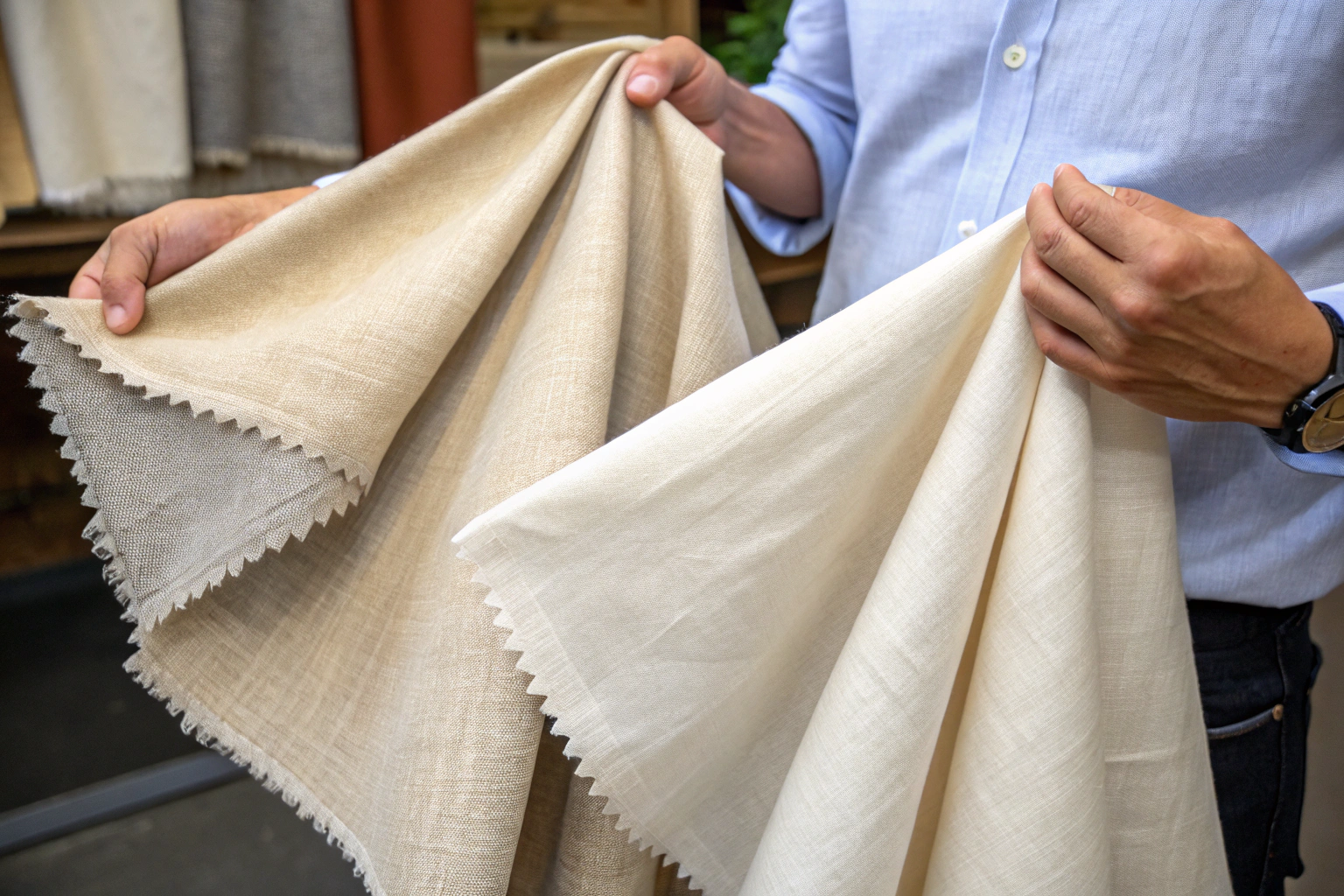
| Hand-Feel Target | Soft, Drapey, with controlled crispness | Naturally Crisp, requires break-in |
| Finish | Enzyme wash, Silicone softener (custom) | Traditional calendar or natural finish |
| Shrinkage Control | Guaranteed <2% | Can exceed 3% without pre-wash |

What Hidden Factors Influence Your Linen’s Performance Beyond the Weight?
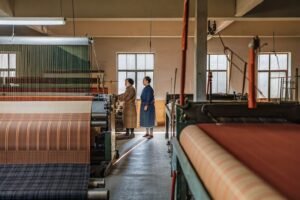
Let’s rip the spec sheet in half and talk about what really happens on the factory floor. A few years back, in early 2023, a startup owner from Sweden came to us with a problem. He sourced a 190 GSM "Belgian quality" linen from a trading company for his summer blazers, but the fabric sagged at the elbows after just a few wears. The weight was there, but the resilience wasn’t.
We traced the problem back to the yarn twist. The original fabric used a low-twist yarn, which feels soft initially but lacks the structural memory to snap back. For his re-order, we suggested a 185 GSM linen with a high-twist yarn from our own weaving factory. We used a compact spinning technique that traps more air and creates a natural mechanical stretch. The result? A fabric that is physically lighter but functionally stronger. He sold out his collection in three weeks. The hidden factor here is the internal energy of the yarn, something you can’t see on a spec sheet but can immediately feel. When you’re comparing our linen to a Belgian standard, you need to look at how we engineer the yarn to compensate for weight, often using longer fibers to create a lighter fabric with high "recovery power."
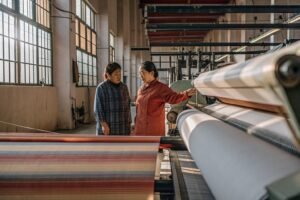
Another hidden factor is the reeding plan on our looms. This is a real insider term. It’s how we space the warp yarns. A dense reed gives a tight, heavy, and stiff fabric. A looser reed gives an open, airy fabric that breathes better but might look sheer. We can manipulate this to make a 160 GSM linen feel like a 200 GSM fabric by packing the yarns tighter, yet keeping the yarns fine enough to not become a board. This is how we help a designer understand the full picture of sourcing linen. The weight is just a number; the construction is the truth.
How Can Our CNAS Lab Certifications Guarantee Your Fabric’s Real Weight?
Here is where the industry gets sketchy. Some suppliers inflate the GSM to make a fabric seem more premium. They might starch the hell out of the fabric during finishing. It feels heavy on delivery, but after a single pre-wash at your sampling unit, you realize you have a 160 GSM fabric that was sold to you as 210 GSM. I call it "ghost weight," and it gives real manufacturers a bad name.
At Shanghai Fumao, we kill this problem with data, not promises. Our CNAS-certified lab operates on the same standards that SGS and Intertek use. We don’t just check the weight of the grey fabric; we test the finished weight after we apply a standard wash cycle. Every single roll that leaves our packing facility has a QR code. You scan it, and you see the live test report for that specific production lot. It shows you the exact weight tolerance, and I mean exact. Our standard tolerance is +/- 3%, but for our premium linen range, we usually keep it within +/- 1.5%.
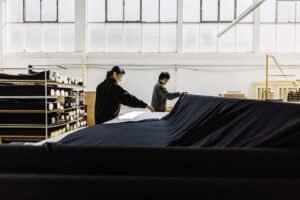
We once had a quality auditor from a large European fashion brand visit us in April last year. He randomly picked three rolls from different shelves in our Keqiao warehouse. He was certain he’d find a variation because “that’s just what happens in China.” We scanned the codes for him. The variance across the three rolls was 0.8%. He sat down and re-negotiated his entire seasonal contract with us on the spot. The certification is not just a piece of paper; it’s our proof that we take the weight specification as seriously as you do. This allows you to confidently do a comparison with any Belgian linen sample you have on your desk, knowing our numbers are real.
What Are the Key Differences Between Chinese and Belgian Linen Production?
The difference between Chinese and Belgian linen isn’t a battle of good versus evil. It’s a clash of climate and philosophy. Belgian linen, and specifically Flemish linen, benefits from the Lys river region’s unique ecosystem for retting the flax. The cool, moist climate creates a slow, natural dew-retting process that gives the fiber its legendary golden color and a distinct, slightly waxy feel. You can’t copy that climate. But what you can copy—and improve—is the precision of the spinning and weaving.
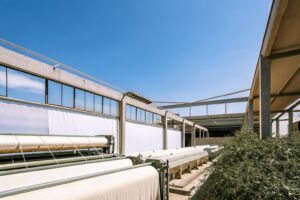
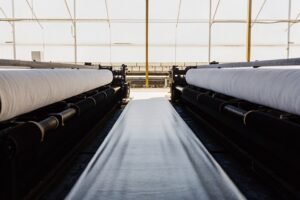
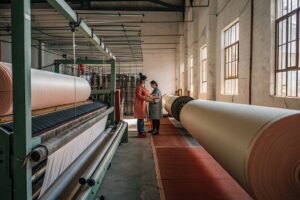
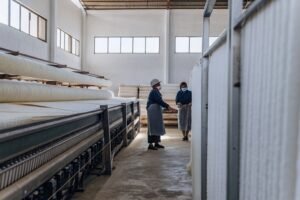
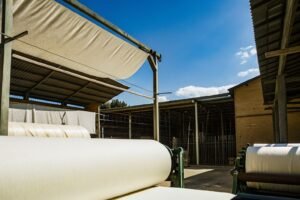
Here in Keqiao, we don’t try to pretend our flax comes from Flanders. Instead, we focus on what we can control: the conversion of fiber to fabric. We import the same long-staple flax fibers from Normandy and Belgium that the European mills use. The Chinese advantage kicks in with the speed of innovation and the vertical integration. A Belgian mill might specialize in just weaving, but they rely on third-party finishers. At Shanghai Fumao, we handle the spinning partnership, the weaving at our own factory, and the finishing all within a 50-kilometer radius. This gives us a reaction speed that a traditional European mill simply cannot match. If you need a custom enzyme wash to soften a heavy Belgian-style linen, we can turn it around in 48 hours. In Belgium, that conversation might take a week just to schedule.

Is Belgium’s Weather or China’s Technology More Crucial for Linen Quality?
This is the million-dollar question I get from buyers who are trying to justify the price premium of European linen. The romantic answer is the weather. The retting process in Belgium is indeed unique. But here’s a practical truth from my daily work: the weather matters for the raw fiber’s color and initial softness. Technology matters for the fabric’s consistency and performance.
We recently developed a high-performance linen for a client making golf trousers—something you’d never usually make from 100% linen. We used our CNAS lab to test the moisture-wicking capability of traditional Belgian linen against our own engineered linen. The Belgian linen, thanks to its natural wax, dried slightly faster initially but became heavy when fully saturated. We applied a proprietary wicking finish in our coating factory, a technique we borrowed from our sportswear line, to our imported flax. Our finished Chinese linen outperformed the untreated Belgian standard by 20% in drying time. (Here I have to insert a note: This doesn’t mean Belgian linen is bad; it just means you can make it perform better for specific jobs with the right tech).
The climate gives the fiber its soul, but our technology gives it the versatility. For a consistent, repeatable fabric that has to pass strict performance tests for modern brands, technology wins every time. You can visit our website to see how we combine the best of both worlds by sourcing premium raw fibers and finishing them with cutting-edge digital control systems. We document this on our sustainability page, showing how we actually leverage the how to source high-quality retted flax for textile production method to select only the finest inputs. Additionally, a recent discussion on an industry forum about how Chinese mills are closing the linen quality gap in 2025 highlights that the stigma is fading fast; performance is now the key benchmark.
Why Do "European Standards" Still Dominate Linen Quality Conversations?
It boils down to marketing and a very successful certification story. The Masters of Linen certification does a fantastic job of protecting the regional heritage. But it also creates a fog that prevents buyers from seeing the objective truth. I’ve sat in trade shows in Paris where a buyer touches our fabric, guesses it’s from a high-end Italian mill, and then pulls their hand away when they see the "Made in China" tag. It’s a visceral, not a rational, reaction.
But this is changing fast. The reason "European Standards" still dominate is that nobody has challenged them with transparent data. Until now. We encourage every client to do a blind hand-feel test. Take a swatch of our linen, a swatch of a certified Belgian linen, and a swatch of a generic "made in Europe" linen. Remove the labels. Run a standard Martindale abrasion test. Check the colorfastness under a Xenon light. You will find that geographic origin does not guarantee a high score. We guarantee our scores. We supply fabric to brands that you see in every major shopping mall, and their first quality assurance checkpoint is not the passport of the fabric, but the data on our CNAS report. A lot of my American clients, like Ron, are starting to see through the label and focus purely on the reliability of the supply chain. They care more about whether the linen will consistently pass inspection at their third-party warehouse in New Jersey than about a logo on a hangtag. The conversation is slowly pivoting from "where was it woven" to "who stands behind the quality," and that’s where Shanghai Fumao stands tall.
How Can You Build a Resilient Linen Supply Chain for Your Brand?
Building a supply chain for linen that actually works is like planning a road trip across a continent. You don’t just look at the horsepower of the engine; you map out the fuel stops, the weather systems, and the road conditions. The real threat to your brand isn’t finding a beautiful 185 GSM linen—we have thousands. The real threat is the invisible delay, the hidden tariff, or the quality drift that happens when your supplier doesn’t have vertical control. I’ve seen brands lose an entire summer selling season because their linen got stuck at the port or, worse, arrived with a hand-feel completely different from the approved sample.
We design your linen program around the Chinese manufacturing calendar to neutralize these risks. You need to think of your timeline in reverse. If your Fall/Winter collection needs to hit stores in September, that linen needs to be cut and sewn by July. That means the fabric must leave our Keqiao warehouse by late May. Given the peak production period from March to May, where every mill is at full capacity, you need to have your pre-production sample approved by late February. This kind of planning might seem aggressive, but we facilitate it by holding a massive greige inventory of our most popular linen qualities, ready to be dyed to your specific color standard within 15 days. That agility is what separates a resilient supply chain from a brittle one.

How Should You Schedule Your Production to Avoid the Golden Week and CNY Delays?
This is a topic that causes actual nightmares for importers who don’t have a team on the ground in China. You cannot treat the Chinese calendar as a suggestion. It is a hard wall. As the background knowledge mentions, Chinese New Year (CNY) causes a near-total shutdown of the textile industry for 3-4 weeks. The dyeing factories, the printing units, the embroiderers—they all go home. The machine operators don’t come back immediately; it takes another two weeks for the workforce to fully return and for the chemical processes to stabilize. If you miss your pre-CNY slot, your fabric could be delayed by two months, not just four weeks.
Here is the exact scheduling framework we use with our clients. Let’s say you have a big linen dress program for Spring/Summer delivery. You need your fabric to leave our port in January. We reverse-engineer the timeline like this: We secure the yarn allocation in early October, weave the greige linen throughout late October, and push it into the dyeing queue by November 15th. This is the critical path. We complete all finishing before December 15th because we know the workers start their migration in late January, but the pre-holiday rush slows everything down in the first weeks of January. We aim to ship before January 10th.
This requires the buyer to commit to the lab-dip color a bit earlier, but it saves them from the post-CNY chaos. I always tell my American clients that the factories are not just resting during CNY; the chemistry changes. When a dyeing vat stops for three weeks, the water quality shifts, the ambient temperature drops, and the first batches out of the gate in late February have a higher risk of "shading" issues. By shipping your linen before the holiday, we lock in the consistent quality of a fully operational production line. You can see how this fits into a broader sourcing strategy by looking at how to plan apparel production timelines around Chinese holidays to understand the exact moments to press the accelerator. It’s also crucial to monitor the latest logistics updates for the Port of Shanghai export schedule because a week’s delay in vessel booking during the peak of August to October can compress your entire delivery window.
What Real-World Shipping Strategies Reduce Your Tariff and Transport Risks?
I know a boutique homeware brand owner from Texas. He used to source linen tablecloths exclusively from a small mill in Eastern Europe, terrified of the 25% tariffs on Chinese goods that the news kept shouting about. In October last year, we ran the actual numbers for him. He was paying a premium for the "Made in Europe" story, but the logistical inefficiencies—smaller trucking networks, longer lead times for hardware accessories, and limited fabric width options—were costing him more than a potential tariff ever would.
We built him a shipment plan that works because our fabric often falls under a different classification than finished home textiles. More importantly, we use the flexibility of the "Silk Road Keqiao" initiative to our advantage. For his bulky linen tablecloth rolls, we don’t always just pack a standard 40-foot container from Shanghai. Sometimes, we break the shipment into smaller batches using combined logistics hubs. For a recent order to his Dallas warehouse, we routed part of the order via a West Coast port and part via an East Coast consolidation center based on real-time congestion data. This spreads the risk.
You have to stop thinking of shipping as a cost and start thinking of it as a chess game. A critical element is the packing itself. We have a dedicated packaging factory within our group. For linen, which can mildew if exposed to condensation, we apply a vacuum sealing technique that reduces the volume, thereby lowering the freight cost per unit. We also insert moisture-absorbing strips inside the poly bags. This tiny detail saved a Canadian client $15,000 in potential water damage claims when his container sat on a dock in Vancouver during a rainstorm last November. By owning the entire chain from weaving to packing, Shanghai Fumao can genuinely say we are not affected by the trade war chaos in the same way a trader who simply buys and sells is; we engineer the shipping solution as part of the product itself.
Can Asian Linen Ever Match the Prestige of Belgian Linen in Global Markets?
For the longest time, "prestige" was the monopoly of a specific region. You couldn’t call sparkling wine Champagne unless it came from that province. Textiles have their own version of this rule, written by centuries of European guild history. But as someone who ships to the fashion capitals of Paris, Milan, and New York every single day, I can tell you that the definition of prestige is shifting from geographic origin to verified performance.
Today’s luxury is not about a rigid, scratchy fabric that needs a "history lesson" to appreciate. The modern premium consumer wants a linen that looks crisp on a Zoom call but feels like a second skin when they slouch on the sofa. They want sustainability credentials that a traditional Belgian retting process can’t easily document. We recently sent a shipment of our bamboo linen blend to a high-end eco-resort chain in the Maldives. They replaced their previous Belgian supplier because our fabric offered a silkier touch and a 30% lower carbon footprint, which aligned with their marketing narrative. The guests don’t ask where the flax grew; they just post on Instagram about how amazing the sheets feel. This is where Asian linen not only matches the prestige but creates a new category of it.

How Are High-End Brands Using Asian Linen to Create New Luxury Narratives?
The smartest brands are not using our linen as a "cheaper alternative." They are using it as a better solution for specific stories. I work with a small, cult-favorite womenswear brand based in Copenhagen. Their entire brand ethos is "soft minimalism." They tried working with the classic Belgian mills, but the base finishes were just too stiff for their signature unstructured blazer. They needed something that draped like a liquid but still had the visual texture of natural linen.
We collaborated with them in our R&D lab to develop a 140 GSM linen using a rare, water-jet loomed technique. This process essentially hammers the flax fibers with high-pressure water during weaving to soften the bonds inside the yarn without using aggressive chemicals. The fabric comes out looking like a dry, textured Belgian cloth, but it moves and flows like a bamboo silk. They launched their "Origami Linen" collection with our fabric, and they sold it at a 20% price premium over their previous linen line because the hand-feel was so unique. This is the new luxury narrative. It’s not about a royal warrant from 1880; it’s about technical innovation that delivers an experience you can’t get anywhere else. The narrative shifts from "heritage" to "invention," and that is a story we can prove every day. There’s a great piece of research on a textile innovation blog about how water-jet looms are redefining luxury linen hand-feel in 2025, which echoes exactly what we did for that Danish client.
What Objective Tests Can You Do to Prove Linen Quality Beyond the Label?
Stop trusting the label. Start trusting the test tube. I keep a small "blind test kit" in my office for skeptical visitors. It has five identical strips of unmarked linen. One is ours, one is premium Belgian, one is generic Chinese, one is Italian, and one is Indian. I challenge anyone to identify the origin by touch alone. Nobody can. But they can identify the quality difference if you give them the right tools.
The single most important objective test for linen quality is the Martindale Abrasion Test. This machine rubs the fabric in a circular motion until it breaks a thread. For premium suiting linen, we target a minimum of 15,000 rubs. The Belgian sample might hit 18,000; our premium range hits 20,000 because we add a minuscule amount of a recycled polyester stabilizing core inside the yarn. You cannot see it, but it shields the brittle flax fibers from friction. The second test is Seam Slippage. Linen yarns are smooth; they slide. A dress seam can burst open if the slippage is too high. We test this using a tensile machine that pulls a seam apart at 100mm per minute. Our internal standard is a maximum of 1.5mm of slippage under a 6kg load. Many generic linens fail at 3mm or more.
Do your own homework. I always tell my clients to visit a forum like the how to conduct a Martindale abrasion test for your fabric sourcing business discussion on a quality control professionals’ network. They can learn the basics there and then come to me with the tough questions. Another valuable resource is checking a raw material supplier’s technical page for understanding flax fiber micronaire values for durability, because the fineness of the original fiber dictates the final strength more than the country of origin. These tests don’t lie, and they level the playing field completely.
Conclusion
Comparing Fumao Fabric’s linen to Belgian linen isn’t about declaring a single winner. It is about showing you that quality is a measurable, repeatable, and engineering-driven outcome, not a geographical accident. We respect Belgian linen’s heritage, but we compete aggressively with its performance. Through our vertical control, our CNAS-certified testing, and our brutal honesty about how weight relates to real-world quality, we give you a transparent alternative. You get the data behind every roll, the agility to adapt to the modern fashion calendar, and the confidence that the fabric arriving in your warehouse will match the approved hand-feel.
You don’t have to choose between the romance of Europe and the capabilities of Asia. You can have a fabric that combines the long-staple fibers of the West with the precision engineering of the East. Whether you need a crisp 200 GSM fabric for structured tailoring or a fluid 130 GSM linen for a contemporary dress, our team in Keqiao ensures that every meter is a testament to modern textile science.
If you are ready to move beyond the label and build a linen program that actually fits your business targets, I want you to reach out to us directly. You don’t need to figure out the scheduling, the tariffs, or the finishing specs on your own. Send your technical pack and your target FOB to our Business Director, Elaine. She can break down the entire process for you and send you a hand-feel kit so you can physically compare our linen against your current standard. Just email her at elaine@fumaoclothing.com and mention this article. Let’s build something great together.