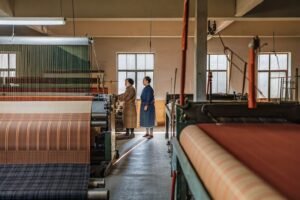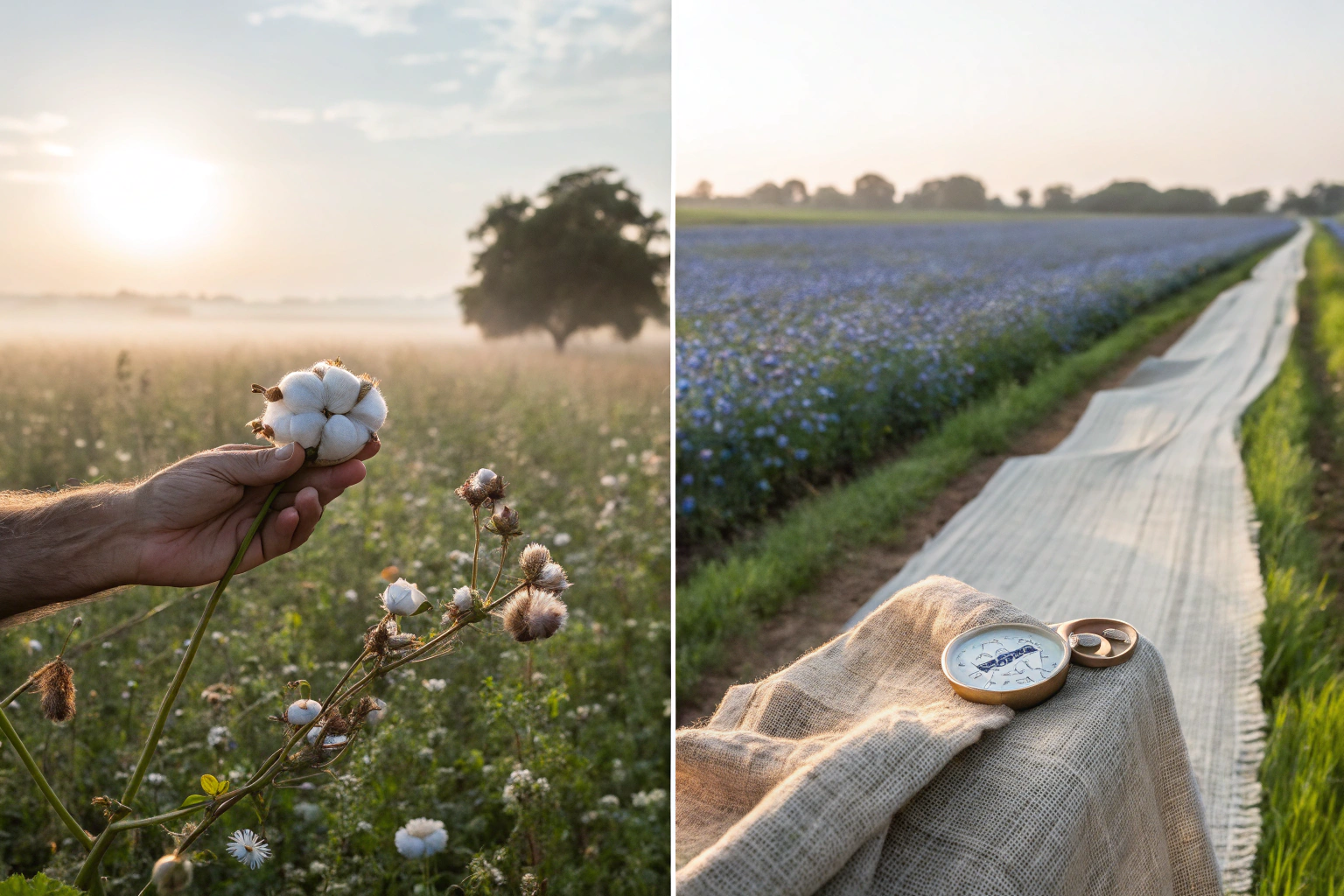
You can’t spin gold from garbage. That’s a blunt truth in the textile industry. The quality of your finished cotton-linen shirting is determined not in my weaving shed, but two years earlier, in the soil of a specific field in a specific rainfall season. The biggest pain point for fabric buyers is the "black box" of raw material sourcing. A mill shows you a finished swatch, but they hide the origin of the fiber like it’s a state secret. Why? Because they’re buying cheap, contaminated spot-market lint from a commodity exchange, blending five different harvests to hit a price point, and hoping you don’t notice the inconsistent dye uptake or the random neps. You want a "premium" cotton-linen, but you’re getting a genetic lottery of seeds, pesticides, and retting methods that you can’t trace, and that’s a liability for your brand’s sustainability claims.
At Shanghai Fumao, our fiber sourcing is not a procurement transaction; it’s a multi-year agricultural partnership. We don’t buy anonymous bales from a clearinghouse. We contract specific harvests from defined geographical regions, and we lock in the fiber quality based on micronaire, staple length, and strength before the seed is even planted. Our primary extra-long-staple cotton comes from the Aksu region of Xinjiang, specifically from farms using drip-irrigation under plastic mulch to control the water stress that concentrates cellulose in the boll, and we supplement this with organic long-staple from rain-fed farms in Gujarat, India, for our GOTS-certified lines. Our flax? It’s exclusively European. We source our long-line scutched flax from the silt-soil belt stretching through Normandy, France, and Flanders, Belgium, where the cool maritime climate prevents the stalks from becoming woody and brittle. We specify "dew-retted" flax for our rustic, silver-grey textures and "tank-retted" for our fine, cream-colored luxury shirting. The difference matters. The terroir of the flax field is as real as the terroir of a Bordeaux vineyard.
You need to know the precise geography and the specific agronomic practices that differentiate a "good" fiber from a "great" one. Let me walk you through the fields, the gins, and the scutching mills that feed our five production lines.
What Are the Geographical Origins of Our Premium Cotton?
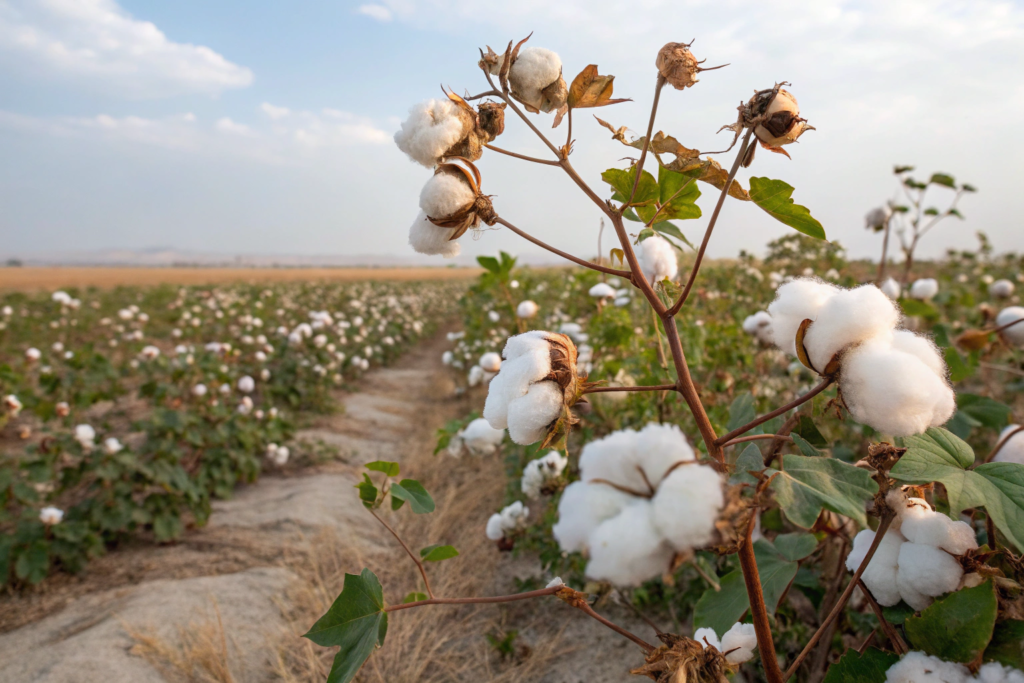
Cotton is not a commodity; it’s a botanical fingerprint. The latitude, the soil salinity, and the diurnal temperature range of the farm directly affect the cellulose wall thickness of the fiber. We source our premium "spinning-grade" cotton from two distinct biomes to serve two different quality mandates. For our ultra-fine, high-count shirting (60s to 100s Ne), we rely on long-staple cotton from the Xinjiang Uyghur Autonomous Region, specifically the Tarim Basin rim. This is a desert oasis ecology. The long summer days, combined with controlled drip irrigation, produce a cotton boll with a staple length consistently exceeding 37mm and a micronaire (a measure of fiber fineness and maturity) in the perfect premium window of 3.8 to 4.2. For our organic and fair-trade certifications, we source rain-fed, non-GMO Shankar-6 varieties from the Saurashtra region of Gujarat, India. This cotton has a slightly shorter staple (28-30mm) but an exceptionally soft hand because it is hand-picked, not machine-stripped, meaning the fibers haven’t been crushed or contaminated with leaf trash.
Why Is "Micronaire" a Critical Indicator in Cotton Selection?
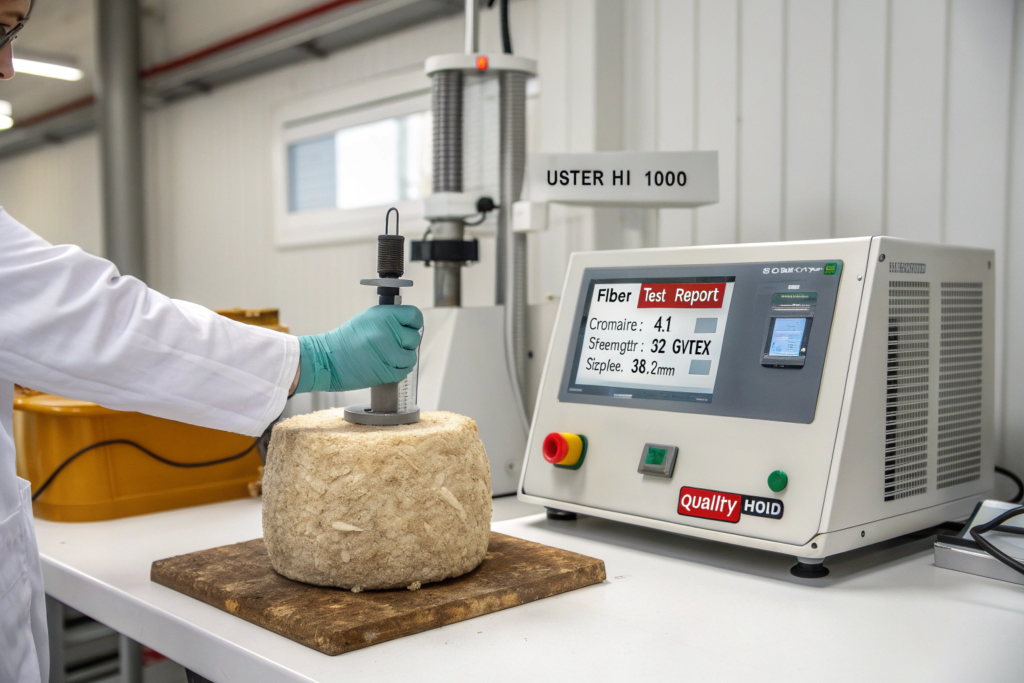
Micronaire is a measurement of the air permeability of a compressed plug of cotton fibers. It’s a proxy for both the fineness (diameter) and the maturity (cellulose development) of the fiber. This number dictates the entire spinning strategy. A micronaire between 3.8 and 4.2 is the "premium ring-spun" goldilocks zone. If the micronaire is too low (below 3.5), the fiber is immature. It has a thin secondary cell wall, meaning it doesn’t absorb dye deeply, leading to "white specks" after piece dyeing. It also creates neps—tangled knots of weak, dead fibers—during carding. If the micronaire is too high (above 4.9), the fiber is coarse, rigid, and feels scratchy against the skin. It refuses to bend and twist into a fine 60s yarn, resulting in a fabric that is hairy and pill-prone. We test every single bale that arrives at our mill with an Uster HVI 1000 machine before accepting the delivery. We reject bales outside the 3.8-4.2 window instantly. We segregate accepted bales by their "maturity ratio" so our mixing manager can blend bales to achieve a specific target fiber distribution, ensuring every meter of fabric has a uniform hand feel and dye affinity.
How Do We Verify the "Non-GMO" Status for Organic Cotton?
A paper certificate from a farm co-op is not enough. Gene flow from neighboring Bt cotton fields can contaminate an organic crop. We verify the absence of the Cry1Ab/Ac transgenic protein (the Bt toxin) directly in the fiber. We use a "lateral flow strip test" (similar to a COVID-19 rapid test, but for GMO proteins) on a random sample of cotton lint from every 5-ton lot of organic cotton that arrives from Gujarat. The strip has specific antibodies; one line means clean, two lines means GMO contamination detected. We do this test in-house, on the spot. We don’t wait for a third-party lab. A batch of "organic" Shankar-6 from a new supplier in Odisha failed this strip test in March 2026—it showed a faint but unmistakable second line indicating less than 1% contamination. We immediately quarantined the entire container, rejected the lot, and filed a contamination report with the certifier. That cotton never touched our carding machines. This is the physical, immunological proof that backs up our GOTS Transaction Certificate. If a supplier can’t show you a batch-specific lateral flow strip photo, their "organic" claim is purely administrative.
How Are Our Linen Fibers Selected and Processed Before Arrival?
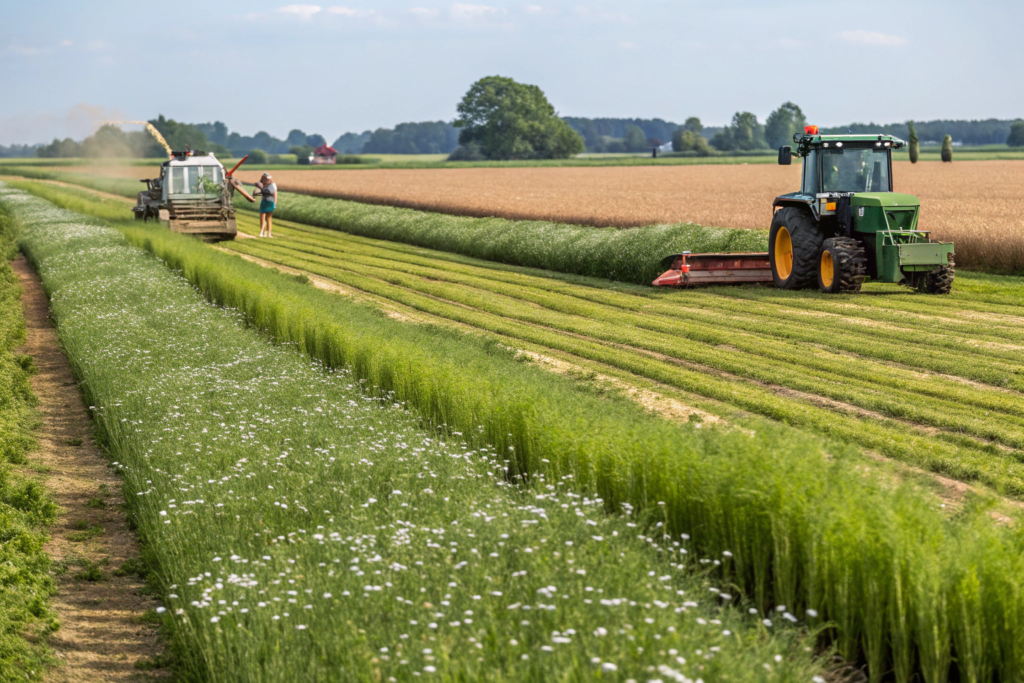
Linen is a survivor, but it’s also a snob about the weather. The flax plant (Linum usitatissimum) demands a specific maritime climate: mild springs, cool summers, and a gentle, humid August for the retting process. We source our long-line flax exclusively from the "Flax Belt" stretching across Northern France, Belgium, and the Netherlands. We buy from scutching mills that process the straw from a network of specific farms. The variety we prefer is "Electra," known for its high bast fiber content and superior fineness. Before the flax leaves Europe, it undergoes "retting," where the woody core of the stalk is dissolved by natural bacteria. We use two retting methods for two different fabric aesthetics. For our rustic, textured linen with a silvery sheen, we specify "dew-retting," where the stalks are laid on the grassy fields for 3-6 weeks to be gently rotted by dew and sun fungus. For our ultra-smooth, clean-look shirting linen, we use "warm-water tank retting," a controlled anaerobic fermentation at 32°C for 48 hours, which produces a creamier, more uniform white fiber. The retting method determines the chemical signature of the pectin residue, which ultimately influences how the dye reacts with the fiber.
What Is the "Scutching" and "Hackling" Process for European Flax?
Before a flax straw can be spun, the useless woody core (the "shive") must be shattered and removed. This is scutching. The retted flax straw is fed into a turbine with rotating wooden blades that break the brittle wooden core into tiny pieces, which fall away as dust, leaving behind the long, golden bast fibers. Then comes hackling. The long fibers are drawn through a series of ever-finer combs (like a giant hairbrush made of sharp steel pins). This straightens the fibers, separates the long "line" fibers from the short "tow" fibers, and removes the final shive fragments. We only buy "hackled line flax" for our premium shirting. Tow is for coarse ropes and low-end upholstery; line is for silky fabric. The hackling density (pins per inch) directly controls the "slub index." Fewer pins mean more natural slubs in the yarn, which is a style choice for a rustic look. More pins mean a perfectly smooth, uniform yarn that can pass as a dress-weight fabric. We specify to our European supplier the exact "Bettson Slub Control" setting for each lot, so the slub character is engineered in the scutching mill, not an accident of the spinning room.
How Does the "Retting Method" Affect the Final Color and Softness?
This is the invisible chemistry that makes or breaks a beige linen. Dew-retting relies on the fungus "Cladosporium herbarum," which slowly digests the pectin. The sun naturally bleaches the fiber during this long field exposure, giving dew-retted flax its signature silvery-grey or champagne tint. It is slightly coarser but has a high luster. Tank-retting uses bacteria (like "Clostridium felsineum") under water. The fermentation produces butyric acid (which smells terrible during processing but washes clean), and the water cushions the fiber, preventing sun damage. The result is a softer, creamier, almost off-white "tank retted" fiber with a slightly higher tensile strength. If you want a natural, un-dyed "oatmeal" linen, we use a blend of 70% dew-retted (for color) and 30% tank-retted (for softness). If you are going to piece-dye a deep black linen, we use 100% tank-retted, because the uniform cream base provides a much cleaner canvas for the black reactive dye and prevents the "muddy" look that dew-retted grey can cause. The retting field is our first dye bath.
How Does Fumao Ensure a Sustainable and Ethical Fiber Supply Chain?
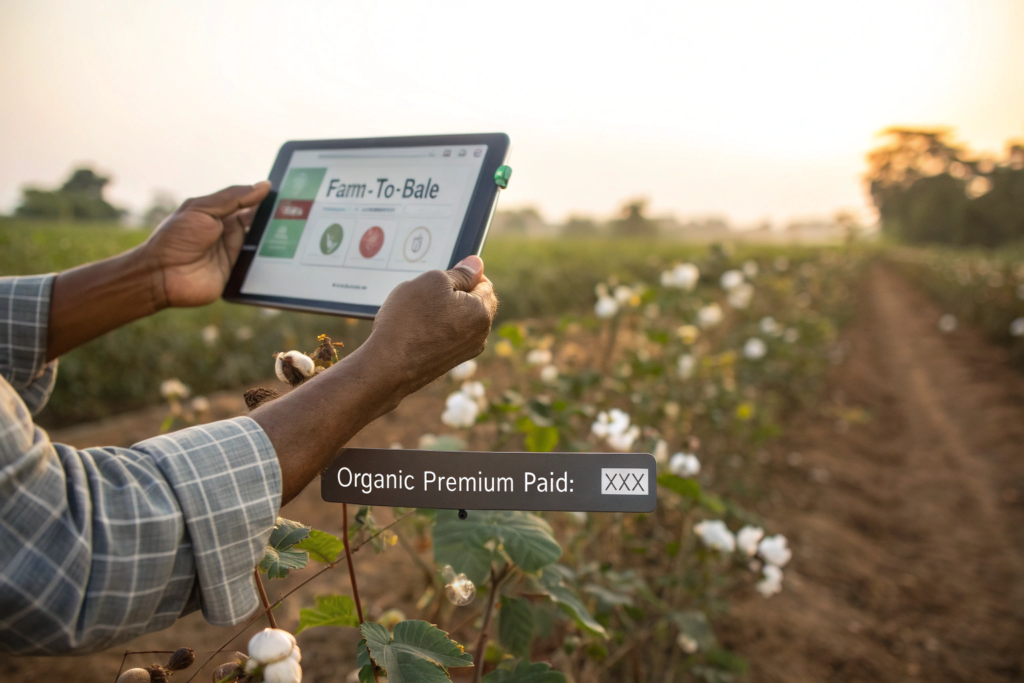
Sustainability is not a logo on a hangtag; it’s a nitrogen budget in the soil and a labor contract in the local language. We audit our fiber supply chain not just for chemical safety, but for agronomic and social sustainability. For our Xinjiang cotton, this is an especially sensitive legal and ethical matrix. We comply strictly with the U.S. Uyghur Forced Labor Prevention Act (UFLPA) by maintaining a "rebuttable presumption" evidence packet that uses isotopic testing (Oritain) to prove the farm gate location and a blockchain-based payroll system in our spinning partner facility that ties the specific bale batch to the specific work shifts. We don’t just avoid the region; we prove our supply chain within the region is ethically clean. For our organic cotton in Gujarat, we fund a "Rotational Crop Intercropping" program where farmers grow pigeon peas alongside cotton to fix nitrogen in the soil, reducing the need for synthetic fertilizers. We pay a premium directly to the farmer cooperative’s bank account, bypassing middlemen, and the premium amount is printed on the bale tag for transparency.
What Is the "Isotopic Origin Test" for Conflict-Free Cotton?
The Uyghur Forced Labor Prevention Act (UFLPA) presumes that all cotton from Xinjiang is produced with forced labor unless proven otherwise. To legally export our long-staple cotton fabrics to the U.S., we must provide "clear and convincing evidence" that our specific supply chain is free of forced labor. We use Oritain’s forensic isotopic testing. Cotton absorbs water from the specific rainfall and soil of its growing region. The ratio of stable isotopes (Hydrogen-2 to Hydrogen-1, and Oxygen-18 to Oxygen-16) in the cellulose molecule acts like a natural GPS. The Tarim Basin has a unique "rain-shadow desert" isotopic signature that is different from, say, the Fergana Valley or West Africa. But we go further. Within Xinjiang, specific micro-regions have subtly different signatures. Our isotopic test verifies the cotton came from the precise audited farm cluster in Aksu, not from a non-audited region. This test, combined with a physical bale-level tracking system, forms our UFLPA rebuttal packet. A simple "non-Xinjiang" certificate is no longer accepted by U.S. CBP; they want forensic geochemistry. We provide it.
How Does the "Rain-Fed" Cultivation in Gujarat Conserve Water?
Cotton is a thirsty crop, conventionally. But the organic cotton we source from Gujarat is strictly "kharif" season rain-fed. The monsoon provides 90% of the water. We prohibit our contract farms from using borewell irrigation during the flowering stage, which forces the plant to develop a deep taproot. This deep root system makes the plant more drought-resistant and increases the uptake of minerals from the subsoil, which actually slightly strengthens the fiber. The "water footprint" of our Gujarat organic cotton, verified by a lifecycle assessment, is roughly 1,200 liters of blue water (irrigation) per kilogram of lint. Conventional cotton in the same region uses 4,500 liters. We publish the water audit report on our ZDHC gateway profile. By choosing rain-fed varieties, we also avoid the "soil salinization" problem that plagues over-irrigated cotton fields, keeping the farmland fertile for generations. This isn’t just eco-marketing; it’s a long-term fiber security strategy. If the soil dies, my supply chain dies.
What Quality Control Checks Occur at the Raw Fiber Stage?
My quality control doesn’t start at the finished fabric roll; it starts at the bale receiving dock. We have a "Raw Material Rejection Protocol" that is more aggressive than most mills’ finished goods inspection. When a truckload of Xinjiang cotton bales arrives, our lab technician doesn’t just check the paperwork. He inserts a motorized coring tool into 10% of the bales (selected at random by our ERP system) and pulls a 200-gram sample from the core. This core sample goes straight to the Uster HVI 1000 machine, which measures staple length, strength (g/tex), micronaire, elongation, color (Rd and +b yellowness), and trash content. The test takes 90 seconds per sample. If the "Strength" (g/tex) falls below 30 for our long-staple lot, we place the entire truck on "Quality Hold." The supplier has two options: accept a 15% price deduction for "weak blend," or take the truck back to the gin. We don’t negotiate; we let the HVI machine be the judge.
How Do We Test for "Stickiness" in Raw Cotton to Prevent Dyeing Defects?
"Sticky cotton" is contaminated with honeydew—sugary secretions from whiteflies or aphids that infested the plant during growth. These invisible sugar droplets cause catastrophic processing failures. During carding, the sugar melts from the friction heat and gums up the rollers, causing the fiber web to wrap and snap. During spinning, it causes the yarn to stick to the drafting rollers, creating thick, uneven "slubs." During weaving, the sticky warp threads adhere to the heddles, causing "warp breaks" and loom stops every two minutes. We detect this using a "Thermo-detector" machine. We take the core sample, heat it to 100°C, and a reflective sensor measures the sugar aerosol release. We quantify stickiness in "H2SD" units. Our pass mark is zero detectable sugar spots. If we detect any, we reject the bale. We do not apply "anti-stick" chemical sprays, which are just masking agents that wash off and leave the honeydew to re-emerge in the dye bath, causing a "sugar stain" that blocks dye uptake and leaves a permanent white streak on the fabric.
What Is the "Vegematic" Trash Analysis for Raw Linen?
Linen comes with natural stubble. Even after hackling, small, chunky remnants of the flax stalk—"shives"—can remain embedded in the fiber bundle. If these wooden shives make it through spinning, they appear as thick, stiff, brownish speckles in a fine woven fabric, completely ruining the clean look. We test the raw hackled flax using a modified "Shirley Analyzer" (we call it the "Vegematic"). We pass a 50-gram sample of the flax through a high-velocity air stream and a series of mesh screens. The machine mechanically separates the fibrous material from the heavy trash particles and the micro-dust. The acceptable "Trash %" for our premium line flax is below 1.5%. If the sample comes back at 2.5%, we know the hackling pins at the European mill are wearing down, and we send them an alert to re-sharpen. We fine-tune our own opening and cleaning line settings in Keqiao based on the Vegematic data. If the batch is "shive-heavy," we slow down the carding speed and increase the flat-strip waste to mechanically eject the wood fragments before they enter the drawing frame. The Vegematic machine talks to the carding machine; raw material data drives live process settings.
Conclusion
The journey of a Fumao cotton-linen fabric begins not in a Keqiao loom, but in the isotopic rain of the Tarim Basin and the dew-damp grass of Normandy. We don’t buy fiber on a commodity exchange; we select specific micronaire windows (3.8-4.2) and specific retting protocols (dew versus tank) to pre-engineer the hand feel, the dye affinity, and the slub character before the yarn is even twisted. We verify the non-GMO status of our organic cotton with a lateral flow immunoassay at the dock, and we prove the ethical origin of our long-staple cotton with an Oritain forensic isotope test that stands up in a U.S. court. We reject sticky bales with a thermo-detector, and we count the wood shives in our flax with a Vegematic. This is not procurement; it’s agricultural forensics.
Every roll you buy carries a "Fiber Provenance Report" in its QR code. You can see the rainfall map of the Gujarat farm and the hackling pin density of the Belgian scutching line. You’re not just buying a meter of fabric; you’re buying a terroir.
If you want to trace the origin of your next collection down to the GPS coordinates of the retting field, contact Elaine. She can provide you with our "Fiber Origin Dossier," including the batch-specific HVI reports, the isotopic lab certificate, and the farmer cooperative premium payment receipt. Reach out to our Business Director, Elaine, at elaine@fumaoclothing.com to schedule a virtual tour of our raw material receiving lab.