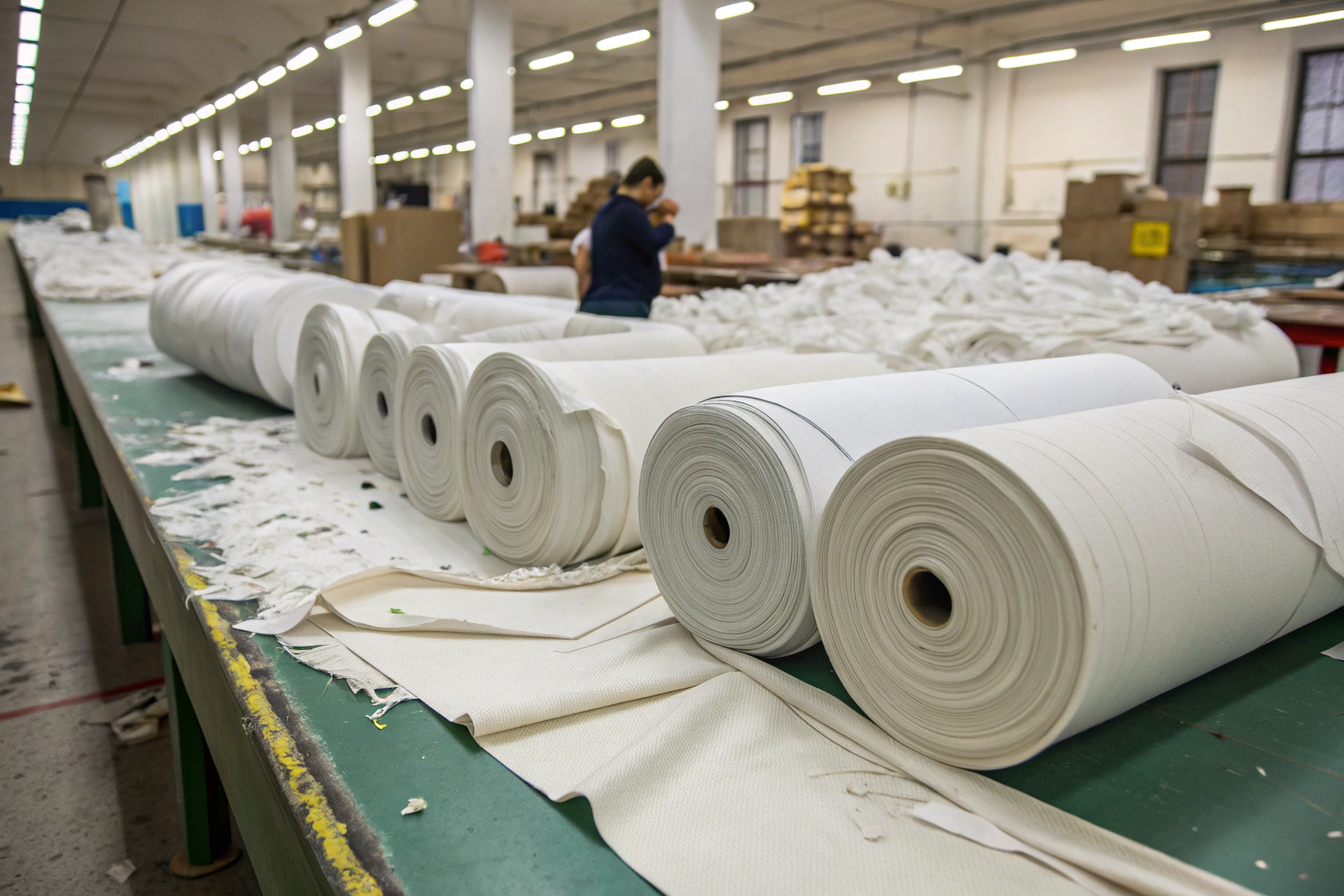
You’ve been told by factories before: "We have quality control." Then your container lands, and you’re staring at 3,000 meters of cotton twill with a recurring barre mark every 20 centimeters. The frustration of inconsistent quality is a slow bleed. You lose money on the cutting table—waste creeps from a planned 5% to a disastrous 15%. Your sewing line slows down because the seamstresses are fighting a stiff, uneven hand feel. And worst of all, your brand reputation takes a hit when a customer returns a shirt because it twisted sideways after one wash. Most mills treat quality control like a police checkpoint at the end of the road—they catch the dead bodies but never stop the accident. That’s useless. You can’t fix a bad warp beam by inspecting the finished roll.
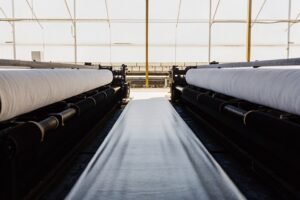
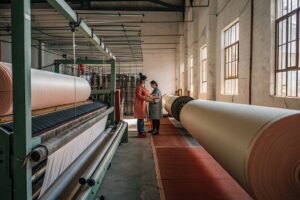
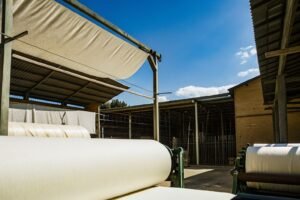
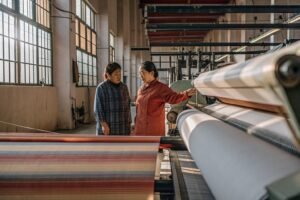
At Shanghai Fumao, we don’t inspect quality into the fabric; we engineer variation out of the process. Our five cotton production lines—Spinning Preparation, Sizing & Warping, Weaving, Dyeing & Finishing, and Final Inspection—are not isolated islands. They are a single, digitally-stitched nervous system. We use a proprietary IoT mesh network where the humidity sensor in the weaving shed talks directly to the tension controller on the sizing machine upstream. If the sizing machine over-dries the cotton warp by 0.5% moisture, the weaving shed’s humidifier receives an auto-command to increase mist output before the beam even hits the loom. This is "feed-forward" control, and it’s the opposite of the reactive "fix-it-later" approach. We measure the torque on the twisting machine spindles in real-time, looking for a 0.3% deviation that signals a bearing is wearing out and will start creating inconsistent twist in the yarn three days later. Most mills wait for the bearing to scream; we replace it during the shift change, silently.
But you don’t see the IoT network. You see the fabric in your hands. So let me walk you through the exact mechanical, thermal, and optical guard stations we’ve installed at each of the five stages, and the specific numbers we hold ourselves to before a single meter rolls onto your pallet.
How Is Quality Engineered During the Spinning Preparation Stage?
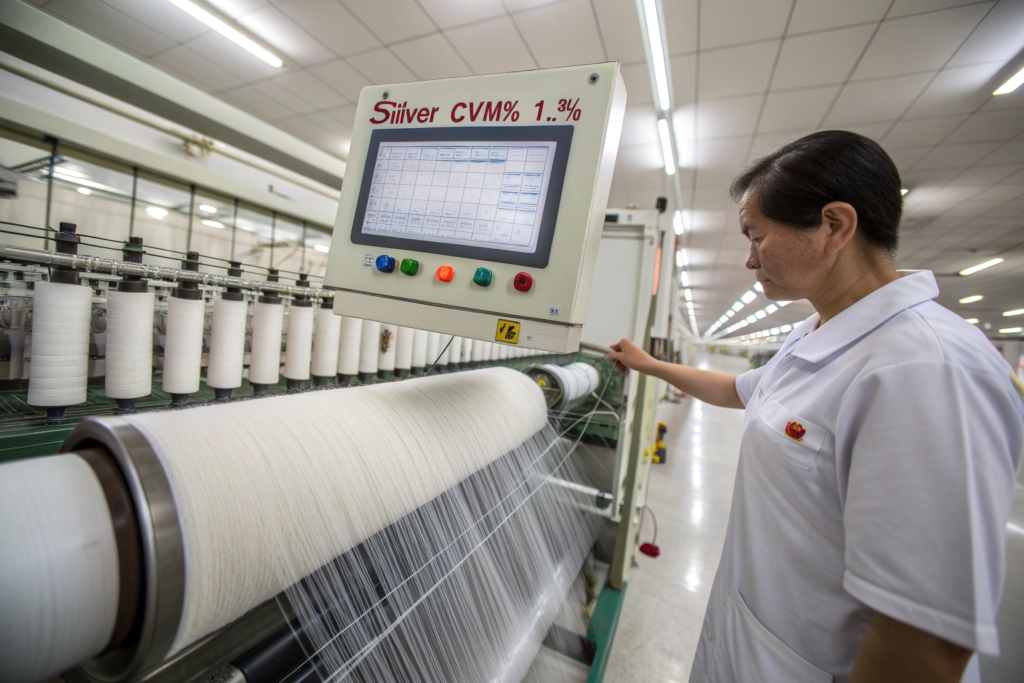
Quality is born in the blowroom, not the testing lab. Cotton arrives as compressed bales full of trash, seed fragments, and short fibers. If we don’t remove the "short fiber content" (SFC) now, those tiny fibers will pop out of the yarn later as pills on a finished shirt. Our spinning preparation line uses a "Rieter C75 carding engine" that operates at an extremely high cylinder speed of 600 RPM. The aggressive centrifugal force flings out micro-dust and immature fiber clusters. But the real secret is our "draw frame autoleveling" system. Cotton sliver—a loose rope of untwisted fibers—naturally varies in thickness. Our RSB-D 50 draw frame uses a tongue-and-groove measuring system that scans the sliver thickness every 2 milliseconds and dynamically adjusts the drafting rollers to compensate. The result is a sliver with a CVm (coefficient of mass variation) of under 1.5%. Standard mills accept 2.5%. We hold 1.5% because a 1% difference in sliver evenness magnifies into a 5% variance in yarn strength by the time it hits the weaving shed. We don’t fight strength at the loom; we build it in the carding room.
What Is the Role of the "AFIS" Machine in Controlling Neps?
Neps are tiny, tangled knots of immature dead fibers. In a dyed cotton-linen shirting, these neps resist dye uptake, appearing as white specks on a dark navy surface. We call them "fish eyes," and they are a defect that instantly cheapens a fabric. We don’t just visually inspect for neps; we physically count them using an "AFIS PRO 2" (Advanced Fiber Information System). This machine takes a 0.5-gram sample of carded sliver, aerodynamically separates the individual fibers in a turbulent air stream, and passes them through a laser beam. It counts every single nep, measuring its size in microns. For our premium shirting cotton (like a 60s Giza), our target is fewer than 80 neps per gram. A standard commercial cotton might have 250 neps per gram. If the AFIS detects a spike to 100 neps per gram in a batch, we know the carding wires are dulling and need sharpening immediately. We don’t wait for a visual defect; we sharpen based on the laser particle count. This data-driven blade maintenance is the difference between a crystal-clear indigo and a speckled "starry night" reject.
How Do We Eliminate "Foreign Fiber" Contamination in Raw Cotton?
The worst contaminant in "natural" cotton is not chemical; it’s polypropylene. Imagine a tiny piece of a white woven feed sack getting mixed into the cotton bale during harvest. It looks identical to cotton, but it does not absorb dye. It melts at high heat and leaves a hard, transparent plastic spot on the finished garment. We hunt these invisible killers using a "Jossi Vision Shield" machine with ultraviolet illumination. The machine scans the open cotton tufts at 15 meters per second. Under UV light, polypropylene glows with a specific fluorescence signature, while cotton remains dark. High-speed compressed air nozzles blow the glowing plastic fragments out of the fiber stream within 40 milliseconds. We also run a "metal detector" conveyor on the feed table. I recall a batch of organic cotton from a new farm in Gujarat that triggered our UV alarm over 20 times per bale. The supplier swore it was hand-picked. Our machine caught blue polyethylene fibers from the worker’s protective aprons. We rejected the entire 5-ton lot on the spot, saving ourselves from producing 20,000 meters of speckled disaster.
What Machine Settings Guarantee Loom-State Quality in Weaving?
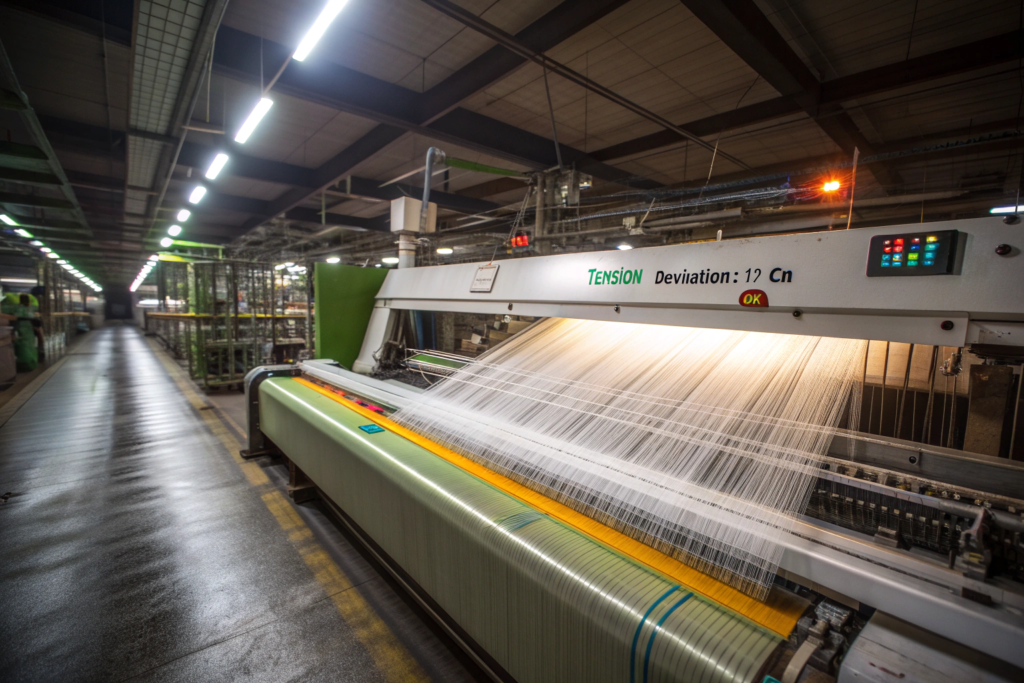
A weaving shed is a battle between tension and friction. The warp yarn runs through a tiny drop wire, a heddle eye, and a reed dent, all under immense static tension. If the tension is uneven by even 10 grams between individual warp ends, you get "loose threads" that float and snag, creating a streaky look. Our looms (Toyota JAT810 air-jet for light cotton, and Picanol rapier for heavier linen blends) are equipped with individual electronically controlled warp let-off sensors. We don’t just set a master tension; we set a "tension tolerance band" across the beam. Our standard is a maximum tension variation of +/- 2 cN per thread across a 240cm wide warp. We achieve this by mapping the "tension profile" of the beam with a hand-held Schmidt tensiometer every morning and feeding that data back into the individual motor drives. Also, we control the "back rest roller" height to influence the shed geometry—the angular opening the warp forms for the weft to fly through. For a dense cotton poplin, we lower the back rest to create a "negative shed," which means the upper warp sheet is slightly slack. This allows the warp threads to bend around each other smoothly, preventing the "cracking" noise and the tiny fiber breakages that cause pilling later.
How Does the "PPM" (Picks Per Minute) Rate Impact Tensile Strength?
Speed kills quality if you overdo it. We hear buyers say, "I want fast production." But pushing a loom’s PPM beyond the yarn’s elastic limit creates micro-cracks in the cotton fibers. When the reed slams the weft yarn into the fell of the cloth at 800 times a minute, the shock wave travels through the yarn. If the PPM is too high, the fibers don’t have time to recover, and internal cohesion breaks down. For a 40s cotton-linen blend, our sweet spot is 650 PPM. We could push the machine to 750 PPM to shave a day off the delivery time, but the resulting fabric would lose about 8% of its tear strength, as measured by the Elmendorf tear test. We choose the lower PPM and the higher tear strength. We calibrate the reed beat-up force using an accelerometer. The data feeds into a "Weavability Limit" curve we plot for every new yarn lot. If a supplier gives us a yarn with a lower breaking elongation %, our system automatically caps the loom speed to stay within the safe elongation window.
Why Is the "Sizing Recipe" a Confidential Weapon for Cotton Warp?
Sizing is the invisible chemistry that coats the warp yarn with a protective film to survive the abrasive heddle eyes. Most mills use a generic "PVA and starch" cooked-up brew. Our sizing recipe is as guarded as a Coca-Cola formula, and it’s customized per yarn. For a 60s compact cotton, too much starch makes the yarn brittle and dusty (causing "lint ball" buildup on the loom). Too much PVA makes it sticky and gums up the reed. Our recipe is a "tri-blend": a high-amylose modified corn starch for hardness, a low-viscosity PVA for film flexibility, and a specific acrylic copolymer for adhesion to the cotton wax. The "pick-up" percentage (the weight of size on the yarn) is strictly controlled at 12.5% +/- 0.5%. We measure it live with a microwave moisture meter after the drying cylinder. If the pick-up drops to 11%, the yarn will fuzz up and break in the shed. If it spikes to 14%, the size will crack and fall off as white powder on the loom floor, and those size fragments can create a "size stain" if not fully removed in desizing. It’s a tightrope.
How Is the Dyeing and Finishing Process Monitored Against Drift?
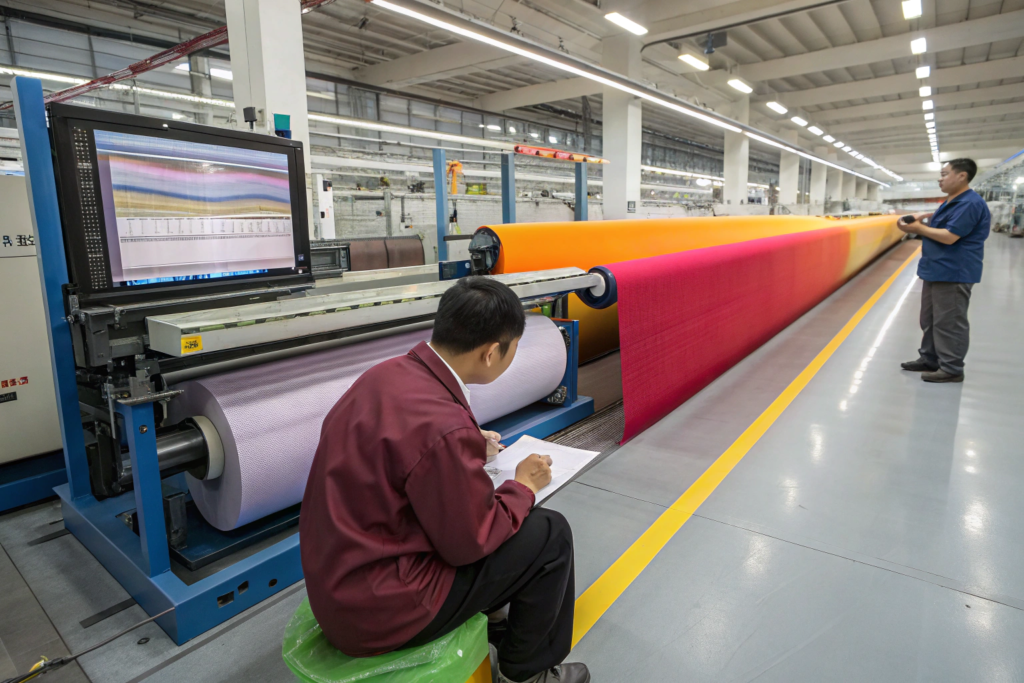
The dyeing floor is where the color lives or dies. The enemy here is "tail shading"—a gradual drift in color from the beginning of the roll to the end. We monitor our continuous dyeing range with a "Datacolor SpectraVision" system. This is a bank of high-speed spectrophotometers mounted right over the moving fabric web. It measures the spectral reflectance every 10 centimeters. The monitor shows a rolling graph of Delta E against the standard. If the Delta E crosses 0.5 (a pre-warning threshold), the system triggers an audible alarm and auto-corrects the dye feed pump. We aim for a final average Delta E of 0.4 or lower across a 1,500-meter run. For finishing, the critical metric is the "shrinkage potential." We measure the residual shrinkage using a "Testfabrics shrinkage scale" after the Sanforizing machine. If the fabric shows more than 2% residual shrinkage, we run it through the compressive shrinkage rubber blanket unit again at a higher pressure. We don’t guess the shrinkage; we mechanically pre-shrink it until it’s inert.
What Is the "Right-First-Time" (RFT) Dyeing Ratio for Our Reactives?
"Right-First-Time" is a KPI that measures how often the dye bath hits the target color on the first attempt, without needing a "dye add" correction. A correction adds 2-3 hours of processing time and weakens the fabric because every extra hot bath degrades the cotton’s tensile strength. Our RFT for cotton reactive dyeing is currently 96%. The industry average hovers around 85%. We hit 96% because we don’t just trust the color recipe software; we test the "raw cotton base white" of every single incoming greige lot before the recipe calculator runs. Different cotton harvests have different natural yellowness (the "Rd" and "+b" values). If the greige is yellower than the standard, our algorithm adds a specific optical brightener or a minuscule dose of ultramarine blue tint to neutralize the yellow cast before the main dye hits. This "base-shade harmonization" prevents the 14% of re-dyeings that plague other mills. It also keeps our water and energy consumption down, because we aren’t running the dye vats twice.
How Do We Validate the "Hand Feel" Using Objective Kawabata Data?
Hand feel is a subjective human sense, right? Wrong. We objectify it. We use the Kawabata Evaluation System (KES) which measures mechanical properties at micro-strain levels. For a "soft touch" cotton shirting, we target a specific KES "Bending Rigidity" (B value) between 0.005 and 0.008 gf·cm²/cm. For a "crisp, structured" dress cotton, we push the B value up to 0.015. The KES machine measures the exact torque required to bend the fabric 0.5 degrees. We correlate this numerical B value with a panel of human hand-feel experts who rank the fabrics 1-5. We’ve built a mathematical translation matrix: "If your hand rates this a 4 on softness, the B value is 0.007." When a buyer says, "Make it feel like the reference swatch," we don’t sniff it; we bend it on the KES until the torque curve perfectly overlaps the reference trace. Chemistry plus physics equals a consistent touch.
What Optical and Digital Checks Occur in the Final Inspection Hall?
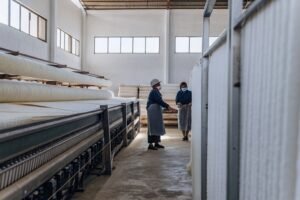
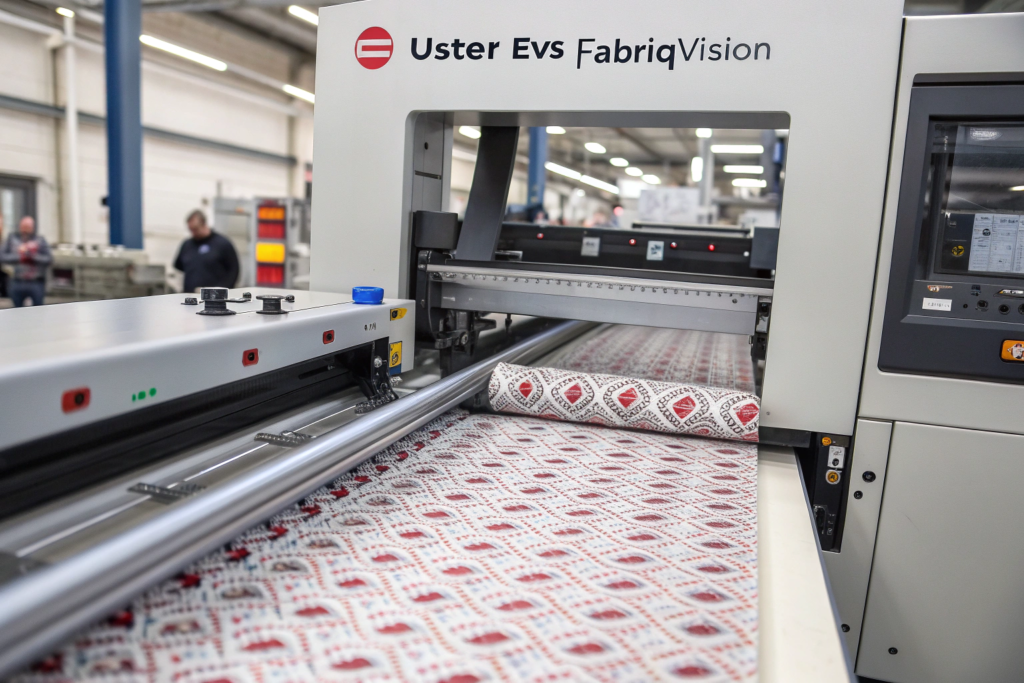
This is the last line of defense, but it’s an automated fortress. We don’t use old-school manual inspection tables where a tired worker rolls fabric and squints. Our final inspection uses a "Uster EVS Fabriq Vision" fabric inspection system. The fabric runs through a scanning bridge at 60 meters per minute. Six high-speed line-scan cameras, coupled with polarized strobe lights, photograph the entire width of the fabric at a resolution of 0.3mm per pixel. The AI software, trained on 5 million images of our specific defects (like slubs, knots, oil stains, and reed marks), flags defects in real-time. The system classifies the defect by type and length, applies the 4-point system penalty automatically, and prints a barcode sticker exactly at the defect location on the fabric selvedge. We map every single defect on a digital roll map so you know exactly where the 2-point and 3-point flaws are. You cut around them. No surprises.
What Is the "AQL 2.5" Standard Versus Our "Internal 1.0" Target?
The international standard for fabric inspection is often AQL 2.5 (Acceptable Quality Limit). This means, statistically, a batch with up to 2.5% major defects is "passable." We consider that embarrassingly low. For our cotton shirting, our internal target is an AQL of 1.0 for major defects. A "major defect" for us is anything that would make a garment unsellable—a hole, a continuous stain, a broken pattern. We use a tighter "sampling plan" (MIL-STD-1916 instead of the older 105E) that requires fewer samples to pass a stricter criteria. If a 3,000-meter lot triggers a single major defect in our final audit, we do not ship it for bulk packing. We re-inspect 100% of that lot. This means we physically unroll every single meter and run it through the vision system again at a slower speed (30 meters per minute). The re-inspection cost is borne by us, not the client. That’s the price of the 1.0 standard. It’s an obsession, not a policy.
How Does the "Fabric Passport" QR Code Compile the Line Data?
Every roll that leaves our factory has a "Fabric Passport"—a QR code on the header that you scan with your phone. This passport isn’t a static PDF. It’s a dynamic compilation of the data points gathered from all five of our production lines. It shows the AFIS nep count from spinning, the sizing pick-up percentage, the loom tension variation log, the Datacolor Delta E chart from dyeing, and the final inspection defect map. You can literally trace a 2mm slub you find on the cutting table back to a 15-minute window on Loom Number 4 when the weft tension spiked by 0.5 cN. Why did it spike? The data shows the air compressor line pressure dipped at exactly that minute. We’ve already replaced the faulty regulator valve. This passport provides the "forensic chain of custody" for your fabric’s quality. You’re not buying a bolt of cloth; you’re buying a terabyte of process control data.
Conclusion
Quality control at Shanghai Fumao is not a door at the end of a hallway; it’s the concrete floor of the hallway, the air pressure in the pipes, and the laser beam counting neps before they become a yarn. We run five cotton production lines as a single closed-loop organism. We start by hunting hidden polypropylene fibers with a UV vision shield, we lock the sizing pick-up to 12.5%, we refuse to speed the looms past the yarn’s elastic safe zone, and we auto-correct the dye shade every 10 centimeters based on spectral reflectance. Then we scan every millimeter with an AI that has memorized 5 million defect images. The output is not a "passed" roll; it’s a digitally mapped, forensically proven, statistically validated physical asset.
You don’t need to cross your fingers when your container arrives. You scan the QR code, and the data tells you exactly what you’ve got. That is engineering confidence.
Ready to source your cotton shirting or bulk linen from a supply chain that never guesses? Contact our Business Director, Elaine, at elaine@fumaoclothing.com. She can arrange a live video walkthrough of our inspection hall and send you a sample roll with a demo "Fabric Passport" so you can trace the data yourself.