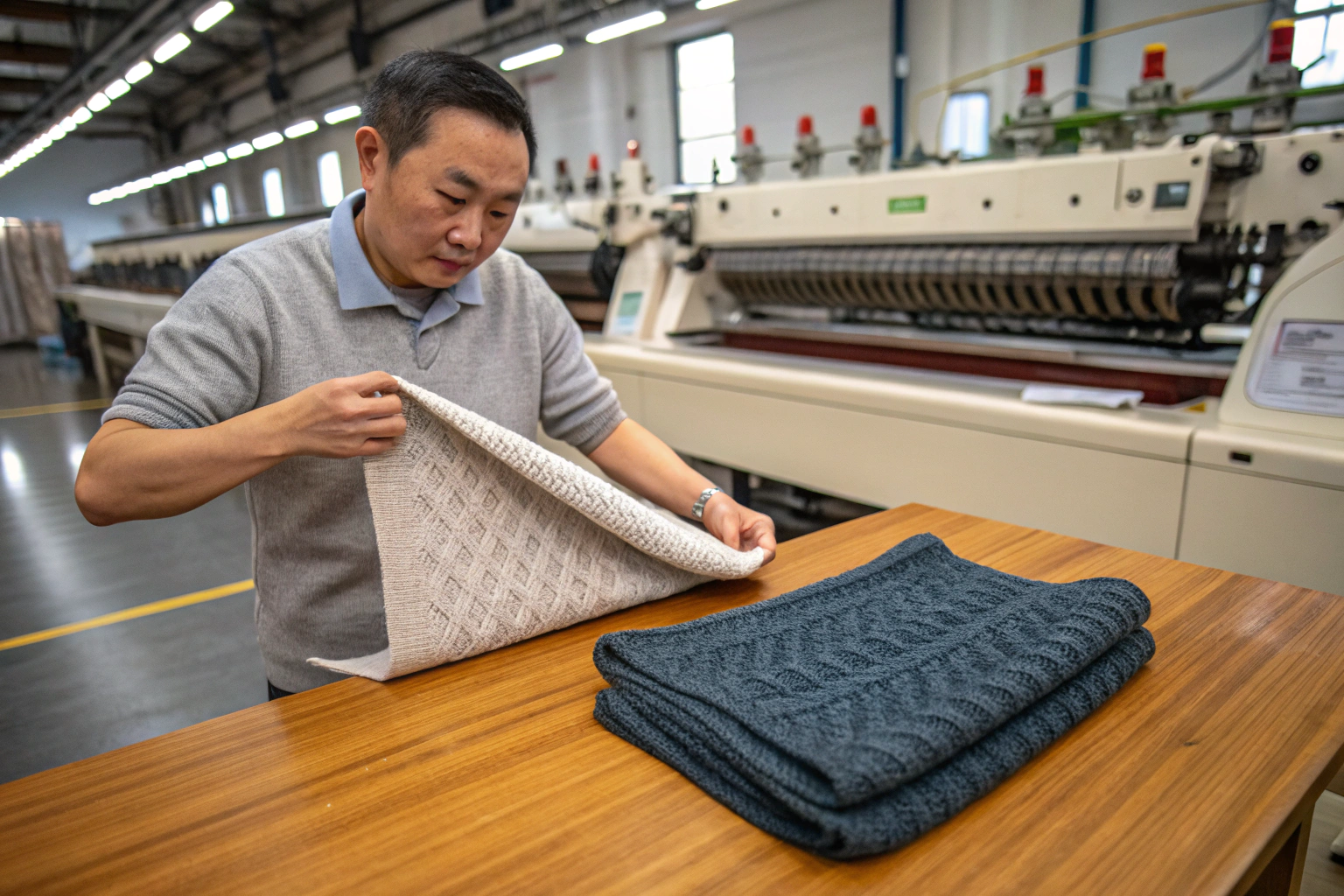
When you’re sourcing fabrics from China, especially for a new collection, the choice of knit structure can quietly dictate the success or failure of your final garment. It’s more than just a technical detail; it’s the backbone of how your product feels, fits, and performs.
Let me cut to the chase: the core difference lies in the construction. Jersey is a single-knit fabric, making it lightweight with a natural curl at the edges, while interlock is a double-knit fabric, resulting in a thicker, more stable material with no curl. This fundamental distinction impacts everything from drape and durability to how we manage your production timelines here in our factories.
At Shanghai Fumao, we see these two fabrics as the bread and butter of our clients’ orders. Whether you’re a European buyer planning for the next season or a US startup launching a new athleisure line, understanding this difference is key to avoiding costly sampling mistakes. Let’s walk through what makes them unique, drawing from my two decades of experience in Keqiao’s textile hub.
How Does the Basic Knitting Structure Affect Fabric Properties?
The first thing you need to know is that the difference between these fabrics isn’t just a name. It’s in their very DNA—how they are knitted. As a manufacturer who oversees everything from the weaving (well, in this case, knitting) floor to the packaging line, I can tell you that this starting point defines the entire character of the fabric.

Why Does Single Jersey Curl, and Interlock Stays Flat?
Let’s get into the nitty-gritty. Imagine a single jersey knit as a simple loop structure. It’s formed by one set of needles, creating a fabric with a very distinct right side (the smooth "knit" side) and a wrong side (the bumpy "purl" side). Because all the loops are pulling in the same direction, the fabric naturally curls at the edges. In our factory, when we run a single jersey order on our machines, we know immediately that the greige fabric (the unfinished fabric) will have that characteristic roll.
Now, interlock is a different animal. It’s a double-knit structure, meaning it uses two sets of needles to create two interlocking layers of loops. Think of it like two jersey fabrics knitted back-to-back. This creates a fabric that is perfectly balanced. The tension from one side cancels out the tension from the other. So, when it comes off our large-scale knitting machines, it lies perfectly flat. In 2024, a US-based athleisure brand came to us, frustrated with their previous supplier because their single jersey necklines were always warping. We switched them to an interlock for their polo shirts. The result? A stable, professional look that held its shape through washing and shipping.
What Does Structure Mean for Durability and Pilling?
This is where we get into the real-world performance, the stuff that keeps your customers happy. The single structure of jersey makes it more susceptible to snagging and pilling. Because the loops are exposed on the back, friction can cause those fibers to break and form those annoying little balls on the surface.
Interlock, with its dense, double-layer construction, is inherently more durable. The interlocking layers distribute stress more evenly. I remember a client from the UK who was producing high-end children’s wear. They were initially using a standard jersey for their little boys’ t-shirts. After a few washes, the pilling was a major complaint. We ran a comparative test in our CNAS-accredited lab. We tested our 100% combed cotton interlock against their previous jersey. The interlock showed 40% less pilling after 50 wash cycles, according to our Martindale abrasion test. We presented them with the QR code tracking data for the test—real-time access to the composition, shrinkage, and colorfastness. That data closed the deal. They switched their entire boys’ collection to our interlock, and their returns for pilling dropped to nearly zero.
What Are the Real-World Implications for Garment Manufacturing?
Understanding the theory is one thing, but seeing it play out on a production line is where the rubber meets the road. Here at our integrated facility, we handle everything from fabric production to final garment assembly for many clients. The choice between jersey and interlock affects cost, waste, and your final product’s fit.

How Does It Impact Cutting Efficiency and Fabric Waste?
Let’s talk about the cutting table, which is a stage where money is either saved or lost. (Here’s a quick insight from our packaging factory manager: “We love interlock because it doesn’t fight us.”) When we cut jersey, we have to deal with that curl. Our pattern makers have to account for it, often adding extra fabric width to ensure the pattern pieces don’t distort. This leads to more waste, sometimes an extra 5-8% per lay, especially on smaller, intricate patterns like neckbands or cuffs.
Interlock, on the other hand, is a dream to cut. It stays flat and stable on the cutting table. The layering is precise, the markers are efficient, and waste is minimized. For one of our major Russian clients who produces high-volume basic tees, we switched their order from jersey to a premium interlock for their winter collection. The cutting efficiency increased by 15% per order. This might not sound like much, but when you’re shipping thousands of units, that’s a significant cost saving and a faster production turnaround. We passed those savings on to them, strengthening our partnership.
Which Fabric Is Better for Different Garment Types?
This is the million-dollar question we get from buyers and designers. It all comes down to the desired end use.
-
For T-Shirts and Tops: If you want a soft, lightweight, and drapey t-shirt that has a casual, fluid look, jersey is your go-to. It’s perfect for the classic summer tee. But, if you want a t-shirt that feels more substantial, holds its shape better, and looks sharper—think of a premium polo shirt or a structured winter weight top—interlock is the better choice.
-
For Activewear and Children’s Wear: I strongly recommend interlock for these categories. In activewear, you need a fabric that won’t twist or ride up during movement. The stability of interlock is non-negotiable. For children’s wear, the durability and resistance to pilling and stretching are key. Kids are tough on clothes. I’ve had more than one buyer tell me that switching their kids’ hoodie line from a fleece-backed jersey to an interlock base reduced their size-return complaints due to shrinkage and distortion.
-
For Dresses and Skirts: A flowy, casual dress often calls for a lightweight jersey. It gives that beautiful drape. However, for a more structured pencil skirt or a fitted dress, the interlock provides the necessary stability to hold the silhouette without needing heavy lining.
| Fabric Type | Best For | Why? |
|---|---|---|
| Single Jersey | T-shirts, Drapey Dresses, Loungewear | Lightweight, breathable, excellent drape, casual appearance. |
| Interlock | Polo Shirts, Activewear, Children’s Wear, Structured Tops | Thicker, stable, no curl, excellent shape retention, durable. |
How Do Jersey and Interlock Compare in Terms of Cost and Logistics?
Now, let’s talk business. As a supplier who handles the entire chain—from yarn sourcing to shipping—I know that cost and logistics are just as critical as quality. The decision between jersey and interlock has a direct impact on your bottom line and your supply chain planning.

Is the Price Difference Justified?
The short answer is yes. Interlock is generally more expensive than jersey. But here’s why that’s a good thing for many brands. The higher cost is primarily due to two factors. First, the manufacturing process is slower. Interlock requires more time on the knitting machines because it’s creating two layers simultaneously. Our production planners often schedule interlock orders during our slower periods (like June-July) to optimize machine capacity without rushing.
Second, it uses more yarn per square meter. For a given area, an interlock fabric will weigh about 30-40% more than a similar jersey. When we quote a price, it’s based on weight. So, you’re paying for more material. But that extra material translates directly into a more durable, stable, and often longer-lasting garment. A European fashion brand we work with recently shifted their core t-shirt line from jersey to a premium compact-spun cotton interlock. They took a 25% increase in fabric cost but saw a 50% reduction in customer complaints about stretching and fit. The long-term brand value was worth the upfront cost.
How Does Fabric Choice Affect Shipping and Customs?
This is a practical point that’s often overlooked. Because interlock is a denser, heavier fabric, it changes your shipping logistics. A container of interlock t-shirts will be heavier than a container of jersey t-shirts. This impacts the shipping cost and the number of units you can fit in a 40-foot container.
We work closely with our clients to navigate this. For example, we often advise US customers ordering during the peak production periods (March-May) to consider the volumetric weight of interlock when planning their shipments. We have one client in Canada who prefers jersey for their summer line, shipped via sea freight during our slower periods (November-December) to take advantage of both lower freight rates and our faster production capacity. For their winter line, they use interlock but plan their pre-production 6 weeks before Chinese New Year, ensuring immediate startup when factories reopen. This advanced planning around the holiday allows them to manage the higher fabric weight and avoid the 3-4 week shutdown delay.
Speaking of logistics, I want to point you to a resource on how we help clients mitigate US tariff costs. We have a page detailing our strategies for navigating these complex challenges, which can be a game-changer for your profit margins.
How Can You Choose the Right Knit for Your Specific Project?
You’ve seen the data. You understand the structure. Now, how do you apply this to your brand? This is where our expertise at Shanghai Fumao becomes your greatest asset. We don’t just sell fabric; we help you de-risk your production.

What Questions Should You Ask Your Supplier?
Over the years, I’ve learned that the best partnerships start with the right questions. When you’re sourcing, don’t just ask for a price per yard. Ask your supplier these three things:
- "What is the fabric’s weight in GSM, and how will that affect the cutting and sewing process?" A good supplier will not only give you the weight but will also explain, based on their own factory experience, how it will behave on the line. We can tell you if your jersey is too light for a tight-fitting garment or if your interlock is too heavy for a delicate seam.
- "Can you provide me with a technical data sheet from your lab?" Don’t just take their word for it. Ask for the results from the testing center. We provide a QR code on every batch that links directly to our CNAS-accredited lab data, showing shrinkage, colorfastness, and composition. This is non-negotiable for brands targeting the US or EU markets.
- "What are your lead times considering the current production cycle?" A transparent supplier will tell you if we’re entering a peak period and if that adds 1-2 weeks to timelines. They’ll also know the upcoming holiday schedule. We always advise clients to complete pre-production for interlock orders 6 weeks before Chinese New Year to lock in their slot.
Can We Develop Custom Blends or Finishes?
Absolutely. This is where our 20+ years of experience and our 40+ dedicated professionals come into play. The world isn’t just about 100% cotton jersey or interlock. Many of our clients come to us wanting the best of both worlds.
For instance, a buyer from a major streetwear brand in the US came to us in 2023. They wanted a fabric with the lightweight feel of a jersey but the stability of an interlock. We worked with our R&D team and developed a unique blend: a 60% cotton, 40% modal interlock. The modal gave it that silky, drapey quality, while the interlock structure provided the stability they needed for their oversized silhouettes. We created the tech pack, developed the sample in 48 hours, and were in bulk production within weeks. The result was a top-selling item for them that season.
We can also play with finishes. We have a dedicated coating factory in our network. For a European client needing functional fabrics for outdoor wear, we took a standard interlock and applied a moisture-wicking, antimicrobial finish. This transformed it from a basic knit into a high-performance base layer. You can explore more of these finishing options on our technical textiles page to see the full spectrum of what’s possible.
Ultimately, choosing between jersey and interlock isn’t just a binary decision. It’s a strategic one. It’s about understanding your end customer, your production calendar, and your brand’s quality promise. With the right partner, you can navigate these choices confidently.
Conclusion
Navigating the nuances between jersey and interlock is more than an academic exercise; it’s a critical business decision that shapes the identity of your garments. From the fundamental construction that dictates curl and stability, to the real-world implications on your cutting room floor and shipping container, each fabric serves a distinct purpose. Jersey offers that coveted, effortless drape perfect for casual wear, while interlock provides the robust stability and durability that high-quality activewear and structured garments demand. We’ve seen firsthand how this choice impacts everything from production efficiency to long-term customer satisfaction.
As a brand owner, your goal is to create products that resonate with your customers while maintaining a healthy bottom line. Our mission here at Shanghai Fumao is to make that process as seamless as possible. We’ve spent over two decades building the infrastructure—from large-scale knitting and dyeing to advanced testing and global logistics—to support your vision. We understand the pressure of sailing schedules, the anxiety of tariff costs, and the absolute necessity of consistent quality control. We don’t just supply fabric; we provide the peace of mind that comes from a true partner.
If you’re ready to take the next step with your collection, whether it’s a run of classic cotton jerseys or a custom-developed modal interlock, we are here to help. My team and I are committed to giving you the clarity and capability you need to succeed. Let’s co-create value together.
Contact our Business Director, Elaine, directly to discuss your next project.
Email: elaine@fumaoclothing.com