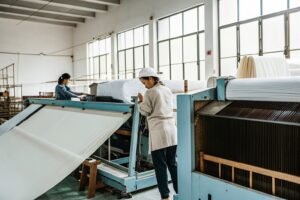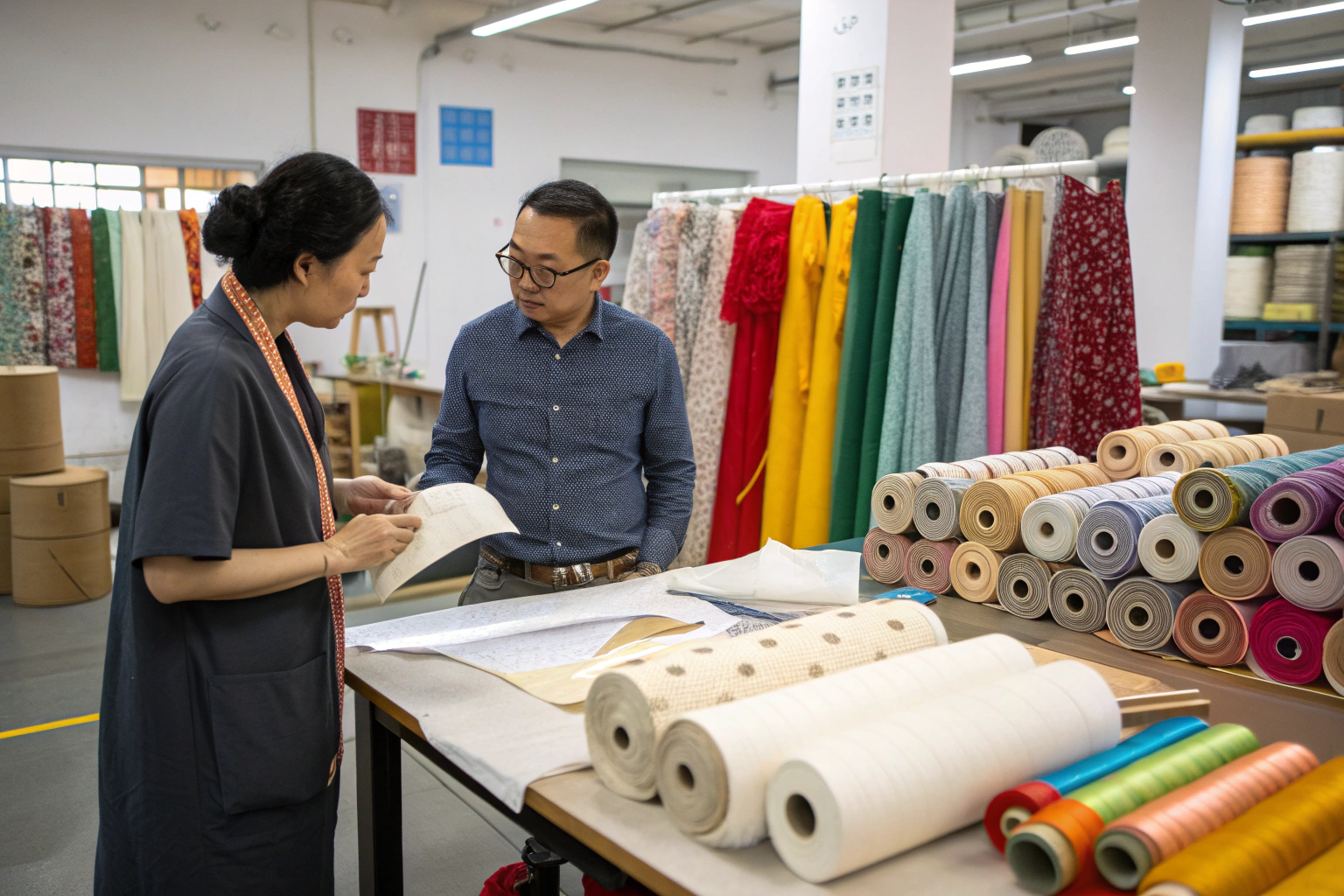
I’ve been in the textile game for over two decades here in Keqiao, and if there’s one question I get more and more from European designers and American brand owners like Ron, it’s this: “How do I find unique, sustainable fabrics without committing to massive minimums?” You’re launching a limited edition collection, or maybe a small test run for a new line. You want something special, something that tells a story, but the big mills just laugh when you ask for 300 yards of a specific organic cotton slub. That’s where the world of deadstock fabrics comes in. But sourcing it? That can feel like a chaotic treasure hunt if you don’t know the terrain.
In short, sourcing deadstock for limited edition collections is about tapping into the hidden inventories of large-scale manufacturers and converters, primarily in massive textile hubs like the one we operate in here in Keqiao, China. It’s a game of speed, relationships, and flexibility. You’re not ordering a production run from scratch; you’re rescuing high-quality surplus—overstock from brands, canceled orders from factories like ours, or leftover rolls from our own weaving and dyeing processes. This allows you to secure premium materials at a fraction of the cost and with a fraction of the environmental impact, all while guaranteeing your collection has an exclusivity that mass-produced fabrics simply cannot match.
But finding this goldmine of fabric isn’t as simple as typing a keyword into a search engine. It requires a different approach than standard manufacturing. You need to know where to look, who to trust, and how to navigate the logistics, especially when you’re an American buyer worried about timeliness, tariffs, and quality control. Over the years, helping clients from New York to London pivot to this model, I’ve learned exactly what works and what leads to a warehouse full of disappointment. Let me walk you through the process we’ve refined.
What Exactly Is Deadstock Fabric and Why Is It Perfect for Small Runs?
Let’s clear up the jargon first. When I talk about deadstock, I’m not talking about some dusty, low-quality material that’s been sitting in a barn for 50 years. In our world, deadstock—also called surplus or overstock—is essentially virgin, high-quality fabric that, for one reason or another, never made it to the cutting table. Maybe a luxury brand ordered too much of a specific satin-back crepe for a season that got canceled. Or perhaps our own knitting machines produced an extra few hundred kilos of a custom blend of organic cotton and recycled polyester, and the original buyer couldn’t take it.
For a limited edition collection, deadstock is your secret weapon. The biggest headache for small designers is the Minimum Order Quantity (MOQ). Most mills won’t touch an order under 3,000 meters per color. But with deadstock, the "MOQ" is whatever is on the roll. It’s inherently a low-volume, high-uniqueness model. (Here’s an insider tip: because this fabric was originally produced for a specific brand or collection, the color and hand feel are often more on-trend and unique than standard mill-run goods). You aren’t just buying fabric; you’re buying a story and a level of exclusivity that’s impossible to replicate with mass-produced textiles. Plus, for the eco-conscious consumer, it’s a direct win—you’re literally diverting waste from the landfill. We saw this firsthand last year when a Dutch designer found 500 meters of a deadstock bamboo jersey with a unique print we had made for a project that fell through. She built her entire summer collection around it.

How can you verify the true quality and composition of deadstock fabrics?
This is where your concern about quality control becomes the main event. When you buy deadstock, you’re usually buying “as-is.” You don’t have the lab dip approval process or the bulk production test reports you get with a fresh order. You absolutely cannot skip this step. When we at Shanghai Fumao offer deadstock to clients, we don’t just pull a roll from the shelf and ship it. Our CNAS-accredited lab puts every batch through the wringer. We test for shrinkage according to AATCC standards, colorfastness to washing and light, and tensile strength. We generate a full spec sheet with QR code tracking so you know exactly what you’re getting. If you’re sourcing on your own, ask the supplier for remnants of the original bulk QC report, or budget to have a sample third-party tested before you commit to the whole lot. Never trust a visual inspection alone; the hidden flaw is the one that ruins your final garment.
What are the common hidden costs (tariffs, shipping) I need to budget for?
You’re right to worry about the final landed cost, Ron. Tariffs and logistics are often the silent budget-killers in deadstock deals. The purchase price of the fabric might be a steal, but you have to factor in everything else. Shipping costs are calculated by volume or weight, and deadstock rolls can be odd sizes, which sometimes wastes space in a container. For U.S. buyers, the tariff classification (HTS code) is critical. Because deadstock can be a blend or a unique construction, it might not fall neatly into the same category as a standard fabric. Misclassifying it can lead to delays and unexpected duties. We always advise our clients to work with a supplier who understands US Customs regulations for textile imports. In fact, our logistics team handles this for our clients daily, ensuring all paperwork—from the packing list to the commercial invoice—is precise to avoid any holdups at Long Beach or New York ports.
How to Find Reliable Deadstock Suppliers in China’s Textile Hubs?
Okay, so you’re sold on the "why." Now for the million-dollar question: where do you actually find this stuff? It’s not like there’s a central Amazon for deadstock fabric. The real inventory is scattered across the sprawling textile districts, hidden in the back rooms of weaving mills, dye houses, and trading companies. If you show up cold, you’ll waste days just trying to find the right gate. I’ve spent my entire career navigating these very streets in Keqiao, and I can tell you, relationships are the only map that works.
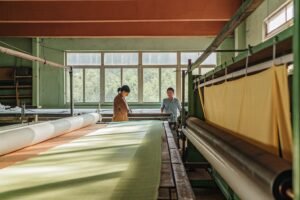
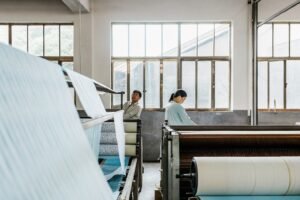
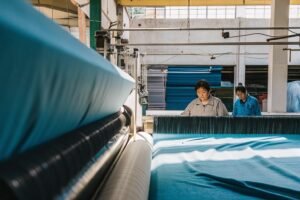
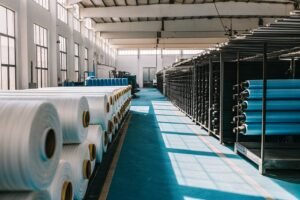
The key is to get as close to the source of the deadstock as possible. The best deals aren’t with a middleman who bought a mixed lot; they’re with the factory that produced the goods in the first place. For example, a weaving mill might have surplus yarn-dyed shirting because a customer’s letter of credit fell through. A printing factory might have 800 meters of a gorgeous floral pattern that was a color rejection. These factories, however, are set up for bulk production, not for managing a retail-like deadstock store. They want to move this inventory fast to free up warehouse space and cash. That’s where companies like mine come in. We act as a curated filter. We maintain long-term partnerships with dozens of local factories (our cooperative dyeing and printing partners), giving us first access to their surplus. We then inspect, catalogue, and offer it to you with full transparency.

Why are personal relationships key to accessing the best surplus inventory?
In China, business runs on guanxi (关系) — relationships built on trust over time. It’s the difference between being shown the "B-grade" stock and being led to the back room where the premium goods are stored. I remember a specific instance in March 2023. A major Korean buyer had over-ordered a complex, three-layer jacquard from one of our partner mills. The mill owner called me directly because we’ve settled accounts fairly for 15 years. He didn’t put it on the open market. He gave us first dibs. We were able to offer that entire lot—a fabric that would have cost $8.50/yard to develop from scratch—to a New York designer for $4.20/yard. That deal happened because of a phone call, not an email blast. If you don’t have those relationships on the ground, you need a partner who does.
What specific questions should you ask a potential deadstock supplier?
Don’t just ask "What do you have?" You need to probe like a detective. The goal is to uncover the fabric’s history to predict its future performance. First, always ask for the original production details: “What was the exact fiber composition and yarn count?” This tells you if it’s the genuine article or a mislabeled blend. Second, ask “Why is this fabric deadstock?” Was it a quality reject (bad), a color overrun (neutral), or a canceled order (often best)? A canceled order from a reputable brand usually means the fabric was fully approved and is top quality. Finally, ask about storage. “How has this been stored?” Fabric should be kept in a dry, clean warehouse away from direct sunlight. We store all our deadstock in climate-controlled conditions, something we’re happy to show clients via video call. A supplier who can’t answer these basic questions is a red flag.
How Does the Deadstock Timeline Compare to Traditional Manufacturing?
Let’s talk about time, because I know that’s a huge pain point. You’re probably used to the standard cycle: sampling takes 2-3 weeks, then you wait for bulk production which can be 6-8 weeks, plus shipping. It’s a slow dance. But with deadstock, the music is completely different. It’s fast, but it’s not always predictable. Understanding the rhythm is key to making it work for your limited edition launch.
The biggest advantage is the elimination of the production lead time. The fabric is already made. This means your timeline shrinks from months to potentially weeks. If we have the fabric you need in our warehouse here in Keqiao, we can inspect, pack, and ship it to the U.S. in a fraction of the time. The bottleneck shifts from manufacturing to logistics and your own cut-and-sew schedule. However, the catch is availability. You can’t reorder a deadstock fabric. Once that 500 meters is gone, it’s gone forever. So your design and decision-making process needs to be agile. You have to be ready to commit when you see the right material. We worked with a Canadian activewear brand in August 2022 who needed a specific moisture-wicking nylon spandex fast to capitalize on a trending style. They found a deadstock lot with us, we QC’d it in 48 hours, and it was on a plane to Vancouver within the week. Traditional manufacturing would have killed their trend cycle.

How can you align your design process with the uncertainty of deadstock?
This requires a shift in mindset. Instead of designing a collection and then searching for the fabric, you let the available fabric inspire the collection. It’s a more organic, collaborative process. A good supplier, like Shanghai Fumao, isn’t just a vendor; we become part of your creative team. We can send you curated swatch cards of what’s available—perhaps a lot of heavyweight organic cotton denim perfect for jackets, and a selection of lightweight Tencel linings. Your designer then builds the pieces around what’s actually obtainable. It’s the opposite of the traditional model. For example, one of our regular buyers, a Japanese boutique owner, never sends us a strict tech pack. She asks for photos of our latest deadstock arrivals and then sketches designs to fit those specific fabrics. It’s a beautiful, efficient symbiosis that eliminates waste and speeds up the whole process.
What’s the fastest shipping method for small deadstock rolls to the USA?
For the quantities typical of deadstock—which might be a few rolls, not a full container—air freight is often the most viable option, despite the cost. But you need to be smart about it. Don’t just use a standard courier like DHL or FedEx for a large, heavy roll; the volumetric weight will kill your budget. We typically consolidate small orders and use a less-than-container-load (LCL) sea freight service for better rates if the timeline allows for 15-20 days. For true rush orders, we work with air freight consolidators who specialize in textiles. They can often get space on a passenger flight cheaper than an express courier. A piece of advice: always ensure your supplier provides a "Fumigated Wooden or Carton Box" certificate for the packaging. U.S. Customs and Agriculture are very strict about untreated wood pallets, and a hold-up there can cost you dearly in storage fees.
How to Ensure Sustainable Practices When Buying Deadstock?
Sourcing deadstock is inherently a sustainable act. You’re literally practicing the highest form of recycling—pre-consumer waste reduction. But if you want to market your limited edition collection as truly eco-friendly, you need to look beyond just the fabric itself. The story of how you sourced it, who handled it, and how it got to you all matter to the conscious consumer. We’ve invested heavily in this because our European clients demand it.
The real sustainability win in deadstock isn’t just about diverting waste; it’s about the entire supply chain’s footprint. When you buy deadstock from a local hub like Keqiao, you’re often buying fabric that doesn’t need to travel far to you (via us) before heading to the U.S. But the bigger picture involves certifications. Can you prove the original fabric was made with non-toxic dyes? Is it GOTS certified organic cotton, or is that just a claim from a middleman? This is where our company’s infrastructure becomes your advantage. Because we have our own CNAS-certified lab and a deep relationship with the original producers, we can often trace the deadstock back to its source batch and provide the original certifications. In 2024, we helped a German brand get certified carbon-neutral shipping for their deadstock order by offsetting the air freight, and we provided full documentation of the fabric’s OEKO-TEX Standard 100 certification from its original production run.

How do you measure the true carbon footprint of a deadstock fabric purchase?
It’s tricky. The common assumption is that because you’re not "making new fabric," the carbon footprint is zero. That’s not true. You have to account for the "last mile." The footprint includes the energy used to store the fabric, the transport from the deadstock supplier to your consolidator, and the international shipping to the U.S. However, studies consistently show that extending the life of a textile by even 9 months can reduce its carbon, water, and waste footprint by 20-30%. So, while your deadstock purchase has a logistics footprint, it’s almost always significantly lower than commissioning a new fabric from scratch, which involves fiber production, spinning, weaving, dyeing, and finishing. A good way to measure is to ask your supplier for a simple life-cycle comparison. We provide our clients with a basic data sheet showing the estimated savings in water and CO2 compared to virgin production, based on industry-standard metrics from organizations like Textile Exchange.
What certifications should you look for to validate the fabric’s green claims?
You need paperwork, not just promises. If a supplier tells you a deadstock fabric is "organic cotton," ask to see the GOTS (Global Organic Textile Standard) or OCS (Organic Content Standard) certificate from the original spinning or weaving mill. For recycled materials, look for the GRS (Global Recycle Standard) certificate. This proves the entire supply chain was audited. For chemical safety, the OEKO-TEX Standard 100 certificate is the gold standard. It ensures the fabric is free from harmful substances. (I’ll be blunt: in the chaos of a textile market, people will slap any label on a roll to make a sale). That’s why at Shanghai Fumao, we don’t just take someone’s word for it. Our in-house team pulls samples and tests them against these standards in our lab. If we can’t verify a green claim with data, we won’t pass it on to you. It protects your brand and our reputation.
Conclusion
Sourcing deadstock fabrics for your limited edition collections is one of the smartest moves you can make in today’s market. You get exclusivity, sustainability, and cost-effectiveness, all while slashing production lead times. But it requires a partner who understands the hidden geography of the textile world, someone who can navigate the chaos of surplus inventory and turn it into a curated, reliable resource for your brand. You need a team that can verify quality, manage the logistics, and handle the tricky parts like tariff classification, so you can focus on what you do best: designing and selling amazing clothes.
At Shanghai Fumao, we’ve built our entire operation around this exact need. With our roots in Keqiao’s textile cluster and our 20+ years of experience, we don’t just have access to deadstock; we have access to the story behind it. Our integrated services—from our CNAS-accredited lab for quality verification to our in-house logistics team that navigates U.S. customs—mean you get a seamless, worry-free experience. We bridge the gap between the chaotic world of surplus fabric and the precise needs of your next collection. If you’re ready to stop fighting minimums and start creating something truly unique, let’s talk. Please reach out to our Business Director, Elaine, at elaine@fumaoclothing.com. Tell her about your project, and let’s see what hidden gems we can uncover together.