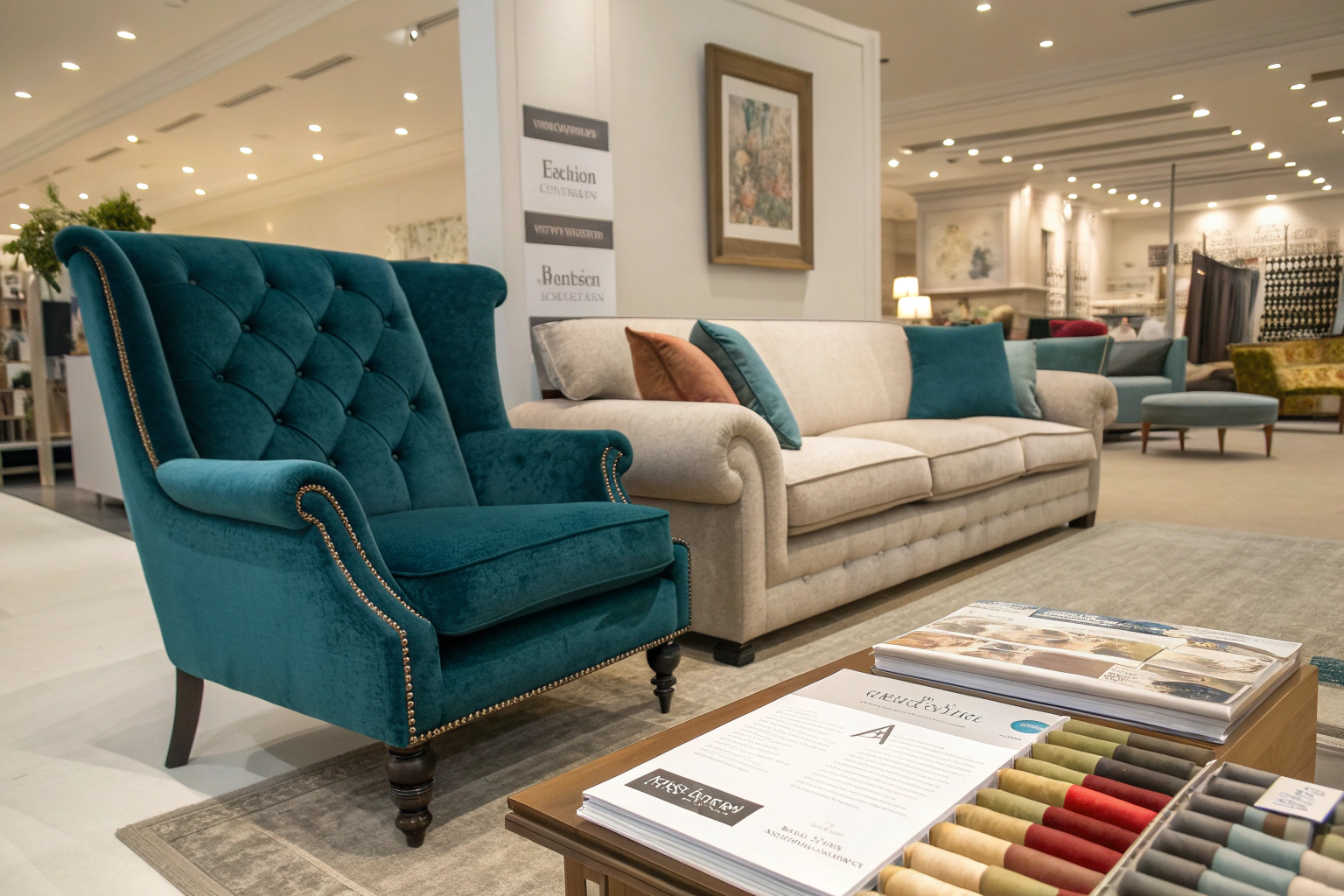
I learned the true meaning of ‘durability’ not in our lab, but in a coffee shop in downtown Shanghai in 2018. A buyer from an Australian contract furniture company placed a stainless steel key on the seat of a velvet dining chair and dragged it across the surface while talking. He did it absently, the way someone might tap a pen. I watched the fabric crush under the pressure, then recover slowly. No fiber breakage. No permanent mark. He looked at me and said, "This passes the key test. The last supplier failed." That moment changed how I think about upholstery fabrics. It is not just about Martindale rub counts. It is about resilience—the ability to absorb abuse and return to original appearance.
Upholstery is the most demanding application for any textile. A shirt might be washed 50 times in its life. A sofa is sat on, slept on, spilled on, and scratched by pets daily for a decade. The fabric must resist abrasion, fading, pilling, seam slippage, and staining. It must maintain its aesthetic under constant compression. And increasingly, it must meet stringent fire safety regulations and sustainability certifications.
At Fumao, we supply upholstery fabrics to residential furniture brands, hospitality specifiers, and marine and automotive contractors. We have tested hundreds of constructions against ISO, ASTM, and BS standards. We have seen 1,000,000+ Martindale fabrics fail in real-world use because the construction was too stiff and the fibers fatigued. We have seen 50,000 Martindale fabrics perform beautifully for a decade because the yarns were air-jet textured for resilience. This article will give you the actual engineering data behind durability, not just the marketing numbers. I will explain why velvet is not automatically fragile, why linen is a terrible choice for high-traffic hospitality, and how to specify fabric that will outlast the furniture it covers.
How Is Upholstery Durability Actually Measured and Certified?
Let me start with the number everyone asks for first: Martindale rub count. Every buyer wants to know: "What is the Martindale?" It is a useful data point, but it is frequently misinterpreted and occasionally manipulated.
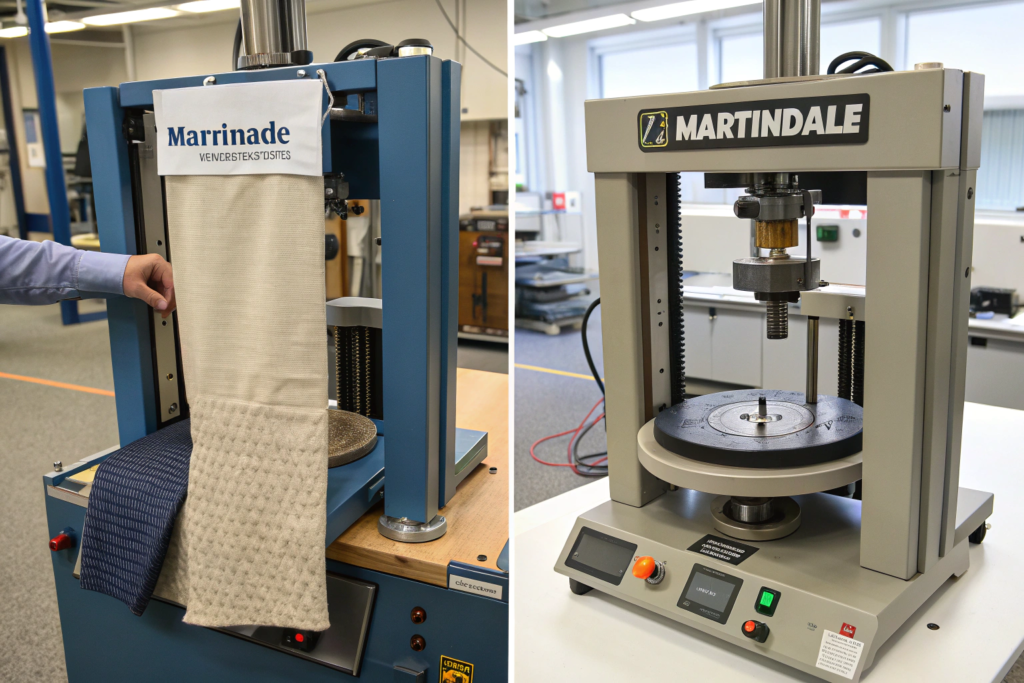
The Martindale test (ISO 12947, ASTM D4966) abrades a circular fabric sample against a standard wool felt abradant in a Lissajous figure motion. The machine runs until the fabric shows thread breakage or a specified color change. The result is the number of cycles survived. General domestic upholstery: 15,000 – 25,000 cycles. Heavy domestic: 30,000 – 40,000. Commercial/contract: 50,000+.
Here is what most suppliers do not tell you: Martindale measures abrasion resistance against wool felt. It does not measure resistance to snagging, seam slippage, pilling, or flex fatigue. A fabric can achieve 100,000 Martindale cycles and still fail catastrophically in a real home because a cat’s claw snagged a loop and unraveled the weave. Conversely, a low-pile wool blend with only 25,000 Martindale might perform beautifully for 15 years because wool fibers have natural resilience and recover from compression.
We use Martindale as a screening tool, but we never rely on it alone. For contract and hospitality projects, we always conduct additional tests:
-
Wyzenbeek (ASTM D4157): The US standard, more common for automotive and heavy-duty contract. It uses a cotton duck fabric oscillating against the test fabric. Results are ‘double rubs’. Correlation to Martindale is not linear.
-
Seam slippage (ISO 13936): Measures how easily yarns shift at sewn seams. A beautiful fabric that pulls apart at the seams under load is worthless.
-
Pilling resistance (ISO 12945): Simulates surface fuzzing from wear. Essential for synthetics and blends.
-
Lightfastness (ISO 105-B02): For contract furniture near windows. We require minimum 4.0 (blue wool scale) for hospitality projects.
In 2022, we rejected a 12,000-meter shipment of polyester chenille for a Dubai hotel project because the Martindale was 65,000 (excellent) but the seam slippage failed at 2mm. The yarns were too slippery; they migrated under tension. The client’s upholsterer would have had constant complaints of seams gaping. We re-engineered the fabric with a higher twist weft and a finer sett, passed seam slippage, and shipped six weeks late. The hotel opened on schedule. The client still uses us exclusively. The BS 2543:2015 standard for upholstery fabrics provides the full framework of required tests for different end-use categories, and I recommend any contract specifier purchase a copy.
What is the ‘rub count’ I should specify for a residential sofa vs. a hotel lobby?
This is where buying guides often oversimplify. I will give you our internal specification matrix, developed over 15 years of supplying both markets.
Residential, light use (formal living room, adult-only household): Minimum 15,000 Martindale. You can use finer yarns, lighter weights, more delicate constructions. Velvet, damask, fine linen blends are acceptable.
Residential, heavy use (family room, children, pets): Minimum 30,000 Martindale. We recommend a twill weave or high-density flat weave. Chenille is acceptable if the pile is short and the backing is tight. Avoid open weaves and long floats.
Hospitality, guest rooms (hotel bedrooms): Minimum 40,000 Martindale plus minimum 4.0 lightfastness. These rooms see moderate but sustained use. The fabric must also pass cigarette resistance (BS 5852) if smoking is permitted, though this is less common now.
Hospitality, public areas (lobbies, restaurants, bars): Minimum 60,000 Martindale, plus seam slippage < 3mm at 180N, plus CRF6 (contract rated FR). This is the harshest environment. We specify solution-dyed acrylic, polyester, or nylon. Natural fibers are generally unsuitable unless heavily blended.
Marine (boat upholstery): Minimum 50,000 Martindale, but the primary requirement is UV resistance and mildew resistance. We use solution-dyed polyester acrylic blends with anti-fungal additives.
I had a conversation in March 2024 with a procurement manager for a major cruise line. They had been specifying 100,000 Martindale fabrics for their casino chairs. The fabrics were failing in 18 months—not from abrasion, but from UV degradation through porthole windows. The high Martindale count gave them false confidence. We switched them to a solution-dyed acrylic with a UV stabilizer package. The Martindale was only 45,000, but the real-world lifespan tripled. The ACT (Association for Contract Textiles) Performance Guidelines are the industry standard for commercial upholstery specification, and they emphasize matching the test to the risk.
Can I trust ‘heavy duty’ or ‘commercial grade’ labels from Chinese suppliers?
You can, but only if you verify. The terms ‘heavy duty’ and ‘commercial grade’ are not regulated. Any supplier can print them on a swing tag. I have seen a 140gsm polyester satin labeled ‘commercial grade’ because the factory owner thought it sounded good.
Here is how we handle this at Fumao. When a client requests a commercial-grade upholstery fabric, we provide a technical data sheet with the actual test results from an accredited laboratory. Not an in-house test. Not a ‘supplier certificate’ from an unknown lab. A report from SGS, BV, ITS, or a CNAS-accredited lab with the specific test methods and numerical results.
We also provide physical samples of the fabric after 20,000, 40,000, and 60,000 Martindale cycles. We keep these in our showroom. You can see and touch the difference. The 20k sample shows slight surface fuzzing. The 60k sample is visibly worn. This transparency builds trust. If a supplier cannot show you a worn sample, they have not actually tested the fabric to those cycles.
In 2023, a US-based furniture brand sent us a competitor’s ‘100,000 cycle’ fabric for benchmarking. We ran it on our Martindale machine. It failed at 34,000 cycles. The competitor had tested the base cloth only, not the finished fabric with the protective topcoat that washed off in the first cleaning. The client cancelled their order and moved the entire program to us. The ISO 12947-1 standard specifies exactly how to prepare and condition samples for abrasion testing, and any legitimate test report will cite this.
What Fabric Constructions Offer the Best Durability-to-Comfort Ratio?
This is the engineering challenge of upholstery. A fabric can be extremely durable—think automotive vinyl—but it will be hot, sticky, and feel cheap. A fabric can be extremely comfortable—think high-pile mohair velvet—but it will crush and show wear patterns.
The optimal construction for most high-use upholstery is a tightly woven, high-density plain weave or twill using air-jet textured yarns. Let me explain why.
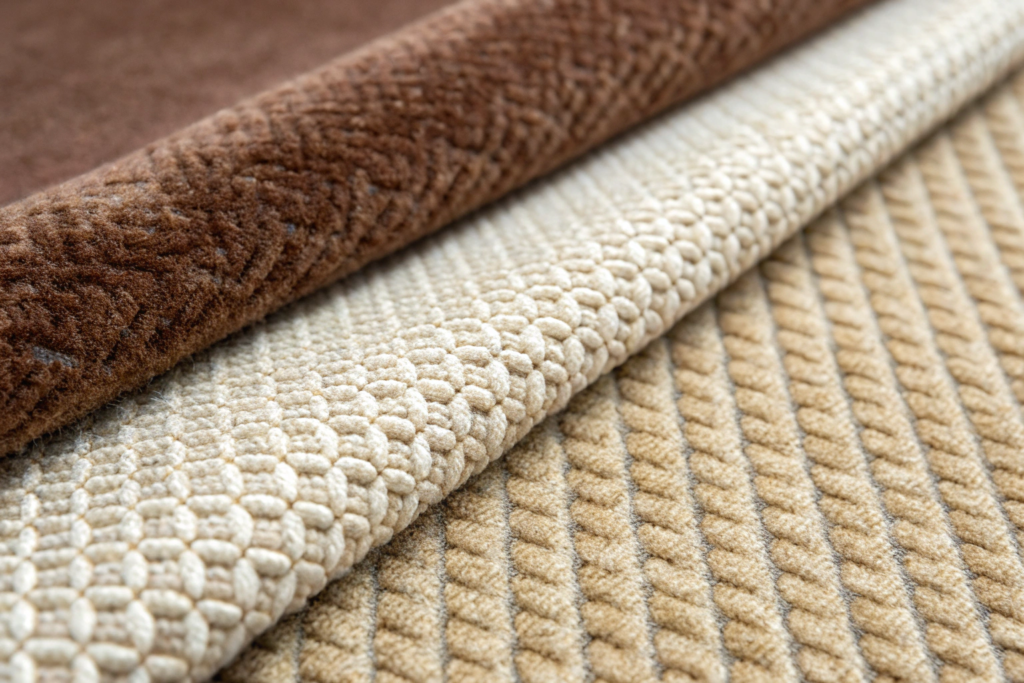
Air-jet texturing is a process that takes flat filament yarns (polyester, nylon) and blasts them with compressed air to create random loops and entanglements. This gives synthetic yarns the appearance and hand feel of spun natural fibers, but with significantly higher abrasion resistance and no pilling. The yarns are also more compressible and recover better than flat filaments.
We developed a specific air-jet textured polyester warp and weft construction for a German office furniture manufacturer in 2021. Target: 80,000 Martindale, soft hand, 12+ colorways, FR-treated. After 18 months of development, we achieved a 320gsm, 2×2 twill that met all targets. The fabric is now specified on over 200,000 office chairs annually. It looks like wool, wears like iron, and costs 40% less than comparable wool blends.
Chenille is popular for residential upholstery because it is exceptionally soft. But chenille is intrinsically vulnerable. The pile is created by cutting woven leno fabrics into strips, which are then twisted into yarns. The cut ends can pull out under abrasion. A high-quality chenille with tightly twisted, heat-set yarns and a dense backing can perform adequately for residential use. A low-quality chenille will bald within months. We recommend chenille only for light-use applications, and only with a minimum Martindale of 25,000 verified.
Velvet is often dismissed as fragile. This is incorrect. A well-constructed velvet with a dense pile, high twist, and a stable woven back can achieve 50,000+ Martindale. The key is pile density. We measure this by weight per square meter of the pile fibers alone. For contract-grade velvet, we target minimum 450gsm total weight with at least 250gsm pile weight. The fiber also matters. Polyester velvet is more durable than cotton velvet. Solution-dyed acrylic velvet offers excellent UV resistance. We have supplied velvet for cinema seating that exceeds 100,000 cycles. The Velvet Manufacturers Association technical bulletin (an actual organization, surprisingly) explains the relationship between pile density and abrasion resistance.
Is polyester the most durable upholstery fiber, or should I consider nylon?
This is a nuanced question. Nylon (polyamide) has inherently higher abrasion resistance than polyester. In laboratory tests, nylon 6,6 can achieve 2-3x the Martindale cycles of standard polyester at the same yarn denier and construction. This is why nylon is dominant in automotive carpeting, seat belts, and military textiles.
However, nylon has three significant disadvantages for upholstery:
-
UV resistance: Nylon degrades in sunlight faster than polyester. It yellows and loses strength. For residential use near windows, this is a problem.
-
Static: Nylon generates static electricity more readily than polyester. In dry climates, users receive shocks when standing up from a nylon-upholstered chair.
-
Cost: Nylon yarn is approximately 30-40% more expensive than equivalent polyester yarn.
For most upholstery applications, we recommend polyester as the optimal balance of durability, UV resistance, cost, and processability. We reserve nylon for specific high-abrasion, low-UV applications such as office chair armrests and public transport seating.
Solution-dyed acrylic is another excellent choice for outdoor and marine upholstery. Acrylic has lower abrasion resistance than polyester, but its UV resistance is superior. It also has a wool-like hand feel that synthetics struggle to match. The key is solution-dyeing—the color is added to the polymer solution before extrusion, not after. This means the pigment is throughout the fiber, not just on the surface. A solution-dyed acrylic can withstand years of direct sunlight with minimal fading. The Sunbrella fabric performance specifications are the benchmark for this category, and we have developed comparable products at competitive price points.
What about natural fibers? Is linen upholstery ever practical?
I love linen. It is beautiful, it is sustainable, and it has a unique textural aesthetic that synthetics cannot replicate. But I will be honest with you: linen is a poor choice for most upholstery applications.
Linen fibers have low elasticity. They do not recover from compression. A linen sofa cushion will show permanent body impressions within months. Linen also has low abrasion resistance. The fibers fibrillate (split lengthwise) under repeated friction, creating surface fuzzing and eventually thinning. Finally, linen is highly absorbent and slow-drying. Spills wick rapidly and stains set permanently.
We do supply linen upholstery fabrics, but only for light-use residential applications with explicit client education. We require a minimum of 50% polyester or nylon blend to improve durability. A 70/30 linen-polyester blend retains much of the aesthetic with significantly better wear performance.
Wool is a better natural fiber choice. Wool fibers have natural crimp and elasticity. They recover from compression. They are naturally flame-resistant and soil-resistant. A high-quality wool upholstery fabric (85% wool, 15% nylon for reinforcement) can achieve 40,000+ Martindale and perform beautifully for decades. The cost is high, and the supply chain for certified non-mulesed wool is constrained, but for premium residential and boutique hospitality, wool remains the gold standard.
How Do I Specify Flame Retardancy for Upholstery Fabrics?
This is the most legally complex aspect of upholstery sourcing. Regulations vary by country, by end-use (residential vs. contract), and by furniture type (upholstered seating vs. mattresses). Ignorance is not a defense. If your fabric fails a flammability test at a third-party laboratory, the shipment will be rejected, and you may face legal liability.
For the US market, the primary standard is CAL TB 117-2013 for residential upholstery. This is a smolder test, not an open flame test. The fabric must resist ignition from a smoldering cigarette. Most polyester and wool fabrics pass this test inherently. Many cotton and linen fabrics require a back-coating treatment to pass.
For contract and public occupancy in the US, NFPA 260 or CAL TB 133 may apply. These are stricter open flame tests. Fabrics typically require high-performance FR back-coatings or inherently FR fibers (modacrylic, Trevira CS).
For the UK and EU, BS 5852 is the dominant standard. It has multiple ignition sources (0 to 7), from a smoldering cigarette to a simulated burning newspaper. Source 0 (cigarette) is typical for residential. Source 5 (wood crib) is common for contract. The entire composite—fabric plus interliner plus foam—must be tested together.
For China, GB 20286-2006 applies to public use textiles. This is increasingly harmonized with ISO standards but has unique local testing requirements.
Here is the critical point: FR back-coatings can negatively affect durability and hand feel. A heavy brominated FR coating can stiffen the fabric, reduce breathability, and cause dye migration. Some FR chemicals are being restricted under EU REACH and various state-level bans in the US. We are transitioning our FR program toward halogen-free, phosphorus-based formulations that meet both flammability and environmental standards.
In 2023, we requalified an entire collection of contract upholstery fabrics for a UK hospitality group. The previous formulation used a brominated FR that passed BS 5852 but failed the new Oeko-Tex Standard 100 limits for persistent organic pollutants. We reformulated with a phosphorus-based back-coating, requalified all 24 colorways, and shipped within 8 weeks. The client did not miss their hotel opening. The UK Furniture and Furnishings (Fire) (Safety) Regulations 1988 are notoriously strict, and any supplier claiming to serve the UK market must demonstrate specific, recent test evidence.
Can I get FR-treated fabric that is also GOTS-certified organic?
This is extremely difficult. GOTS prohibits the use of halogenated flame retardants and requires that any FR treatment be non-toxic and biodegradable. Most effective FR chemicals do not meet these criteria. There is ongoing research into bio-based FR treatments (phytic acid, chitosan), but they are not yet commercially viable for high-volume production at competitive price points.
For clients who require both flame retardancy and organic certification, we recommend inherently FR natural fibers. Wool, when densely constructed, passes many smolder tests without chemical treatment. Hemp and linen blends can sometimes achieve sufficient smolder resistance through high-density weaving and natural mineral salts, but this must be verified on a case-by-case basis. The GOTS Positive List for chemical inputs explicitly excludes halogenated FR compounds, and the list of approved FR chemicals is very short.
What is the ‘ugly edge’ problem in FR-coated fabrics, and how do I prevent it?
This is a manufacturing defect that causes significant rejection rates in cut-and-sew operations. The ‘ugly edge’ refers to the phenomenon where FR back-coating migrates to the face of the fabric at the roll edges during drying. The edge becomes darker, stiffer, and sometimes tacky. When the upholsterer cuts panels near the edge, they encounter this defect and must scrap the material.
We solved this problem in 2020 by installing edge cooling nozzles on our coating line. As the coated fabric exits the drying oven, we direct jets of cool air specifically at the roll edges. This sets the coating faster at the edges, preventing migration back to the face. We also increased the trim allowance on all FR-coated upholstery fabrics from 2cm per side to 5cm per side. This adds cost, but it reduces client waste. Our cut-and-sew customers report <1% edge-related defects, compared to industry averages of 5-8%.
If you are sourcing FR-coated fabric, I recommend asking your supplier: "What is your trim allowance, and how do you control edge migration?" Their answer will tell you whether they understand the process or are simply applying generic chemistry.
How Do I Balance Sustainability and Durability in Upholstery?
This is the emerging frontier. For years, upholstery was exempt from sustainability pressure because the expected lifespan is so long. A sofa that lasts 15 years has lower annual environmental impact than a fast-fashion t-shirt worn 15 times, regardless of material. But this logic is now under scrutiny. Brands want both durability and recycled content, and biodegradability, and chemical transparency.
Recycled polyester is now widely available for upholstery applications. The challenge is maintaining abrasion resistance with recycled fiber. Recycled staple fiber is generally shorter and has lower tenacity than virgin fiber. We compensate by blending virgin and recycled (typically 70/30 or 50/50) and by optimizing the spinning process. A 100% recycled polyester upholstery fabric with 50,000+ Martindale is technically achievable but costly. The economics improve with volume.
Mechanically recycled wool is another option. Post-industrial wool waste is shredded, re-spun, and woven. The fiber length is shorter, so pilling resistance is lower. We blend with 10-15% nylon to reinforce. The aesthetic is heathered and informal, which suits certain residential and hospitality aesthetics. The carbon footprint is significantly lower than virgin wool.
Biodegradability is nearly incompatible with durability. If a fabric is designed to break down in a landfill, it will also break down faster in use. We do not offer biodegradable upholstery fabrics for contract applications. For residential, we offer undyed organic cotton and linen canvas that are fully compostable, but only for light-use, short-lifecycle applications. The Cradle to Cradle Certified Circular Economy principles acknowledge this tension and focus on material health and recyclability rather than biodegradability for long-life products.
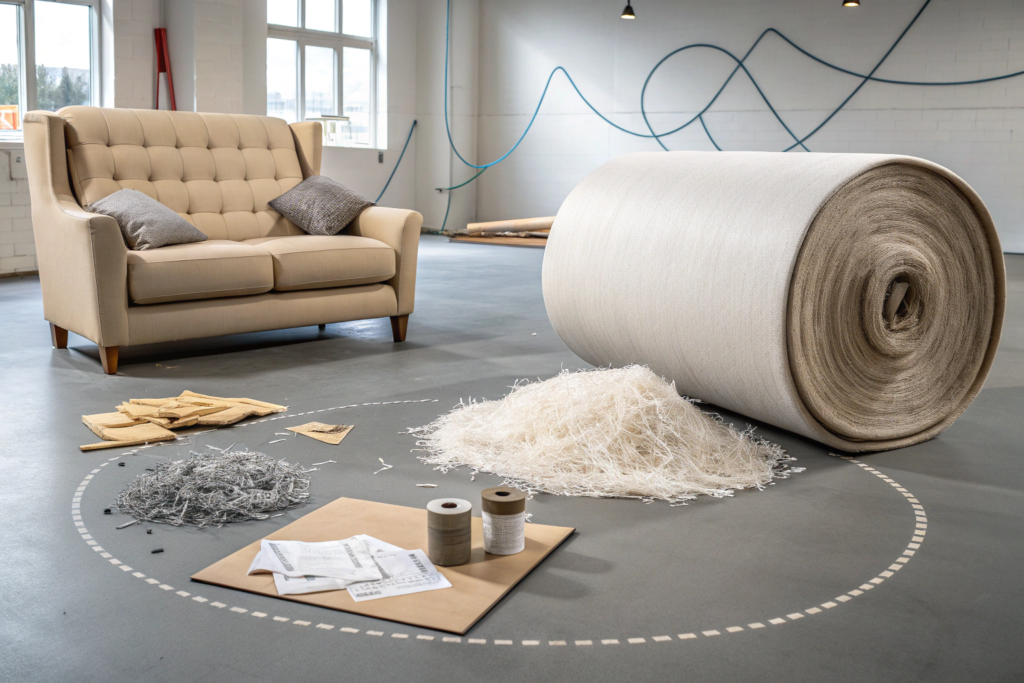
One genuinely promising innovation is mono-material upholstery. A fabric made entirely of polyester (face yarns, backing yarns, sewing thread) can be recycled back into polyester fiber at end of life. No mixed fibers. No back-coatings that contaminate the recycling stream. We have developed a 100% polyester velvet that meets 50,000 Martindale and passes CAL TB 117 without FR chemicals. The client can return the worn-out furniture, and we grind it, re-extrude it, and make new fabric. This is true circularity. The Ellen MacArthur Foundation’s Jeans Redesign project demonstrated the feasibility of mono-material denim recycling, and we are applying the same logic to upholstery.
Is ‘vegan leather’ durable enough for contract upholstery?
It depends entirely on the construction and quality. The term ‘vegan leather’ covers everything from high-performance, hydrolysis-resistant polyurethane that meets automotive specifications, to low-cost PVC that cracks within two years.
For contract upholstery, we specify high-performance PU with the following minimum requirements:
- Abrasion resistance: 100,000+ Wyzenbeek double rubs
- Hydrolysis resistance: Pass ISO 1419 (7 days at 70°C / 95% RH)
- Cold crack: Pass ISO 4675 at -15°C
- Lightfastness: Minimum 4.0 (ISO 105-B02)
- FR: Meet CAL TB 117 or BS 5852 source 0 as required
This is not cheap. Our contract-grade PU leather costs approximately $18-22 per meter FOB. It is used in luxury hospitality, corporate headquarters, and marine applications. It performs comparably to premium bovine leather.
At the other end of the market, commodity PU leather (often called ‘bonded leather’ or ‘bicast’) has a thin PU coating over a split leather backing or a non-woven fiber base. This material typically fails within 2-3 years in residential use. The coating peels, cracks, or delaminates. We do not recommend it for any upholstery application where durability is required.
The SATRA Technology Centre publishes comparative performance data on various synthetic leather constructions, and the variation within the category is far greater than the variation between synthetic and genuine leather.
How do I test fabric for pet claw resistance?
This is not a standardized test, but it should be. We have developed an in-house test specifically for clients targeting the residential pet-owner market.
We mount a fabric sample at 45 degrees on a foam-backed substrate. We use a standardized metal claw tool (actually a modified spring-loaded center punch with a 1mm radius tip) to drag across the surface at controlled force. We measure: 1) snag height, 2) fiber fracture, and 3) permanent distortion.
Our findings: Tightly woven, high-density flat weaves outperform plush constructions. A 2×2 twill in high-tenacity polyester shows minimal snagging. Velvet and chenille show significant fiber displacement. Microfiber suede (polyester) is surprisingly resistant because the fibers are very short and densely packed.
We have also tested ‘anti-claw’ finishes. Most are ineffective. A silicone-based coating reduces friction slightly but washes off after cleaning. There is no chemical replacement for mechanical construction. If your customer has large dogs, recommend a flat weave or a high-performance microfiber suede.
Conclusion
Upholstery fabric is not fashion fabric. It is not apparel fabric. It is a high-engineering material that must withstand years of mechanical stress, UV exposure, cleaning, and often regulatory scrutiny. The Martindale number is important, but it is not sufficient. You must understand the construction, the fiber, the finishing chemistry, and the end-use environment.
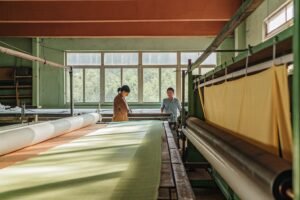
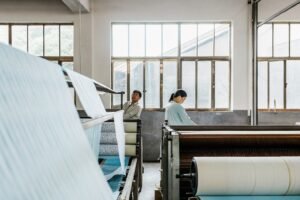
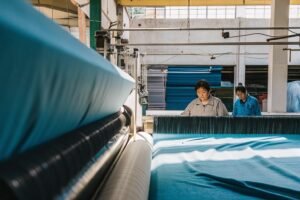
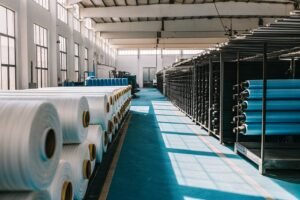
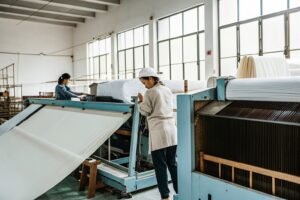
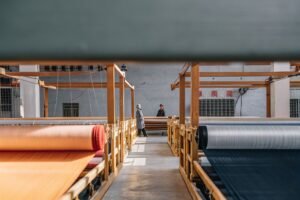
At Shanghai Fumao, we have dedicated weaving machines, specialized coating lines, and a CNAS-accredited laboratory specifically for contract and residential upholstery. We do not treat upholstery as an extension of our apparel business. It is a separate discipline with separate quality standards, separate sales engineers, and separate supply chains. We have invested in air-jet texturing partners, in solution-dyed fiber capacity, in halogen-free FR chemistry, and in mono-material recycling systems because we believe this category requires deep specialization.
If you are specifying upholstery fabric for a residential collection, a hotel renovation, a corporate office fit-out, or a marine project, I invite you to contact us. We will ask you about your abrasion targets, your lightfastness requirements, your flammability jurisdiction, and your sustainability goals. We will recommend specific constructions with corresponding test reports. We will send you abrasion-worn samples so you see the failure mode before it happens.
Contact Elaine, our Business Director, to discuss your upholstery fabric specifications. Elaine manages our contract and residential upholstery division and has personally overseen projects for major hotel chains, office furniture manufacturers, and cruise lines. Elaine’s email is: elaine@fumaoclothing.com. Tell her what you are furnishing, and she will recommend the fabric that will outlast the furniture.