Finding the right fabric supplier for your activewear line can feel like searching for a needle in a haystack. You need performance, durability, style, and value—all while navigating complex global supply chains. It’s a common pain point that can make or break a collection.
The key is partnering with a supplier that offers not just materials, but integrated solutions. This means finding a partner with deep technical expertise, rigorous quality control from yarn to yard, and the agility to match fashion’s fast pace. Success hinges on a clear sourcing strategy that balances technical specifications, ethical production, and logistical efficiency.
Let’s dive into the core considerations for sourcing high-performance fabrics, moving beyond simple price comparisons to build a foundation for quality, innovation, and timely delivery. A strategic approach here turns fabric from a commodity into your brand’s greatest competitive advantage.
What Are the Key Performance Features for Swimwear and Leggings Fabrics?
Not all stretch fabrics are created equal. For swimwear and leggings, the fabric isn’t just about fit—it’s the engine of performance. Choosing wrong leads to customer returns, bad reviews, and damaged brand reputation. The right fabric feels great, performs under pressure, and lasts.
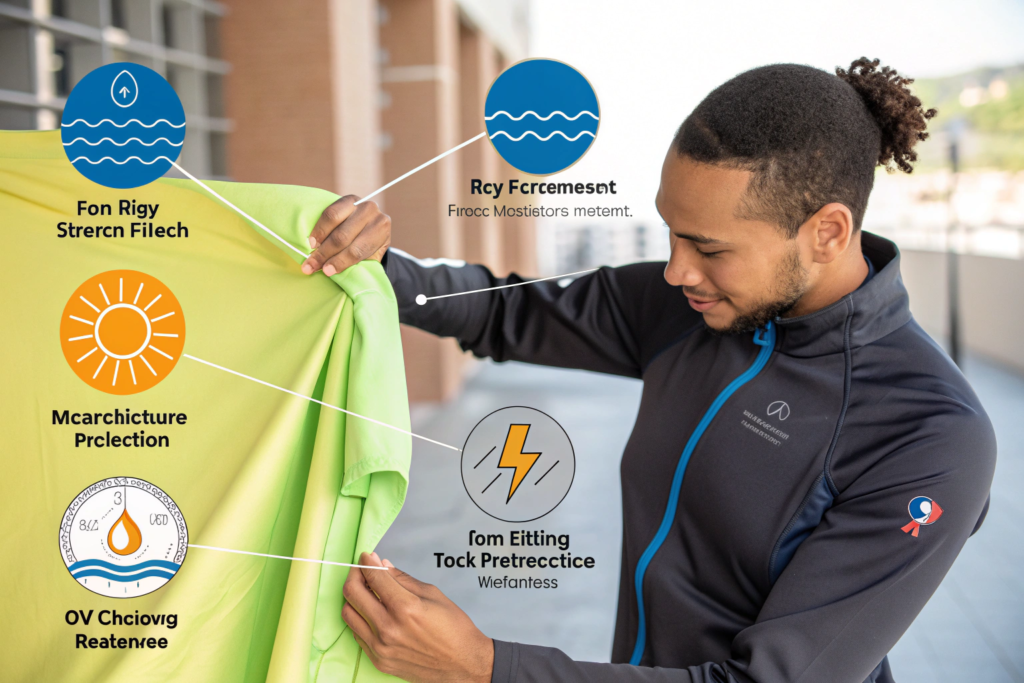
Essential features include superior four-way stretch for freedom of movement, excellent chlorine or saltwater resistance for swimwear, and high moisture-wicking capabilities for leggings. UV protection, colorfastness, and shape retention are non-negotiable. It’s a blend of chemical engineering and textile science to create a second skin that works as hard as your customers do.
How Do You Test for Chlorine and UV Resistance?
You can’t trust a supplier’s word on performance—you need data. At Shanghai Fumao, our CNAS-accredited lab is our truth center. For swimwear, we conduct accelerated chlorine resistance tests that simulate months of pool use in days, checking for elasticity loss and color fade. For both swim and activewear, UV protection testing (UPF rating) is critical. We use spectrophotometers to measure how effectively the fabric blocks UVA and UVB rays, ensuring a UPF 50+ rating for optimal protection.
The process is meticulous. For a client from Florida in 2023, we developed a recycled nylon/Spandex blend for sun-protective swimwear. Through iterative testing, we optimized the solution-dyeing process and fiber blend, achieving a UPF 50+ rating that lasted over 80 washes, a key selling point they now heavily promote. Understanding global testing standards for performance apparel is crucial for compliance and marketing. We provide full test reports aligned with AATCC, ISO, and customer-specific standards, so you have certified proof of performance.
What’s the Difference Between Nylon and Polyester for Activewear?
This is the classic debate. Sourcing high-quality nylon for swimwear often means seeking a softer, more luxurious hand feel and excellent color vibrancy, especially with solution-dyed options. Nylon generally recovers better from stretch and is inherently more resistant to chlorine degradation than untreated polyester. However, it can be prone to fading if not properly engineered.
Sourcing durable polyester for leggings, on the other hand, leans into superior moisture-wicking, faster drying times, and excellent durability. It’s often more cost-effective and offers great strength. The innovation happens in the yarn and finish. For instance, in 2022, we worked with a California-based yoga brand to create a legging fabric using textured polyester yarns. This gave the feel of cotton with the performance of polyester, solving their problem of fabrics that felt too synthetic. The key is to match the fiber to the primary function: nylon for fashion-forward, color-rich swimwear; polyester for high-sweat, durable athletic leggings. (Here’s a quick comparison we often share with buyers:)
| Feature | Nylon (e.g., 82% Nylon / 18% Spandex) | Polyester (e.g., 88% Polyester / 12% Spandex) |
|---|---|---|
| Primary Feel | Softer, silkier | Stronger, can be brushed or textured |
| Moisture Wicking | Good | Excellent |
| Chlorine Resistance | Good (better with treatment) | Varies; requires specific treatment |
| Durability & Abrasion | Very Good | Excellent |
| Cost | Generally Higher | Generally More Economical |
| Best For | Fashion Swimwear, Luxury Leggings | High-Intensity Training, Everyday Activewear |
How to Navigate Minimum Order Quantities (MOQs) and Lead Times?
MOQs and lead times are where sourcing dreams meet reality. A fantastic fabric is useless if you can’t order it in your volume or get it in time for your season. This is a major pain point, especially for emerging brands competing with giants.
The secret is understanding factory capacity and planning cycles. Managing fabric MOQs from Chinese suppliers requires clear communication. While our standard MOQ for a new custom development might be 1000-2000 yards, we offer a “stock design customization” program. Here, you can modify colors or minor details of existing patterns in our 30,000+ design library for an MOQ as low as 500 yards. For lead times, you must master the Chinese manufacturing calendar for fashion production. Peak seasons (Mar-May, Aug-Oct) add 1-2 weeks. Major holidays like Chinese New Year (3-4 week shutdown) require planning 6-8 weeks ahead. A European brand we work with now finalizes tech packs with us 6 weeks before CNY, ensuring production starts the day factories reopen.

Can You Get Low MOQs for Custom Performance Fabrics?
Yes, but it requires a strategic partnership. The high MOQ barrier is usually due to dye lots and machine setup costs. Our approach at Shanghai Fumao is to act as an aggregator. By consolidating similar custom color requests from multiple small clients into a single dye vat, we can offer lower yardage per client. For example, in Q3 2023, we helped three independent Australian activewear brands, each needing a specific shade of moss green for leggings. We combined their orders, dyed a master batch, and split it, bringing the effective MOQ for each down to 800 yards instead of 3000.
Another strategy is leveraging our extensive base fabric library. We stock greige (undyed) fabrics in common constructions like 88/12 polyester-spandex brussels. Customization then focuses on finish and print, drastically reducing the minimums. Exploring fabric sourcing strategies for startup clothing brands often means starting with stock fabrics and gradually introducing custom elements as your volume grows. We guide our startup partners through this phased approach to manage cash flow and risk.
How Do Shipping and Tariffs Impact Sourcing Timelines and Cost?
This is the make-or-break math. You might find a cheap fabric, but sea freight volatility and US import tariffs on Chinese textiles can erase your margin. The key is working with a supplier who understands total landed cost. For shipments to the US, we classify our performance fabrics under precise HTS codes. Many of our functional fabrics, especially those with bonded membranes or specific technical finishes, may fall into categories with lower duty rates than basic apparel fabrics. We provide the necessary documentation to support correct classification.
For timeline impact, we don’t just hand you a fabric roll; we manage the door-to-door process. Our logistics partners provide consolidated container services for smaller orders, which is a game-changer for cost. In early 2024, for a client in Texas, we combined their fabric order with hardware (from our partner in Yiwu) into one container, cutting their shipping cost per unit by 35%. We also keep real-time data on sailing schedules from Ningbo to Los Angeles and can advise on the optimal booking window to avoid peak surcharges and port congestion.
What Sustainable and Innovative Options Are Available?
Today’s consumer demands performance with a conscience. Sustainability is no longer a niche; it’s a core specification. But “eco-friendly” is a broad term. Your job is to find verifiable innovation that aligns with your brand story.
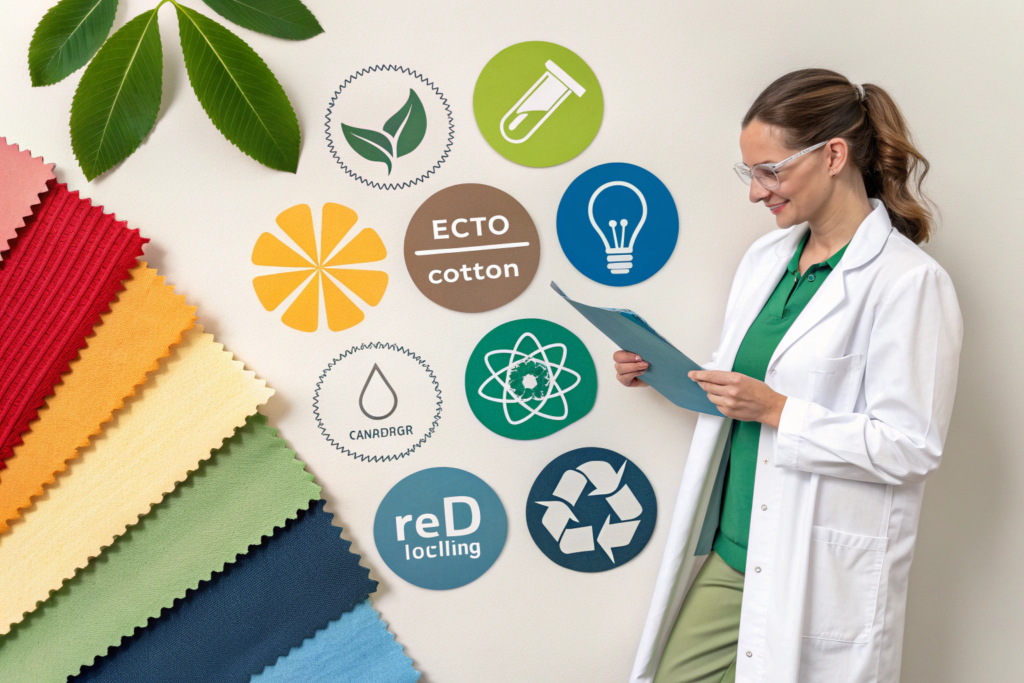
We’re seeing massive growth in sourcing recycled polyester for activewear (rPET) and recycled nylon (ECONYL® type). The quality is now virtually indistinguishable from virgin fiber. Our BAMSILK (bamboo silk) and Tencel™ blends offer incredible softness and biodegradability for lounge-focused leggings. The innovation extends to finishes: PFC-free durable water repellent (DWR) for outdoor apparel, and antibacterial fabric treatments for sportswear that use silver-ion or plant-based technology, tested to AATCC 100 standards.
Are Recycled Fabrics as Durable as Virgin Materials?
Absolutely, when engineered correctly. The early generations of recycled yarn had strength issues, but fiber technology has advanced tremendously. The durability now depends more on the yarn spinning and fabric construction than the source of the polymer. We conduct side-by-side testing in our lab. For a major client in Germany last year, we provided exhaustive data comparing our 100% rPET performance brushed fleece against a virgin counterpart. The results showed less than 5% variance in tensile strength and pilling resistance, while the recycled version had a 60% lower carbon footprint.
The real trick is in the supply chain integrity. We ensure our post-consumer recycled plastic bottle sourcing comes from certified suppliers with chain-of-custody documentation (like GRS – Global Recycled Standard). This gives you the certified story to tell. For performance, we often blend recycled core yarns with virgin filament wraps or use specialized spinning techniques to enhance strength, creating a fabric that’s both responsible and rugged enough for high-intensity use.
What Innovative Finishes Enhance Performance?
This is where fabric becomes functional. Beyond basic moisture-wicking, we’re working with finishes that react to the body’s needs. Phase-change material (PCM) microcapsules can be embedded in the fabric to absorb excess heat and release it back, regulating microclimate. Compression finishing using precise mechanical and heat setting can enhance muscle support in leggings.
One of our most successful innovations has been in the development of odor-control technology for sportswear. We moved beyond just adding an antibacterial agent. For a UK-based sportswear brand, we developed a finish that combines a silver-ion antimicrobial with a moisture-management polymer. This two-pronged approach doesn’t just kill bacteria (the source of odor); it also rapidly moves sweat away from the skin, leaving less moisture for bacteria to thrive. Their post-launch customer feedback showed a 40% reduction in complaints about garment odor after intense workouts.
How to Ensure Quality Consistency Across Bulk Production?
A perfect sample is just the beginning. The real challenge is replicating that quality across 10,000 yards. Inconsistent dye lots, width variation, or elasticity differences can stop your production line and create a nightmare of mismatched garments.
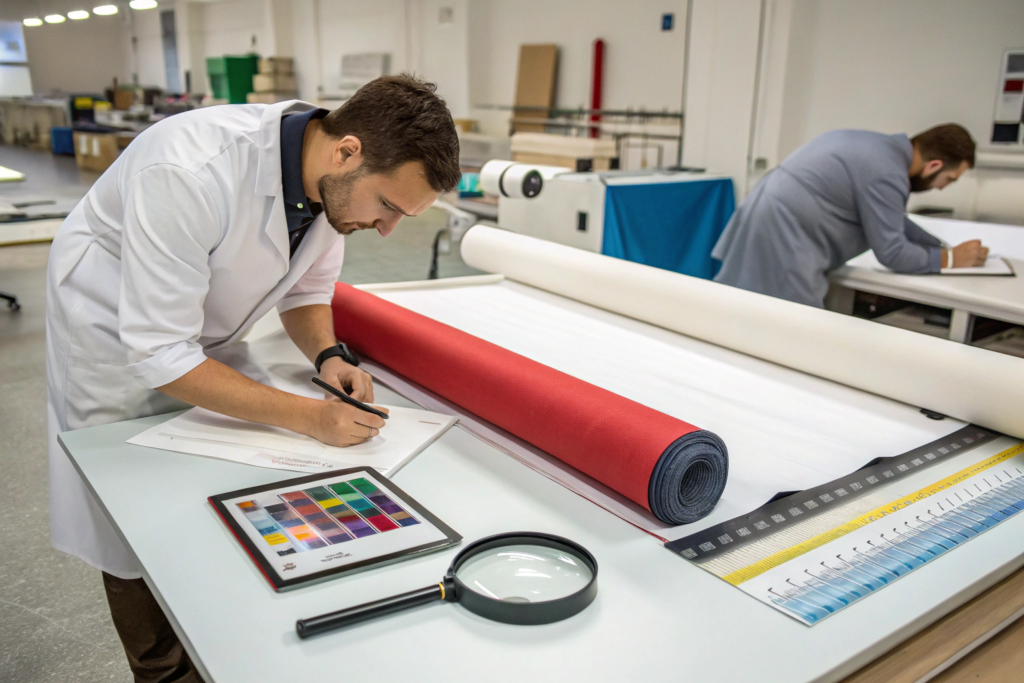
The answer is a vertically integrated control system. At Shanghai Fumao, our quality process starts before production even begins. We conduct pre-production testing on approved yarns and greige fabric. During bulk dyeing and finishing, our QC team is on-site at our partner mills, not waiting for the final roll. We use digital color matching systems for textile production to ensure lab dip approval translates to bulk. Every roll is inspected on LED light tables for defects, and we provide inspection reports with defect maps. Our QR code tracking system allows you to see the test data for the specific batch your fabric came from.
What is In-Line Quality Control Versus Final Inspection?
Most suppliers only do final inspection, which is like checking for fire after the house is built. In-line quality control happens during each production stage. For a knitted fabric, we check the greige fabric for evenness, weight, and defects right off the knitting machine. During dyeing, we pull samples to check color absorption at different stages. This catches issues early, when they can be corrected without scrapping an entire batch.
Final random inspection (AQL sampling) is the last checkpoint. We follow statistically valid AQL standards (like Level II, 1.5 for major defects) to pull samples from finished rolls. But the power comes from combining this with in-line data. In a case from late 2023, our in-line checks during the brushing process for a French client’s fleece leggings detected slight variation in pile height. We adjusted the machine settings in real-time, preventing a 5000-yard batch from being off-spec. This proactive approach saved the client a potential 3-week delay and costly rework.
How Do You Manage Color Matching and Lab Dip Approval?
Color is emotional, and digital screens lie. Our process is built for accuracy and speed. You send us a physical standard or Pantone code. Our lab creates 3-5 lab dip samples for fabric sourcing on the actual base fabric you’ll use, not just a swatch of cotton. We ship these to you via DHL within 48 hours. (Here I have to add, our speed on this is a real advantage.)
The critical step is approving under correct lighting. We advise clients to use a standard light box (D65 daylight is industry standard). Once you approve, that lab dip becomes our absolute color target. Our dye houses use computerized dispensing systems that follow the exact formula. We then send a bulk production sample from the first dye lot for your final confirmation before the full run proceeds. This two-step approval, combined with our in-line spectrophotometer checks, ensures the color you approved is the color you get, roll after roll. For a client in New York, this system brought their bulk color approval rate from 70% to over 98% in two seasons.
Conclusion
Sourcing performance fabrics for swimwear and leggings is a multidimensional challenge that blends science, logistics, and strategic partnership. It’s about moving beyond a transactional search for the lowest price per yard to building a collaborative relationship with a supplier who understands your technical needs, quality demands, and market pressures. From decoding the nuances of nylon versus polyester and navigating MOQs to implementing rigorous quality controls and embracing sustainable innovation, each step requires expertise and clear communication.
The ultimate goal is to secure a fabric that performs flawlessly for your end-user and arrives reliably to support your production calendar. This requires a supplier with depth—one embedded in a true textile hub like Keqiao, with control over the supply chain and a commitment to being a solutions partner, not just a vendor.
Ready to transform your activewear line with fabrics that deliver on every promise? Shanghai Fumao specializes in co-creating value through high-performance textiles. Let’s discuss how we can bring your next collection to life with quality, speed, and innovation. For a direct conversation about your specific needs, please contact our Business Director, Elaine, at elaine@fumaoclothing.com. We’re here to help you weave success.