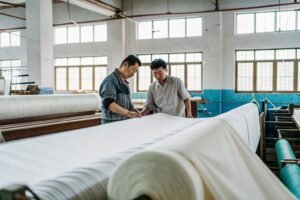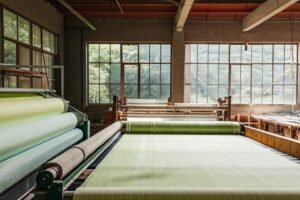
I’ll start with a confession. About a decade ago, when buyers asked about “sustainability,” my team and I would point to a few organic cotton swatches and call it a day. The truth was, we didn’t really get it. The turning point came in 2018 when a major German brand audited us. They didn’t just check our fabric; they walked our dyeing partner’s effluent outlet and asked our embroidery workers about overtime pay. We failed on several counts. That was humbling. It wasn’t about marketing anymore; it was about survival and responsibility. We spent the next two years and significant investment rebuilding our processes from the ground up. Today, when we talk about sustainability and ethics at Shanghai Fumao, it’s not a brochure—it’s the operational blueprint for every meter of fabric we produce.
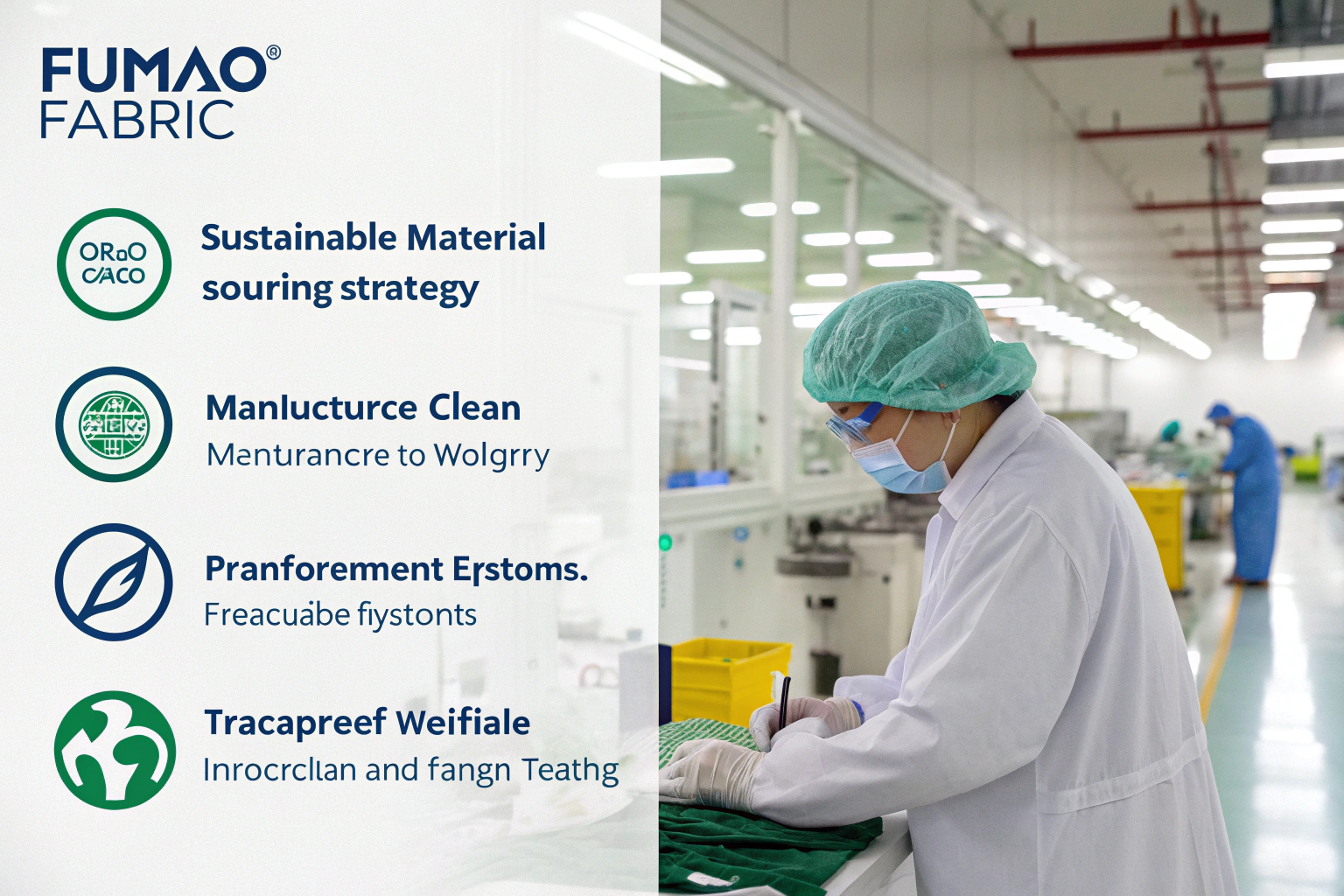
Fumao Fabric supports sustainable and ethical production through a vertically integrated strategy that controls four key pillars: sustainable material sourcing, clean manufacturing processes, verified worker welfare, and transparent, traceable systems. We don’t just sell “green” fabrics; we engineer a responsible supply chain from fiber to finished roll, backed by international certifications, in-house CNAS lab testing, and a genuine partnership model with our production partners.
This isn’t a generic ESG statement. Let me take you behind the curtain and show you the concrete, often unglamorous, work that happens daily in Keqiao. I’ll share data, processes, and real compromises we’ve made to turn principles into practice. This is the story of how a traditional Chinese textile company is rewriting its own rules.
How Are Sustainable Materials Sourced and Verified?
It all starts with what we put into our fabrics. “Sustainable material” is a term that’s been watered down. For us, it means a fiber’s journey has a lower environmental impact and is verifiably better than conventional options. We focus on three streams: recycled, natural/organic, and next-gen materials.
Our sourcing is proactive, not passive. We don’t just buy what’s available; we work with certified spinning mills and fiber producers to develop and trace specific sustainable yarns. This control at the source is non-negotiable.
What Does “Recycled” Really Mean at Fumao?
We deal primarily in Recycled Polyester (rPET) and Recycled Cotton. The devil is in the details.
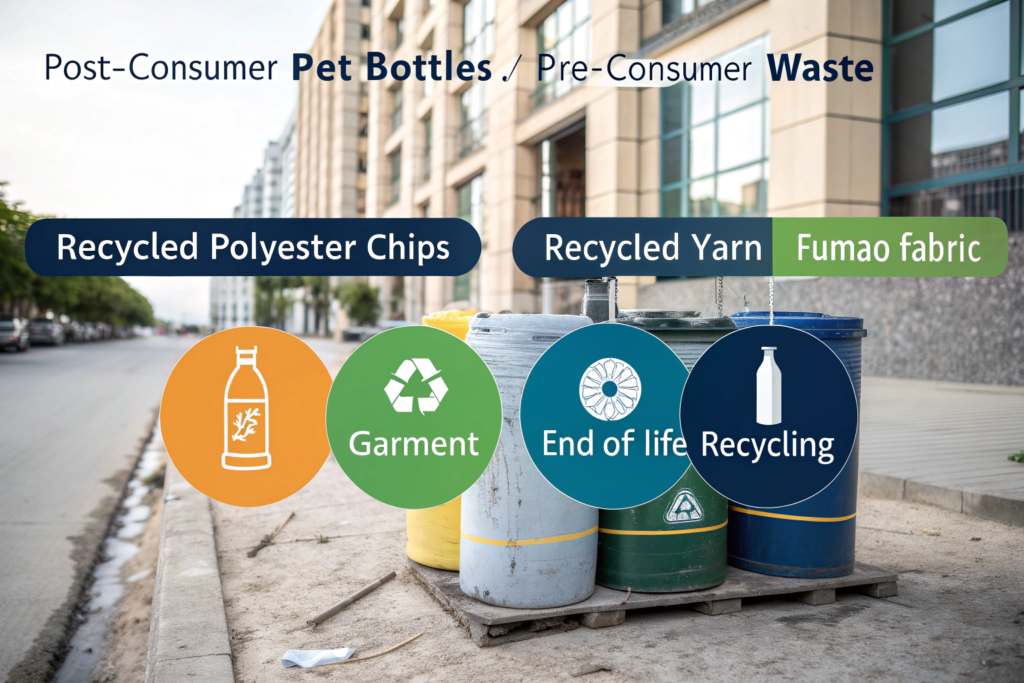
- rPET Traceability: We require our yarn suppliers to provide a Mass Balance Certificate (often following GRS – Global Recycled Standard). This document traces the recycled content back to its source, whether post-consumer plastic bottles or pre-consumer textile waste. In 2023, 40% of our polyester-based fabrics contained GRS-certified rPET. The key performance point? Our high-tenacity rPET for workwear performs identically to virgin polyester in abrasion tests, debunking the myth that recycled means weaker.
- Recycled Cotton Challenges: Recycled cotton from post-industrial scraps is shorter in staple length, which can weaken yarn. We don’t use it for heavy-duty fabrics. Instead, we blend it (up to 30%) with longer-staple organic cotton or Tencel™ to create beautiful, slub-textured canvases and jersey for casualwear, giving new life to cutting-room waste.
A resource like the Textile Exchange website is invaluable for understanding the rigorous chain of custody models for recycled materials that underpin credible certifications.
How Do We Ensure Organic and Natural Fibers Are Legitimate?
“Organic” is one of the most abused terms. Our defense is third-party certification and direct relationships.
- Organic Cotton: We exclusively source GOTS (Global Organic Textile Standard) certified organic cotton. GOTS covers the entire chain—from farm to finished fabric—ensuring no toxic pesticides, fair labor practices, and strict limits on processing chemicals. Our clients can audit the certificate down to the batch.
- BAMSIK & Tencel™: Our BAMSIK bamboo fabric is made from lyocell-process bamboo pulp, not the problematic viscose process. It’s OEKO-TEX certified. Similarly, our Tencel™ (Lyocell) comes from Lenzing with FSC-certified wood sources. We choose these closed-loop processes where over 99% of solvents are recovered and reused, minimizing water and chemical impact.
We’ve learned that trust is built on paperwork. For a Scandinavian children’s wear brand, we provided a full dossier tracing their organic cotton jersey from a GOTS-certified farm in Xinjiang through our GOTS-certified knitting and dyeing processes. This level of detail is now standard for our sustainable lines.
What Does “Clean Manufacturing” Look Like on the Ground?
Sustainable fibers can be ruined by dirty processes. The heart of our environmental impact is in dyeing, finishing, and energy use. This is where we’ve made our biggest physical and financial investments.
“Clean” isn’t just about the output; it’s about the entire input-output system. We focus on reducing water, chemicals, and energy at the process level, not just treating waste at the end.
How Have We Revolutionized Our Dyeing and Finishing?
This is the most polluting part of textiles. We partner with dye houses that share our commitment and have invested in technology.
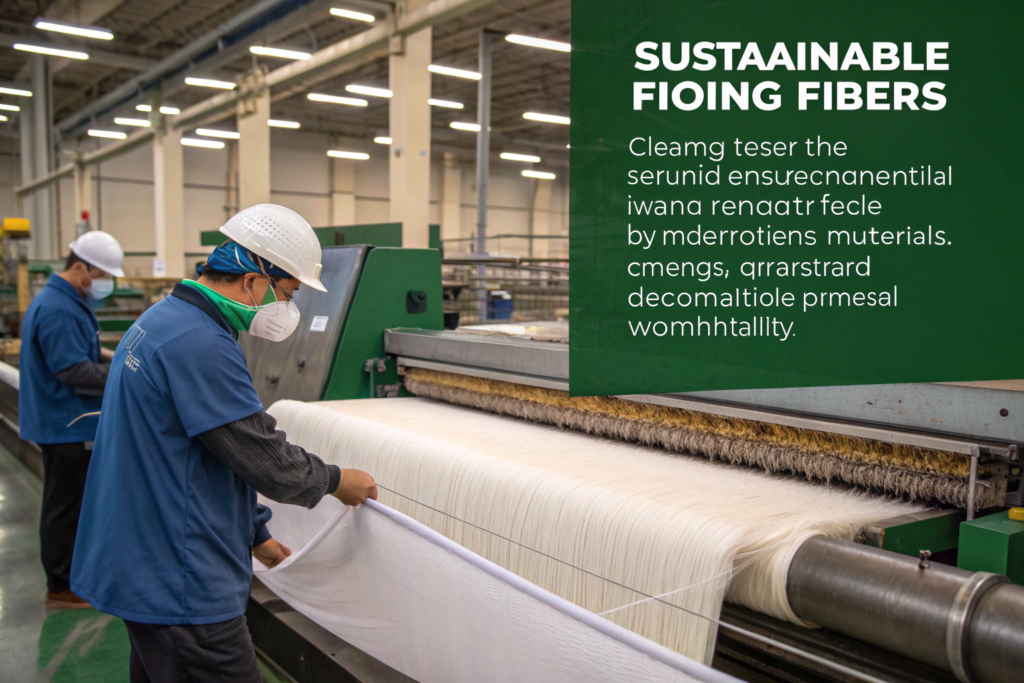
- Low-Liquor Ratio Dyeing Machines: Our partner dye mills use advanced machines that use up to 50% less water than conventional jets. The fabric moves through a tiny chamber with just enough dye liquor, drastically reducing water and chemical consumption.
- Eco-Friendly Dyes and Chemicals: We mandate the use of OEKO-TEX STeP certified dyes and auxiliaries, which ban substances like APEO, heavy metals, and formaldehyde. For our vibrant colors, we’ve shifted a significant portion to high-exhaustion reactive dyes and water-based pigment systems, which have a higher uptake rate onto the fiber, meaning less dye ends up in the wastewater.
- Digital Printing Advancements: Our in-house digital printing uses Kornit and MS printers with eco-friendly, water-based inks. This is a game-changer: virtually zero wastewater compared to traditional screen printing, and it allows for on-demand production, reducing deadstock fabric waste by up to 30% for our sample and small-batch clients.
(Here’s a real cost: switching to these premium dyes and machines increased our base cost by 8-15%. We absorb part of this and are transparent with clients about the rest. It’s the price of doing it right.)
How is Waste and Energy Managed?
Sustainability is also about efficiency and circularity.
- Water Treatment & Recycling: All our partner facilities have advanced on-site water treatment plants. Treated water is recycled for non-production uses like floor cleaning and toilet flushing. We monitor the Chemical Oxygen Demand (COD) levels of effluent water to ensure compliance, which is often stricter than local regulations.
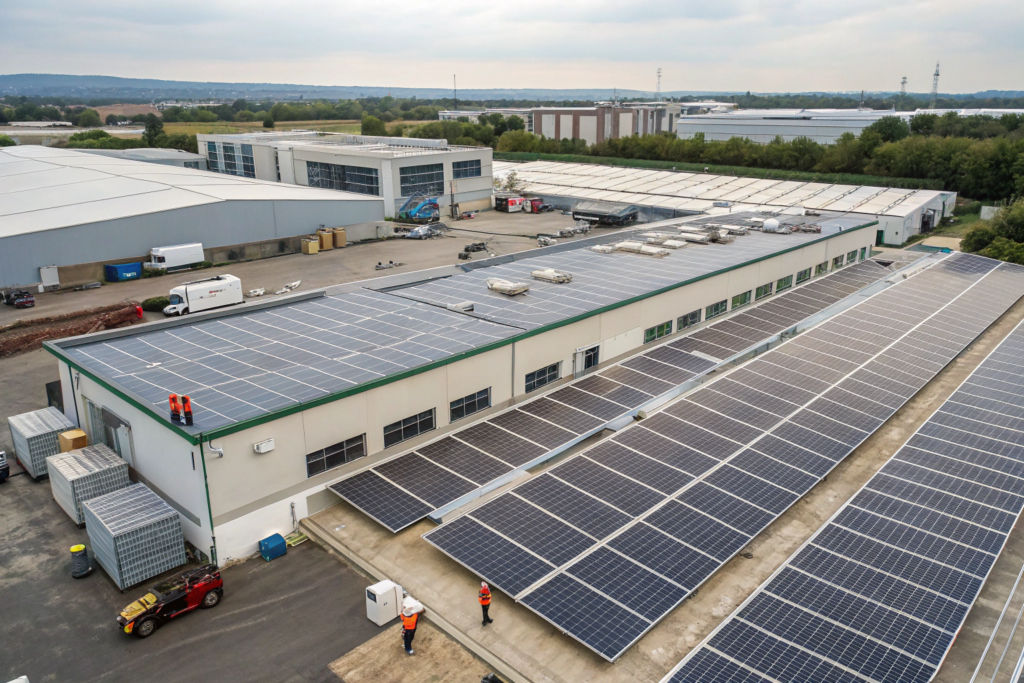
- Solar Power Initiative: In 2022, we installed solar panels on the roof of our main warehouse and office complex. This now supplies over 60% of our non-production electrical needs. The next phase is to integrate this with our partner weaving mills.
- Fabric Waste Program: We don’t send cut-offs to landfill. We segregate them: cotton-rich waste goes to a partner making recycled yarn or insulation material; synthetic waste is pelletized for industrial uses. Our goal is zero fabric waste to landfill by 2026.
For technical insights into best available techniques (BAT) for textile wastewater management, reports from the European Integrated Pollution Prevention and Control (IPPC) Bureau provide a rigorous benchmark we strive to meet.
How Are Worker Welfare and Ethical Practices Ensured?
Ethics is about people. An “eco-friendly” fabric made in an unsafe or exploitative factory is a contradiction. Our commitment extends to every worker in our extended supply chain.
We moved from a purely transactional relationship with our partner factories to a partnership model with shared standards. We audit not just for quality, but for dignity.
What Does Our Social Compliance Audit Cover?
We conduct annual unannounced audits alongside third-party auditors like SGS. Our checklist is based on amfori BSCI and Sedex principles.
- Fair Wages & Hours: We verify time cards and pay slips to ensure wages meet or exceed local minimums and that overtime is voluntary and compensated correctly. After the 2018 audit failure, we helped our main embroidery factory transition to a transparent piece-rate + bonus system that increased average take-home pay by 18% while reducing mandatory overtime.
- Safe Working Conditions: We check for proper ventilation in dyeing areas, machine safety guards, availability of personal protective equipment (PPE), and clearly marked emergency exits. We funded the installation of a new ventilation system at one of our printing partners.
- No Child or Forced Labor: We verify worker age through ID checks and interview workers privately. Our contracts with partners explicitly terminate cooperation for any violation of this principle.
A platform like the Fair Labor Association (FLA) website shares case studies and tools that have helped us structure our own worker engagement programs.
How Do We Build a Culture of Ethics?
It goes beyond audits. We invest in training and channels for feedback.
- Manager & Worker Training: We sponsor annual training sessions for our partners’ HR and line managers on fair labor standards. For workers, we help facilitate sessions on their rights and safety procedures.
- Anonymous Grievance Channels: Workers at our key partner facilities have access to a multi-lingual hotline and suggestion box managed by a third party, allowing them to report concerns without fear of reprisal.
- Community Investment: As part of Keqiao, we contribute to local vocational training schools to help build a skilled, fairly compensated next-generation workforce for the textile industry. It’s in our long-term interest.
How Do We Provide Transparency and Traceability to Clients?
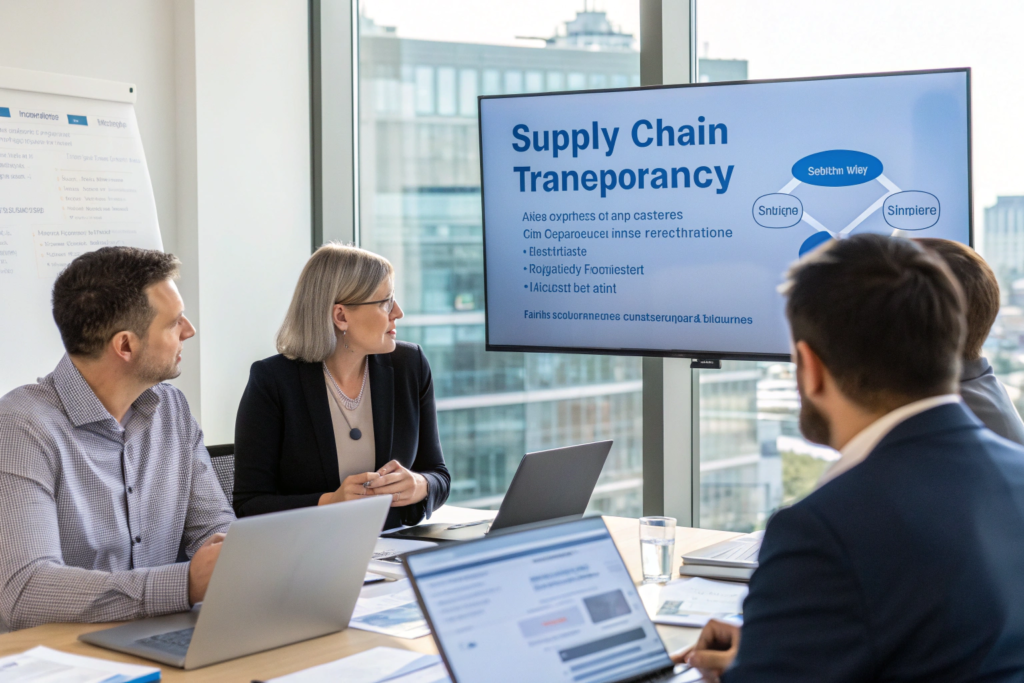
Trust but verify. In today’s market, claims are worthless without proof. Our clients, especially in the EU and North America, demand visibility into their supply chain. We’ve built digital tools to provide it.
Transparency isn’t just a report; it’s a real-time window. We use technology to connect the physical product to its digital passport.
What is the Fumao Fabric QR Code Traceability System?
This is our flagship tool. Every bulk roll of fabric from our sustainable lines receives a unique QR code tag.
When scanned (by you, your factory, or even your end consumer), it reveals a secure page with:
- Material Breakdown: Percentage of GRS rPET, GOTS organic cotton, etc.
- Production Journey: Key stages (weaving, dyeing partner name, finishing) with dates.
- Lab Test Reports: Direct links to PDFs of the actual CNAS lab reports for that batch—tests like colorfastness, shrinkage, pH, and banned substance screening (e.g., for AZO dyes, formaldehyde).
- Carbon Footprint Data: For select product lines, we provide an estimated kg CO2 equivalent per meter, calculated based on our processes and material data.
A US outdoor brand used this system in 2023 for their “Eco-Trail” collection. They marketed the scannable tag, and their customers loved the story—it increased engagement and justified a 15% price premium.
How Do We Partner for True Sustainability?
We know our limits. True sustainability requires collaboration with brands who share the vision.
- Co-Development: We work with brands to design for sustainability from the start. This might mean choosing a mono-material fabric (like 100% rPET) that is easier to recycle at end-of-life, or optimizing a design to reduce cutting waste.
- Take-Back Pilot Programs: We are in early discussions with several European brands about a fabric take-back scheme. At the end of a garment’s life, we would take back the fabric (if it’s from our mono-material lines) and mechanically recycle it into new yarn, moving towards a circular model.
An industry initiative worth following is the Ellen MacArthur Foundation’s Jeans Redesign project, which sets guidelines for circular garment design—principles we are actively applying to our fabric development.
Conclusion
Supporting sustainable and ethical production is not a side project at Fumao Fabric; it is the central trajectory of our business. It is a complex, ongoing, and costly journey of investing in certified materials, clean technology, people, and transparency systems. We have moved from seeing sustainability as a cost center to understanding it as the foundation of long-term resilience, innovation, and partnership with the world’s most forward-thinking brands.
The choice to source sustainably is no longer just moral; it is commercial. It future-proofs your supply chain against tightening regulations and builds deeper loyalty with an increasingly conscious consumer.
If you are looking for a fabric partner that provides not just a product, but verifiable proof of your shared commitment to a better industry, let’s build that proof together. At Shanghai Fumao, we combine the scale and expertise of Keqiao with the accountability and transparency demanded by the global market. Contact our Business Director, Elaine, to request our sustainability dossier, sample our traceable fabrics, and start a conversation about your goals. Email Elaine at elaine@fumaoclothing.com.