Hey there, I’ve been in this textile game for over two decades, running Fumao Textiles International from the heart of Keqiao. Every week, I talk to buyers like you who are drowning in a sea of quotes. One supplier says $2.50 per meter, another says $3.00 for "similar" fabric. The frustration is real. How do you know what you’re really paying for? It’s not just about the number; it’s about the whole story behind it. You’re not just buying fabric; you’re buying quality, reliability, and peace of mind.
Comparing fabric prices globally is less about finding the cheapest ticket and more about calculating the total cost of ownership, factoring in hidden variables like quality consistency, logistics reliability, and production lead times. A price list without context is just a meaningless number. The real skill lies in dissecting each component of that quote to make an apples-to-apples comparison and avoid costly surprises down the line.
Let’s pull back the curtain. I’ll walk you through the framework we use internally and share the exact questions we ask when evaluating our own supply chain partners. This isn’t just theory; it’s the daily reality of managing a global textile business. By the end, you’ll have a practical checklist to turn confusing quotes into clear, actionable decisions.
What’s Really Included in the Price Per Meter?
You get a quote: "100% Cotton Poplin, $1.85/meter." Seems straightforward, right? Wrong. This is where the game begins. In our experience, this base price is like the headline of a story—you need to read the full article. I’ve seen buyers lock in a "great price" only to get hit with extra charges later that blow their budget out of the water.
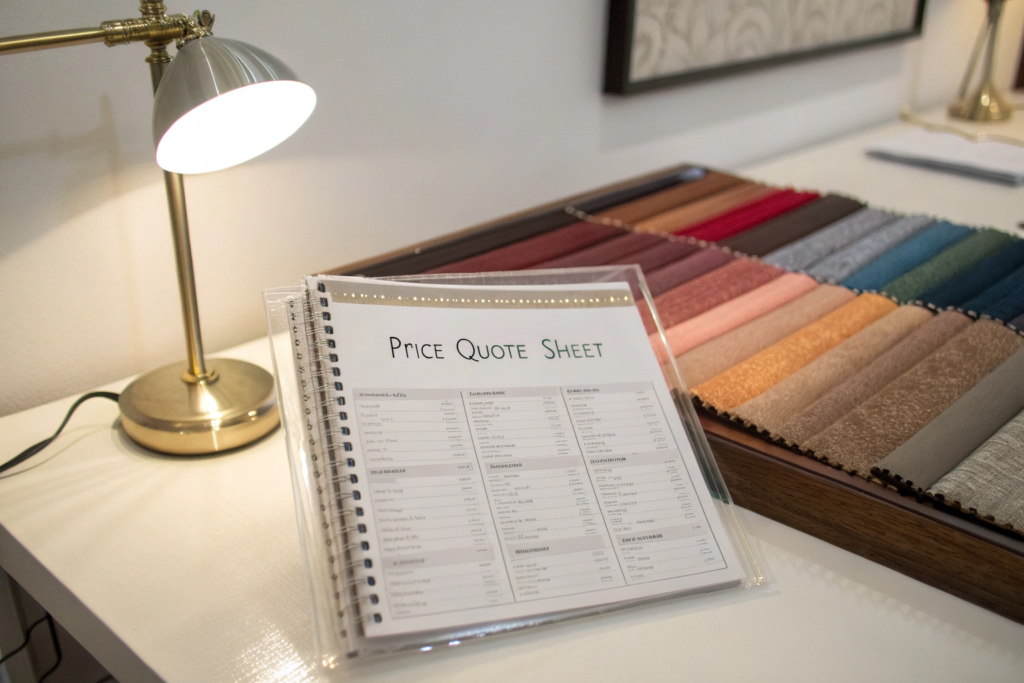
The price per meter is just the starting point. A transparent quote must detail inclusions like standard testing, minimum order quantities (MOQs), and basic certifications. At Shanghai Fumao, our standard quote sheet breaks down every cost component upfront, because we believe in no surprises. For instance, our base price for organic cotton poplin includes basic shrinkage and colorfastness tests—tests that some suppliers list as costly add-ons.
How Do Testing and Certification Costs Vary?
This is a major hidden cost. Let’s say you’re sourcing GOTS-certified organic cotton. The fabric cost is one thing, but the certification paperwork and batch testing are another. Some suppliers absorb the cost of maintaining their facility certification across large volumes, while others charge per certificate. A European client last year learned this the hard way. They compared two quotes for the same Tencel™ blend jersey. Supplier A’s price was 8% lower. However, Supplier A’s price excluded microbial resistance testing and a reach compliance certificate, which were non-negotiable for their market. Adding these brought Supplier A’s cost 12% higher than Supplier B’s all-inclusive quote from the start.
Always ask: "Does this price include X test reports for my market?" Get it in writing. A great resource to understand the landscape of sustainable textile certifications and their associated costs is this guide on the Common Objective platform, which breaks down the real-world implications of labels like GOTS, OCS, and GRS.
Are You Paying for Quality or Just Quantity?
A lower price per meter often means a lower grams per square meter (GSM) or a looser thread count. I’ll give you a real case from my desk. In March 2023, a US-based activewear brand was comparing quotes for antibacterial polyester. One quote was 15% cheaper. We asked for samples of both. Our in-house CNAS-accredited lab tested them. The cheaper fabric had a subpar antimicrobial efficacy rate (only 70% reduction vs. the claimed 99%) and its moisture-wicking speed was 40% slower. The buyer almost paid less for a fabric that would have caused customer returns. We created a simple comparison table for them, which made the choice obvious.
| Feature | Supplier X (Lower Cost) | Shanghai Fumao Quote |
|---|---|---|
| Price per meter | $2.10 | $2.45 |
| GSM | 150 g/m² | 165 g/m² |
| Antibacterial Efficacy (AATCC 100) | 70% | 99.5% |
| Included Tests | Composition only | Comp, Shrinkage, Colorfast, Safety (pH, AZO) |
| MOQ | 3000 meters | 1000 meters |
| Lead Time | "45 days" | 35 days, guaranteed |
The table doesn’t lie. You’re not just comparing price; you’re comparing value per dollar. (Here’s a tip from the factory floor: a slightly higher GSM can mean way better durability, saving you from claims down the road.)
How Do Lead Times Impact Your True Cost?
Time is money, especially in fashion. A quote with a 30-day lead time at $2.00/meter can be far more expensive than a 45-day lead time at $1.90/meter if a delay causes you to miss your shipping window and pay for air freight. I’ve managed production through every Chinese holiday and peak season, and I can tell you, timing is everything.
Lead time is not just a number; it’s a promise that carries huge financial risk. A "45-day" lead time that stretches to 60 days can derail your entire collection’s launch. You need to understand the supplier’s production calendar and build in buffer periods for the inevitable hiccups.
What Risks Are Hidden in the Production Calendar?
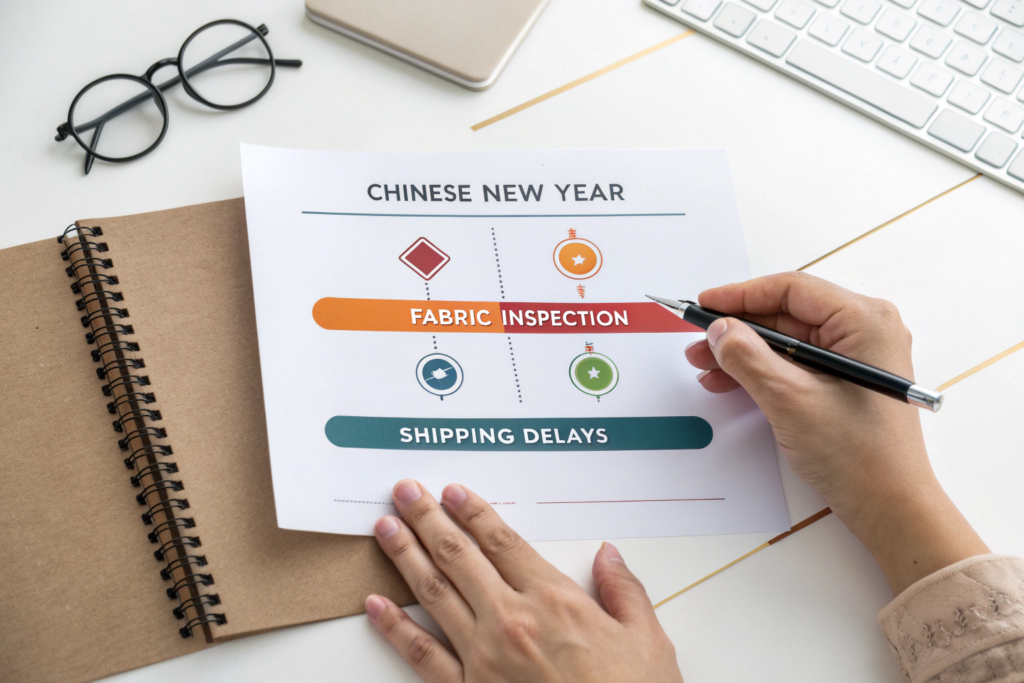
Remember the background info about peak seasons and holidays? This is critical. Placing an order for custom dyed linen in early August (peak season) might add 2 weeks versus ordering in July. But the biggest pitfall is Chinese New Year. A savvy European fashion brand we work with now completes all pre-production sampling and approval at least 6 weeks before the shutdown. This allows Shanghai Fumao to start production literally on the first day factories reopen, securing a vessel space while others are still in line. Conversely, a client who ignored our timeline advice in 2022 saw their velvet order delayed by 7 weeks, forcing a $15,000 air freight shipment.
To plan effectively, you must understand global freight schedules from major Chinese ports. A forum like The Fashion Network often has threads where logistics managers share current experiences with port congestion and carrier reliability, which are vital for your final cost calculation.
Can You Quantify the Cost of a Delay?
Absolutely. Let’s do the math. Assume your 10,000-meter order costs $20,000 FOB. A two-week delay might mean:
- Missing your booked sea freight slot -> Switching to air freight: Cost increase of $8,000 – $12,000.
- Delayed store launch -> Lost sales & marketing costs: Potentially tens of thousands.
- Stockout at retail -> Damage to brand reputation: Priceless.
A supplier offering a "rock-bottom price" but with a history of delays is the most expensive option. We build trust by being transparent about our capacity. For example, we recently invested in AI-driven production scheduling that links our weaving, dyeing, and finishing partners in real-time. This is why we can often offer and meet a 28-day turnaround for bulk orders on standard fabrics—a competitive advantage that saves our clients real money.
How Do Logistics & Tariffs Affect the Final Landed Cost?
You’ve agreed on a fantastic FOB price. Celebrate? Not yet. The journey from our factory door to your warehouse is where many budgets unravel. Landed cost—the total of fabric cost, shipping, insurance, duties, and local fees—is the only number that matters. A supplier who helps you navigate this is worth their weight in gold.
The quoted "FOB Shanghai" price is just the first leg of the journey. A supplier with strong logistics partnerships and trade compliance knowledge can save you significant money and headaches. This is where our location in the Keqiao textile cluster shines, with direct access to multimodal hubs.
What’s the Best Incoterm for Your Business?
Choosing between FOB, CIF, or DDP is a major cost driver. For large, experienced importers, FOB often offers the best control and cost. For smaller brands, DDP (Delivered Duty Paid) can be a lifesaver, providing a single, predictable cost. Last November, a startup client from the UK was comparing a DDP quote from us against an FOB quote from another supplier. Our DDP quote was initially higher. However, when they factored in the UK clearing agent fees, VAT handling, and potential delays, our all-inclusive DDP price was actually 5% lower and infinitely simpler. A blog like "Shipping and Freight Resource" offers excellent, practical comparisons of these Incoterms and when to use each.
We often advise clients on this. For our US clients, we leverage our experience with US tariff codes for technical textiles (like those for moisture-wicking fabrics) to ensure correct classification and avoid costly customs holds. (I have to add, our packaging factory’s pre-palletizing service has saved clients a fortune on destination handling fees.)
Are You Accounting for All Duties and Taxes?
This is the final frontier of cost comparison. Trade agreements matter. For example, fabrics with recycled polyester (rPET) content may qualify for different duty treatments under sustainability initiatives. Similarly, our exports to RCEP member countries often benefit from preferential rates. A supplier should provide a detailed proforma invoice with a clear Harmonized System (HS) code. An incorrect code can lead to overpayment or penalties.
Let’s be concrete: A US client importing our performance knits for sportswear was initially classified under a general code with a 12% duty. Our documentation and material breakdown helped them reclassify under a specific technical knit code, reducing the duty to 8.5%. That’s a direct 3.5% saving on the total landed cost. Always ask your supplier: "Can you provide the HS code and a material breakdown for customs?" A reliable supplier will have this ready.
How Can You Evaluate Supplier Reliability Beyond Price?
Price and specs on paper mean nothing if the supplier can’t deliver on them consistently. Reliability is the glue that holds everything together. It’s the difference between smooth sailing and constant crisis management. How do you measure something as intangible as trust? You look for concrete signals.
A supplier’s reliability is proven through communication transparency, quality consistency across orders, and proactive problem-solving. It’s about partnership, not just transaction.

What Are the Red Flags in Supplier Communication?
Pay attention to how they communicate. Vague answers, long email response times, and reluctance to provide video calls or factory tours are red flags. A green flag? When a supplier proactively alerts you to potential issues. In July last year, our monitoring showed a potential delay in a specific recycled nylon yarn. We immediately informed two affected US clients, presented alternative yarn options with updated costs and swatches, and kept their production on schedule. This kind of proactive communication is standard for us but rare in the industry.
Look for suppliers who are active on professional platforms beyond Alibaba. A supplier who contributes valuable insights on forums like Textile Focus or LinkedIn industry groups is often more invested in their reputation and staying current. It shows they are part of the global conversation.
How Do You Verify Quality and Compliance Claims?
Anyone can say "we have high quality." The proof is in the processes. Ask for:
- Lab reports from recent orders: Not just a generic certificate.
- Quality control procedures: How many inspection points? What’s the acceptable quality level (AQL) they use? At Shanghai Fumao, we have a 5-point inspection system and provide QR codes with access to test data for every batch—a level of traceability that builds immense trust.
- Audit reports: Can they share a recent third-party social compliance or environmental audit? (Many large EU buyers now require this).
A concrete example: A German client auditing us in 2023 was impressed not just by our CNAS lab, but by our digital inventory system. They could see real-time stock levels of our BAMSILK bamboo blends, which allowed them to make fast, confident decisions. This operational transparency directly reduces the "risk cost" of working with a supplier.
Conclusion
Comparing fabric prices globally is a multidimensional puzzle. It goes far beyond the simple dollar figure per meter. True cost is a combination of the visible price, the hidden costs of testing and logistics, the risk premium of lead times and reliability, and the strategic value of a supplier’s expertise. The cheapest initial quote often becomes the most expensive choice through delays, quality failures, and logistical nightmares.
The most successful buyers we partner with treat us as an extension of their team. They share their goals, challenges, and target costs openly. This allows us to engineer solutions—whether it’s suggesting a slightly different blend of cotton and spandex to hit a price point without sacrificing performance, or planning production cycles around Chinese holidays to protect their timelines. They don’t just buy fabric; they invest in a supply chain partner.
If you’re tired of comparing apples to oranges and want a transparent partner who helps you calculate the true landed cost and value of your fabrics, let’s talk. We can co-create solutions that fit your budget, timeline, and quality demands. Reach out to our Business Director, Elaine, to discuss your next project. She can connect you with our technical and logistics teams to get a comprehensive, no-surprises quote. Email Elaine at elaine@fumaoclothing.com.