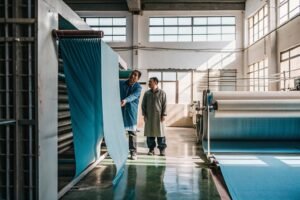
Ever unrolled a bolt of fabric and wondered about the journey it took to get there? That perfect piece of twill or silky satin didn’t just appear. It went through a precise, multi-stage transformation, from loose fibers to the finished textile in your hands. For brands sourcing from China, understanding this journey isn’t just academic—it’s the key to communicating your needs, spotting quality issues, and truly partnering with your supplier.
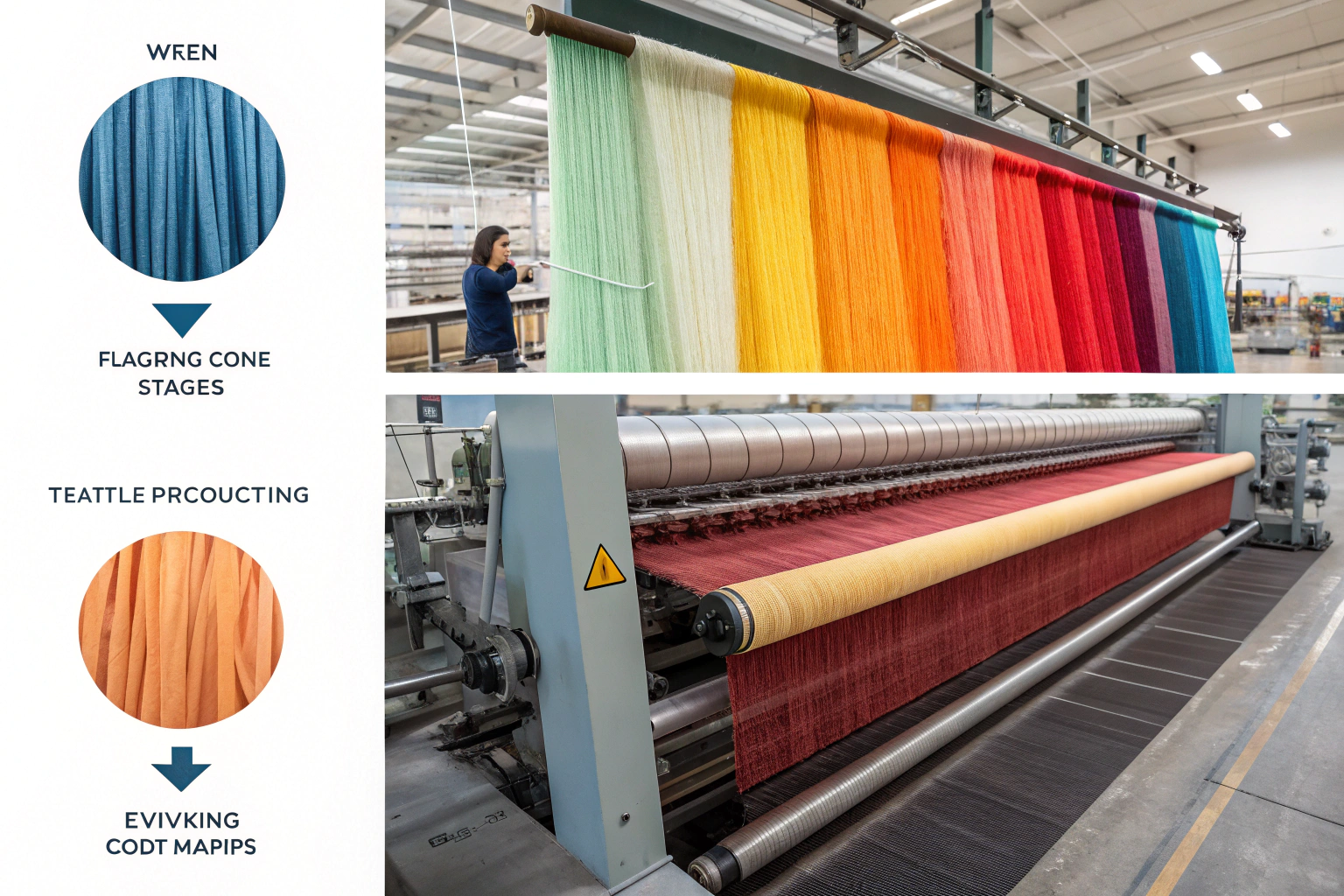
The process of creating finished fabric follows a clear, sequential pipeline: Weaving (or knitting) forms the base structure, Dyeing and Printing impart color and pattern, and Finishing applies special treatments to enhance performance and hand feel. Each stage is interdependent, and mastery at every step is what separates exceptional suppliers from basic mills. Think of it like building and decorating a house: you need a solid frame (weaving), then you paint the walls (dyeing), and finally, you install the features that make it livable (finishing).
Knowing this process inside out empowers you. It lets you ask the right questions, like "Is this fabric yarn-dyed or piece-dyed?" or "Can you apply a moisture-wicking finish?" This knowledge turns you from a passive buyer into an informed partner. At Shanghai Fumao, with our integrated control from weaving to finishing, we see this expertise in our clients lead to fewer errors, faster development, and superior final products. Let’s pull back the curtain on how your fabrics are really made.
How is the Base Fabric Woven on Modern Looms?
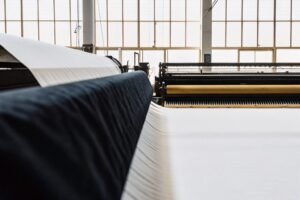
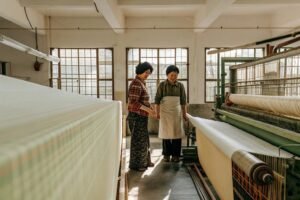
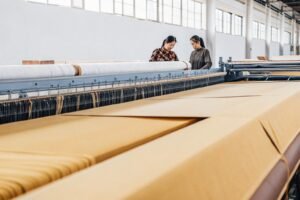
Before any color hits the fabric, its very soul—its structure, weight, and drape—is determined on the loom. Weaving is the foundational art of interlacing two sets of yarns: the warp (running lengthwise) and the weft (running crosswise). The precision of this process dictates everything from a fabric’s strength to its surface texture.
Modern weaving has evolved far beyond ancient handlooms. Today, high-speed rapier looms and air-jet looms dominate, capable of producing vast quantities of consistent, high-quality fabric. The key for you as a buyer is understanding how the choice of loom and weave pattern directly impacts your final product. A jacquard fabric for an elaborate gown requires a different loom (a jacquard loom with intricate electronic controls) than a simple, sturdy canvas for bags.
What’s the Difference Between Grey Fabric and Finished Fabric?
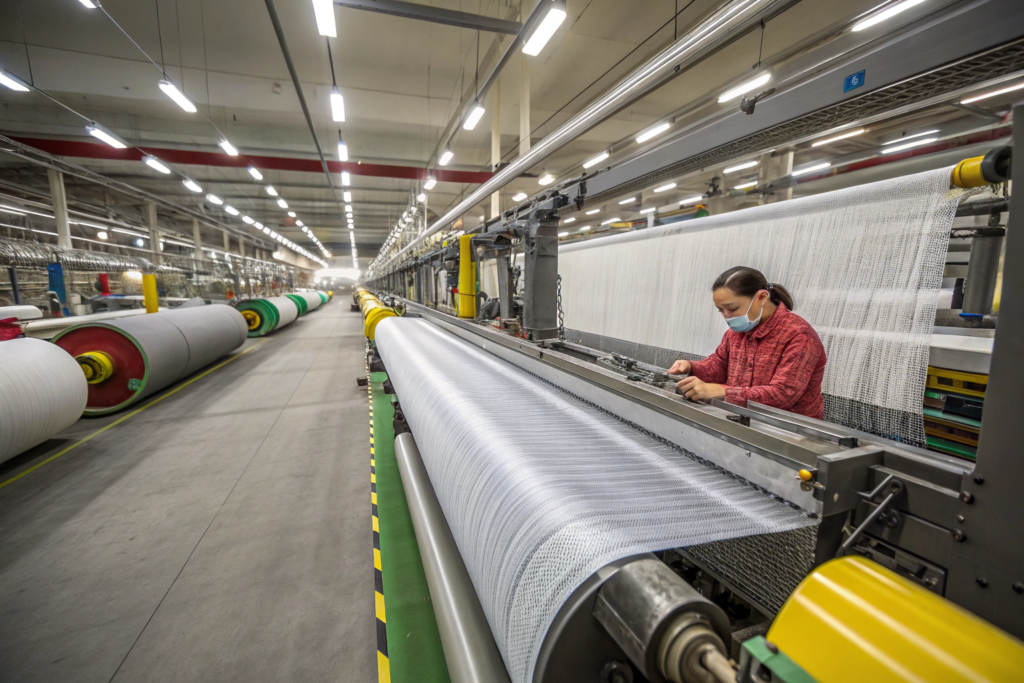
This is the most fundamental distinction. Grey fabric (or greige goods) is the material that comes directly off the loom. It’s untouched—undyed, unbleached, and with no special finishes. It often has a dull, off-white or beige color from the natural impurities in the yarns and the sizing agents used to strengthen them for weaving. It feels rough and stiff.
Finished fabric is the final product after dyeing and finishing. This is what you receive. The transformation is dramatic. For example, a stiff, pale grey cotton fabric becomes soft, vibrant, and ready for cutting and sewing. At Shanghai Fumao, we always remind new clients that the sample they approve is the finished state. We once had a European client panic because the initial "grey state" photos of their bulk order looked nothing like their soft, colored sample. We explained the process and sent photos after the dyeing stage—the fabric matched perfectly. Understanding the characteristics and testing of greige goods is a critical first step in quality control.
How Do Weave Patterns Like Twill and Satin Affect Fabric Properties?
The weave pattern is the blueprint. It’s not just about aesthetics; it’s engineering. Here’s a breakdown of the three fundamental weaves:
| Weave Type | Visual Pattern | Key Properties | Common Uses |
|---|---|---|---|
| Plain Weave | Simple over-under, 1×1 grid. | Strong, durable, crisp, less pliable. | Poplin, chiffon, organza, taffeta. |
| Twill Weave | Distinct diagonal ribs (e.g., denim). | Durable, drapes well, hides dirt, softer. | Denim, chino, gabardine, tweed. |
| Satin Weave | Long floats on the surface, no visible diagonal. | Very smooth, lustrous, drapes beautifully, less durable. | Satin, charmeuse, sateen for bedding. |
The pattern changes everything. A twill weave is often chosen for workwear because its diagonal structure is more resilient to abrasion. A satin weave uses long yarn "floats" on the surface to create that signature shine, but those floats can be prone to snagging. (Here’s a pro tip: when you need a fabric that’s both strong and has a good drape, a twill is often your best bet). Choosing the right one requires knowledge of how fabric weave impacts garment construction and fit.
What Happens During the Dyeing and Printing Stages?
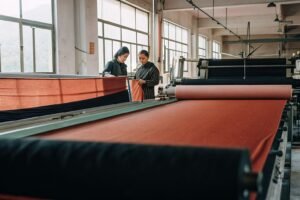
Once you have your perfect grey fabric, it’s time to give it color and character. This is where science and creativity collide. Dyeing and printing are chemical processes that require extreme precision to ensure color consistency, fastness, and safety. A small error in pH level or temperature can ruin an entire batch.
The stage at which color is applied is crucial. Yarn-dyeing colors the threads before weaving (think of plaid shirts or striped seersucker), allowing for complex patterns and exceptional color fastness. Piece-dyeing involves coloring the whole woven fabric in a large batch, which is more common and cost-effective for solid colors. The method used—whether jet dyeing (fabric circulated in a pressurized tube) or pad dyeing (fabric dipped and squeezed)—affects the hand feel and penetration of the dye.
What’s the Difference Between Reactive Dye and Pigment Print?
This is a major quality and cost differentiator. Reactive dyeing is a chemical reaction where dye molecules form a covalent bond with the fabric fibers (like cotton or linen). The result is brilliant, long-lasting color that is highly resistant to washing and fading. It’s the premium choice.
Pigment printing, on the other hand, is more like applying paint. A binder "glues" the pigment color to the surface of the fabric. It can feel slightly stiffer, and the colorfastness, especially to rubbing (crocking), is generally lower than reactive dye. However, it’s versatile and works on almost any fiber. For a client’s sportswear line in 2023, we recommended a reactive dye for their performance polyester base to ensure the bold colors survived intense sweating and repeated washes, which was a key selling point for their brand. Knowing the technical and commercial trade-offs between dyeing and printing methods is essential for specifying your order correctly.
How Do We Ensure Color Consistency Across Large Orders?
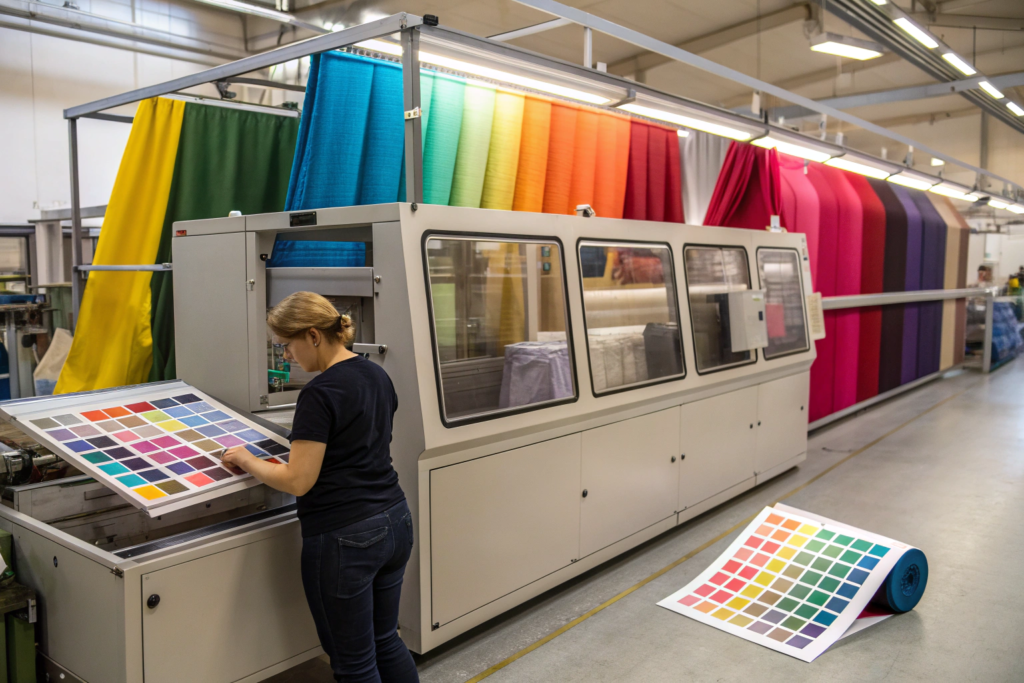
Color consistency is a huge pain point. The sky blue on one roll must match the sky blue on the next 50 rolls. This is where a supplier’s process control is tested. It starts with a perfect lab dip—a small sample dyed to match your Pantone or physical standard. Once approved, this becomes the "golden standard."
In bulk production, parameters like dye concentration, temperature, time, and water chemistry are digitally controlled. At Shanghai Fumao, we use computer color matching systems and run strike-offs (small batch samples) before the full run. Our lab then tests for colorfastness to washing, light, and rubbing using international standards (AATCC, ISO). A common request we manage is for colorfastness certification for wholesale fabric orders, which gives our clients, especially in the EU, documented proof of quality for their own customers.
Why is Fabric Finishing the Most Crucial Step?
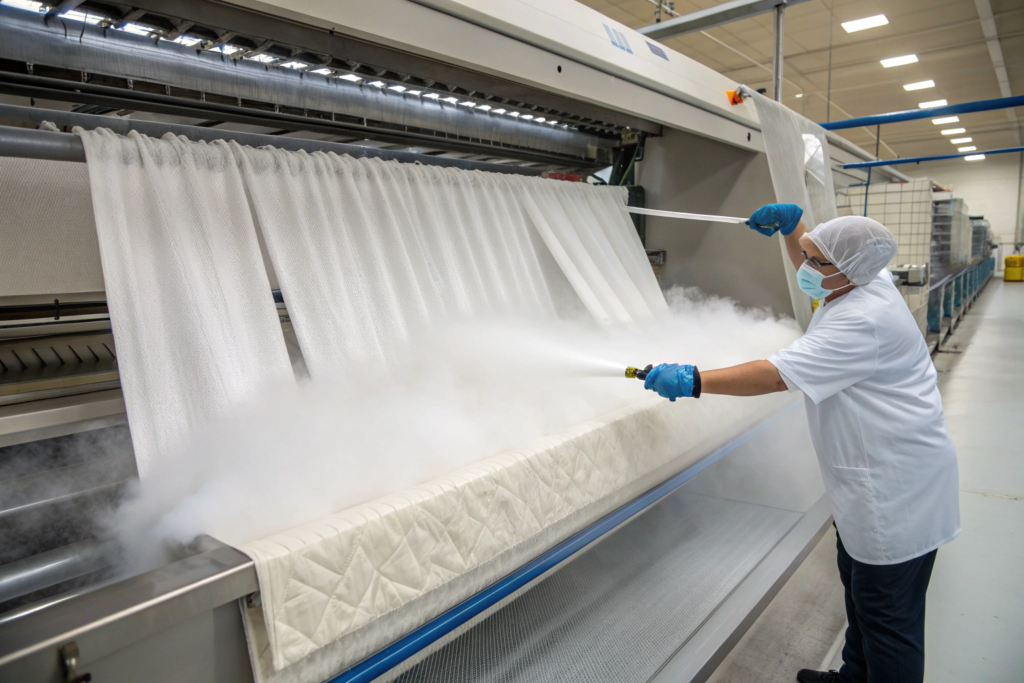
If weaving builds the body and dyeing gives it color, then finishing is what gives it its personality and superpowers. This final step can transform a mediocre fabric into a standout one. Finishing encompasses any treatment applied to the fabric after dyeing to change its appearance, hand feel, or performance.
It can be mechanical—like brushing to create a soft fleece or calendaring with hot rollers to create a smooth, glossy surface. It can be chemical—like applying a water-repellent (DWR) finish for outdoor gear or an enzyme wash to soften denim. This stage is where innovation happens. You can take a simple woven polyester and make it anti-bacterial, moisture-wicking, and UV-resistant. (I always say, finishing is where the magic happens—it’s what makes you go "wow" when you touch the fabric).
What are Common Functional Finishes for Performance Wear?
Today’s market demands more than just aesthetics. Functional finishes add value and allow you to command a higher price. Here are key ones:
- Moisture-Wicking: Pulls sweat away from the skin to the fabric’s surface to evaporate. Crucial for sportswear.
- Water Repellent (DWR): Causes water to bead up and roll off the fabric surface. Not to be confused with waterproof.
- Anti-Microbial: Inhibits the growth of odor-causing bacteria on the fabric.
- UV Protection: Adds a coating that blocks harmful ultraviolet rays.
- Flame Retardant (FR): Slows or prevents the spread of flame, often required for children’s sleepwear or contract textiles.
We developed a fabric for a US-based athleisure startup last year that combined a moisture-wicking finish with a soft-touch peach-skin finish. The dual application required precise calibration in our partnered finishing mill to ensure both functions remained effective after washing. The product became a bestseller for its unique combination of performance and luxury feel. Resources like specialist forums on technical textile finishes are great for researching the latest innovations.
How Does Finishing Affect the Final Hand Feel and Drape?
The "hand feel" is the tactile quality of the fabric—how soft, crisp, heavy, or fluid it feels in your hand. Finishing is the primary driver of this. A mercerization finish on cotton adds strength and a permanent silky luster. A sanding or peach-skin finish creates a wonderfully soft, suede-like texture.
The drape—how the fabric flows and falls—is equally affected. A softening finish with silicones will give a fabric a much more fluid drape than its stiff, grey state. Conversely, a crisp finish with resins will give it more body and structure. It’s not an afterthought; it’s a core design decision. When clients at Shanghai Fumao ask us to match a competitor’s sample, 70% of the work is often in reverse-engineering the finish, not the weave or base color.
How is Quality Controlled Throughout the Entire Process?
Quality isn’t "inspected in" at the end; it’s "built in" at every single step. A broken thread on the loom, a dyeing temperature fluctuation, or an uneven finish application—any of these can compromise the final product. An integrated supplier doesn’t just check the final roll; they monitor the entire pipeline.
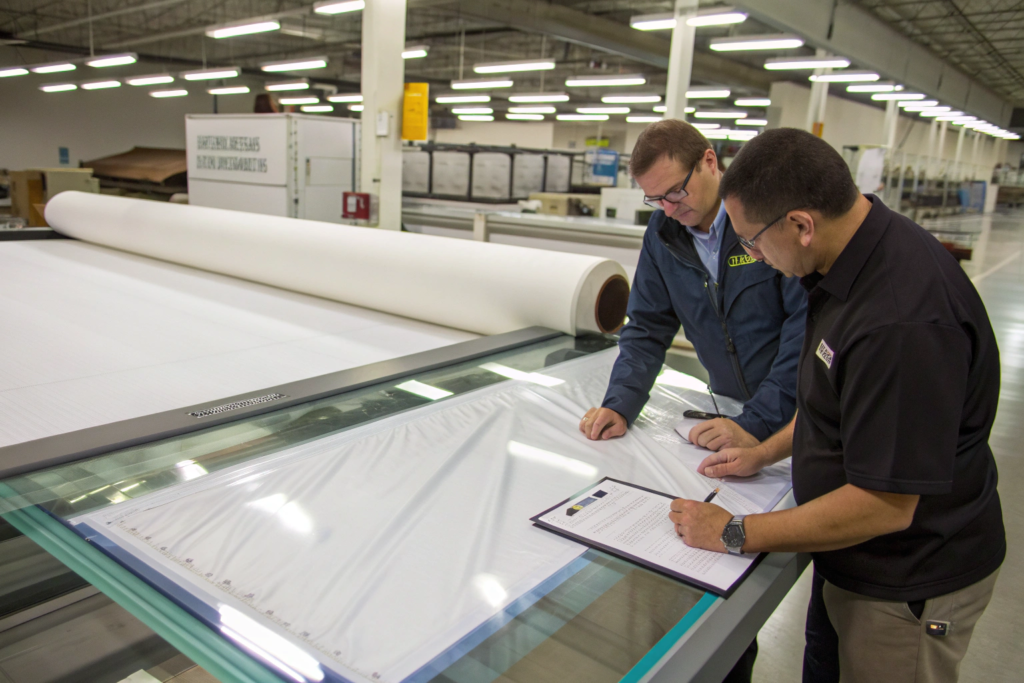
This means real-time checks: loom operators watching for broken warps, dye house technicians measuring pH and temperature, finishing specialists testing for finish pickup percentage. Then comes the final Fabric Inspection, where every meter is run over a backlit inspection frame to identify and mark any defects like holes, stains, or weaving errors. This data is often summarized in a Inspection Report that includes defect rate per 100 yards and the overall grade of the roll.
What Standards are Used for Final Fabric Inspection?
The industry standard is the 4-Point System, established by the American Association of Textile Chemists and Colorists (AATCC). In this system, defects are assigned penalty points based on their size (e.g., a defect over 3 inches gets 4 points). The total points per 100 square yards of fabric are calculated, and if they exceed the acceptable limit (which is agreed upon with the buyer, often 20-28 points), the roll is rejected or downgraded.
At our facilities, we also track other critical parameters like width tolerance (e.g., 57/58" +/- 0.5"), GSM (weight) tolerance, and shrinkage rate. We provide these test reports to our clients, giving them quantifiable proof of quality. For example, a UK retailer we work with requires all their linen to have a verified post-wash dimensional stability test result below 5% shrinkage, which we guarantee through controlled finishing.
How Can I Be Sure My Bulk Order Matches the Approved Sample?
This is the ultimate test of a supplier’s systems. The answer lies in a comprehensive reference package and in-process checks. You must provide a signed Golden Sample and a detailed Tech Pack. A good supplier will then:
- Match the exact yarn and dye lot used for the sample.
- Pull a Pre-Production Sample (PP Sample) from the beginning of the bulk run and send it to you for approval before continuing.
- Conduct in-process quality checks (IPQC) during weaving, dyeing, and finishing.
We had a case with a client ordering a complex jacquard where the PP sample showed a slight variation in the sheen. Because we caught it early through our IPQC and communicated immediately, we adjusted the finishing parameters before proceeding with the full 10,000-meter order. This saved the client from a massive loss and solidified a partnership based on transparency. Tools like bulk order quality assurance checklists for importers are invaluable for setting expectations with any new supplier.
Conclusion
The journey from yarn to finished fabric is a symphony of engineering, chemistry, and meticulous craftsmanship. Understanding the sequential stages of Weaving, Dyeing, and Finishing—and the critical quality control that binds them—transforms how you source. It moves the conversation from "What’s the price?" to "How is it made?" This knowledge is your most powerful tool for ensuring consistency, innovation, and value in every meter of fabric you purchase.
Partnering with a supplier who not only performs these steps but masters them under one integrated umbrella is the ultimate advantage. It ensures seamless communication, eliminates finger-pointing between different factories, and guarantees that the quality you sample is the quality you receive in bulk.
If you’re looking to source fabrics with confidence, understanding the process is the first step. The next is finding a partner who executes it flawlessly. At Shanghai Fumao, this integrated process is our daily reality. We invite you to experience the difference that comes with true end-to-end control. For a detailed consultation on how we can manage the weaving, dyeing, and finishing of your next fabric order, contact our Business Director Elaine at elaine@fumaoclothing.com. Let’s build the foundation of your next collection together.