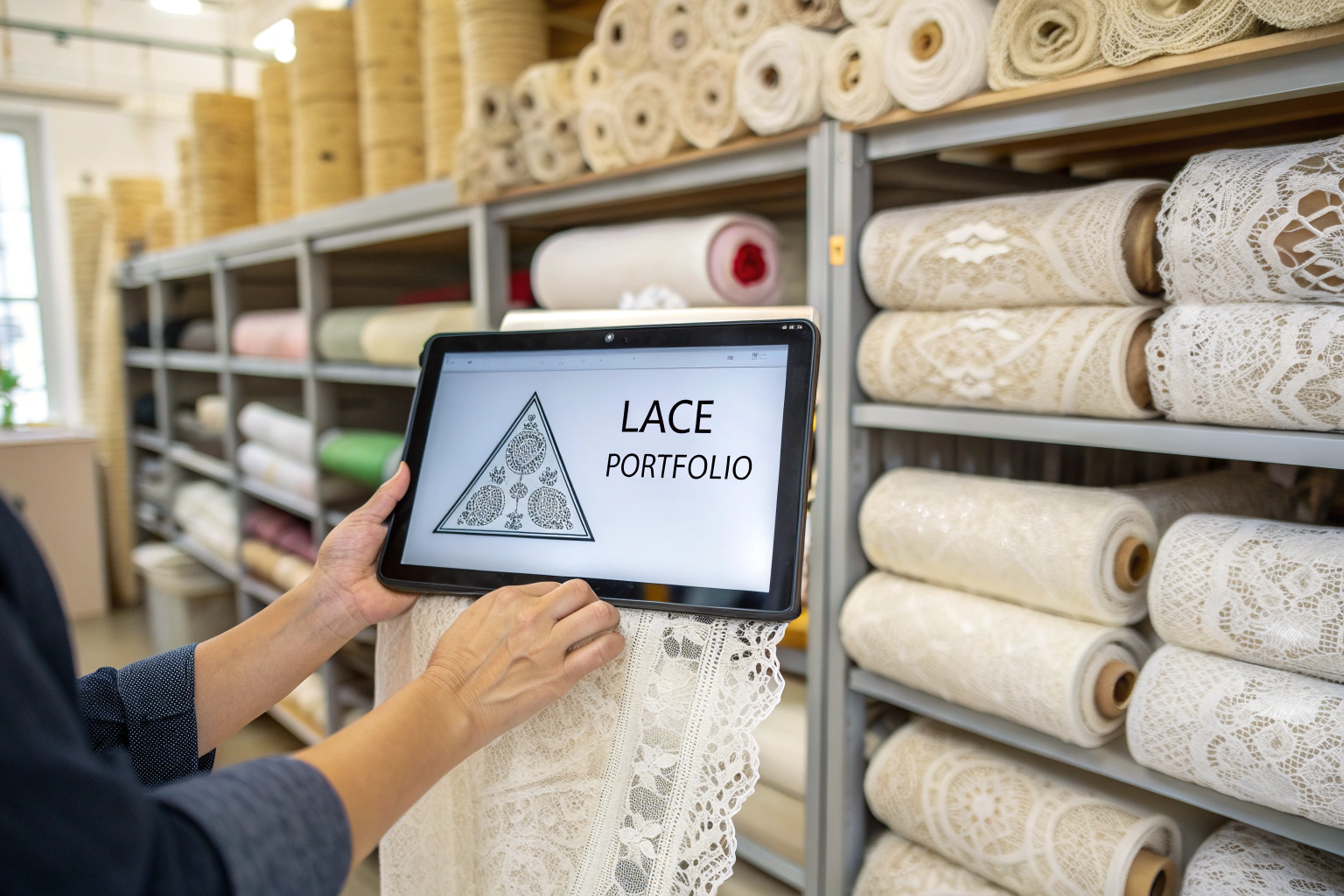
You launch a new collection, and your signature lace runs out. Your supplier says, "Sorry, discontinued." Or, a competitor releases a line with an innovative lace you’ve never even seen. Your sourcing is a single point of failure. In today’s fast-paced market, relying on one type of lace or one supplier isn’t just risky—it’s a direct threat to your brand’s creativity, resilience, and bottom line. So, how do you systematically build a lace portfolio that fuels innovation, mitigates risk, and sets you apart?
Building a diverse lace sourcing portfolio is a strategic business exercise, not a random collection of samples. It requires intentionally cultivating suppliers across different tiers (stock, custom, innovators), categories (fibers, constructions, origins), and price points to create a balanced "fabric pyramid." The goal is to have a core of reliable, versatile workhorses, a middle layer of trend-responsive specialties, and a pinnacle of exclusive, innovative showstoppers—all backed by strong, transparent relationships. This portfolio becomes your brand’s unique textile IP.
This guide will provide a actionable framework. We’ll define the ideal portfolio structure, identify key sourcing channels for each tier, outline strategies for relationship management and quality assurance at scale, and show you how to turn this portfolio into a tangible competitive advantage. Let’s build your fabric foundation.
What is the Ideal Structure of a Balanced Lace Portfolio?
Think of your portfolio like a financial investment portfolio. You wouldn’t put all your money into one volatile stock. Similarly, you need a mix of stable, low-risk assets and higher-risk, high-reward opportunities. For lace, this translates into a three-tiered pyramid structure that balances cost, lead time, uniqueness, and risk.
The base supports your commercial viability, the middle drives seasonal appeal, and the top defines your brand’s creative ceiling. In 2023, we helped a Copenhagen-based contemporary brand restructure their sourcing. They were stuck in the middle—everything was a custom, 6-month development. We introduced them to our stock lace program for 40% of their needs, freeing up budget and time to develop one truly groundbreaking custom lace per season. Their collections became more commercially sound and creatively daring.

Tier 1: The Core Workhorses – What Belongs Here?
This tier is about predictability and speed. These are the laces you can always get, use across multiple collections, and rely on for bestsellers.
- Characteristics: High availability (stock), consistent quality, competitive pricing, medium to high volume usage. Often simpler patterns and constructions.
- Examples: Standard all-over floral embroidered laces, basic stretch laces (power net), simple Chantilly nets, staple guipure patterns in black/white/ivory. Fibers are typically reliable polyesters, nylons, or cotton blends.
- Sourcing Goal: Secure 2-3 reliable suppliers for overlapping categories. For instance, one for embroidered laces, one for stretch laces, one for Leavers-type laces. This creates healthy competition and backup.
Practical Tip: Build a physical "Core Library" with numbered swatches. Every designer gets a copy. When sketching a new blouse, they can immediately spec "CL-024 (Ivory Stretch Floral)" knowing the price, width, and lead time are pre-vetted. This dramatically speeds up the design-to-production timeline.
Tier 2: The Seasonal Specialties – How to Stay Trend-Relevant?
This tier is your reactive layer. It allows you to tap into trends, regional craftsmanship, and emerging popular styles without the long lead time of full custom development.
- Characteristics: Medium availability, shorter lead times than custom (4-8 weeks), higher price point than core, used for key seasonal styles.
- Examples: Trend-forward laces from major fabric fairs (e.g., lace with metallic yarns, neon accents, burnout effects). Regional specialties like Indian threadwork laces, Korean ultra-fine embroideries, or Eastern European crochet-style laces. New constructions that are gaining popularity (e.g., 3D silicone appliqué on lace).
- Sourcing Goal: Develop relationships with specialized mills and trading houses that excel in these niches. Attend fairs like Première Vision, Intertextile Shanghai, or even regional markets to discover these players.
How We Facilitate This: As part of the Keqiao cluster, we see new specialty laces daily. For our partners, we act as scouts, sending quarterly "Trend Pulse" packages with 5-10 new specialty lace swatches we think align with their brand DNA. This gives them a constant, low-effort pipeline of fresh ideas.
Tier 3: The Innovation & Exclusives – How to Build Your Signature?
This is where you plant your flag. This tier is about proactive creation and long-term partnership.
- Characteristics: Long lead time (3-6+ months), high cost, low volume, exclusive to your brand (for a period or entirely). This is about creating assets, not just buying fabric.
- Examples: Fully custom-designed lace from scratch. Co-development of new material, like lace with integrated biodegradable glitter or lace made from a novel seaweed-based fiber blend. Exclusive licensing of a vintage lace pattern archive.
- Sourcing Goal: Deep, strategic partnerships with 1-2 top-tier mills or R&D-focused suppliers (like Shanghai Fumao) who have the technical capability and willingness to invest in joint development. This is based on trust and shared vision.
A Success Story: We co-developed a signature lace for a New York luxury brand over 9 months. It involved recreating a damaged Art Deco lace sample from their archive, but making it stretch for modern wear. The process included sourcing specialty yarns, 12 sample iterations, and a 3-year exclusivity agreement. That lace is now synonymous with their brand identity and appears in every collection in new colorways.
Where to Source for Each Tier of Your Portfolio?
Your sourcing channels should match the tier’s requirements. Using a custom mill for core stock laces is inefficient and expensive. Using a general trader for a technical innovation is doomed to fail.

What are the Best Channels for Core and Specialty Tiers?
- For Core (Tier 1):
- Large Integrated Suppliers/Trading Companies: Companies that hold massive stock and have connections to multiple mills. They offer one-stop shopping for basics and reliable replenishment. Think of companies like ours, Shanghai Fumao, where you can get 50+ core lace types with 2-week delivery.
- B2B Marketplaces (Alibaba, Made-in-China): Effective for finding and vetting multiple suppliers for a single core item (e.g., "black stretch lace"). Use them to identify potential partners, but always move to direct contact and rigorous sampling after initial discovery.
- For Seasonal Specialties (Tier 2):
- Fabric Fairs & Exhibitions: Première Vision (Paris), Texworld (NYC/Paris), Intertextile Shanghai. This is where mills and specialist traders showcase their newest developments. It’s for discovery and building your mid-tier supplier list.
- Regional Sourcing Agents: An agent based in a lace-specific region (e.g., South India for thread laces, Korea for fine embroidery) can provide access to smaller, highly specialized mills you’d never find online.
- Niche Online Platforms: Platforms like Queen of Raw or specific textile marketplaces can offer deadstock or unique small-batch laces perfect for limited editions.
Key Action: After each fabric fair, don’t just collect bags of swatches. Within one week, categorize them into your portfolio tiers. Then, send targeted inquiries: to core suppliers for pricing on 500m, to specialty suppliers for 50m samples, and to innovators for a meeting to discuss possibilities.
How to Identify and Partner with True Innovators (Tier 3)?
Finding a partner for the top tier is about due diligence on capabilities.
- Look for R&D Investment: Do they have a lab? Do they talk about new fibers (recycled, organic, high-tech)? Do they have patents or proprietary processes? Ask for case studies.
- Assess Vertical Integration: A supplier with control over spinning, dyeing, and finishing has more levers to pull for true innovation than a simple trader.
- Evaluate Communication & Transparency: Are they willing to explain the "why" and "how" behind their products? Will they share test reports? During our first meeting with potential innovation partners, we dive straight into technical challenges. If they can’t engage, they’re not the right fit.
- Start Small: Begin with a small, manageable co-development project—like customizing the color and finish on an existing lace of theirs—to test the partnership workflow before committing to a 12-month flagship development.
Our Model: We position ourselves as an innovation partner by showcasing our CNAS lab, our collaborations with fiber companies like Lenzing (Tencel™), and our track record of developing functional laces (e.g., UV-resistant lace for resort wear). Brands come to us not just to buy lace, but to solve a material problem.
How to Manage Multiple Suppliers and Ensure Consistent Quality?
A diverse portfolio means managing multiple relationships and a constant influx of new materials. Without a system, this becomes chaotic. Quality must be standardized, or your production will be a nightmare.
The solution is to build a centralized Fabric Approval and Data Management System. This is your single source of truth for every lace in your portfolio, from swatch to shipment.

What Should Your Fabric Approval Protocol Include?
Every new lace, regardless of tier, must pass through the same gate before entering the portfolio.
- Initial Swatch Review: Aesthetic approval by design team.
- Technical Data Sheet (TDS) Collection: Mandatory. Must include composition, width, weight, shrinkage, colorfastness ratings.
- Lab Testing: For Tiers 2 & 3, and spot-checks on Tier 1. Conduct in-house or third-party tests for pilling, snagging, stretch recovery, and wash durability. Adhere to international standards for colorfastness and physical testing.
- Wearer Trial: For key laces, make a prototype garment and have someone wear it for a day. Does it itch? Does it stretch out? This catches issues lab tests miss.
- Bulk Approval: Never skip this. Order a 10-20 meter "bulk yardage" sample from the supplier’s production run. Check for consistency with the original swatch in color, weight, and hand-feel.
Implementing the Protocol: We helped a UK brand digitize this. They now use a simple cloud database. When a new lace passes all checks, its data sheet and approved photos are uploaded. Any team member can access it, and the system flags when a supplier’s certificate is about to expire.
How to Build Strong, Transparent Relationships with Key Suppliers?
Relationships are the glue of your portfolio. Move from transactional to partnership-based interactions.
- Communication Cadence: Schedule quarterly business reviews with your top 5 suppliers. Discuss forecasts, challenges, and new ideas.
- Provide Forecasts: Even rough 6-month forecasts help your core suppliers plan raw materials, securing better prices and availability for you.
- Visit Them: Go to their factories. See their process. This builds immense trust and gives you insight into their real capabilities. We host dozens of client visits a year in Keqiao—it’s the fastest way to align.
- Be a Good Customer: Pay on time. Give clear feedback. Consolidate orders where possible. A preferred customer gets priority when a hot new lace is launched or when capacity is tight.
The Payoff: During the 2022 port congestion crisis, our partners who had shared forecasts and maintained open communication with us received their shipments routed via alternative logistics we secured, often at locked-in rates. Those with purely transactional relationships faced delays and soaring spot-market freight costs.
How to Use Your Portfolio as a Strategic Design & Marketing Tool?
Your lace portfolio is not a back-office secret. It’s a front-line strategic asset. It should actively inspire designers and provide compelling stories for your marketing team.

How to Integrate Portfolio Thinking into the Design Process?
Move from "What lace can we find?" to "What lace can we use from our portfolio or develop?"
- Portfolio Reviews: Start each season with a design team meeting reviewing the portfolio. Re-discover core items and brainstorm new applications for specialty laces.
- "Lace First" Design: Sometimes, let the material lead. A stunning new innovative lace from Tier 3 can be the starting point for an entire capsule collection.
- Cross-Collection Utilization: Design with your core laces in mind to be used across multiple collections (e.g., mainline and diffusion line), maximizing your buying power and minimizing complexity.
How to Market Your Sourcing Expertise?
Today’s consumer values authenticity and sustainability. Your diverse portfolio is a story.
- Highlight Exclusivity: "Featuring our custom-developed lace, exclusive to our brand."
- Showcase Sustainability: "This lace is made from GOTS-certified organic cotton, sourced from our long-term partner mill in India."
- Celebrate Craftsmanship: "This intricate Leavers lace is sourced from a family-owned mill in Normandy, France, preserving a 200-year-old technique."
- Transparency: Consider a "Materials Origin" page on your website, showcasing your key suppliers and partnerships. This builds tremendous brand equity.
Final Thought: A well-built lace sourcing portfolio is what separates a brand that simply makes clothes from a brand that has a distinct, recognizable, and resilient material identity. It’s an investment that pays dividends in creativity, stability, and brand story for years to come.
Conclusion
Building a diverse lace fabric sourcing portfolio is a foundational business strategy that directly impacts your brand’s creative potential, operational resilience, and market differentiation. By structuring it as a three-tiered pyramid—comprising reliable Core Workhorses, trend-responsive Seasonal Specialties, and exclusive Innovations—you create a balanced ecosystem that supports both commercial consistency and creative ambition. Success requires matching each tier to the right sourcing channels, from integrated suppliers for core needs to specialist mills and fairs for specialties, and deep technical partnerships for true innovation. Crucially, this portfolio must be managed through a rigorous approval protocol and nurtured via transparent supplier relationships to ensure quality and reliability at scale.
Ultimately, a strategic lace portfolio transforms sourcing from a reactive cost center into a proactive brand asset, inspiring design and providing authentic stories for your customers. If you are ready to architect or elevate your brand’s material foundation, Shanghai Fumao is positioned to be your strategic partner across all three tiers—from our vast stock library and trend-forward specialties to our co-development innovation lab. Contact our Business Director, Elaine, at elaine@fumaoclothing.com to begin constructing a portfolio that weaves strength, beauty, and uniqueness into every collection.