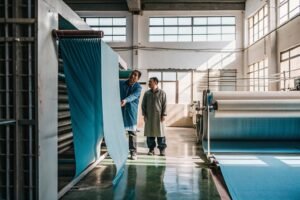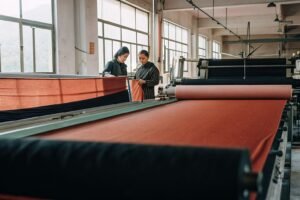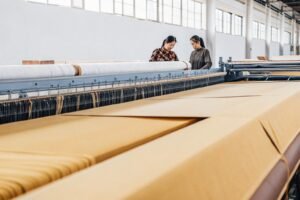
You admire the intricate beauty of a delicate lace trim or an heirloom-quality lace fabric. But have you ever considered the hidden environmental cost woven into every thread? The traditional lace making we romanticize—often associated with European ateliers and artisan craftsmanship—carries a surprisingly heavy ecological burden when scaled for modern fashion. From water-intensive raw materials to chemical-laden dyeing and high-energy embroidery, the journey from fiber to finished lace leaves a deep imprint on our planet.
The environmental footprint of traditional lace production is significant and multi-faceted, spanning high water consumption, chemical pollution, substantial energy use, and notable textile waste. The footprint is concentrated in three key stages: raw material cultivation (especially cotton), the dyeing and finishing processes, and the production waste from intricate cutting. Understanding this impact is the first step toward making informed, sustainable sourcing decisions that don’t sacrifice beauty for responsibility.
This guide will dissect the lifecycle of traditional lace. We’ll quantify the water and chemical use, expose the energy demands of classic Leavers and embroidery machines, explore the waste problem, and critically examine the real value of artisanal versus industrial methods. Finally, we’ll map out the credible alternatives and certifications that can guide you to a lighter-footprint lace.
How Do Water and Chemicals Dominate the Lace Lifecycle?
The environmental story of lace begins long before the loom. For natural fiber-based laces, the greatest impact often occurs at the very start: raw material cultivation and processing. Synthetic laces, while less thirsty, introduce a different set of chemical and fossil fuel challenges.
Let’s be specific. Traditional cotton lace, prized for its softness, is one of the most water-intensive textiles on Earth. The water footprint of cotton cultivation is staggering, with global averages often cited at around 10,000 liters of water per kilogram of cotton lint—enough for a single pair of jeans, let alone the delicate fabric that follows. This doesn’t include the water used later in bleaching, dyeing, and finishing. When a client insists on "100% cotton lace for sustainability," we have to gently educate them that fiber origin is only one part of a very complex equation.
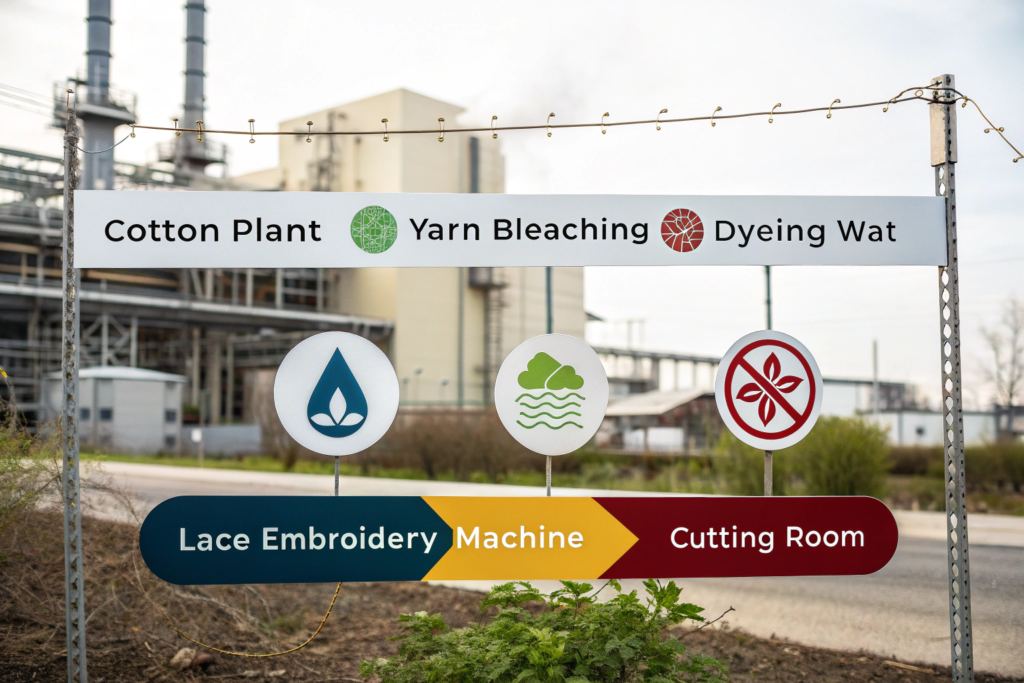
What is the True Water Cost of Natural Fiber Lace?
The water toll extends beyond the field.
- Irrigation for Cultivation: As mentioned, conventional cotton is a thirsty crop, heavily reliant on irrigation that can deplete local water tables and degrade soil quality.
- Scouring and Bleaching: Cotton yarn must be scoured (washed) and often bleached to achieve the pure white base for many laces. This uses hot water and chemicals like hydrogen peroxide or chlorine compounds.
- Dyeing and Printing: This is a major hotspot. The dyeing process requires vast amounts of water to dissolve dyes and chemicals, and to rinse the fabric afterward. For multi-colored laces or printed laces, this process may be repeated multiple times. Wastewater from dyeing, if untreated, contains heavy metals, salts, and toxic residues that can pollute rivers.
- Finishing: Additional washes for softening or applying functional finishes (like starch for stiffness) add to the total.
A Comparative Insight: When analyzing the footprint for a client’s collection, we compared a traditional cotton lace with a recycled polyester lace. The recycled polyester used 86% less water in its lifecycle (primarily because it skipped cultivation and required less intensive dyeing). This data point helped them pivot their "eco" line toward more impactful material choices.
Why are Dyehouses and Finishing Plants Pollution Hotspots?
The chemical legacy is perhaps the most damaging. Traditional dyeing and finishing are chemical-intensive operations.
- Toxic Effluent: Untreated or poorly treated wastewater discharges dyes, fixing agents, heavy metals (from certain dyes), and formaldehyde (from some wrinkle-resistant finishes) into waterways. This devastates aquatic ecosystems and can contaminate drinking water sources.
- Salt Load: The dyeing process, especially for cotton, uses enormous quantities of salt to force dyes onto the fibers. This saline wastewater is difficult and expensive to treat, leading to soil salinization when used for irrigation.
- Air Emissions: Certain finishing processes and the burning of fossil fuels for steam generation release volatile organic compounds (VOCs) and greenhouse gases.
The concentration of these impacts is severe in regions with lax environmental oversight. This is why the location and certification of your supplier’s dyeing partner is as important as the lace maker itself. At Shanghai Fumao, we partner with dyehouses that have invested in zero-discharge water recycling systems and hold certifications like OEKO-TEX STeP, which audits chemical management and environmental performance.
What is the Energy and Waste Profile of Lace Manufacturing?
Beyond water and chemicals, the actual creation of the lace pattern—whether by antique Leavers loom or modern electronic embroidery machine—is energy-hungry. Furthermore, the very nature of lace design and garment construction generates unique waste streams.
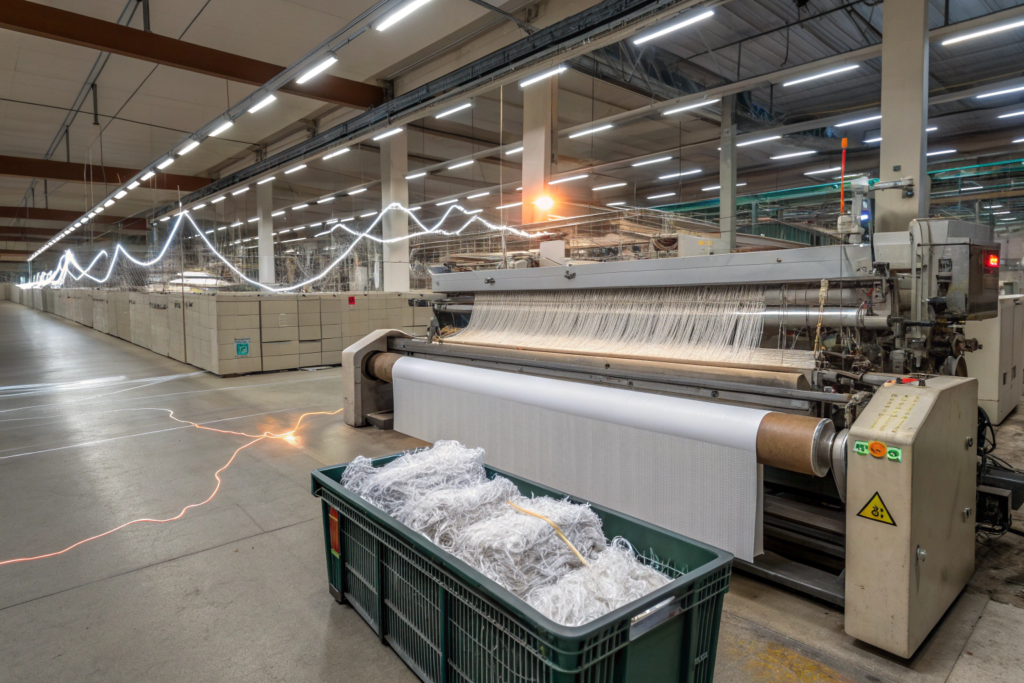
Industrial lace production is not a cottage industry. A single modern Raschel or Jacquard lace machine can consume significant electricity, running 24/7 to be economical. And while digital embroidery is more efficient than hand-work, it is still a slow, precise process that uses energy for every stitch.
How Energy-Intensive are Traditional Lace Machines?
The energy demand varies by technology.
- Leavers Lace Looms: These historic, mechanical looms (the source of "true" Leavers lace) are less common but still in use for high-end laces. They are mechanically complex and were traditionally powered by water wheels or steam, and now by electricity. Their production is slow, meaning the energy cost per meter is high.
- Raschel and Tricot Knitting Machines: These are the workhorses of modern lace production. They are high-speed, computerized knitting machines. While efficient in output, they run continuously and require climate-controlled environments (adding HVAC energy) to maintain yarn tension and prevent static.
- Schiffli or Multi-Head Embroidery Machines: Used for embroidered laces and appliqués, these machines use hundreds of needles moving simultaneously. The constant motion of needles, bobbins, and the frame is electrically intensive.
The Carbon Footprint: This direct electrical energy, often sourced from coal-powered grids in major manufacturing countries, translates directly into carbon dioxide emissions. A 2022 analysis we commissioned for our own supply chain showed that transitioning our primary lace supplier’s mill to solar panels reduced the embedded carbon in our lace by over 30%. This is a tangible improvement we now communicate to sustainability-focused brands.
Why is Lace Particularly Prone to High Cutting Waste?
This is a design and geometry problem. Lace patterns are irregular, and garment patterns are irregular. Fitting one onto the other is like a complex puzzle with inevitable gaps.
- Pattern Mismatch: To ensure the lace motif aligns correctly on the finished garment (e.g., a flower centered on the bodice), cutters must "walk" the pattern piece along the fabric, often leaving unusable scraps between pieces. For large-scale patterns, waste can exceed 30%.
- Delicate Handling: Lace cannot be cut in extremely high piles like denim, as it shifts and snags. Lower cutting heights mean more frequent lay-ups and more "end-of-roll" remnants.
- Edge Waste: The selvage of all-over lace is often discarded, and the shaped edges of border laces create off-cuts.
Innovation in Action: We work with designers to engineer "placement prints" or to design garments that use lace borders strategically, minimizing cut waste. For one project with a zero-waste design studio, we developed a custom lace panel width that matched their specific pattern layout, reducing cut waste from an estimated 25% to under 8%. This required close collaboration but proved that waste is not a fixed cost of doing business.
Artisanal vs. Industrial: Which Has a Lighter Footprint?
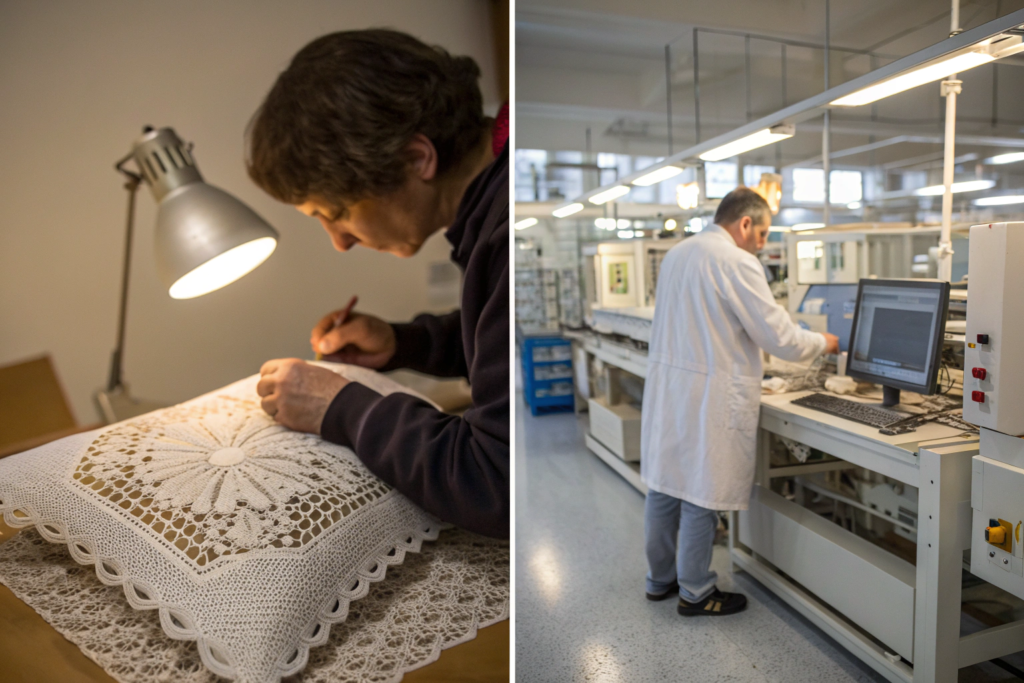
The romantic notion of the lone lacemaker might suggest a lighter touch on the planet. The reality is more nuanced and often counterintuitive. While artisan methods avoid industrial-scale chemical baths and massive energy draws, their extreme inefficiency and potential use of untreated materials can lead to a higher per-unit footprint.
It’s a question of scale and methodology. A hand-embroidered lace collar taking 100 hours to complete has a footprint dominated by the artisan’s home energy use and the sourcing of their small-batch materials. An industrially produced counterpart might use more water in total volume, but far less per collar. The most sustainable option often lies in modern, optimized industrial processes that are tightly controlled and certified.
Does "Handmade" Always Mean More Sustainable?
Not necessarily. Key considerations include:
- Material Sourcing: An artisan may source small quantities of yarn from unknown origins, which could be conventionally grown cotton or synthetics. Traceability is low.
- Energy and Resource Efficiency: Hand processes are slow. The energy for lighting, heating, and tools per meter of output is high. Dyeing small batches is notoriously inefficient in water and chemical use per unit.
- Lack of Scale for Innovation: An artisan cannot invest in solar panels, water recycling, or non-toxic dye technologies. They are often price-takers in the materials market.
The Verdict: Artisanal lace is precious for its cultural value, skill preservation, and uniqueness—not for its low environmental impact. Its footprint is different, not inherently smaller.
Can Modern Industrial Production Be the Cleaner Choice?
Yes, when it incorporates best-in-class technology and rigorous management. This is known as "clean production."
- Efficiency Gains: Modern mills can optimize dye recipes, use automated dispensing to minimize chemical excess, and capture heat from processes for reuse.
- Investment in Technology: They can afford to install water treatment and recycling plants, shift to renewable energy, and use efficient machinery.
- Certification and Transparency: Industrial-scale producers are the ones who can undergo and afford third-party certifications like GOTS (for organics), OEKO-TEX, and Bluesign®, which provide audited frameworks for reducing environmental impact.
Our Stance at Fumao: We believe in leveraging scale for sustainability. By consolidating orders through our vertically integrated network, we can direct volume toward partners who have made these green investments. For example, our primary dyeing partner’s closed-loop system recycles over 90% of its process water. This is an infrastructure cost that only makes sense at an industrial scale, but it benefits every meter of lace we produce there.
What are the Credible Pathways to Sustainable Lace?
Awareness of the problem must lead to action. The good news is that viable, more sustainable alternatives exist at every stage of the lace lifecycle. The goal is incremental improvement—choosing the better option available today.
The most impactful levers are: 1) Material Choice, 2) Process Innovation, and 3) Design for End-of-Life. You don’t have to perfect all three at once; starting anywhere moves the needle.
Which Material Innovations Reduce the Upstream Footprint?
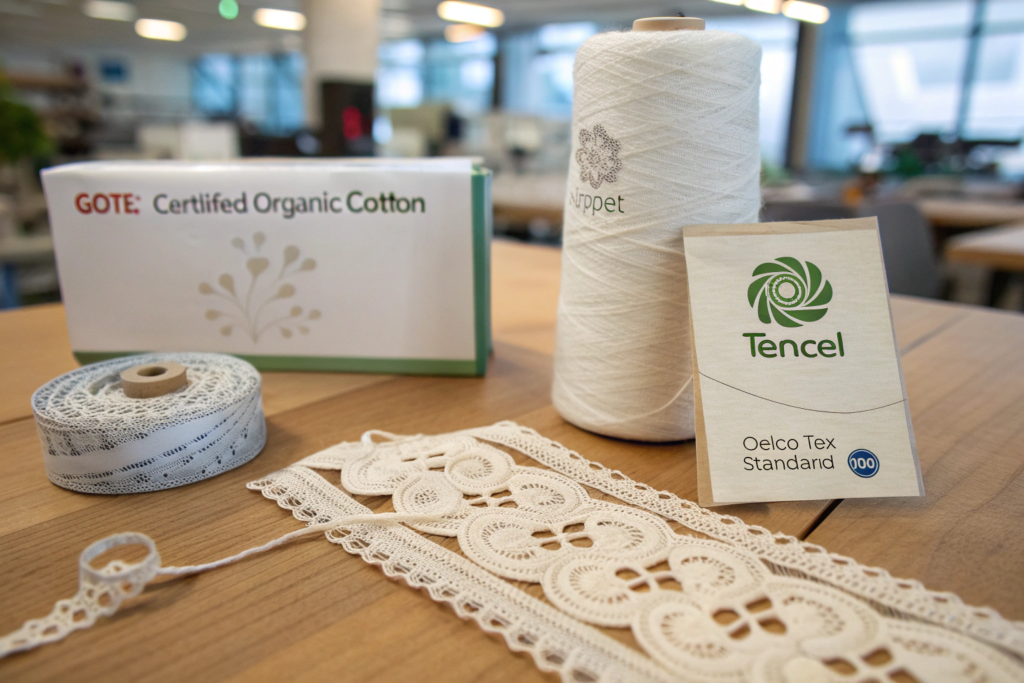
- Organic Cotton: GOTS-certified organic cotton eliminates synthetic pesticides and fertilizers, reducing water pollution and improving soil health. It typically uses rainwater more efficiently, though water consumption for processing remains.
- Recycled Fibers: Lace produced from post-consumer recycled polyester (rPET) or recycled nylon has a dramatically lower footprint. It diverts plastic from landfills/oceans and uses 50-80% less energy than virgin synthetics. The key is to ensure the recycled content is high (we aim for 100% recycled face yarns).
- Regenerated Cellulosics: Tencel™ (Lyocell) and Modal, made from sustainably harvested wood pulp in a closed-loop solvent system, offer a biodegradable option with excellent drape for lace bases. Their production is notably efficient in water and chemical use.
Case Study: For a sportswear collaboration in 2023, we developed a performance stretch lace using 78% recycled polyester and 22% Lycra® EcoMade (which contains recycled content). A lifecycle assessment showed a 60% reduction in carbon footprint and a 75% reduction in water usage compared to a virgin polyester/nylon blend lace. This is the power of intentional material specification.
What Certifications and Process Standards Should You Demand?
Look for suppliers who can provide proof, not just promises.
- OEKO-TEX Standard 100: Ensures the final lace fabric is free from harmful levels of regulated chemicals. It’s a safety baseline.
- OEKO-TEX STeP or Bluesign®: These certify the production facilities for environmental performance, chemical management, and worker safety. This is where you address dyehouse pollution.
- Global Recycled Standard (GRS) or Recycled Claim Standard (RCS): Verifies the chain of custody and percentage of recycled content.
- GOTS (Global Organic Textile Standard): The gold standard for organic fibers, covering environmental and social criteria from harvest to finished product.
Sourcing Tip: Ask your supplier: "Can you provide a breakdown of the lace’s composition and the environmental certifications held by your yarn spinner, dyer, and finishing plant?" A transparent supplier will have this information. We compile this into a Sustainability Facts Sheet for our clients, because accountability builds trust.
Conclusion
The environmental footprint of traditional lace production is undeniably heavy, rooted in water-intensive agriculture, polluting chemical processes, energy-hungry machinery, and inherent material waste. However, this reality is not a life sentence. By understanding the impact hotspots—particularly in dyeing and raw material sourcing—designers and brands can make empowered choices. The pathway to a lighter footprint lies in prioritizing certified organic or recycled materials, partnering with suppliers who invest in clean production technologies like water recycling, and embracing design strategies that minimize waste. While artisanal methods hold cultural value, it is often through scaled, optimized, and transparent industrial production that the most significant environmental efficiencies can be achieved.
Moving toward sustainable lace is a journey of continuous improvement, requiring curiosity, specification, and partnership. At Shanghai Fumao, we are committed to being a partner on that journey, offering material alternatives like recycled polyester lace and leveraging our integrated supply chain to drive efficiencies and traceability. If you are ready to weave sustainability into the very fabric of your collection, contact our Business Director, Elaine, at elaine@fumaoclothing.com to explore our range of certified and lower-impact lace solutions.