You’ve found a treasure trove of vintage lace—perhaps in a Parisian flea market or from a family heirloom trunk. The patterns are exquisite, unlike anything produced today. But the fabric is fragile, discolored, and stained. The dream of incorporating this unique history into your modern collection crashes against the fear of damaging irreplaceable material. How do you bridge the gap between preserving delicate past and creating wearable present? The challenge isn’t just cleaning; it’s a careful dance of restoration, stabilization, and intelligent redesign.
Reviving vintage lace for modern use is a three-phase process: Assessment & Conservation, Gentle Restoration, and Strategic Re-engineering. The core philosophy is to “stabilize first, beautify second.” This involves halting decay through professional stabilization techniques, then using specialized, non-invasive cleaning methods, and finally, integrating the lace into new garments through protective mounting and clever design that respects its fragility. Success lies in treating vintage lace not as bulk fabric, but as precious, finite appliqué material.
This guide will walk you through the practical steps from a textile expert’s perspective. We’ll cover how to assess damage, which restoration techniques to use (and which to avoid), how to partner with conservators, and most importantly, how to design contemporary pieces that celebrate the lace’s history without pretending it’s new. Let’s give these heirlooms a new life.
Phase 1: The Critical Assessment – Is Your Vintage Lace Salvageable?
Before you even think about water, you must become a detective. The goal of Phase 1 is not to fix, but to understand. What are you really working with? Blindly proceeding can turn a fragile item into a pile of threads. This stage determines if the lace can withstand any intervention and what its future role can be.
You need to identify three things: the fiber content (this dictates every subsequent step), the type and extent of damage, and the structural integrity. A 1920s silk Chantilly lace requires a completely different approach from a 1970s polyester guipure. I’ve seen designers rush this stage, only to have a cherished Edwardian lace dissolve during a “gentle” soak because the silk had been weakened by invisible perspiration acids.
How to Safely Identify Fibers and Diagnose Damage?
Never trust a guess. Use a combination of non-destructive tests.
- The Burn Test (ONLY on an already detached, tiny thread): This is the most reliable. Take a single thread from an inconspicuous area (like a selvage or damaged section) with tweezers.
- Silk/Wool: Smells of burnt hair, leaves a crushable black ash.
- Cotton/Linen: Smells of burnt paper, leaves soft, gray ash.
- Acetate (common in mid-20th c.): Smells like vinegar, melts and forms a hard bead.
- Polyester/Nylon (post-1960s): Smells chemical, melts into a hard plastic bead.
- Visual & Tactile Diagnosis:
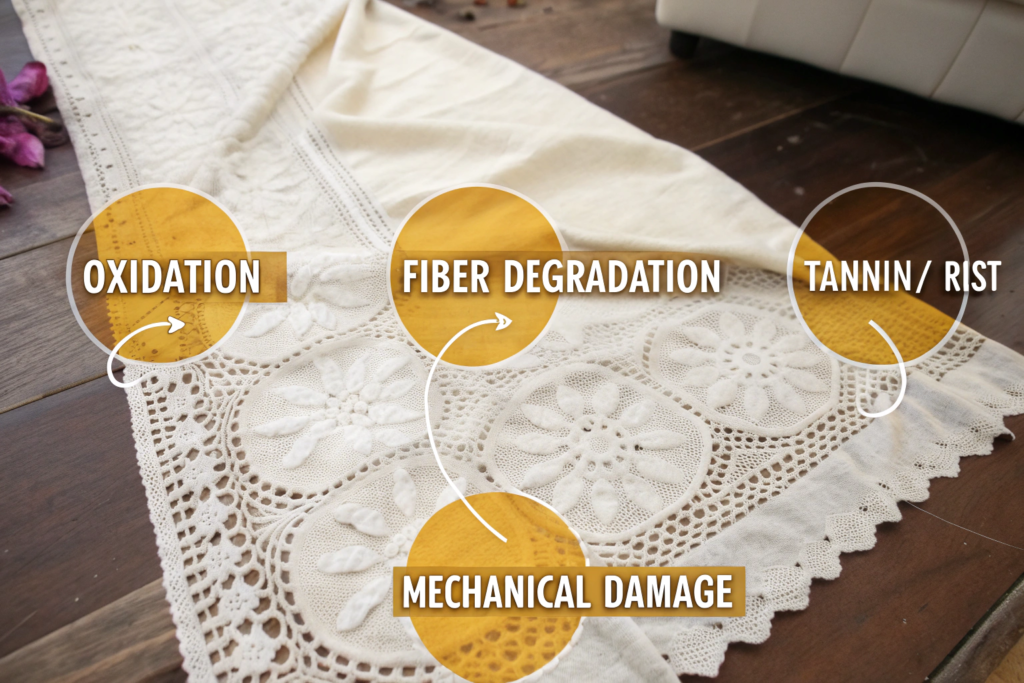
- Brittleness/Dry Rot: Fibers snap easily with gentle bending. Often caused by light exposure.
- Discoloration: Even yellowing is often oxidation. Brown spots could be rust, tannin (tea, wine), or mold.
- Stiffness: Could be from starch (temporary) or degraded finishes (permanent).
- Odor: A musty smell indicates mold or mildew—a red flag requiring specific treatment.
Case Study: A client brought us a 1950s wedding veil with severe brown spots. The burn test confirmed silk. The spots didn’t react to rust remover but lightened with a saliva test (enzymes breaking down protein-based stains). This indicated organic stains, likely food or beverage. This diagnosis saved us from using harsh chemicals that would have damaged the silk. We later replicated this lace pattern for her using our archival lace reproduction services, giving her a wearable new piece while preserving the original.
When is Professional Conservation the Only Option?
Know your limits. If the lace is museum-level, historically significant, or exhibits extreme brittleness, multiple types of staining, or previously botched repairs, hire a textile conservator.
- Signs You Need a Pro: The fabric feels like it might crumble to the touch, has extensive water damage or mold, or is attached to another unstable material (like decaying rubber or acidic paper).
- What They Do: Conservators use scientific tools like microscopy and pH testing. Their treatments, such as stabilizing support stitching with fine silk net or using custom-made gels for spot cleaning, are minimally invasive and fully documented. They work to preserve the artifact in its current state, not necessarily make it look new.
- Your Role as Designer: Work with the conservator to discuss your end goal—"I want to incorporate this into a garment for occasional wear." They can then tailor their stabilization to support that use, rather than just archival storage.
Phase 2: The Gentle Restoration – Cleaning and Stabilization Techniques
Once you’ve assessed and decided to proceed, Phase 2 is about careful intervention. The motto is: “Do no harm.” Every action should be reversible or at least not accelerating decay. This phase is less about making it pristine and more about making it stable and aesthetically coherent for its new life.
Forget commercial detergents. We’re working with chemistry calibrated to old fibers. The process is slow and patient. Rushing here is the most common cause of disaster. I recall a designer trying to "brighten" a cream lace with a common oxygen bleach; it created catastrophic yellow streaking because the lace had a hidden synthetic blend.
What are the Step-by-Step Methods for Safe Cleaning?
Always test any method on the most damaged area first.
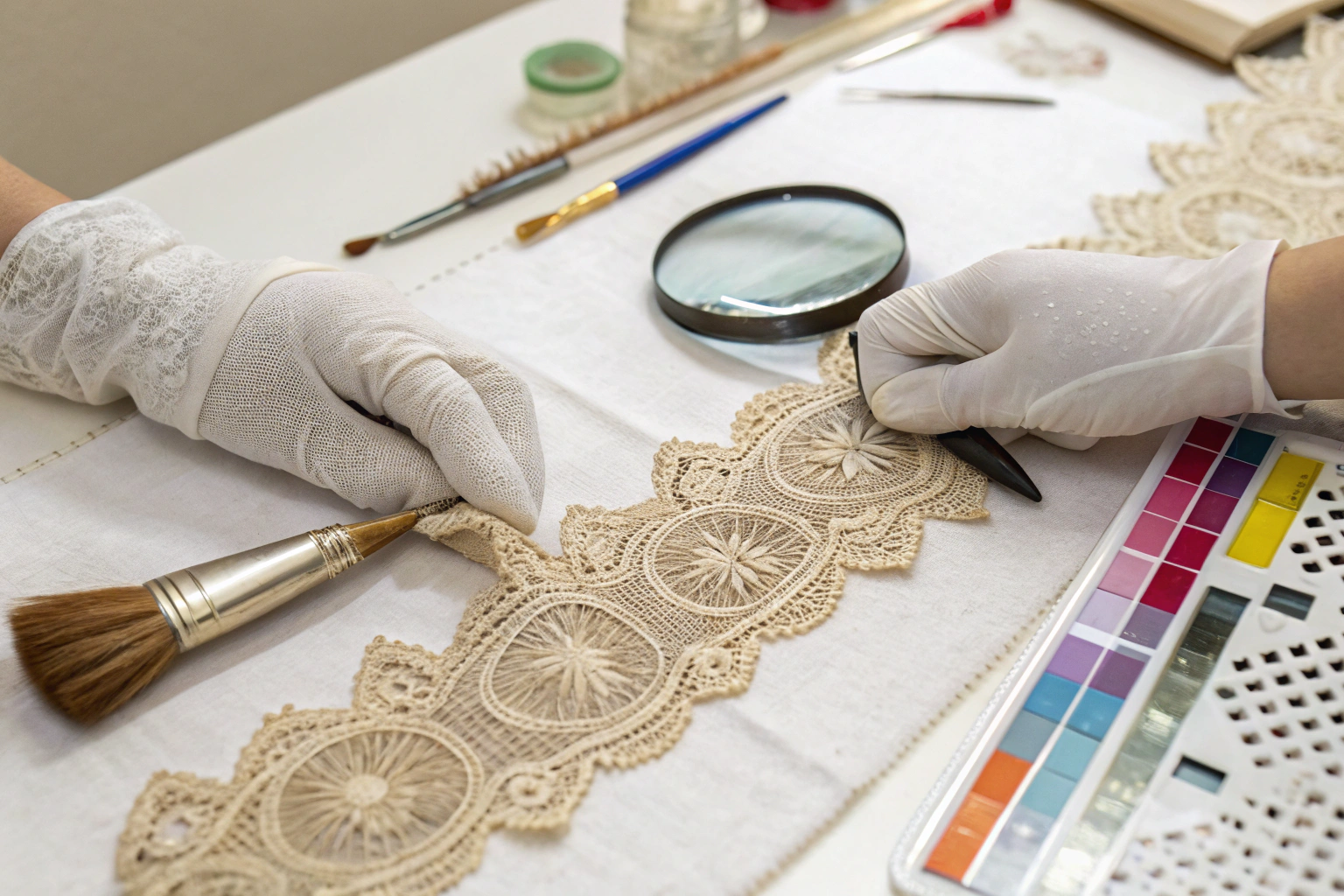
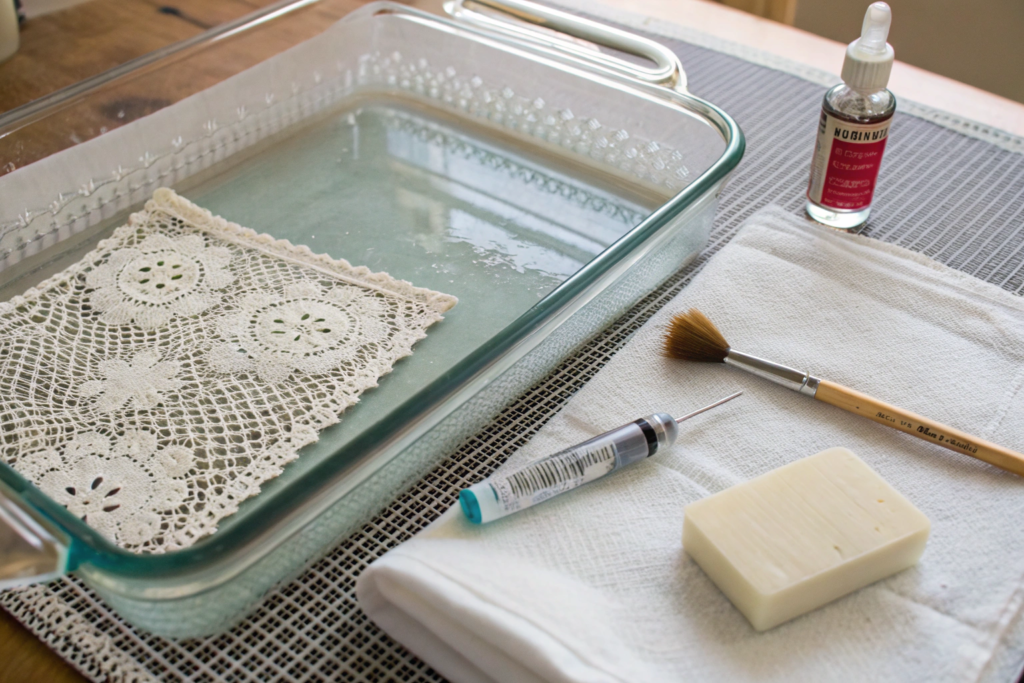
- Surface Cleaning: Start with the least invasive step. Use a soft, natural bristle brush (like a hake brush) to gently dislodge loose dirt and debris. Work over a sheet of white paper to see what comes off.
- Wet Cleaning (For Sturdy Fibers): Only proceed if the lace passed the strength test.
- Use Deionized or Distilled Water: Tap water minerals can set stains.
- Use a Neutral pH Textile Surfactant: Products like Orvus WA Paste or conservation-grade soaps are designed for old fibers.
- The Bath: Support the lace on a fiberglass or polyester mesh screen. Submerge in a large volume of water to float dirt away, don’t agitate. Change water until it runs clear. This may take many baths over hours.
- Drying: Never wring. Blot between layers of white towels. Dry flat on a mesh rack, reshaping the lace as it dries. Avoid direct heat and sunlight.
- Spot Treatment: For persistent stains, use targeted methods. For organic stains on protein fibers (silk/wool), a 1% solution of enzymes in water can be applied locally with a cotton swab. For rust, a commercial rust remover formulated for textiles, applied with precision, can work. Always consult a professional stain removal guide for antique textiles before proceeding.
How to Stabilize Fragile Lace Without Compromising Its Look?
Cleaning is only half the battle. You must now reinforce the lace to handle the stress of being part of a garment.
- The Net Mount (The Gold Standard): This is the most common and respectful method. A sheer, stable net (like nylon or silk illusion tulle) is placed behind the fragile lace. Using fine, almost invisible stitches (like a pick stitch or a laid couching stitch), the lace is secured to the net at multiple, discreet points. The net takes all the structural stress of the garment, while the lace sits atop, purely as decoration. This is how haute couture houses integrate antique lace.
- Adhesive Methods (Use with Extreme Caution): Fusible web can be a quick fix but is often irreversible and can stain or stiffen lace over time. If used, select the lightest weight, and use a protective pressing cloth with very low heat. It’s generally not recommended for valuable pieces.
- Edge Stabilization: Use a fine, matching thread to oversew or blanket stitch any fraying edges to prevent further unraveling.
Our Hybrid Approach: For a project with a Milanese fashion house, we restored 100 meters of 1960s lace that was beautiful but fragmented. After cleaning, we mounted the best fragments onto a custom-dyed silk net. For the missing sections, our designers created digital pattern files to fill gaps with new, sympathetic lace, produced on modern machines. The result was a continuous, stable fabric where old and new were indistinguishable to the casual eye, allowing for full-garment construction.
Phase 3: Modern Integration – Designing with Restored Lace
This is where creativity meets conservation. You are not designing with new fabric. You are curating and framing a historical artifact. The design must serve the lace, not force the lace to serve an impractical design. The goal is to create a garment that feels contemporary while honestly showcasing the lace’s age and story.
The most successful applications treat vintage lace as precious appliqué or focal points, not as the main structural fabric. It’s about strategic placement and honest juxtaposition. Let the wear and tear become part of the aesthetic—a small, stabilized hole can tell a story; trying to hide it completely often looks forced.
What are the Most Flattering and Protective Design Applications?
Design to protect the lace from stress and wear.
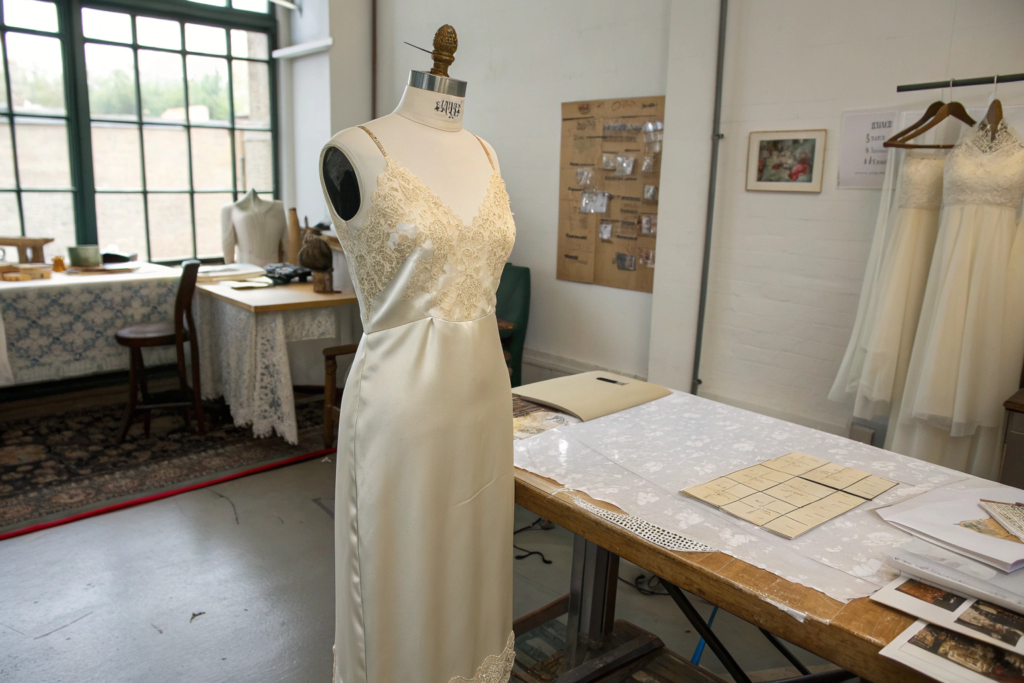
- Appliqué as Focal Point: This is the safest and most impactful method. Mount the restored lace onto a new, sturdy base fabric (silk duchess, cotton sateen) and apply it as a decorative panel on a bodice, cuff, collar, or back yoke. The base fabric bears the garment’s stress.
- Overlay on Strategic Areas: Use the lace as an overlay on sleeves, skirt hems, or necklines, where it is attached to a full lining and not subject to constant friction (like at the waist or underarms).
- Accessories and Trims: Consider using smaller pieces for clutches, hair accessories, or as a trim on a veil. This minimizes handling.
- The “Fragment” Approach: If you have a large but damaged piece, don’t try to use it all. Cut out the most perfect, beautiful fragments and use them as scattered appliqués or create a collage. This is honest and artistic.
Golden Rule: Never place vintage lace in high-stress areas: zipper plackets, side seams, waistbands, or anywhere it will experience regular pulling, sitting, or abrasion.
How to Source Compatible Modern Materials for a Cohesive Look?
The new materials you pair with the vintage lace must be sympathetic in quality and aesthetic, but also provide the necessary support.
- Base Fabrics: Choose natural, breathable, and stable fabrics like silk crepe, silk habotai, fine wool crepe, or high-quality cotton voile. They should have a drape and luster that complement the age of the lace. Avoid stiff, synthetic fabrics that will visually and physically overwhelm the delicate lace.
- Threads and Notions: Use fine, natural thread (silk or cotton) for hand-application. For machine sewing, a fine polyester thread can offer strength. Buttons and closures should be lightweight and placed away from the lace itself.
- The "Bridge" Fabric: If you’re reproducing parts of the pattern (like we did for the Milan project), the new lace should match the fiber and weight as closely as possible. Work with a specialist like Shanghai Fumao who can produce small runs of custom lace replication based on vintage samples. This ensures a perfect marriage of old and new.
A Success Story: A New York-based designer specializing in heirloom pieces sent us a collection of varied, damaged Victorian lace collars. Instead of restoring each as a collar, we disassembled them, stabilized the best motifs, and appliquéd them onto the cuffs and plackets of modern silk blouses. The contrast between the crisp new silk and the intricate, slightly yellowed lace created a narrative that customers loved. The lace was protected in low-wear areas, and the garments were fully wearable.
The Business and Ethical Considerations
Working with vintage materials isn’t just a technical craft; it’s a business model with ethical dimensions. You must be transparent with customers, manage limited supply chains, and price accordingly.
How to Market and Price "Heirloom Revival" Pieces?
Honesty is your greatest marketing tool.
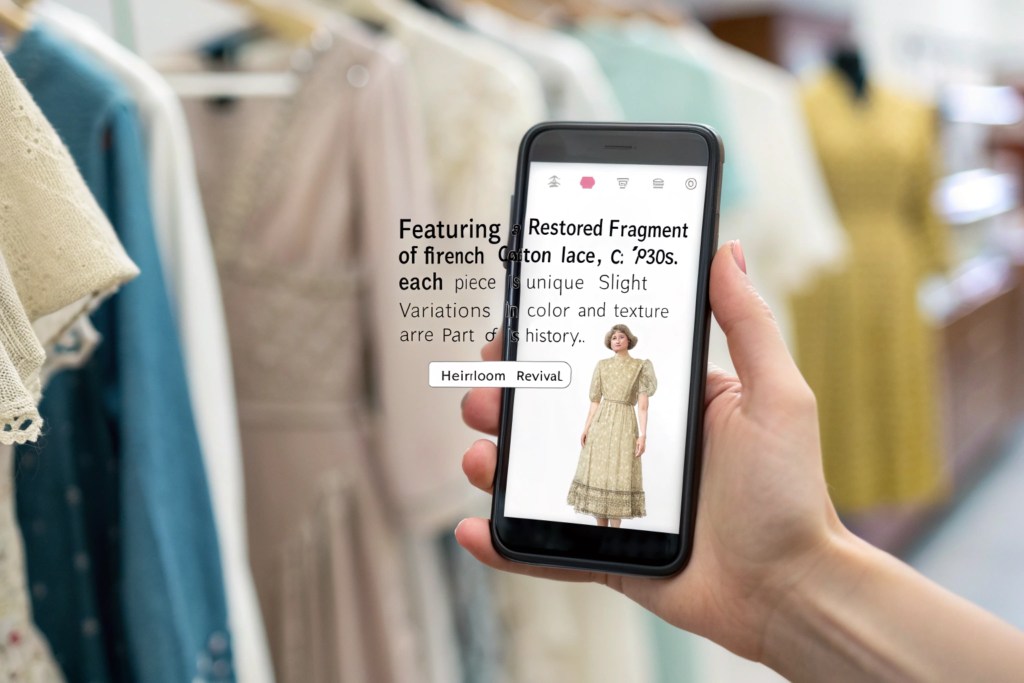
- Transparency: Clearly label: "Incorporates restored vintage lace from the 1940s." Note that each piece is unique due to the nature of the source material. This turns potential flaws (variations, minor imperfections) into selling points—proof of authenticity and sustainability.
- Storytelling: Document the process. Share the story of the lace’s era, how it was found, and the restoration steps. This creates immense emotional value.
- Pricing: Price must reflect the labor-intensive restoration (often 10-20 hours per piece), the scarcity of the material, and the design expertise. This is a luxury, slow-fashion product. It cannot compete with fast fashion pricing.
What are the Ethical Sourcing and Sustainability Impacts?
Using vintage lace is the ultimate upcycling.
- Reducing Textile Waste: You are diverting historical textiles from landfills and giving them new purpose.
- Lowering Carbon Footprint: You are using existing materials, avoiding the water, energy, and chemical inputs of new fabric production.
- Sourcing Ethically: Purchase from reputable vintage textile dealers or estate sales. Be wary of bulk lots that might contain culturally sensitive materials or have unclear provenance. The goal is respectful reuse.
Our Role: At Shanghai Fumao, we support designers in this niche by providing the complementary modern fabrics and, when needed, the reproduction services to make fragmented vintage lace workable. We see it as part of a broader sustainable textile sourcing strategy that values both heritage and innovation.
Conclusion
Reviving vintage lace for modern collections is a rewarding practice that blends respect for history with contemporary design. It demands a methodical, three-phase approach: beginning with a forensic assessment to diagnose fiber content and damage, moving to gentle, reversible cleaning and stabilization techniques, and culminating in intelligent design that integrates the lace as protected focal points rather than structural elements. This process requires patience, specialized knowledge, and an ethical commitment to transparency and sustainability.
The final garments are more than clothing; they are conversations between past and present, carrying stories in their threads. If you are inspired to embark on such a project but need a partner for stabilization materials, compatible modern fabrics, or expert reproduction work, Shanghai Fumao can provide the technical foundation. Let us help you translate history into wearable art. For a consultation, please contact our Business Director, Elaine, at elaine@fumaoclothing.com.