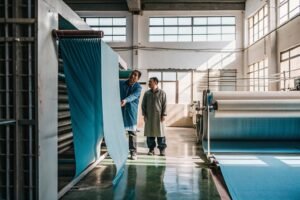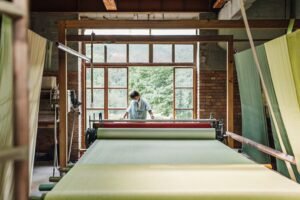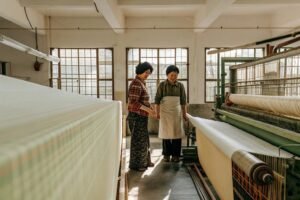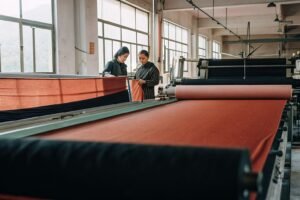
Finding ethically produced lace feels like looking for a needle in a haystack, doesn’t it? You want beautiful, intricate designs for your fashion line, but the stories of unfair labor practices and environmental damage can keep you up at night. I get it. The pressure from conscious consumers is real, and a single misstep in your supply chain can tarnish a brand’s reputation for years. The problem isn’t just about finding a supplier; it’s about finding one you can trust with your brand’s ethical backbone.
The solution is a proactive, multi-layered approach to due diligence. Ensuring ethical lace production goes beyond a simple certificate—it requires direct engagement, transparency at every stage, and partnerships with suppliers who embed ethics into their operational DNA. By focusing on verifiable labor standards, sustainable material sourcing, and traceable, low-impact manufacturing, you can build a supply chain that delivers both beauty and integrity.
For over two decades at Shanghai Fumao, we’ve navigated the complex waters of ethical textile production from the heart of Keqiao. We’ve learned that true ethics are proven on the factory floor, not just on a paper audit. Let’s unravel how you can confidently secure ethically produced lace, turning a major sourcing headache into a competitive advantage for your brand.
What Are the Key Labor Standards for Ethical Lace Manufacturing?
The shimmer of lace shouldn’t hide the shadow of poor working conditions. Ethical lace production starts with people. It’s about ensuring the hands that craft these delicate fabrics work in safety, with dignity, and under fair terms. Many buyers get lost in the aesthetics and price, only to face devastating PR crises later. The core labor standards are your non-negotiable checklist, your first line of defense.
Key international frameworks set the baseline. The International Labour Organization’s (ILO) conventions on forced labor, child labor, discrimination, and freedom of association are fundamental. However, in the specialized context of lace production—which often involves detailed handwork or meticulous machine operation—specific standards around fair wages, working hours, and occupational health become critically amplified. You need a supplier who doesn’t just pass an audit but champions these principles daily.
How Can You Verify Fair Wages and Working Hours in Practice?
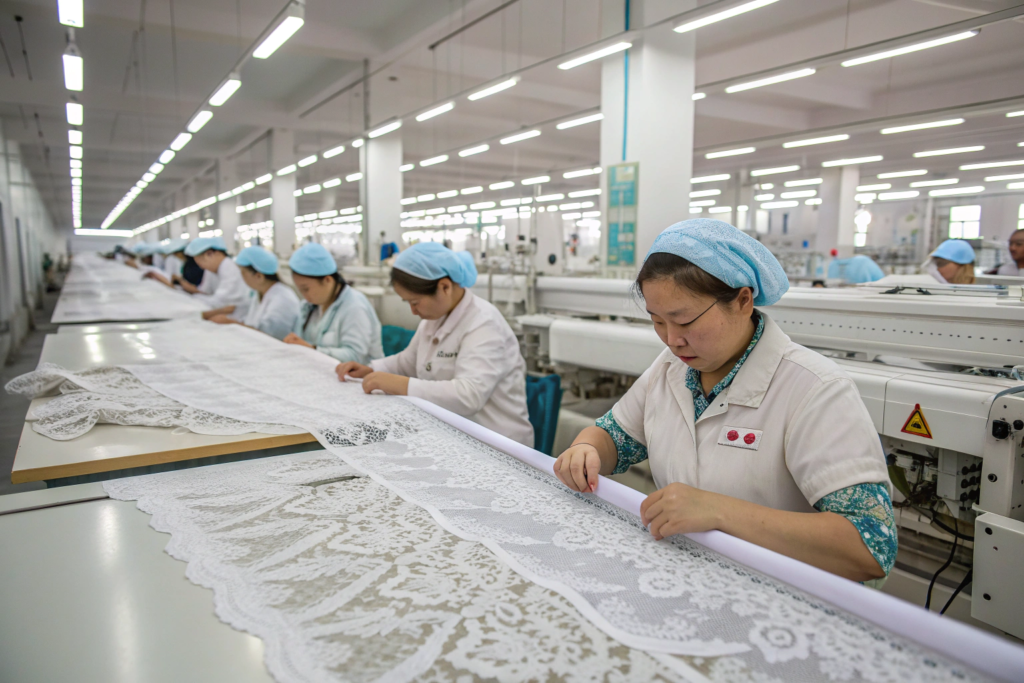
Audit reports are a snapshot; real verification needs ongoing insight. The challenge is that overtime is often hidden, especially during peak seasons before major fashion weeks. A true ethical partner will have transparent, digital attendance and payroll systems. At Shanghai Fumao, we implemented a blockchain-based pilot project with a key embroidery partner in 2023. This system allowed our European clients to anonymously verify that the premiums paid for a rushed Swiss embroidered lace order were directly received by the artisans, with no middle-layer deductions. We moved from asking “Are you compliant?” to proving “Here is the compliance in real-time.” Always ask for documented overtime policies and cross-check payroll samples against local minimum and industry average wage data—don’t just rely on a stamped certificate.
Furthermore, understanding the local context is key. For instance, exploring resources on managing overtime risks in Asian textile hubs can provide practical frameworks for your own supplier assessments. Another critical aspect is worker voice. Platforms like the Fair Wear Foundation’s brand guide to social dialogue offer valuable insights and tools for brands looking to implement robust social dialogue mechanisms in their supply chains, going beyond passive auditing to active engagement.
What Does a Safe Workshop for Lace Production Look Like?
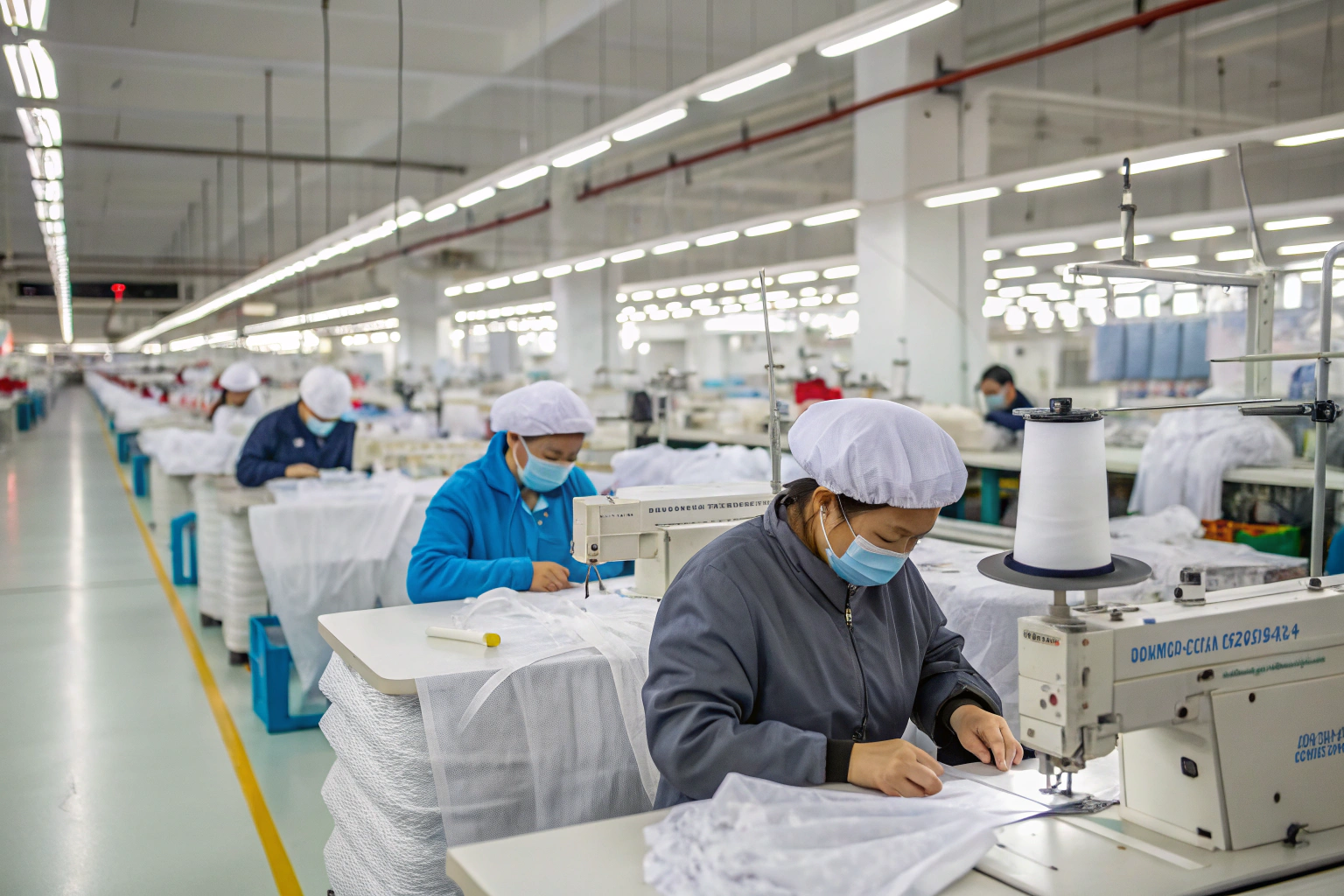
Lace manufacturing involves specific hazards: high-speed knitting machines, fine dust from fibers, and repetitive hand motions. A safe workshop must address these directly. Look for clear machine guarding, proper ventilation systems to manage airborne particulates, and ergonomic workstations for hand-finishing sections. Regular, recorded safety training is a must. I recall visiting a potential partner’s facility in 2022. While their lace samples were exquisite, I noticed workers at the Raschel lace machines without proper finger guards and the emergency stop cords were tied back. We walked away. Our own partnered facilities conduct monthly safety drills. We also insist on seeing maintenance logs for machinery; a well-maintained machine is a safer machine. A clean, organized floor with clear fire exits and first-aid stations is the most basic visual indicator of a management that cares for its workforce.
Why Is Sustainable Sourcing Crucial for Ethical Lace?
Ethical lace isn’t just about social responsibility; it’s deeply intertwined with environmental stewardship. The traditional production of lace, especially synthetic-based laces, can be resource-intensive. Sustainable sourcing shifts the focus from merely minimizing harm to actively creating positive impact through material choice, ensuring the beauty of the fabric doesn’t come at the earth’s expense. This is where your brand’s commitment to the UN SDGs becomes tangible.
The core of sustainable sourcing lies in the fibers. Opting for GOTS-certified organic cotton or Lenzing™-branded Tencel™ lyocell for base yarns ensures they come from responsibly managed sources. For synthetic laces, the use of recycled polyester (rPET) or recycled nylon diverts plastic waste from oceans and landfills. The crucial step is traceability—you must be able to trace the yarn back to its origin. This is why we at Shanghai Fumao have invested in QR-code tracking from the bale of organic cotton or the batch of recycled polyester chips all the way to the finished lace roll. It’s a system that gives our clients, and their end-consumers, a verifiable story.

What Are the Best Eco-Friendly Fibers for Modern Lace?
The ideal fiber balances low environmental impact with the performance needed for lace: strength, drape, and the ability to hold fine details. Tencel™ lyocell is a superstar here. Made from sustainably sourced wood pulp in a closed-loop process, it offers a beautiful, smooth filament perfect for luxurious, biodegradable lace. Recycled nylon, often sourced from discarded fishing nets, provides excellent durability for applications like stretch lace in athleisure. For a natural aesthetic, organic cotton lace is timeless, but ensure it’s GOTS-certified to guarantee the farming and processing standards. We’ve seen a 40% year-on-year increase in client requests for lace containing these fibers. A German lingerie brand we worked with in late 2023 successfully launched a line using our Oeko-Tex certified recycled nylon lace, which became a key marketing pillar for them.
However, navigating certifications can be complex. For brands new to this, a guide on understanding textile recycling certifications for apparel is an invaluable resource to avoid greenwashing. Similarly, diving into the comparative lifecycle analysis of lace fiber options can provide data-driven clarity on the true environmental footprint of your material choices, helping you make informed decisions beyond marketing claims.
How Do You Trace the Origin of Lace Materials?
Transparency is the antidote to greenwashing. Effective tracing requires a combination of technology and trusted partnerships. The gold standard is a chain-of-custody certification like GRS (Global Recycled Standard) for recycled content or GOTS for organic. These require rigorous documentation at each transfer point. At Shanghai Fumao, we supplement this with our own digital platform. For an order of chantilly lace made with GOTS organic cotton, a client can scan a QR code and see not just the certificate, but the gin where the cotton was processed, the shipment date of the yarn to our knitting facility, and the water and energy consumption data from the dyeing stage. This level of detail wasn’t possible a few years ago, but it’s what discerning brands now demand. It turns a supply chain into a story chain.
How to Audit a Lace Supplier for Ethical Compliance?
An audit is your deep dive, your chance to look behind the curtain. A common mistake is treating it as a mere paperwork exercise. A truly effective ethical audit for lace production is part-investigation, part-collaboration. It’s about observing the unspoken rhythms of the workshop, interviewing workers without management present, and verifying that policies are lived, not just filed. I’ve been on both sides of this table for 20 years, and the audits that drive real change are thorough, unexpected, and focused on continuous improvement.
Your audit must go beyond the generic social compliance checklist. For lace, pay special attention to the subcontracting of hand-embellishment or beading work, which is often farmed out to home-based workers—a high-risk area for labor violations. Demand a full list of all subcontractors. Also, audit the environmental management systems: how are dye effluents from coloring lace treated? What happens to the fabric off-cuts? A holistic audit covers Social (S), Environmental (E), and Governance (G) factors.

What Should Be on Your Pre-Audit Questionnaire?
This document sets the stage and filters out clearly non-compliant suppliers before you invest time in an on-site visit. It should be detailed and require evidence.
| Category | Key Questions for Lace Suppliers | Documents to Request |
|---|---|---|
| Social & Labor | Detail policies on child/forced labor, freedom of association. What is the wage structure for skilled lace weavers? How is overtime recorded and compensated? | Latest social audit report (SMETA, BSCI, etc.), payroll records for last 3 months (anonymized), signed employment contracts. |
| Environmental | Provide wastewater treatment plant details and latest test reports. What is the policy on chemical management (ZDHC MRSL)? How are lace fabric scraps handled? | Environmental permits, ZDHC Gateway chemical inventory snapshot, waste disposal contracts. |
| Supply Chain Traceability | List all subcontractors for processes like embroidery or dyeing. Provide GRS/GOTS transaction certificates for claimed sustainable materials. | Subcontractor list with addresses, Chain of Custody certificates for key raw materials. |
| Governance & Ethics | Describe the whistleblower protection mechanism. What is the process for handling worker grievances? | Anti-bribery/corruption policy, documented grievance procedure. |
Sending this questionnaire separates the talkers from the doers. A supplier that hesitates or provides vague answers is a red flag.
What Are the Red Flags During an On-Site Factory Visit?
The paperwork might be perfect, but the factory floor tells the real story. Here are critical red flags specific to lace production:
- Noise and Dust Mismanagement: Lace knitting machines are loud. If workers aren’t wearing provided hearing protection, it indicates poor safety culture. Excessive dust in the air without proper extraction points to health risks.
- Rushed Worker Interviews: If management insists on being present during worker interviews or you sense fear among staff, trust your gut. You need private, confidential conversations.
- “Ghost” Workstations: Be wary of factories that seem too clean or have unused workstations that look staged. Check power consumption logs if possible—a functioning workshop has a consistent energy footprint.
- Unaccounted Subcontracting: If you see lace samples or partially finished goods (like bales of leavers lace waiting for hand-finishing) that don’t match the main factory’s primary machinery or skill set, probe deeply. Ask to see the specific workshop where that step is done.
- Lack of Transparency in Dyeing: If the dye-house is “off-limits” or you can’t see the effluent treatment outlet, it’s a major environmental red flag. Ethical production has nothing to hide. (Here’s a tip from our own QC head: smell the water leaving the facility—it shouldn’t smell harshly chemical).
Can Technology and Certification Guarantee Ethical Lace?
This is the million-dollar question. Many brands want a simple, tech-driven or certificate-based guarantee. The truth is, neither is a silver bullet, but together they form an incredibly powerful assurance system. Technology provides the immutable data and transparency, while certification provides the verified framework and standards. Relying solely on one is like trusting only a speedometer without knowing the traffic laws—you have data, but no context for what’s safe or right.
Blockchain for traceability, AI for monitoring machine safety and productivity patterns, and IoT sensors for real-time environmental data are revolutionizing transparency. These tools create a digital thread that is very hard to falsify. Meanwhile, certifications like Fair Trade, GOTS, GRS, and OEKO-TEX® STeP provide third-party validation that specific, rigorous standards have been met. The synergy is key: technology proves the what and how much, while certification validates the standard against which it’s measured.
How Does Blockchain Improve Supply Chain Transparency?
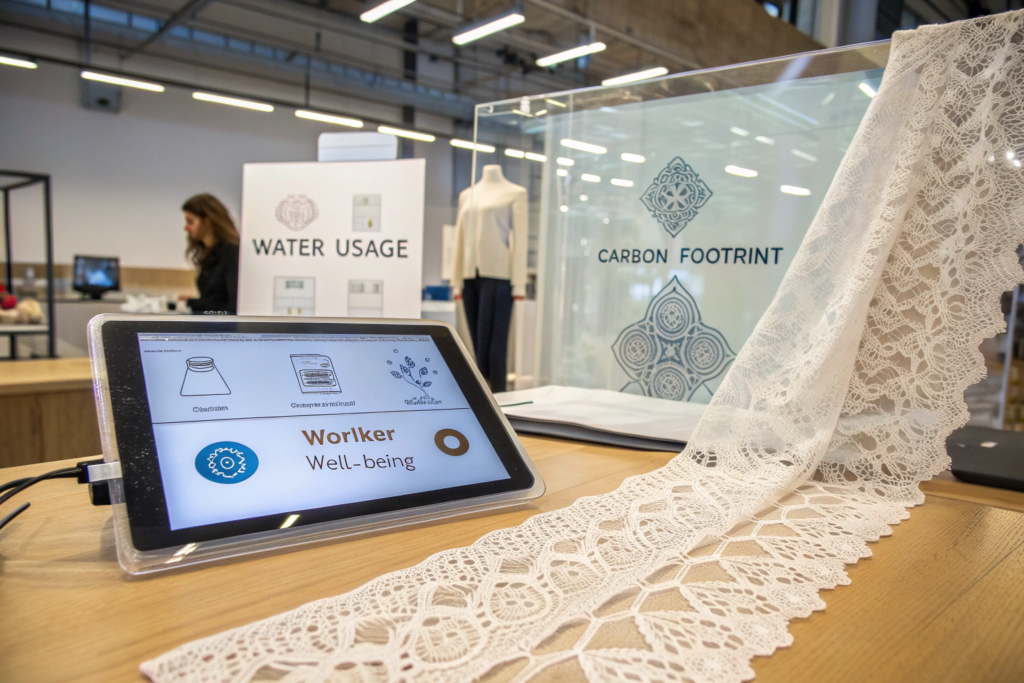
Blockchain creates a decentralized, tamper-proof ledger for your lace’s journey. Imagine each step—organic cotton ginning, yarn spinning, dyeing with ZDHC MRSL-compliant dyes, lace knitting, finishing—being recorded as a “block” with time stamps, location data, and transaction details. Once added, it cannot be altered. For a client, this means scanning a tag on a final garment and seeing the entire lifecycle. We piloted this with a U.S.-based sustainable brand in early 2024 for their guipure lace trim. They could show consumers not just the GOTS certificate, but the exact batch of dye used and the energy consumption of the specific loom. This level of proof builds unparalleled consumer trust and drastically reduces audit fatigue for the brand.
To understand the practical implementation of such systems, researching blockchain use cases in textile traceability offers concrete examples beyond theory. Furthermore, for brands assessing the readiness of their suppliers, resources on building a digitally transparent apparel supply chain from scratch can provide a valuable step-by-step roadmap.
What Are the Limitations of Relying Solely on Certifications?
Certifications are crucial, but they have blind spots. First, they are often snapshot audits—a factory can prepare for an audit day and then revert to old practices. Second, they can be cost-prohibitive for smaller, truly ethical artisans, locking them out of the market. Third, most social certifications focus on the tier-1 factory, missing critical deeper tiers like small embroidery units or home-based beaders. A certificate tells you a supplier can operate ethically on a given day; it doesn’t guarantee they do every day. This is why our partnership model at Shanghai Fumao includes unannounced spot checks by our own QC team, who are trained to look for the discrepancies between the audit file and the daily reality. We combine the framework of certification with the vigilance of ongoing oversight.
Conclusion
Ensuring the ethical production of lace fabric is a journey, not a destination. It demands moving beyond checkbox compliance to building genuine, transparent partnerships with your suppliers. It requires a blend of old-fashioned due diligence—asking tough questions, visiting factories, talking to workers—and new-fashioned technology that provides undeniable proof. The goal is to weave ethics as tightly into your supply chain as the threads in the lace itself.
The reward is immense. It’s more than risk mitigation; it’s a powerful brand differentiator. An ethically sourced lace tells a story that resonates with today’s conscious consumer, builds loyalty, and ultimately creates a more resilient and humane industry. Your commitment transforms a beautiful fabric into a force for good.
If you’re ready to source lace that aligns with your brand’s highest ethical and quality standards, we should talk. At Shanghai Fumao, we’ve built our entire operation on this principle of verified, transparent responsibility. From our CNAS-certified lab testing to our digital traceability platforms and deep partnerships with ethically audited specialty workshops, we provide the confidence you need. Let’s create something beautiful, responsibly. Contact our Business Director, Elaine, to discuss your next project: elaine@fumaoclothing.com. We’re here to help you not just find lace, but find peace of mind.