I learned this lesson the hard way about fifteen years ago. One of our best salespeople, someone who could build relationships with anyone, lost a major potential client because they couldn't answer a simple question about the difference between jersey and interlock. The client, a startup founder, asked "what's the difference in recovery?" and our salesperson said "they're both soft knits." The client went to a competitor who could explain exactly why interlock would work better for their application.
That lost sale cost us about $50,000 that year. More importantly, it taught me that product knowledge isn't optional in sales—it's the foundation of credibility. Your sales team can be charming, persistent, and responsive, but if they can't answer technical questions about fabric construction, they'll lose business to someone who can.
Let me walk you through exactly why fabric construction knowledge matters for sales, what your team needs to know, and how to build that knowledge into your sales process. This isn't about turning salespeople into textile engineers—it's about giving them the confidence and credibility to serve clients well.
How Does Fabric Knowledge Build Customer Trust?
Trust is the currency of B2B sales. And nothing builds trust faster than demonstrated expertise.
When a salesperson can look at a fabric and immediately identify its construction—"this is a single jersey, which means it will have good drape but may curl at the edges during cutting"—they signal competence. The client thinks, "this person knows what they're talking about. I can trust their recommendations."
When a client asks "will this fabric work for my application?" a knowledgeable salesperson doesn't guess. They ask follow-up questions: "What's the garment? How will it be worn? What's your quality standard?" Then they connect fabric properties to client needs. That consultation builds trust that no amount of relationship-building alone can create.
When problems arise—and they always do—clients remember who helped them avoid issues and who left them exposed. A salesperson who warned about potential shrinkage and recommended pre-shrinking is remembered as a partner. One who just took an order is forgotten.
A German client once told me they chose us over a cheaper supplier because our salesperson spent an hour explaining why a particular knit construction would work better for their activewear line. "The other supplier just sent a price. You sent expertise." That's the power of knowledge.
What Questions Should Salespeople Ask to Demonstrate Expertise?
The right questions show clients you understand their world.
Start with application: "What are you making? How will it be worn? What's the use case?" These questions show you're thinking about their needs, not just selling fabric.
Move to performance: "Does this need to stretch? Recover? Resist wrinkles? Breathe?" These connect fabric properties to garment requirements.
Address production: "How will this be cut? Sewn? Finished?" Understanding their manufacturing process lets you anticipate challenges.
Consider end-user: "Who's the customer? What do they expect?" A fabric for luxury buyers differs from one for mass market.
Then translate answers into recommendations. "For yoga wear with that much stretch requirement, you'll want a nylon-spandank with at least 15% spandex. Here's why..."
A Swedish client's purchasing manager told me she can spot an amateur salesperson in five minutes: they only talk about price and delivery. A professional asks about her business first.
How Does Knowledge Prevent Costly Mistakes?
The cost of fabric mistakes goes far beyond the fabric itself.
A salesperson who doesn't understand shrinkage might sell a cotton jersey for a fitted dress without mentioning that it will shrink 5% in the first wash. The client cuts garments that end up too small, ruining an entire collection. The cost: thousands in wasted fabric, plus lost sales and damaged reputation.
A salesperson who doesn't understand recovery might sell a low-quality knit for activewear. The garments bag out after a few wears. Returns pour in. The client loses money and credibility. The salesperson loses a customer.
A salesperson who doesn't understand dye lots might sell matching fabrics from different production runs without warning about potential shade variation. The client ends up with mismatched garments and angry customers.
These aren't hypothetical—I've seen every one happen. In each case, the root cause was a salesperson who didn't know enough to warn the client about what they were buying.
A French brand once ordered 5,000 meters of what they thought was pre-shrunk jersey. It wasn't. Garments shrank two sizes. The supplier blamed the client for not asking. The client blamed the supplier for not telling. Everyone lost.
What Fabric Construction Basics Every Salesperson Must Know?
Not everyone needs to be a textile engineer. But every salesperson needs a foundation of essential knowledge.
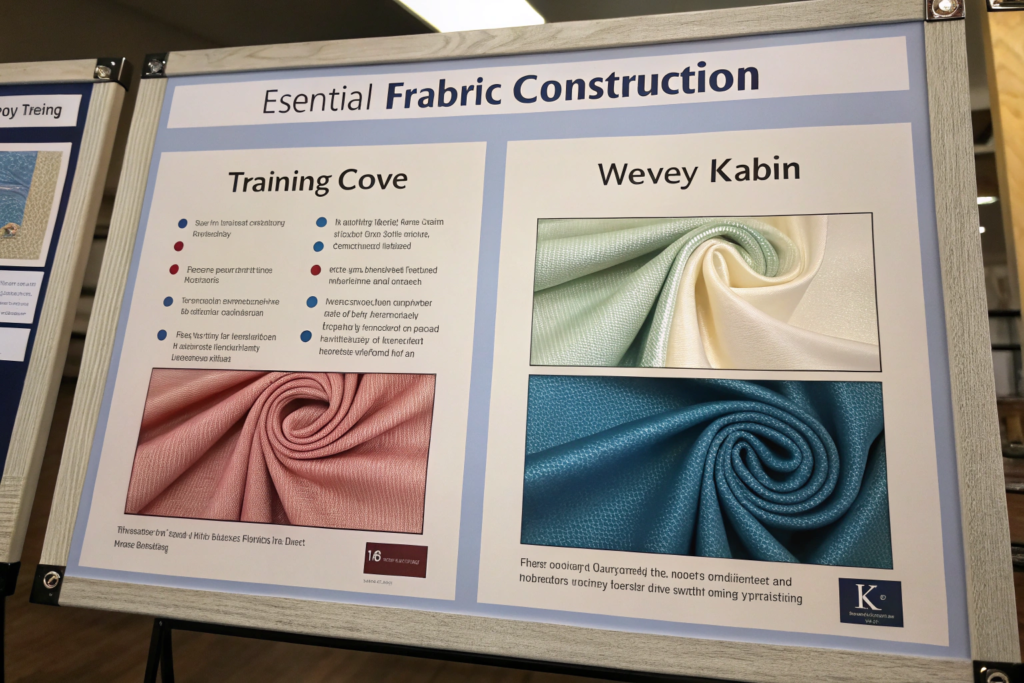
Knit vs woven is the most fundamental distinction. Salespeople must be able to explain the difference in construction, properties, and applications. They should be able to identify each by sight and touch, and explain why a client would choose one over the other.
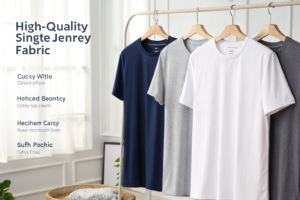
Common knit constructions matter: jersey (single knit), interlock (double knit), rib, fleece. Each has different stretch, recovery, drape, and applications. A salesperson should know that jersey curls at edges, interlock doesn't, rib has natural elasticity.
Common woven constructions matter: plain weave (poplin, broadcloth), twill (denim, chino), satin. Each has different durability, drape, and appearance. A salesperson should know that twill hides wrinkles better than plain weave, satin has more luster but less durability.
Fiber properties matter: cotton (comfortable, absorbs, shrinks), polyester (durable, wicks, can pill), rayon (soft, drapes, weak when wet), wool (warm, resilient, requires care). Salespeople should understand how fiber choice affects fabric performance.
Blend implications matter: why combine fibers, what each contributes, how blends change behavior. Cotton-polyester blends offer comfort plus durability; cotton-spandex adds stretch.
A US client's sales team took a half-day training on these basics. Within a month, their average order value increased 15% because they could confidently recommend higher-value fabrics that actually met client needs.
Why Is the Knit vs Woven Distinction So Critical?
This distinction affects every aspect of garment design and production.
Pattern making differs completely. Knit patterns require negative ease (pattern smaller than body) because the fabric stretches. Woven patterns require positive ease (pattern larger than body) because the fabric doesn't stretch. Selling a knit when the client has woven patterns, or vice versa, guarantees failure.
Cutting behavior differs. Knits can stretch during cutting, requiring special handling. Wovens are stable but can shift on the bias. A salesperson who warns about these differences helps clients prepare.
Sewing requirements differ. Knits need ball-point needles and stretch stitches. Wovens need sharp needles and lockstitches. Selling the wrong thread or needle type leads to production problems.
Garment performance differs. Knits recover from stretching; wovens don't. A client making fitted garments needs to know which they're getting.
A Spanish brand once ordered what they thought was a stable woven for a fitted blazer. It was actually a double knit. The blazer stretched out of shape within hours. The salesperson hadn't understood—or communicated—the difference.
What Should Salespeople Know About Fabric Weight?
Weight affects everything from garment cost to performance to seasonality.
GSM (grams per square meter) is the standard metric. Salespeople should know typical ranges: lightweight (under 150 GSM), mid-weight (150-250 GSM), heavy (over 250 GSM). They should understand how weight affects drape, durability, and warmth.
Weight tells stories about application. Lightweight fabrics work for summer, linings, delicate blouses. Mid-weight works for most apparel. Heavy works for outerwear, pants, structured garments.
Weight affects cost. Heavier fabrics use more fiber, generally costing more. But lightweight specialty fabrics can be expensive too. Salespeople should understand the economics.
Weight relates to yield. How many garments per yard? Lighter fabrics yield more garments per kilo, affecting landed cost calculations.
A Canadian brand's sales team learned to always ask "what weight are you looking for?" before showing samples. It saves hours of showing fabrics that won't work for the application.
How Does Fabric Knowledge Improve Upselling and Cross-Selling?
Knowledgeable salespeople don't just take orders—they create value by suggesting better options.
When a client asks for basic cotton jersey, a knowledgeable salesperson might say "this will work well, but for just 15% more, you could get a combed cotton jersey that will be softer and pill less. Your customers will notice the difference." That's not pushing—that's consulting.
When a client needs a fabric for travel, a knowledgeable salesperson might suggest a stretch woven with wrinkle resistance, explaining why it outperforms standard options. The client gets a better product; the salesperson makes a higher-value sale.
When a client complains about previous fabric problems, a knowledgeable salesperson can diagnose why and suggest alternatives. "That pilling happened because the yarn was low-twist. Here's a higher-twist option that will last longer." That's solving problems, not just selling.
The best upselling comes from genuine expertise, not sales pressure. Clients sense the difference.
A UK brand's sales team increased average order value by 22% after training on fabric properties. They weren't pushing harder—they were recommending smarter, and clients appreciated it.

How Do You Identify Opportunities for Better Fabrics?
The clues are in the conversation.
Listen for performance needs. "We need this for a hotel uniform" means durability matters. "It's for a summer wedding collection" means drape and breathability priority. Match fabric properties to stated needs.
Listen for past problems. "Our last supplier's fabric pilled" means you recommend anti-pilling finishes. "Garments shrank after washing" means you suggest pre-shrunk options. Problems are opportunities to provide solutions.
Listen for brand positioning. "We're a luxury brand" means premium fibers, finer constructions. "We're a basics brand" means value-engineered options that balance cost and quality. Match fabric to positioning.
Listen for unstated needs. A client focused on price may not mention they need durability. Ask "how will these garments be used?" to uncover deeper requirements.
A Swedish salesperson once noticed a client ordering the same basic jersey repeatedly. She asked "are you happy with how these hold up?" The client admitted to pilling issues. She recommended a higher-quality option with anti-pilling finish. The client switched and has ordered 30% more volume annually since.
What's the Difference Between Selling Features and Selling Benefits?
Features are what fabric has. Benefits are what features do for the client.
Feature: "This is a 240 GSM double knit." Benefit: "This weight will hold its shape through repeated wear, perfect for uniforms."
Feature: "This has 5% spandex." Benefit: "Your customers will love how this moves with them and snaps back into shape."
Feature: "This is GOTS-certified organic cotton." Benefit: "You can market this as sustainably produced, which your eco-conscious customers will appreciate."
Feature: "This is a high-twist worsted wool." Benefit: "This fabric resists wrinkles, so your customers can wear it all day and still look fresh at dinner."
Salespeople who translate features into benefits sell more because clients understand the value.
A German sales team practices "feature-benefit translation" in every meeting. They don't just list specifications—they explain what those specs mean for the client's business.
How Does Fabric Knowledge Help Troubleshoot Client Problems?
Problems will happen. Knowledgeable salespeople turn problems into relationship-strengthening moments.
When a client complains about shrinkage, a knowledgeable salesperson can ask: "Was the fabric pre-shrunk? What was your washing process?" They might identify that the client used hot water when cold was specified, or that the fabric needed pre-treatment they skipped.
When a client complains about pilling, a knowledgeable salesperson can explain: "Pilling happens when short fibers work loose. This fabric uses longer-staple fibers that resist pilling. Here's how to minimize it in the future."
When a client complains about color bleeding, a knowledgeable salesperson can ask about dye lots, wash procedures, and finishing. They might identify that the client mixed different dye lots, or that the fabric needed a different care approach.
In each case, the salesperson becomes a consultant, not just a vendor. The client learns something and appreciates the expertise.
A French client once called panicked about fabric that was "stretching during cutting." Our salesperson asked "are you using a rotary cutter or shears? How are you handling the fabric?" The client was pulling the fabric as they cut, stretching it. A simple process change solved the problem.

How Do You Diagnose Fabric Issues Without Being a Technician?
You don't need to be a textile engineer to ask good questions.
Start with the symptoms: What exactly is happening? Shrinkage? Pilling? Color fading? Seam puckering? The symptom points toward possible causes.
Ask about the process: How was the fabric handled? Cut? Sewn? Washed? Finished? Process reveals where problems might have occurred.
Ask about timing: When did the problem appear? Immediately? After first wash? After multiple wears? Timing suggests different causes.
Ask about scope: Is it happening on all garments or just some? One roll or multiple? Scope indicates whether it's a material problem or a process problem.
Then share what you know: "Based on what you're describing, this sounds like it might be [possible cause]. Here's what I'd suggest trying..."
A Portuguese salesperson saved a client relationship by walking them through this diagnostic process. The problem turned out to be their washing machine temperature, not the fabric. The client appreciated the help and remains loyal.
When Should You Involve Technical Experts?
Knowing your limits is as important as knowing your strengths.
Involve experts when the problem is beyond your knowledge. "This sounds like it might be a dyeing issue. Let me have our technical team review the samples and call you tomorrow."
Involve experts when the stakes are high. A $100,000 order with quality problems deserves full technical attention.
Involve experts when the client is technical themselves. Some clients are textile experts and expect to talk to peers. Match their expertise with appropriate resources.
Involve experts when the problem keeps recurring. If the same issue appears across multiple orders, something systematic needs attention.
A US salesperson knows exactly when to bring in our technical team. She handles routine questions herself, saving their time for complex issues. Clients appreciate getting the right level of expertise at the right time.
How Do You Train Salespeople on Fabric Construction?
Training doesn't have to be complicated, but it must be hands-on and ongoing.
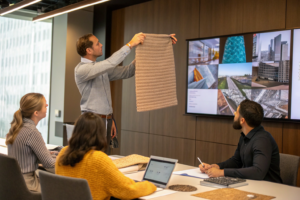
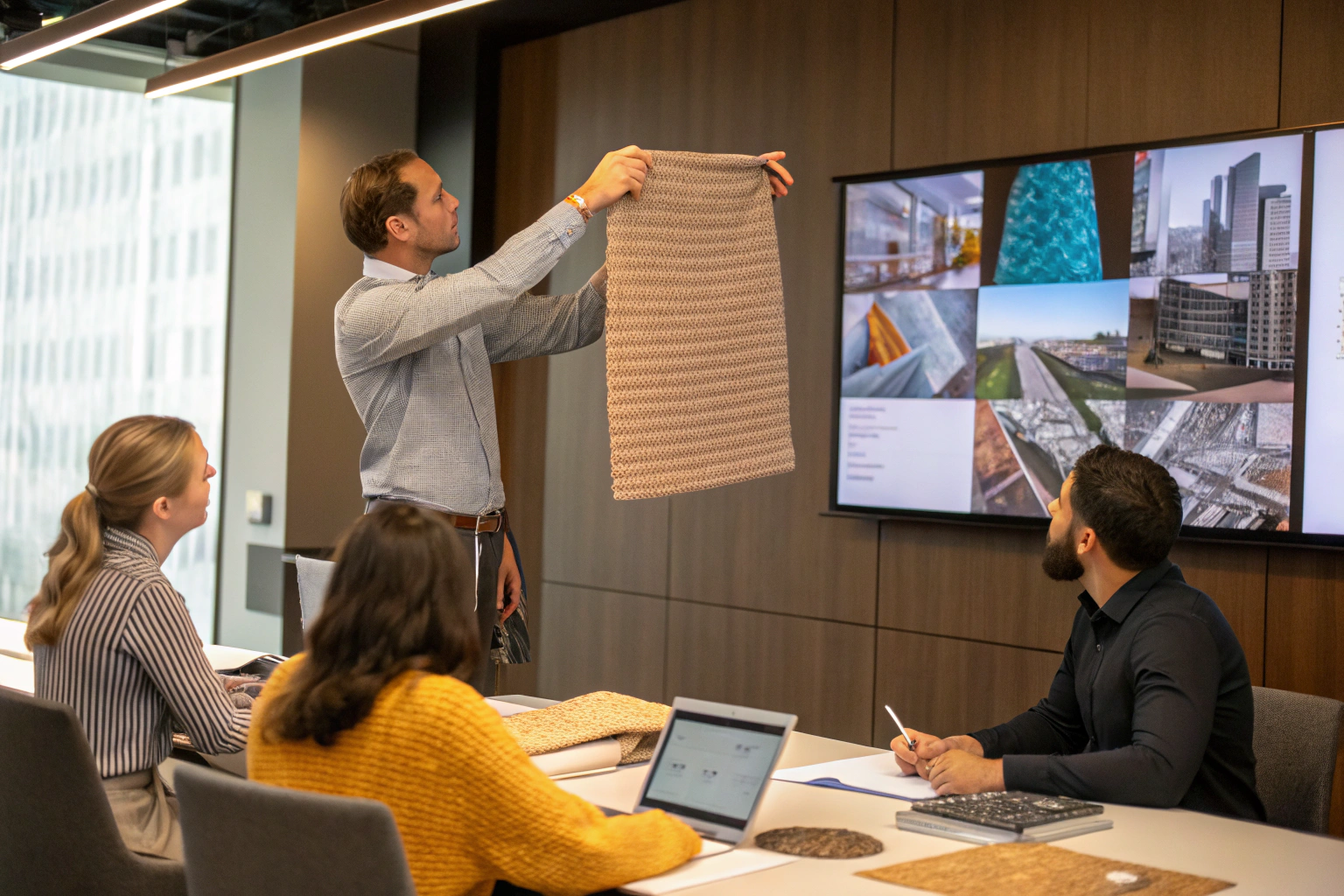
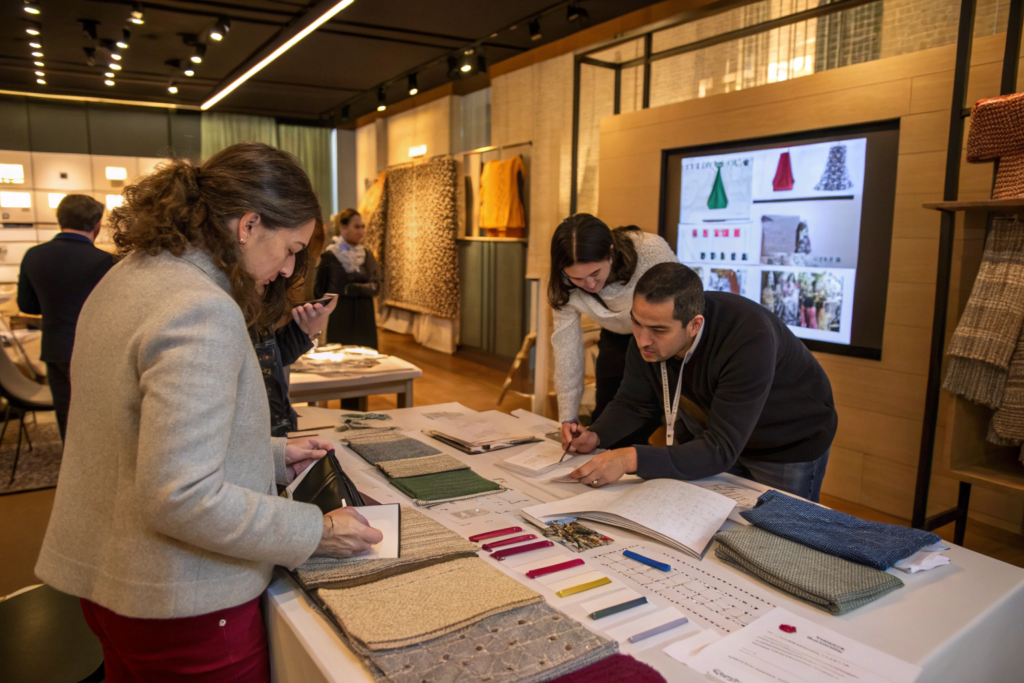
Start with samples, not slides. Give each salesperson a set of fabric swatches representing key constructions. Let them touch, stretch, examine. Physical experience creates memory that pictures can't match.
Teach the tests. Show them how to identify knit vs woven in seconds—stretch test, edge test, visual inspection. These skills become automatic with practice.
Connect to applications. For each fabric, discuss what it's good for and why. "Jersey works for t-shirts because..." "Twill works for pants because..." Build the connection between construction and use.
Practice with real scenarios. Role-play client conversations. "A client asks for fabric for yoga pants. What do you recommend and why?" Practice builds confidence.
Refresh regularly. Fabric knowledge fades without reinforcement. Monthly "sample sessions" where you review new fabrics and revisit basics keep knowledge current.
A Dutch brand's sales team does a "fabric Friday" every week—30 minutes reviewing one fabric type in depth. Over a year, they cover dozens of constructions. New hires learn fast; veterans stay sharp.
What Training Resources Are Most Effective?
Different people learn differently. Offer multiple formats.
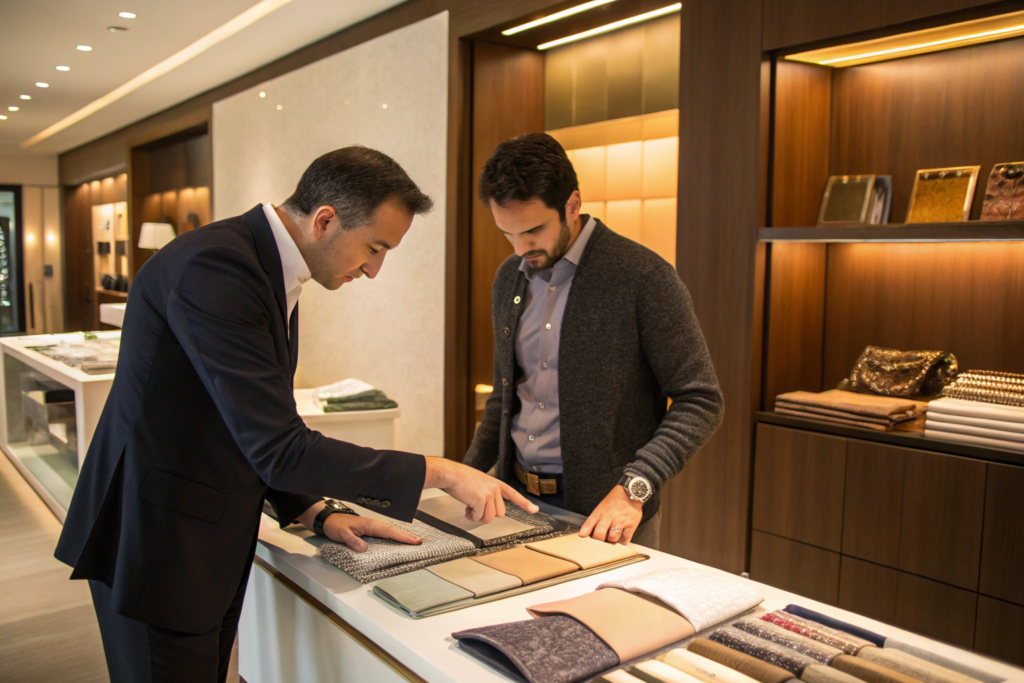
Physical sample libraries are essential. Every salesperson should have a personal set of reference samples they can touch, compare, and show clients. These become their primary learning tool.
Quick reference guides help on the spot. A one-page cheat sheet with key properties of common fabrics fits in a notebook or lives on a phone. When a client asks a question, they can check.
Video demonstrations work for visual learners. Short videos showing how to perform tests, identify fabrics, and explain differences can be watched repeatedly.
Peer learning leverages experience. Pair new salespeople with veterans for ride-alongs and joint calls. Watching an expert in action teaches what books can't.
Client feedback loops bring learning full circle. When a client reports success or failure with a fabric, share that learning with the whole team. Real-world outcomes reinforce lessons.
A Swedish sales manager creates a "learning moment" in every team meeting. Someone shares a client interaction where fabric knowledge made a difference. The stories stick.
How Do You Measure Sales Team Fabric Knowledge?
What gets measured gets improved.
Test regularly. Simple quizzes on fabric identification, properties, and applications keep knowledge fresh. Make them practical—identify this sample, recommend for this use case.
Track recommendation success. When salespeople suggest alternatives, track whether clients accept and whether the fabric performs. Success builds confidence.
Monitor client feedback. Are clients asking more technical questions? Are they expressing confidence in your team's expertise? Qualitative feedback matters.
Review lost sales. When you lose a deal, ask why. If it was because a competitor offered better technical guidance, that's a training opportunity.
Celebrate expertise. Recognize salespeople who demonstrate exceptional knowledge. Make expertise a valued part of your culture.
A Canadian brand includes fabric knowledge in every performance review. Salespeople know that expertise matters as much as sales numbers. The result is a team that clients trust.
Conclusion
Fabric construction knowledge isn't optional for sales teams—it's the foundation of credibility, the source of trust, and the key to consultative selling. Salespeople who understand what they're selling can:
- Build trust through demonstrated expertise
- Ask better questions that uncover client needs
- Recommend appropriate solutions, not just products
- Upsell and cross-sell naturally through value creation
- Troubleshoot problems that inevitably arise
- Train themselves continuously as new fabrics emerge
The investment in training pays for itself many times over. A sales team that knows fabric can:
- Close deals faster because clients trust them
- Sell higher-value products through confident recommendations
- Retain clients longer by solving problems effectively
- Attract better clients who value expertise over price
- Build a reputation that competitors can't copy
At Shanghai Fumao, we invest heavily in sales team training. Every new hire spends time in our sample room, our production facility, and our quality lab. They learn from technicians, not just sales managers. They build sample libraries they can touch and reference. They practice client conversations until recommendations flow naturally.
The result is a sales team that clients trust. When a client asks "will this work for my application?" our team doesn't guess—they know. When problems arise, our team helps solve them. When opportunities for better fabrics appear, our team recommends them confidently.
This expertise is why clients stay with us for decades. They know that when they talk to us, they're talking to people who understand their business.
Whether you're building your own sales team or looking for a supplier whose team already has the knowledge, remember: fabric expertise isn't a luxury—it's a necessity. The cost of ignorance is far higher than the investment in learning.
Contact our Business Director, Elaine, today to experience the difference that knowledgeable sales professionals make. She and her team will listen to your needs, ask the right questions, and recommend solutions that work. Email her directly at: elaine@fumaoclothing.com. Let's talk fabrics with people who know what they're talking about.