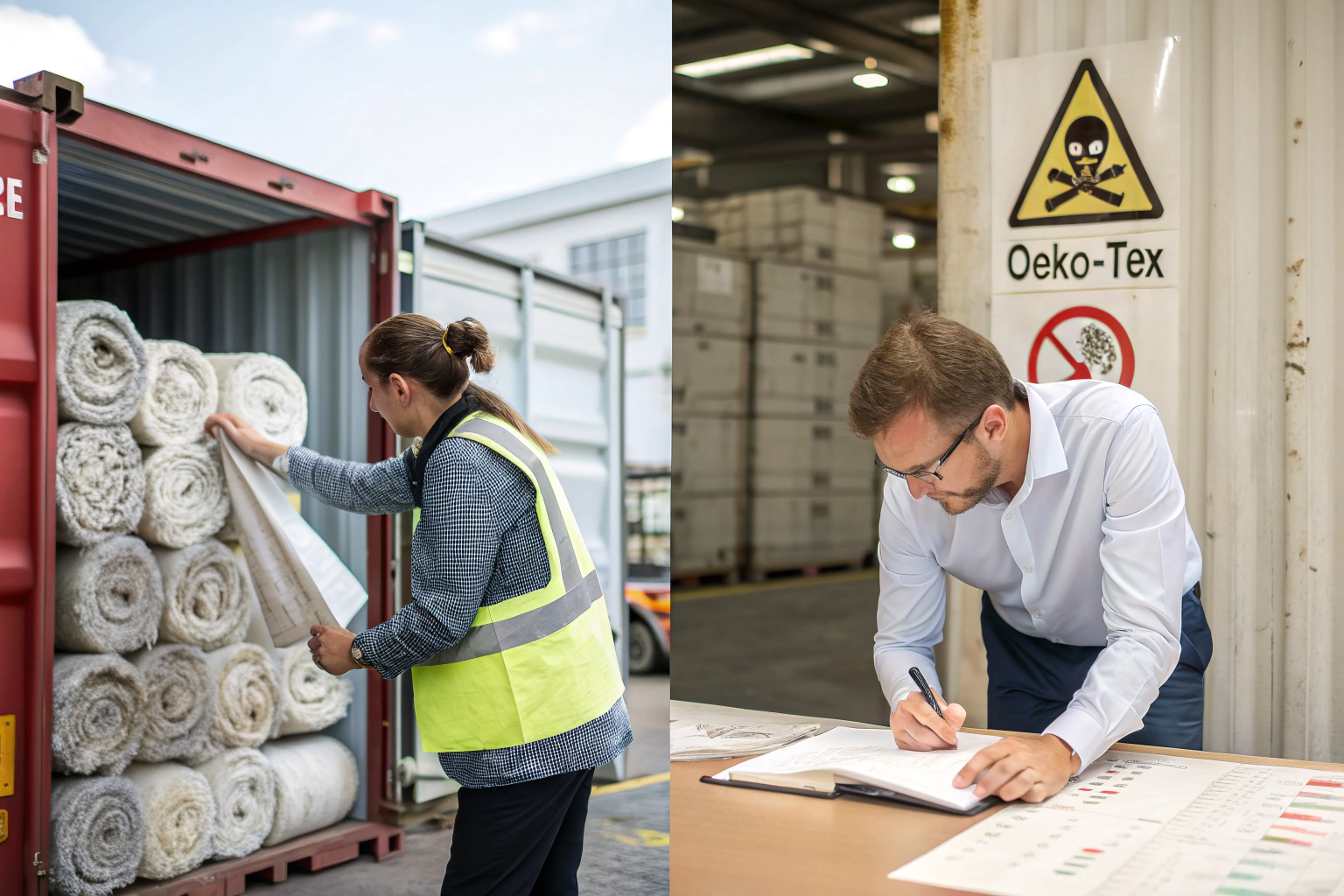
Let me start with a story. Last March, right in the middle of the peak production rush, I got a panicked call from a client in Seattle. He had just received a 20,000-meter shipment of printed polyester from a non-certified supplier he’d chosen for a “great price.” His QA team did a random test. The results showed traces of lead and cadmium in the prints—levels that would violate both US CPSC and California Prop 65 regulations. The entire order was unsellable. He faced a total loss on the fabric, air freight costs to expedite a replacement, and, worst of all, a six-week delay that caused him to miss his key retail window. His “great price” turned into a financial disaster. He asked me, “Can you fix this?” We could. But the real question was: could it have been prevented?
The answer is yes. This is precisely why your next bulk order shouldn’t just be about price per meter or lead time. It should be about risk mitigation, and that begins with choosing an OEKO-TEX certified manufacturer. Think of it this way: would you rather buy a car with a basic safety check or one that has passed a rigorous, internationally recognized crash test? For bulk orders, where the financial stakes are exponentially higher, that certified safety check isn’t a luxury—it’s your business insurance.
Ordering from an OEKO-TEX certified manufacturer like us at Shanghai Fumao means you’re buying into a system, not just a product. It’s a system built on documented chemical management, traceable supply chains, and proactive compliance. This system directly protects you from the three biggest nightmares of importation: customs rejection, product recalls, and brand reputation damage. In this article, I’ll walk you through the tangible, bottom-line reasons why this certification is the smartest criterion for your next bulk sourcing decision.
How does OEKO-TEX certification de-risk your bulk investment?
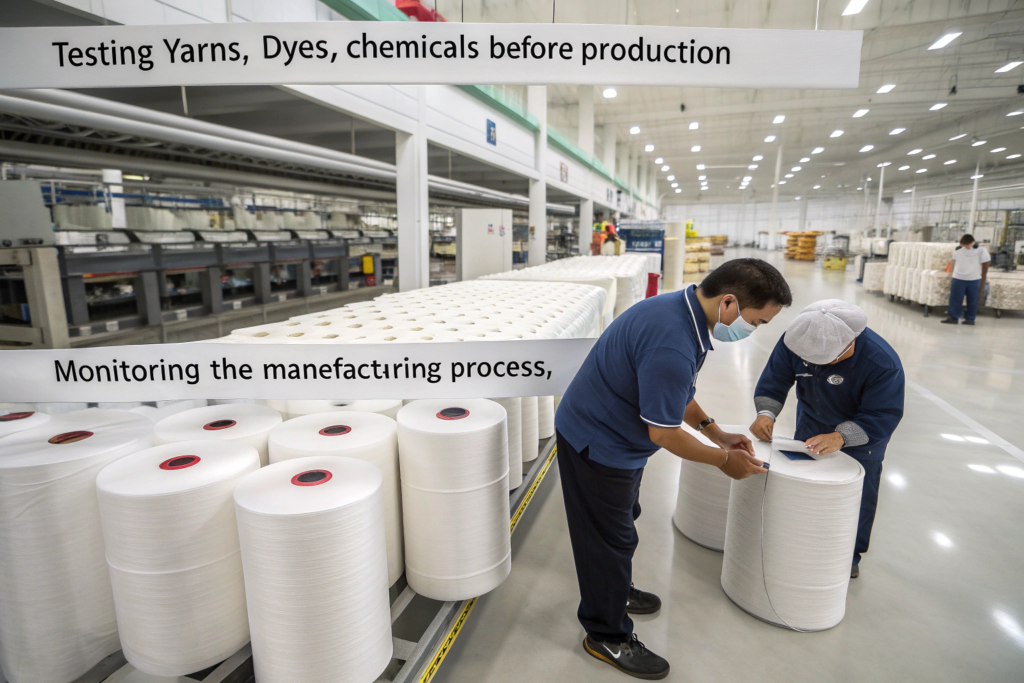
When you place a bulk order, you’re committing significant capital—often tens or hundreds of thousands of dollars—months in advance. The risk isn’t just in the fabric quality; it’s in its very legality. An OEKO-TEX certified manufacturer operates within a controlled framework that systematically reduces this risk at every stage. The core of this is prevention over correction. We test inputs (yarns, dyes, chemicals) before they enter production, monitor processes, and test the final output for every single batch. This proactive approach stops problems before they become your expensive problems.
Consider the financial anatomy of a bulk order failure. It’s not just the lost cost of the fabric. It’s the storage and disposal fees for contaminated goods, the expedited shipping for a rushed replacement, the lost sales from missed delivery deadlines, and the potential legal liabilities. In 2023, we worked with an Australian swimwear brand that switched to us after a previous supplier’s fabric failed for aromatic amines. Their calculated total loss on that single failed 15,000-meter order exceeded $85,000. With our OEKO-TEX certified production, their next order of 25,000 meters sailed through Australian Border Force biosecurity checks with the provided test reports, saving them that entire risk burden. The certification fee was a fraction of that potential loss.
What specific supply chain failures does it prevent?
An OEKO-TEX certified supply chain is a transparent one. It prevents failures that originate upstream, often invisible to the buyer:
- Contaminated Raw Materials: A non-certified yarn spinner might use a banned fungicide. A non-certified dye supplier might use a cheaper, non-compliant carrier. These contaminants bake into the fabric from the very beginning. Certified manufacturers are required to source from assessed suppliers and maintain a restricted substances list (RSL) for all inputs, creating a chemical barrier at the gate.
- Cross-Contamination in Production: Running a “clean” order on machinery right after a “dirty” order (like a batch with heavy metals or PFAS) can cause transfer. Certified facilities must have cleaning validation protocols and often schedule certified production in dedicated runs to prevent this.
- Inconsistent Batch Quality: Without batch testing, you have no guarantee that lot is as safe as the approved sample. We once had a client who received a bulk order where the factory had switched to a cheaper softening agent mid-production. The fabric felt the same but failed for phthalates. OEKO-TEX’s mandatory batch-level verification eliminates this gamble.
How does it streamline your compliance and due diligence?
As an importer, you are legally responsible for your product’s safety. Proving due diligence to regulators or a court is much easier with an OEKO-TEX certificate and batch test report from a certified manufacturer. It’s a pre-packaged, internationally recognized evidence kit. This saves you weeks of internal work auditing chemical safety sheets, verifying test methods, and staying on top of global regulatory updates like the EU’s evolving REACH SVHC list. In essence, you are outsourcing a complex, high-stakes compliance task to a specialized system. This allows your team to focus on design, marketing, and sales, not toxicology.
Does working with a certified manufacturer improve quality beyond safety?
Here’s the insider perspective that many miss: a factory that is disciplined enough to maintain OEKO-TEX certification is almost always a factory with superior overall operational discipline. The mindset required to document every chemical input, calibrate testing equipment, pass unannounced audits, and maintain traceability is the same mindset that produces consistent, high-quality fabric. It’s a culture of precision.
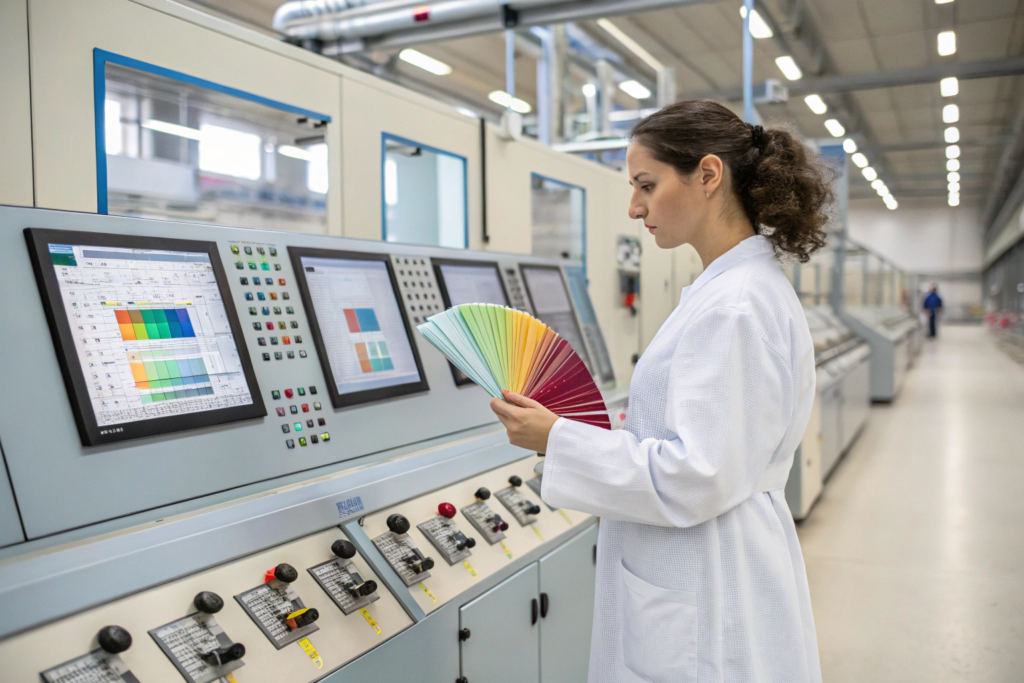
Let me give you a concrete example from our own production. Achieving OEKO-TEX certification for a new fabric line isn’t just about sending a sample to a lab. It forces a deep collaboration between our R&D, dyeing, and quality control teams. We must precisely document the exact dye recipe, pH levels, washing temperatures, and finishing agents. This rigorous process invariably leads to a more stable and reproducible product. In 2024, a Swedish activewear brand praised us not only for the safety of our recycled polyester but for the exceptional color consistency across multiple bulk dye lots—a direct result of the controlled processes we have in place for certification. Safety and quality are two sides of the same coin.
How does certification drive better communication and planning?
Clarity is a byproduct of a certified system. When you work with us, you’re not just emailing a salesperson. You’re engaging with a team that speaks the technical language of compliance. This eliminates costly misunderstandings. Your tech pack’s requirement for “azo-free dyes” is immediately understood and actioned within our certified framework. Furthermore, because our production planning must account for certified material sourcing, dedicated machine scheduling, and lab testing time, we are forced to provide you with more realistic and reliable lead times from the start. This transparency in planning is invaluable for your own inventory and sales forecasting. You avoid the “black box” experience where delivery dates constantly shift.
Can it actually lead to cost savings, not just cost addition?
This is the crucial reframe. View the OEKO-TEX premium not as an added cost, but as a cost avoidance strategy that yields savings. Consider:
- Reduced Internal QC Costs: You can reduce the frequency and scope of your own third-party testing because you can rely on the manufacturer’s certified testing protocol.
- Fewer Returns and Claims: Safe, non-irritating fabrics lead to fewer customer returns for skin reactions, protecting your profit margins and customer loyalty.
- Efficiency in Scaling: Once you approve one OEKO-TEX certified fabric from a manufacturer, scaling up to larger volumes or adding colors is far smoother. The compliance groundwork is already laid, speeding up the development cycle for future seasons.
A sportswear client from Florida calculated that by consolidating their sourcing with us, a certified manufacturer, they reduced their annual third-party testing budget by 60% and cut their product development lead time by three weeks per season. The initial “higher” fabric cost was recouped multiple times over.
How does it future-proof your brand and supply chain?
The regulatory and consumer landscape is shifting rapidly. Bans on PFAS “forever chemicals” are spreading across US states. The EU’s Green Deal and Digital Product Passport (DPP) are coming. Consumers are increasingly using apps to scan for certifications. Sourcing from an OEKO-TEX certified manufacturer is not just about meeting today’s standards; it’s about building a supply chain agile enough to meet tomorrow’s.
A certified manufacturer is already plugged into this network of change. The OEKO-TEX association constantly updates its standards based on the latest scientific and regulatory findings. By partnering with us, you automatically benefit from this forward-looking vigilance. For instance, when new substance limits are announced, our R&D team is already reformulating or sourcing alternatives. This means your product is less likely to become obsolete or non-compliant a year from now. You’re not just buying fabric for your next season; you’re investing in a supply chain partner that is navigating the future with you.

What is the role of certification in building brand equity?
In a crowded market, trust is your most valuable asset. The OEKO-TEX label is a globally recognized trust signal. It allows you to make credible “safe for you and the planet” claims in your marketing. This isn’t greenwashing; it’s backed by science. For a direct-to-consumer brand, this can be the deciding factor for a conscious consumer at the checkout page. For a brand selling to retailers, it’s often a mandatory requirement to get on the shelf. By sourcing certified materials, you are directly investing in your brand’s reputation and equity. It transforms a compliance necessity into a powerful marketing tool.
How does it enhance supply chain resilience and partnership?
A bulk order relationship should be a strategic partnership, not a transactional gamble. An OEKO-TEX certified manufacturer is, by necessity, a more open and auditable partner. This transparency builds a stronger, more resilient relationship. When disruptions happen—like a dye chemical being banned—a certified partner can quickly provide alternative options with pre-verified safety data. Their systems are designed for traceability, which became crucial during the pandemic and remains key for navigating trade policy shifts. This resilience ensures your bulk orders are more secure against external shocks. At Shanghai Fumao, our certification framework is the backbone of the trust we build with long-term partners, allowing us to co-develop products with confidence, season after season.
What should you verify when auditing a certified manufacturer?
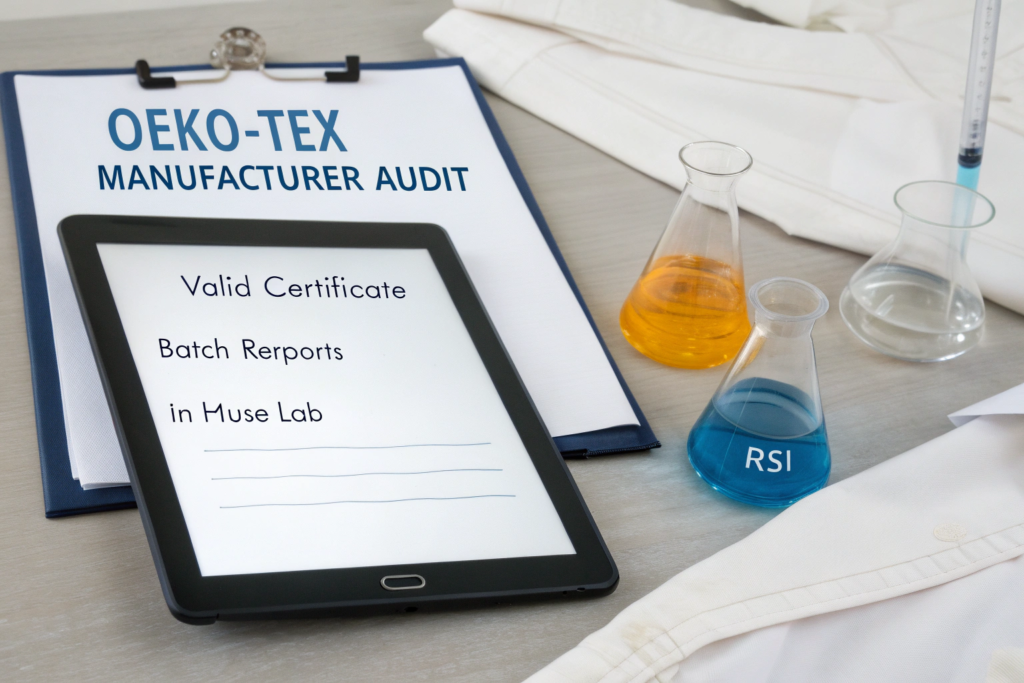
Not all “certified” manufacturers are equal. The label is a promise, and you need to verify how that promise is kept. Here is a practical checklist for your next supplier audit:
| Aspect to Verify | What to Ask For / Look For | Red Flag |
|---|---|---|
| Certificate Validity | The current OEKO-TEX Standard 100 certificate PDF. Check the company name, address, and product scope. | Certificate is expired or lists a different company entity. |
| Batch Testing Proof | Request the test report for the most recent bulk order of a fabric similar to what you’re buying. | Supplier cannot provide batch-specific reports, only a generic certificate. |
| In-House Capability | Ask if they have in-house testing equipment (pH meter, spectrophotometer) for preliminary checks. | No internal QC lab; they “outsource all testing,” which can cause delays. |
| Raw Material Control | Ask for their RSL and how they approve chemical suppliers. Do they use pre-certified yarns? | Vague answers, no documented system for input control. |
| Production Segregation | Ask how they prevent cross-contamination. Do they have dedicated lines or cleaning protocols? | “We just clean the machines,” with no defined procedure or records. |
During a visit to our facilities last fall, a Canadian outerwear brand’s product team asked to see this exact process. We showed them our QR code-based traceability system, where scanning a roll label pulls up its OEKO-TEX test report, dye lot number, and production date. This level of openness sealed the deal for their 50,000-meter order of functional fabric.
How to avoid the “certificate-only” supplier?
Some suppliers obtain a certificate for one or two basic fabrics to attract clients but don’t integrate the system into all their operations. To avoid this:
- Ask for Complexity: Inquire about certifying a more complex fabric you’re interested in (e.g., a fabric with a water-repellent finish or a specific blend). Gauge their confidence and process.
- Request a Visit or Virtual Tour: Ask to see their quality control lab and chemical storage areas. A serious manufacturer will be proud to show this.
- Check Their Longevity: How many years have they held the certification? A long-standing certification indicates a deep-rooted commitment, not a marketing tactic.
- Ask About Challenges: “What was the most difficult part of getting your factory certified?” A genuine answer about process overhaul or staff training indicates real implementation.
Why is vertical integration in a certified manufacturer a major advantage?
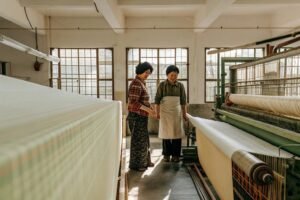
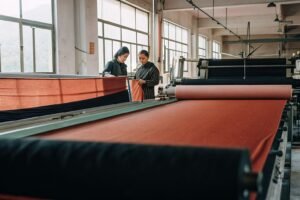
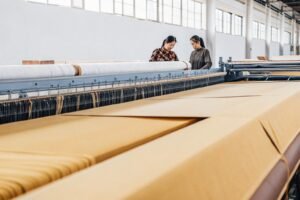
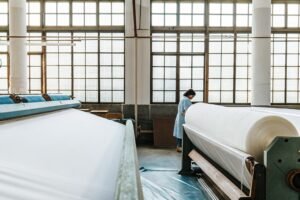
This is where companies like Shanghai Fumao provide disproportionate value. We control weaving, have deep partnerships with certified dyeing and finishing units, and conduct in-house testing. This vertical integration within a certified framework means:
- Faster Response: If a test indicates an issue, our dyeing team can adjust the recipe immediately, without negotiating with a separate factory.
- Better Cost Control: We avoid mark-ups and communication gaps between multiple certified entities, keeping your costs more competitive.
- Guaranteed Traceability: The chain of custody is under one management system, making it seamless and foolproof.
For bulk orders, this integrated control is a game-changer for both reliability and speed.
Conclusion
Choosing an OEKO-TEX certified manufacturer for your next bulk order is one of the most impactful business decisions you can make. It moves the conversation from short-term price per meter to long-term total cost of ownership and brand value. It transforms your fabric from a commodity into a verified, low-risk asset. It replaces anxiety about customs and compliance with confidence.
The evidence is clear: the structured, preventive approach of a certified partner directly safeguards your capital, streamlines your operations, future-proofs your products, and strengthens your brand. In an industry where a single failure can erase an entire season’s profit, this certification is the difference between gambling and investing wisely.
Your bulk order is the foundation of your collection. Build that foundation on the rock of verified safety and systemic reliability, not the sand of uncertain savings.
Ready to place your next bulk order with the confidence that comes from a truly integrated, OEKO-TEX certified manufacturer? At Shanghai Fumao, we’ve built our entire operation around this principle of trusted, transparent production. Let’s discuss your volume needs and how our certified system can work for you. Contact our Business Director, Elaine, at elaine@fumaoclothing.com to request samples and see the difference that a disciplined, certified partner can make.