For years, I’ve sat across the table from buyers like you—Ron from America, or a procurement manager from a big German outdoor brand—and the conversation always starts the same: price, quality, and lead time. But lately, since about mid-2024, a new word keeps popping up. It’s not just “sustainability” anymore. It’s “compliance.” I see the worry in your eyes. You’re looking at your supply chain in China, thinking, “Is my fabric going to be blocked at the port in Rotterdam next year?”
The EU’s New Textile Strategy, fully kicking in by 2026, isn’t just another bureaucratic checkbox. It’s a fundamental shift in how we make and sell fabrics. If you’re importing into Europe—or even if your customers’ customers are there—this changes everything. At Shanghai Fumao, we’ve spent the last 18 months preparing for this because we saw it coming. We didn’t just read the EU documents; we reverse-engineered them in our own labs.
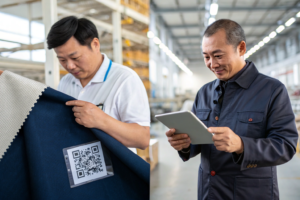
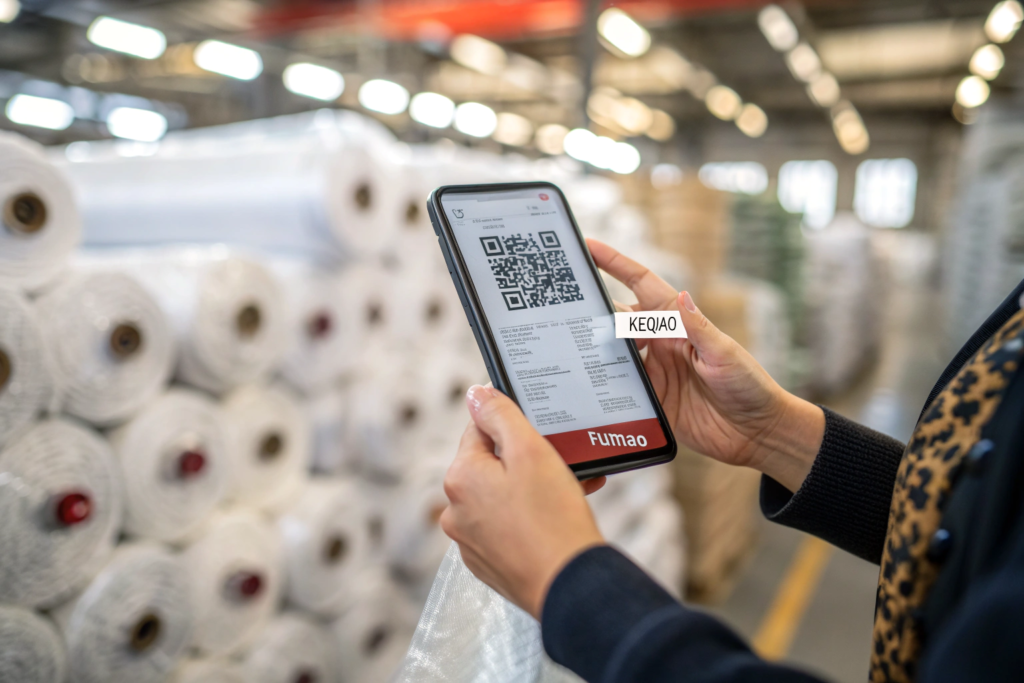
Here is the hard truth: If you think this is just about recycling, you are already behind. This strategy is about data, chemistry, and circularity. It’s about proving that the polyester in your jacket wasn’t made in a factory that dumps wastewater into the river. It’s about scanning a QR code on a bolt of fabric and seeing exactly where the cotton was grown. (Here’s where I get excited—we actually implemented this QR system two years ago because our European clients demanded it.)
So, let’s cut through the noise. Forget the EU policy PDFs for a minute. Let’s talk about what this means for your production schedule, your costs, and your relationship with your Chinese suppliers. I’m going to break this down based on what we are actually doing on the ground in Keqiao, right now, to make sure our clients don’t just survive 2026, but actually use this to sell more clothes.
What Exactly Is the "Digital Product Passport" and Why Will It Affect My Shipping?
I remember a specific call in March 2023. A client in Lyon, France, was frantic. Their shipment of viscose twill was sitting in customs because they couldn't prove it wasn't made from ancient forest pulp. We had the certifications, but the paperwork was a mess. It took us three weeks to sort it out. The EU saw this chaos, and they built the Digital Product Passport (DPP) to fix it. By 2026, this won't be a problem; it will be a standard.
The DPP is essentially a digital identity card for every single textile product sold in the EU. It’s not just a sticker that says “100% Cotton.” It’s a data point that tracks the product’s entire life cycle. Think of it like a carfax report for your fabric. It will tell the buyer, the customs officer, and the consumer where the fiber came from, what chemicals were used, the water consumption, the carbon footprint, and even how to recycle it.
To meet this, we had to change our entire data collection process. We now log every batch of raw material. For example, when we source recycled polyester from plastic bottles, we don’t just take the supplier’s word for it. We actually run tests in our CNAS-certified lab to verify the recycled content percentage. We then upload that data directly to a secure cloud that links to the fabric’s QR code. We are currently integrating our systems with several blockchain platforms to ensure this data cannot be tampered with. This isn’t about being fancy; it’s about ensuring your goods clear customs on day one.
How do I actually get a Digital Product Passport for fabrics made in China?
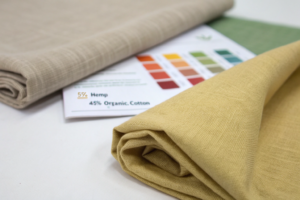
Getting a DPP starts way before the fabric is woven. You can't just "buy" a passport at the end. You have to build it from the ground up. First, you need a supplier who has their data in order. At shanghai fumao, we start by providing a raw material declaration for every batch. This includes the supplier invoice for the yarn, the test report from our lab confirming fiber composition (using standards like ISO 1833), and a breakdown of our dyeing process. We use a low-liquor ratio dyeing machine, which we can document, to prove we saved water. The actual passport is a digital file that we generate. For clients who use platforms like how to verify sustainable fabric sourcing from Chinese suppliers on industry forums like the Sustainable Apparel Coalition, we can push this data directly to their systems. We've been using the Higg Index tools for years, so aligning with the EU's PEF (Product Environmental Footprint) methods is a natural next step for us. We actually just hired a dedicated data manager last month just to handle DPP requests.
Will the Digital Product Passport increase my fabric costs?
Yes, initially, there is a cost, but I look at it as an insurance policy. The cost isn't in the passport itself, but in the clean production needed to get good data. If your supplier is using cheap, unreported dyes or mixing in virgin materials without telling you, they cannot create a valid DPP. That fabric will be stuck, and you will lose money. We've invested about ¥550 million (roughly $75 million) over the last three years into green tech—like our new water recycling plant and solar panels on our warehouse roofs. This investment allows us to generate the positive data the DPP requires. Does this make our base price slightly higher than a supplier who is doing nothing? Maybe. But that supplier's fabric becomes unsellable in the EU by late 2026. Our fabric moves. You avoid delays, fines, or last-minute scrambles to find replacement goods. In the long run, it saves you money. We've seen this with our partners in the UK who switched to us after their previous supplier's goods were rejected due to incomplete restricted substance lists. It’s about total cost, not unit cost.
Are "Forever Chemicals" (PFAS) Really Banned in My Outdoor and Workwear Fabrics?
In late 2022, a Scandinavian workwear brand came to us with a problem. Their old supplier was using a standard durable water repellent (DWR) finish that contained C8 fluorocarbons. The EU was tightening the screws, and they needed a replacement, fast. We sent them 20 different samples over two months. We tested paraffin-based finishes, dendrimer technologies, and even a new silicone-based solution. We failed a lot. But by March 2023, we nailed it. We developed a PFAS-free coating that held up to their strict abrasion and rain tests. That’s the reality of this ban.
The restriction on PFAS (per- and polyfluoroalkyl substances) is a huge deal for anyone making waterproof jackets, tents, or stain-resistant uniforms. These are nicknamed "forever chemicals" because they don't break down in the environment. The EU is essentially banning all intentional use of PFAS in textiles. This isn't a maybe; it's happening. You can't just wash the chemical off; you have to replace the chemistry entirely.
This has been a massive R&D push for us. Our team of 20+ R&D experts has been working non-stop. We’ve partnered with a German chemical company to license their new PFAS-free membrane technology. We’ve also developed our own paraffin-based DWR that, while it doesn’t last as long as the old C8 stuff, meets the EU durability standards for most apparel categories. The key is managing expectations. If you need a rain jacket that stays waterproof for five years of heavy industrial use, the chemistry is different from a fashion raincoat. We guide our clients through these trade-offs every single day. We actually built a "PFAS-Free Decision Tree" for our sales team to help buyers choose the right coating based on their end use.

What alternatives exist for waterproof coatings if PFAS is banned?
You’ve got a few solid options, but they each have a "personality." The most common switch we are making is to C6-based DWRs. Wait, hold on—I need to correct myself. Even C6 is being phased out. Scratch that. The real future is non-fluorinated DWRs. These are often based on hydrocarbons, silicones, or dendrimers. Hydrocarbon DWRs (like paraffin) are the most cost-effective and work well for simple water repellency, like a light drizzle on a jacket. Silicone-based DWRs are great for softness and are often used in automotive textiles. Then you have the high-tech stuff—dendrimer-based finishes. These create a tree-like structure on the fabric fiber, providing excellent durability and water repellency. They are more expensive, but they are the closest performance match to the old PFAS chemistries. We also use physical methods, like tightly weaving high-tenacity nylon, to create a mechanical barrier to water, reducing the need for heavy chemical coatings. We source these chemicals from certified partners and always provide the safety data sheets so you can show your EU compliance officer.
How can I verify my Chinese supplier isn't secretly using banned chemicals?
You can't just trust a handshake on this. You need a paper trail and physical proof. First, insist on a full Restricted Substance List (RSL) compliance certificate from a third-party lab like SGS or Bureau Veritas. But don't just accept the first one. We do batch-by-batch testing in our own CNAS-accredited lab. This is key because a supplier might have a certified process but then use a cheaper, non-certified dye in a specific run to save money. Our QR code system lets you see the actual test report for your specific batch. We test for over 1000 substances, including all the PFAS compounds flagged by ECHA. If you're really worried, you can do what one of our Australian clients does: they pay for a surprise audit. They’ll email us on a Tuesday and say, "We want a video tour of your chemical storage area right now." We do it. We have nothing to hide. If a supplier refuses that, run. Also, check if they are part of the ZDHC (Zero Discharge of Hazardous Chemicals) program. It's a good baseline. We’ve been ZDHC contributors since 2021, which means our chemical management is transparent.
How Does the EU Strategy Affect My Fabric Orders If I Only Sell in the US?
Ron, this section is for you. I know you’re thinking, "I sell to NYC, not Paris. Why should I care about some EU law?" I get it. I used to think the same way. But the textile world is a small pond, and when a big rock (the EU) throws a stone, the waves hit everyone. We saw this with REACH (the EU's chemical regulation). It became the de facto global standard because big brands like Nike and H&M apply it to their entire supply chain, not just their European lines.
Here’s the reality: Your biggest competitors—the Zaras, the H&Ms, the Lululemons—they all sell in Europe. To meet EU 2026 standards, they are forcing their entire supply chain to clean up. Guess who is in that supply chain? The same weaving mills, dyeing houses, and finishing plants that make your fabric. If your mill has to switch to PFAS-free finishes for their EU clients, guess what finish they are going to use for your fabric? It’s cheaper for them to run one clean process than to run two separate lines.
This creates a massive advantage for you. You get access to cleaner, higher-quality, more traceable fabric without the EU regulations forcing you to change your labels or marketing. You also protect yourself from the future. The US is not far behind. We are already seeing state-level bills in California and New York targeting PFAS and textile waste. By aligning with EU standards now, you future-proof your brand. Plus, it’s a killer marketing angle. You can tell your American customers, "This jacket is made to the strictest environmental standards on the planet." That's a powerful story. We have a client in Boulder, Colorado, an outdoor startup, who uses exactly this angle to compete with the big guys. They love that we can give them the same compliance data we give to our German clients.

Will my US-bound shipments face delays because of these new EU rules?
Indirectly, yes. The delays won't be because a customs agent in Long Beach is checking for a DPP (not yet, anyway). The delays will happen earlier—in production. As Chinese factories re-tool and re-train to handle the complex data and chemistry for EU orders, their entire workflow changes. It becomes more precise. There's less room for the "quick and dirty" shortcuts that sometimes speed up production. For example, if a big EU order is in the queue, and they need to run your "standard" polyester order, they now have to flush the dyeing machines more thoroughly to ensure no cross-contamination of restricted chemicals. This takes time. We invested in dedicated production lines for our EU-certified fabrics to avoid this. One line for standard, high-volume goods, and another line specifically for high-compliance, eco-certified fabrics. This way, Ron, your order isn't stuck behind a German order that needs a special cleanout. You get speed, and they get compliance. It’s about smart factory layout. We learned this from our Japanese partners years ago—efficiency is about separation.
Can I use the same 'green' certifications to market my clothing in the US market?
Absolutely. And you should. The US market is hungry for authenticity. While the EU has regulations like the DPP, the US market responds to story and trust. If your fabric is GOTS certified organic cotton, or if it uses our recycled polyester verified by the Global Recycled Standard (GRS), that’s a powerful story in the US. It proves your product is premium. We had a New York-based designer last year who was sourcing deadstock fabrics. She loved the eco-angle but couldn't prove the fabric's origin. We helped her transition to our new line of GOTS certified cotton jersey sourcing from China, which we can trace back to the farm cooperative in Xinjiang (with full third-party audits). She now markets her t-shirts as "Ethically Sourced from Farm to Finished Garment." Her sales, she told me, went up 30% because she could back up her claims with our data. The EU strategy gives you the ammunition to win the marketing war in the US. You get the compliance without the regulatory burden.
How Do I Plan Production Around the 2026 Deadlines Without Missing a Season?
A brand we work with in the Netherlands made a mistake in early 2024. They assumed the 2026 deadline was far away. They kept ordering their standard nylon fabric with a conventional finish. We warned them. We showed them the ECHA roadmap. They said, "We'll deal with it in 2025." Now, in late 2024, their entire spring 2026 line is at risk because their fabric supplier (not us) can't provide the necessary PFAS-free alternative that passes their own quality tests. They are now scrambling, and we are helping them re-engineer their entire outerwear collection in six months. It’s stressful for them.
You cannot treat this as a 2026 problem. You have to treat it as a 2024/2025 solution. The deadlines are effectively now because of lead times. If you need a completely new fabric—say, a biodegradable blend with a specific certification—it takes time to develop. It takes time to test. It takes time to get the yarn. It takes time to book mill space. The factories that are ready, like ours, are already booked for Q1 2025 by clients who are proactive. The panic orders will start hitting in late 2025, and that’s when prices will spike and quality will drop.
My advice is to work backward from your 2026 collection launch. If you launch in Spring 2026, your fabric needs to be in production by mid-to-late 2025. That means you need your lab dips and testing done by early 2025. That means you need to start conversations now. We have a specific "EU 2026 Readiness" workflow. We sit down with clients, look at their current best-sellers, and figure out which ones need to be reformulated. We then create a timeline. For example, for one UK client, we took their best-selling viscose dress and re-made it in Tencel Lyocell, which has a much better environmental profile and fits perfectly within the EU’s circular economy action plan. We did the first samples in Q3 2024. They will test the market in Q2 2025. If it sells, they scale up for 2026. It’s smart, low-risk testing.

When should I start requesting compliant samples from my fabric supplier?
Right now. If you haven't started asking for PFAS-free or DPP-ready samples, you are late. The textile industry moves on cycles. We are currently developing fabrics for Winter 2026. The R&D for these fabrics started in early 2024. By requesting samples now, you get on our schedule. You get our best R&D attention. If you wait until mid-2025, you will be choosing from whatever inventory is left, or you'll be rushed. We have a policy: for any new eco-development project, we need a 6-month lead time minimum. That’s 6 months from brief to production-ready sample. That’s because we need to source the certified yarn, test it in our lab, run it through our dyeing partners, get the coating right, and then send it to you for your approval and wear testing. We just finished a project for a Canadian brand where we developed a wool-nylon blend with a bio-based finish. It took 8 months from idea to approved sample. Plan for this.
What are the first steps to transition my existing fabric catalog to be EU-compliant?
First, don't try to change everything at once. It’s too expensive and too risky. Start with your core items—the 20% of your styles that make 80% of your revenue. Take your best-selling woven cotton and ask us, "Can you make this with organic cotton and a non-toxic dye?" We probably can. We did this for a large Russian retailer (before the sanctions, of course). They had 10 core shirting fabrics. We swapped the conventional cotton for organic cotton sourcing from a controlled supply chain and switched to OEKO-TEX certified dyes. The fabric looked identical. Felt identical. But now it was compliant. That’s the easiest win. Second, audit your bills of materials. If you have a blend, say 65% Polyester / 35% Cotton, ask for the test reports on both components. You might find the polyester is fine, but the cotton has pesticide residue. We can help you source a better cotton. Shanghai Fumao offers a full "fabric audit" service where we actually deconstruct your sample, test every component, and give you a report card. From that, we build a roadmap to compliance. It’s a service we started offering because too many clients were getting nasty surprises from their own suppliers.
Conclusion
This EU strategy isn't a wall; it's a filter. It’s going to filter out the suppliers who cut corners, who pollute, and who hide their supply chains. And it’s going to elevate suppliers like us, who have been investing in quality, transparency, and clean production for years. I know change is hard. I’ve been in this industry for over two decades, and I’ve seen cycles come and go. But this one is different because the consumer is driving it. They want to know where their clothes come from.
For you, the buyer, this is a chance to clean up your supply chain, tell a better story, and actually build a more resilient business. Yes, there will be some short-term headaches. But the long-term gain—a loyal customer base that trusts your brand—is worth it.
If you are looking at your production calendar and feeling overwhelmed, or if you just want to understand how your favorite corduroy or denim can be made to meet these new rules, let's talk. Don't wait until your goods are stuck at the border. We have the systems, the certifications, and the experience to guide you through this transition smoothly. We are already doing it for brands in Germany, France, and the UK.
So, reach out to our Business Director, Elaine. She handles all our EU and US compliance coordination. Just send an email to elaine@fumaoclothing.com. Tell her I sent you. Tell her what you’re working on. She can set up a call, arrange a virtual tour of our lab, or even start the sample process for your core fabrics. At shanghai fumao, we don’t just sell fabric; we help you navigate the future of fashion.