You found a supplier on Alibaba. Beautiful website, great prices, responsive communication. You place a sample order, and it's perfect. You place a production order for 5,000 units, and disaster strikes. The quality is wrong, the delivery is late, and when you try to fix it, the person you've been talking to says "let me check with the factory." Suddenly you realize you've been dealing with a trading company, not a manufacturer, and you have no direct relationship with the people actually making your clothes. I've watched this scene play out hundreds of times, and it breaks my heart every single time.
Here's the truth that every experienced importer learns eventually: trading companies sell you promises; factories deliver reality. A good trading company isn't necessarily evil—they provide convenience and consolidation. But when things go wrong, and they will go wrong at some point, you want to be dealing with the people who own the machines, control the quality, and can actually fix problems. After 20 years running an integrated weaving, dyeing, and finishing operation in Keqiao, I've seen both sides of this equation. Let me show you why direct factory relationships win every time.
What control do I actually lose when using a trading company?
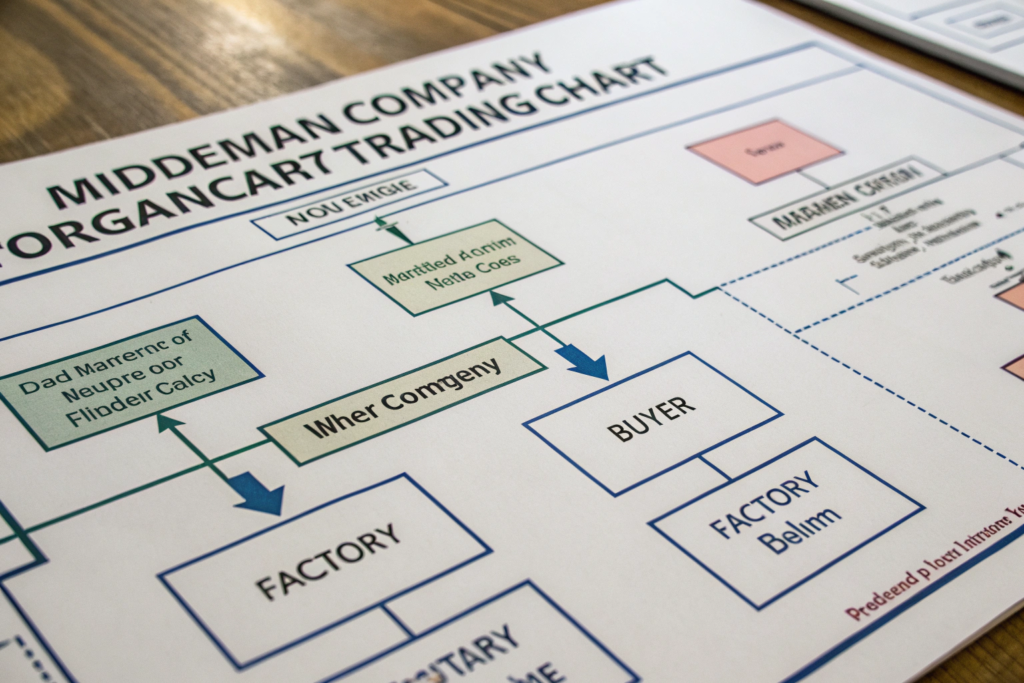
You think you're in control because you have a contact person who answers emails quickly. But control isn't about communication speed—it's about visibility and authority. When your order hits problems, the trading company's person becomes a messenger, not a decision-maker. They carry questions to the factory and bring answers back. Every round trip takes days. Every clarification loses nuance.
I had a client from Boston in 2023 who learned this painfully. They ordered 8,000 meters of organic cotton jersey through a trading company in Shanghai. The fabric arrived with subtle but consistent shade variation—each roll was slightly different. The trading company spent three weeks "communicating with the factory" while the client's production line sat idle. When we finally got involved, we identified the problem in two days: the factory had switched dye lots mid-production and didn't calibrate properly. If the client had been dealing directly with us, we would have caught it during production and fixed it immediately. Instead, they lost six weeks and $14,000 in air freight to recover.
Who actually solves problems when quality issues appear?
This is the million-dollar question. When your fabric is wrong, who can actually make it right? With a trading company, you're talking to someone who doesn't own the machines, doesn't employ the workers, and can't change production processes. They can request, negotiate, and pressure—but they can't decide. Every fix requires convincing the factory to act.
With a direct factory relationship, you call the production manager or the quality director. They have authority. They can stop a production line, adjust a dye formula, or re-run a failed batch without asking permission from anyone. A Toronto-based activewear brand switched from a trading company to us in 2022 after a disaster with moisture-wicking fabric. Their trading company's factory produced fabric that failed wicking tests, and it took six weeks to get replacement goods. Now with us, when a test shows a problem, we fix it immediately—sometimes within 48 hours—because we control the entire process. A discussion of factory vs intermediary problem-solving on the Sourcing Journal forum shows how other buyers have learned this lesson.
How does pricing transparency change with a middleman?
Trading companies exist to make profit on the spread between what the factory charges and what you pay. That's not evil—it's business. But it means you never know the real cost of your goods. You can't negotiate intelligently because you don't know where the fat is. When prices rise, you don't know if it's raw material increases or the trading company protecting their margin.
A Melbourne-based fashion brand discovered this in 2023 when they finally visited their "factory" in China. The trading company had been marking up their fabric by 32% and their garments by 28%. The brand had been paying premium prices thinking they were getting premium quality. The factory was actually mid-tier. They switched to direct sourcing and saved 19% on their next order while actually improving quality. A guide to understanding pricing layers in apparel sourcing from the International Trade Centre helps calculate what you might be overpaying.
What happens to your intellectual property with a trading company?
This scares me most. When you share your designs, tech packs, and specifications with a trading company, you're sharing with people who have no long-term stake in protecting your IP. They work with dozens of factories. Your designs become currency—something they can show to other potential clients or other factories.
I've seen it happen. A New York designer shared her original print designs with a trading company for sampling. Six months later, she found almost identical prints on a competitor's line sourced from a different country. The trading company had shared her designs with another factory that produced for someone else. With direct factory relationships, we sign NDAs, we lock designs in our system, and our reputation depends on protecting client IP. A legal analysis of intellectual property risks with intermediaries on the Fashion Law Journal explains the legal recourses—or lack thereof—when your designs get stolen.
How do factories and trading companies differ on quality control?
Every trading company claims they do quality control. They send inspectors, they check shipments, they guarantee standards. But here's what they don't tell you: their QC happens at the end, when problems are already baked in. They can reject bad goods, but they can't prevent them from being made. Real quality control happens during production, not after.
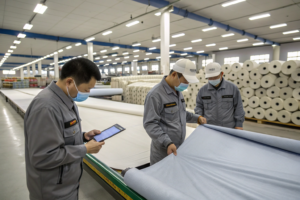
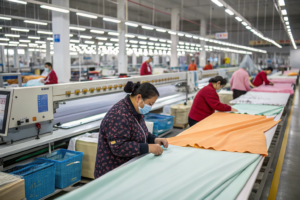
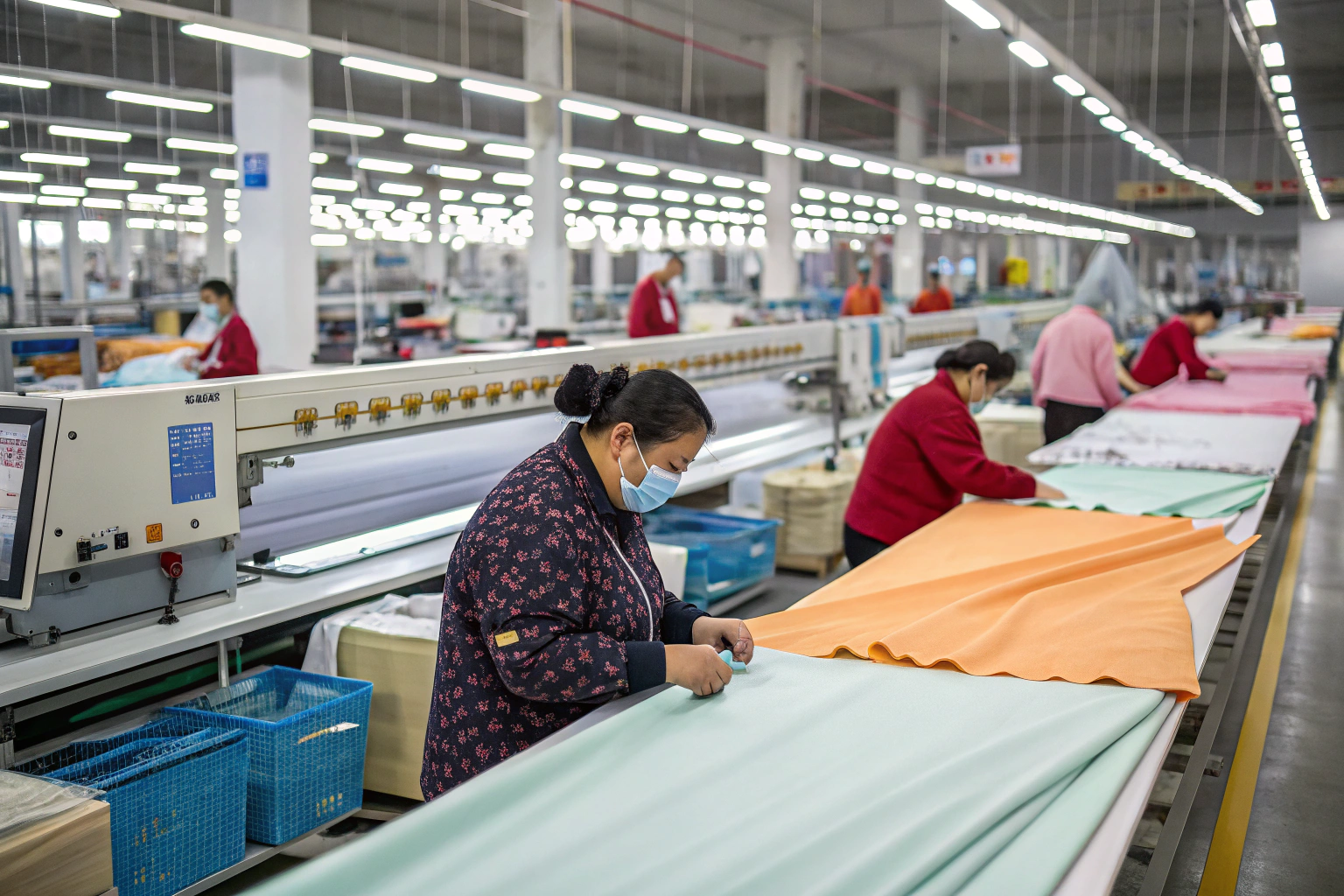
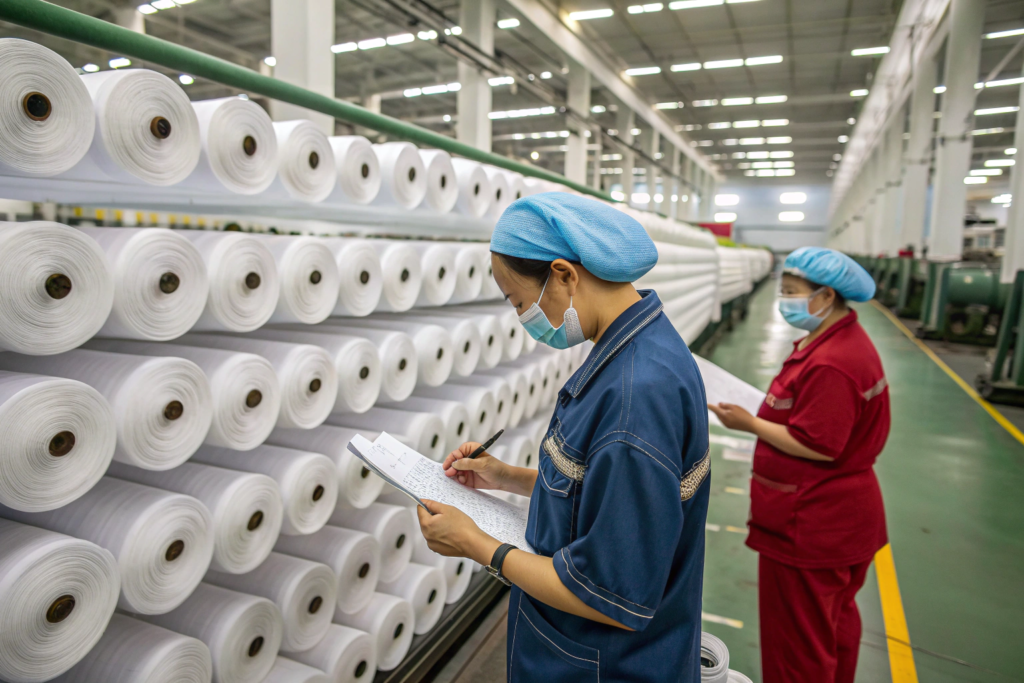
A factory with integrated quality systems checks fabric at every stage: yarn quality before weaving, greige goods before dyeing, first pieces after dyeing, mid-production rolls, and finished rolls before packing. When something goes wrong, we catch it at the source and fix it immediately. A trading company's inspector shows up when everything is finished and says "this is bad." That's not quality control—that's quality detection, and it's too late.
What does real in-process quality inspection look like?
Let me walk you through our actual process at Shanghai Fumao because this is what you're missing with a trading company. When we run a client's fabric, we don't wait until the end to check.
Stage one: yarn inspection. We test incoming yarn for thickness, strength, and consistency before it ever touches our looms. If the yarn is bad, we reject it before weaving starts.
Stage two: greige inspection. After weaving but before dyeing, we check the raw fabric for defects—slubs, holes, tension issues. This is when problems are cheapest to fix.
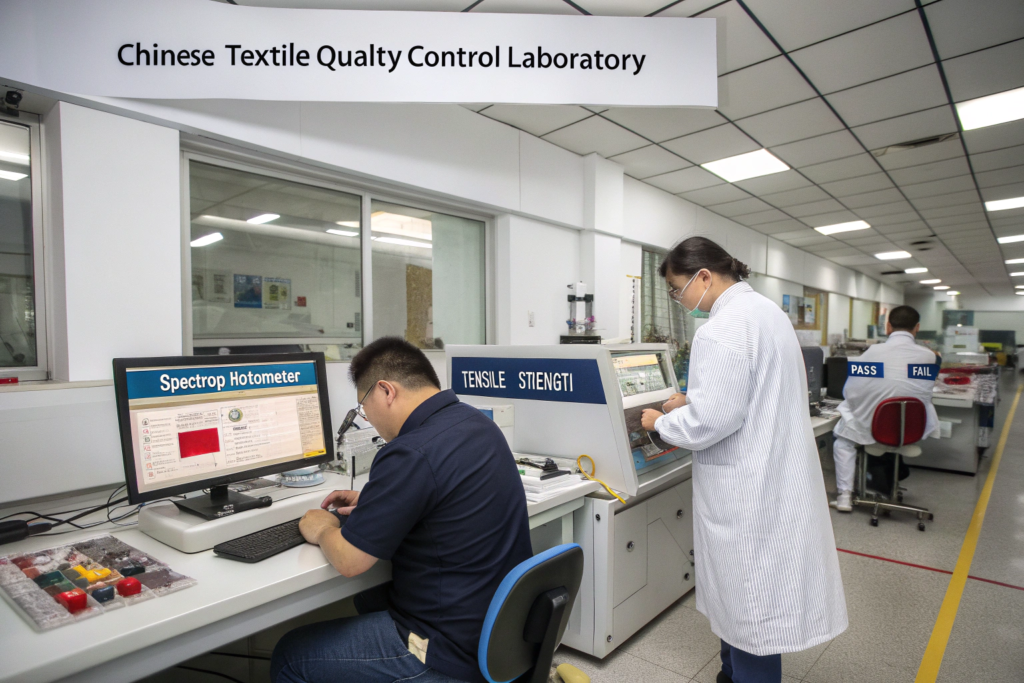
Stage three: lab dip approval. We dye a small sample and run spectrophotometer tests. Delta E under 1.0? Proceed. Over 1.5? Adjust formula and try again.
Stage four: first production piece. When dyeing starts, we pull the first meters off the line and test everything—color, shrinkage, hand feel, construction. If it's wrong, we adjust before 1,000 meters are ruined.
Stage five: mid-production check. Halfway through, we pull random rolls and test again. Consistency matters.
Stage six: final inspection. Every roll is inspected on our machines, with QR codes tracking results. A detailed explanation of multi-stage quality control systems on the Textile Today website shows why this matters for consistency.
A London-based luxury brand switched to us after their trading company's factory delivered fabric that passed final inspection but failed during garment cutting. The problem? Tension variation across rolls meant pattern pieces didn't match. In-process inspection would have caught it. They now require process audits from all suppliers.
How do factories handle production failures differently?
When a factory fails, they lose money. When a trading company's factory fails, the trading company loses face but the factory just moves on to the next order. This difference in accountability matters enormously.
A Vancouver-based outdoor brand had 12,000 meters of technical shell fabric produced through a trading company. The fabric failed waterproof testing—completely failed, wouldn't keep out a light rain. The trading company spent months negotiating with the factory, eventually getting a 30% refund. The brand still had no fabric and missed their season. The factory faced no real consequence because they'd already been paid for the work.
When we have a failure—and yes, it happens occasionally because fabric is complex—we own it. We re-run the production at our cost. We air freight the replacement to meet client deadlines. We investigate and fix the root cause. Our reputation depends on making it right, not just negotiating a discount. A case study of factory accountability vs trading company mediation on the Quality Assurance International site shows how direct relationships create better outcomes.
What documentation do factories provide that trading companies can't?
Traceability. Real factories can trace every roll of fabric back to the yarn lot, the dye batch, the machine operator, the inspection record. Trading companies give you certificates that someone else provided. When customs questions your documents, when a client demands proof of organic certification, when you need to verify that your fabric is actually GOTS certified—a factory can produce the paper trail. A trading company can only forward what the factory gives them, often with gaps.
A German brand learned this in 2023 when their EU customer demanded proof that their recycled polyester was actually recycled. The trading company provided a certificate from their factory. The customer's auditor contacted the certification body and discovered the certificate was for a different production run. The brand lost the contract. With direct factory relationships, we provide batch-specific test reports, chain-of-custody documents, and production records that auditors accept. A guide to supply chain traceability documentation from the Textile Exchange explains what real documentation looks like.
How do pricing and minimums actually compare between factories and traders?
Everyone assumes factories have lower minimums and better prices. Actually, the opposite is often true for small quantities. Trading companies aggregate demand from multiple clients, so they can offer lower minimums than most factories. A factory might require 3,000 meters per color; a trading company might accept 500 meters because they combine your order with someone else's.
But here's the catch: that convenience costs you in per-unit price and in flexibility. When you grow, the trading company's aggregation model stops working for you. You're still paying the middleman markup, still waiting for consolidated shipments, still dealing with someone else's priorities. The brands that succeed long-term use trading companies to start, then transition to factories once volumes justify direct relationships.
When does it make sense to start with a trading company?
If you're ordering 200 meters of five different fabrics, a factory probably won't talk to you. Their minimums are set by production economics—setting up a dyeing line for 200 meters costs almost as much as for 2,000 meters, so they need volume to spread the cost. Trading companies fill this gap by combining orders.
A Chicago-based startup worked with a trading company for their first two years. They ordered small quantities of multiple fabrics, tested the market, and refined their designs. The trading company handled consolidation, logistics, and communication. The markup was worth the convenience. But by year three, they were ordering 5,000+ meters per style and realized they were leaving money on the table. They switched to direct factory relationships and saved 22% annually while gaining better quality control. A guide to transitioning from trading companies to factories on the Sourcing Playbook site helps brands know when they're ready.
What volume justifies going direct to factories?
This depends on your product complexity and the factory's capabilities. For basic fabrics like cotton jersey or polyester lining, you might need 3,000-5,000 meters per order to interest a good factory. For complex technical fabrics or custom developments, the threshold might be lower because factories value the expertise and potential for long-term partnership.
A Denver-based outdoor brand started direct with us at 2,000 meters per style because their technical requirements needed our R&D involvement. A trading company couldn't provide the development support they needed. The volume was lower than our typical minimum, but we saw potential and invested in the relationship. Three years later, they're ordering 20,000 meters annually. A calculator for determining your direct sourcing break-even point on the International Trade Centre site helps model the economics for your specific situation.
How do factories handle small orders for growing brands?
Smart factories recognize that today's small client is tomorrow's big client. We've built our business around this reality. We offer tiered pricing—higher for small orders, lower as volumes grow—but we give small clients the same quality attention as large ones. We know that if we help a startup succeed, they'll grow with us.
A Melbourne-based swimwear brand started with us ordering 800 meters per style. They paid a slight premium versus our largest clients, but they got our full quality system, our R&D support, and our direct communication. Three years later, they're ordering 8,000 meters per style at our best rates. The relationship grew naturally because we invested early. A discussion of factory strategies for small clients on the Textile Future blog shows why many factories now court growing brands rather than just established players.
What relationship benefits do factories offer that trading companies can't?
This is the part that doesn't show up on spreadsheets. A factory relationship gives you access to knowledge, innovation, and flexibility that trading companies simply can't provide. When you work directly with the people who make things, you learn why things work, why they fail, and how to make them better. That knowledge transforms your business.
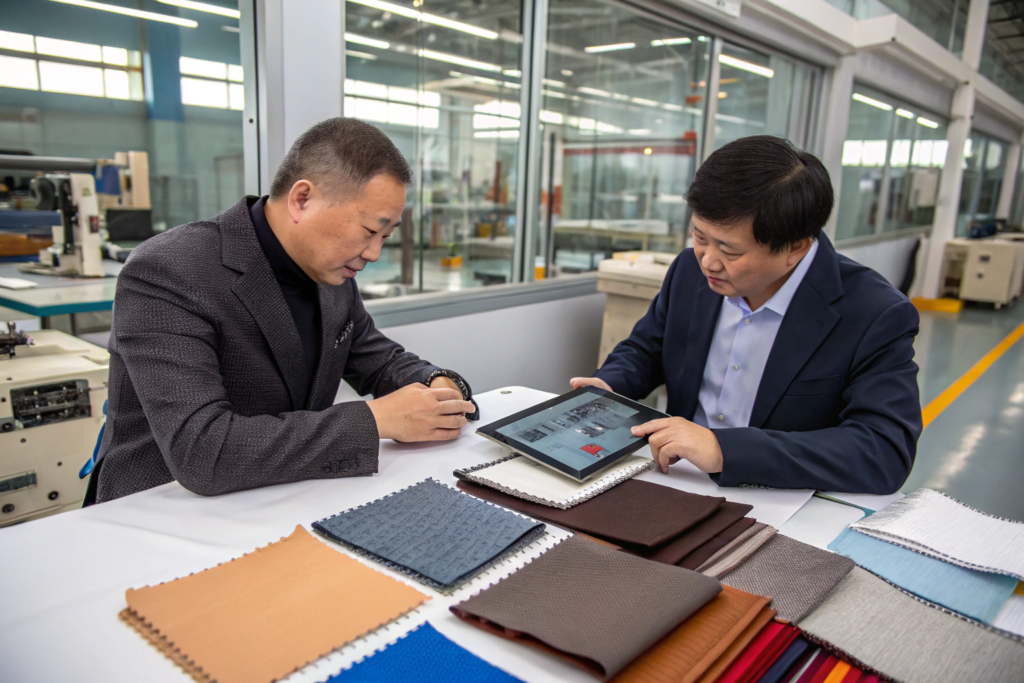
A trading company sells you what exists. A factory helps you create what doesn't exist yet. When you have a new idea—a fabric with a specific hand feel, a particular performance characteristic, an innovative finish—a factory can figure out how to make it. The R&D happens in our lab, with our technicians, using our machines. You're not just buying fabric; you're buying capability.
How does factory R&D access accelerate your product development?
Last year, a Boston-based activewear brand came to us with a problem. They wanted a fabric that felt like cotton but performed like polyester—moisture-wicking, quick-drying, but with natural hand feel. A trading company would have said "sorry, we don't have that" and offered alternatives.
We spent three months in development. Our R&D team tried different yarn blends, knit structures, and finishing treatments. We failed seven times before we got it right. The final fabric—a modified polyester with a special mechanical finish—became their best-selling product. They couldn't have done that through a trading company because no trading company invests in R&D for individual clients. A case study of collaborative fabric development on the Textile Innovation Network site shows how direct relationships enable innovation.
A trading company exists to move volume, not to solve problems. A factory that owns its machines and employs its technicians exists to make things, including things that have never been made before. That difference matters enormously when you want to differentiate your brand.
What flexibility do factories provide during production issues?
Production never goes perfectly. Machines break. Dye lots vary slightly. Fabrics behave unexpectedly. With a factory, you have partners who can adjust in real-time. When we see a potential issue, we call the client immediately: "Your fabric is running slightly softer than the sample. Do you want us to adjust the finishing, or proceed as is?" The client decides, and we act.
A Toronto-based brand had this experience in 2024. Their fabric was running 2% higher shrinkage than spec. We caught it mid-production, called them, and discussed options. They chose to adjust the garment patterns to accommodate the shrinkage rather than re-run the fabric. The decision took one hour. If they'd been working through a trading company, the message would have taken days to transmit, and by then the whole production run would be finished. A guide to real-time production problem-solving on the Apparel Manufacturing Forum explains why speed matters.
How do factories help you understand what's actually possible?
This is the education piece that transforms buyers. When you work directly with factories, you learn about manufacturing. You see what's easy and what's hard. You understand why certain constructions cost more. You discover alternatives you didn't know existed. That knowledge makes you a better designer and a better buyer.
A London-based designer told me last year that working directly with us changed how she designs. She used to specify constructions that were unnecessarily expensive. Now she designs for manufacturability—creating garments that look complex but use efficient methods. Her costs dropped 15%, and her quality improved because she stopped fighting the manufacturing process. A discussion of design for manufacturability principles on the Fashion Institute of Technology site explains why this matters for emerging brands.
Trading companies can't provide this education because they don't make anything. They're translators, not teachers. Factories are the source of knowledge. When you tap that knowledge directly, you become a better partner and a better brand.
Conclusion
Choosing between a factory and a trading company isn't about good versus evil. Trading companies serve a real purpose—they aggregate demand, simplify communication, and provide access for small buyers. If you're ordering 200 meters of five fabrics, a good trading company might be exactly what you need. But if you're serious about building a brand, if quality matters, if you want to innovate and grow, direct factory relationships win every time.
The difference comes down to control, transparency, and partnership. With a factory, you control your quality through in-process inspection, not after-the-fact detection. You see real costs and negotiate real prices. You build relationships with people who can actually solve problems. You access R&D capabilities that create competitive advantage. You learn how things work, which makes you better at what you do.
At Shanghai Fumao, we've built our business around direct relationships with brands who want more than just a transaction. We offer the integration—weaving, dyeing, finishing, inspection—that trading companies can only promise. We invest in our clients' success because we know that when they grow, we grow. Our 40-person team includes dedicated client managers who speak your language and understand your market. Our CNAS-accredited lab catches problems before they reach you. Our logistics team navigates the chaos of global shipping so you don't have to.
If you're ready to stop dealing with middlemen and start building a real partnership, let's talk. Elaine, our Business Director, has helped hundreds of brands make the transition from trading companies to direct factory relationships. She can assess your current sourcing, identify where you're overpaying or under-delivering, and show you how direct partnership changes everything. Contact Elaine at elaine@fumaoclothing.com to start a conversation about building something real together. Let's make your brand better, together.