I was standing in a client’s factory in Vietnam two years ago, watching his production line struggle with a batch of t-shirts. The necks were wavy. The cuffs were stretched out. He was losing 8% of his garments to rework. I picked up one of the rejected bodies and looked at the neckband. It was a single jersey knit. I told him, “This is your problem. You’re using the wrong fabric for the trim.”
He looked at me like I had just solved a three-month mystery. I explained that the neckband needed to stretch and recover. A single jersey stretches, but it doesn’t recover. After a few wears, the neck would sag. What he needed was a rib knit.
That moment stuck with me. Rib knit is one of those fabrics that everyone uses but few people understand. It’s the unsung hero of garment construction. It’s on the cuffs of your hoodie, the collar of your t-shirt, the waistband of your joggers. Without it, your clothes would lose their shape after the first wear.
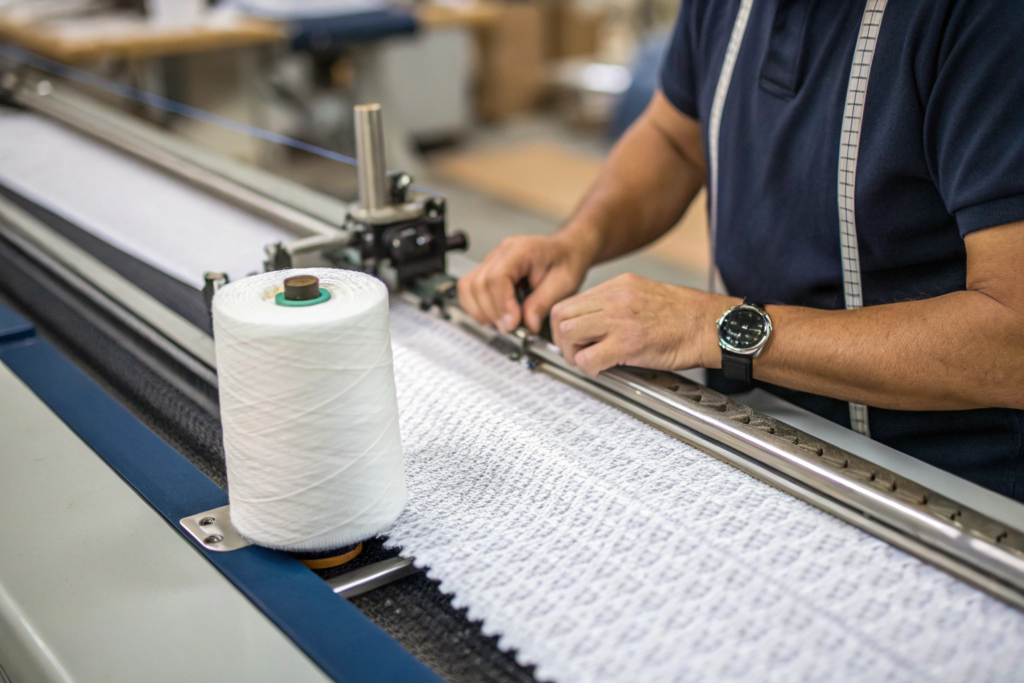
I’ve been producing rib knits in Keqiao for over 15 years. We run them on our circular knitting machines daily, for everything from basic t-shirt trims to high-end sportswear. Let me explain why rib knit is the perfect fabric for cuffs and collars, and how to get it right for your garments.
What Makes Rib Knit Different from Other Knits?
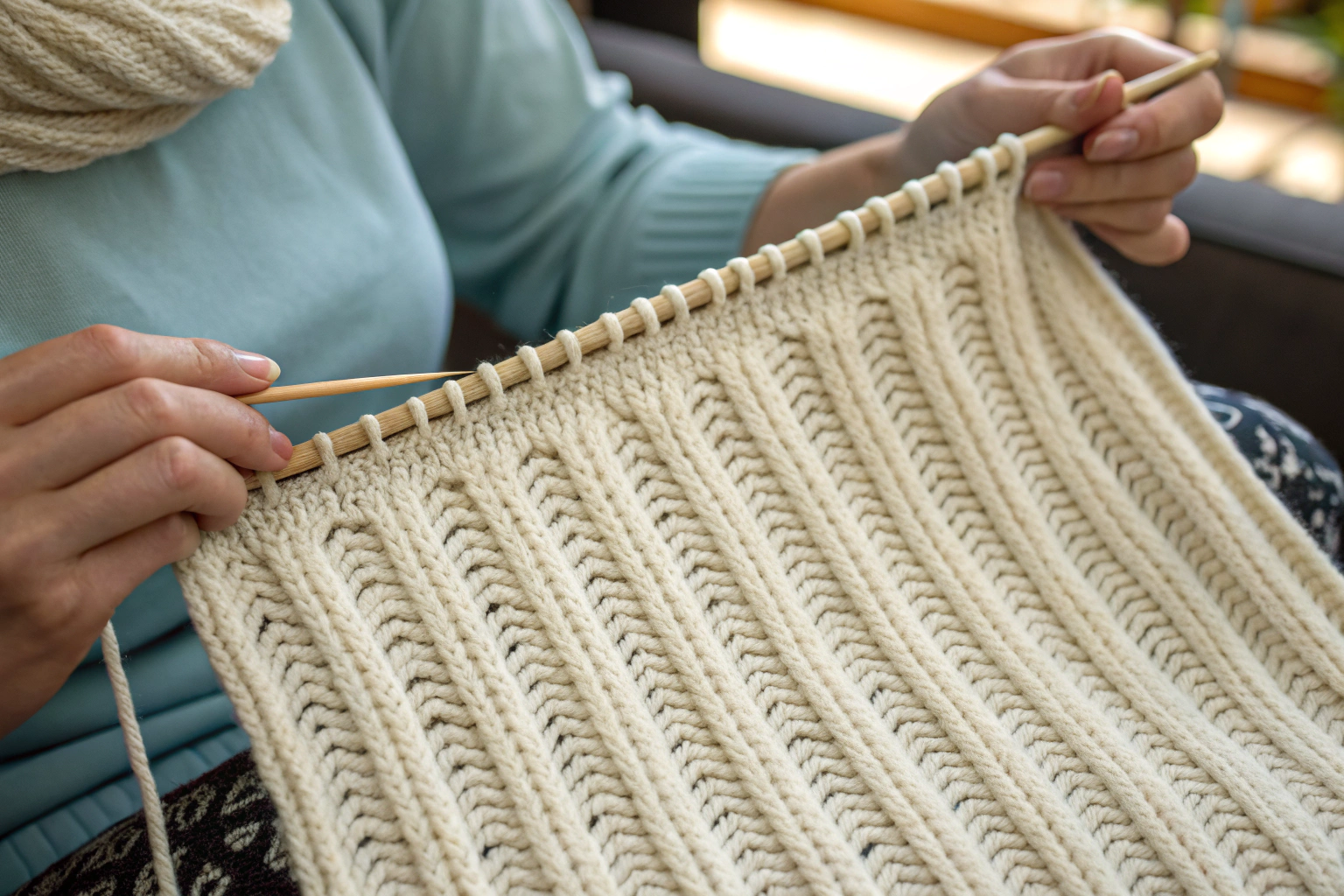
To understand why rib knit works for cuffs and collars, you need to understand how it’s made. I’ve shown this to dozens of clients, and the lightbulb moment always comes when they see the structure.
How Does the Structure Create Stretch and Recovery?
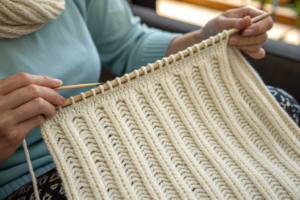
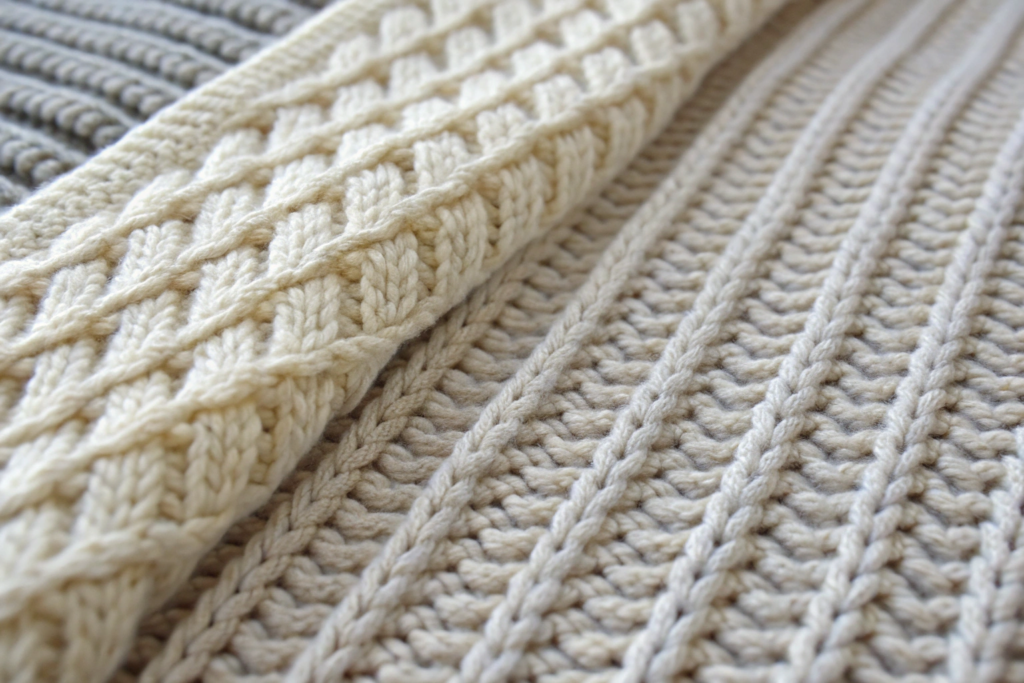
Rib knit is made on a machine with two sets of needles. One set knits the face stitches. The other set knits the back stitches. They alternate. The result is a fabric with vertical rows of knit and purl stitches on both sides.
That alternating structure is the secret. When you stretch a rib knit, the loops pull apart. When you release, the alternating tension pulls them back. That’s recovery. A single jersey—which has all the stitches on one side—stretches but doesn’t have the same recovery mechanism.
I remember showing this to a client from New York in 2023. She was designing a line of hoodies and had been using single jersey for her cuffs. They would stretch out after the first wear. I took a piece of 2x2 rib and stretched it across my hand, then released it. It snapped back to its original size. She said, “Why isn’t everyone using this?” I explained that rib costs a bit more and takes longer to knit, but for trim, it’s worth every penny.
The amount of recovery depends on the rib structure. A 1x1 rib—one knit stitch, one purl stitch—has moderate stretch and good recovery. A 2x2 rib—two knit, two purl—has more stretch and is the standard for hoodie cuffs and waistbands. A 3x3 rib has even more stretch and is used for heavy outerwear and hats.
For a technical explanation of rib knit structures, there’s a resource on how different rib constructions affect fabric performance . It breaks down the engineering behind the stretch.
Why Doesn’t Single Jersey Work for Trims?
This is the question I get from designers who are new to garment construction. Single jersey is soft. It’s comfortable. Why not use it for everything?
The problem is recovery. Single jersey is a weft knit with all the loops on one side. It stretches, but the loops don’t have the alternating tension that pulls them back. If you use single jersey for a neckband, it will stretch out when the wearer pulls the shirt over their head. After a few wears, the neck becomes wavy or saggy.
In 2022, a client from the UK had a return rate of 12% on a line of t-shirts. Customers complained that the necks were stretching out. I visited his factory. The manufacturer was using a single jersey for the neckbands to save cost. I explained that the savings on fabric were being eaten by returns and lost customers. He switched to 1x1 rib. The return rate dropped to under 2%.
If you’re sourcing garments, check the trims. If the cuffs or collars are made from the same fabric as the body—especially if it’s a single jersey—they will fail over time.
What Makes Rib Knit the Ideal Choice for Cuffs and Collars?
Cuffs and collars have a specific job. They need to hold the garment in place without constricting. They need to stretch enough to put the garment on and off, then return to shape. Rib knit does this better than any other fabric.
How Does Rib Knit Provide the Right Level of Compression?
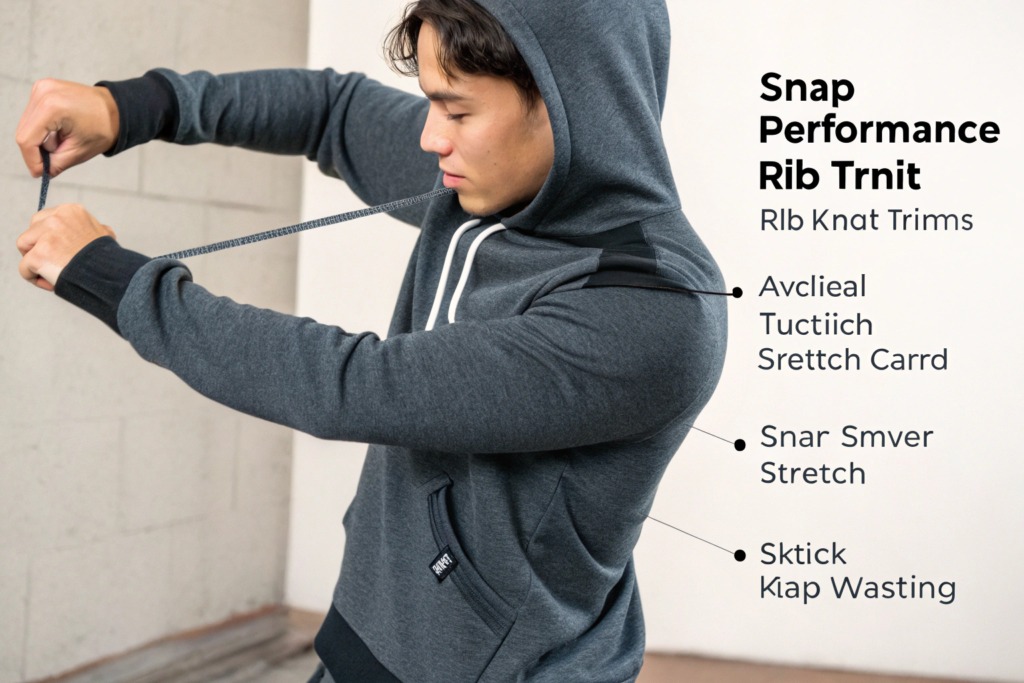
The compression in a rib knit comes from the tension in the loops. When you wear a hoodie, the cuff needs to stay at your wrist without sliding down. It needs enough compression to grip, but not so much that it feels tight.
I worked with a US sportswear brand in 2023 that was having complaints about their hoodie cuffs being too tight. The manufacturer was using a 1x1 rib with a high spandex content. The cuffs gripped well, but customers with larger hands found them hard to pull on.
We switched to a 2x2 rib with a lower spandex content—about 3% instead of 8%. The 2x2 structure has more inherent stretch because there are more loops per area. The lower spandex made the cuff softer. The combination gave enough grip to stay at the wrist but enough give to pull on easily.
The key is balancing spandex content with rib structure. For cuffs that need high grip—like on a rain jacket where you don’t want wind coming in—I recommend a 1x1 rib with 5-8% spandex. For casual hoodies, a 2x2 rib with 2-4% spandex works well. For waistbands on joggers, a 2x2 or 3x3 rib with 5-8% spandex provides the hold needed to keep the pants up without a drawstring.
Why Is Rib Knit More Durable Than Other Trims?
Durability comes down to the structure. In a rib knit, the loops are interlocked in a way that distributes stress. When you pull on a rib cuff, the tension spreads across multiple loops. When you release, the loops return to their original shape.
In a single jersey trim, the stress concentrates on the loops at the edge. Over time, those loops stretch out and don’t recover. The edge becomes wavy or curled.
I had a client from Australia in 2024 who was sourcing hoodies from a supplier that used single jersey for the waistband. After a few months, the waistbands were all stretched out. Customers complained that the hoodies didn’t stay down. The supplier had saved $0.30 per garment on the trim. The client lost customers who had been buying from him for years.
If you want garments that last, use rib knit for the trims. It costs a bit more upfront. It saves you in returns and reputation.
How Do You Source Quality Rib Knit Fabric for Trims?
Not all rib knit is the same. I’ve seen rib that looks good on the roll but fails in the garment. The quality comes down to yarn, spandex, and finishing. Let me tell you what to look for.
What Yarn and Spandex Content Should You Specify?
The fiber blend determines how the rib performs. For cotton rib, I recommend combed cotton over carded. Combed cotton removes the short fibers that can cause pilling. The rib stays clean and soft wash after wash.
For the spandex, the content depends on the application. For a standard t-shirt collar, 1x1 rib with 2-3% spandex is enough. The collar needs to stretch over the head and recover. That’s it.
For a hoodie cuff that gets pulled on and off constantly, 2x2 rib with 5-8% spandex provides the durability needed. I’ve tested cuffs with 5% spandex against cuffs with 2% spandex. The higher spandex content kept the cuff tight after 50 wear cycles. The lower content stretched out after 20.
For waistbands on joggers or sweatpants, 2x2 or 3x3 rib with 8-10% spandex is the standard. The waistband needs to hold up the pants without a drawstring. The higher spandex gives the recovery needed.
In 2023, we produced a run of 2x2 cotton-spandex rib for a European loungewear brand. The client wanted a soft hand but high recovery. We used 95% combed cotton and 5% spandex. The rib had the softness of cotton with the recovery of a performance fabric. The client told me their customers loved that the waistbands didn’t stretch out after a season of wear.
How Does Finishing Affect Rib Knit Performance?
Finishing is often overlooked, but it’s critical for rib. The finishing process sets the loops and stabilizes the fabric.
I look for compaction on rib fabrics. Compaction is a mechanical process that compresses the fabric, setting the loops in place. It’s the same principle as sanforization for woven fabrics. Without compaction, the rib can shrink and distort after washing.
I also look for steam finishing. Steam relaxes the yarns and sets the stitch structure. A rib that hasn’t been properly steamed will be stiff and won’t recover well.
In 2024, a client from the US received a shipment of rib from another supplier. The rib looked fine on the roll. When his factory cut and sewed it, the cuffs were curling. The rib hadn’t been properly finished. The curl made it impossible to sew cleanly. He had to reject the entire trim order.
When you’re sourcing rib, ask about finishing. A good supplier will run rib through a compactor and a steamer. The fabric will lay flat and stay flat.
For a guide to rib knit finishing, there’s a resource on how finishing affects the performance of ribbed trims . It covers mechanical and chemical finishing options.
What Are the Common Mistakes When Specifying Rib Knit?
I’ve seen the same mistakes repeated by buyers who are new to rib knit. Let me walk you through them so you can avoid them.
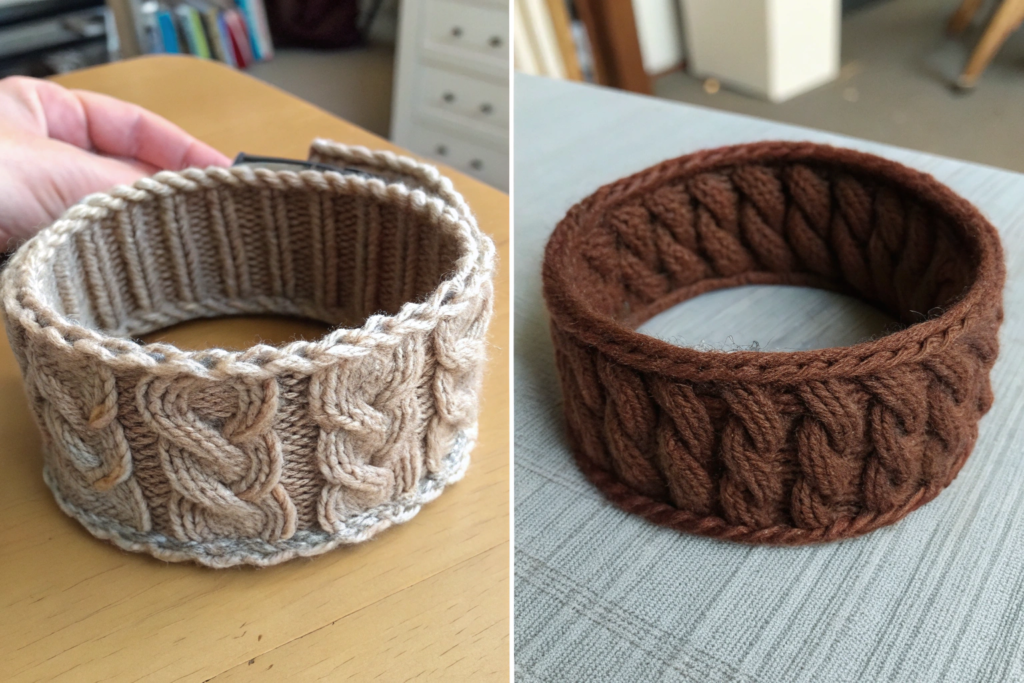
Why Does Rib Curl If Not Finished Correctly?
Rib knit has a natural tendency to curl. The alternating stitch structure creates tension that pulls the edges. Proper finishing sets the stitches and eliminates the curl.
When a client tells me their rib is curling, I know immediately that the finishing was skipped or rushed. The supplier either didn’t run it through a compactor or didn’t steam it properly.
In 2022, a client from Canada ordered rib for a large hoodie collection. The rib arrived and his factory couldn’t sew it. The edges were curling so badly that the sewing machines couldn’t catch the fabric. He called me in a panic. We shipped replacement rib within 10 days, properly compacted and steamed. His production resumed. He told me he would never buy unfinished rib again.
If you’re sourcing rib, ask for a sample of the finished trim. Test it. Does it lay flat? Can you stretch it and have it return? If it curls, reject it.
How Do You Avoid Color Mismatch Between Body and Trim?
This is a common issue. The body fabric and the rib trim need to match. But rib is often dyed separately, sometimes in a different facility.
I recommend dyeing the rib with the same batch of yarns as the body. If the body is made from 100% cotton, the rib should be made from the same cotton and dyed at the same time. That’s the only way to guarantee a perfect match.
In 2023, a client from the UK ordered a run of navy hoodies. The body was a 320 GSM cotton-polyester fleece. The rib was from a different supplier. The body was a rich navy. The rib was slightly lighter. The mismatch was visible in the finished garment. The client had to sell them at a discount.
Now, when we produce hoodies, we dye the rib and the body together. The colors match perfectly. If you’re sourcing rib separately from your body fabric, ask your body supplier to provide the rib as well, or coordinate the dyeing.
Conclusion
Rib knit is the unsung hero of garment construction. It’s on your cuffs, your collars, your waistbands. It keeps your hoodies from sliding up, your t-shirt necks from sagging, your joggers from falling down. The alternating stitch structure gives it stretch and recovery that no other knit can match.
At Shanghai Fumao , we’ve been producing rib knit trims for over 15 years. We run 1x1, 2x2, and 3x3 ribs in cotton, polyester, and spandex blends. We use combed cotton for softness and durability. We finish every roll with compaction and steam to eliminate curl. We test every batch for recovery, shrinkage, and colorfastness. And we can dye your rib to match your body fabric perfectly.
I’ve helped designers understand why their cuffs were curling. I’ve helped brands fix their neckband issues. I’ve watched the relief on a client’s face when the rib they thought was impossible to sew suddenly lays flat and sews clean. That’s what good rib does. It makes the garment work.
If you’re designing garments with rib trims, or if you’re having problems with the rib in your current production, let’s talk. My business director, Elaine, handles all our knit fabric inquiries. She knows the rib structures, the spandex contents, and the finishing processes. She can look at your spec and recommend the rib that will perform for your garment.
Contact Elaine directly: elaine@fumaoclothing.com
Tell her about your garment. Let her help you get the trim right.