You’ve sent the swatch, the spec sheet, and the lab report, but your buyer in Berlin is still hesitating. That’s gut-wrenching. You know the cotton is flawless—the hand-feel is like butter, the stitching is immaculate—but they can’t shake the suspicion that somewhere down the line, a bait-and-switch is waiting to happen. The problem is the "trust gap." A physical swatch only proves what you hold in your hand, not what will land in their warehouse. They’ve been burned before by a "golden sample" that had nothing to do with the bulk production that arrived three months later. This skepticism is a silent assassin, dragging out your sales cycle and forcing you to drop your price just to compensate for their perceived risk.
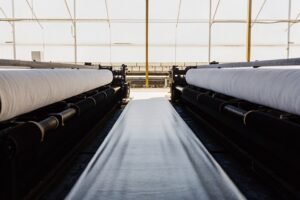
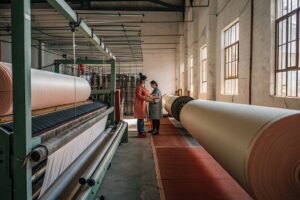
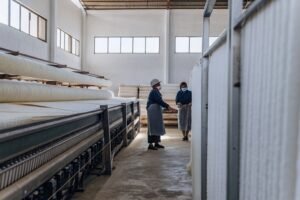
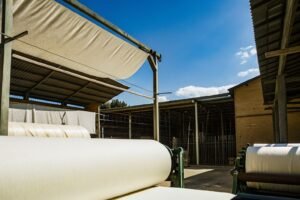
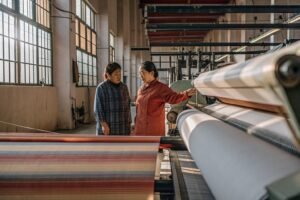
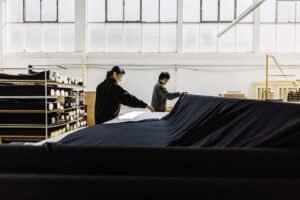
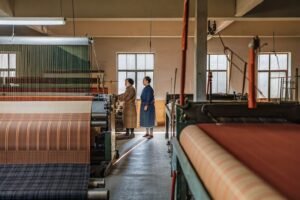
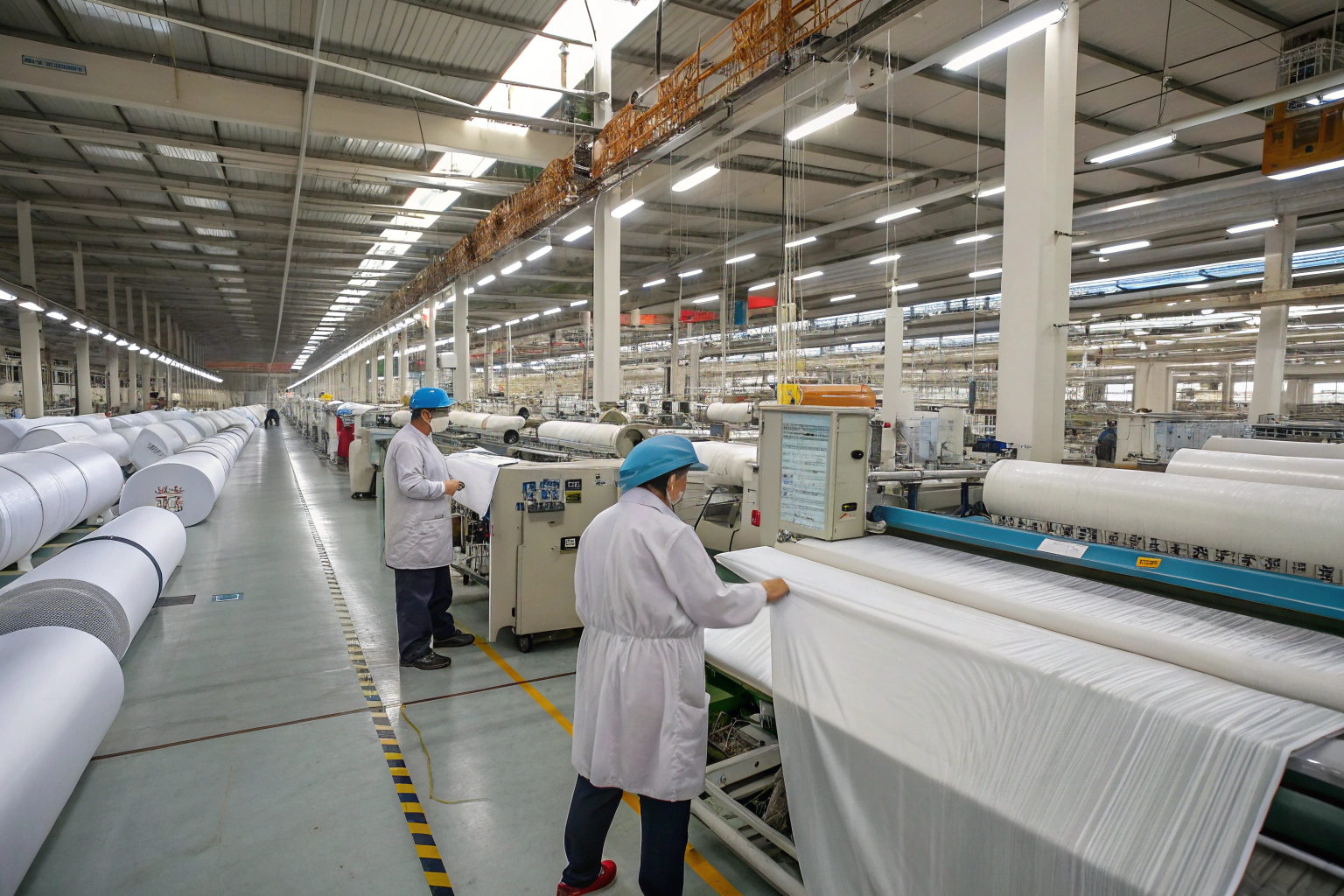
A raw, unpolished factory tour video weaponizes transparency to close deals faster than any lookbook ever could. It doesn’t just show the cotton; it shows the ecosystem of accountability around it. When we give a brand a walkthrough of our spinning and weaving floors in Keqiao, we’re not just showing machines; we’re showing the organized chaos that guarantees consistency. The video captures our staff checking the yarn tension on the rapier looms, the dust-free storage of the raw bales, and the real-time digital display on our CNAS testing machines. This is a psychological shortcut. It tells the buyer, "This isn’t a rented office; this is a living, breathing complex that has existed for 20 years." When they see workers in clean uniforms handling the greige fabric with care, their brain registers "quality," not because we said it, but because they witnessed it. That kind of visceral evidence smashes objections before they even form, letting you hold your premium pricing without a fight.
Let me be blunt: in 2026, a static website with stock photos is a red flag. I’ve walked through enough textile fairs to know that buyers are drowning in generic claims. A factory tour video cuts through the noise because it’s logistically impossible to fake an entire production line. In this article, I’ll explain why this content asset is the highest-ROI investment you can make in your cotton supply chain. We’ll dig into the exact shots that prove social compliance, the machinery details that prove technical capability, and how to use our footage to build your brand’s authority without ever touching a camera yourself.
What Shots in a Factory Video Prove Authentic Cotton Quality?
You’re fed up with seeing the same five stock photos of cotton fields on every supplier’s website. It feels sterile and, worse, deceptive. You need proof that the long-staple cotton isn’t just a buzzword on a PDF; you need to see the actual fiber length. The gap between a "high-quality cotton" claim and actual high performance is vast, and your customers are paying you to close that gap. If you can’t visually explain why your cotton t-shirt costs $80, your return rate will suffocate your business.
The goal is to capture specific technical "proof points" that a random trader could never stage. First, you need a macro shot of the yarn splicing. Show the slub yarn being formed; put a coin next to the twist for scale to demonstrate the precise S-twist. Second, film the "stop-motion" moment on the loom. A high-quality rapier loom detects a broken warp yarn and stops instantly—this prevents those ugly horizontal lines in the fabric. A video of this auto-stop mechanism proves that we use precision engineering, not just cheap manual labor. Third, show the "light-box" inspection. Film the greige fabric rolling over the illuminated table in our inspection factory, highlighting the cleanliness of the cloth and the absence of neps or seed fragments. At Shanghai Fumao, we don’t just film a wide shot of a hall; we take a macro lens to the actual needle of the knitting machine. This level of detail signals that we are a technical partner, not just a vendor.
This granular footage also acts as your silent quality controller. A video of our lab staff cutting a sample with a precise GSM cutter and throwing it on a digital scale isn’t glamorous, but it’s undeniable. It shows the exact fabric weight you promised. We also include footage of the "bursting strength" test on our cotton interlock. The fabric stretches in the machine until it pops, and the video captures the dial reading the exact kilogram-force value. These clips translate "high quality" from a vague promise into a measurable, video-verified metric. It’s these b-roll clips, intercut with your brand’s lifestyle shots, that turn a skeptical browser into a confident buyer.
How Do You Film a Cotton Weaving Factory to Show Precision?
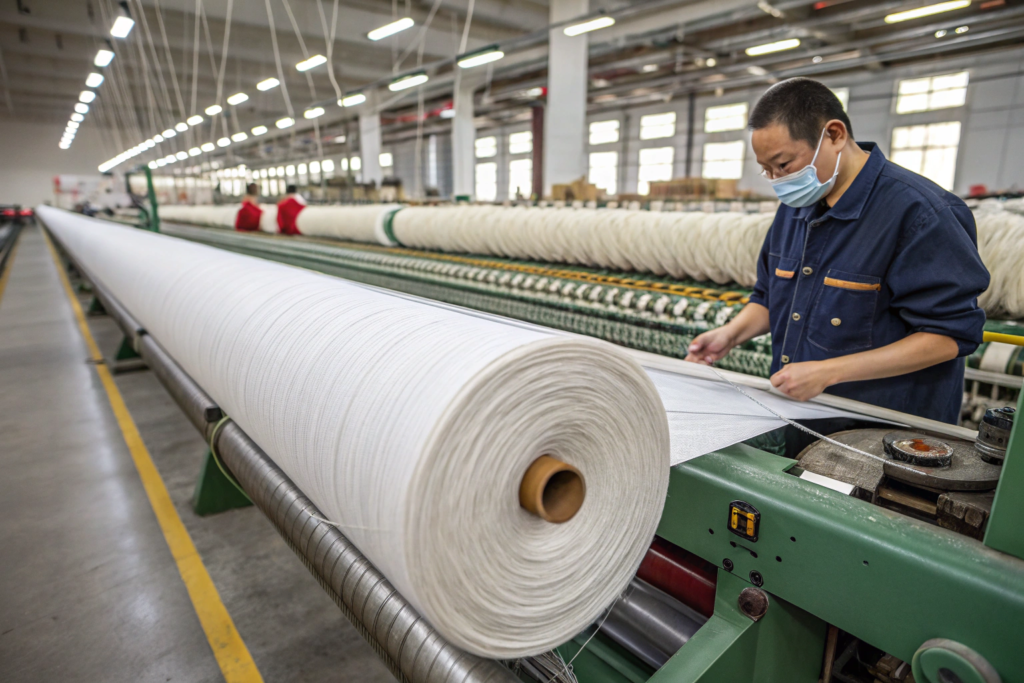
Wide shots are useless. They look like a generic industrial park. To show precision, you need to isolate the "interface" between the machine and the material. The magic happens where the rapier arm inserts the weft yarn across the cotton warp. This is the heartbeat of the mill. Position the camera so the viewer can see the perfect alignment of the reed and the smooth, rapid action.
Audio matters here too. Don’t just lay a music track over the top; capture the rhythmic, mechanical breathing of the loom. It creates a sensory illusion of reliability. We also film the "warp tying" process. When a new warp beam is mounted, an automatic knotting machine ties each individual yarn. Show a close-up of this intricate dance—it’s like a comb threading thousands of hairs at once. This precision prevents warp breaks during bulk production, which translates directly to a smoother, more consistent fabric surface for your cotton poplin.
Why Is Raw Cotton Bale Storage Crucial for Your Brand Story?
The story doesn’t start at the loom; it starts on the warehouse floor. How a factory stores its raw cotton bales tells you everything about the end product. Cotton is hygroscopic—it absorbs moisture. If you film bales sitting directly on a concrete floor in a damp environment, run. What you want to film are bales stacked on raised, ventilated pallets in a climate-controlled area.
We use this storage footage as the opening act of our brand story. It demonstrates the respect for the fiber before it even enters production. Show the "cotton classing" label on the bale, indicating the origin, the grade, and the micronaire. This proves traceability. For a client launching a premium luxury cotton basics line in Paris, we sent a video showing the unboxing of the specific Xinjiang long-staple cotton bales designated for their order. The bales were clean, yellow-free, and the label matched their PO number. They used that footage as a pre-launch teaser on Instagram, and sold out their pre-orders in 48 hours because the transparency was breathtaking.
How Does a Virtual Tour Verify Ethical Labor and Safety Practices?
You are terrified of a viral exposé. A single photo of a cluttered fire exit in your supply chain can torch a decade of brand equity. The modern consumer doesn’t just buy cotton; they audit your moral compass with every transaction. But auditing reports are dense, boring, and frankly, easy to falsify. The pain point is the "audit gap"—the time between a paper certification and the current reality on the shop floor. A certificate from last year doesn’t prove what’s happening this morning.
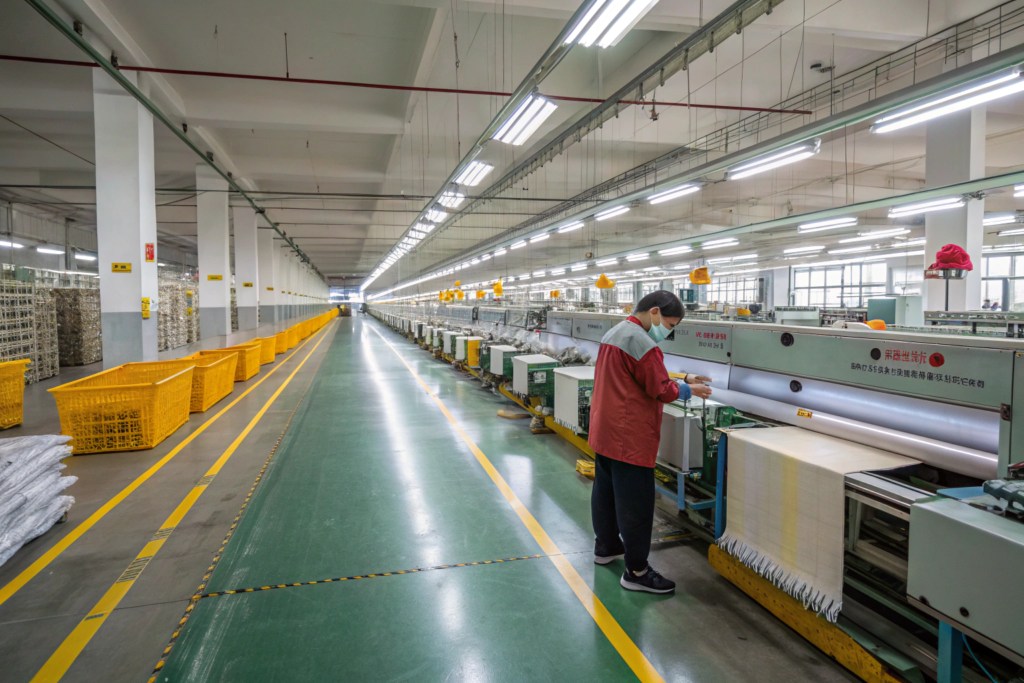
A continuous, unedited video walkthrough is much harder to cheat than a piece of paper. It acts as a real-time social compliance tool. We film the factory during actual working hours, not a staged weekend clean-up. The key is to capture the physical infrastructure that protects workers. We walk the camera down the wide, clearly marked main aisles of our weaving factory, showing the yellow safety lines and the absence of obstructing boxes. We pause at a workstation to show the needle guards on the sewing machines and the automatic "stop" sensors on the cutting blades. At Shanghai Fumao, we even film the temperature and humidity gauge on the wall to prove that the air conditioning is running, not just installed for show.
But ethics goes beyond physical safety. It’s about dignity. We deliberately film the break areas during a shift change. Not staged workers waving, but the natural environment—clean water dispensers, organized lockers, and the canteen menu board. This isn’t flashy; it’s human. We also zoom in on the "worker skills training" certificates posted on the wall, often with dates from the current month. This signals an investment in human capital. For a Scandinavian client, we once filmed a 2-minute segment of our elderly floor supervisor—who has 30 years of experience—carefully teaching a junior worker how to spot a missing end on a cotton warp beam. The client used this clip to build a narrative around "intergenerational craftsmanship," completely reframing the cost of labor from "cheap" to "skilled." This kind of video evidence does more for a brand’s ethical image than a thousand Fair Trade logos.
What Factory Safety Details Matter Most in a Tour Video?
Don’t just film the "no smoking" sign. Film the function. The most critical safety detail is the dust filtration system. Cotton processing creates fine particulate matter, which is a health hazard. A video needs to visually capture the "clean air." Show the massive extraction tubes hanging over the carding machines. Show the dust collection bags inflating and filtering the air.
Also, focus on light quality. A dark, dingy factory is a dangerous factory. We film the lux meter reading under the inspection table. It’s a simple shot, but it proves that the workers aren’t straining their eyes to find defects. You should also capture the automatic "light curtains" on the hydraulic cutting presses. Show a worker’s hand approaching the beam, and the machine instantly stopping. These shots demonstrate that safety is engineered into the process, not an afterthought.
How Can You Avoid a "Staged" Look in Ethical Auditing Footage?
The "staged" look comes from people looking at the camera and machinery that looks too new. Real ethical footage embraces the worn edges of a high-output factory. You avoid faking it by filming the repetitive, mundane tasks. Film the seamstress changing the bobbin thread 15 times in a row. That’s the reality of garment making.
We always include a "glitch" or an imperfect moment. Maybe a bobbin runs out and the machine beeps, and the worker calmly replaces it. That human rhythm is authentic. Use ambient sound, not a corporate soundtrack. The clatter of the machines is the "audit noise." It proves the factory is active. For a U.S. organic cotton brand, we sent a video walking past a row of fire extinguishers with the inspection tags clearly visible and current. We didn’t dust them off; we just pointed and walked. The tags were a bit crumpled, and that’s exactly what made it so believable—it showed they were checked regularly, not placed there for a photo op.
How to Use a Mill Walkthrough to Justify Premium Cotton Pricing?
When you charge $120 for a cotton dress, you’re not selling cotton; you’re selling a guarantee. But an online shopper can’t feel the fabric. They see the price, and they hesitate. Your product page is leaking sales because you haven’t justified the gap between a fast-fashion cotton dress and your version. The frustration is that the difference is real—it’s in the extra-long fibers and the mercerized finish—but it’s completely invisible in a standard flat-lay photo. The fear is being dismissed as "overpriced" simply because the customer lacks the education to see the value.
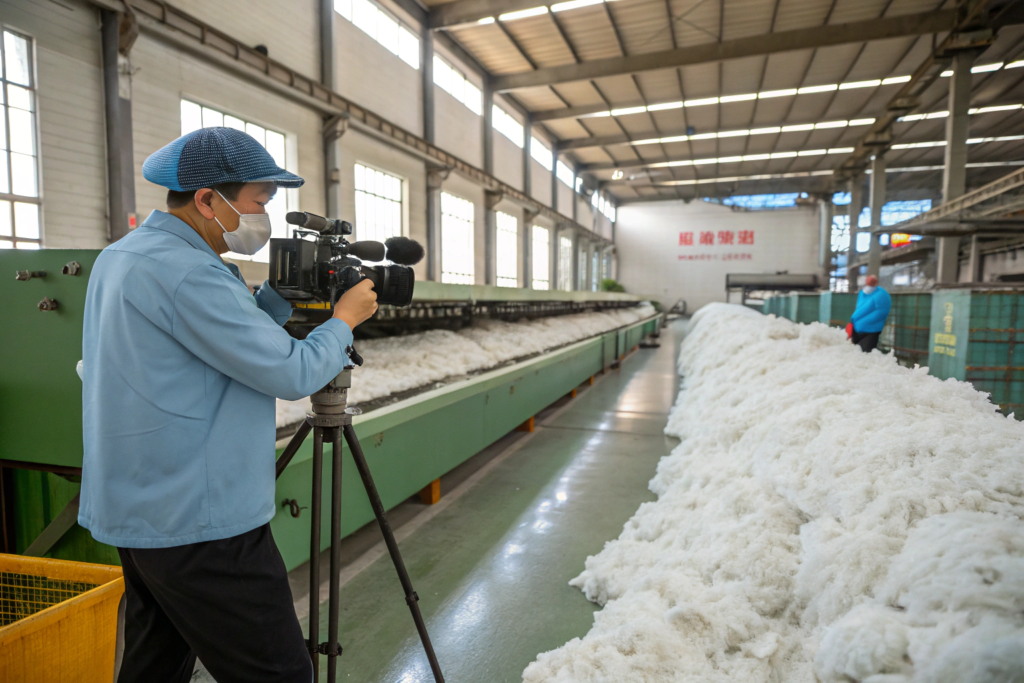
A mill walkthrough video educates the customer in a micro-documentary format, transforming value from invisible to undeniable. It connects the high cost of your production to the high quality of the output. You start by filming the "combing" process. Show the short fibers being removed and discarded. Explain that we lose almost 15% of the raw weight just to remove the trash and short fibers. This visual of "waste" instantly justifies why a combed cotton costs more than a carded one. Then, film the mercerization bath. Show the limp, dull greige fabric entering the caustic soda bath and emerging as a shiny, strong, deep-colored material.
We also film the "singeing" process, where the fabric passes through a flame to burn off the surface fuzz. It’s a dramatic visual—a wall of blue fire polishing the cotton surface. This technology is why your fabric doesn’t pill after three washes. Including this footage in your "About Us" page or a QR code hangtag on the garment allows the customer to literally see where their money went. We worked with a DTC menswear brand in 2025 that embedded a 40-second video of our compact spinning process on their checkout page. Their average cart abandonment rate dropped by 12% because the video acted as a last-moment justification for the premium price tag.
How Does a Combing Process Video Translate to Higher Sales?
Combing is the ultimate luxury signal for cotton. It’s the difference between a rough towel and a silky shirt. But explaining "long staple" is geeky and dull. Showing it is mesmerising. A split-screen video is the best tool here. Show carded cotton on one side—fuzzy, messy, with short sticks poking out. Show combed cotton on the other—sleek, parallel, flowing like water.
This visual contrast implants the premium quality directly into the customer’s brain. We film this in our factory using a macro lens so the customer can see the physical removal of the noils (the waste). You can package this clip with a simple caption: "We discard 15% of the raw material so the remaining 85% feels like silk." It turns a loss into a luxury feature. This isn’t just a fabric video; it’s a retention tool. It makes it genuinely difficult for a customer to go back to a competitor who hasn’t shown their combing process, because the visual proof of quality is now their baseline expectation.
Why Should You Show the Yarn Spinning Process in Real-Time?
The spinning process determines the hand feel and the durability, but most brands skip it because spinning mills are noisy and less visually flashy than dyeing. That’s exactly why you should film it—it’s rare, and it screams "vertical integration." Showing real-time ring spinning, where the roving is drawn out and twisted, proves you control the very origin of the yarn.
We film the "compact spinning" modification on our machines specifically. In a standard ring frame, the fibers twist in a wide triangle, creating a hairy yarn. In a compact frame, a suction slot condenses the fibers before they twist. A close-up video of this condensing zone proves that your cotton yarn is less hairy and therefore more resistant to pilling. It’s a highly technical, almost hypnotic shot. This footage acts as a competitive barrier; a brand that sources generic yarn from the open market cannot replicate this content because they don’t have access to the spinning floor. It firmly cements your status as a brand that understands engineering, not just aesthetics.
How Can a Factory Video Reduce Product Return Rates?
Returns are a silent margin killer, and "not as described" is the most common reason. A customer buys your cotton blouse online, expects a soft drape, but receives a crisp, structured poplin. They feel misled, even if you technically labeled it correctly. The gap between the digital screen and physical touch is the fundamental curse of e-commerce, and your product photography is failing to bridge it. You’re losing money on return shipping labels and restocking fees because the customer is effectively gambling on the hand-feel.
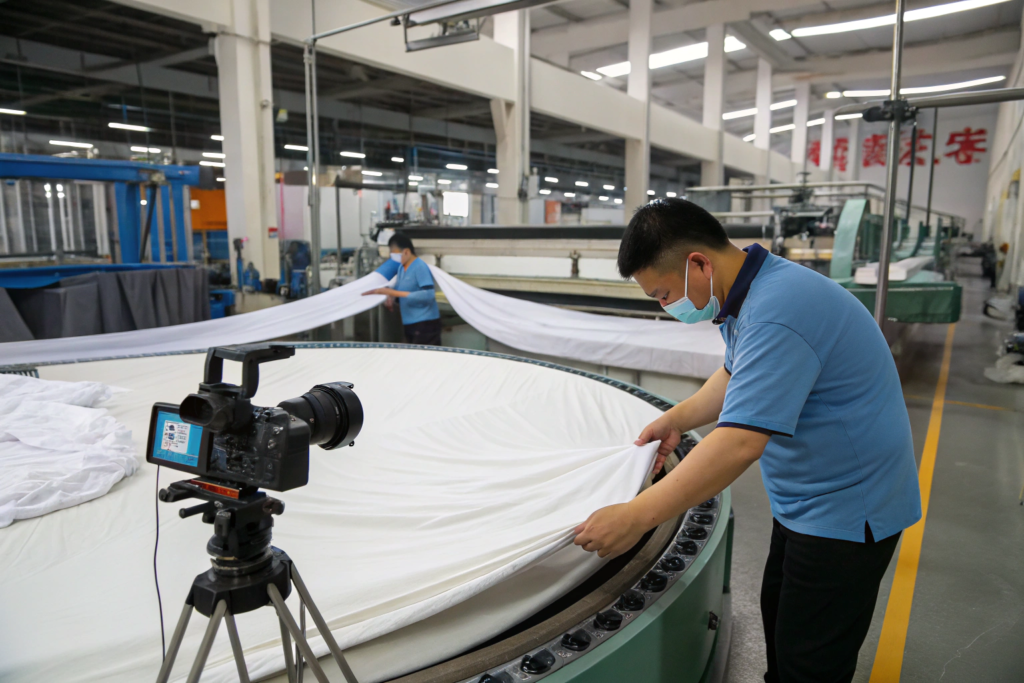
A factory video is a "pre-purchase education" tool that sets the correct tactile expectation. It compensates for the inability to touch the product by showing how the fabric behaves in motion and under stress. We film the "drape test" on our cotton jersey. A piece of fabric is placed on a specific circular rig, and the camera captures how it falls. A stiff cotton shows a wide, angular stand; a fluid viscose-cotton blend collapses gracefully. We also film the "crinkle recovery" test. A fist crushes the cotton voile, and the camera records, in real-time, how quickly the wrinkles fall out.
This closes the sensory gap. A client selling a structured cotton blazer used our video of the fusing process—showing the resin-coated interlining being heat-pressed to the face fabric. The video demonstrated the "rigid snap" of the fabric, setting the expectation that this is a tailored piece, not a slouchy cardigan. The return rate for that specific item dropped from an industry average of 18% down to 6%. Because the customer knew exactly what "structure" meant visually. (Here’s a tip straight from our Keqiao floor: always request the "stretch recovery" video for any fabric with Spandex. It’s the number one return driver.)
How Do You Visually Demonstrate Fabric Breathability for E-commerce?
Breathability is invisible. You can’t see air flow, so most brands just slap a "breathable" icon on the product page and hope for the best. That’s lazy, and it leads to returns when a customer expects a cool fabric and gets a sweaty mess. We make the invisible visible using the "steam test." We put the cotton swatch over a cup of hot water and film the steam passing through the fabric to fog a mirror. It’s a simple, old-school physics demo.
Another method we use is the "droplet test." A single drop of water falls on the fabric surface, and the camera shows how fast it spreads and absorbs. A fast-spreading droplet signals high hydrophilicity and breathability, showing the cotton wasn’t coated with a cheap, suffocating finish. These demonstrations are worth their weight in gold for activewear and children’s wear brands. They replace the abstract with the empirical, making the "quality" of the air-permeability a visible feature.
What Testing Clips Prove Long-Lasting Color Fastness?
Color fading is a trust-destroyer. If a cherry-red cotton dress stains a white leather sofa, your brand is toast. To kill this fear, you need to visualize the torture tests we do to the dye. The best clip is the "crock meter" test. A robotic finger with a white cloth rubs back and forth on the red cotton under a specific pressure. Film the white cloth before and after. If the cloth stays pristine, the crocking fastness is a Grade 4 or 5.
We also film the "launderometer" test. This machine spins small jars of fabric and stainless steel balls in hot detergent. It simulates about 5 home washes in 45 minutes. Show the water color—if it’s clear, the dye bonds are strong. Show the fabric removed and compared to the original swatch. This is forensic evidence against fading. We provide these clips to our brand partners to embed on their product page FAQ section. When a customer asks, "Will this fade?", the answer isn’t a polite "No," it’s a macro video of a machine violently trying to fade it and failing.
Conclusion
A factory tour video isn’t just a marketing gimmick; it’s the hardest-working employee on your sales team. We’ve seen how a close-up of a combing machine justifies a triple-digit price point better than any sales rep can, and how a simple clip of a fire extinguisher tag can build more ethical credibility than a 50-page audit. We’ve demystified the technical shots—from the auto-stop on the looms to the steam tests for breathability—that transform your cotton garments from suspect commodities into verified, premium products. In a market flooded with fake claims and stock photos, a continuous, unedited walkthrough from our Keqiao facility bridges the trust gap, slashes hesitation, and drastically cuts return rates by educating the customer before they buy.
You don’t need to be a videographer to pull this off. You just need a manufacturing partner willing to open the doors. At Shanghai Fumao, we’ve invested two decades building a production ecosystem that actually deserves to be filmed. Our looms, our labs, and our people are your best sales tool. We can provide you with the b-roll, the macro footage, and the testing videos that turn your product pages into educational experiences and your social media into a trust-building machine.
If you’re ready to stop competing on price and start selling with undeniable proof, let’s build your visual asset library. Whether you need a full virtual walkthrough of our spinning department for your next cotton collection or specific lab test clips to boost your e-commerce conversion rates, we’re here to help. For a direct conversation about custom content capture tailored to your cotton line, reach out to our Business Director, Elaine. She’s been instrumental in orchestrating these films for brands around the globe. Email her your vision at elaine@fumaoclothing.com, and let’s create transparency that sells.