I've been in this business long enough to know that the most expensive fabric you can buy is the one that ruins your finished garments.
Let me tell you about a call I got in early 2024. A client from New York had just received a container of our premium cotton-spandex jersey. The fabric looked beautiful. The color was perfect. The handfeel was exactly what they ordered.
Two weeks later, they called me back. The tone was different.
"David, the garments are too small. We cut 5,000 pieces based on your fabric specifications. After the first wash, the whole batch shrunk by 8%. What happened?"
I asked them one question: "Did you pre-shrink the fabric before cutting?"
Silence.
They had assumed the fabric was stable. They had assumed they could cut directly from the roll and everything would be fine. They had assumed wrong.
That shipment cost them $45,000 in wasted labor, rushed re-cuts, and air freight to meet their retail deadlines. And it all could have been avoided if they had understood one simple truth: knitted fabric moves.
Today, I'm going to explain why pre-shrinking is not just a nice-to-have step in garment production. It's essential. Especially when you're importing knitted fabrics from overseas. I'll walk you through what pre-shrinking actually does, how we do it in our factory, and what happens when you skip it.
What Actually Happens When You Skip Pre-shrinking?
Let me start with what I see every day in our quality control department.
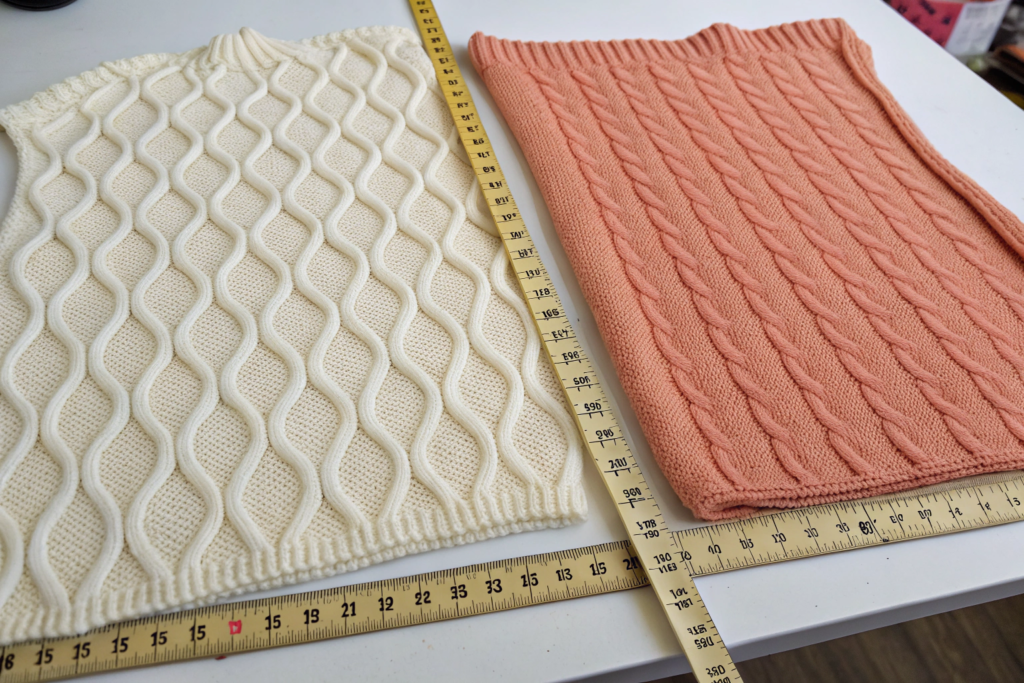
When a knitted fabric comes off the circular knitting machine, it is not in its final form. It has been knitted under tension. The yarns have been stretched and looped together. The whole structure is like a spring that's been pulled tight.
If you take that fabric and cut it directly, you're cutting a stretched fabric. You're making pattern pieces based on dimensions that won't exist after the first wash.
What's the Real Cost of Not Pre-shrinking?
I'm going to give you a breakdown that I wish every buyer could see before they start production.
In 2023, a UK-based children's wear brand ordered 20,000 meters of cotton fleece from us. It was a beautiful fabric—brushed on the back, soft handfeel, perfect for hoodies and sweatpants.
We offered to pre-shrink the fabric using our compacting machine. The cost was an additional $0.15 per meter. The client declined. They wanted to save the money.
They cut the fabric. They sewed the garments. They looked great coming off the production line.
Then they washed the first batch.
The hoodies shrank by 6% in length. The hoods no longer sat properly. The sleeves were too short. The sweatpants had shrunk in the rise, making them uncomfortable.
The client had to re-cut and re-sew 30% of the order. They paid for rush shipping to meet their delivery dates. They lost their margin on the entire collection.
Let me do the math for you.
- Pre-shrinking cost they declined: $0.15 per meter × 20,000 meters = $3,000
- Actual cost of the disaster: $12,000 in wasted labor + $8,000 in re-cut materials + $15,000 in expedited shipping = $35,000
And that's not counting the damage to their brand reputation when retail partners received late shipments.
When I tell clients that pre-shrinking is insurance, I'm not trying to upsell you. I'm trying to protect you from a problem I've seen destroy too many production runs.
Why Does Knitted Fabric Shrink More Than Woven?
This is fundamental to understanding why pre-shrinking matters.
Woven fabrics are made with yarns that go over and under each other in a grid. The yarns are straight. They don't have built-in tension. When a woven fabric shrinks, it's usually the fibers themselves contracting, which is typically 1-3%.
Knitted fabrics are made with loops. Every stitch is a loop that's been formed under tension. That tension is stored energy. When the fabric gets wet or hot, that energy releases. The loops relax. The fabric contracts.
Think of it like this.
A woven fabric is like a piece of paper. You can wet it, and it might wrinkle, but it doesn't fundamentally change shape.
A knitted fabric is like a spring. You stretch it, and it wants to snap back. The pre-shrinking process is letting that spring relax before you build something with it.
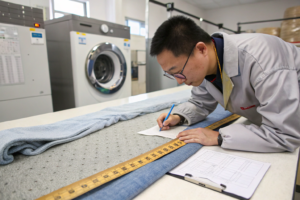
In our lab, we regularly test knitted fabrics for residual shrinkage. Even after our compacting process, most knits still have 2-3% shrinkage left. Without compacting, that number is often 5-8% or more.
A client from Germany learned this in 2022. They imported a container of organic cotton jersey from another supplier. The fabric hadn't been pre-shrunk. Their cut-and-sew factory in Portugal cut the fabric directly.
The finished t-shirts shrank two full sizes after the first wash. The client had to recall the entire collection from retail stores. They lost over 100,000 euros on that order.
They've been buying from us ever since. And they always specify that we pre-shrink every meter before shipment.
How Does Pre-shrinking Actually Work in a Factory?
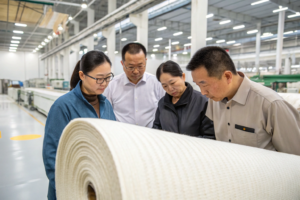
Now let me take you inside our factory and show you exactly how we pre-shrink knitted fabrics.
It's not magic. It's a specific process called compacting. And we run it on every knitted fabric that leaves our facility unless the client specifically tells us not to.
What Is Compacting and How Does It Work?
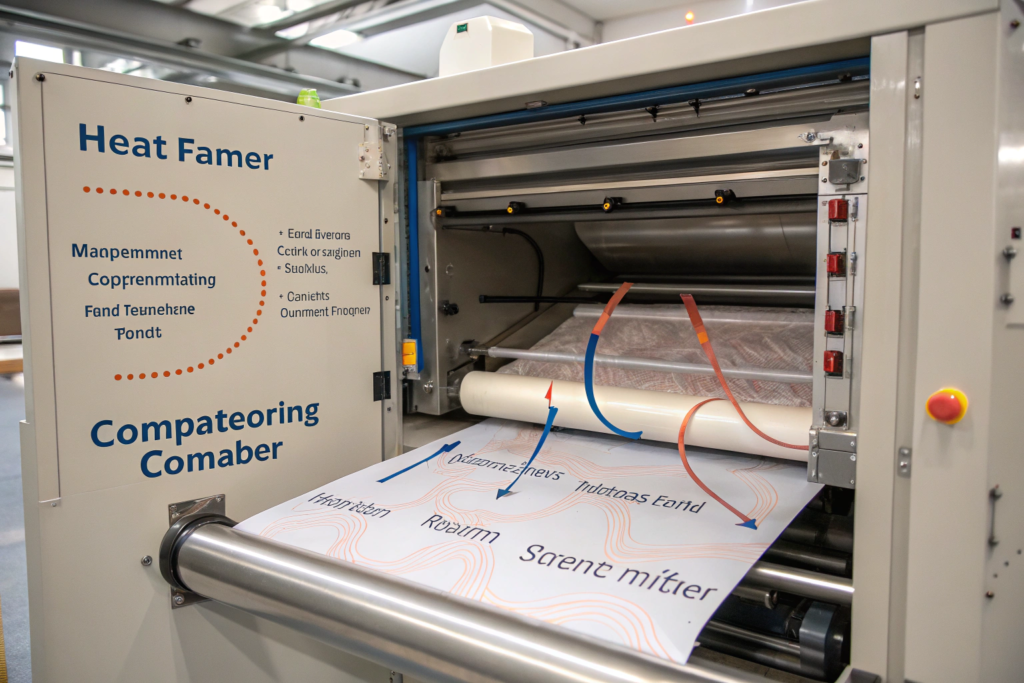
Compacting is the technical term for mechanical pre-shrinking.
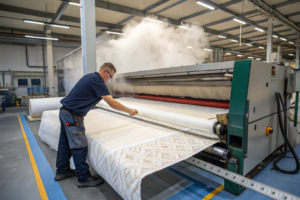
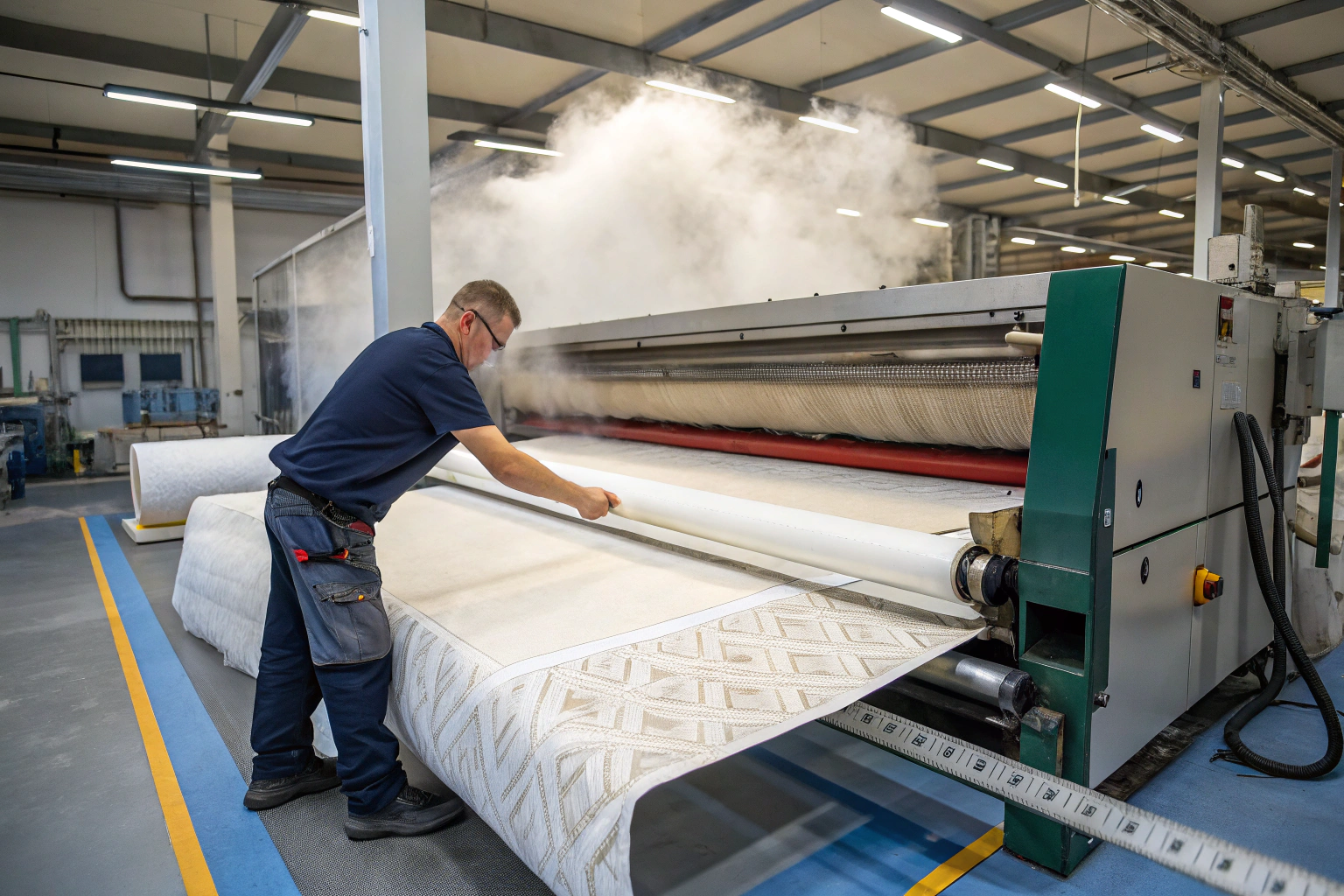
We have a compacting machine that does three things to the fabric:
1. Heat. The fabric passes over heated rollers. The temperature is precisely controlled based on the fiber content. For cotton, we use about 150-180°C. For polyester blends, the temperature is lower because synthetic fibers are more heat-sensitive.
2. Moisture. The fabric is steamed. The steam relaxes the fibers and opens up the structure. The combination of heat and moisture is what allows the yarns to release the tension that was built up during knitting.
3. Mechanical compression. This is the key step that separates compacting from simple washing. The fabric is fed between a heated roller and a rubber belt that compresses the fabric. The rubber belt is running slightly slower than the fabric feed, so the fabric is literally pushed together. The loops are forced to relax.
When the fabric comes out of the compactor, it's been physically shortened. A fabric that was 100 meters long going in might come out as 97 meters. That 3% reduction is the shrinkage we've removed.
In 2024, we ran a test for a Canadian athletic wear brand. We took the same batch of cotton-spandex jersey and split it. One half went through the compactor. The other half didn't.
We sent both to their cut-and-sew factory in Vietnam.
The compacted fabric produced garments that measured within spec after washing. The non-compacted fabric produced garments that were consistently 5-6% smaller.
The client now specifies compacting on every order.
Can I Pre-shrink Fabric Myself Instead of Relying on the Supplier?
This is a question I get a lot.
The short answer is yes, you can pre-shrink fabric yourself. But the practical answer is that it's rarely the best option.
Here's what you'd need to do:
Option 1: Launder the fabric before cutting.
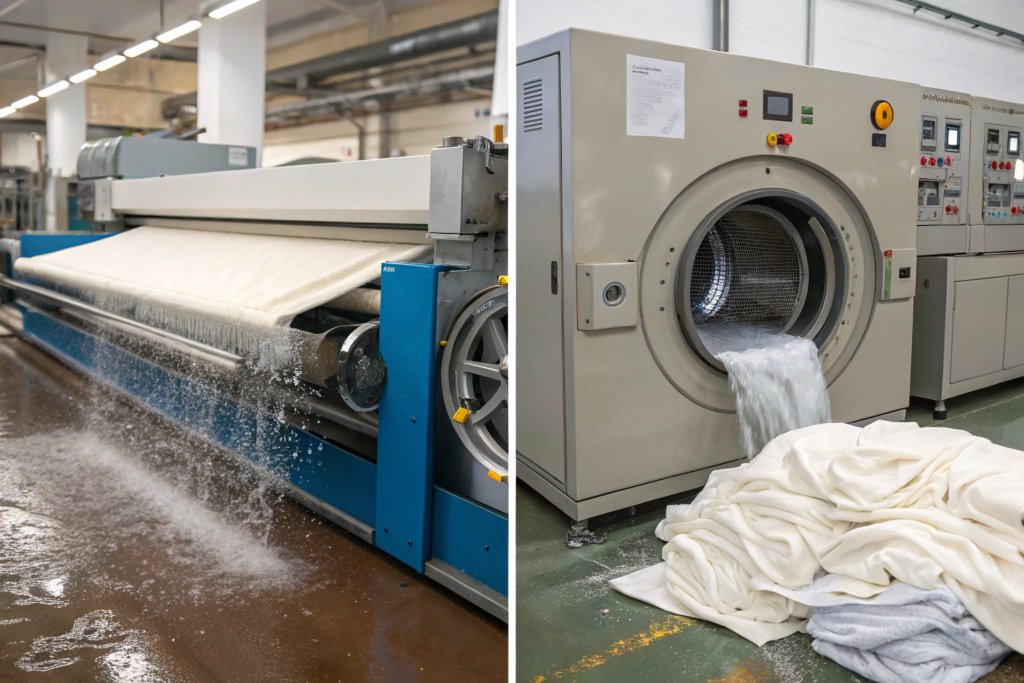
You can wash the entire fabric roll. This means you need access to industrial washing equipment that can handle full-width fabric rolls. You need drying equipment. You need to re-roll the fabric after washing.
The challenges: fabric can tangle in industrial washers. The edges can curl. You lose length, so your yield per roll decreases. And you need to store wet fabric while it dries.
Option 2: Cut and wash the garments.
This is what many smaller brands do. They cut the garments, sew them, and then wash the finished pieces.
The challenge: The garments will shrink after they're sewn. If you cut based on the original fabric dimensions, your finished garments will be smaller than your pattern intended. You can compensate by increasing pattern sizes, but that requires testing and precision.
A US-based denim brand tried this in 2023. They cut their jeans based on the original fabric width, washed after sewing, and ended up with jeans that were two sizes too small. They had to re-cut and re-sew 2,000 pairs.
The most reliable approach is to have your fabric supplier pre-shrink the fabric before shipment. That's what we do at Shanghai Fumao. The fabric arrives at your cut-and-sew factory stable, ready to cut, and with predictable shrinkage for any remaining residual movement.
What Are the Different Methods of Pre-shrinking?
Not all pre-shrinking is the same. And understanding the difference can help you specify exactly what you need from your supplier.
What's the Difference Between Mechanical and Chemical Pre-shrinking?
Mechanical pre-shrinking is what I just described with the compactor. It uses heat, moisture, and compression to relax the fabric structure.
The advantages: It's predictable. The fabric maintains its original width and length relationships. It works on most fiber types. And it doesn't introduce any chemicals that might affect future dyeing or finishing.
The disadvantages: It requires specialized equipment. It's an additional step in production that adds time and cost.
Chemical pre-shrinking uses resin treatments to stabilize the fabric.
The fabric is treated with a chemical that bonds the fibers in place, preventing them from contracting. This is more common for woven fabrics, where it's called "Sanforizing" or similar processes.
For knits, chemical pre-shrinking is less common because the resin can affect the handfeel. It can make the fabric stiffer. And there are concerns about the chemicals used—some are formaldehyde-based, which is restricted by many brand standards.
We use only mechanical compacting for knitted fabrics. It gives us the dimensional stability we need without compromising the natural handfeel that makes knits comfortable.
How Do I Specify Pre-shrinking Requirements to My Supplier?
This is where communication matters.
When you're ordering knitted fabric for import, don't just assume your supplier will pre-shrink it. Many won't unless you ask. And even when you ask, you need to be specific.
Here's what I recommend you include in your technical specifications:
1. Residual shrinkage target.
Specify the maximum shrinkage you'll accept after the first three home laundries. For most knitted garments, 3% in length and 3% in width is acceptable. For high-precision applications like tailored knitwear, you might want 2% or less.
2. Testing method.
Specify the test standard you want used. AATCC 135 is the standard for domestic washing. ISO 6330 is the international equivalent. Your supplier should be able to test to these standards and provide results.
3. Compacting requirement.
State clearly: "Fabric must be mechanically compacted to achieve residual shrinkage of 3% maximum in both directions per AATCC 135."
In 2023, a Swedish client sent us a specification sheet that included exactly these requirements. They also asked for a test report from each batch showing the residual shrinkage results.
We provided the reports. They tested the fabric themselves when it arrived. The results matched. The production run went smoothly. No surprises.
That's how it should work.
How Does Pre-shrinking Affect Other Fabric Properties?
Some buyers worry that pre-shrinking will change the fabric in negative ways.
And they're right to ask. Pre-shrinking does change the fabric. But in my experience, the changes are almost always positive.
Does Pre-shrinking Change the Handfeel?
This is the most common concern.
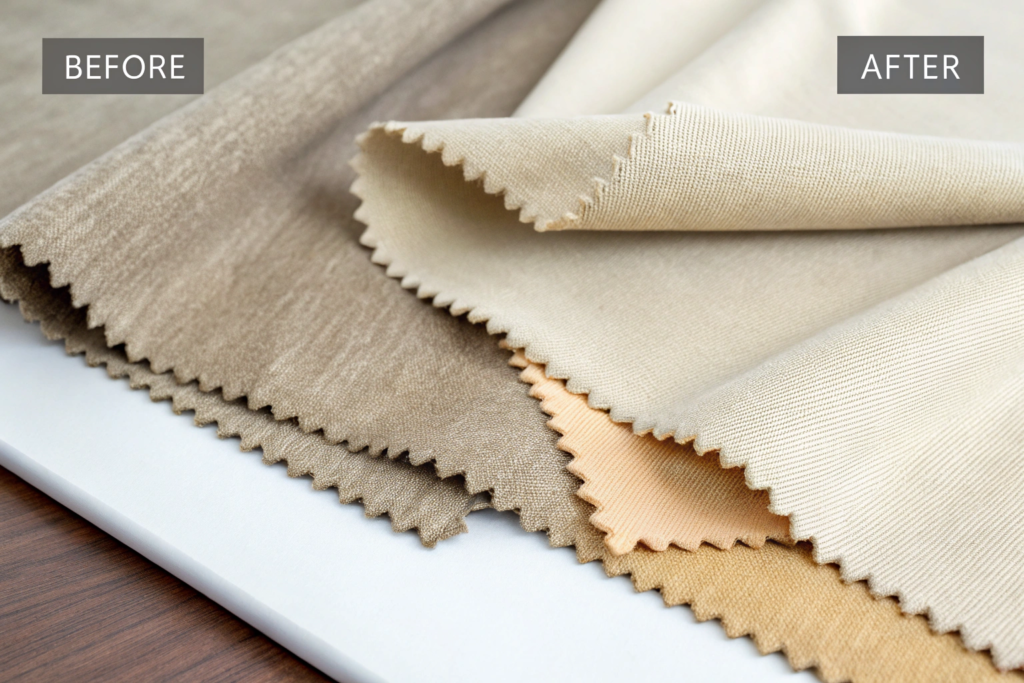
When we compact a fabric, we're compressing it. The loops are forced together. The fabric becomes slightly denser.
For most knitted fabrics, this actually improves the handfeel. The fabric becomes softer because the yarns are no longer under tension. It drapes better. It feels more relaxed.
I've had clients tell me that our compacted cotton jersey feels like it's already been worn and washed a few times—in a good way. It has that lived-in softness without any of the wear.
In 2024, we compacted a batch of modal-spandex jersey for a lingerie brand. They were worried the compacting would make the fabric too dense and lose the fluid drape they needed.
We ran a test. The compacted fabric had a slightly fuller handfeel—not heavier, just more substantial. The drape was actually better because the fabric wasn't fighting itself. The brand approved the compacted version and now specifies it for all their jersey orders.
Does Pre-shrinking Affect Color or Print?
This is something to be aware of.
If you're printing or dyeing after pre-shrinking, there's no issue. The compacting happens before the color is applied.
But if you're compacting pre-dyed fabric—which is what we usually do—the process can sometimes affect the color.
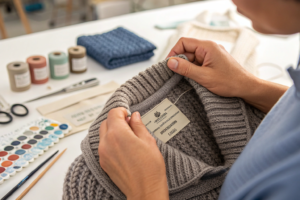
The heat and moisture can cause slight color shifts. For most colors, it's imperceptible. But for very sensitive shades—like pastels or very saturated brights—we sometimes see a Delta E change of 0.5-1.0. That's within industry tolerance, but it's something to be aware of.
We always test before running a full batch. If the color shifts more than acceptable, we adjust the dyeing process to compensate.
A US-based sportswear brand learned this in 2022. They imported pre-dyed fabric from a supplier that didn't pre-shrink it. They cut and sewed, then washed the garments. The color faded unevenly because the shrinkage had caused the dye to release differently in areas of higher tension.
Now they pre-shrink before cutting, and the color stays consistent.
Conclusion
Let me be direct with you.
If you're importing knitted fabric and you're not pre-shrinking it before cutting, you're gambling. And the odds are not in your favor.
I've seen it happen too many times. A beautiful fabric. A carefully planned collection. A production run that looks perfect coming off the line. And then the first wash reveals the truth.
Garments that don't fit. Sleeves that are too short. Hoods that pull. Pockets that have shifted. Seams that are puckered.
All of it preventable.
Pre-shrinking isn't an extra cost. It's an investment in quality. It's insurance against the kind of production disaster that can wipe out your margin and damage your reputation.
At Shanghai Fumao, we pre-shrink every knitted fabric we ship unless a client specifically asks us not to. We run every roll through our compacting machine. We test residual shrinkage on every batch. And we provide the test results so you can verify the fabric is stable before you cut.
Why do we do this? Because we've been in this industry for over 20 years. We've seen what happens when fabric isn't stable. And we'd rather take the extra step than get that phone call from a client who's looking at 5,000 finished garments that don't fit.
If you're sourcing knitted fabric, ask your supplier about their pre-shrinking process. Ask for test results. Verify the residual shrinkage meets your requirements.
And if you're working with us, you can rest assured that the fabric arriving at your factory is stable, consistent, and ready to cut.
Because at the end of the day, a garment that fits is a garment that sells. And that's what we both want.
Ready to source stable, pre-shrunk knitted fabrics? Contact our Business Director, Elaine, directly at elaine@fumaoclothing.com. She'll walk you through our compacting process and help you specify the right shrinkage targets for your production needs.