You’ve approved the sample. You’ve placed the bulk order. The fabric is produced. It’s packed. It’s on a container. It arrives at your factory. Your cutter unrolls the first few yards. Then he stops. There’s a defect. A line across the fabric. A color variation from one roll to the next. A hole.
Now what? Do you accept the fabric and hope the defects don’t affect too many garments? Do you reject the fabric and wait for a replacement? Either way, you lose. You lose time. You lose money. You lose trust in your supplier.
I’ve been on both sides of this. As a supplier, I’ve had clients reject fabric after it arrived at their factory. The cost of replacing that fabric was huge. The delay was even bigger. As a buyer of raw materials, I’ve had to reject yarn that didn’t meet our standards. I learned the hard way: inspection must happen before production, not after.
At Shanghai Fumao, we have made pre-production fabric inspection a non-negotiable step in our process. We inspect every roll before it goes into production. We catch defects early. We fix them before they become your problem.
Let me walk you through why this step is so critical, what we inspect for, how we do it, and what happens when we find problems.
What Is Pre-Production Fabric Inspection and Why Does It Matter?
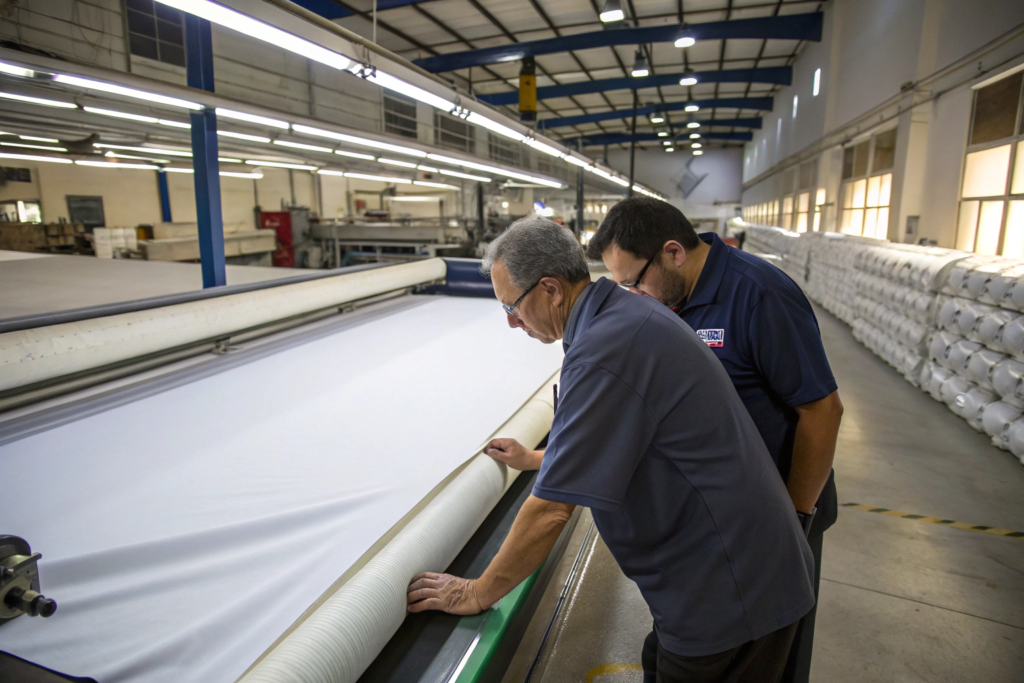
Pre-production inspection is exactly what it sounds like. We inspect the fabric before we start bulk production. We check the yarn, the greige fabric (unfinished fabric), and the finished fabric at key stages.
Most suppliers only inspect at the end. They finish the fabric, roll it, pack it, and then maybe do a quick check. If they find defects, it’s too late. The fabric is already made. The dyeing is done. The finishing is applied. Fixing it means redoing everything.
We inspect throughout the process. We catch problems when they are cheap and easy to fix.
What’s the Cost of Skipping Pre-Production Inspection?
Let me give you a real example. In 2022, a client from the US ordered 8,000 yards of a custom cotton twill. He chose a supplier based on price. That supplier did not do pre-production inspection. They knitted, dyed, finished, and shipped.
When the fabric arrived at the client’s factory in Mexico, the cutter found a broken yarn every 50 yards. The defect rate was 8%. The client had to stop production. He had to order replacement fabric. He missed his launch date. The cheap supplier ended up costing him $15,000 in lost sales and expedited shipping.
Now compare that to our process. We inspect the yarn before it goes on the knitting machine. If the yarn has weak spots, we reject it. We inspect the greige fabric after knitting. If we find broken yarns, we repair them before dyeing. We inspect after dyeing. If the color is off, we re-dye. We inspect after finishing. If the finish is uneven, we reapply.
By the time the fabric is packed, we have inspected it three or four times. The defect rate is under 2%. The client gets fabric that works.
The cost of pre-production inspection is small. The cost of skipping it is huge.
How Does Pre-Production Inspection Build Trust?
Trust is built on consistency. When a client knows that we inspect every step, they don’t have to inspect us. They can trust that the fabric will work.
A client from Sweden told me, “I used to test every roll when it arrived. It took my team days. Now I spot-check your fabric. I almost never find defects. You have saved me weeks of inspection time per year.”
That’s the value of pre-production inspection. It moves quality control from the buyer to the supplier. It’s where it belongs.
What Are the Key Stages of Pre-Production Fabric Inspection?
Pre-production inspection is not one thing. It’s a series of inspections at different stages. Each stage catches different types of problems.
Stage 1: Yarn Inspection – Catching Problems Before They Start
The yarn is the foundation. If the yarn is bad, the fabric will be bad. No amount of knitting, dyeing, or finishing can fix bad yarn.
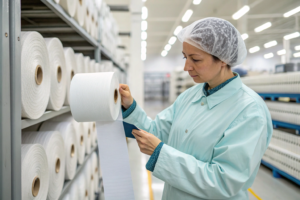
We inspect every batch of incoming yarn. We test for:
- Evenness (Uster test): Yarn thickness should be consistent. Variations cause streaks and weak spots.
- Strength: Weak yarn breaks during knitting. Breaks cause holes and stopped machines.
- Contamination: Different colored fibers or foreign material in the yarn. Shows up as spots in the fabric.
- Moisture content: Too dry, and the yarn breaks. Too wet, and it can mildew.
In 2023, we received a shipment of organic cotton yarn from a new supplier. Our Uster test showed high unevenness. The yarn would have caused streaks in the finished fabric. We rejected the entire shipment. The supplier replaced it. Our client never knew there was a problem.
If we had skipped yarn inspection, those streaks would have gone into the fabric. The client would have seen them. The order would have been rejected. Weeks of production time lost.
Stage 2: Greige Inspection – Fixing Defects Before Dyeing
Greige fabric is fabric that has been knitted or woven but not yet dyed or finished. Defects are easier to see and easier to fix at this stage.
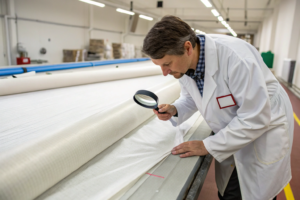
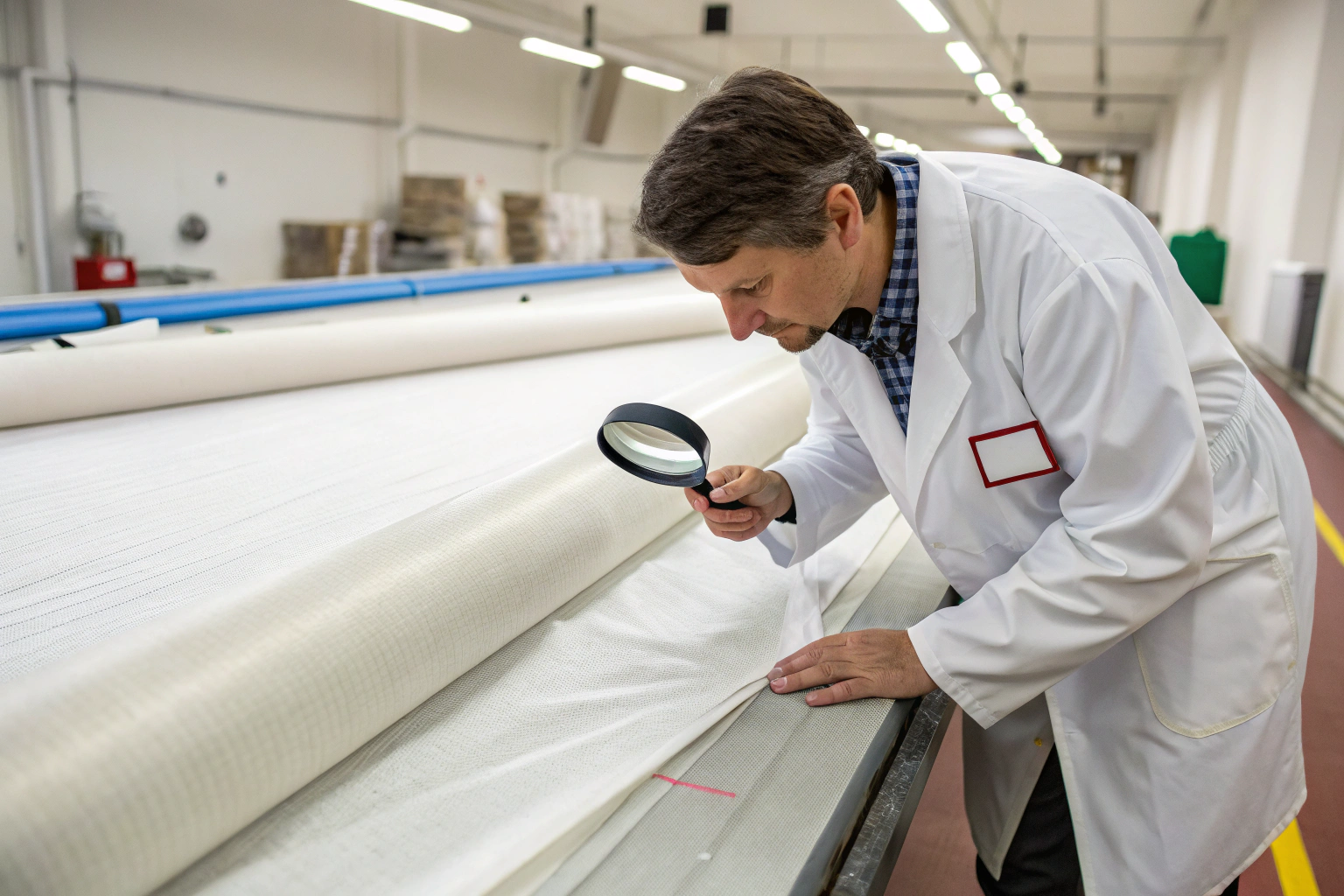
We run every roll of greige fabric through our inspection machine. We look for:
- Broken ends or picks: Missing yarns that create holes or lines.
- Oil stains: From the knitting or weaving machines.
- Uneven selvages: Ragged edges that can cause problems in finishing.
- Weight variation: Rolls that are too heavy or too light.
When we find a defect, we mark it with a colored sticker. A small defect can be repaired. A large defect means the roll is rejected and rewoven.
A client from the UK once asked us, “Why do you inspect before dyeing? Can’t you just dye it and then inspect?” We explained: a defect that is visible in greige fabric will still be visible after dyeing. But after dyeing, it’s too late to reweave. The fabric is already colored. Repairing it is harder. Re-dyeing is expensive.
Inspect early. Inspect often.
Stage 3: Dyeing and Finishing Inspection – Ensuring Color and Handfeel
After dyeing and finishing, we inspect again. This time we focus on color, handfeel, and finish application.
We check:
- Color match: Against the golden sample. We use a spectrophotometer for numerical measurement. Delta E must be under 1.0.
- Color uniformity: No shading from edge to edge or roll to roll.
- Handfeel: Softener application must be consistent. Too much softener, and the fabric feels greasy. Too little, and it feels harsh.
- Finish application: Water repellent, anti-pilling, etc. We run tests to confirm the finish is effective.
In 2023, we had a batch of fabric that passed the color test but failed the handfeel test. The softener application was uneven. One end of the roll was soft. The other end was stiff. We rejected the batch and re-ran it through the finishing machine. The client never saw the bad batch.
If we had skipped finishing inspection, the client would have received fabric with uneven handfeel. Some garments would have felt good. Others would have felt cheap. The brand reputation would have suffered.
Stage 4: Final Inspection Before Packing – The Last Line of Defense
Before any fabric is packed, it goes through a final inspection. This is the last chance to catch problems.
We inspect:
- Every roll on a light table.
- Defects are marked and scored using the four-point system.
- Rolls that exceed the defect limit are rejected.
- Accepted rolls are measured for length and width.
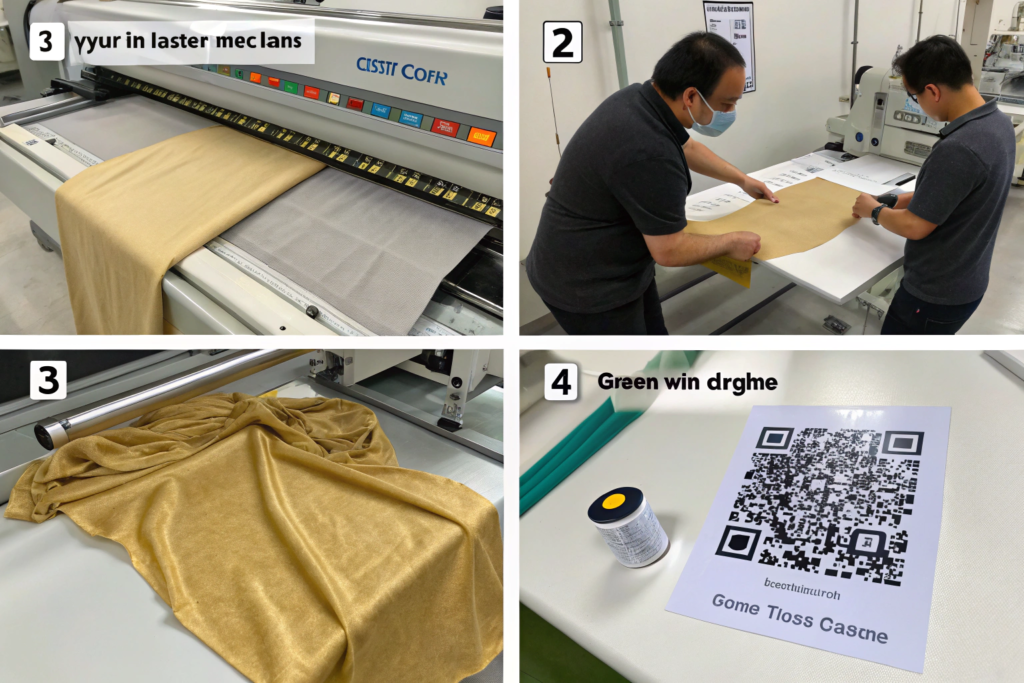
- QR codes are applied. The QR code links to all inspection data for that roll.
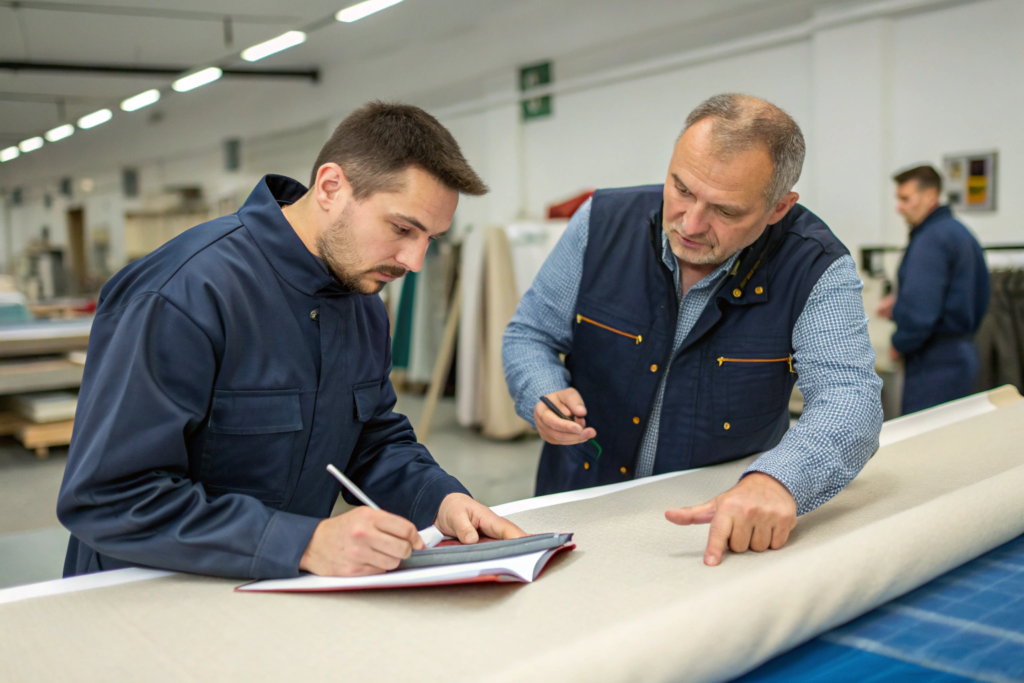
A client from Canada visited our factory during final inspection. He watched as our inspector found a small defect on a roll. The inspector marked it, scored it, and the roll passed because the defect was small. The client asked, “Why don’t you reject that roll?” We explained the four-point system. The defect was small and would be cut out during garment production. Rejecting the whole roll would waste good fabric.
He understood. He told me, “I like that you have a system. You’re not just guessing.”
What Inspection Standards and Methods Do You Use?
Inspection is not just looking. It’s measuring against standards. Without standards, inspection is just opinion.
What Is the Four-Point System for Fabric Inspection?
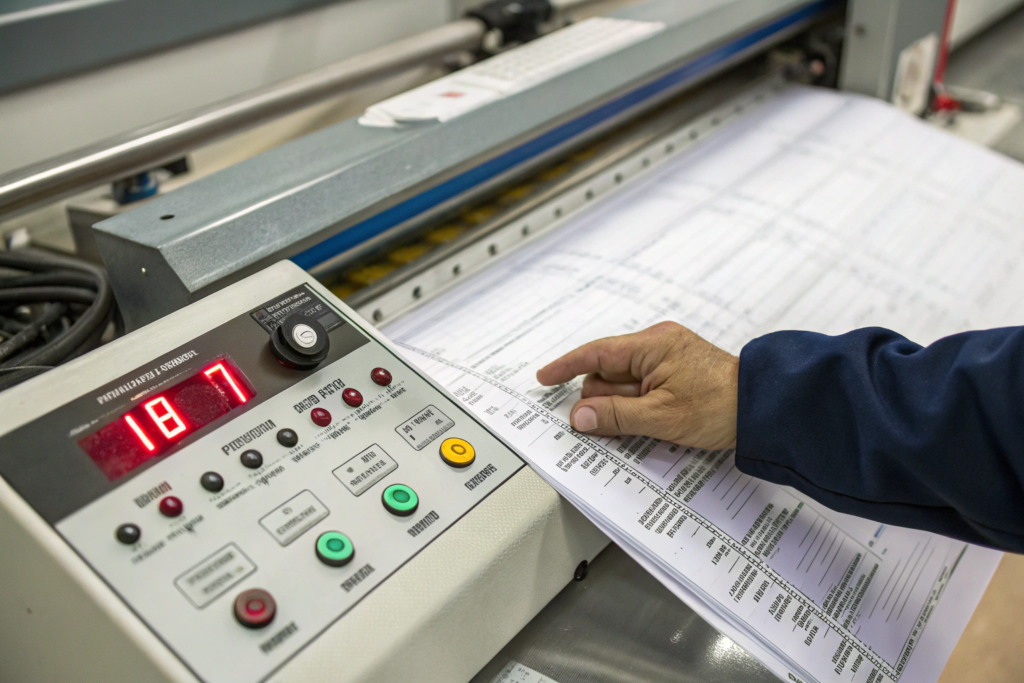
The four-point system is the industry standard for grading fabric. Each defect is assigned points based on its size.
| Defect Length | Points |
|---|---|
| Up to 3 inches | 1 point |
| 3 to 6 inches | 2 points |
| 6 to 9 inches | 3 points |
| 9+ inches | 4 points |
Holes, regardless of size, are 4 points.
At the end of the roll, we add up the points. We calculate points per 100 square yards.
- Acceptable: Less than 20 points per 100 square yards
- Seconds: 20-40 points per 100 square yards
- Reject: More than 40 points per 100 square yards
For premium clients, we use a stricter standard: less than 15 points per 100 square yards.
In 2023, a client from Japan requested the stricter standard. We agreed. The first roll of his order scored 18 points. Under the standard standard, it would have passed. Under the stricter standard, it failed. We rejected the roll and rewoven it. The client paid a higher price for the stricter standard. He got what he paid for.
How Do You Inspect for Color Consistency?
Color is subjective. Human eyes are good, but they’re not consistent. That’s why we use a spectrophotometer.
The spectrophotometer measures color numerically. It gives a delta E value. Delta E is the difference between the sample color and the standard color.
- Delta E < 0.5: Excellent match. Invisible to the human eye.
- Delta E 0.5-1.0: Good match. Visible only to a trained eye under good lighting.
- Delta E 1.0-2.0: Acceptable for most commercial use.
- Delta E > 2.0: Reject.
We also inspect color under different light sources. A color that matches in daylight might not match under fluorescent light. We use a light booth with multiple light sources: D65 (daylight), TL84 (fluorescent), and UV (for optical brighteners).
A client from the US once rejected a shipment because the color looked different in his factory than it did in our lab. We realized his factory used old fluorescent lights. We sent him a light booth. Now he checks colors under standardized lighting. No more disputes.
How Do You Document Inspection Results?
Every roll gets an inspection report. The report includes:
- Roll number
- Length and width
- Defect points and score
- Pass/fail status
- Inspector name and date
The report is linked to the roll’s QR code. You scan the code, and you see the report.
We also keep a video record of every inspection. The camera records the fabric as it moves over the light table. If there’s a dispute later, we can review the video.
A client from Germany once claimed that a roll had a defect we missed. We pulled the video. The defect was visible on the video. But it was within the acceptable point limit. We explained. The client accepted.
What Happens When Pre-Production Inspection Finds Problems?
Inspection is useless if you don’t act on the findings. When we find problems, we have a process.
How Do You Classify and Prioritize Defects?
Not all defects are equal. We classify them into three categories:
-
Critical defect: Makes the fabric unusable. Hole, large oil stain, wrong color. The roll is rejected immediately.
-
Major defect: Affects the appearance or performance of the garment. Visible streak, uneven handfeel, color variation. The roll is rejected or offered as seconds at a discount.
-
Minor defect: Small defect that can be cut around during garment production. Small slub, tiny knot. The roll is accepted, but the defect is marked.
In 2023, we found a roll with a major defect: a 2-inch oil stain in the middle. The stain could not be removed. The roll was rejected. The client was told. A replacement roll was woven.
If we had shipped that roll, the client would have found the stain during cutting. They would have had to cut around it, wasting fabric. Or they would have had to reject the roll and wait for a replacement.
What Is the Corrective Action Process?
When we find a problem, we don’t just fix the fabric. We fix the process that caused the problem.
We use a simple corrective action process:
-
Identify the problem. What is the defect? Where was it found? Which machine? Which operator?
-
Find the root cause. Why did it happen? Machine out of calibration? Yarn batch bad? Operator error?
-
Take corrective action. Fix the machine. Replace the yarn. Retrain the operator.
-
Verify the fix. Run a test batch. Inspect it. Confirm the problem is gone.
-
Document everything. Record the problem, the root cause, the fix, and the verification.
In 2022, we had a recurring problem with broken yarns in a specific fabric. We kept rejecting rolls. We kept reweaving. The problem kept coming back. Finally, we did a root cause analysis. We found that a batch of yarn from a specific mill had low strength. We stopped using that mill for that yarn type. The problem went away.
If we had just replaced the bad rolls without finding the root cause, the problem would have continued.
How Do You Communicate Problems to the Buyer?
Honesty is the best policy. When we find a problem that affects the buyer, we tell them immediately. We don’t wait. We don’t hope they won’t notice.
We explain:
- What the problem is
- How many rolls are affected
- What caused it
- What we are doing to fix it
- The new timeline
Most buyers appreciate the honesty. A client from Australia told me, “I’ve had suppliers hide problems from me. I always find out later. Then I’m angry. When you tell me immediately, I can plan. I can adjust. I trust you more, not less.”
Conclusion
Pre-production fabric inspection is not optional. It’s not a nice-to-have. It’s a non-negotiable step in any serious fabric supply chain.
Why? Because fabric defects don’t disappear. They don’t get better with time. They don’t become invisible after cutting and sewing. A defect in the fabric is a defect in the garment. A defect in the garment is a returned product, a discount, or a lost customer.
Inspection at the end is too late. The fabric is made. The dyeing is done. The finishing is applied. Fixing it means starting over. The cost is huge. The delay is huge.
Inspection throughout the process—yarn, greige, dyeing, finishing—catches problems when they are small and cheap to fix. A bad yarn batch is returned to the mill. A broken end in greige is repaired before dyeing. An uneven finish is reapplied before packing.
At Shanghai Fumao, we have made pre-production inspection the backbone of our quality system. We have the equipment. We have the trained inspectors. We have the documented procedures. We have the corrective action process.
We don’t ship fabric that hasn’t been inspected. We don’t take shortcuts. We don’t hope for the best.
If you’re tired of receiving fabric with surprises, I want you to reach out to our Business Director, Elaine, at elaine@fumaoclothing.com. Ask her about our inspection process. Ask to see our inspection reports. Ask for a virtual tour of our inspection room.
We don’t hide our inspection. We’re proud of it. Because inspection is how we protect you from defects. And protecting you is our job.