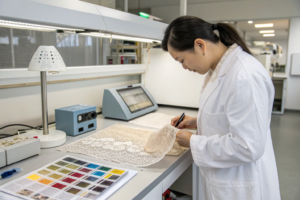
Let me share something that still haunts me from my early days in this business. We once supplied what we thought was "perfect" cotton jersey to a children's wear startup. The fabric was soft, the price was right, and it passed our basic colorfastness check. Six months later, the brand's founder called me in tears. A major retailer had randomly tested their bestselling toddler romper and detected levels of formaldehyde that exceeded the strictest limits. The entire shipment was pulled from shelves, their reputation was shattered overnight, and their business never recovered. That moment changed everything for us at Shanghai Fumao. It wasn't just about losing a client; it was about realizing that in children's wear, "good enough" is a dangerous fantasy. OEKO-TEX® certification isn't a marketing luxury for this sector—it's the minimum viable standard for operating ethically and legally.
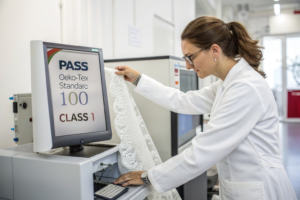
OEKO-TEX® STANDARD 100 is an absolute non-negotiable for children's clothing wholesale because it provides the most comprehensive, scientifically rigorous, and globally recognized system for eliminating harmful substances that pose unique risks to children. Children are not small adults; their skin is more permeable, their organs are still developing, and they have a heightened tendency to put fabrics in their mouths. The certification's strict "Product Class I" (for babies under 3) and "Class II" (for direct skin contact) standards are specifically designed to address these vulnerabilities, testing for over 100 substances that generic fabric tests simply ignore. In wholesale, where you're responsible for hundreds or thousands of garments, this certification is your single most effective risk management tool.
You might source from factories that claim their fabrics are "baby-safe" or "non-toxic." But without the independent, laboratory-verified discipline of OEKO-TEX®, these are just words. In today's market, where parents are forensic investigators and regulators are cracking down, those words offer zero protection. This article will detail exactly why OEKO-TEX® is the bedrock of responsible children's wear wholesale, covering chemical safety, regulatory compliance, brand trust, and operational efficiency—all through the lens of a supplier who has made this certification the foundation of our children's product line.
How Does OEKO-TEX® Address Unique Risks to Children's Health?
Children's physiology makes them exceptionally vulnerable to chemical exposures. Their skin's surface area to body weight ratio is higher, their skin barrier is thinner, and their metabolic systems are still maturing. A chemical that might cause minor irritation in an adult can lead to significant absorption and potential systemic effects in a child. Furthermore, the "mouthing behavior" of infants and toddlers means fabrics are constantly exposed to saliva, which can leach out harmful substances. OEKO-TEX® isn't just a stricter version of an adult standard; it's a specifically engineered protocol for these realities.
The certification mandates brutally strict limits for three critical categories: 1) Allergenic and Carcinogenic Dyes, 2) Formaldehyde, and 3) Heavy Metals and Phthalates. For example, the allowable limit for formaldehyde in Product Class I (babies) is 20% of the limit for adult clothing not in direct skin contact. It completely bans the use of allergenic disperse dyes, which are common in colorful polyester but are a leading cause of textile-related contact dermatitis. The saliva and perspiration fastness tests ensure that dyes and finishes won't migrate when a child sucks on their clothing. This is proactive, prevention-focused safety engineering.

Why Are Phthalates and Heavy Metals Specifically Targeted?
These are "everywhere chemicals" in traditional textile processing that pose documented developmental risks. Phthalates (like DEHP, BBP) are used as softeners in PVC prints (common on children's t-shirts) and can be hormone disruptors. Lead and cadmium can be present in certain pigments used for prints or as contaminants in low-cost metal trims like zippers and snaps.
OEKO-TEX® testing scans for these substances with extremely low detection limits. We had a stark lesson in 2021. A client sent us a cute printed kids' tee from another supplier to analyze. The print was bright and felt fine. Our in-house screening (which mirrors OEKO-TEX® parameters) flagged elevated levels of a specific phthalate in the plastisol ink. The supplier had used a cheap, non-compliant ink. If that garment had been imported to the US, it would have violated CPSIA. For a wholesaler, a single batch like this could lead to a recall of thousands of units. OEKO-TEX® certification of the final product (which includes testing trims and prints) eliminates this risk at the source. It’s why understanding the dangers of phthalates in children's products is critical, and OEKO-TEX® provides the enforceable solution.
How Does the "Saliva Fastness" Test Actually Work?
This is a test unique to children's product safety standards. Fabric samples are immersed in an artificial saliva solution under controlled time and temperature conditions. The solution is then analyzed to see if any dyes or chemicals have leached out. It simulates a baby chewing on a sleeve for hours.
We integrate this thinking into our fabric development. For a line of OEKO-TEX® certified organic cotton ribbing used for baby cuffs and collars, we don't just choose any dye. We work with dyehouses that use pre-reduced, high-fixation dyes specifically formulated for this test. The result? The color stays vibrant on the fabric, not in the baby's mouth. When a German babywear brand reviewed our test reports and saw perfect scores for saliva fastness, their head of sourcing said, "This is the data that lets me sleep at night." That's the value: transforming anxiety into assurance.
How Does It Simplify Complex Global Compliance for Wholesalers?
If you wholesale children's clothing, you're likely dealing with multiple markets: the US with its CPSIA, the EU with its REACH and toy safety directives, Australia with its mandatory standards, etc. Each has its own list of restricted substances and testing requirements. Managing this compliance maze in-house is a full-time job with massive liability. OEKO-TEX® acts as a universal compliance harmonizer.
The OEKO-TEX® STANDARD 100 criteria are updated annually to incorporate the strictest limits from regulations worldwide. By sourcing OEKO-TEX® certified garments (not just fabric, but the finished garment certified to Class I or II), a wholesaler can be confident that the product meets or exceeds the chemical safety requirements of virtually all major markets. This is a huge operational simplification. Instead of maintaining separate inventories for the US and EU, you can stock one certified product line with confidence. The certificate becomes your passport.

Does It Replace CPSIA Testing for the US Market?
No, and any supplier who claims it does is misinformed or dishonest. CPSIA is a legal requirement in the US with its own specific testing and certification (Children's Product Certificate) process. However, OEKO-TEX® is the strongest possible foundation for CPSIA compliance. Here’s the practical synergy:
An OEKO-TEX® Product Class I certificate tests for a broader range of chemical hazards than the baseline CPSIA requirements (which focus on lead, phthalates, and flammability). If your garment has a valid OEKO-TEX® Class I certificate, it has already passed rigorous tests for substances that could also cause a CPSIA violation (e.g., certain heavy metals). This means your mandatory CPSIA third-party testing is far less likely to have a surprise failure. We guide our wholesale clients through this two-step process: 1) Use OEKO-TEX® as our internal gold standard for material safety, 2) Then conduct the specific CPSIA tests with a CPSC-accepted lab to generate the legally required CPC. The OEKO-TEX® step de-risks the CPSIA step. Resources on navigating the overlap of global safety standards are essential, but a certified supplier simplifies execution.
How Does It Manage the Risk of Supply Chain Contamination?
In wholesale, you often don't control every step of production. The garment factory sources trims, threads, and prints. This is where the "full article" OEKO-TEX® certification is irreplaceable. A certificate for the fabric alone is insufficient. The certification must cover the final, assembled garment, which means every component has been assessed.
We enforce this with our manufacturing partners. For any children's wear order, we mandate that the garment factory must use our OEKO-TEX® certified fabrics and must source all other components (thread, elastic, labels, prints, buttons) from our vetted list of certified accessory suppliers. The factory then submits the finished garment to an OEKO-TEX® institute for certification. This closed-loop system prevents a non-compliant $0.01 button from contaminating a $10 garment. For a wholesaler, this systemic control is what you're really buying—not just a product, but a guaranteed process.
How Does OEKO-TEX® Build Unbreakable Trust with Retailers and Parents?
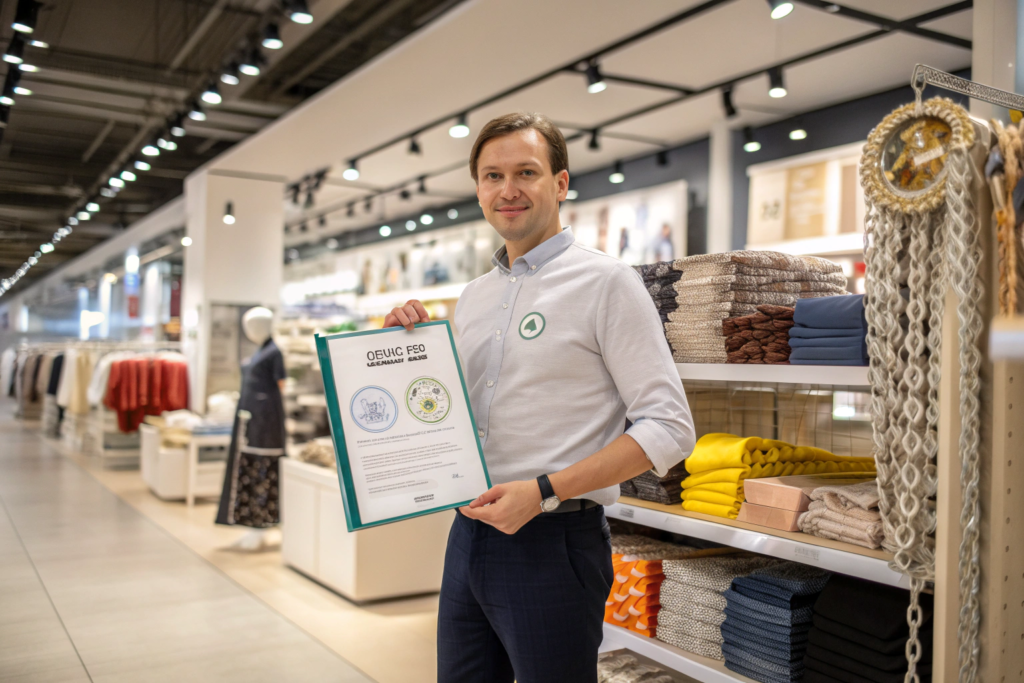
Trust is the entire business model of children's wear. Parents delegate their child's safety to the brands they buy from, and retailers delegate that trust to their wholesalers. In this chain, OEKO-TEX® is the most recognized and trusted independent verification. It's a label that parents actively look for. For a wholesaler, offering OEKO-TEX® certified lines isn't just a sales feature; it's a critical tool for B2B sales conversion and B2C brand building.
Retailers, from large chains to boutique stores, are increasingly risk-averse. Their liability is enormous. When you pitch a new children's line, the first question is often, "What safety certifications do you have?" An OEKO-TEX® certificate is a definitive answer that immediately moves the conversation past doubt and into colors, styles, and quantities. It shows you are a professional, serious supplier who understands the market's non-negotiable requirements.
Can It Command a Premium and Improve Margins?
While there is a cost to certification, the market rewards it. Parents are demonstrably willing to pay more for verified safety. A 2023 market study in Europe showed that children's items with credible eco-labels (like OEKO-TEX®) could sustain a 15-20% price premium over uncertified equivalents. For a wholesaler, this means two things: 1) Your certified lines can have healthier margins, and 2) They become your key differentiator in a crowded, price-competitive market.
We saw this with a mid-sized UK wholesaler client. They introduced a basic range of OEKO-TEX® certified baby bodysuits alongside their conventional range. The certified range was 12% more expensive at cost. They positioned it as their "Premium Safe&Sound" line. Within two seasons, it accounted for 40% of their babywear volume and over 50% of the category's profit. The retailers they supplied loved having a clearly differentiated, "safe-choice" option to offer parents. The certification provided the story that justified the price.
How Does It Create Marketing Content That Actually Resonates?
"Soft" and "cute" are generic. "OEKO-TEX® certified for safety against harmful substances" is specific, credible, and addresses a core parental fear. This allows wholesalers and their retail partners to create powerful, educational marketing. You can create hangtags explaining what OEKO-TEX® means, blog posts about why chemical safety matters, and social media content highlighting the certification process.
At Shanghai Fumao, we provide our wholesale partners with a "Trust Toolkit" – high-resolution images of the certificates, short videos explaining the tests, and simple infographics. This enables a small boutique retailer to speak with the authority of a large brand. It transforms the wholesaler from a mere logistics provider into a brand-building partner. In an era of conscious consumption, this is invaluable.
How Does It Streamline Quality Control and Reduce Business Risk for Wholesalers?
For a wholesaler, quality failures are a logistical and financial nightmare. Returns, chargebacks, and recalls don't just cost money; they destroy retailer relationships. Children's wear failures are the most severe. OEKO-TEX® certification introduces a level of pre-emptive quality control that drastically reduces the probability of these catastrophic events. It shifts your QC focus from reactive inspection to proactive system assurance.
The certification requires annual renewal and includes regular unannounced audits of the certified production sites. This means the factory producing your goods is being held to a consistent, high standard by a third party throughout the year, not just during your scheduled visit. Furthermore, the testing is done on a pass/fail basis for a comprehensive list of parameters. You are not relying on a factory's own, potentially limited, test report.

How Does It Minimize Returns and Liability Claims?
The most common non-fit returns in children's wear are related to skin irritation, color bleeding after washing, and shrinkage. OEKO-TEX® testing directly addresses these issues through its pH, colorfastness (to washing, perspiration, saliva), and dimensional stability tests. A certified garment is engineered to perform.
We track this with our wholesale partners. One client, specializing in children's pajamas, reported that after switching to our OEKO-TEX® certified fleece, their return rate for "skin irritation" and "color fading" dropped by over 60% within a year. The certification had eliminated the variables causing those problems. For a wholesaler, fewer returns mean higher net profitability, happier retailers, and less wasted inventory. It also dramatically reduces the risk of a liability claim related to a chemical allergy, which could be business-ending. Implementing a robust quality assurance framework for children's products is essential, and OEKO-TEX® is its scientific core.
Does It Make Supply Chain Management More Agile?
Ironically, adding a certification requirement can speed up your time-to-market. How? When you work with a supplier like us whose children's wear fabrics are already OEKO-TEX® certified and in stock, you eliminate the 4-6 week period typically required for fabric safety testing and approval. You can move directly to sampling and production.
A case in point: In early 2024, a wholesaler needed to quickly produce a capsule collection of children's spring basics to capitalize on a trend. Their usual lead time was 14 weeks. Because they used our pre-certified fabric library (jersey, interlock, french terry), they bypassed the fabric approval phase. We developed samples in 10 days, and the bulk order was shipped in 9 weeks. The OEKO-TEX® certification, already embedded in the material, became an enabler of speed and agility, allowing them to be first to market with a guaranteed-safe product.
Conclusion
For children's clothing wholesale, OEKO-TEX® STANDARD 100 certification is not an optional add-on or a niche marketing gimmick. It is a fundamental operational necessity. It is the most effective system available for mitigating the unique health risks to children, simplifying the labyrinth of global compliance, building unshakeable trust with retailers and end-consumers, and streamlining quality control to protect your business from financial and reputational ruin. In a sector where the stakes are the highest imaginable, it provides the verified safety net that allows everyone in the supply chain—from manufacturer to wholesaler to parent—to breathe easier.
Choosing to wholesale OEKO-TEX® certified clothing is a decision to prioritize long-term responsibility over short-term cost. It’s an investment in your brand's integrity and your business's resilience. At Shanghai Fumao, we have dedicated our children's wear fabric division to this standard because we believe it is the only responsible way to operate. If you are ready to build or elevate your children's wear offering on a foundation of proven safety and trust, let's partner. Contact our Business Director, Elaine, to explore our comprehensive range of OEKO-TEX® certified fabrics and garments designed for the most important customers in the world. Reach her at: elaine@fumaoclothing.com.