Let's cut through the noise. When you hear "ethical compliance," you likely think of fair wages and safe factories. But in 2024, ethical compliance has a new, non-negotiable pillar: truth in labeling. Making false environmental claims is now seen as a profound ethical breach—a betrayal of consumer trust that regulators are punishing with massive fines and that consumers are punishing with boycotts. OCS (Organic Content Standard) is not just a fabric certification; it is your brand's primary defense against committing that ethical violation. It transforms your good intentions about using organic materials into a verifiable, legally defensible standard of conduct. Without it, you are not just risking a fine; you are risking your brand's moral license to operate.
OCS is critically important for your brand's ethical compliance because it provides the auditable, third-party verification necessary to substantiate your organic content claims, directly aligning with the core ethical principle of honesty in marketing. It creates a due diligence framework that satisfies evolving consumer rights laws, retailer mandates, and upcoming regulations like the EU's Empowering Consumers Directive, which explicitly bans unsubstantiated green claims. In essence, OCS turns your ethical sourcing policy from an internal document into an external, provable reality.
This is about moving from "doing good" to "proving good." Let's examine how OCS anchors your brand's ethics in evidence, not just emotion.
The Ethical Imperative: Honesty as a Non-Negotiable Standard
The fundamental ethical contract between a brand and its customer is simple: "We will tell you the truth about what you're buying." When you label a garment "made from organic cotton," you are making a specific, factual claim. In the absence of verification, that claim is merely an opinion. OCS provides the objective, third-party verification that bridges the gap between claim and fact, fulfilling your ethical duty of honesty.
This is not a niche concern. Global movements like Fridays for Future and watchdog groups have shifted public consciousness. Consumers now view "greenwashing" not as clever marketing, but as a form of corporate lying. Your brand's reputation for integrity is now tied directly to the provability of your sustainability claims.
How does OCS prevent unintentional greenwashing?
Many brands fall into greenwashing not out of malice, but from a broken supply chain. They are told by their factory that the fabric is organic, and they believe it. OCS eliminates this "trust me" gap.
- Breaks the Telephone Game: In a long supply chain (farm → gin → spinner → weaver → garment factory), information degrades. OCS replaces verbal assurances with mandatory documentation (Transaction Certificates) at each transfer.
- Detects Blending and Fraud: The OCS mass balance system makes it mathematically difficult to blend conventional and organic cotton without detection. An ethical brand cannot unknowingly sell a blended product as 100% organic if their supplier uses OCS.
- Provides a Clear Benchmark: The standard defines what "organic content" means and how to calculate it, removing ambiguity. You can't accidentally overstate the percentage.
For example, a well-intentioned Australian brand in 2023 claimed their dresses were "100% organic." A customer's complaint triggered an investigation. They discovered their garment factory, while using organic fabric, had used standard polyester thread and trims, making the 100% claim false. Had they used an OCS framework, the correct composition (e.g., 95% organic cotton, 5% other materials) would have been calculated and labeled from the start, preserving their honesty.
What is the ethical cost of a failed compliance audit?
The cost is measured in trust, not just money. When a retailer like Target or Zalando conducts a compliance audit and finds your organic claims can't be proven, the consequences are ethical as much as commercial:
- Delisting: You are removed from the "sustainable" collections and potentially from the retailer altogether. This signals to the market that your ethics are not credible.
- Public Scoring: Platforms like Good On You rate brands publicly. A failing audit can lead to a downgrade, broadcasting your lack of compliance to conscious consumers.
- Internal Morale: Your own team, who believed in the brand's mission, faces disillusionment.
OCS provides the evidence package to pass these audits cleanly, protecting not just revenue, but your team's pride and your customers' faith.
The Regulatory Shield: Navigating the New Legal Landscape
Ethical compliance is rapidly becoming legal compliance. Governments are enacting laws that treat unsubstantiated green claims as consumer fraud. The regulatory landscape is shifting from voluntary guidelines to enforceable penalties. OCS certification is your documented, third-party evidence that can be presented in a court of law or to a regulator to demonstrate "due diligence."
This is where ethics meets liability. Implementing OCS is an act of responsible corporate governance.
How does OCS align with the EU's Empowering Consumers Directive?
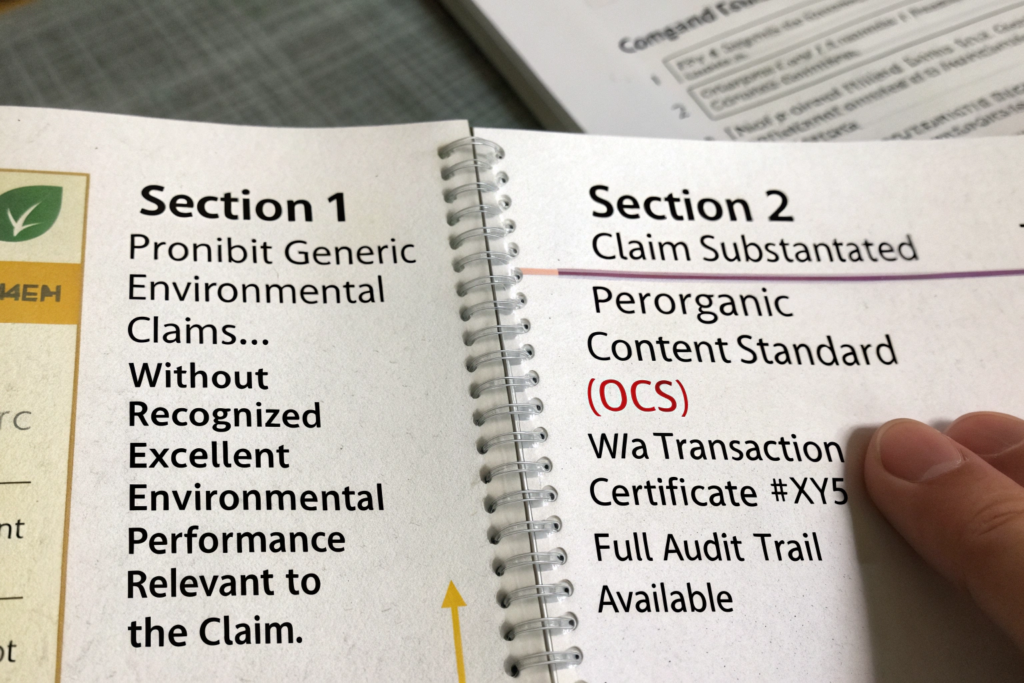
The directive, set to be enforced, bans vague claims like "environmentally friendly" and requires specific, evidence-based proof for any claim. For an "organic cotton" claim, OCS is exactly the type of "recognized excellent environmental performance" standard referenced.
By using OCS, you are pre-emptively aligning your brand with this stringent law. You are gathering the evidence now that you will be legally required to produce later. This proactive stance is the ethical choice—it respects the spirit of the law before it's enforced. Brands that wait will face a costly, chaotic scramble for compliance.
Can OCS protect against FTC Green Guides enforcement in the US?
Absolutely. The FTC Green Guides require that marketers have "competent and reliable evidence" to back environmental claims. An OCS Transaction Certificate, issued by an accredited third-party after auditing a full supply chain, constitutes exactly that.
If the FTC were to challenge your organic claim, presenting the OCS TC and the supporting audit trail is your strongest possible defense. It shows you didn't just make it up; you invested in a system to verify it. This shifts you from being a potential target of enforcement to a model of compliant practice. Resources like the FTC's own guidance on environmental claims underscore the need for proof, which OCS provides.
Building Consumer Trust Through Radical Transparency
Today's ethical consumer demands more than a feel-good story; they demand proof. They are armed with smartphones and skepticism. OCS enables a level of transparency that builds deep, durable trust. It allows you to move from saying "we are ethical" to showing your ethics in action.
This transparency is a powerful marketing asset, but more importantly, it's an ethical commitment to your customers. It treats them as informed partners, not passive recipients.
How can OCS data be used in consumer-facing communication?
Don't hide your proof in a compliance folder. Showcase it:
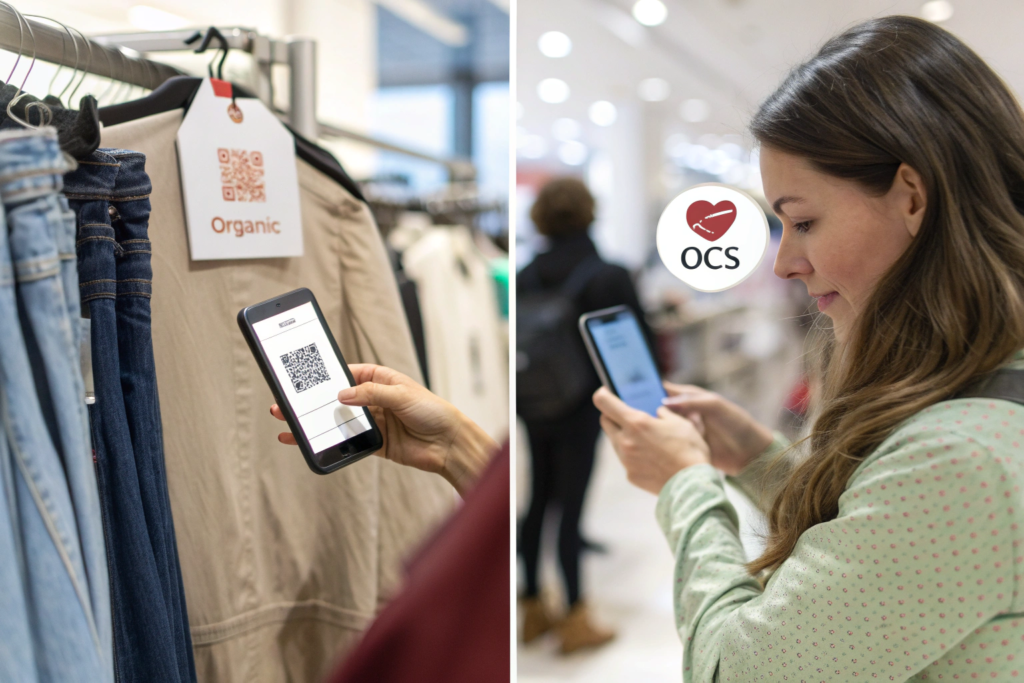
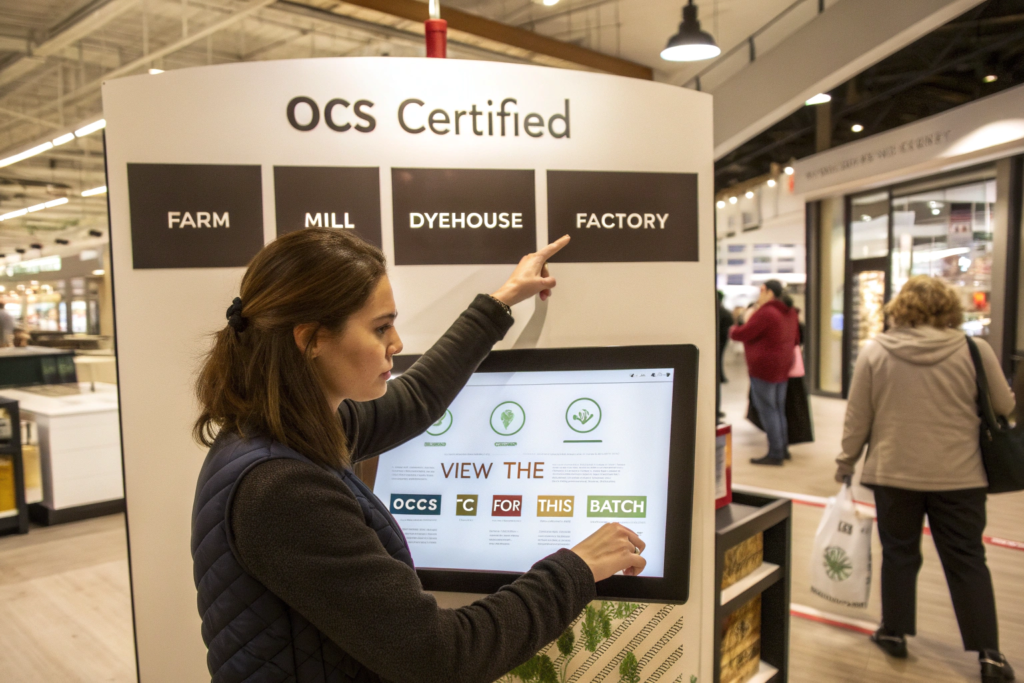
- QR Codes on Hangtags: Link directly to a landing page for that product's specific OCS TC (with sensitive commercial data redacted). This says, "We have nothing to hide."
- Supply Chain Storytelling: Use the documented journey of your OCS materials in your "About Us" or product pages. Show maps, photos of partner farms or mills (with permission), and explain what each step means.
- Impact Reporting: Use the quantified data from your OCS purchases (e.g., "This collection used 5,000 kg of OCS organic cotton, supporting X hectares of pesticide-free farming") in annual sustainability reports.
This approach transforms the certification from a cost of doing business into a core element of your brand narrative. It's honest marketing.
What is the long-term brand value of this trust?
Trust is the ultimate competitive moat. A brand known for verifiable ethics:
- Commands Price Premiums: Consumers pay more for brands they trust.
- Fosters Loyalty: Trust turns customers into advocates who forgive occasional missteps.
- Attracts Talent: The best employees want to work for companies with authentic values.
- Resists Crises: A strong reputation for integrity provides resilience in the face of negative publicity or market downturns.
Investing in OCS is an investment in this trust equity. It's a tangible way to demonstrate that your ethics are operational, not just ornamental.
Conclusion
OCS is vital for your brand's ethical compliance because it operationalizes honesty. In an era where consumers and regulators demand proof over promises, OCS provides the auditable, third-party verified evidence that your organic claims are true. It protects you from the ethical and legal pitfalls of greenwashing, aligns you with tightening global regulations, and builds unshakeable consumer trust through radical transparency.
For a modern brand, ethical compliance is no longer just about how you treat people in your supply chain, but how honestly you communicate with your customers about what you sell them. OCS is the tool that ensures this communication is built on fact, securing your brand's reputation and its future.
If your brand is ready to build its ethical foundation on verifiable proof, the partnership starts with a supply chain that shares your commitment. At Shanghai Fumao, our embedded OCS system is designed to be the transparent backbone for ethical brands. Contact our Business Director, Elaine, to integrate integrity into your next collection: elaine@fumaoclothing.com. Let's prove your values, together.