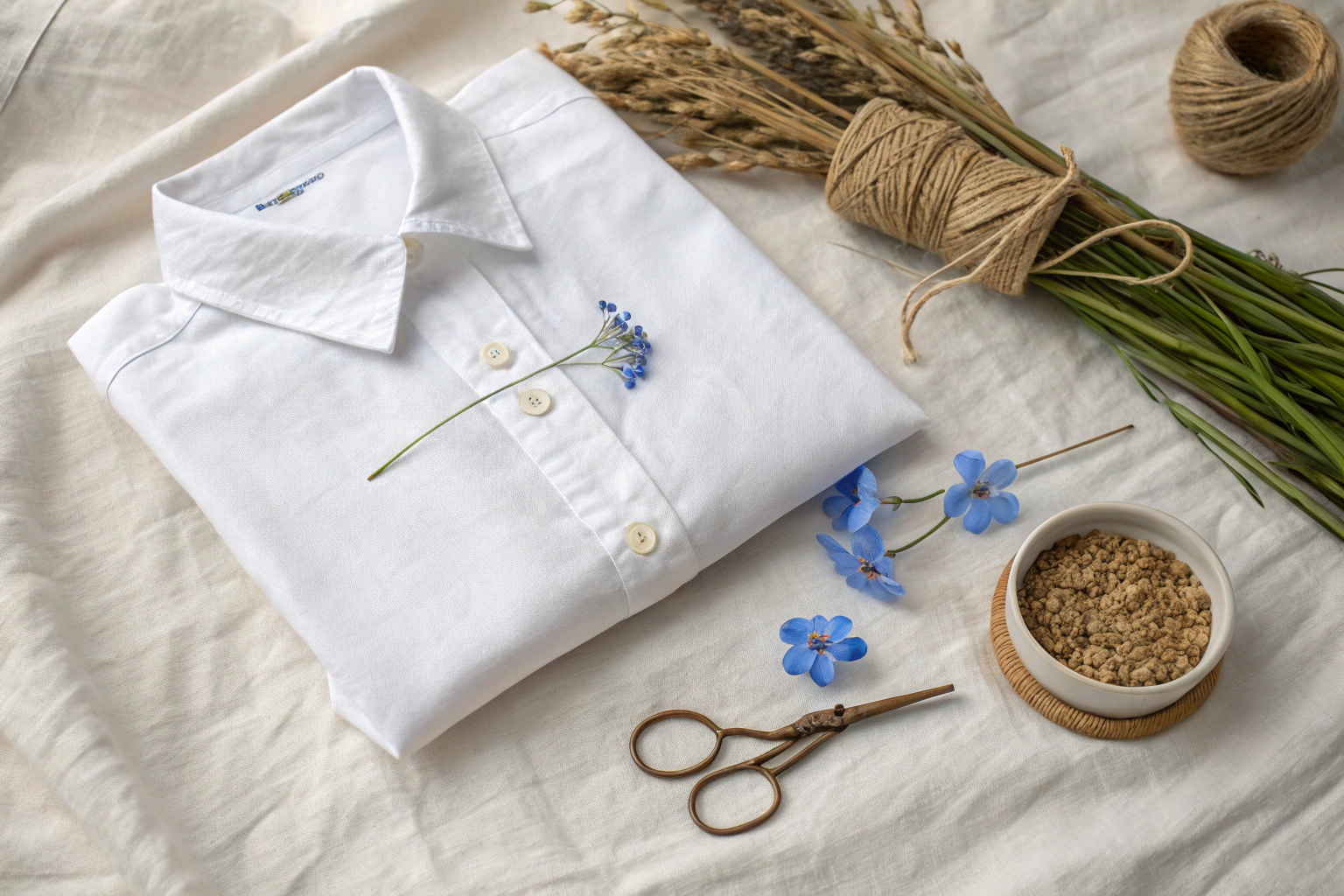
Last month, I had a video call with a buyer from a major fast-fashion retailer in Spain that I've known for years. For the last decade, our conversations have been about polyester blends, performance fabrics, and the latest technical innovations. But this time, his request surprised me. He said, "We need linen. Lots of it. For everything—shirts, dresses, trousers, even jackets. What do you have?" I laughed and asked him what changed. He said, "Our customers are done with plastic. They want real. They want natural. They want something that breathes and looks good even when it's wrinkled. They want linen."
The answer is that linen is experiencing a massive comeback in 2026 because it perfectly aligns with the three dominant forces shaping consumer culture right now: the rejection of "fast fashion" plastic, the embrace of "quiet luxury" aesthetics, and the urgent need for genuinely sustainable, low-impact materials. After decades of being pushed aside by easy-care synthetics and mass-produced cotton, linen is being rediscovered by a new generation of consumers who value authenticity, durability, and a connection to nature. It's not just a fabric; it's a statement against the disposable, synthetic, and homogenized.
But here's the thing I told that Spanish buyer. This isn't just a nostalgic return to grandma's tablecloths. The linen of 2026 is different. It's softer, more versatile, and more accessible than ever, thanks to innovations in fiber processing and blending. And the supply chain is under immense pressure to keep up. I've been in this industry in Keqiao for over 20 years, and I've never seen demand for linen like this. The brands that succeed will be the ones who understand not just the "why" of linen's comeback, but the "how" of sourcing it reliably in a market where everyone wants it at once. Let me break down exactly what's driving this renaissance and what it means for your brand.
What Cultural and Consumer Shifts Are Driving Linen's Comeback?
Let's start with the cultural moment. Fashion doesn't exist in a vacuum. The fabrics that dominate reflect the values and anxieties of the time. Right now, we are living through a massive cultural shift away from the hyper-polished, synthetic, "influencer" aesthetic of the 2010s and toward something more authentic, durable, and individual. Linen is the perfect fabric for this moment.
I see it in my own clients. A few years ago, everyone wanted "stretch" and "wrinkle-free." Now, they want "texture" and "natural slub." They want fabrics that look like they have a history, that feel real, that aren't trying to be perfect. Linen, with its inherent irregularities and beautiful wrinkles, is the anti-synthetic.
Is "quiet luxury" the reason for linen's popularity?
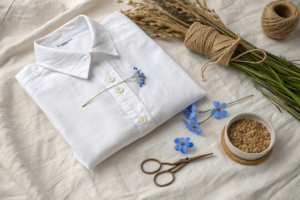
Absolutely. "Quiet luxury" is the aesthetic that rejects logos and flashy displays of wealth in favor of understated quality, impeccable materials, and timeless design. It's about wearing a beautifully made linen shirt that will last for years, not a polyester-blend t-shirt with a giant logo that will fall apart after three washes.
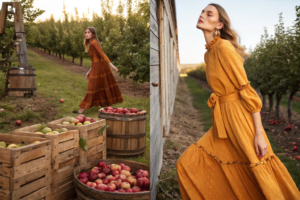
Linen is the ultimate quiet luxury fabric. It whispers "I value quality and craftsmanship" without shouting. The slight irregularities in the yarn, the natural slub, the way it softens and becomes more beautiful with age—these are signs of a genuine, well-made product. A client from a British heritage brand told me that their linen jackets are their best-selling item because "they look expensive without trying to look expensive." That's the essence of quiet luxury. (This Vogue article on quiet luxury explains the aesthetic beautifully.)
How does the "anti-plastic" sentiment affect fabric choice?
This is huge, especially among younger consumers. Gen Z and Millennials have grown up with the knowledge that synthetic fibers shed microplastics, are made from fossil fuels, and don't biodegrade. They are actively seeking out natural alternatives. They want clothes that won't pollute the ocean when they eventually wear out.
Linen is the ultimate anti-plastic fabric. It's made from flax, a renewable plant. It's fully biodegradable. It requires no irrigation and few pesticides to grow. It sequesters carbon. For a consumer trying to reduce their environmental footprint, choosing linen over polyester is a tangible, meaningful action. A buyer from a US-based sustainable lifestyle brand told me that their marketing research shows "plastic-free" is now a more powerful motivator for their customers than "organic." Linen delivers on that promise. (The Ellen MacArthur Foundation's work on circular economy highlights the importance of moving away from synthetic fibers.)
What Makes Linen's Environmental Profile So Compelling Right Now?
Beyond the cultural trends, linen has genuine, quantifiable environmental advantages that are becoming impossible for brands to ignore. As regulations tighten and consumers demand proof, linen's low-impact profile shines. It's not just a feeling; it's a fact.
I've had to provide lifecycle assessment data to many clients over the years. Linen consistently outperforms almost every other fiber on key metrics. When a client from a German outdoor brand asked us to compare the carbon footprint of a linen canvas versus a cotton canvas for a tote bag, the linen came out 40% lower. That's the kind of data that drives sourcing decisions now.

How much water does linen really save compared to cotton?
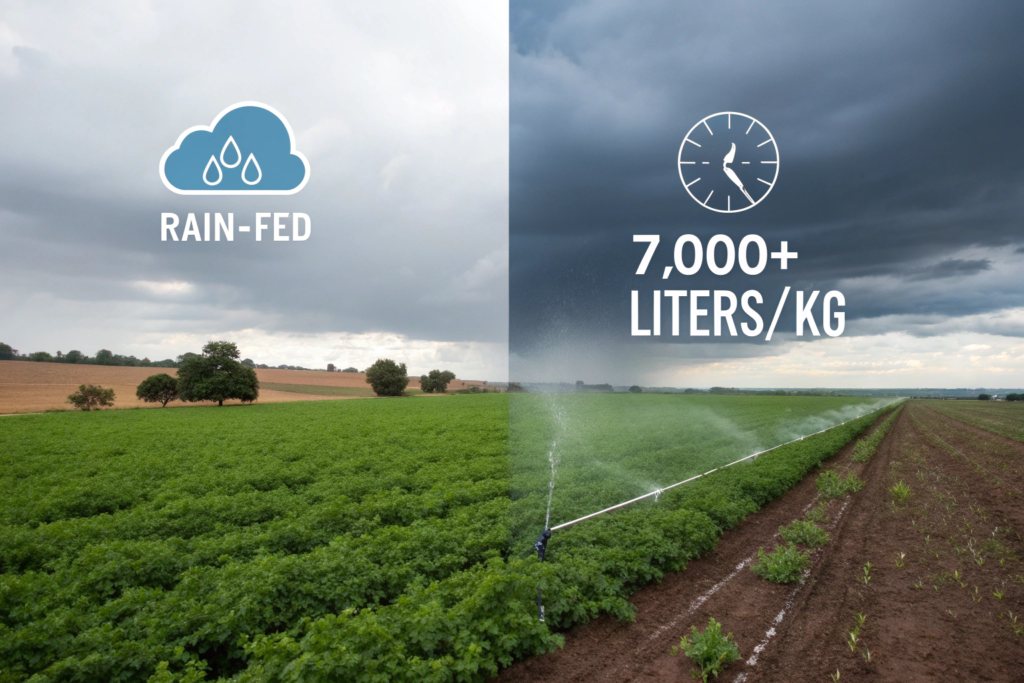
The numbers are staggering. Conventional cotton is notoriously thirsty, requiring anywhere from 7,000 to 29,000 liters of water to produce one kilogram of fiber, depending on the growing region. Linen, made from flax, is typically rain-fed and requires little to no irrigation. It thrives in the cool, damp climates of Northern Europe with natural rainfall.
The water savings are on the order of 80% to 90% compared to conventional cotton, and even compared to organic cotton (which still requires significant water), linen is a clear winner. For a client from a French luxury brand developing a "low-water" capsule collection, linen was the obvious choice for the core fabric. They marketed it as "grown by the rain, not by irrigation," and consumers responded. (The Water Footprint Network has detailed data on the water footprint of different fibers.)
Is linen truly biodegradable and plastic-free?
Yes, 100%. Linen is a natural cellulosic fiber made from flax. At the end of its long life, if it's not blended with synthetics, it will biodegrade in soil or compost, just like leaves. It doesn't shed microplastics when washed. It's completely plastic-free.
This is a huge selling point in an era of microplastic anxiety. A client from a Canadian children's wear brand switched their entire line to linen for this reason. Parents are terrified of their kids ingesting or absorbing microplastics. A linen romper or shirt gives them peace of mind. The fiber is also naturally anti-bacterial and hypoallergenic, which is an added bonus for sensitive skin. (This study on the biodegradability of natural fibers confirms linen's advantages.)
How Has Linen Itself Evolved to Appeal to Modern Consumers?
Here's the part that surprises many people. The linen of 2026 is not your grandmother's stiff, scratchy, wrinkle-prone fabric. Innovations in fiber processing, spinning, and finishing have created linens that are softer, more versatile, and easier to care for than ever before. The "roughness" that once limited linen's appeal has been engineered away.
I've seen this evolution firsthand. Twenty years ago, our linen fabrics were much coarser. We had to warn clients about shrinkage and stiffness. Now, we can offer linens that are soft enough for baby clothes and drapes beautifully for evening wear. The fiber itself hasn't changed; our ability to process it has.
What is "stone-washed" or "enzyme-washed" linen?
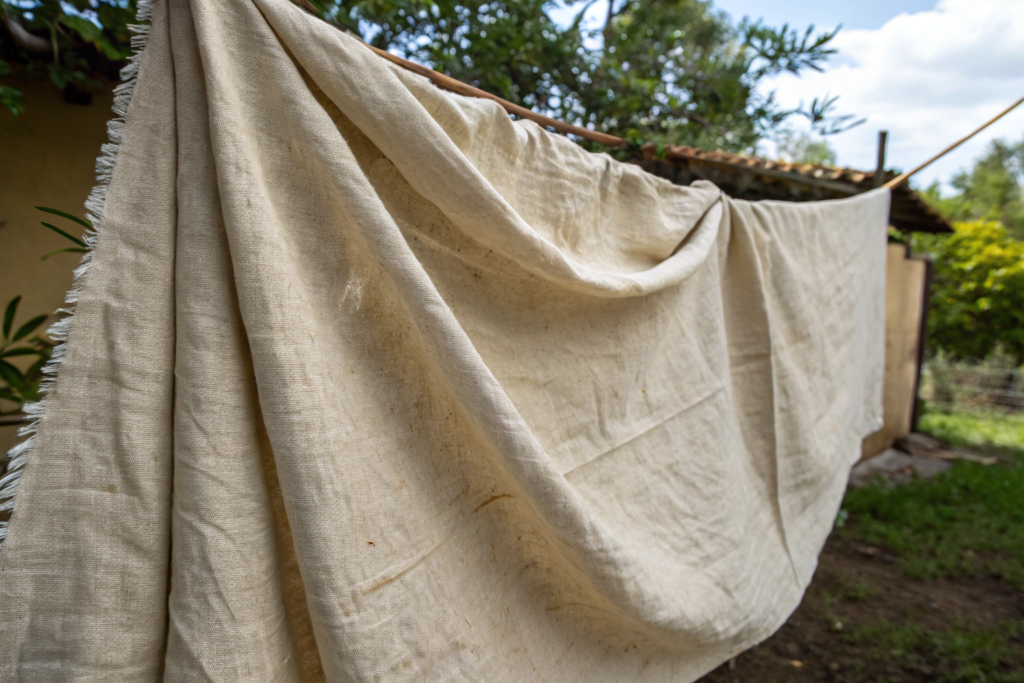
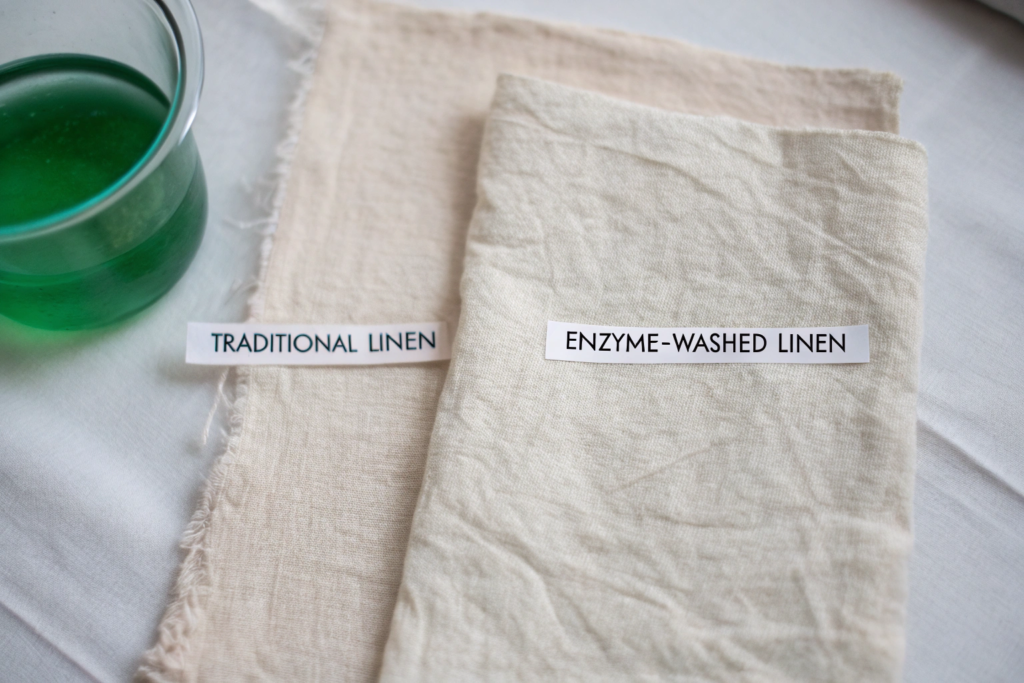
These are finishing techniques that dramatically soften the handfeel of linen. Stone-washing, familiar from denim, involves tumbling the fabric with pumice stones to physically abrade the fibers and create a soft, worn-in feel. Enzyme-washing uses natural enzymes (cellulases) to gently break down protruding fiber ends, creating a smooth, soft surface without the mechanical abrasion.
We use a combination of these techniques for many of our linen clients. A Portuguese brand we work with specializes in "vintage" linen apparel that feels like it's been worn and loved for years, right out of the box. The enzyme wash gives it that incredibly soft, slightly faded, perfectly relaxed handfeel that consumers love. (This article from Textile Today explains enzyme washing.)
What about "linen blends" – are they cheating?
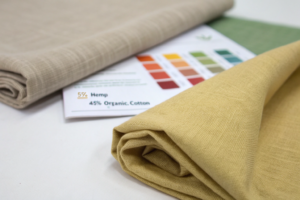
Not at all. Linen blends are often the smartest way to harness linen's advantages while mitigating its few drawbacks. Blending with other fibers can reduce wrinkling, add softness, improve drape, or lower cost, depending on the blend.
- Linen-cotton blends are classic. They offer the breathability and texture of linen with the softness and familiarity of cotton. They wrinkle less than pure linen.
- Linen-TENCEL™ blends are my personal favorite for elevated apparel. TENCEL adds incredible softness, drape, and a slight sheen, while linen provides structure and texture. The 70/30 linen-TENCEL blend we produce for a Dutch menswear brand is one of our best-selling fabrics.
- Linen-viscose blends are similar to TENCEL blends, often at a slightly lower price point, but with less environmental credibility.
- Linen-silk blends are the ultimate luxury, combining linen's texture with silk's luster and softness for stunning special-occasion pieces.
Blending isn't cheating; it's smart design. It's about creating the best possible fabric for a specific end use. (The Common Objective guide to linen discusses blend options.)
What Are the Supply Chain Challenges of Linen's Comeback?
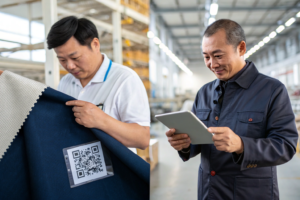
This is the part that keeps sourcing managers up at night. The sudden surge in demand for linen has put immense pressure on a supply chain that was, frankly, not prepared for it. Flax is grown in a relatively small geographic area (primarily France, Belgium, the Netherlands) and processed by a limited number of specialized mills. When everyone wants linen at once, bottlenecks happen.
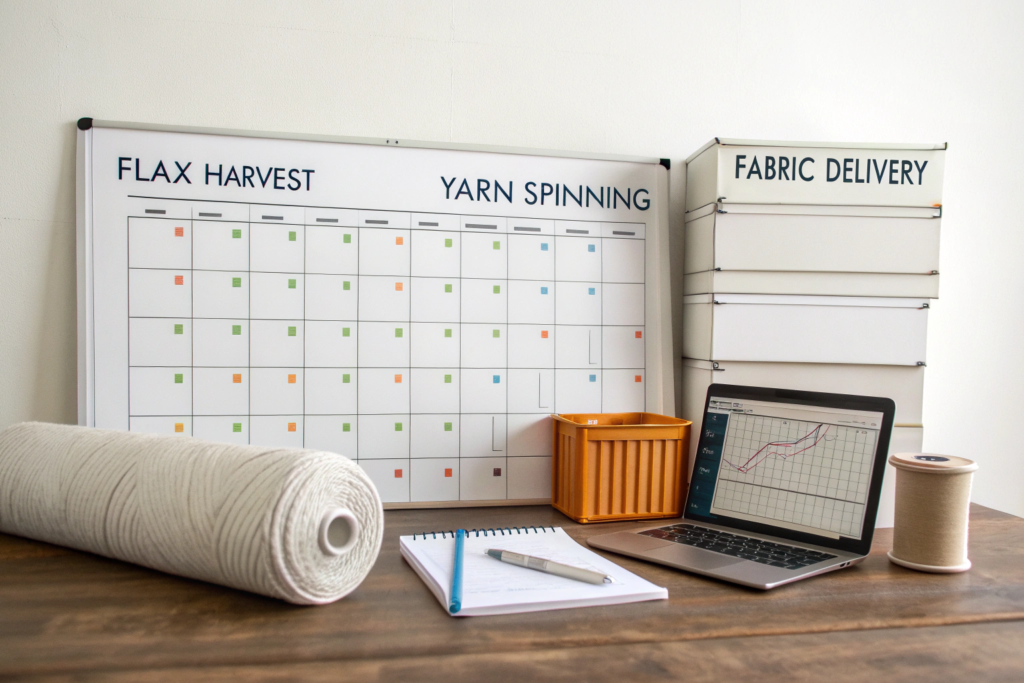
I've had to have some tough conversations with clients this year. A buyer from a US-based brand wanted 50,000 meters of a specific linen fabric in eight weeks. I had to tell him it was impossible. The flax hadn't even been harvested yet. We had to work together to forecast his needs and place orders months in advance. The brands that plan ahead are the ones who will get the linen they need.
Why is European flax so highly prized and supply-constrained?
The best linen in the world comes from Western Europe—specifically Normandy in France, Flanders in Belgium, and the Netherlands. The unique combination of maritime climate, rich soil, and generations of expertise produces flax with exceptionally long, strong, and fine fibers. This is where "Masters of Linen" certification comes from.
This growing region is limited. You can't just plant flax anywhere and get the same quality. And the processing infrastructure—the scutchers, hacklers, and spinners that turn flax straw into linen yarn—is also concentrated in Europe. When demand spikes, these facilities run at full capacity. Lead times stretch. Prices rise. A client from a UK brand learned this the hard way last year when they tried to place a large order in March for a summer collection. The European spinners were already booked solid. They had to scramble to find alternative sources. (The Confédération Européenne du Lin et du Chanvre is the industry body for European flax.)
How can brands secure reliable linen supply in this market?
The answer is forecasting, partnerships, and flexibility. You cannot treat linen like a commodity you can order at the last minute. You need to build relationships with suppliers who have deep connections in the European flax supply chain.
We advise our clients to forecast their linen needs at least six months in advance, and for large or complex orders, even longer. We also encourage them to be open to blends and alternative constructions. If a specific yarn is unavailable, maybe a slightly different blend or weight can work. And we build strong relationships with our European flax suppliers so we can secure allocation for our key clients. A Scandinavian client who orders the same linen-cotton canvas twice a year gets priority because we know their pattern. They plan ahead, and they are never disappointed. (The Masters of Linen website has a directory of certified European linen producers.)
How Can Brands Incorporate Linen Beyond Traditional Shirts?
The beauty of linen's comeback is that it's not just for the classic white button-down anymore. Designers are getting creative, using linen in categories where it was rarely seen before. This versatility is fueling further demand.
I'm constantly amazed by the new applications our clients dream up. Linen is showing up in tailoring, in outerwear, in footwear, even in accessories. It's a testament to the fiber's inherent beauty and the ingenuity of designers.
Linen for suiting and tailored jackets?
Absolutely. Linen suiting is having a moment. The relaxed, slightly rumpled look of a linen jacket is the epitome of effortless summer style. The key is choosing the right weight and weave. A slightly heavier, more tightly woven linen holds its shape better for tailoring. A looser, more open weave is better for a soft, unstructured jacket.
We've been producing a range of linen suiting fabrics for an Italian client for years. They use a 280-gram linen in a plain weave for classic summer jackets. The fabric is substantial enough to tailor beautifully, but breathable enough for the hottest days. They also do a beautiful linen-silk blend for more formal occasions. (This Permanent Style article on linen suits is a great resource.)
Linen for home textiles and accessories?
This is a massive and growing market. Linen's natural texture, durability, and hypoallergenic properties make it ideal for bedding, towels, and table linens. Linen bedding, in particular, has become a cult favorite among those who appreciate its breathability and the way it softens with each wash.
We also see linen in bags, hats, and even shoes. A client from a French accessories brand makes beautiful linen canvas totes that are both stylish and durable. Another client in Japan makes linen sneakers that are incredibly comfortable and breathable. The possibilities are endless. (This Architectural Digest article on linen bedding explains its appeal.)
Conclusion
So, why is linen fabric experiencing a massive comeback in 2026? It's the perfect convergence of cultural, environmental, and product innovation. Culturally, it embodies the "quiet luxury" aesthetic and the rejection of synthetic, disposable fashion that defines the current moment. Environmentally, it offers a genuinely low-impact profile—rain-fed, pesticide-free, biodegradable, and carbon-sequestering—that meets the demands of conscious consumers and tightening regulations. And product-wise, modern processing techniques and smart blends have created linens that are softer, more versatile, and more appealing than ever before, moving far beyond the classic shirt into suiting, accessories, and home textiles. The result is a fiber that feels both timeless and utterly contemporary, authentic and innovative. The challenge now is supply: the sudden surge in demand is straining a concentrated, specialized supply chain, making long-term planning and strong supplier partnerships more critical than ever.
This is exactly the kind of deep, supply-chain expertise we offer at Shanghai Fumao. With over 20 years of experience in Keqiao, we have cultivated strong relationships with European flax growers and spinners, ensuring reliable access to the world's best linen. We offer a vast range of linen fabrics—from classic pure linens to innovative blends with TENCEL, cotton, and silk—and we can guide you through the complexities of lead times, pricing, and quality control. If you're ready to ride the linen wave and create a collection that resonates with today's consumers, please reach out to our Business Director, Elaine. She can discuss your needs, share our extensive linen library, and help you plan a successful, sustainable sourcing strategy. Email her directly at elaine@fumaoclothing.com. Let's bring the timeless beauty of linen to your next collection.