
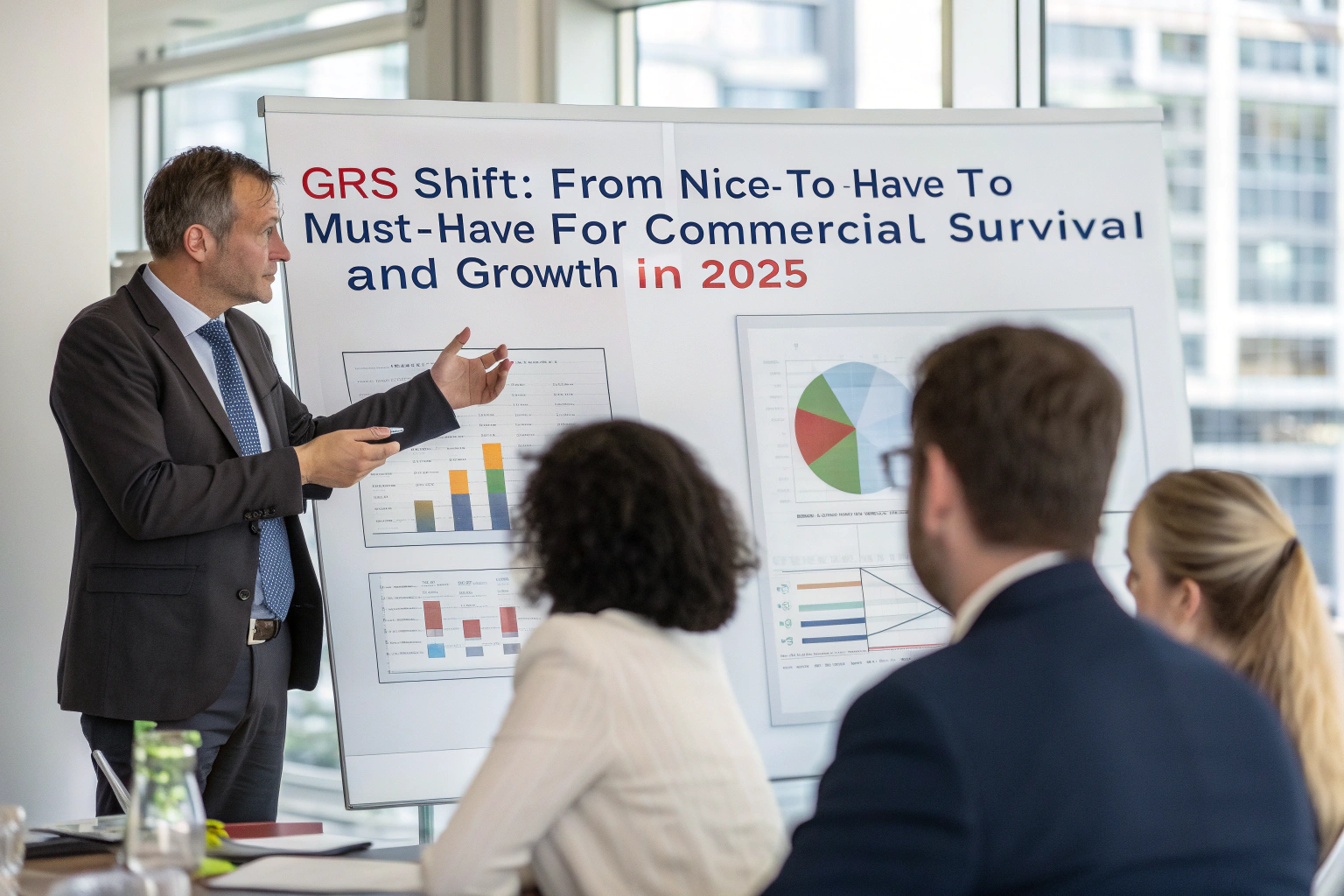
If you're planning your 2025 collections right now, you're probably hearing "GRS" in every sourcing conversation. But this isn't just another industry buzzword—it's becoming the baseline for doing business in major markets like the EU and North America. I've watched brands scramble last-minute to meet new regulations, and trust me, getting ahead of GRS now saves massive headaches later.
The short answer is that GRS has shifted from a "nice-to-have" sustainability feature to a "must-have" for commercial survival and growth in 2025. It directly addresses three critical pressures: stringent new government regulations, conscious consumer demand for transparency, and the urgent need for circular supply chains. Brands that integrate GRS now will have smoother market access, stronger consumer trust, and better protection against greenwashing accusations.
Let me break down exactly why GRS is non-negotiable for your 2025 strategy and how forward-thinking brands are already leveraging it for competitive advantage.
How Are New Regulations Making GRS Essential?
Government regulations are no longer looming on the horizon—they're here, and they're specific. The EU's Strategy for Sustainable and Circular Textiles is setting de facto global standards, while states like New York and California are implementing their own extended producer responsibility laws. GRS provides the verified documentation to prove compliance.
The regulatory landscape for 2025 is fundamentally different from previous years. We're moving beyond voluntary goals to mandatory reporting and circularity targets. The EU's forthcoming Digital Product Passport, for instance, will require detailed information on a garment's environmental footprint and recycled content—data that a GRS certification system already captures and verifies. For brands selling globally, having GRS in place means your supply chain is already aligned with these emerging frameworks. You're not just reacting to laws; you're prepared for them.

Which specific 2025 regulations require GRS-type verification?
Several major regulatory frameworks effectively make GRS-type certification the most straightforward path to compliance. The EU's Ecodesign for Sustainable Products Regulation (ESPR) will mandate minimum recycled content in certain product categories, exactly what GRS tracks. France's Anti-Waste for a Circular Economy (AGEC) Law already requires detailed consumer information on recycled content, which a GRS Transaction Certificate provides. In the US, New York's Fashion Act (if passed) would require brands to map their supply chains and disclose environmental impacts—another area where GRS's chain-of-custody excels. We helped a German outerwear brand navigate AGEC compliance in early 2024 by providing GRS documentation for their recycled nylon shells, allowing them to sell seamlessly in the French market. Understanding the detailed timeline of EU sustainable textile regulations is crucial for planning. Furthermore, tracking how California's SB 253 affects fashion brands provides insight into coming US requirements.
How does GRS future-proof my brand against upcoming laws?
GRS acts as a regulatory shield. Because it's a comprehensive, third-party verified standard that covers the entire supply chain, it provides credible evidence of compliance with not just current laws, but the direction of legislation. Lawmakers are focusing on circularity, recycled content, and supply chain transparency—all core elements of GRS. Investing in GRS-certified production now means you won't be forced into a costly, rushed supply chain overhaul when the next wave of regulations hits. In my experience, brands that started with GRS in 2022-2023 are now calmly preparing for 2025, while those who waited are facing premium prices and limited supplier capacity. The Sustainable Apparel Coalition's Higgs Materials Sustainability Index is another tool that aligns with this regulatory trend, helping brands assess material impacts.
What Consumer Shift Makes GRS a Commercial Necessity?
The consumer has evolved. It's not just about a minority of eco-activists anymore; mainstream shoppers now expect proof behind sustainability claims. A 2024 survey by McKinsey found that 65% of consumers plan to buy more secondhand or recycled products, but they're increasingly skeptical of vague "green" marketing. GRS provides the verified story they want to hear.
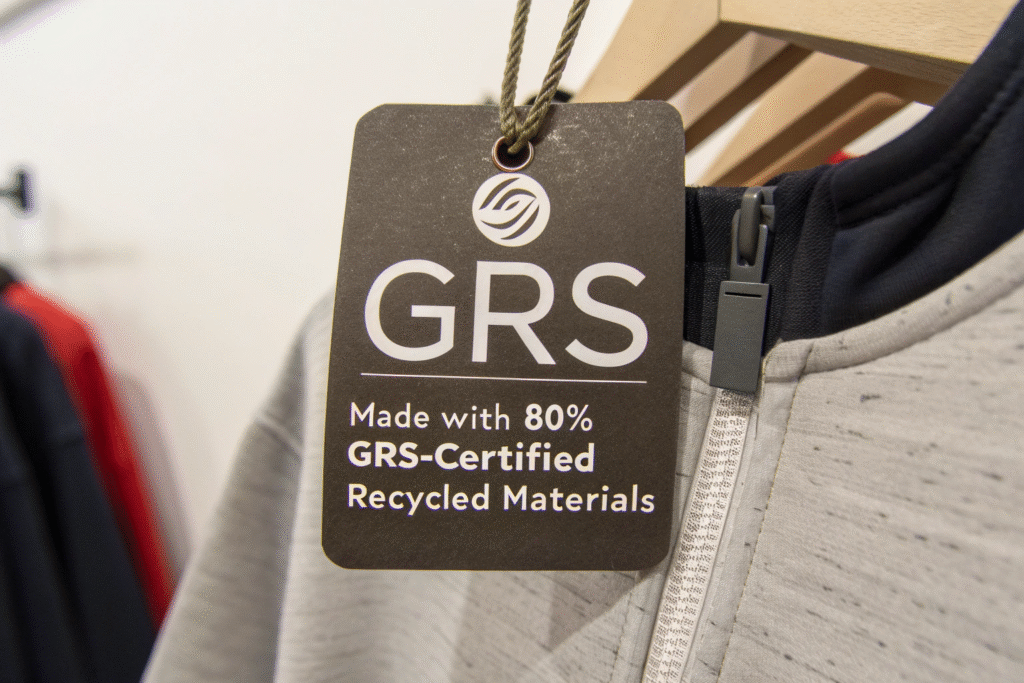
Today's consumers, particularly Gen Z and Millennials, are "proof-driven shoppers." They use their smartphones in aisles to check certifications and read ingredient lists. A hangtag with a GRS logo and a specific percentage like "Made with 80% GRS-certified recycled materials" is far more powerful and defensible than a generic "eco-friendly" label. This isn't a hypothetical—we've seen it directly impact sales. A Swedish sportswear client launched two nearly identical product lines in 2023: one with GRS certification and clear labeling, and one with only general sustainability messaging. The GRS-labeled line outperformed the other by over 30% in sell-through rate, demonstrating the tangible commercial value of third-party verification.
How does GRS certification influence purchasing decisions?
GRS influences purchasing at the point of trust. When a consumer sees the GRS label, they understand that an independent organization has verified the recycled content claim. This removes the cognitive burden of deciding whether to trust the brand's own marketing. It's the difference between a restaurant saying "Our food is fresh!" and displaying an "A" grade from the health department. The certification does the convincing for you. Furthermore, GRS allows for specific, quantifiable claims ("50% recycled content") which are inherently more believable and impactful than vague adjectives. For a deep dive into consumer trust and certifications, the Journal of Consumer Research on eco-labels offers valuable academic insights. Brands can also learn about effectively communicating recycled content to modern shoppers to maximize marketing impact.
What's the demographic data behind the demand for certified products?
The numbers are compelling and point to a long-term shift, not a fleeting trend. First, Gen Z's spending power is skyrocketing as they enter the workforce, and this cohort prioritizes sustainable and ethical purchases more than any previous generation. Second, a recent NielsenIQ report showed that products with credible sustainability claims grew twice as fast as those without. Third, the resale market—intrinsically linked to circularity and recycled materials—is projected to be twice the size of fast fashion by 2027. This isn't a niche; it's the future core of the apparel market. Brands ignoring this data for their 2025 planning are effectively ceding a growing, high-value customer segment to competitors who have embraced certifications like GRS.
How Does GRS Drive Circular Economy Innovation?
GRS is more than a label; it's a mechanism that financially incentivizes the entire recycling ecosystem. By creating a premium market for verified recycled materials, GRS stimulates investment in collection, sorting, and recycling technologies. This, in turn, makes recycled materials more available and affordable, accelerating the industry's transition to a circular model.
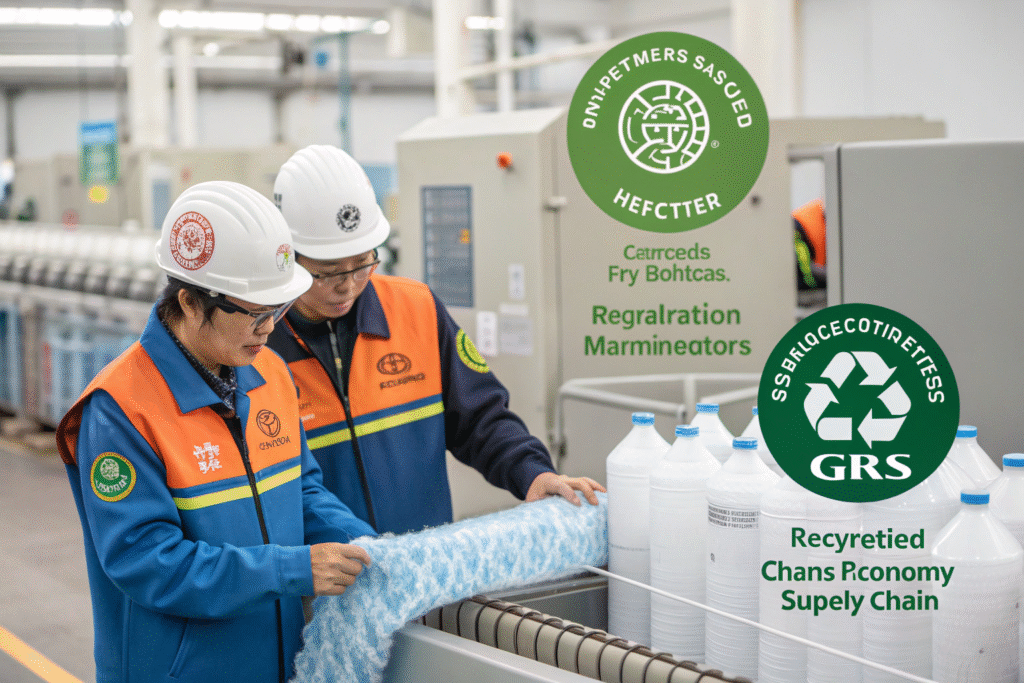
The "circular economy" can sound abstract, but GRS makes it operational. The standard's chain-of-custody requirement means that every player in the supply chain—from the PET bottle collector to the recycled polyester yarn spinner to us at Shanghai Fumao as the fabric manufacturer—must be certified. This creates a closed, transparent loop where materials are tracked and valued. This system is already driving innovation in unexpected areas. For example, we're now working with a chemical recycling startup that can break down colored PET waste into clear rPET pellets, a process that was previously not commercially viable. The demand from brands for GRS-certified materials is what makes such R&D investments worthwhile.
What new technologies is GRS making possible?
The demand for GRS materials is fueling advances across the recycling landscape:
| Technology | Innovation | Impact on Apparel |
|---|---|---|
| Advanced Sorting | AI and hyperspectral imaging can now accurately separate textiles by fiber type and color. | Creates purer, higher-quality recycled fiber streams suitable for GRS certification. |
| Chemical Recycling | Breaks down polymers like polyester and nylon to their molecular level. | Allows for recycling of blended fabrics and creates recycled fiber that is virgin-quality. |
| Traceability Platforms | Blockchain and digital IDs linked to physical products. | Provides the immutable data backbone for GRS's chain-of-custody, enhancing trust. |
We leveraged new advanced sorting technology in 2024 to source GRS-certified post-consumer cotton, which we then blended with GRS recycled polyester to create a unique fabric for a UK-based high-street retailer's 2025 circular collection.
How does GRS create a closed-loop system in practice?
In a true closed-loop system, waste becomes a resource. GRS enables this by providing the financial and traceability structure. Here's a practical example from our work: A large activewear brand had a take-back program for old uniforms. Those uniforms were sent to a GRS-certified recycler, broken down into polyester pulp, and spun into new GRS-certified recycled polyester yarn. That yarn was then shipped to us at Shanghai Fumao to weave new fabric for the next generation of uniforms. The GRS certification and the accompanying Transaction Certificates followed the material through every step, verifying the recycled content and creating a verifiable "circle." This would not be possible without a standard like GRS to ensure integrity at every transfer point. Learning about the principles of a circular economy from the Ellen MacArthur Foundation provides the foundational theory behind this practice.
Why Is GRS a Strategic Sourcing Advantage for 2025?
Beyond compliance and marketing, GRS is becoming a key factor in securing reliable, future-proof production capacity. As demand for recycled materials surges, suppliers with proven GRS expertise and certification will become the preferred partners for major brands. Sourcing from them de-risks your supply chain.
Think of it this way: the world is moving toward circularity. Major brands have made public commitments to using 100% recycled polyester or other sustainable materials by 2025-2030. The entire industry is competing for a finite amount of certified recycled material and production capacity. By building relationships with GRS-certified suppliers now, you ensure your access to these constrained resources. You're not just buying fabric; you're investing in supply chain resilience. We've seen this play out at our own facility—clients who started their GRS journey with us two years ago now get priority scheduling and access to our newest innovations because we view them as strategic partners aligned with our long-term vision.

How does GRS impact cost and lead times in sourcing?
There's a common misconception that GRS always means higher cost and longer leads. While there is a premium for the certified recycled raw material, the total cost picture is more nuanced. First, as volume increases, the premium is shrinking—for some base fabrics, it's now under 10%. Second, GRS can actually reduce lead times in the long run by simplifying compliance and minimizing the risk of delays at customs or from internal audits. Furthermore, by planning your 2025 GRS orders early, you can lock in capacity and avoid the price spikes that come with last-minute rushes. A savvy client from the Netherlands now places their core GRS fabric orders 9 months in advance, securing better pricing and guaranteeing production slots during peak periods.
Can GRS certification improve my brand's investor appeal?
Absolutely. In today's market, Environmental, Social, and Governance (ESG) criteria are a major factor in investment decisions. A robust GRS program provides concrete, auditable data for the "Environmental" pillar. It demonstrates to investors that your brand is proactively managing regulatory risk, meeting consumer demand, and building a supply chain resilient to resource scarcity. This isn't just corporate social responsibility; it's sound business strategy. When a brand can show that a significant portion of its collection is GRS-certified, it signals mature, forward-thinking management that understands the future of the industry. This can be a powerful differentiator when seeking funding or going public. The Global Reporting Initiative (GRI) standards are often used by investors to assess company performance, and GRS data can directly contribute to these reports.
Conclusion
GRS is a top priority for 2025 because it sits at the convergence of regulation, consumer demand, and industrial innovation. It has transformed from a niche certification into a core business strategy that addresses the most pressing challenges facing the apparel industry. Brands that treat GRS as a strategic imperative now will be market leaders tomorrow; those who view it as an optional extra will be playing catch-up in an increasingly regulated and transparent world.
The question is no longer if you should adopt GRS, but how quickly you can integrate it into your 2025 collections. The brands that act now will secure the best supplier partnerships, the most compelling consumer stories, and the smoothest path to market. If you're ready to make GRS a central part of your 2025 strategy, let's discuss how we can support your journey. Contact our Business Director, Elaine, to explore our GRS-certified fabric options and co-develop your next sustainable line. Reach her at: elaine@fumaoclothing.com.





One Response
Victory Slot? Cara, gotta love the name! Been spinning the reels and having some fun. Nothing crazy yet, but the vibe is good. Definitely checking it out some more. Who knows, maybe I’ll hit that jackpot! Check them out here: victory slot