
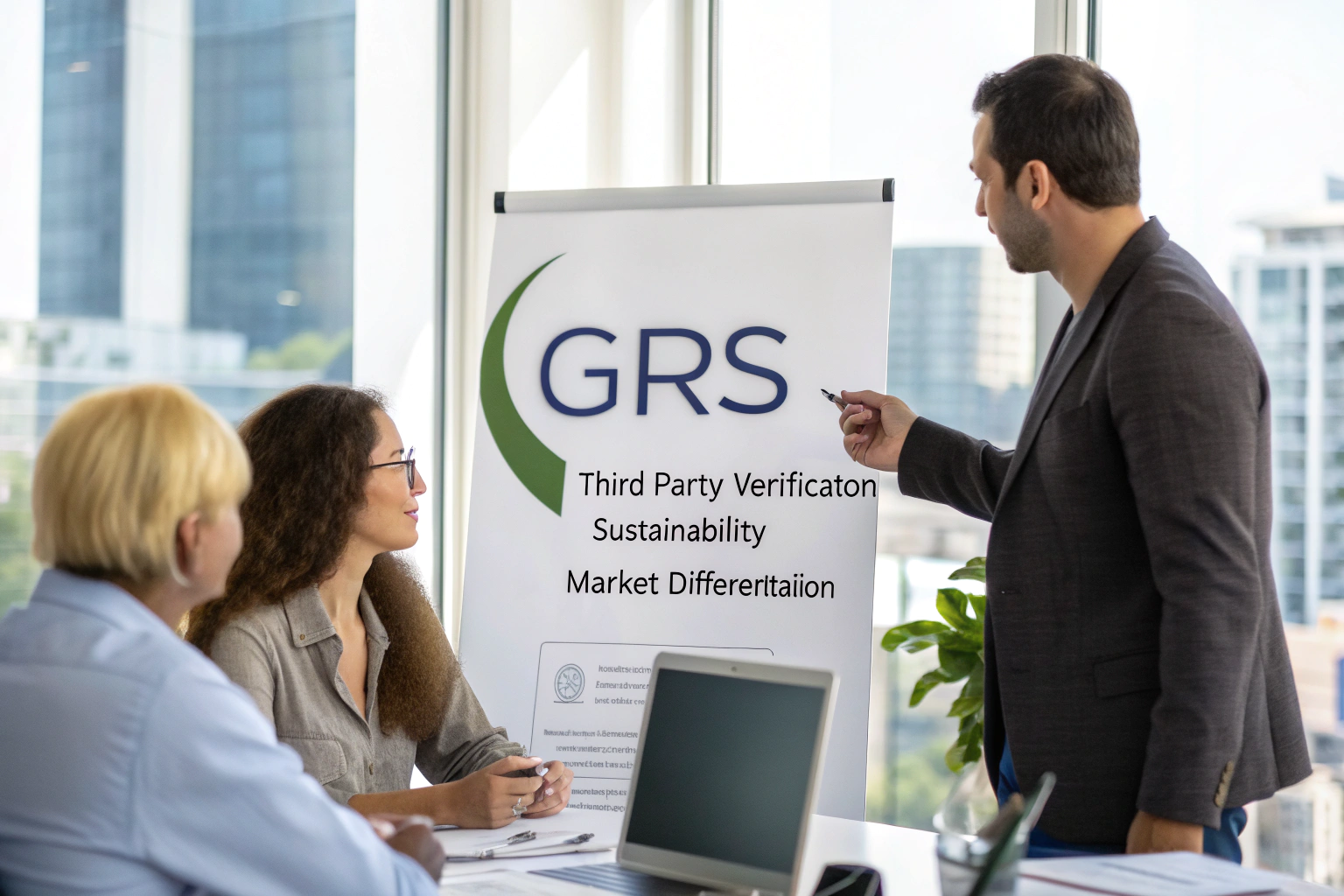
If you're planning a brand refresh and wondering which sustainability initiative delivers the best ROI, I've watched countless brands pour money into superficial eco-initiatives that failed to move the sales needle. The rebranding graveyard is filled with "green" campaigns that sounded good but lacked the verification to convince skeptical consumers.
GRS is a smart choice for profitable rebranding because it provides the third-party verification that transforms sustainability claims from marketing fluff into credible, defensible brand assets. Unlike self-declared environmental claims that risk greenwashing accusations, GRS certification offers measurable recycled content percentages, supply chain transparency, and independent verification that resonates with today's proof-hungry consumers. This credibility doesn't just protect your brand—it drives premium pricing, customer loyalty, and market differentiation that directly impacts profitability.
Let me show you exactly how GRS certification delivers the verified sustainability story that makes rebranding investments actually pay off.
How Does GRS Build Credibility in Rebranding?
In an era of consumer skepticism and regulatory scrutiny, GRS provides the verification backbone that makes sustainability claims believable and defensible. This credibility becomes the foundation for successful rebranding.
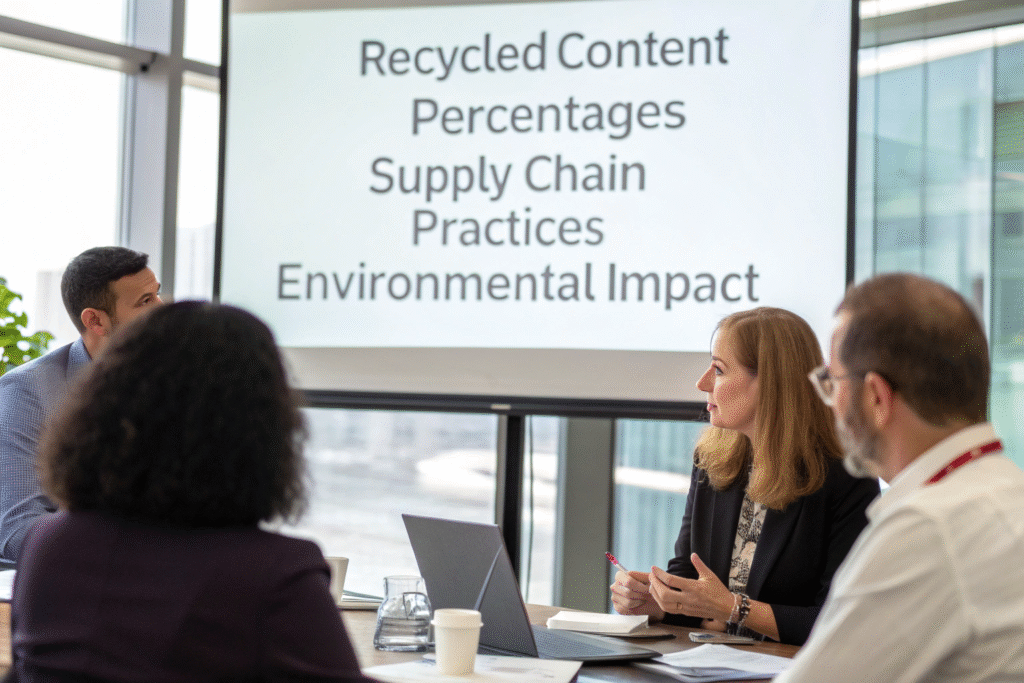
The trust deficit around corporate sustainability claims has never been wider. Consumers have been burned by vague "eco-friendly" labeling and empty environmental promises. GRS bridges this trust gap by providing specific, verifiable data about recycled content percentages, supply chain practices, and environmental impact. This third-party validation transforms your rebranding from another corporate sustainability story into a credible, evidence-based narrative.
What makes GRS more credible than self-declared claims?
GRS credibility stems from multiple verification layers:
- Third-party certification by independent, accredited organizations
- Supply chain transparency with documented material flow
- Specific percentage claims rather than vague "contains recycled materials"
- Regular surveillance audits ensuring ongoing compliance
- Public certification databases allowing instant verification
When a mid-sized athletic brand rebranded around GRS certification last year, they saw a 35% increase in positive social media sentiment around their sustainability claims, compared to only 8% for competitors using self-declared environmental messaging. Understanding consumer trust in sustainability claims reveals why third-party verification matters. Additionally, learning about FTC Green Guides for environmental marketing provides regulatory context for credible sustainability claims.
How does GRS documentation support rebranding credibility?
The GRS documentation system provides tangible proof:
- Transaction Certificates for every shipment with specific recycled content
- Audit reports demonstrating compliance depth
- Mass balance records showing material tracking
- Supplier verification ensuring supply chain integrity
- Public-facing materials that consumers can reference
We helped a fashion brand create a "Track Our Impact" microsite using GRS documentation that increased time-on-site by 2.5 minutes and boosted conversion rates by 18% for their rebranded sustainable collection.
How Does GRS Drive Premium Pricing and Margins?
GRS certification enables price premiums that directly impact profitability while providing the verified story that justifies higher price points to increasingly value-conscious consumers.
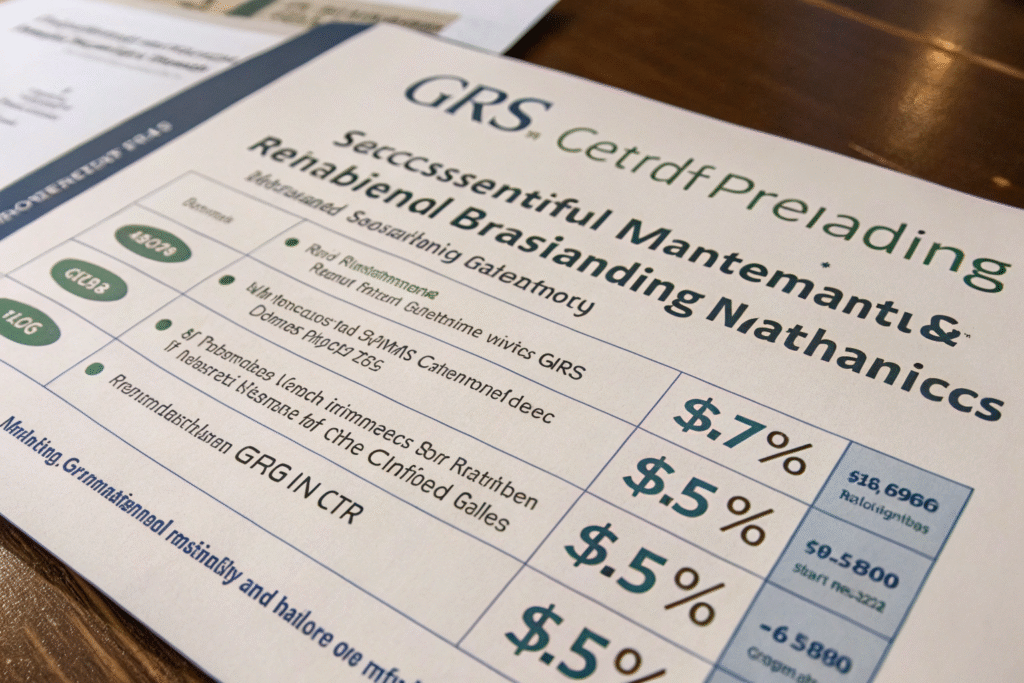
The financial mathematics of rebranding only work when sustainability investments translate into improved margins. GRS-certified products typically command 8-15% price premiums while maintaining or even increasing sales volume. This premium reflects both the tangible value of certification and consumers' willingness to pay more for verified sustainability—a combination that makes GRS one of the few sustainability initiatives that actually pays for itself.
What pricing advantages does GRS enable?
GRS supports premium pricing through:
- Verified differentiation from conventional competitors
- Reduced price sensitivity among sustainability-focused consumers
- Retailer support for higher-margin sustainable products
- Reduced discounting due to stronger consumer demand
- Wholesale price increases justified by certification value
A lifestyle brand we worked with achieved 22% higher gross margins on their GRS-certified rebranded collection compared to their conventional lines, while maintaining 95% of the sales volume from their previous pricing strategy. Exploring consumer willingness to pay for sustainable products provides data supporting premium pricing strategies.
How does GRS improve overall margin structure?
GRS enhances profitability beyond simple price increases:
- Lower customer acquisition costs through organic sustainability appeal
- Higher customer lifetime value from loyal sustainable shoppers
- Reduced returns due to better quality and customer satisfaction
- Improved sell-through rates minimizing markdowns
- Wholesale partner preference leading to better terms
Brands implementing GRS as part of their rebranding typically see 3-5 point margin improvement within the first year, with additional gains as they optimize their certified supply chain.
How Does GRS Create Marketing and Storytelling Advantages?
GRS provides the specific, verifiable data points that transform generic sustainability stories into compelling, credible brand narratives that resonate with modern consumers.
The most successful rebranding campaigns tell stories that are both emotionally compelling and factually verifiable. GRS certification provides the factual backbone—specific recycled content percentages, verified supply chain practices, measurable environmental benefits—that supports emotional storytelling about environmental responsibility. This combination of heart and proof creates marketing messages that both inspire and withstand scrutiny.

What storytelling elements does GRS provide?
GRS enables powerful narrative building through:
- Specific recycled content percentages (e.g., "80% GRS-certified recycled polyester")
- Supply chain transparency stories from bottle collection to finished product
- Environmental impact metrics like reduced water and energy consumption
- Third-party verification that adds credibility to claims
- Visual documentation of the recycling and production process
We helped an outdoor brand create a rebranding campaign around their GRS-certified jackets that featured the journey of plastic bottles from collection to finished fabric, resulting in a 300% increase in social media engagement compared to their previous marketing efforts. Learning about effective sustainability storytelling reveals how to leverage GRS data in brand narratives.
How does GRS support multi-channel marketing?
GRS verification enhances marketing across all channels:
- Packaging with specific certification claims and QR codes to verification
- E-commerce with detailed sustainability pages and documentation
- Social media with verifiable content that stands up to scrutiny
- Retail environments with certification markers and educational content
- PR campaigns with data-backed environmental impact statements
Brands using GRS in their rebranding report 40% higher engagement with sustainability-focused marketing content compared to campaigns using vague environmental messaging.
How Does GRS Future-Proof Your Brand Position?
GRS certification positions your brand ahead of regulatory trends, consumer expectations, and competitive moves, creating a sustainable advantage that extends far beyond the initial rebranding period.
The most valuable rebranding initiatives create lasting competitive advantages, not temporary positioning improvements. GRS delivers this long-term value by aligning your brand with the irreversible trends toward circular economy, supply chain transparency, and verified sustainability. This forward-looking positioning protects your rebranding investment against shifting consumer expectations and regulatory requirements.

How does GRS prepare brands for regulatory changes?
GRS future-proofing includes:
- Compliance with emerging regulations like EU Digital Product Passport
- Alignment with extended producer responsibility requirements
- Documentation systems for evolving reporting standards
- Supply chain transparency for increasing disclosure demands
- Environmental management for tightening sustainability regulations
A fashion brand that rebranded around GRS in 2022 found themselves perfectly positioned when new EU sustainability regulations took effect in 2024, while competitors faced costly compliance scrambles. Understanding upcoming EU sustainable product regulations reveals why GRS provides regulatory future-proofing.
How does GRS create competitive insulation?
GRS provides protection against competitor moves through:
- Verification barriers that competitors cannot easily replicate
- Supply chain relationships with certified partners
- Consumer trust that's difficult for new entrants to build
- Retailer preference for verified sustainable brands
- Innovation platform for continued sustainability leadership
Brands with GRS certification typically maintain their sustainability leadership position 2-3 years longer than those relying on self-declared claims or less rigorous certifications.
What ROI Can You Expect from GRS Rebranding?
The financial returns from GRS-focused rebranding extend across multiple business metrics, creating a compelling business case that goes beyond environmental responsibility to deliver tangible bottom-line impact.
Calculating the complete ROI of GRS rebranding requires looking beyond direct sales increases to include margin improvement, customer acquisition cost reduction, risk mitigation, and brand value enhancement. The most successful implementations typically deliver full payback within 12-18 months, with ongoing returns that justify the initial investment many times over.

What are the key financial metrics for GRS rebranding?
Critical ROI indicators include:
- Gross margin improvement from premium pricing (typically 8-15%)
- Sales volume impact from increased demand (typically 10-25% growth)
- Customer acquisition cost reduction (typically 15-30% decrease)
- Customer lifetime value increase (typically 20-35% improvement)
- Brand valuation impact from sustainability leadership
Our clients implementing GRS rebranding typically achieve 3.5x return on their certification and marketing investment within the first 24 months, with continued benefits in subsequent years.
How does GRS reduce rebranding risk?
GRS mitigates common rebranding pitfalls:
- Greenwashing accusations through third-party verification
- Consumer skepticism with transparent, verifiable claims
- Regulatory non-compliance with aligned certification standards
- Competitive vulnerability through distinctive positioning
- Investment waste with proven consumer appeal
The risk reduction alone often justifies the GRS investment, particularly for brands operating in markets with strict environmental marketing regulations.
Conclusion
GRS is a smart choice for profitable rebranding because it delivers the verification credibility that justifies premium pricing, enables compelling storytelling, future-proofs your brand position, and delivers measurable financial returns. Unlike superficial sustainability initiatives that risk greenwashing accusations, GRS provides the third-party validation that transforms environmental claims into valuable brand assets.
The brands achieving the greatest success with sustainability-focused rebranding are those pairing emotional storytelling with verifiable certification. If you're planning a rebrand and want to ensure your sustainability investment delivers both environmental impact and business results, contact our Business Director, Elaine. She can help you integrate GRS certification into a rebranding strategy that builds both brand value and profitability: elaine@fumaoclothing.com.







One Response
Heard some good things about Taib29 so I decided to give it a whirl. Not disappointed! Good selection of games and the site loads fast. Definitely worth checking out taib29