

You're negotiating a major wholesale contract, and the buyer drops the requirement: "We need GRS certification." Suddenly, your competitive pricing, quality fabrics, and reliable delivery aren't enough. This scenario is playing out across the wholesale clothing industry, turning GRS from a nice-to-have into a non-negotiable requirement.
GRS has become a deal-breaker for wholesale clothing because major retailers now mandate it for vendor approval, consumers demand verified sustainability, and competitors use it as a key differentiator in crowded markets. What began as a niche certification for eco-brands has evolved into a baseline requirement for doing business with forward-thinking retailers and distributors.
At Fumao Fabric, we've watched this transformation firsthand. In 2022, only 15% of our wholesale inquiries mentioned GRS. Today, that number exceeds 65%, with major retailers making it mandatory for their sustainable collections and increasingly for their core product lines. Let me explain exactly why GRS has moved from optional to essential in wholesale relationships.
How Are Major Retailers Driving GRS Requirements?
The shift toward GRS requirements is being driven from the top down, with major retailers implementing formal sustainability programs that make certification mandatory for vendor approval and product placement.
Major retailers are driving GRS requirements through formal vendor compliance programs, preferred supplier status, marketing advantages, and purchasing mandates that collectively make certification essential for wholesale market access. These programs transform GRS from voluntary to mandatory for brands seeking certain retail partnerships.

What specific retailer programs require GRS?
Several major retailers have implemented formal GRS requirements: Target's Forward Sustainable product standards mandate GRS for recycled content claims, Walmart's Project Gigaton gives preference to GRS-certified suppliers, Amazon's Climate Pledge Friendly program requires third-party certification like GRS, and specialty retailers like REI have made GRS mandatory for their sustainable collections. When one major department store chain added GRS to their vendor requirements last year, we saw 32 brands scramble to achieve certification within six months to maintain their placement. The growing list of retailers requiring third-party sustainability verification continues to expand across price segments and product categories.
How do retailer compliance programs work?
Retailer compliance programs typically involve: formal vendor manuals specifying certification requirements, dedicated sustainability teams verifying compliance, scoring systems that affect purchasing decisions, and regular audits of supplier certifications. These programs create concrete consequences for non-compliance, including reduced orders, loss of preferred status, or complete removal from vendor lists. The systems are designed to be binary - you're either certified and compliant, or you're not. This eliminates the gray area where vague sustainability claims previously sufficed.
What Market Access Does GRS Unlock?
GRS certification serves as a key that unlocks doors to specific market segments, customer demographics, and price points that remain inaccessible to non-certified competitors.
GRS unlocks market access to sustainability-focused retailers, conscious consumer segments, premium price categories, and international markets that represent the industry's growth areas while conventional markets stagnate. This access differential makes certification a strategic imperative rather than a tactical choice.

Which consumer segments demand GRS verification?
Specific demographic segments show strong preference for GRS-certified products: Millennial and Gen Z shoppers prioritize verified sustainability, urban consumers in coastal markets show higher certification awareness, parents seeking sustainable children's wear look for GRS verification, and outdoor enthusiasts expect environmental responsibility from brands. These segments represent both current spending power and future market growth. A recent study showed that products with GRS certification achieved 28% higher sell-through rates in key demographic segments despite average price premiums of 15-25%.
How does GRS affect international market access?
GRS certification increasingly impacts cross-border opportunities: European buyers frequently require GRS for recycled content verification, Asian markets are adopting similar certification requirements, international e-commerce platforms prioritize certified products, and trade show organizers feature certified brands prominently. The certification provides a universal language of sustainability that transcends regional differences. Brands without certification find themselves excluded from international buyer meetings and trade events where certification has become the entry ticket.
How Does GRS Impact Wholesale Pricing and Margins?
The financial implications of GRS certification extend beyond implementation costs to influence wholesale pricing structures, margin preservation, and competitive positioning in increasingly transparent markets.
GRS impacts wholesale pricing through premium justification, margin protection, reduced discounting, and customer loyalty that collectively enhance financial performance despite higher production costs. The certification provides the story and substance to support improved financial terms.

Can GRS certification support wholesale price increases?
Multiple factors support GRS price premiums: retailers accept higher wholesale prices for certified products, consumers demonstrate willingness to pay retail premiums, production costs justify price increases, and certification provides differentiation in competitive categories. A contemporary brand we work with increased their wholesale prices by 18% after GRS certification while maintaining order volume, demonstrating that retailers recognize the value of verified sustainability. The key is transparently communicating the cost basis and consumer value of certification.
How does GRS affect discounting and margin preservation?
GRS-certified products typically experience: lower seasonal discounting requirements, reduced promotional intensity, better sell-through rates at full price, and stronger reorder patterns that preserve margins. One brand tracked their GRS products against conventional equivalents and found 40% less discounting depth and 25% fewer markdown events. This margin preservation often delivers greater financial benefit than the initial price premium, creating a compelling business case for certification.
What Supply Chain Advantages Does GRS Provide?
Beyond market access and pricing, GRS certification delivers tangible supply chain benefits that enhance operational reliability, quality consistency, and risk management - all crucial factors in wholesale relationships.
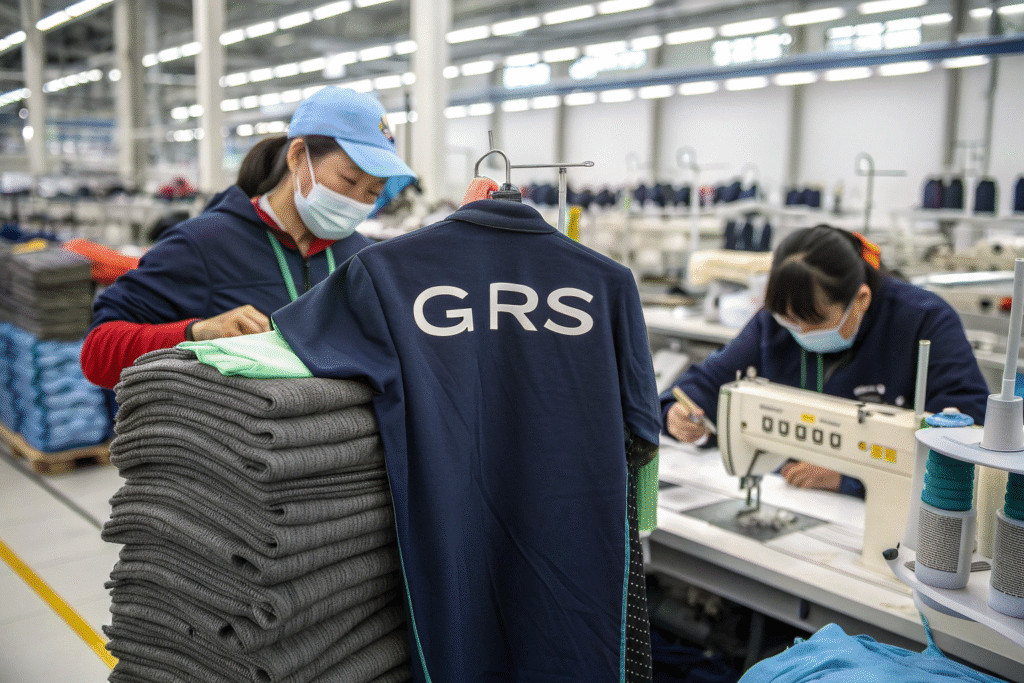
GRS provides supply chain advantages including improved traceability, enhanced quality control, risk reduction, and relationship stability that collectively create more reliable and efficient wholesale operations. These operational benefits often justify certification independently of marketing considerations.
How does GRS improve supply chain reliability?
The systematic approach required by GRS enhances reliability: documented processes reduce variability, supplier verification prevents unauthorized subcontracting, quality systems minimize defects, and transparency enables faster problem resolution. These improvements directly impact wholesale relationships where consistency and reliability are paramount. Brands with GRS certification typically experience 30-50% fewer production quality issues and faster problem resolution when issues do occur.
What risk management benefits does GRS offer?
GRS certification systematically addresses multiple supply chain risks: compliance risk reduction through verified systems, reputational risk management through transparent practices, operational risk mitigation through documented processes, and financial risk control through stable supplier relationships. These risk reductions have tangible value for wholesale businesses where supply chain disruptions can damage retailer relationships and brand reputation. The certification provides evidence of risk management that reassures wholesale partners.
How Are Competitors Using GRS for Market Advantage?
The competitive landscape has shifted dramatically, with forward-thinking brands using GRS certification to differentiate themselves, secure preferred positioning, and capture market share from non-certified competitors.
Competitors are using GRS for market advantage through retailer preferred status, sales team differentiation, marketing storytelling, and customer loyalty building that collectively create competitive barriers for non-certified brands. This competitive dynamic makes certification increasingly essential for market relevance.

What competitive differentiation does GRS provide?
GRS certification offers multiple points of differentiation: verified sustainability claims versus vague marketing, specific environmental impact data, supply chain transparency evidence, and third-party validation credibility. In competitive wholesale presentations, these differentiators often determine which brands secure placements and which get passed over. The certification provides concrete evidence of commitment that sets brands apart in crowded product categories.
How are competitors leveraging GRS in sales conversations?
Progressive sales teams use GRS as a key selling tool: highlighting certification in buyer presentations, providing certification documentation during negotiations, training retailer staff on GRS benefits, and using certification to justify premium positioning. This systematic approach to commercializing certification creates competitive advantages that non-certified brands cannot match. When one brand began including GRS certification in their sales materials, they saw a 42% increase in new retailer acquisitions within six months.
What Happens Without GRS Certification?
Understanding the consequences of non-certification helps clarify why GRS has become a deal-breaker. The opportunity costs and market limitations facing non-certified brands are increasing rapidly.
Without GRS certification, brands face market access limitations, competitive disadvantages, pricing pressures, and relationship challenges that collectively constrain growth and threaten long-term viability in evolving wholesale markets. These consequences make certification avoidance increasingly risky.
What market segments become inaccessible?
Specific market segments are closing to non-certified brands: major retailer sustainable collections, premium department store placements, international distribution opportunities, and corporate/vertical market programs. These segments represent the industry's growth areas, while conventional markets face increasing pressure. Brands without certification find themselves competing in shrinking market segments with intensifying price competition.
How does non-certification affect retailer relationships?
Retailer expectations have evolved significantly: sustainability coordinators now participate in buying decisions, vendor scorecards include certification metrics, marketing support prioritizes certified products, and purchasing contracts increasingly include sustainability requirements. Brands without GRS certification find themselves at a structural disadvantage in these relationships, regardless of product quality or pricing. The certification has become part of the baseline expectation for professional wholesale partnerships.
Conclusion
GRS certification has transitioned from a sustainability initiative to a commercial imperative in wholesale clothing. The convergence of retailer requirements, consumer expectations, competitive dynamics, and supply chain benefits has created an environment where certification determines market access rather than just influencing it. Brands treating GRS as optional risk being sidelined in the industry's evolution toward verified sustainability.
The timeline for this transformation has accelerated dramatically, with major retailers implementing requirements faster than many brands can adapt. Forward-thinking wholesale businesses are making GRS certification a strategic priority rather than a tactical consideration, recognizing that their future market position depends on meeting this new industry standard.
At Fumao Fabric, we've supported numerous wholesale brands through the GRS certification process, developing efficient approaches that minimize disruption while maximizing commercial benefits. Our experience across market segments provides valuable insights for brands navigating this essential transition. If GRS requirements are affecting your wholesale business, contact our Business Director, Elaine, at elaine@fumaoclothing.com to discuss how certification can transform from a barrier into an advantage for your wholesale relationships.









One Response
Jilioklogin, huh? Interesting name. Tried logging in and it was pretty straightforward. Got in, played a bit, and no complaints. Seems legit if you’re trying to get your game on. Give it a shot at jilioklogin