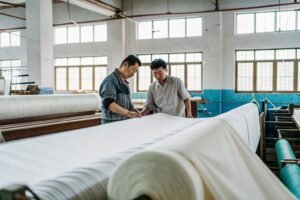
Nothing frustrates fashion designers, fabric buyers, and apparel manufacturers more than receiving beautifully printed fabric—only to discover that the pattern is visibly skewed after cutting or laundering. Even a few degrees of off-grain distortion can lead to misaligned seams, twisted garments, or rejected production lots. This is where fabric skew testing becomes a quality-control must.
Skew testing measures the degree to which the fabric’s weft (horizontal yarns) deviates from a true perpendicular alignment with the warp (vertical yarns). For printed designs, maintaining proper grain alignment is critical to visual symmetry, cut consistency, and final product integrity.
In this article, I’ll walk you through what skew testing is, how it impacts print quality, which methods and tolerances to use, and how to verify supplier results with confidence.
What Is Fabric Skew and How Is It Measured?
To ensure print alignment and garment accuracy, you must first understand the mechanics behind fabric skew. Skew refers to the angular displacement of the fabric’s weft yarns relative to its warp yarns—measured as a deviation from 90°.
Fabric skew is typically measured in degrees or as a percentage deviation across fabric width. A skew of more than 2% can result in visibly twisted prints or garments. Skew testing is essential for both rotary screen printing and digital printing applications.

How Does Skew Happen?
Skew often results from:
- Uneven tension during weaving
- Improper alignment during heat setting
- Fabric roll compression or biased feeding during printing
- High-speed digital or rotary print equipment with misaligned tracks
You can find a technical breakdown of fabric skew mechanics from Textile Learner and test method insights on AATCC Test Method 179.
How Is Skew Testing Performed?
Skew is measured using:
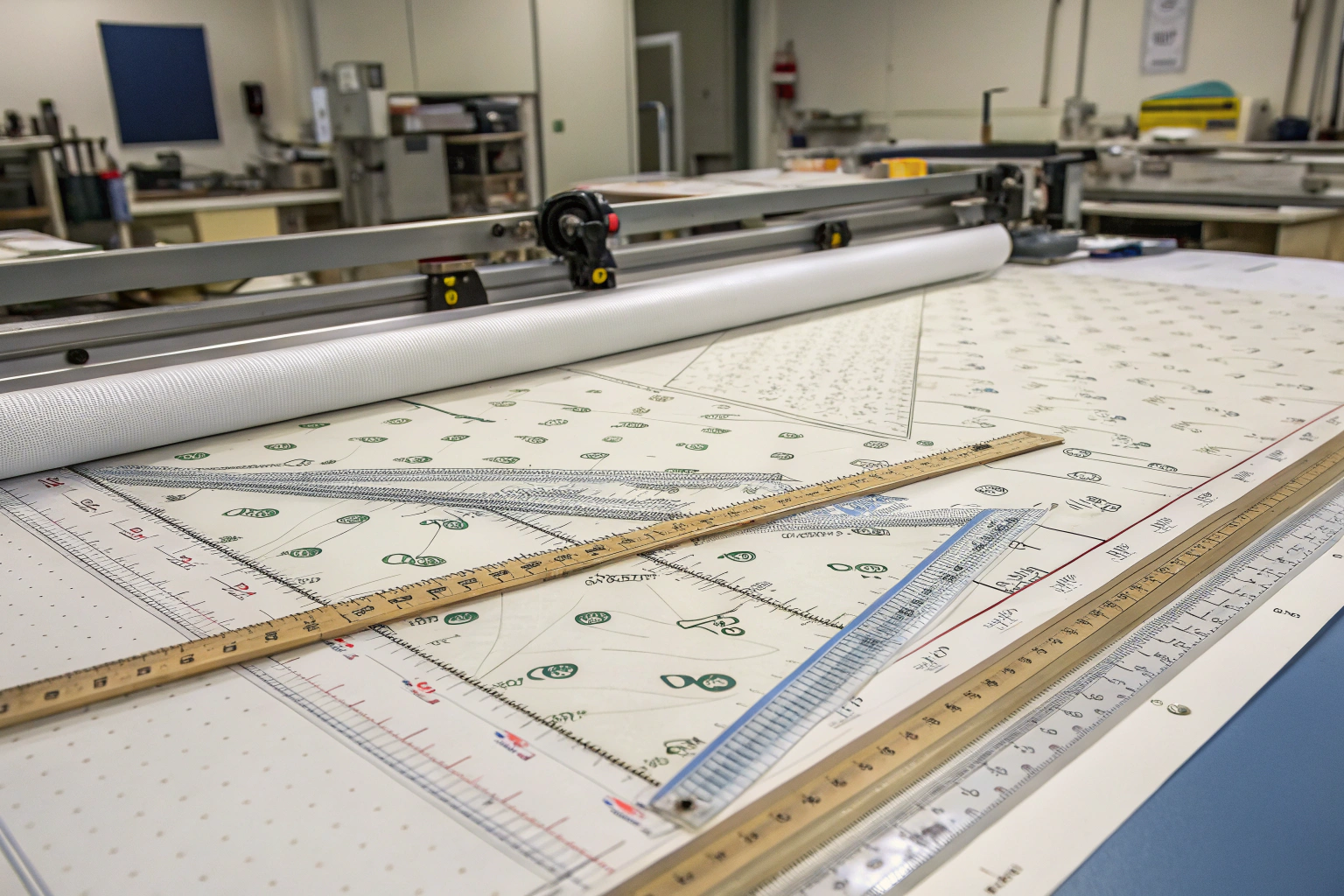
- A fabric inspection frame with lightboard and measurement guides.
- Drawing lines along the warp and checking deviation of the weft yarns.
- Calculating deviation angle or percentage skew (cm/meter deviation).
The most recognized lab standard for skew testing is AATCC 179 or ASTM D3882, which evaluates skew and bowing. Global test labs like SGS and Intertek offer this as part of fabric QC analysis.
Why Does Skew Matter in Printed Fabrics?
Even minor skew can be a dealbreaker in print-sensitive apparel. In today’s fast fashion and e-commerce-driven market, poor alignment is one of the top reasons for product returns and quality claims.
In printed fabrics, skew distorts the placement of motifs, logos, stripes, or grids—especially in garments with center seams, symmetrical designs, or block patterns. It leads to off-grain stitching, poor drape, and unsellable product.

What Are the Common Visual Effects of Skew?
- Diagonal pattern distortion across panels
- Misaligned logos or motifs after garment cutting
- Twisted side seams on t-shirts or trousers
- Hem that appears slanted or uneven
Brands like Zalando and ASOS have stringent skew tolerances, especially on striped and geometric prints, to prevent these visual issues.
Which Products Are Most Sensitive to Skew?
- Shirts with grid or check prints
- Jersey fabrics with engineered placement graphics
- Swimwear, leggings, or sportswear with full-body digital prints
- Home textiles like curtains or tablecloths with repeat patterns
We often advise clients sourcing for retail display, boutique brands, or luxury apparel to limit skew within ±1.5% to avoid visible disruption. For more product-specific QC thresholds, refer to Textile Quality Control Handbook.
What Is Acceptable Fabric Skew Tolerance?
Setting proper skew tolerance is essential to prevent production waste. Different end uses allow different tolerances, and these should be clearly defined in purchase orders or tech packs.
The generally acceptable skew tolerance for apparel is ±2% across fabric width, with stricter limits (±1%) for printed or visual-centered designs. For digital prints, tolerances should be even tighter (±0.5% to ±1.0%).

How Do You Calculate Skew Percentage?
Skew (%) = (Offset in cm ÷ Fabric width in cm) × 100
For example:
If a fabric 150cm wide has a 3cm skew offset:
(3 ÷ 150) × 100 = 2% skew
Tolerances by product category:
| Application | Recommended Skew Tolerance |
|---|---|
| Printed Casualwear | ±2.0% |
| Luxury Fashion | ±1.0% |
| Digital Placement | ±0.5–1.0% |
| Stripes/Checks | ±1.5% |
| Home Decor Prints | ±2.5% |
Sources like AATCC and ASTM Standards publish industry-adopted limits for performance verification.
Can Skew Be Corrected?
Yes. Fabric can be reprocessed via stenter frame heat setting, tension readjustment, or bias correction rollers. We assist clients with in-line correction at dye houses and post-printing stages to reduce skew before final shipment.
This topic is well detailed in ResearchGate’s textile finishing studies and through webinars by Textile World.
How to Verify and Communicate Skew Standards to Suppliers?
Even with a solid understanding of skew, you need the right procedures to hold your supplier accountable. Clear communication, documentation, and third-party verification can save your project from costly alignment issues.
To ensure compliance, include skew tolerance in your tech pack, request AATCC or ASTM test reports, and inspect bulk rolls before cutting. Establish corrective actions in case tolerance is breached.

What Documents Should You Request?
- Test reports for AATCC 179 or ASTM D3882
- QC images of fabric laid flat with grid measurement
- Batch ID tracking to match roll and test data
- Pre-shipment inspection checklist from third party labs
Suppliers listed on platforms like Alibaba Verified or Global Sources often provide template QC forms and accept tolerance-based PO contracts.
What If the Supplier Fails the Skew Tolerance?
If skew exceeds tolerance, your options include:
- Reprocessing (heat reset or trimming the skew)
- Price discount for downgraded fabric
- Reprint or reject depending on criticality
At Fumao Fabric, we embed skew test data in our QR-coded quality sheets. For sensitive orders (e.g. brand-striped sportswear), we align with clients on tolerance enforcement clauses prior to production.
Conclusion
Skew may seem like a small issue, but in the world of printed fabrics, it can make or break your product’s quality. From misaligned motifs to twisted hems, the consequences of ignoring skew can ripple through your brand reputation and bottom line.
At Fumao Fabric, we go beyond aesthetics by incorporating ASTM and AATCC-aligned skew testing, tension monitoring during finishing, and transparent documentation on every printed roll. Whether you’re developing high-precision activewear or boutique-level cotton prints, we ensure your patterns stay straight and your production stays stress-free.
Need help sourcing printed fabrics with strict skew compliance? Contact our Business Director Elaine at elaine@fumaoclothing.com and we’ll help you align your vision—literally and technically.