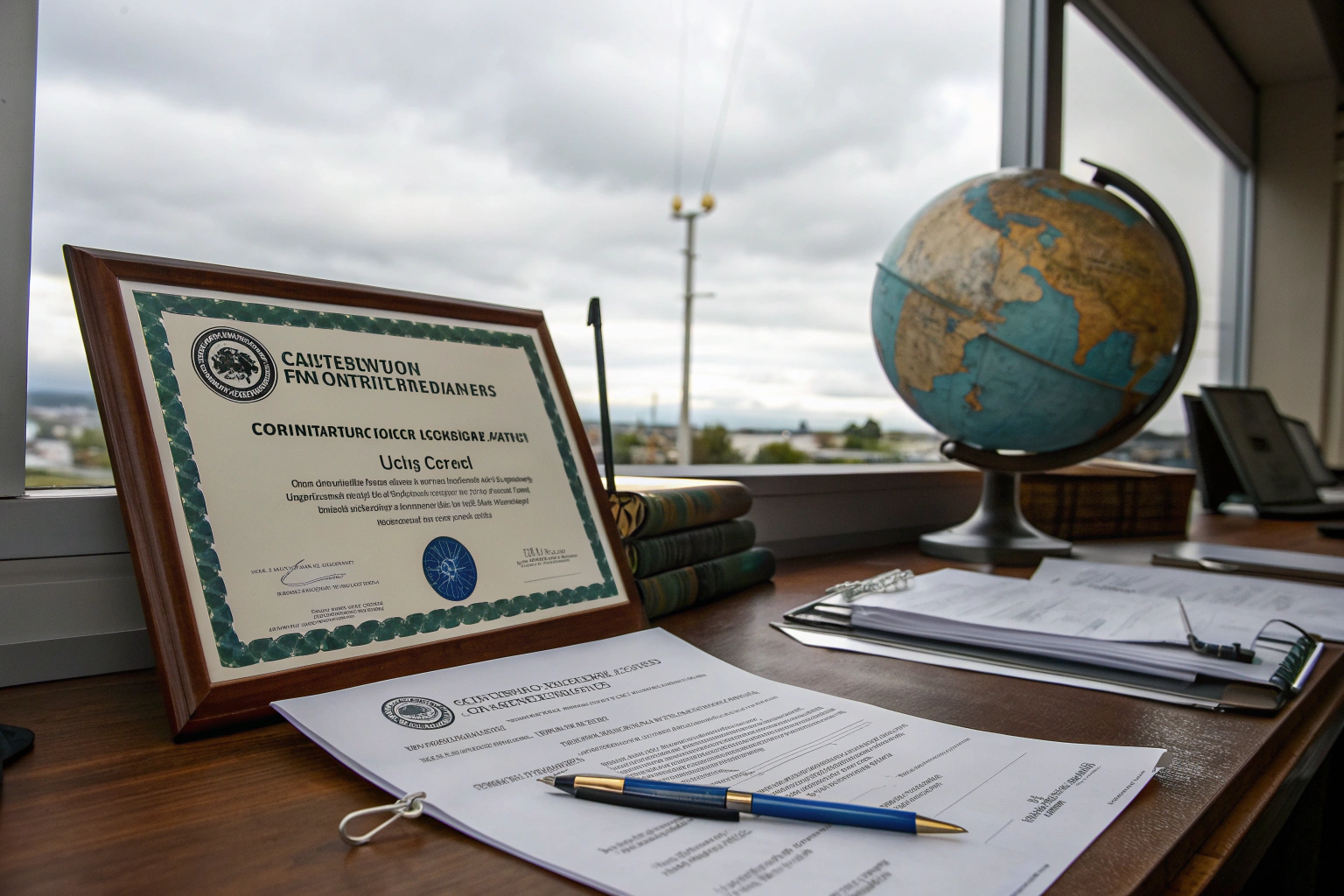
You've found a garment factory in Bangladesh or a fabric mill in India offering incredible prices—50% less than your current supplier. The samples look decent. You're tempted to place a trial order and start boosting your margins. But then you ask for their compliance certificates. The response is vague: "We follow all standards," or they send you a blurry, expired PDF that you can't verify. This is the moment you decide: save on cost now, or invest in certainty. Sourcing from developing countries without verified certificates isn't a cost-saving strategy; it's a high-stakes gamble with your brand's finances, legality, and reputation. The certificate isn't just paperwork; it's your independent, third-party verification that the factory operates within a framework you can trust.
In developing countries, where local enforcement of labor, environmental, and safety laws can be inconsistent or weak, a certificate acts as a critical external anchor. It's a signal that the facility has opened its doors to an accredited international auditor and met a defined set of globally recognized criteria. Without it, you are relying solely on the supplier's word and your own due diligence, which is often impossible to conduct thoroughly from thousands of miles away. The certificate bridges the trust gap. It answers the terrifying questions: Are the workers making my clothes paid fairly and working safely? Is the dye wastewater being dumped into the local river? Does this "organic" cotton contain banned pesticides? In high-risk sourcing environments, the certificate is not just vital; it's your primary risk mitigation tool.
Let me be direct: At Shanghai Fumao, we source raw materials from across Asia. We've walked into uncertified mills where the smell of chemicals was overwhelming and safety gear was non-existent. The price was low, but the hidden cost—potential for a catastrophic compliance scandal that traces back to your brand—was infinite. Our own BSCI, OEKO-TEX®, and GOTS certificates are our promise that we have systematically eliminated those risks. For you, demanding these certificates isn't about creating bureaucracy; it's about ensuring the foundation of your supply chain isn't built on sand. When the EU's new due diligence laws hit, that certificate will be your first line of legal defense.
How Do Certificates Mitigate Immense Supply Chain Risk?
The supply chain risks in developing countries are multi-layered and often invisible from a distance. They range from ethical collapses (child labor, forced labor) to operational disasters (factory fires due to unsafe buildings, chemical spills) to legal and financial traps (customs seizures for non-compliant goods). A certificate from a reputable body is a structured, evidence-based assessment that specifically targets these risks. It's a proactive health check, preventing a crisis rather than reacting to one.
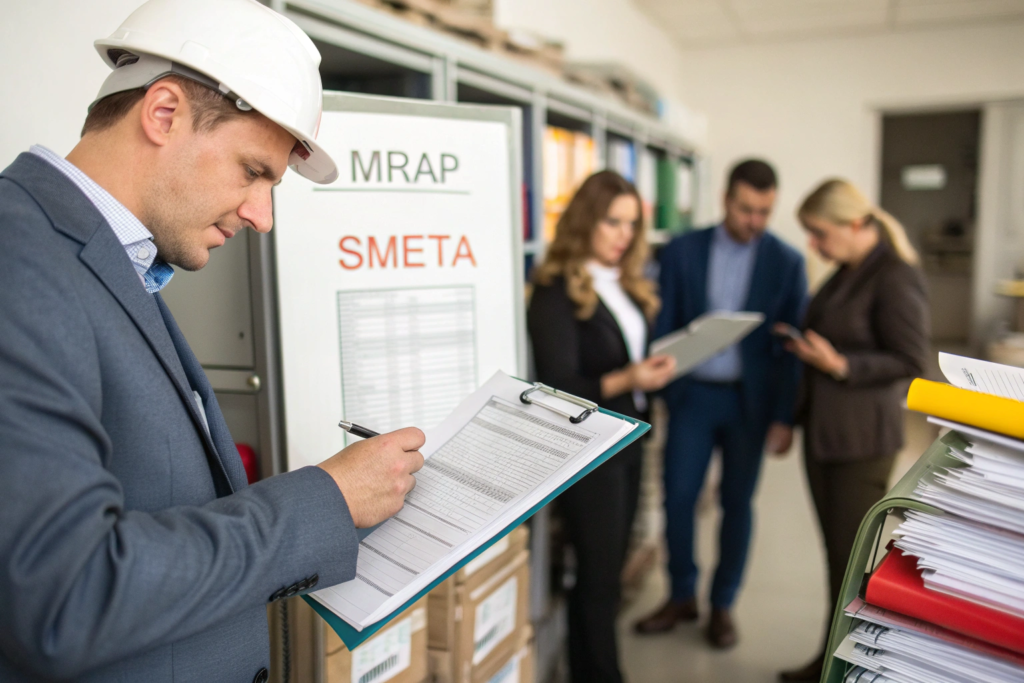
Consider the alternative: conducting your own audit. You'd need to send a team of experts fluent in the local language and law to inspect payroll records, interview workers privately, check boiler permits, and review chemical inventories. The cost and complexity are prohibitive for most brands. A certificate from, say, WRAP (Worldwide Responsible Accredited Production) or SMETA (Sedex Members Ethical Trade Audit) means a professional auditor has already done this. They've checked for evidence of forced labor, assessed fire exits, and verified wage calculations. The certificate is the summary of their findings. It transfers the risk assessment burden from you to a specialized third party.
What Specific Risks Do Social Compliance Certificates (BSCI, SA8000) Address?
Social compliance failures can destroy a brand overnight. Certificates like BSCI (Business Social Compliance Initiative) or SA8000 are your shield. They verify:
- No Child or Forced Labor: Auditors check age documents and interview workers.
- Fair Wages & Working Hours: They review time cards and payroll records to ensure compliance with local law and overtime limits.
- Safe & Healthy Working Conditions: Assessments of building safety, fire equipment, ventilation, and emergency procedures.
- Freedom of Association: Whether workers can form unions or worker committees.
A major European brand avoided a PR disaster in 2023 when an NGO investigation alleged poor conditions at a Vietnamese factory. The brand immediately produced the factory's current BSCI Audit Report—which showed a "Grade B" rating with no critical violations—defusing the crisis. Without that live certificate, they would have been guilty by association. Resources like the Clean Clothes Campaign reports show how common these risks are, making verification essential.
How Do Environmental Certificates (ISO 14001, ZDHC) Manage Operational & Legal Risk?
Environmental negligence can lead to operational shutdowns by local authorities or devastating pollution liabilities. Certificates like ISO 14001 (Environmental Management Systems) or adherence to the ZDHC (Zero Discharge of Hazardous Chemicals) Manufacturing Restricted Substances List (MRSL) prove the factory manages its environmental impact.
- ISO 14001 shows they have a system to monitor and reduce waste, energy use, and emissions.
- ZDHC MRSL Conformance proves they use approved, safer chemicals and treat their wastewater before discharge.
An uncertified dyeing unit might be shut down overnight by environmental police, halting your production. A certified partner is far less likely to face such disruptive action. For brands subject to the EU's CSDDD (Corporate Sustainability Due Diligence Directive), this documentation is legally required to prove you've assessed environmental risks. The ZDHC Gateway is a key platform for verifying chemical management.
How Do They Ensure Product Safety & Quality Consistency?
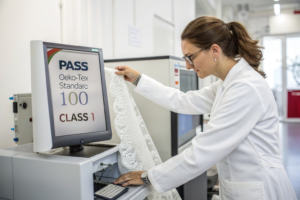
Beyond ethical and operational risks, there's the direct risk to the consumer: product safety. Developing countries may have different or poorly enforced consumer safety standards. A certificate like OEKO-TEX® STANDARD 100 is your scientific guarantee that the fabric or garment has been tested in an accredited lab for harmful levels of over 100 substances—including carcinogenic dyes, heavy metals, and allergens. For children's wear, Class I certification is non-negotiable. Without it, you risk poisoning your customers and facing massive product liability lawsuits and recalls.
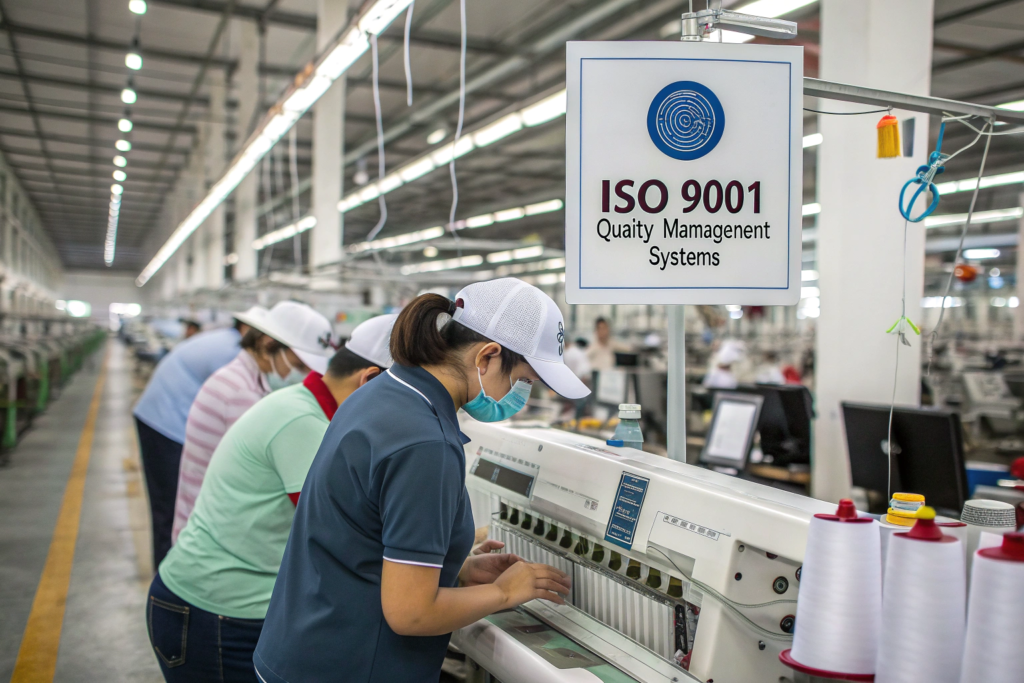
Quality consistency is another chronic challenge. An uncertified factory often lacks standardized processes. One batch is perfect; the next is flawed because dye temperatures varied or sewing machine tensions weren't checked. Certificates like ISO 9001 (Quality Management Systems) indicate the factory has documented procedures, calibration schedules for equipment, and a system for corrective action. This doesn't guarantee perfection, but it guarantees a system aimed at consistent output, dramatically reducing your rate of defective goods and the associated costs of returns and discounts.
Why is OEKO-TEX® or Similar a Minimum Safety Baseline?
For any product touching skin, this is your due diligence. An OEKO-TEX® certificate is batch-specific or product-specific. It answers: "Is this specific shipment of fabric safe?" We had a client sourcing silk from a new Indian vendor. The vendor claimed it was "all-natural." Our mandatory OEKO-TEX® test found high levels of chromium (a heavy metal used in some dyes) in the sample. The certificate process caught a dangerous contaminant before it reached consumers. For any brand, understanding global restricted substances lists (RSLs) for textiles is key, and OEKO-TEX® is a globally accepted verification of compliance.
How Does ISO 9001 Directly Impact Your Defect Rate?
A factory with ISO 9001 has a framework for consistency. They have:
- Incoming QC: Checking fabric against a standard upon arrival.
- In-Process QC: Regular checks during sewing.
- Final Inspection: A defined AQL sampling procedure.
- Corrective Action Reports: When a defect is found, they document why it happened and how to prevent it.
This system reduces variability. Data from our own operations shows that after achieving and enforcing ISO 9001, our client's defect-related claims fell by over 40%. The certificate is proof of this system's existence. For complex technical garments, this is invaluable. Industry studies on the ROI of quality management systems support this correlation.
How Do Certificates Simplify Legal Compliance & Market Access?
Navigating the legal landscape of importing into the EU, USA, or Australia is complex. Regulations like REACH (EU), CPSIA (USA), and Modern Slavery Acts (UK, Australia) place the legal onus on the importer (you) to ensure compliance. Trying to prove your products are REACH-compliant by testing every component yourself is a logistical and financial nightmare. A valid certificate from an accredited body is your primary evidence of compliance. It shifts the burden of proof to the supplier and the certifier. Customs authorities and market surveillance agencies recognize these certificates, smoothing entry and reducing the risk of border rejection.
Furthermore, major retailers and e-commerce platforms (Amazon, Zalando, etc.) now mandate certain certificates for their suppliers. They act as gatekeepers. Without the required certificates, you simply cannot access these sales channels. The certificate becomes your ticket to market. In this sense, sourcing from a certified factory in a developing country isn't just about risk mitigation; it's a commercial enabler that opens doors to larger, more profitable customers.
How Does a Certificate Satisfy Modern Slavery Act Requirements?
Laws like the UK Modern Slavery Act require companies to publish an annual statement on the steps they've taken to ensure slavery is not present in their supply chains. A generic statement is no longer enough. Regulators and investors expect evidence. A SMETA or BSCI audit report from your factory is concrete, third-party evidence of your due diligence. It shows you've selected a supplier that has been audited on this specific issue. Without it, your statement is weak and exposes you to legal and reputational challenge. The UK Government Modern Slavery Act guidance explicitly encourages the use of such audits.
Why are Certificates Critical for EU REACH & US CPSIA Compliance?
REACH (Registration, Evaluation, Authorisation and Restriction of Chemicals) restricts hundreds of substances. CPSIA focuses on lead, phthalates, and other child safety hazards. Proving compliance for each shipment via your own testing is impractical. A valid OEKO-TEX® STANDARD 100 certificate (which incorporates REACH SVHCs) or a CPSIA-specific test report from an ILAC-accredited lab is the standard proof accepted by authorities. When your shipment arrives at EU or US customs, having this documentation readily available can prevent costly delays for testing. For children's products, it's not optional. Resources like the US CPSC's guide to testing and certification make this clear.
How Do They Build Long-Term, Strategic Supplier Partnerships?
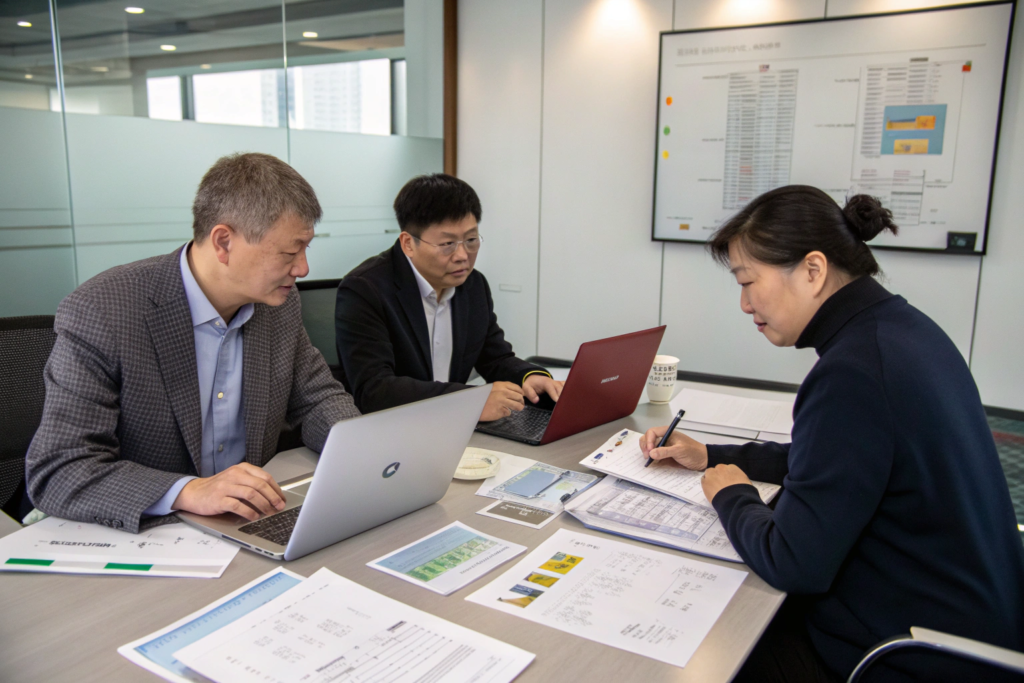
Sourcing based solely on price from uncertified factories leads to transactional, unstable relationships. The factory will cut corners to meet your price, then disappear when problems arise. A certified factory, by contrast, has made a significant investment in systems, audits, and better practices. They are professionalizing their business. Partnering with them is an investment in a stable, improving supply chain. They are more likely to have capable management, speak English, use digital systems, and engage in problem-solving. This transforms the relationship from a constant firefight into a collaborative partnership focused on innovation and continuous improvement.
When you work with a certified partner, you can discuss efficiency improvements, value engineering, and sustainable innovation. They have the management structure to understand and execute these projects. For example, at Shanghai Fumao, our certifications allow us to work with clients on carbon footprint reduction projects for specific fabrics, because we have the data tracking systems (part of ISO 14001) to measure it. An uncertified mill has no idea where to start. Your relationship evolves from "buyer-supplier" to "strategic partners."
What is the "Flywheel Effect" of Partnering with Certified Suppliers?
Investing in certified suppliers creates a positive cycle:
- You pay a fair price that allows them to maintain standards.
- They invest in better equipment and training, improving quality and efficiency.
- Your defect rates fall and innovation increases.
- You give them more business, reinforcing the cycle.
This is the opposite of the race-to-the-bottom dynamic with uncertified suppliers. It builds a supply chain that is both ethical and competitively advantaged. Case studies from the Ethical Trading Initiative (ETI) demonstrate this long-term value.
How Does Certification Future-Proof Your Supply Chain?
Regulations are only getting stricter (e.g., EU CSDDD, Green Claims Directive). Consumer and investor scrutiny is increasing. A certified supplier is already on the journey of transparency and continuous improvement. They are adapting to new rules. An uncertified supplier is a stranded asset—a partner you will inevitably have to replace at great cost as regulations tighten. Choosing certified partners now is a strategic decision that saves you from a painful and expensive supply chain overhaul later. Analysis of future supply chain regulations consistently points to certification as a foundational preparedness step.
Conclusion
In the context of sourcing from developing countries, a certificate is far more than a document—it is a multidimensional risk management tool, a legal compliance shield, a quality assurance system, and a marker of a professional, strategic partner. The slightly higher FOB price you pay for a certified supplier is not a cost; it is an insurance premium against catastrophic ethical, operational, legal, and financial risks. It is an investment in supply chain resilience and brand integrity.
In a world where a single social media post about a factory fire or a lab test showing toxic chemicals can erase years of brand building, the certificate is your verified proof of due diligence. It turns the opaque and risky process of offshore sourcing into a managed, transparent, and sustainable strategy.
Don't let low initial prices blind you to existential risks. Insist on verified certificates. Audit them. Partner with suppliers for whom certification is a starting point, not an end goal. To source with confidence from Asia, contact our Business Director, Elaine, at elaine@fumaoclothing.com. Let us show you our full certification portfolio and the robust systems behind every document.