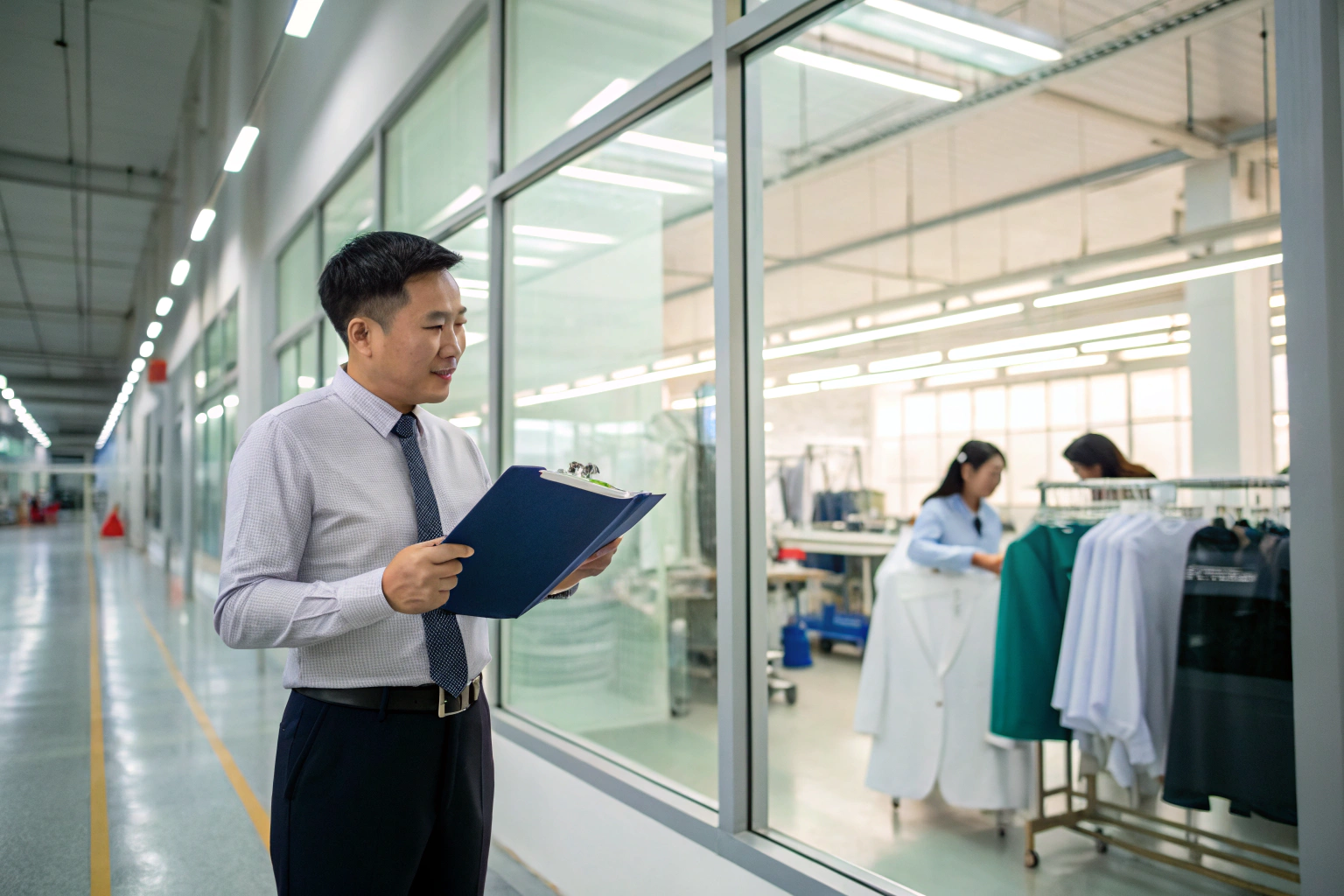
You've received quotes from five different clothing factories. The prices are similar, the portfolios look good. But one factory's proposal is dotted with logos you don't recognize: BSCI, GOTS, ISO 9001, Oeko-Tex® Standard 100. Are these just decorative badges to justify a higher price, or do they signal something fundamentally different about how the factory operates? In an industry where hidden costs, quality failures, and ethical scandals can sink a brand overnight, these certificates are your first and most reliable line of defense.
Think of a certificate not as a piece of paper, but as a verified story. It tells you that an independent, expert third party has audited the factory and confirmed it meets specific, rigorous standards. It transforms promises ("we produce good quality") into proof ("we have a certified management system that consistently delivers good quality"). For a professional factory, these certifications are the bedrock of their business, not a marketing accessory. They are the systems that allow them to reliably serve global brands like ZARA, H&M, or Lululemon. Choosing a factory with the right certifications is the single most effective way to de-risk your supply chain.
As the owner of Shanghai Fumao, I can tell you the investment in getting and maintaining these certifications is significant—it runs into tens of thousands of dollars annually. We do it not because clients always ask, but because it's the right way to run a modern, scalable, and responsible manufacturing business. It's the difference between a workshop and a professional institution. Let's decode what these certificates really mean for your order's safety, quality, and timely delivery.
How Do Certifications Prove a Factory's Quality Management System?
At its core, a quality-related certification like ISO 9001 is a blueprint for consistency. It's not a guarantee that every single garment will be perfect (that's impossible), but it is a guarantee that the factory has a documented, audited system to prevent errors, catch defects early, and correct processes continuously. An uncertified factory relies on the skill of a veteran line supervisor. A certified factory combines that skill with a system that ensures every supervisor, on every line, follows the same proven procedures.
This system covers the entire journey of your order. It dictates how tech packs are reviewed for errors before cutting begins. It standardizes how sewing machine tension is calibrated daily. It requires documented inspection checkpoints at In-Process Quality Control (IPQC) and Final Random Inspection (FRI). For example, our ISO 9001 system at Shanghai Fumao mandated a specific fabric relaxation process before cutting for a stretch denim order in 2023. This simple, documented step—often skipped in uncertified facilities—reduced post-production shrinkage variations by 70%, saving a European brand from a potential mass return issue.
What Does a "Certified Process" Actually Look Like on the Factory Floor?
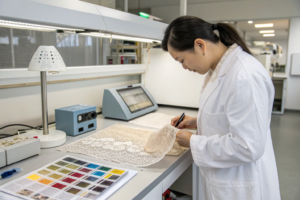
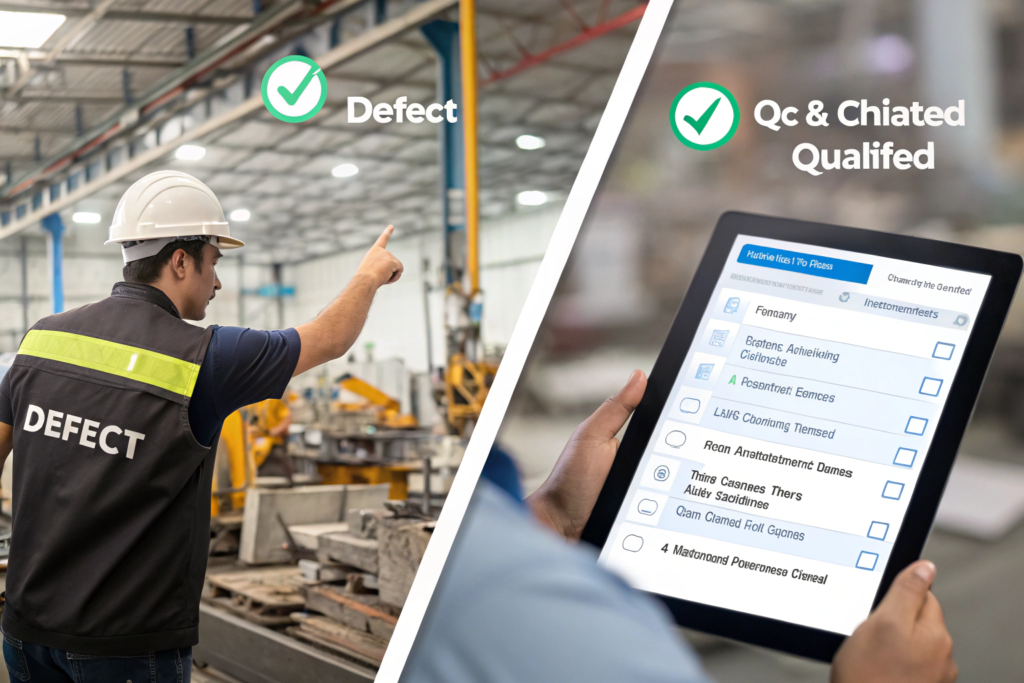
It looks like predictability. When you have a certification, every action is traceable. Let's take fabric inspection. In a non-certified setting, a worker might run fabric over a light table and clip defects based on gut feeling. In our CNAS-accredited lab system (a higher tier than basic ISO), the process is governed by AATCC or ISO test methods.
- The inspector follows a written procedure: fabric speed, lighting lux level, defect classification (Major/Minor).
- Each defect is tagged with a unique number and its location logged digitally.
- This data is analyzed weekly. If defect rates for a certain yarn supplier spike, procurement is alerted.
This turns quality control from a final gatekeeper into a forward-looking management tool. It answers not just "how many defects?" but "where do they come from and how do we stop them at the source?" For brands concerned about how to implement AQL sampling for garment inspection, a certified factory's system provides the reliable framework to make it work consistently.
How Do Certifications Directly Protect Your Order from Costly Mistakes?
They build error-proofing into the process. A key component of management system certifications is Corrective and Preventive Action (CAPA). When a mistake happens—say, 5% of shirts have mismatched collar points—the certified factory is required to:
- Contain the issue (sort the batch).
- Investigate the root cause (Was the pattern wrong? Was the cutting marker misaligned? Was operator training inadequate?).
- Implement a fix (Revise the pattern digitization SOP).
- Verify the fix works and update all related procedures.
We had a case where a client's recycled polyester jersey was pilling. Our CAPA process traced it not to our knitting, but to the abrasive surface of a specific model of industrial folder at the sewing factory. We provided the sewing factory with a technical advisory and switched to a softer-finish guiding tape. The pilling issue vanished for all subsequent orders. This systematic approach is what you pay for. Resources like the Textile Institute's publications often stress the importance of such systemic quality management over piecemeal fixes.
Do Social Compliance Certifications Really Ensure Ethical Production?
This is where certificates move beyond product quality to brand protection. Certifications like BSCI (Business Social Compliance Initiative), Sedex, or WRAP (Worldwide Responsible Accredited Production) are your insurance against the devastating PR and legal risks of unethical labor practices. In the age of conscious consumerism, a social media post showing underage labor in your supply chain can destroy a brand instantly. A social compliance certificate is an independent audit confirming the factory's operations meet basic ethical standards.
The audit checks for evidence of: legal employment contracts, payment of at least minimum wage with overtime records, working hours within legal limits, a safe and hygienic workplace, freedom of association, and a strict prohibition of child or forced labor. It's not a perfect system—audits are snapshots in time—but it dramatically raises the floor. A factory that invests in passing a BSCI audit is making a clear business decision to operate transparently and ethically. It shows they are planning for the long term with reputable partners.

What Do Auditors Actually Check During a Social Compliance Audit?
They look for verifiable records, not promises. An auditor will:
- Cross-check timecards against payroll records to verify overtime is paid correctly.
- Randomly interview workers privately (without management present) to confirm working conditions match the records.
- Inspect dormitories (if provided), canteens, and first-aid facilities.
- Review fire drill logs and machine safety maintenance records.
In 2022, a major US brand required all fabric mills to have Sedex audits. For us at Shanghai Fumao, the process took months of preparing documentation and upgrading some safety signage and machine guards. The auditor spent two days on-site, interviewing workers from different departments. Passing that audit wasn't just about winning one client; it became a foundational standard for our operations, making us more attractive to all responsible brands. Understanding the scope and methodology of a BSCI audit is crucial for any brand sourcing from high-risk regions.
How Does Ethical Certification Impact Your Brand's Value and Risk?
It directly impacts your bottom line and brand equity. Firstly, it mitigates colossal risk. The financial and reputational cost of a supply chain scandal far outweighs any slight premium paid to a certified factory. Secondly, it future-proofs your business. Legislation like the EU's Corporate Sustainability Due Diligence Directive (CSDDD) is making supply chain due diligence a legal requirement. Partnering with certified factories now puts you ahead of the curve.
Furthermore, it aligns with consumer values. You can confidently market your products as ethically made, which commands higher loyalty and price points. It transforms your supply chain from a cost center into a value statement. Forums like Fashion Revolution provide extensive resources on why supply chain transparency and ethical certification matter to modern consumers.
How Do Material & Safety Certifications (Like GOTS, Oeko-Tex) Protect Your Customers?
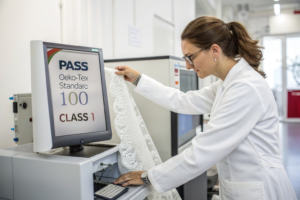
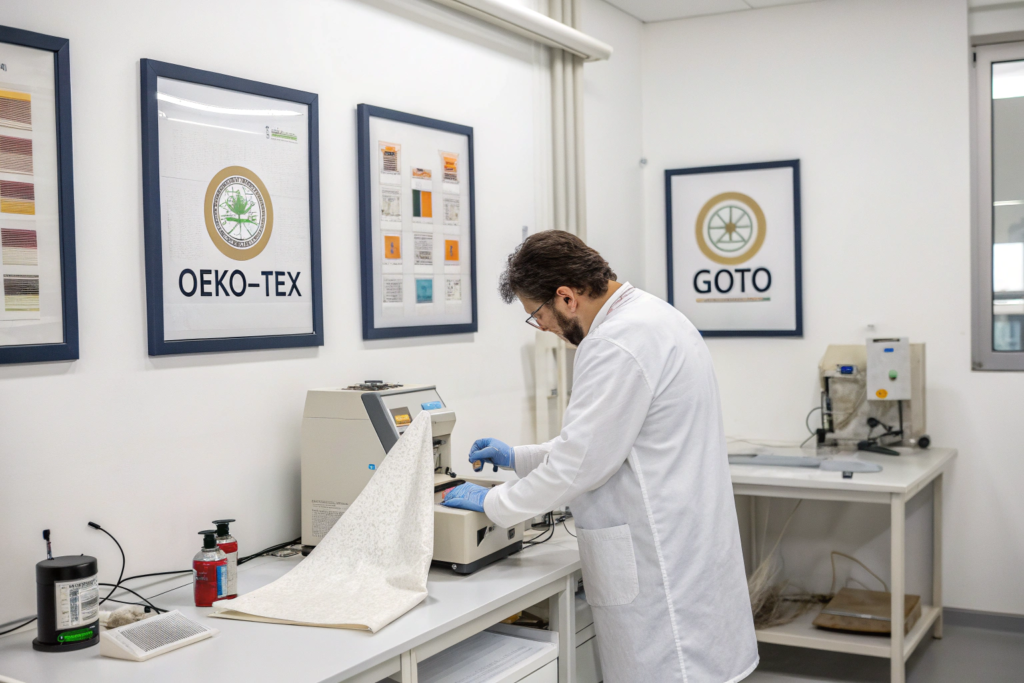
These certificates are the final, crucial link between factory production and consumer trust. They verify that the physical product is safe and meets its claimed environmental or organic credentials. Oeko-Tex® Standard 100 tests for a palette of over 100 harmful substances (like heavy metals, pesticides, allergenic dyes) to ensure the fabric is harmless to human ecology. It's a baseline safety certificate that any brand selling in regulated markets like the EU should demand.
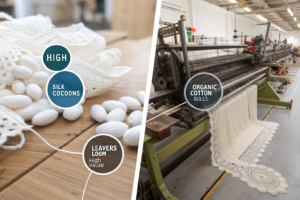
GOTS (Global Organic Textile Standard) is the gold standard for organic fibers. It's far more comprehensive. It tracks the organic content from farm to finished product, ensuring environmental and social criteria are met at every stage, including processing, manufacturing, packaging, and labeling. When you buy a GOTS-certified cotton shirt from a GOTS-certified factory, you have a chain of custody proving the organic integrity.
Why Can't a Factory Just "Use Organic Cotton" Without GOTS?
Because "organic" is only as good as its verification. Without GOTS certification, there is no guarantee:
- That the conventional, pesticide-laden cotton hasn't been mixed with organic cotton during ginning or spinning.
- That toxic dyes and bleaches weren't used in processing, contaminating the "organic" fiber.
- That the social conditions at the processing mill were ethical.
GOTS certification involves auditing the entire supply chain. Our dyeing partner for GOTS projects must themselves be GOTS certified. They must use approved, low-impact dyes and keep meticulous records of chemical inventory and wastewater treatment. This system exists precisely to prevent greenwashing. For brands looking to understand the step-by-step process of obtaining GOTS certification, the official website outlines the rigorous requirements.
What Happens if You Skip Safety Certifications for "Basics"?
You risk regulatory rejection and liability. We had a client in 2023 who sourced basic polyester lining from an uncertified mill to save $0.10 per meter. Their shipment to the EU was held at customs because random testing detected levels of Dimethyl Fumarate (DMFu), an allergenic mold inhibitor, above EU REACH regulations. The entire container was rejected. The cost of destruction, lost goods, and air-freighting replacement fabric from a certified supplier like us dwarfed the initial "savings." Safety standards like understanding EU REACH regulations for textiles are non-negotiable, and certificates are your proof of compliance.
What Other "Operational" Certifications Signal a Reliable Partner?
Beyond product and ethics, professional factories hold certificates that prove their operational excellence and financial stability. These are often overlooked but are critical for smooth, large-scale collaboration.
- ISO 14001 (Environmental Management): Shows the factory actively manages its environmental impact (energy use, waste, emissions). This is increasingly important for brands with ESG (Environmental, Social, and Governance) goals.
- Customs-Trade Partnership Against Terrorism (C-TPAT) for US-bound goods: While more for logistics, a factory certified by a major brand under C-TPAT protocols demonstrates ultra-secure logistics and documentation, leading to fewer customs delays.
- Financial Health Certifications/Reports: While not a "certificate" in the traditional sense, a factory's willingness to provide a verified financial health report demonstrates transparency and stability. It tells you they are a viable long-term partner, not a risk of suddenly going bankrupt mid-order.

How Does an Environmental Certificate (ISO 14001) Affect Your Order?
It affects cost, risk, and brand story. An ISO 14001-certified factory has systems to reduce water and energy consumption. This can lead to more stable pricing, as they are less vulnerable to utility cost spikes. It also ensures proper handling of chemical waste, mitigating the risk of environmental accidents that could disrupt production. For a brand, partnering with such a factory provides authentic content for sustainability marketing, much stronger than vague "eco-friendly" claims. Our investment in Shanghai Fumao's low-carbon production and water recycling system, aligned with ISO 14001, is a key reason we retain premium European clients year after year.
Why Should You Care About a Factory's Financial "Health Certification"?
Because your deposit and production timeline are at stake. A financially unstable factory might:
- Use your deposit to pay off old debts instead of buying your materials.
- Cut corners on quality to save cost.
- Go out of business, leaving you with no product and a lost deposit.
While sensitive, a request for a bank reference or proof of consistent on-time payments to suppliers is reasonable for large orders. A professional factory understands this need for trust. Industry platforms like ThomasNet often discuss strategies for supplier financial risk management, highlighting the importance of vetting beyond just product capability.
Conclusion
In the complex world of global manufacturing, certificates are the universal language of trust and professionalism. They are not mere decoration; they are the physical manifestation of a factory's systems, ethics, and commitment to excellence. A certificate confirms that a factory has invested in building reproducible processes, protecting workers, ensuring product safety, and operating responsibly. This structured approach directly translates to lower risk, higher predictable quality, and a more resilient supply chain for your brand.
Choosing a factory with the right portfolio of certifications is the most strategic decision you can make at the sourcing stage. It is the difference between hoping for the best and having a system that ensures the best. At Shanghai Fumao, our walls are not just decorated with certificates; our entire operation is built upon them. They guide our daily decisions, from the lab to the loading dock. They allow us to partner confidently with the world's leading brands and aspiring entrepreneurs alike. If you're looking for a partner whose professionalism is verified, not just claimed, let's talk. Reach out to our Business Director, Elaine, at elaine@fumaoclothing.com to discuss how our certified systems can bring reliability and peace of mind to your next clothing line.