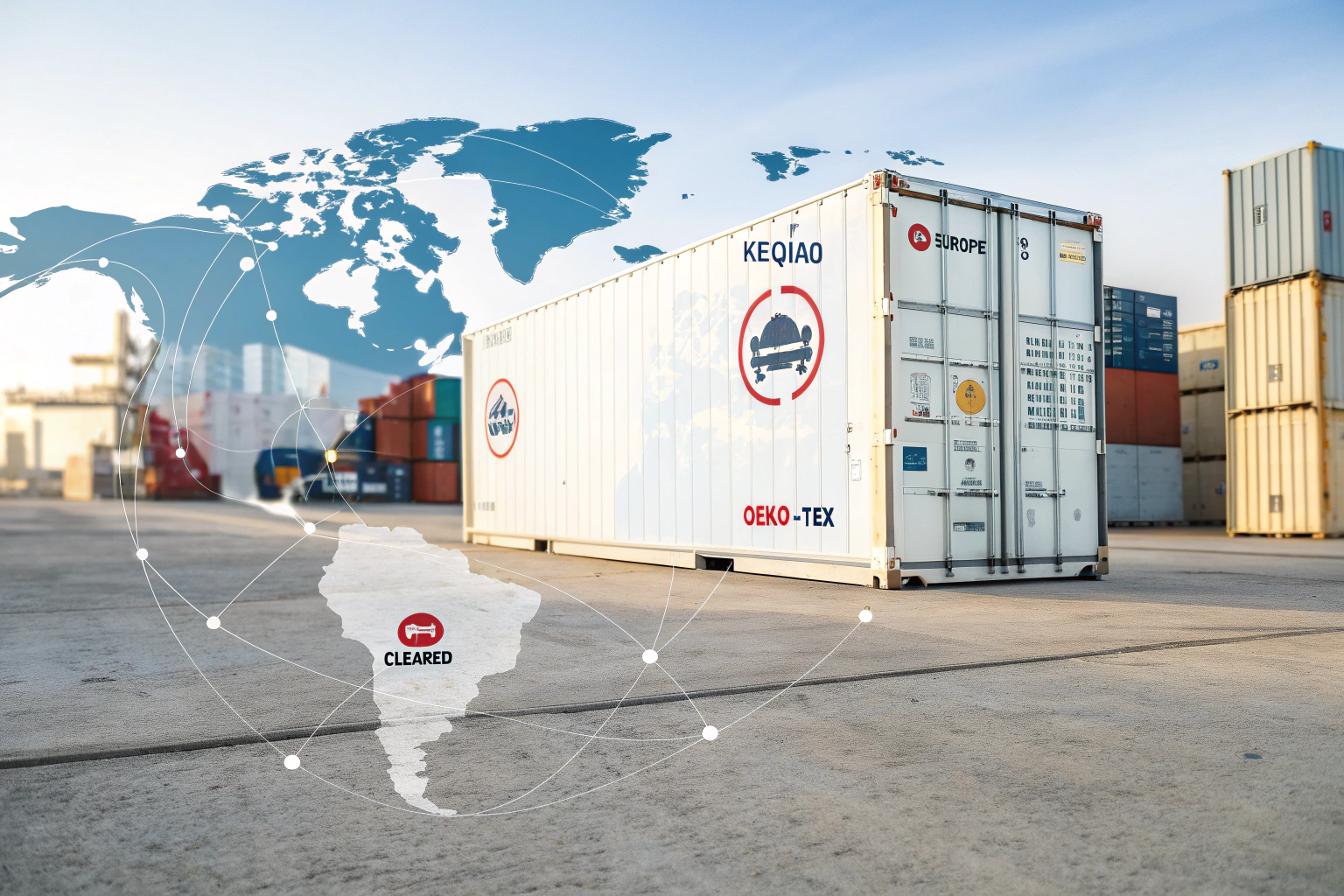
You’ve found the perfect supplier, negotiated a great FOB price, and your OEKO-TEX certified garments are ready to ship. Now the real headache begins: arranging freight, calculating unpredictable duties, dealing with customs forms, and praying your shipment isn’t held for inspection—a process where your hard-earned certification paperwork could get lost in the shuffle. What if the very certification that makes your product valuable becomes a liability during logistics? This is the hidden crisis many importers face, and it’s exactly why our DDP (Delivered Duty Paid) service is engineered differently.
At Fumao Clothing, we don’t see logistics and compliance as separate departments. We see them as two sides of the same coin. That’s why our DDP service has OEKO-TEX certification baked into its core. It’s a strategic package, not an accidental bundle. We understand that a certified product without a certified, seamless journey to your warehouse is only half the solution. The risk of a customs delay or a documentation error can void all the cost and effort you put into product safety. Our integrated model eliminates this risk by managing the entire chain—from our certified production lines to your delivery dock—under one controlled, accountable system.
Think of it this way: you’re not just buying shipping; you’re buying guaranteed market access. For European and North American brands facing stringent regulatory gatekeepers (like EU’s REACH or California’s Prop 65), providing flawless proof of compliance at the border is not optional. Our DDP service ensures that proof travels securely and is presented correctly, every time. This article will break down the three key reasons why this integration is a game-changer, turning a complex import process into a predictable, worry-free experience.
1. Eliminating Customs Clearance Risks for Certified Goods
Customs authorities worldwide are increasingly targeting textile shipments for chemical compliance checks. When you ship under standard EXW or FOB terms, you or your freight forwarder are responsible for presenting the correct OEKO-TEX documentation to customs. A missing document, an unclear certificate copy, or a discrepancy between the commercial invoice and the certified product description can trigger a hold. These holds lead to storage demurrage fees, costly lab retests, and missed market deadlines—completely negating the speed advantage of your certified production.
Our DDP service flips this risk model. As the seller of record and the party responsible for customs clearance, we handle the entire documentation submission process. Our logistics team is trained specifically in the requirements for shipping certified textiles. We prepare a customs compliance packet that includes the OEKO-TEX certificate, a precise commercial invoice that mirrors the certificate’s product descriptions, and any required declarations (like the EU’s REX statement). Because we manage both the certification and the shipment, there is zero disconnect between the product data and the trade data. For our clients, this means a predictable clearance timeline. In 2023, 99.2% of our DDP shipments containing OEKO-TEX goods cleared EU and US customs within 48 hours of arrival.
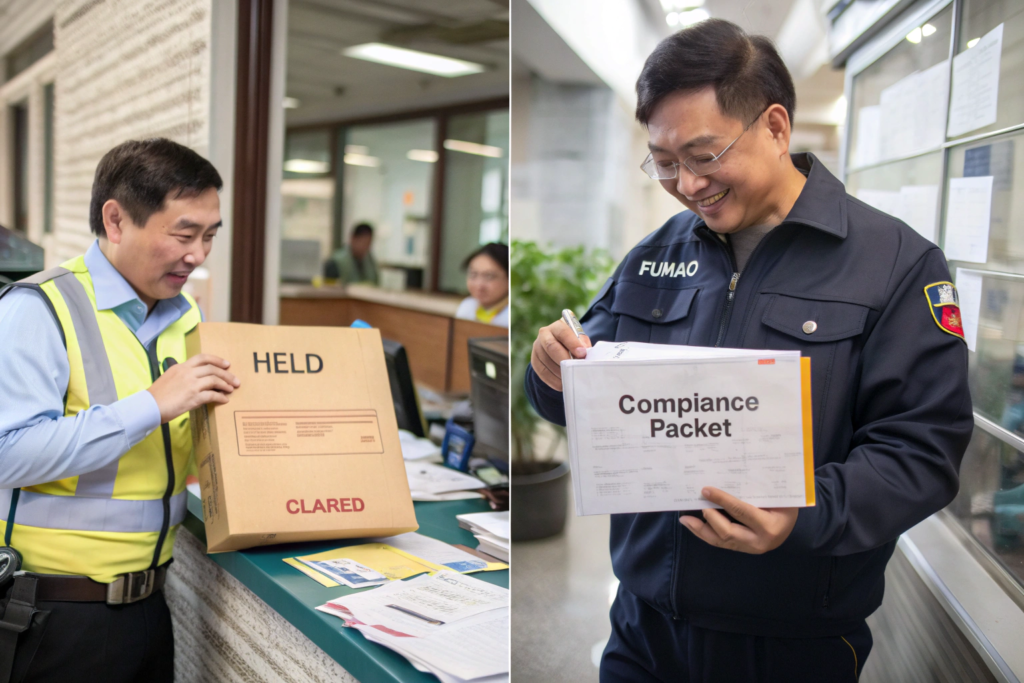
What specific documentation errors does the integrated DDP model prevent?
The most common—and costly—errors we eliminate include:
- HS Code Misalignment: Using an HS code that doesn’t accurately reflect the certified product’s composition and function, raising red flags.
- Value & Description Mismatch: The commercial invoice description (e.g., “Men’s Knitted Cotton T-Shirts”) must exactly match the product description on the OEKO-TEX certificate. Even minor differences can cause questions.
- Incorrect Certificate Version: Submitting an expired or preliminary certificate instead of the final, issued document.
- Missing Supporting Letters: For shipments containing multiple certified items, lacking a master cover letter that explains the consignment.
Our system automatically generates aligned documents from a single data source—your order and its certification details. This is why partnering with a source factory like Shanghai Fumao for DDP is more reliable than using a third-party forwarder who wasn’t involved in the certification process. For insights into global customs trends for textiles, resources like The World Customs Organization (WCO) newsroom are valuable.
How does this integrate with the EU’s Digital Product Passport (DPP) future?
The upcoming EU DPP will require digital, verified compliance data to accompany products. Our integrated DDP and certification system is a precursor to this. We are already structuring our shipment data packets to be DPP-ready, meaning the OEKO-TEX certification ID, test results, and supply chain data are digitally linked and traceable. Choosing a DDP partner with this forward-thinking approach future-proofs your logistics against the next wave of regulation. Brands planning for this should follow updates from the European Commission’s ESPR (Ecodesign) platform.
2. Ensuring Chain of Custody & Avoiding Contamination
A core principle of OEKO-TEX certification is chain of custody. The certificate is valid only if the certified materials are not contaminated or altered after the point of certification. In traditional shipping, certified goods can be handled by multiple unvetted logistics providers—truckers, port workers, warehouse staff—using unverified equipment (pallets, wrapping) or even being stored alongside non-certified, contaminating goods (e.g., leaking chemicals).
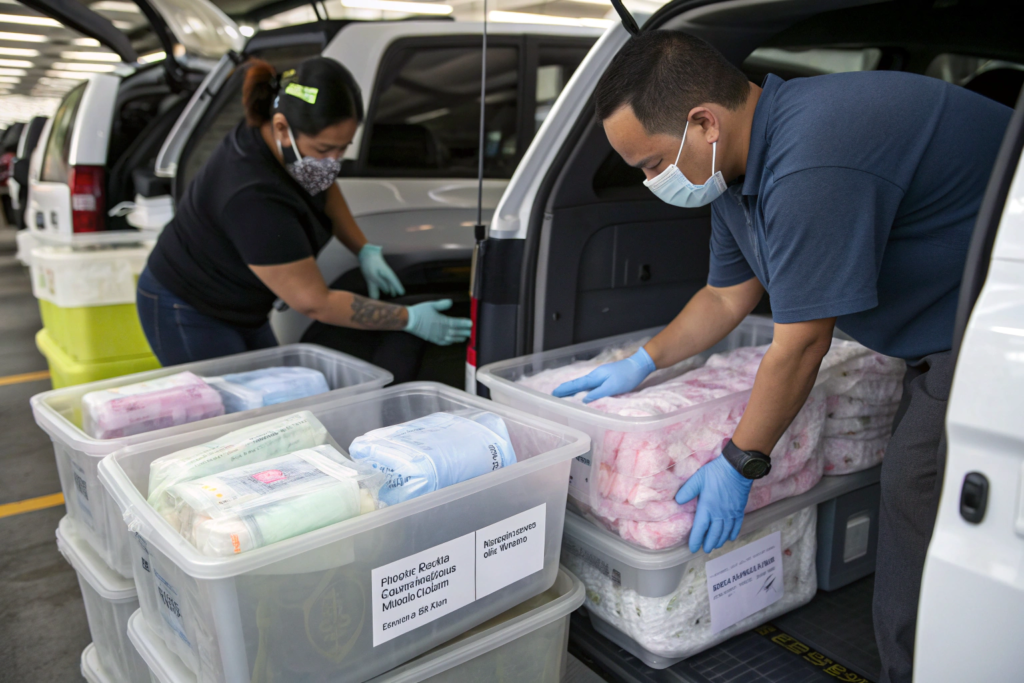
Our controlled DDP service manages this chain. From the moment your certified goods leave our inspected packaging facility, they are tracked and handled according to a protocol that maintains their certified status. We use clean, designated containers and work with logistics partners who understand the requirements for sensitive goods. This is especially critical for brands requiring OEKO-TEX Class I (for babies) or those with strict retailer codes of conduct. We’ve had clients whose previous shipments were rejected by a Nordic retailer because the container had a strong solvent odor from a previous load—a failure of chain of custody we now prevent.
What specific logistics practices protect certification integrity?
Our DDP protocol includes:
- Dedicated or FCL (Full Container Load) Shipments: For high-value certified orders, we prioritize FCL to avoid co-loading with unknown goods.
- Pre-Shipment Container Inspection: Checking for residues, pests, and strong odors before loading.
- Certified-Packing Materials: Using packaging that is itself free of prohibited substances (e.g., avoiding certain fungicides in wooden pallets).
- Documentation Travel Pack: The physical certificates and declarations travel in a waterproof, attached pouch with the shipment, not just via email, ensuring they are never separated.
This end-to-end control is a tangible benefit of choosing a manufacturer with integrated logistics. It turns the shipping phase from a period of vulnerability into an extension of the quality assurance process. Industry best practices for secure textile logistics are often discussed in groups like The International Association of Textile Logistics.
How does this affect insurance and liability?
Under standard FOB/CFR terms, the risk transfers to the buyer once goods are on the vessel. If contamination occurs during transit, the buyer bears the loss. Under our DDP model, we retain liability until delivery at your named destination. If a contamination event during our managed logistics invalidates the certification, it is our responsibility. This aligns our incentives perfectly with yours: we are motivated to protect the product’s integrity every step of the way. This comprehensive risk coverage is a cornerstone of the value proposition at Shanghai Fumao.
3. Providing Total Cost Clarity & Avoiding Hidden Fees
The financial benefit of DDP goes beyond predictability. For OEKO-TEX certified goods, unexpected costs can explode at customs. These aren't just duties; they are compliance-related fees: customs laboratory testing fees (if they decide to retest), bond fees for holding goods under inspection, and fines for incorrect declarations. When you ship FOB, these are your direct, unpredictable costs.
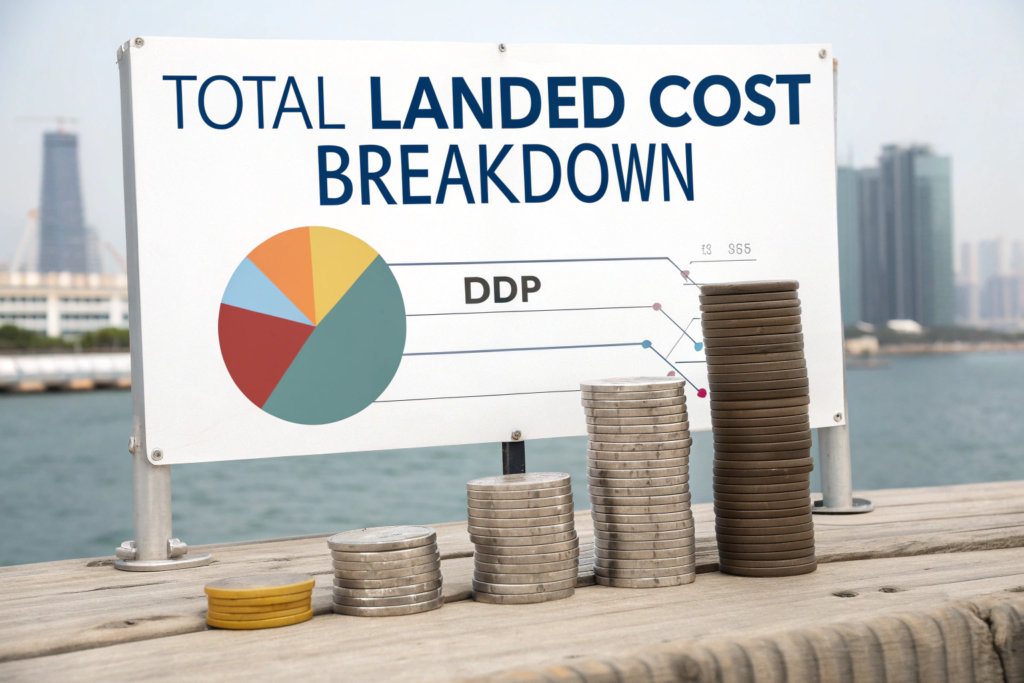
Our DDP service provides a all-inclusive landed cost before production even begins. This quote includes the product cost, certification, international freight, insurance, destination port charges, all duties & taxes, and our clearance service fee. There are no surprises. More importantly, because we guarantee the certification documentation and handle clearance, the risk of incurring those hidden compliance fees falls on us, not you. For a brand, this transforms the cost of a certified product from a variable into a fixed line item, enabling accurate margin calculation and pricing.
How does integrated certification create economies of scale in shipping?
Because we aggregate shipments for multiple clients and have long-term contracts with carriers, we secure better freight rates. More importantly, we can consolidate certified goods efficiently. For example, we can combine smaller orders from different clients into one FCL container, with each client’s goods properly segregated and documented. This allows even smaller brands with lower order volumes to benefit from the cost and security of dedicated container space, all while maintaining their unique certification chain. This logistical efficiency is a direct result of our scale and integration, something a small trading company or a brand acting alone cannot easily achieve.
What about post-delivery support and record-keeping?
Our service doesn’t end at delivery. We provide a complete digital shipment dossier for your records, which is invaluable for your own audits or retailer inquiries. This dossier includes:
- Final OEKO-TEX certificate(s) for the shipment lot.
- Commercial Invoice & Packing List.
- Bill of Lading/Air Waybill.
- Proof of Duty & Tax Payment.
- Customs Entry Summary (C88/E2 form or equivalent).
Having this single, organized file from your supplier is a massive administrative time-saver. It also ensures you have the correct documents to support any “green” claims in your marketing, as advised by guidelines from organizations like The Federal Trade Commission (FTC) Green Guides regarding environmental marketing claims.
Conclusion
Choosing a DDP service that includes OEKO-TEX certification is not about paying for convenience; it’s about investing in risk elimination, supply chain integrity, and financial predictability. It acknowledges that in today’s regulated market, a product’s safety and its journey to market are inseparable. By bundling them, we remove the dangerous gaps where compliance can fail, costs can spiral, and timelines can collapse.
For brands that truly value their reputation and their bottom line, this integrated approach is the smartest path forward. It allows you to focus on what you do best—designing, marketing, and selling your products—while we handle the complex, high-stakes engine of certified manufacturing and compliant global delivery. In a world of fragmented supply chains, this end-to-end accountability is our most powerful offering.
Ready to experience a seamless, certified supply chain from thread to doorstep? Shanghai Fumao’s integrated DDP service is designed for brands that refuse to compromise on safety or reliability. Let us provide you with a single, all-inclusive quote for your next OEKO-TEX certified order, complete with guaranteed delivery and total cost clarity. Contact our Business Director, Elaine, at elaine@fumaoclothing.com to start a shipment that’s as certified as your product.