Let me tell you a story that happens more often than you'd think. Last year, a client from Germany came to us frustrated. They were producing a premium winter jacket. They had sourced an OEKO-TEX® certified shell fabric, a certified insulation, but the zippers and sewing threads were from a different, uncertified supplier. When their final product failed a random retail audit for phthalates, the culprit was the plasticizer in the zipper tape. The entire shipment was held, and the brand faced huge losses. This is the exact gap we decided to close. Why does Fumao Clothing go through the immense effort and cost to ensure certification covers every single component, from the main fabric down to the last stitch? Because a chain is only as strong as its weakest link, and in today's market, a single failed component can break your entire business.
At Fumao Clothing, our certification covers the entire garment production because we believe in delivering not just materials, but guaranteed safety and compliance. We've built an integrated, traceable supply chain that controls or rigorously vets every element—fabrics, trims, threads, and finishes—ensuring the final product you receive carries a certification with undeniable integrity. We don't just sell you a certified component; we deliver a certified, finished garment you can trust without reservation.
Think of it as the difference between buying a crash-tested car frame versus a fully crash-tested, road-ready vehicle. We provide the latter. This holistic approach isn't just about avoiding risk; it's about creating a seamless, reliable, and truly valuable partnership for brands that cannot afford compromises.
What Does "Full Garment Certification" Actually Mean in Practice?
For most suppliers, "certified" means the fabric they sell you has passed a test. For us at Fumao Clothing, it means the entire assembled garment is eligible for and covered by the OEKO-TEX® STANDARD 100 certificate. This is a fundamental operational difference. It means we have systematically mapped, tested, and controlled every input that goes into your order.
The OEKO-TEX® standard requires testing of all article components: the outer fabric, lining, interlining, sewing thread, elastic, zippers, buttons, prints, and even non-textile accessories like plastic clips. If any one of these is non-compliant, the entire article fails. Therefore, our model is built on vertical integration and certified partner networks. We don't just hope our thread supplier is clean; we source from a shortlist of thread manufacturers whose products we have pre-tested and whose production is included in our certification scope. When you place an order with us for, say, 5,000 certified hoodies, we are not just weaving the fleece. We are ensuring the drawcords, the grommets, the print ink, and the care labels all carry the same verified safety pedigree.
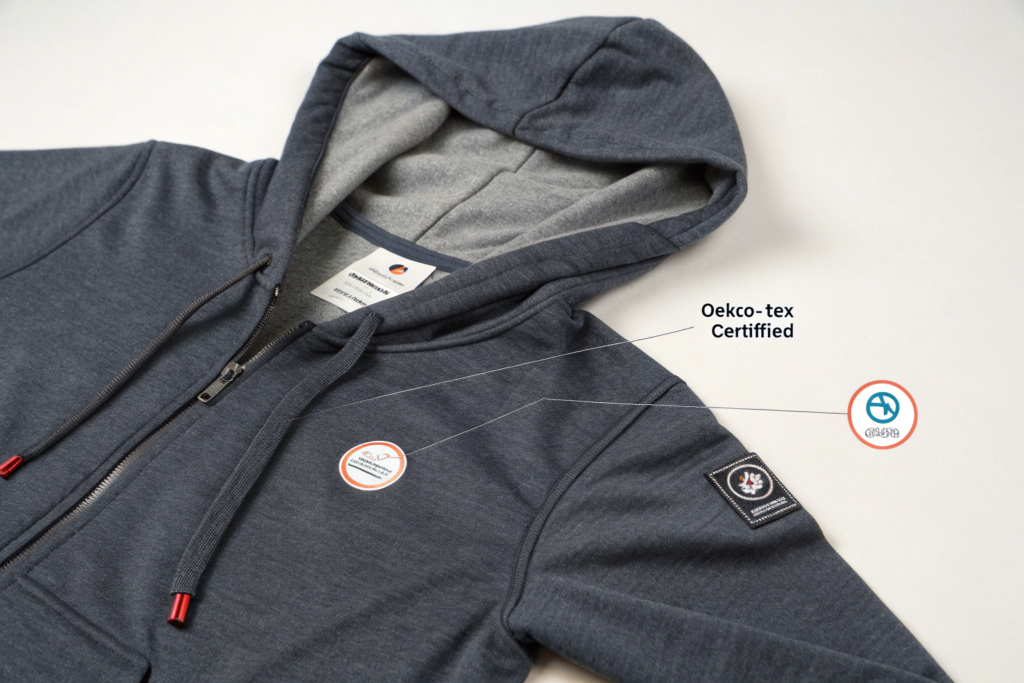
How Does Fumao Manage the Complexity of Multi-Component Sourcing?
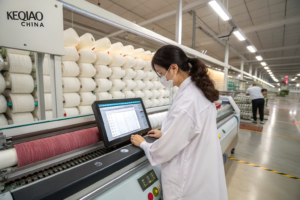
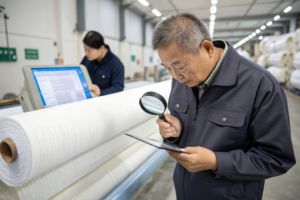
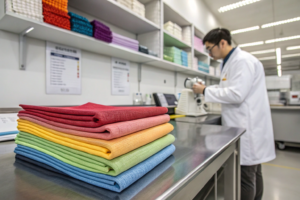
It starts with a Restricted Substances List (RSL) that is stricter than the standard itself. Every potential material supplier must submit full composition disclosures and recent test reports. But we don't stop at paperwork. Our CNAS-accredited in-house lab conducts spot audits. We routinely test random samples of incoming threads, elastics, and zipper tapes for key parameters like pH, formaldehyde, and banned amines.
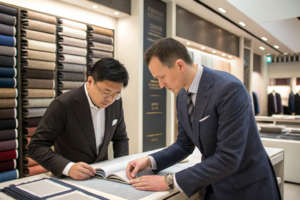
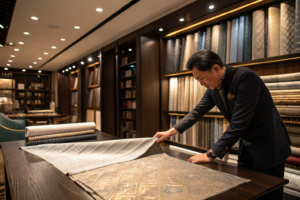
We maintain a library of pre-approved, certified components. For a recent order of technical trekking pants for a Scandinavian brand (Q4 2023), we used: our own certified nylon-cotton blend fabric, a certified PFC-free DWR finish from our coating unit, YKK's GreenRise® zippers (which are OEKO-TEX® compliant), and polyester thread from a partner mill included in our certification. The entire bill of materials (BOM) was pre-vetted, which allowed us to guarantee the certification and cut the development lead time by 30%.
What Are the Common "Hidden" Components That Break Certification?
Brands often overlook these "small" items, which become huge liabilities:
- Sewing Thread: Often polyester or nylon, it requires dyeing and finishing. Cheap thread can be a source of heavy metals and allergenic dyes.
- Elastics and Drawcords: These contain dyes, latex (a potential allergen), and plasticizers. We source latex-free elastics where possible and test for phthalates.
- Printing Inks and Plastisol: Especially in graphics-heavy apparel. Many contain PVC and phthalates. We use phthalate-free, water-based inks and OEKO-TEX® certified digital printing partners.
- Adhesives and Bonding Films: Used in seam sealing or logos. We ensure they are free from banned solvents.
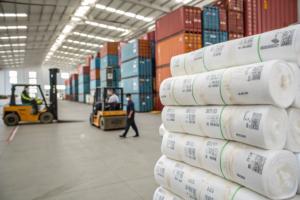
By controlling these, we eliminate the nasty surprises. This holistic control is what allows us to offer true package transportation and customs clearance assurance, as the documentation for the entire shipment is consistent and verifiable.
What Tangible Benefits Does This Holistic Approach Deliver to Brands?
The benefit is simple: risk elimination and operational simplicity. You deal with one responsible entity—Fumao Clothing—for the compliance of the entire product. This translates into concrete advantages.
1. Guaranteed Audit Passage: When a retailer like Walmart, Target, or a major EU department store conducts an audit, they can request test reports for any component. With our system, we provide a complete, coherent dossier for the finished garment. There are no weak links to question. A UK-based children's wear brand working with us passed a rigorous unannounced SGS audit in March 2024 with zero non-conformities, specifically praised for their complete component traceability, which was powered by our backend system.
2. Streamlined Logistics and Faster Time-to-Market: Sourcing different components from multiple certified suppliers is a logistical nightmare—coordinating lead times, managing separate documentation, and consolidating shipments. Our integrated model means single-point coordination. Fabric, trims, and production are synced. Your critical path in apparel manufacturing becomes shorter and more predictable. We've seen clients reduce their overall production timeline by 2-3 weeks simply by avoiding the multi-vendor coordination chaos.

How Does This Impact Pricing and Total Cost of Ownership (TCO)?
Yes, our FOB price per garment might be higher than just sourcing certified fabric alone and assembling elsewhere. But the Total Cost of Ownership (TCO) is often lower when you factor in:
- Eliminated Failed Audit Costs: No fees for re-testing, shipping holds, or product destruction.
- Reduced Management Overhead: You don't need a team to vet and manage multiple compliant suppliers.
- Avoided Recall/Return Costs: The financial and reputational cost of a recall is catastrophic.
- Faster Time-to-Market: Earlier sales revenue has tangible value.
For an emerging US athleisure brand in 2023, our analysis showed that while our per-unit cost was 8% higher, their projected TCO over one year was 15% lower due to avoided management hours and zero compliance incidents, allowing them to scale confidently.
Does This Model Support Small-Batch and Custom Orders?
Absolutely. Our agile R&D and pre-approved component library are designed for this. You're not locked into massive minimums for custom trims. For a startup producing 500-unit runs of custom-printed yoga sets, we can provide certified fabric, thread, and printing from within our ecosystem, ensuring the small batch is as compliant as a 50,000-unit order for a giant retailer. This democratizes access to bulletproof certification. Resources like the Fashion Institute of Technology's sourcing guides often highlight the importance of such integrated partners for small brands.
How Is This Full-Coverage Certification Implemented on the Factory Floor?
This isn't a paper-based policy; it's a physical, day-to-day operational discipline. It requires segregation, training, and relentless documentation.
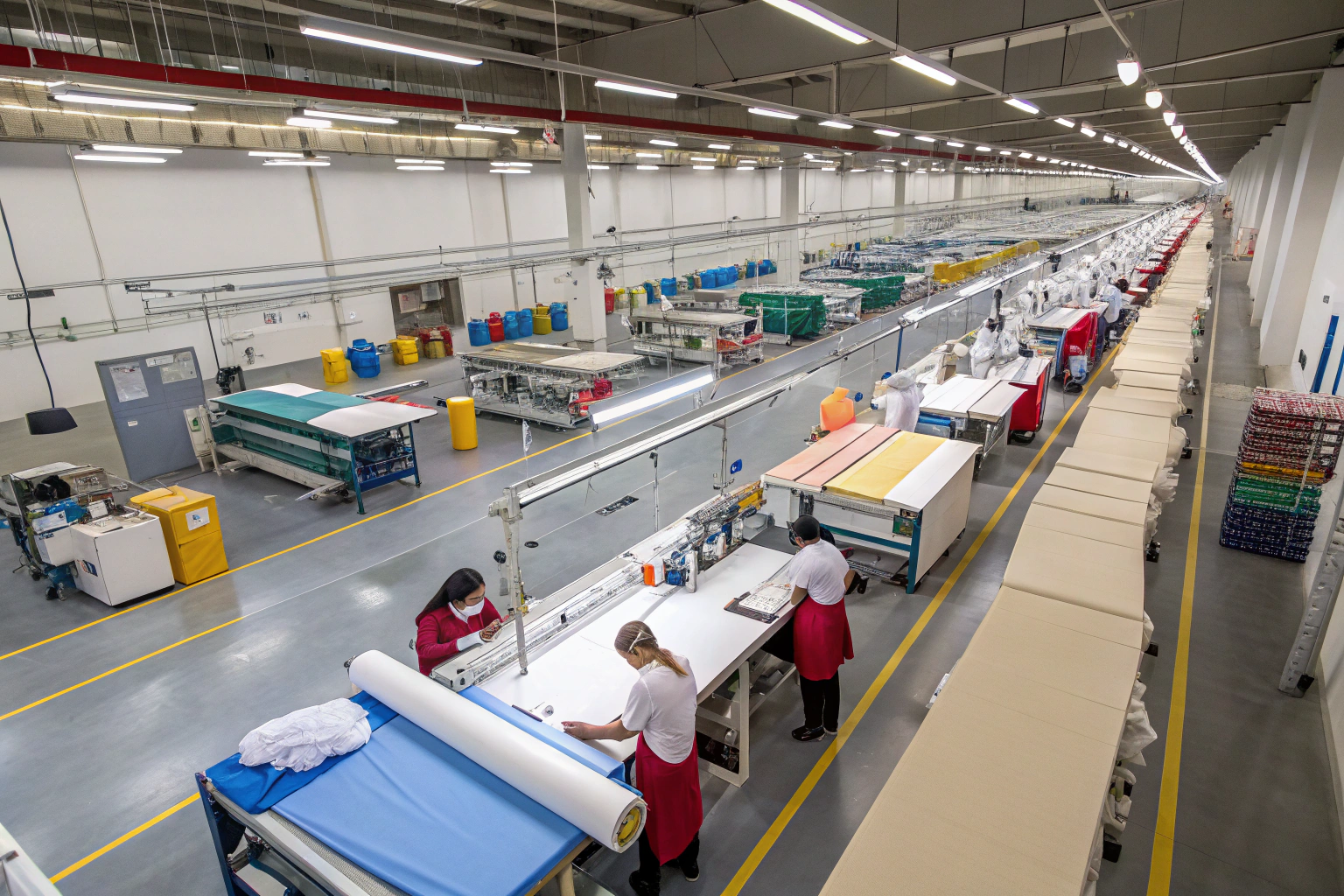
Our cutting rooms and sewing lines have designated areas for certified production runs. Physical identification is key: certified fabric rolls have specific barcode tags; bins for certified threads and trims are marked with green labels. The workflow is designed to prevent commingling. Before a sewing line starts a certified order, a supervisor verifies that all materials loaded—down to the spool of thread—are from approved, logged batches.
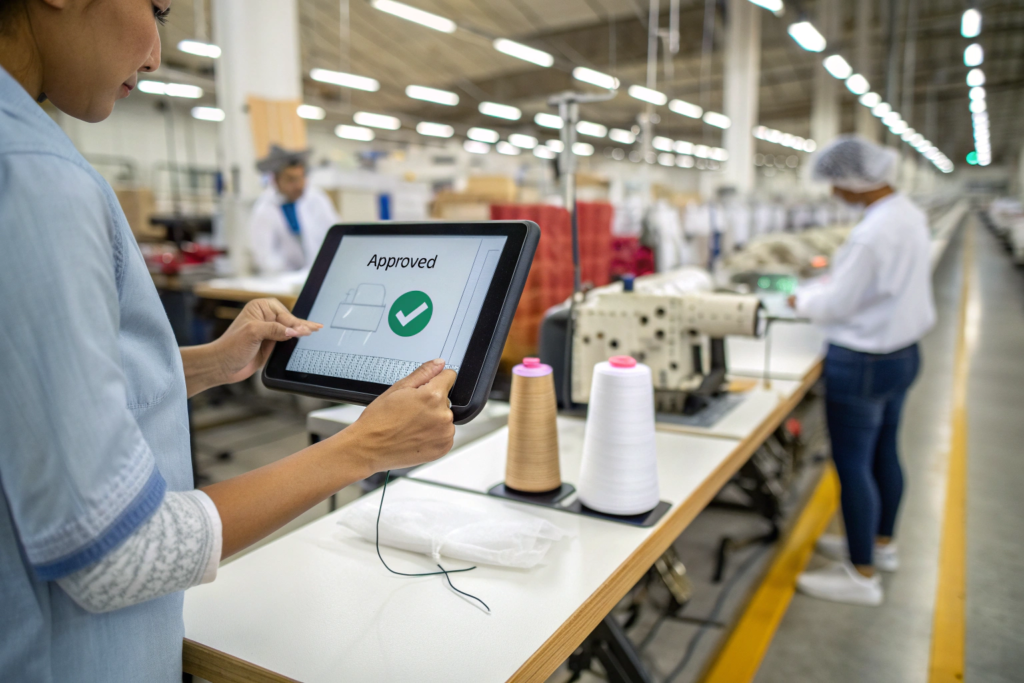
What Role Does Technology and Traceability Play?
Technology is the glue. Our QR code-based tracking system is not just for fabric. Each batch of incoming trim gets a unique QR code linked to its test reports and supplier declarations. When these components are scanned during kit preparation for cutting, they are digitally linked to the production order. The final garment's tracking code can, in theory, be used to trace back to the lot number of the thread used in its seams. This level of digital traceability for apparel compliance is what allows us to stand behind our claim with data, not just promises.
How Are Subcontracted Processes Like Printing Managed?
We don't subcontract to unknown units. Our two printing factories and two embroidery factories are strategic partners whose processes are audited and included in our certification scope. We provide them with approved inks and materials, and they operate under our quality protocol. For instance, when we execute a complex all-over print for an Australian streetwear label, the print factory uses our pre-tested, water-based ink inventory and the operation falls under our regular internal audit schedule. This is how we maintain control without owning every single asset.
Why Is This Approach Critical for Navigating US Tariffs and EU Regulations?
In the current trade landscape, compliance is multifaceted. It's not just about chemicals; it's about origin, documentation, and duty implications. Our integrated model simplifies this complexity.
For US tariffs, our package includes duty engineering advice. By ensuring all key value-adding processes (from fabric formation to garment making) are completed within our certified ecosystem, we help establish a clear and defensible country of origin, which is crucial for correct HTS classification and tariff application. This provides clarity and predictability for your landed cost calculation.
For the EU's evolving regulations like the EU Strategy for Sustainable and Circular Textiles and the upcoming Digital Product Passport (DPP), our system is future-proof. The DPP will require detailed information on composition, chemicals, and supply chain. Our existing traceability database is essentially a ready-made foundation for generating the data required for a DPP. Partnering with us means you are preparing for tomorrow's regulations today. Engaging with industry analyses on the EU Digital Product Passport will show you how critical integrated data management is.
Conclusion
Fumao Clothing’s decision to certify the entire garment production is a strategic investment in certainty. It transforms certification from a hopeful claim attached to a piece of fabric into a guaranteed property of a finished, market-ready product. We absorb the complexity of multi-component compliance so you don't have to. We build the unbroken chain of trust so your brand doesn't suffer a break in reputation.
In a world where consumers and regulators demand total transparency, offering a product that is only partially certified is an increasing liability. The future belongs to brands that can demonstrate holistic responsibility—from the fiber to the final stitch.
If you are looking for a partner who offers not just supply, but surety, let's talk. At Fumao Clothing, our "full coverage" certification is your comprehensive risk management solution. We invite you to audit our process, review our component library, and put our commitment to the test. To explore how this integrated approach can secure and simplify your next collection, contact our Business Director, Elaine. She can walk you through a real case study and a sample of our compliance dossier. Reach her at elaine@fumaoclothing.com. Let's build clothing that is certified with confidence, through and through.