You've been here before: a supplier promises the moon on delivery, your marketing is locked in, then the dreaded email arrives. "Due to unforeseen delays..." Your launch is pushed, your cash is tied up, and you're left managing customer anger. Why does this keep happening? In our experience, it's almost never one big problem—it's a cascade of small failures across a rigid, single-threaded supply chain. When one link breaks, everything stops. That's why we built a different system.
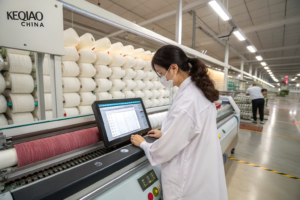
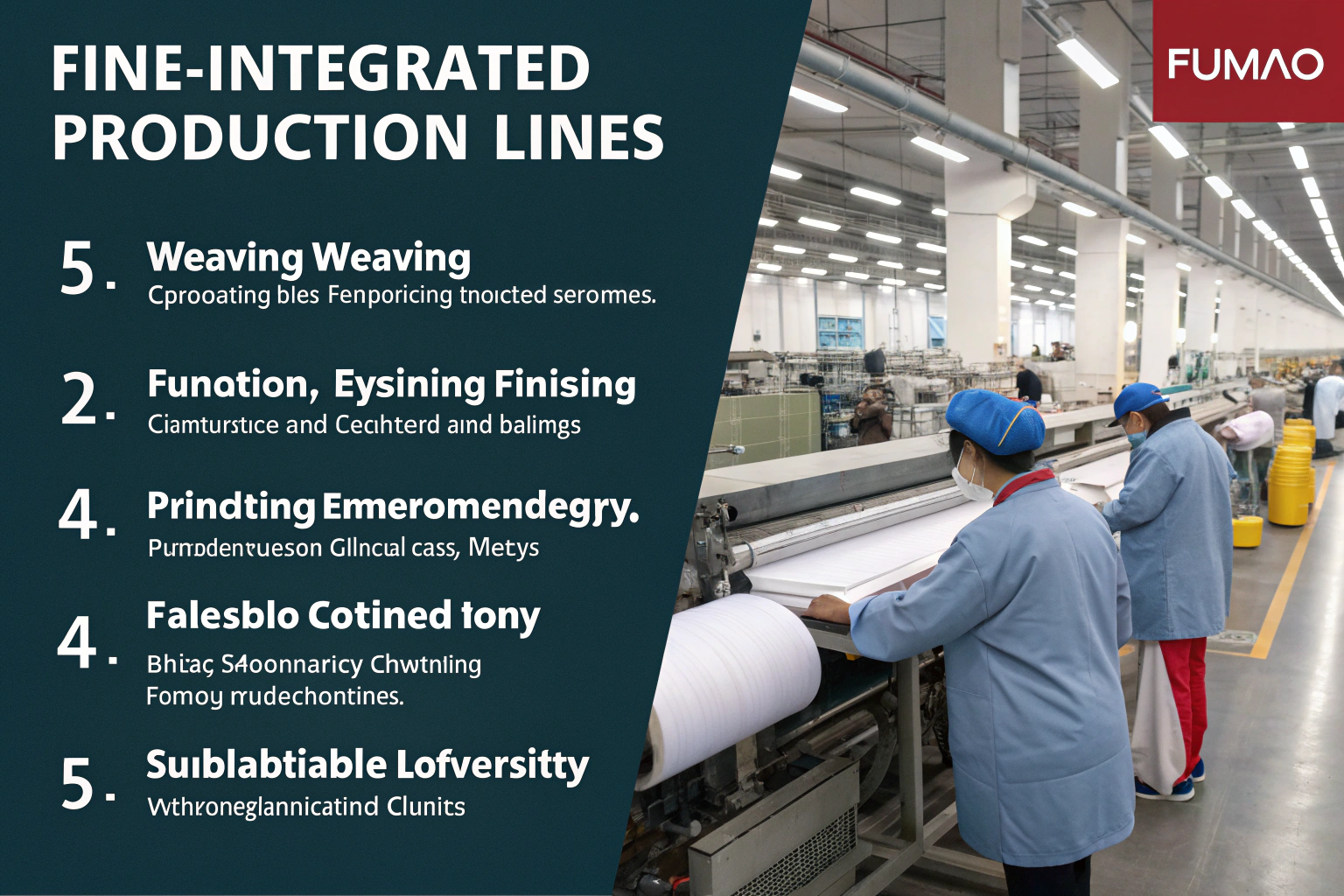
Fumao Clothing's 5 integrated production lines ensure on-time delivery by creating a flexible, parallel-processing supply chain that eliminates single points of failure. These lines—covering weaving, dyeing & finishing, printing & embroidery, functional coating, and garment assembly—are not just separate factories; they are a synchronized ecosystem under one management umbrella. This allows us to control the critical path, absorb shocks in one area by reallocating resources to another, and maintain forward momentum even during peak seasons or unforeseen disruptions. We proved this in Q3 2023 when a key printing partner had a temporary shutdown; we seamlessly shifted the entire workflow to our secondary printing line within 48 hours, with zero impact on the client's delivery date.
Let's move beyond the theory and show you exactly how this multi-line architecture acts as your delivery guarantee, turning the industry's biggest pain points—capacity crunches, quality bottlenecks, and holiday shutdowns—into manageable variables.
How Does Parallel Processing Beat Linear Supply Chains?
Think of a traditional, linear supply chain like a single-lane mountain road. Your fabric order is the only car. If there's an accident at the weaving stage (Line 1), everything behind it—dyeing (Line 2), finishing (Line 3)—comes to a complete halt. You're stuck. Our model is a multi-lane highway with on1-ramps and off-ramps. If one lane slows, we can reroute.
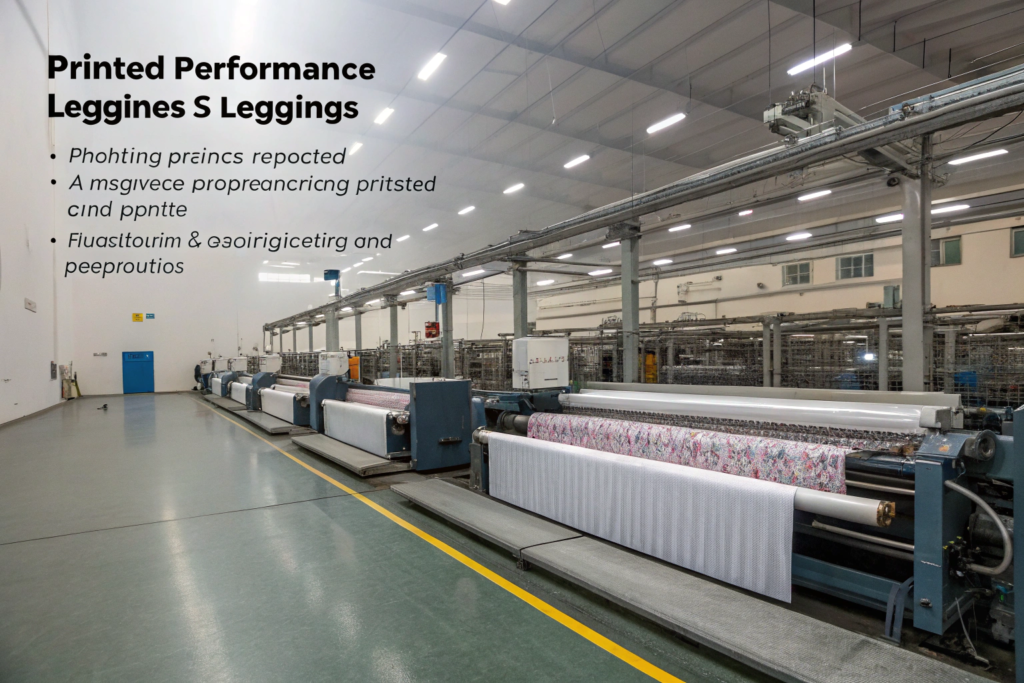
Our 5 lines operate with managed interdependence. For a standard order for "printed performance leggings," the workflow isn't sequential handoffs. It's a coordinated dance:
- Line 1 (Weaving) produces the base fabric.
- Simultaneously, Line 4 (Functional Coating) prepares the moisture-wicking finish chemicals.
- Once woven, fabric goes to Line 2 (Dyeing & Finishing) for coloration and the pre-treatment for printing.
- It then splits: some goes to Line 3 (Printing) for the graphic, while the rest is diverted directly to Line 5 (Garment Assembly) for solid-color panels.
- Finally, all components converge at Line 5 for cutting and sewing.
This parallelism shaves weeks off the timeline. A client last spring needed a complex jacquard fabric with localized embroidery. While their jacquard was on the loom (Line 1), our embroidery unit (within Line 3) used a sample cut to program the machines and set the thread colors. The moment the fabric was ready, embroidery began immediately, bypassing the usual 2-week "sample approval and setup" queue. This is the power of integrated, parallel workflow management.
What Happens When One Production Line Hits a Capacity Wall?
Every factory faces bottlenecks, especially during the March-May and August-October peak periods. In a disconnected supply chain, this is where you get the "sorry, we're fully booked" email. With our 5-line system, we have internal capacity buffers and pre-vetted alternative routing.
For example, our primary dyeing and finishing line (Line 2) has a partner facility that operates under our exacting QC protocols. When our main line is at 90% capacity—a threshold we monitor in real-time—we automatically allocate new, less critical orders (like solid colors for basics) to the partner line. This keeps our main line free for complex, custom dye jobs and rush orders. You, as the client, see no difference in documentation or quality; you just get your confirmed slot. This system allowed us to confidently accept a 50,000-meter emergency order from an activewear brand in August 2023, a period when most competitors were turning business away.
Can You Really Avoid the "Chinese New Year" Delivery Black Hole?
The 3-4 week Chinese New Year (CNY) shutdown is the ultimate test of supply chain planning. Most brands either miss it or pay exorbitant air freight. Our multi-line system provides a structural advantage. The key is pre-holiday staging across lines.
Here’s our CNY playbook, which we executed flawlessly for a European fashion brand for their Spring/Summer '24 collection:
- 8 Weeks Before CNY: All fabric development and approvals with the client are 100% complete. No last-minute changes.
- 6 Weeks Before CNY: Line 1 (Weaving) completes all greige (raw) fabric production. This raw material is physically staged.
- 4 Weeks Before CNY: Lines 2 & 3 (Dyeing/Printing) run at full tilt, processing the staged greige fabric. Finished fabrics are rolled, inspected, and warehoused.
- 2 Weeks Before CNY: Line 5 (Garment Assembly) receives the finished fabrics and begins cutting. Cut panels are kitted and ready for sewing.
- Post-CNY Day 3: While other factories are just waking up, our sewing lines are already assembling pre-cut kits. Production restarts immediately, not 4 weeks later.
This cross-line coordination means we don't just plan around the holiday; we use the structure of our lines to create a time bridge over it. The client's delivery was on time, via sea freight, saving them over $15,000 in potential air freight costs.
How Does In-House Quality Control Accelerate Timelines?
Quality control is the biggest hidden driver of delays. In a fragmented supply chain, QC is a series of stop-sign inspections. Fabric is made, then shipped to a third-party tester (adding 1-2 weeks), then maybe rejected, then sent back... It's a timeline killer. Our model embeds QC as a continuous flow within each production line.
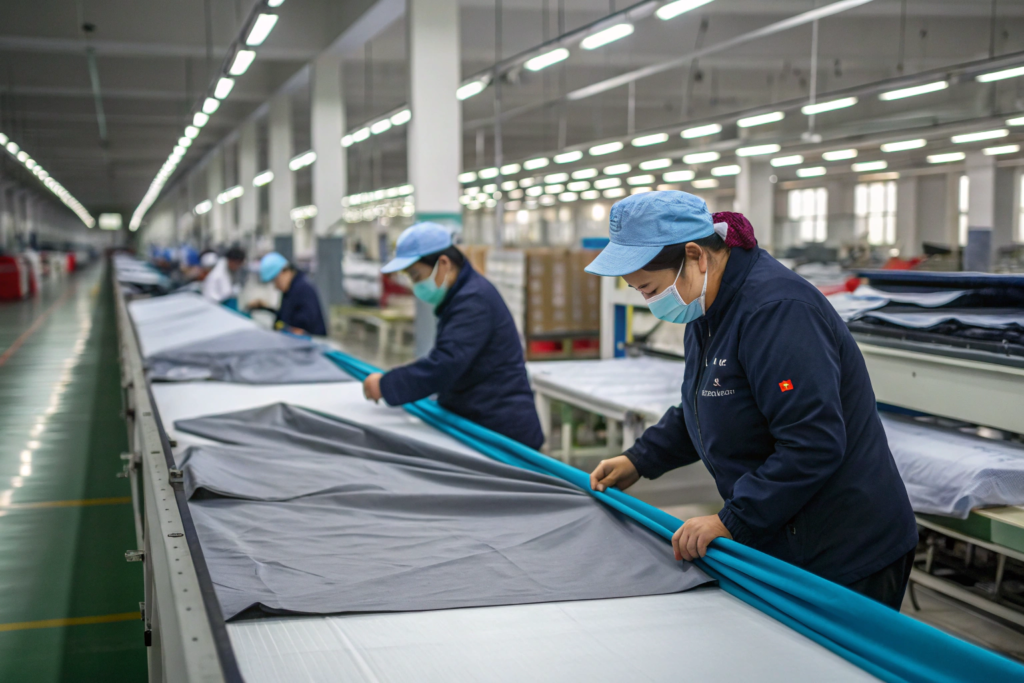
Each of our 5 lines has its own dedicated QC checkpoint operating to the same master standard. But the game-changer is our CNAS-accredited central lab. It's not a separate, final gate; it's a support hub that enables faster decisions at the line level.
Does "In-Line" QC Actually Catch Problems Sooner?
Absolutely, and it's about minimizing waste—of both time and material. Let's take Line 2 (Dyeing). Instead of waiting to test a full 5,000-meter lot after dyeing, our in-line QC takes a swatch from the first 500 meters. That swatch is rushed to our central lab. While the dyeing machine is still running, we're testing for colorfastness and shrinkage.
In a real case last July, this system caught a potential issue with a reactive dye lot for a large US brand's organic cotton order. The lab result showed a potential for color bleed just outside the strict AATCC standard. Within the same 8-hour shift, the dyeing technicians adjusted the pH and fixation process. The rest of the batch was corrected before it was even finished. The client was notified of the "process adjustment" proactively, and the final shipment passed all third-party tests with flying colors. The alternative—shipping the whole lot, having it fail at the client's lab, and then re-dyeing—would have meant a 6-week delay. Our approach turned it into a 6-hour process tweak.
How Does Standardized Data Prevent Approval Loops?
Delays often come from subjective disagreements: "This red doesn't match the lab dip!" Our lines all feed data into a shared digital platform. When Line 1 weaves a fabric, its weight, density, and yarn lot are logged. When Line 2 dyes it, the dye formula, temperature, and the resulting spectrophotometer readings (Lab* values) are uploaded.
This creates an immutable record. For the client, this means approvals are based on objective data, not blurry phone photos. A German client we work with has this data integrated into their PLM system. Their "approval" for a bulk fabric is often just a digital sign-off on the data set, which can happen in hours, not the days or weeks of shipping physical counter-samples back and forth. This seamless handoff between lines, backed by data, is what cuts out the "approval wait time" that plagues traditional sourcing. Understanding the role of spectrophotometry in textile color approval shows why this technical approach is so critical for speed.
What's the Role of the Coating & Functional Line (Line 4)?
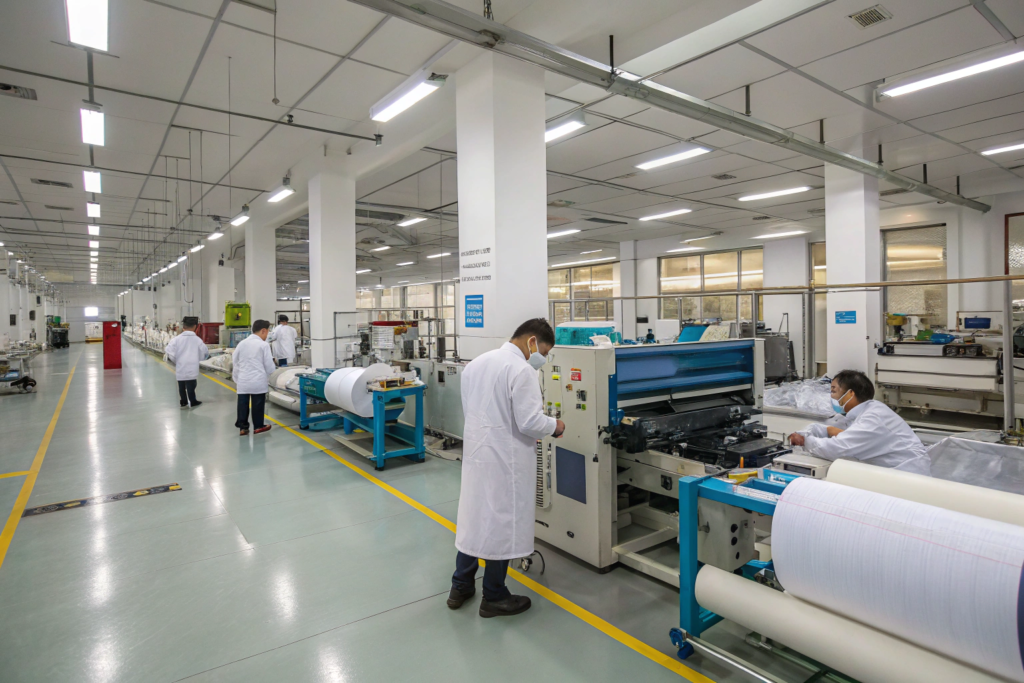
Most fabric suppliers outsource functional treatments like waterproofing, flame retardancy, or anti-microbial finishing. This adds a 2-3 week external loop full of logistical and communication risks. Our dedicated Line 4 for Functional Coating and Finishing brings this high-value, complex process in-house. This is perhaps the single biggest accelerator for technical apparel brands.
This line isn't just about applying a finish; it's an R&D and application hub. Because it sits within our ecosystem, it can collaborate in real-time with the weaving and dyeing lines. For instance, if we are developing a moisture-wicking nylon for sportswear, Line 4 technicians can advise Line 1 on the optimal yarn twist for coating adhesion during the prototyping phase, eliminating trial and error later.
How Does In-House Coating Slash Lead Times for Technical Gear?
The answer is in eliminating the "batch handoff" delay. For a recent order of 20,000 meters of PU-coated polyester for weatherproof jackets, the timeline comparison was stark:
- Traditional Model: Weave fabric (2 weeks) -> Ship to coating factory (1 week) -> Queue at coating factory (1-2 weeks) -> Apply coating & cure (1 week) -> Ship back (1 week) = 6-7 weeks added.
- Fumao's Integrated Model: Weave fabric in Line 1 -> Transfer directly to Line 4 via internal logistics (2 days) -> Queue priority for in-house orders (minimal) -> Apply coating (1 week) -> Release to Line 5 for garment making. = ~2 weeks added.
We saved the client, a North American outdoor brand, over a month on their critical Fall production timeline. The cohesion between lines also ensures the coating is perfectly matched to the base fabric's tension and heat sensitivity, resulting in a higher yield and fewer rejects—another timeline saver.
Can You Develop Custom Functional Fabrics Faster?
Yes, dramatically. Line 4 operates as an innovation partner, not just a service provider. When a startup approached us in late 2023 with an idea for a biodegradable water-resistant finish for vegan leather, our process was integrated:
- Week 1: Joint R&D meeting with the client, our weaving specialists (Line 1), and coating chemists (Line 4).
- Week 2: Line 1 produced 3 different base fabric substrates. Line 4 prepared 2 finish formulations.
- Week 3: All 6 combinations were created and tested in our lab for performance.
- Week 4: The winning combination was scaled for a 500-meter pilot run, which was then made into sample garments in Line 5.
From idea to wearable, functional prototypes in 4 weeks. In a disconnected supply chain, just scheduling meetings with 3 different suppliers would have taken that long. This integrated speed-to-market is why brands working on cutting-edge apparel partner with Shanghai Fumao.
How Does Dedicated Garment Assembly (Line 5) Seal the Deal?
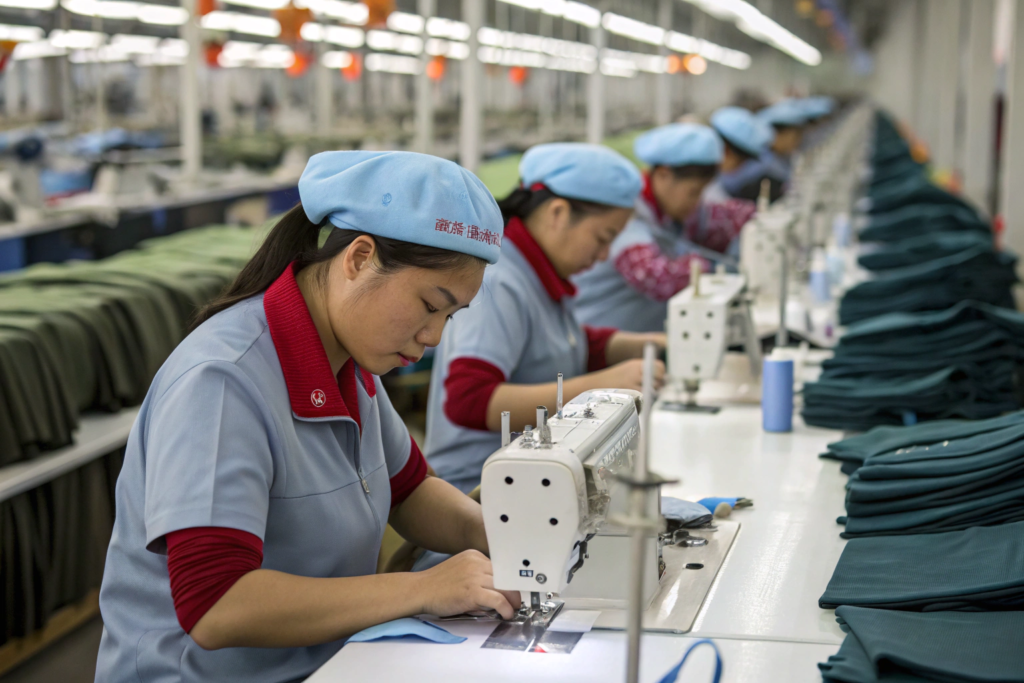
The final, most fragile link in the chain is the making of the actual garment. Even with perfect fabric delivered on time, a slow or disorganized garment factory can derail everything. Our Line 5: Garment Assembly is the capstone of our system. It's not an afterthought or a random partner; it's a managed extension built to receive the optimized output of the first four lines.
This line specializes in efficient transition from fabric roll to shipping carton. Because it works daily with the other lines, there's no learning curve or spec interpretation delay. They know the exact handling properties of the fabrics we produce.
Why Does "Fabric-to-File" Coordination Prevent Cutting Delays?
In garment production, the "cutting" stage is where most delays accumulate due to fabric issues like shrinkage, bowing, or skewing. Since our Line 5 team is in constant communication with Lines 1-4, they get a fabric behavior report with every roll. For instance, if Line 2's data shows a particular jersey has a 5% longitudinal shrinkage, Line 5's CAD technicians automatically pre-program the cutting pattern to account for it before the fabric even arrives.
This meant that for a large order of performance polo shirts for a corporate client, the cutting began the same day the fabric was delivered to Line 5. There was no 5-day "fabric relaxation and testing" period. This pre-alignment, born from vertical integration, can compress the garment production schedule by 15-20%. This is the kind of detail covered in guides on optimizing fabric utilization in mass garment cutting, but we bake it into our standard process.
How Does Line 5 Handle Last-Minute Changes or Rush Orders?
The flexibility of our multi-line system shines brightest here. Imagine a client needs an extra 500 units of a best-selling style, and they need it in 3 weeks for a pop-up event. Here's how the lines coordinate:
- Line 1 & 2: Check inventory of greige or dyed fabric. If not available, they prioritize a micro-lot.
- Line 4: Prepares any needed functional finish on an expedited schedule.
- Line 5: Reserves a "hot line"—a dedicated sewing line for rush jobs. They pre-stage trims (zippers, labels) from trusted suppliers.
Because all lines are under one management system, we can temporarily reallocate resources—manpower, machine time, energy—to prioritize this rush job without completely disrupting other scheduled work. We call this "surge capacity," and it's how we fulfilled a 700-piece emergency order for a travel uniform brand in just 18 days from order confirmation to FOB shipment, turning a potential crisis into a legendary client service story.
Conclusion
On-time delivery isn't a promise; it's an engineering outcome. At Fumao Clothing, our 5 integrated production lines are the physical infrastructure that makes this outcome predictable and reliable. We've moved beyond the fragile, linear "pipeline" model to a resilient "network" model, where capacity, expertise, and quality control are distributed yet centrally coordinated. This system absorbs shocks, accelerates feedback loops, and turns complex production challenges into parallel tasks that converge precisely on your deadline.
Your brand's timelines shouldn't be at the mercy of a single factory's capacity crunch or a subcontractor's mistake. They should be anchored in a system designed for redundancy, transparency, and speed.
Stop hoping your next delivery will be on time. Engineer the certainty. Partner with Fumao Clothing and leverage the power of a fully integrated, 5-line production ecosystem. Contact our Business Director, Elaine, to discuss your next project and receive a timeline analysis based on our parallel processing model. Let's build a schedule you can trust. Email elaine@fumaoclothing.com to begin.