I remember a buyer from a large European retail chain who called me about eight years ago. He was furious. He had ordered 50,000 meters of a custom-dyed cotton twill from another supplier based on a small, one-inch sample they had sent him. The sample looked perfect. The color was exactly what he wanted. The hand feel was right. When the bulk fabric arrived, it was a completely different shade. The color was off by several points. The hand feel was stiffer. His entire production run of 80,000 shirts was delayed while he scrambled to find replacement fabric. He lost his retail window and ended up having to discount the entire collection by 40%. The supplier? They claimed the sample was "representative" and refused to take responsibility.
That buyer is now one of our most loyal clients. And the first thing he does with every new order is ask for a proper swatch. Not a photo. Not a one-inch cut. A full, properly labeled swatch that he can test, wash, and approve before we cut a single meter of bulk fabric.
At Shanghai Fumao, we've built our quality system around the swatch. It's not just a piece of fabric. It's a contract. It's a reference. It's the single most important tool for ensuring that what you order is exactly what you get. In this article, I'm going to explain why fabric swatches are non-negotiable, what makes a good swatch, and how to use them to protect your supply chain.
What Makes a Good Fabric Swatch?
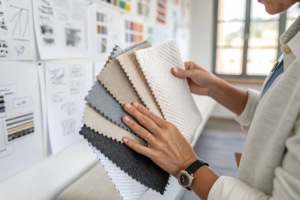
Not all swatches are created equal. A tiny scrap cut from the edge of a roll is not a swatch. A photo sent via WeChat is not a swatch. A real, usable fabric swatch is a tool that allows you to evaluate the fabric under the same conditions that your end customer will experience. It needs to be big enough, properly labeled, and representative of the bulk production.
What Size Should a Fabric Swatch Be?
This is a detail that many buyers overlook. A swatch that's too small is useless. You can't test shrinkage on a one-inch square. You can't check the drape on a postage stamp. You can't see how the color looks in different lights on a tiny scrap.
The industry standard for a proper swatch is at least 10 centimeters by 10 centimeters. That's about four inches by four inches. For woven fabrics, I actually prefer a larger swatch—maybe 20 centimeters by 20 centimeters. That gives you enough fabric to run a full test for shrinkage, colorfastness, and pilling. It also lets you see how the fabric drapes and behaves when you fold it or hang it.
I had a client from a lingerie brand in France who learned this lesson. She was ordering a delicate lace fabric and approved a small two-inch swatch. When the bulk fabric arrived, the drape was completely different. The lace was stiffer because the finishing process hadn't been fully calibrated for the bulk run. If she had asked for a larger swatch—big enough to actually sew a sample garment—she would have caught the drape issue before production. Now, she always asks for a "production swatch" that's large enough to make a sample bra cup. That simple change eliminated her drape problems. For a guide on how to request and evaluate fabric swatches, this sourcing blog offers a checklist for swatch evaluation.
What Information Should Be on the Swatch Label?
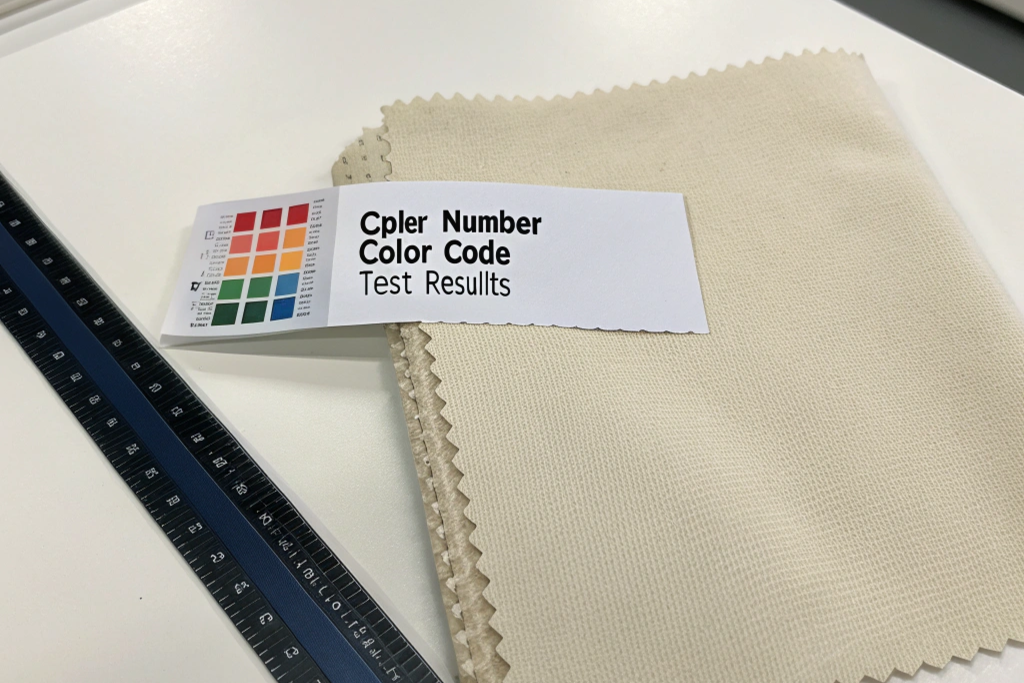
A swatch without a label is just a piece of fabric. You need documentation that tells you exactly what you're looking at. The label should include the order number, the fabric style code, the color name or code, the lot number, and the date. It should also include the test results—shrinkage, colorfastness, pilling rating, and any other relevant specifications.
We print labels for every swatch we send. It sounds like a small thing, but it makes a huge difference. I remember a client from a workwear brand in Canada who received swatches from three different suppliers. Two of them sent swatches with no labels. Just a piece of fabric in a plastic bag. The third—us—sent swatches with a full label showing the order number, the fabric specifications, and the test results. He told me later that the labeled swatch made him feel confident that we were organized and professional. He placed the order with us. That label was worth more than any sales pitch.
The other reason labels matter is traceability. If something goes wrong with the bulk order, the swatch is your reference. If the swatch isn't labeled, how do you prove that the bulk fabric is different? A labeled swatch creates a clear chain of evidence. For a discussion of how to document fabric approvals, this textile quality control article explains the importance of swatch documentation.
How Do You Use Swatches to Test Quality?
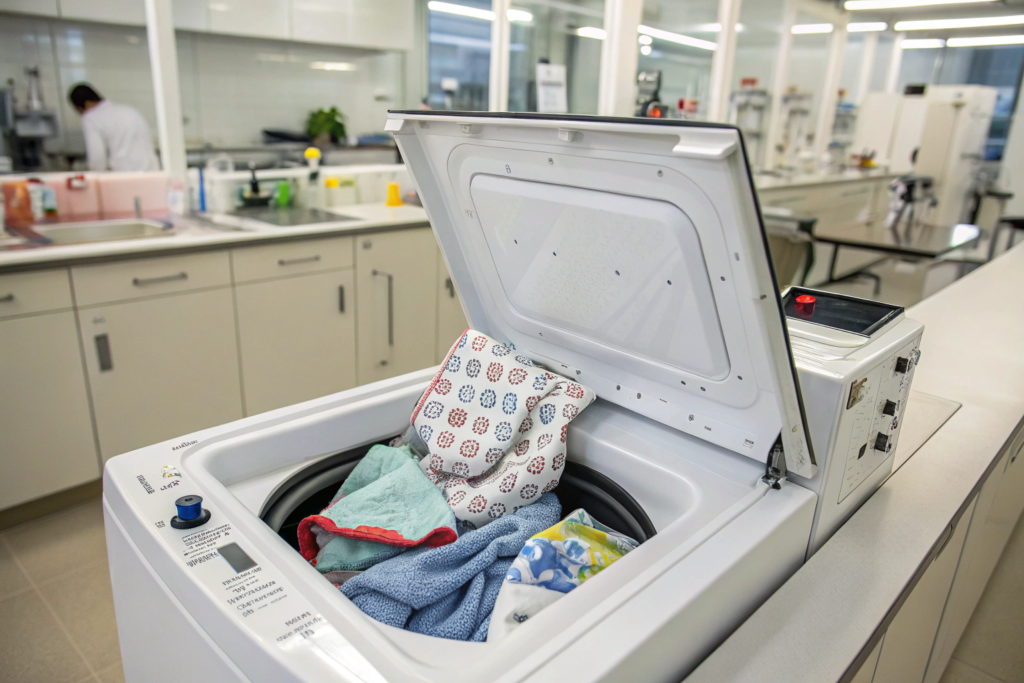
A swatch isn't just for looking at. It's for testing. The best buyers treat every swatch as a sample that needs to be put through the same conditions that the final garment will face. Wash it. Wear it. Scrub it. See what happens.
What Tests Should You Run on a Swatch?
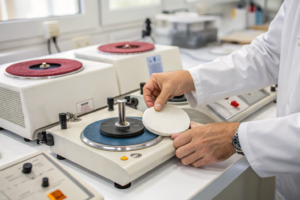
The specific tests depend on your end use, but there are a few that every buyer should run. The first is shrinkage. Cut a piece of the swatch, measure it precisely, wash it according to the care instructions, and measure it again. If the shrinkage is more than what the supplier promised, you have a problem. For apparel, we typically guarantee shrinkage under 3%. For home textiles, it might be under 5%.
The second is colorfastness. Rub the fabric with a white cloth—dry and wet. See if the color transfers. If you're making something that will be worn against light-colored clothing or upholstery, this is critical. We test for colorfastness to rubbing (crocking) in our lab, but you can do a simple test yourself.
The third is hand feel after washing. A fabric can feel beautiful off the roll but turn into sandpaper after one wash. Wash the swatch, dry it, and feel it again. Does it still have the softness you need? Does it feel stiff or scratchy?
I had a client from a baby clothing brand in the UK who runs a full battery of tests on every swatch. She washes the swatch three times. She tests for colorfastness to saliva—because babies put everything in their mouths. She even tests for flammability. It sounds extreme, but her products are for the most sensitive consumers. She told me that testing swatches saved her from a disaster once when a supplier's fabric failed the saliva test. She caught it before production. Now, she has a zero-defect rate on her incoming fabric. For a comprehensive guide to fabric testing methods, this industry resource provides a step-by-step guide to home fabric testing.
How Do You Compare Swatches from Different Suppliers?
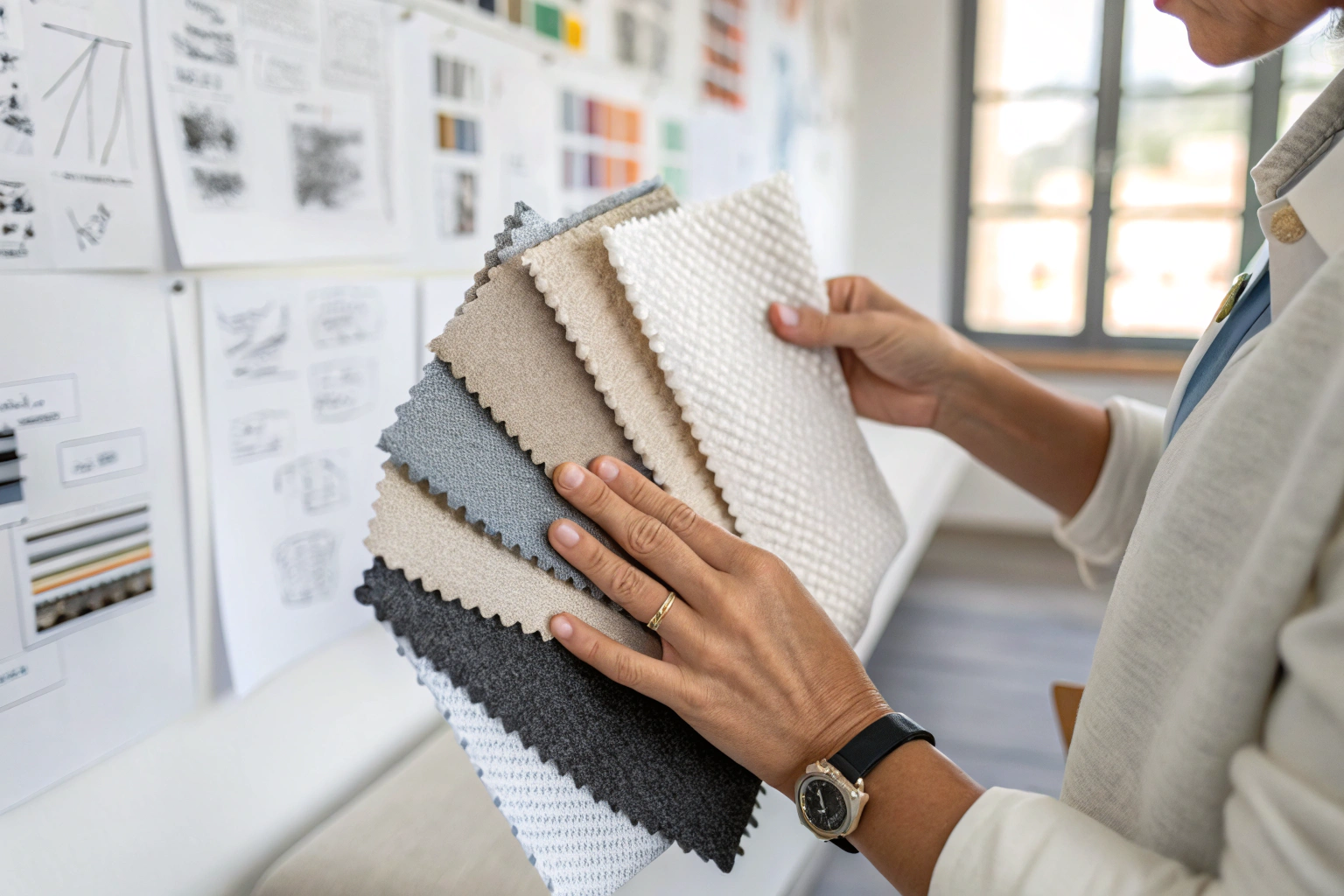
If you're sourcing from multiple suppliers, swatches are how you make an apples-to-apples comparison. But you need to be systematic about it. Don't just look at the swatches in isolation. Put them side by side. Wash them together. Test them under the same conditions.
I worked with a procurement manager from a hotel chain in Dubai about five years ago. He was sourcing sheeting fabric for a new property. He had swatches from four different suppliers. Instead of just looking at them, he sent all four to a testing lab and had them run the same tests—shrinkage, colorfastness, tensile strength, and pilling. The results were eye-opening. The cheapest swatch had shrinkage over 8% and pilled after two washes. The most expensive swatch had excellent test results but was over budget. One supplier's swatch fell in the middle—good test results, reasonable price. That's the one he chose. He told me that the testing cost him about $500, but it saved him from a potential $200,000 problem if he had chosen the wrong fabric.
When you're comparing swatches, also pay attention to the supplier's response. Did they send the swatch quickly? Was it properly labeled? Did they include test data? These are signals about how they will handle your order. A supplier who sends a sloppy swatch will probably send sloppy bulk fabric. For advice on how to evaluate suppliers through their sampling process, this sourcing guide offers a framework for supplier assessment.
What Happens When You Skip the Swatch Stage?
I've seen it happen too many times. A buyer is in a hurry. Their production timeline is tight. They get a photo from a supplier, the price is right, and they skip the swatch. They approve based on a screen image. And then the disaster comes.
What Are the Most Common Swatch-Related Disasters?
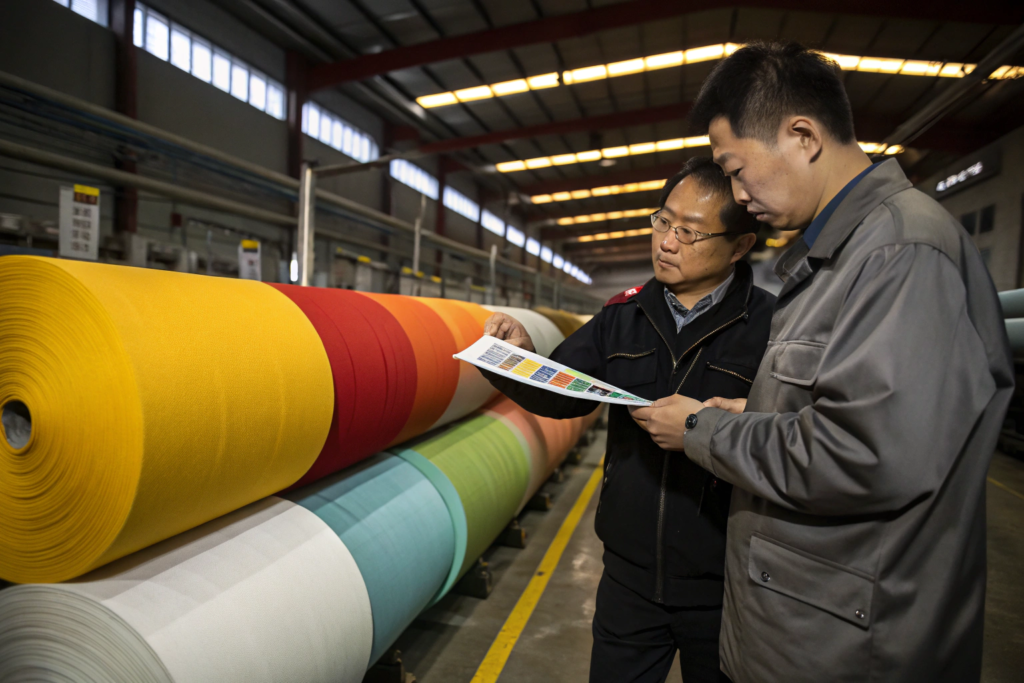
The most common is color mismatch. What you see on a screen is not what you get in real life. Screen colors vary. Lighting conditions vary. A color that looks perfect on your laptop might be completely wrong in natural light. I've seen buyers approve a "navy blue" based on a photo, only to receive a fabric that was closer to purple. Without a physical swatch, you have no recourse. The supplier can say, "It looks the same to me."
The second is hand feel misrepresentation. A photo can't tell you how a fabric feels. A fabric that looks soft and drapable in a photo might be stiff and cardboard-like in reality. I had a client from a dress brand in Sweden who approved a silk-like fabric based on a photo. When the bulk arrived, it was a cheap polyester that felt like plastic. She had to scrap the entire order. Now, she never approves without a physical swatch that she can touch and drape.
The third is performance failure. A fabric that looks beautiful off the roll might shrink, pill, or fade after washing. Without testing a swatch, you won't know until your garments are already made. I remember a client from a sportswear brand in Australia who ordered a large quantity of a performance knit without testing a swatch. The fabric had a moisture-wicking finish that looked good in the sample. But when the bulk arrived, the finish was uneven. Some areas wicked moisture, others didn't. His customers complained that the shirts felt wet and clammy. He lost repeat business. For a collection of real-world sourcing horror stories, this industry forum has a thread where buyers share their worst fabric sourcing experiences.
How Do You Protect Yourself When a Supplier Won't Send a Swatch?
If a supplier refuses to send a proper swatch, walk away. I know that sounds harsh, but it's the best advice I can give you. A supplier who won't send a swatch is either hiding something or doesn't have their quality process under control. Either way, it's not a risk worth taking.
A client from a children's wear brand in the US learned this lesson. He found a supplier on Alibaba with great prices. He asked for a swatch. The supplier said they didn't send swatches to new clients. They said his order was too small to justify the cost. He was tempted to proceed anyway. But he decided to test us instead. We sent him swatches for three different fabrics within 48 hours. He approved them, placed his order, and the fabric arrived perfect. He told me later that he almost made a huge mistake by working with the supplier who wouldn't send swatches. Now, he has a rule: no swatch, no order.
If a supplier is legitimate, they will send swatches. It's a cost of doing business. At Shanghai Fumao, we send swatches to every serious inquiry. It's an investment in the relationship. For a guide on how to vet suppliers based on their sampling process, this sourcing article offers red flags to watch for during the sampling phase.
How Do You Manage the Swatch-to-Bulk Transition?
Getting a good swatch is only half the battle. The real test is whether the bulk fabric matches the approved swatch. This is where many sourcing relationships fall apart. The swatch is beautiful. The bulk is different. And suddenly you're in a dispute with your supplier.
What Is a "Production Swatch" and Why Do You Need One?
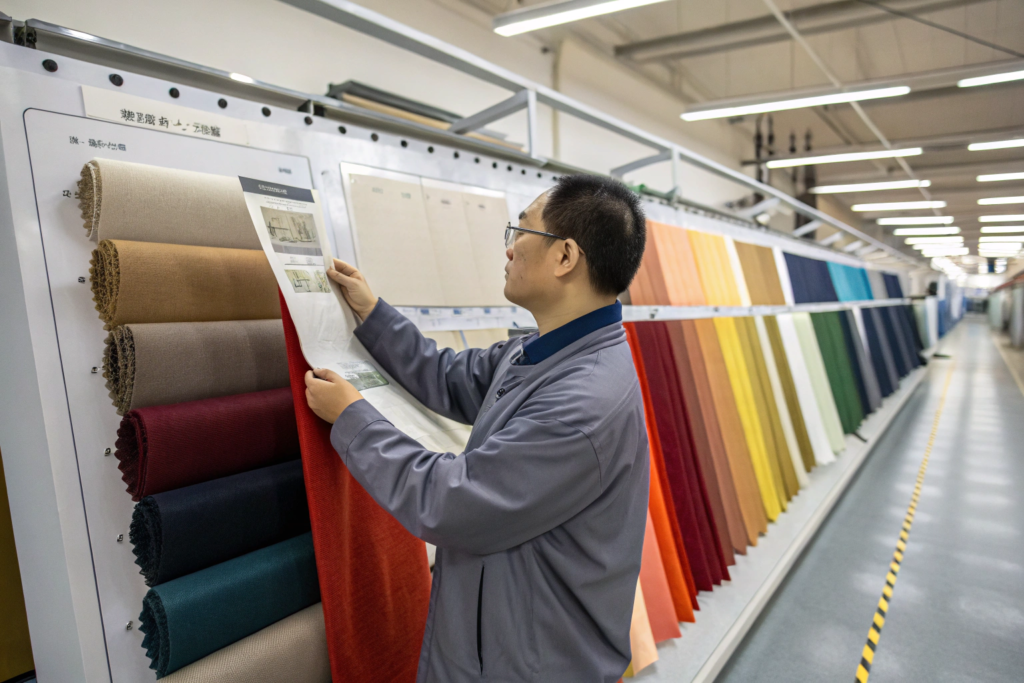
A swatch sent before production is a promise. A "production swatch" taken from the actual bulk run is proof. This is a critical step that many buyers skip. After the bulk fabric is produced, we take a sample from the first rolls and send it to the client for approval. Only after the client approves the production swatch do we finish the full order.
This process saved a client from a major problem last year. He was ordering a custom-dyed polyester for a line of outdoor jackets. The pre-production swatch was perfect. When we ran the bulk, the first batch came out slightly darker. We caught it in our own QC check. We stopped production, sent him a production swatch, and explained the issue. He had a choice: accept the darker shade or wait for us to re-run the batch. He chose to accept it, but he wanted to see the color first. If we had just shipped the bulk without that production swatch, he would have received fabric that didn't match his expectations. Instead, he knew exactly what he was getting. He adjusted his trim colors to match the new shade, and the collection still looked great.
A production swatch protects both parties. It gives the buyer confidence. It gives the supplier a clear approval before shipping. For a detailed explanation of the production swatch process, this textile quality guide covers how to manage bulk fabric approval.
How Do You Handle a Bulk Fabric That Doesn't Match the Swatch?
Sometimes, despite everyone's best efforts, the bulk fabric doesn't match the swatch. What do you do? The first step is to stay calm and gather evidence. You have the approved swatch. You have the production swatch or the bulk sample. You have the test results. Document everything.
Then, contact your supplier immediately. Don't wait. Show them the evidence. A good supplier will work with you to find a solution. That might mean a discount on the order, a replacement shipment, or a split where you use the fabric for a different application.
I remember a situation where a client from a home textile brand in the US received a bulk order of a printed cotton that was a full shade darker than the approved swatch. The supplier argued that the difference was within tolerance. We reviewed the lab reports and found that the dye bath temperature had been slightly higher than the specification. It was a clear error. We negotiated a 20% discount on the order. The client used the darker fabric for a different product line where the shade worked. The supplier learned to monitor dye bath temperatures more carefully. Everyone moved forward.
The key is to have clear specifications in your contract. Specify the acceptable color tolerance—usually a delta E of 0.5 or 1.0. Specify the test methods. And keep the approved swatch as a reference. Without that swatch, you have no leverage. For advice on how to handle quality disputes, this sourcing forum thread offers real-world strategies for resolving fabric issues.
Conclusion
Fabric swatches are not a formality. They are not a nice-to-have. They are the foundation of a reliable supply chain. A proper swatch is your contract with the supplier. It's your quality reference. It's your evidence if something goes wrong. And it's your best tool for ensuring that the fabric you order is the fabric you receive.
A good swatch is large enough to test. It's properly labeled with all the relevant information. It comes with test data. It's produced on the same machines and with the same processes that will be used for the bulk order. And it's approved before any production begins.
When you skip the swatch stage, you're gambling with your supply chain. You're betting that a photo on a screen or a tiny scrap of fabric will accurately represent thousands of meters of production. That's a bet I've seen lose too many times. Color mismatches. Hand feel failures. Performance problems. All of them could have been caught with a proper swatch.
When you use swatches correctly, you protect yourself. You test before you commit. You compare different suppliers on a level playing field. You establish a clear reference for the bulk production. And when the fabric arrives, you have a standard to hold the supplier accountable.
At Shanghai Fumao, we treat swatches as the most important part of our quality process. We send large, labeled swatches with every inquiry. We provide test data. We run production swatches from the first rolls of every bulk order. And we stand behind our swatches. If the bulk doesn't match the swatch, we make it right.
If you're tired of playing the fabric lottery—hoping that what arrives matches what you approved—it's time to make swatches non-negotiable. Don't approve without touching. Don't trust without testing. And never, ever place a bulk order based on a photo.
I invite you to work with a supplier who takes swatches as seriously as you do. Let's start with a proper swatch. Let's test it together. Let's approve it. And then let's run your bulk order with confidence.
Contact our Business Director, Elaine, to request swatches for your next collection.
Email: elaine@fumaoclothing.com
Let's get your fabric right from the very first sample.