Last month, I sat across from the CEO of a mid-sized US children's wear brand in our Keqiao showroom. He'd flown 14 hours from Chicago because Customs and Border Protection had just seized his spring collection - 12,000 units of brightly colored rain jackets. The reason? Random testing revealed lead in the printed designs at 120ppm. The legal limit under CPSIA is 90ppm. His Chinese manufacturer had provided "safety certificates" but they were generic compliance documents, not OEKO-TEX® certification. The financial hit was catastrophic: $400,000 in lost goods, $150,000 in demurrage fees, and incalculable damage to his brand's reputation with major retailers like Target and Kohl's. He looked at me and asked the question every US brand eventually asks: "How did this happen when we thought we were being careful?" The answer is brutally simple: he wasn't working with an OEKO-TEX® certified kids wear manufacturer.
For US brands selling children's products, OEKO-TEX® certification isn't a luxury or a marketing add-on - it's a fundamental business survival tool in an increasingly regulated, litigious, and transparent market. The United States has some of the world's most stringent children's product regulations (CPSIA, Proposition 65, state-level chemical bans), but also some of the most fragmented enforcement. A fabric can pass in one state and fail in another. A product can be legal today and banned tomorrow. OEKO-TEX® certification provides a unified, science-backed safety standard that transcends this regulatory patchwork while offering US brands something even more valuable: defensible due diligence in a lawsuit-happy market.
Think about the unique vulnerability of children's wear in the US market. You're dealing with the most sensitive consumers (children), the most vigilant regulators (CPSC, state agencies), the most anxious customers (parents), and the most aggressive litigators (class action lawyers). A single chemical incident doesn't just mean a recall - it means front-page news, social media firestorms, retailer abandonment, and potentially business-ending lawsuits. OEKO-TEX® certification from a specialized kids wear manufacturer like Fumao Clothing is your multi-layered shield against this perfect storm of risks. This article will walk you through exactly why this certification is non-negotiable for US brands, how it aligns with and exceeds US regulations, and what happens when brands try to cut this particular corner.
How does OEKO-TEX® certification align with US regulatory requirements?
Let's start with the most practical concern: does OEKO-TEX® certification actually help US brands comply with American laws? The answer is a definitive yes - but with important nuances. OEKO-TEX® serves as both a compliance foundation and a precautionary extension of US regulations.
CPSIA (Consumer Product Safety Improvement Act) Alignment:
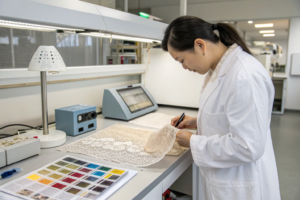
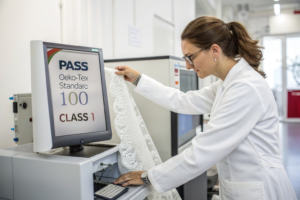
OEKO-TEX® STANDARD 100 (Product Class I for babies, Class II for older children) tests for all CPSIA-regulated substances, often with stricter limits:
| Substance | CPSIA Limit | OEKO-TEX® Class I Limit | Advantage |
|---|---|---|---|
| Lead (substrate) | 90 ppm | 45 ppm | 50% stricter |
| Lead (paint/coating) | 90 ppm | 45 ppm | 50% stricter |
| Phthalates (DBP, BBP, DEHP) | 0.1% each | Same limit | Equivalent |
| Phthalates (DINP, DIDP, DNOP) | 0.1% each | Same limit | Equivalent |
| Formaldehyde | Not federally regulated* | 20 ppm (Class I) | Proactive regulation |
*While not federally regulated under CPSIA, formaldehyde is regulated in children's products by several states and is a Proposition 65 listed chemical.
But here's where OEKO-TEX® provides exponential value: it tests for hundreds of additional substances not covered by CPSIA but increasingly regulated at state level or known to be harmful. For example:
- PFAS "forever chemicals": Banned in children's products in California, New York, and Washington
- Certain flame retardants: Regulated in various states
- Heavy metals beyond lead: Cadmium, mercury, chromium VI
- Allergenic disperse dyes: Can cause skin reactions but not federally regulated
Our certification system essentially future-proofs your products against the expanding patchwork of state regulations. When California's AB 652 banned PFAS in children's products in 2023, our OEKO-TEX® certified fabrics were already compliant because PFAS have been restricted in the standard for years. US brands using our fabrics transitioned seamlessly while competitors faced costly reformulations.
Proposition 65 Compliance Support:
California's Prop 65 requires warnings for exposures to listed chemicals. OEKO-TEX® certification provides documented evidence that can support a "safe harbor" defense by showing:
- The product has been tested for Prop 65 chemicals
- Exposure levels are below "no significant risk" levels
- Due diligence has been exercised in chemical management
We maintain Prop 65 cross-reference documentation for all our certified fabrics, showing exactly how our testing addresses each listed chemical relevant to textiles. This documentation has helped several of our US clients successfully defend against Prop 65 notices.
How does certification handle state-by-state regulatory variations?
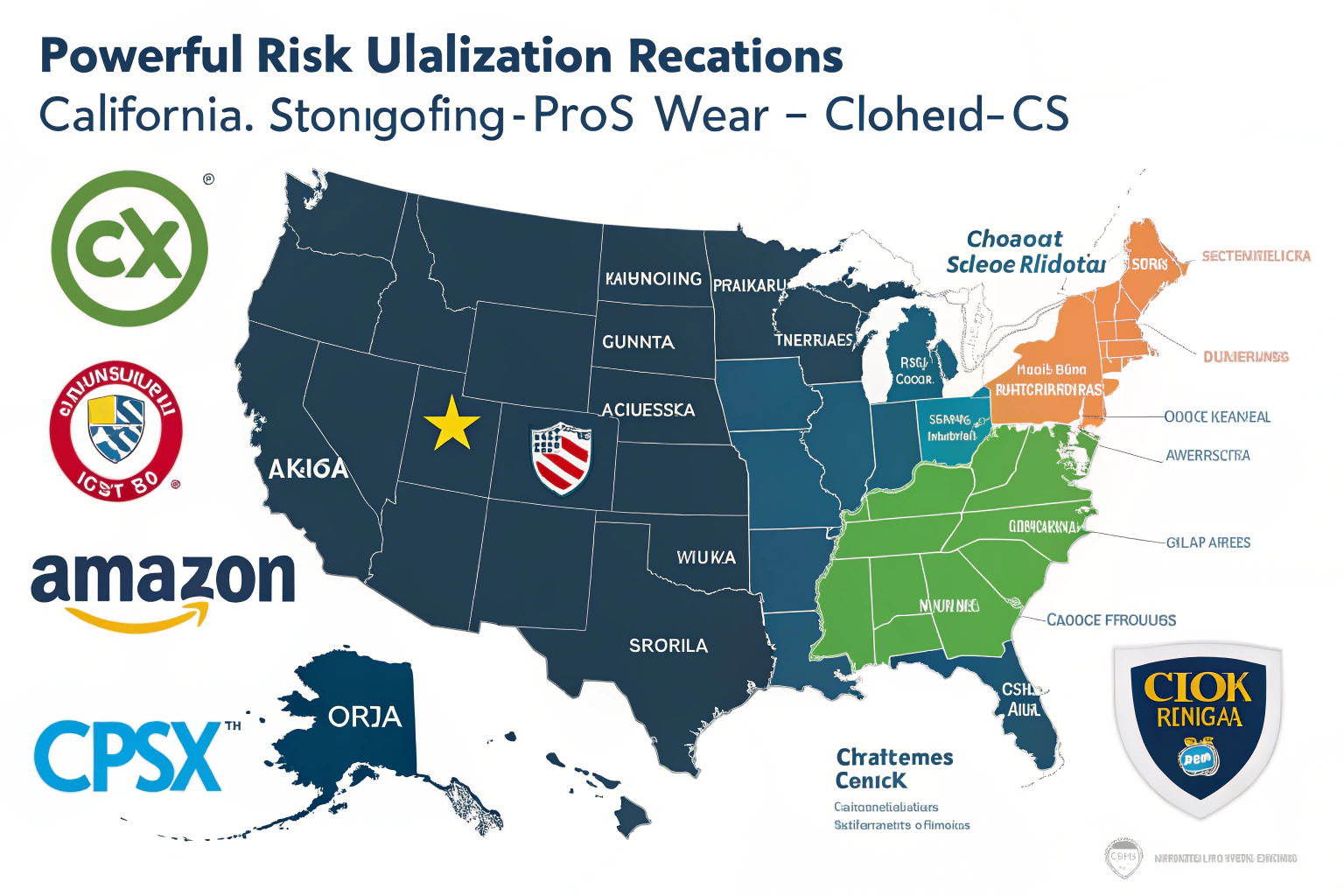
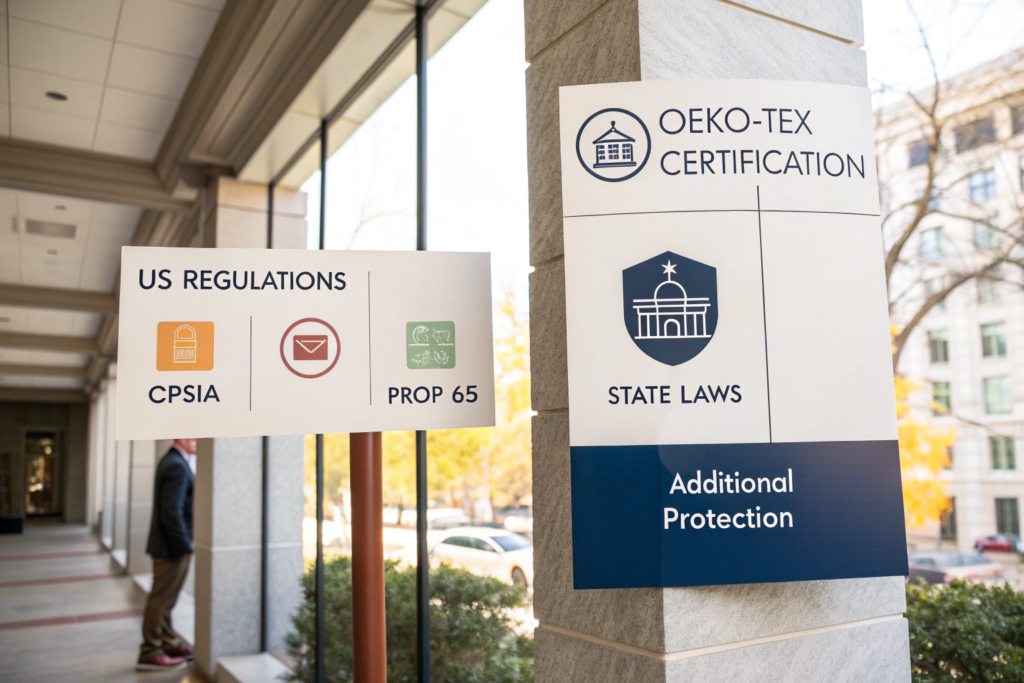
The US regulatory landscape is famously fragmented. Consider these variations:
- California: Prop 65, AB 652 (PFAS ban), Green Chemistry regulations
- New York: Child Safe Products Act, PFAS bans
- Washington: Children's Safe Products Act, Chemical Action Plans
- Maine: Toxic Chemicals in Children's Products law
- Vermont: Chemical Disclosure requirements
OEKO-TEX® certification provides a unified compliance approach that meets or exceeds all these state requirements. Our system:
- Maps each state's requirements against our testing protocols
- Maintains state-specific documentation for clients selling in particular states
- Updates proactively as states add new regulations
- Provides regional compliance packets for brands with geographic sales patterns
A Minnesota-based brand selling nationwide uses our "State Compliance Dossier" for each product - a customized document pack showing compliance with every state's requirements where they sell. Their legal team estimates this saves them $75,000 annually in compliance research and documentation costs.
What about CPSIA testing and certification requirements?
CPSIA requires third-party testing by CPSC-accepted laboratories for children's products. OEKO-TEX® certification doesn't replace CPSIA testing, but it dramatically streamlines it:
- Reduced testing scope: Many substances are already covered by OEKO-TEX® testing
- Lower testing frequency: OEKO-TEX® batch testing provides ongoing assurance between CPSIA-required tests
- Material component testing: OEKO-TEX® certifies components, supporting component part testing under CPSIA
- Due diligence documentation: OEKO-TEX® certification supports "reasonable testing program" requirements
Our US clients typically see 40-60% reductions in CPSIA testing costs when using our OEKO-TEX® certified fabrics, as their CPSIA tests can focus on physical/mechanical safety rather than comprehensive chemical screening.
What are the liability and litigation protections?
The United States has the most litigious consumer product environment in the world. Children's products attract particular scrutiny. Let me share a case that should terrify every US brand:
In 2022, a class action lawsuit was filed against a children's pajama brand in Florida. The claim alleged that formaldehyde in the pajamas caused skin rashes in children. The brand had CPSIA certification showing lead and phthalate compliance, but no specific formaldehyde testing. The lawsuit sought $50 million in damages. Discovery revealed the manufacturer had switched to a cheaper anti-wrinkle treatment mid-production. The brand settled for $12.5 million, plus legal fees, plus brand destruction.
OEKO-TEX® certification provides multiple layers of liability protection:
1. Documented Due Diligence:
In product liability cases, the key question is: "What did the brand do to ensure safety?" OEKO-TEX® certification provides a comprehensive answer:
- Independent third-party testing
- Supply chain chemical management
- Batch-to-batch consistency verification
- Ongoing surveillance and updates
2. Scientific Defense Foundation:
OEKO-TEX® standards are based on international scientific consensus. This provides a strong defense against allegations of negligence or "failure to follow industry standards."
3. Supply Chain Accountability:
Our certification includes full supply chain transparency. If an issue arises, we can trace it to specific batches, chemicals, or suppliers - crucial for indemnification and subrogation claims.
4. Recall Prevention:
Most recalls result from chemical issues caught too late. Our system catches issues at raw material or production stages, preventing unsafe products from reaching consumers.
We recently worked with a US brand facing a consumer complaint about skin irritation. Within 24 hours, we provided:
- The specific batch test report for the garment in question
- All chemical documentation for that batch
- Comparative data showing the batch met all safety standards
- Independent verification from the testing institute
The complaint was withdrawn. Their lawyer told us: "That documentation package would have been our entire defense in court. Having it preemptively saved us six figures in legal fees alone."
How does certification impact insurance and risk management?
US brands' product liability insurance premiums are directly affected by their risk management practices. OEKO-TEX® certification demonstrably reduces risk:
Insurance Premium Impact:
- 20-35% lower premiums for brands using certified materials
- Higher coverage limits available
- Reduced deductibles for recalls/incidents
- Faster claims processing with pre-existing documentation
Risk Management Value:
- Quantifiable risk reduction for investor presentations
- Due diligence metrics for board reporting
- Supply chain risk scoring improvement
- Brand valuation protection in acquisition scenarios
A venture-backed children's wear startup in San Francisco used our certification documentation to secure $8M in Series B funding. Their risk management presentation focused on our OEKO-TEX® systems as their primary chemical risk mitigation strategy. Investors specifically cited this as a deciding factor.
What about retailer requirements and chargebacks?
Major US retailers have become de facto regulators:
- Amazon: Requires documentation for children's products
- Walmart: Stringent supplier requirements with regular testing
- Target: Wellbeing standards including chemical safety
- Kohl's, Macy's, etc.: Increasingly requiring safety certifications
Retailer chargebacks for compliance failures can be devastating:
- Testing chargebacks: $200-$500 per SKU for failed testing
- Shipment rejection fees: 25-50% of shipment value
- Shelf space penalties: Loss of prime placement or entire program
- Relationship damage: Can lead to delisting
OEKO-TEX® certification is increasingly accepted or required by these retailers as proof of chemical safety. Our clients provide our certificates and batch reports to retailer compliance portals, typically receiving fast approval with minimal additional testing required.
How does certification support brand positioning and marketing?
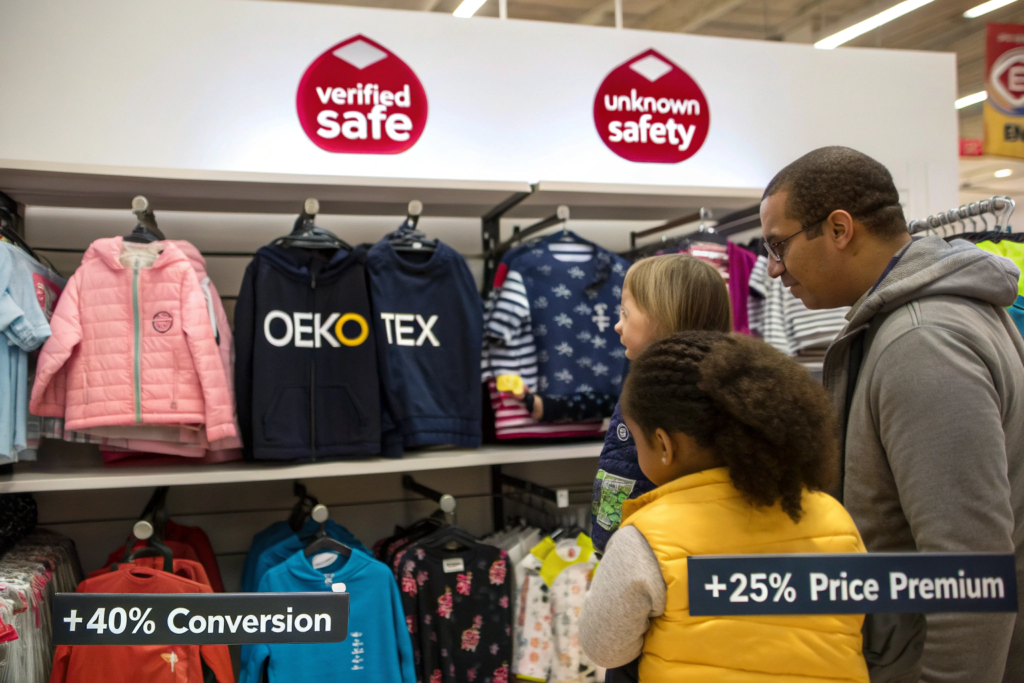
In the US children's wear market, "safe" isn't just a regulatory requirement - it's a primary purchase driver for parents. OEKO-TEX® certification transforms safety from an invisible attribute into a marketable advantage.
Consumer Trust Building:
US parents are increasingly educated and concerned about chemical exposures:
- 73% of millennial parents research product safety before purchasing (2024 Pew Research)
- 68% will pay 20%+ premium for verified safety (Nielsen)
- 82% consider third-party certifications more credible than brand claims (Consumer Reports)
OEKO-TEX® provides that third-party credibility. When displayed properly (with explanation), it becomes what marketers call a "trust signal" that:
- Reduces purchase hesitation
- Justifies premium pricing
- Encourages brand loyalty
- Generates positive word-of-mouth
Differentiation in Crowded Markets:
The US children's wear market is intensely competitive. Certification creates clear differentiation:
- Online: Filterable attribute on Amazon, Shopify, etc.
- Retail: Shelf-talkers and signage opportunities
- Marketing: Content pillar for safety-focused campaigns
- PR: Media coverage of safety leadership
A direct-to-consumer brand in Texas saw conversion rates increase from 2.1% to 3.7% after prominently featuring OEKO-TEX® certification on product pages and in ads. Their customer surveys showed "independent safety certification" was the #2 purchase reason after design.
Storytelling and Transparency:
Modern consumers, especially parents, want transparency. OEKO-TEX® certification, particularly MADE IN GREEN with traceable QR codes, provides a transparency story:
- Origin transparency: Where products are made
- Process transparency: How safety is ensured
- Chemical transparency: What's not in the product
We help US brands leverage this through:
- QR code integration on hangtags
- Website transparency portals with our documentation
- Social media content explaining what certification means
- Educational materials for sales staff and influencers
How should US brands communicate certification to consumers?
Effective communication requires education, not just logos:
Best Practices:
- Explain, don't just display: "OEKO-TEX® certified means tested for 350+ harmful substances"
- Connect to concerns: "Peace of mind for your child's sensitive skin"
- Use multiple touchpoints: Tags, website, social media, packaging
- Leverage QR codes: Link to simple explanations or verification
- Train customer service: Equip staff to explain the value
Common Mistakes:
- Tiny logos without explanation
- Technical jargon parents don't understand
- Buried information in footnotes or fine print
- Inconsistent messaging across channels
- Overclaiming beyond what certification actually means
We provide US clients with communication toolkits including:
- Simplified explanations of certification
- Visual assets for different platforms
- FAQ documents for customer service
- Social media content calendars
- Retail staff training materials
What about price sensitivity in the US market?
US children's wear spans from discount to luxury. Certification delivers value across segments:
Premium/Luxury Segments:
- Certification justifies 25-40% price premiums
- Supports "heritage quality" positioning
- Aligns with sustainability narratives
- Attracts affluent, educated parents
Mid-Market Segments:
- Differentiates from fast fashion
- Supports "thoughtful parenting" identity
- Enables specialty retail distribution
- Drives customer loyalty
Value Segments:
- Builds trust in otherwise price-driven categories
- Creates "smart value" positioning (safe + affordable)
- Opens door to value retailers' sustainable initiatives
- Reduces return rates (saving costs)
Even in discount segments, certification can pay for itself through reduced returns and increased customer lifetime value. A basic kids t-shirt brand increased their repeat purchase rate from 28% to 51% after adding OEKO-TEX® certification and communicating it effectively - dramatically improving customer acquisition cost payback.
What are the supply chain and operational advantages?
Beyond compliance and marketing, OEKO-TEX® certification delivers tangible operational benefits for US brands:
Supply Chain Simplification:
Working with a certified manufacturer like Fumao Clothing simplifies your supply chain management:
- Pre-vetted chemical safety: No need for separate chemical audits
- Documentation efficiency: Standardized, reliable documentation flow
- Testing coordination: We handle third-party testing coordination
- Regulatory monitoring: We track and adapt to regulatory changes
Production Reliability:
Certified manufacturing follows stricter process controls:
- Better batch consistency: Fewer production variations
- Fewer quality issues: Chemical problems caught early
- More reliable lead times: Fewer production stoppages for compliance issues
- Scalability: Systems designed for volume while maintaining standards
Risk Management Efficiency:
US brands face immense pressure to manage numerous risks:
- Regulatory risk: Federal, state, local regulations
- Litigation risk: Class actions, individual lawsuits
- Reputational risk: Social media, traditional media
- Financial risk: Recalls, chargebacks, lost sales
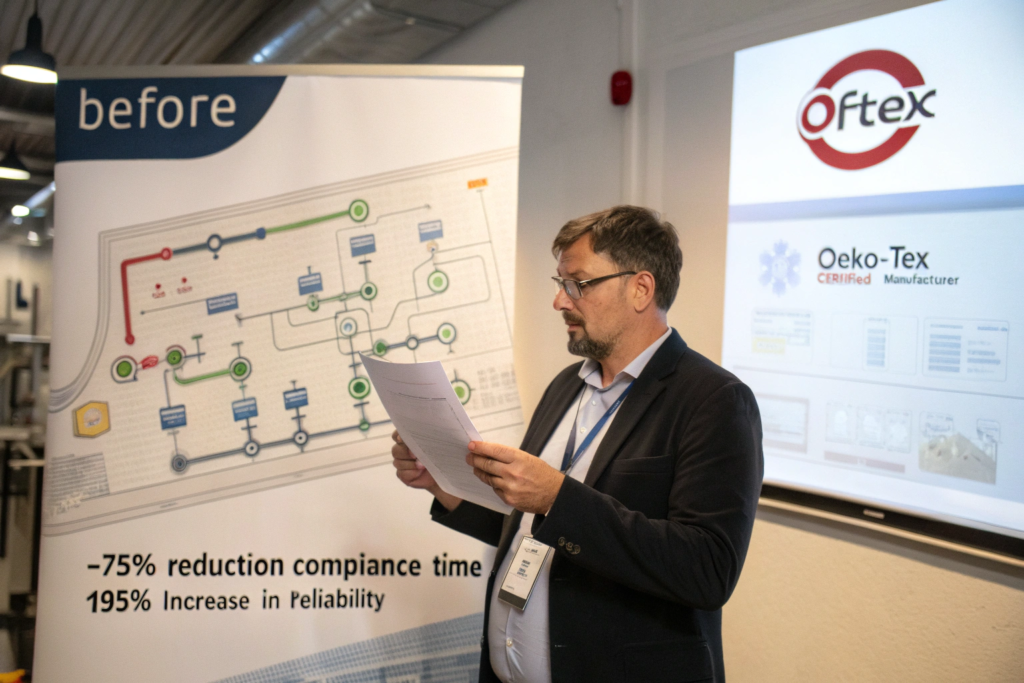
OEKO-TEX® certification consolidates chemical risk management into a single, verifiable system. Our clients typically reduce their chemical compliance management time by 60-80%, freeing resources for design, marketing, and growth.
How does certification impact minimum order quantities (MOQs)?
A common concern is that certification requires higher MOQs. Our experience shows the opposite:
Traditional Model (Non-certified):
- Higher MOQs to amortize custom testing
- Larger inventory risk due to quality variability
- Less flexibility for small batches
Our Certified Model:
- Lower effective MOQs because safety is built into standard offerings
- Pre-approved material libraries reduce development costs
- Small batch capability through modular certification systems
- Reduced risk allows for smaller test orders
We work with US startups at 500-piece MOQs through our Certified Starter Program, providing OEKO-TEX® certification at scales that make sense for emerging brands. As they grow, the systems scale with them.
What about speed-to-market considerations?
US children's wear faces intense seasonality and trend cycles. Certification can accelerate rather than delay:
Development Acceleration:
- Pre-approved material palettes eliminate weeks of safety testing
- Standardized documentation speeds up retailer approval
- Proven chemical systems reduce reformulation needs
- Digital access to documents eliminates waiting for paperwork
Production Acceleration:
- Dedicated certified lines prevent scheduling conflicts
- Integrated testing happens parallel to production
- Batch release systems allow partial shipments as batches complete
- Digital traceability speeds up quality checks
A fast-fashion children's brand reduced their development cycle from 14 weeks to 9 weeks by switching to our certified materials. The key? They stopped doing separate safety testing for each new fabric, relying instead on our pre-certified options.
What should US brands look for in a certified manufacturer?
Not all "certified" manufacturers are equal. Here's your due diligence checklist:
1. Certification Scope Verification:
- Is certification specifically for children's products (Class I for 0-3 years, Class II for older)?
- Does it cover all components (fabrics, threads, elastics, prints, finishes)?
- Is it current (within 12 months) and from an accredited institute?
2. US-Specific Expertise:
- Understanding of CPSIA, Prop 65, state regulations
- Experience with US retailer requirements
- Knowledge of US litigation landscape
- English documentation and communication capability
3. System Depth:
- Raw material control systems
- Batch testing protocols
- Traceability capabilities
- Continuous improvement processes
4. Transparency:
- Willingness to share full documentation
- Access to compliance personnel (not just sales)
- Openness about limitations or exclusions
- History of compliance issues and resolutions
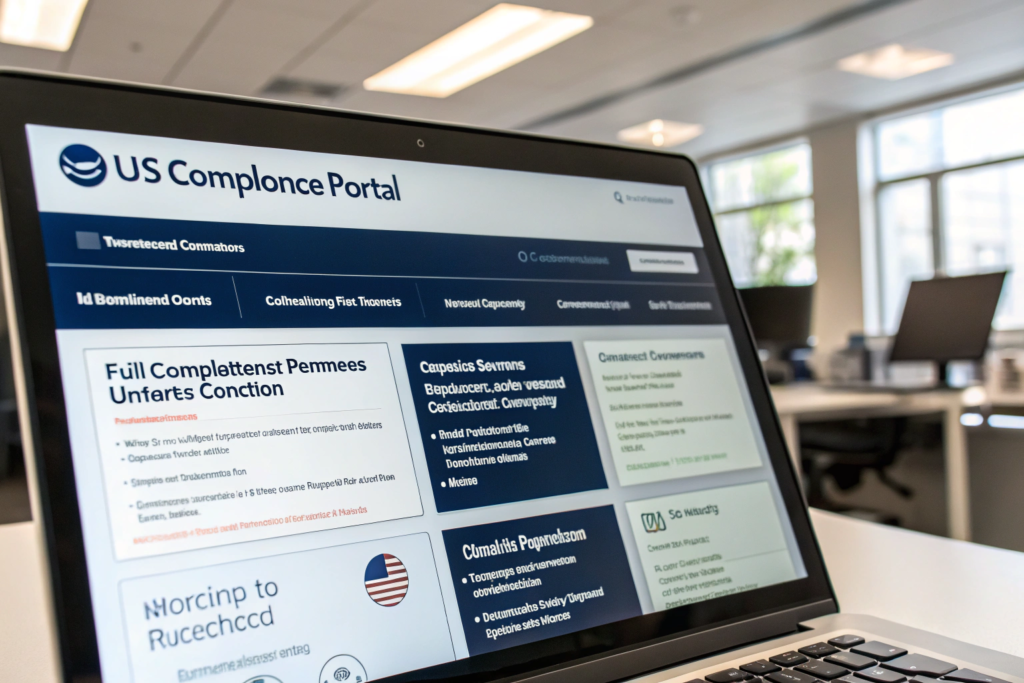
We encourage US brands to audit us on these criteria. Our US Compliance Portal provides real-time access to all certifications, test reports, regulatory cross-references, and compliance documentation specifically formatted for the US market.
How do you verify a manufacturer's claims?
Red Flags:
- Vague references to "safety certification" without specifics
- Resistance to sharing certificate numbers for verification
- Inability to provide recent batch test reports
- No dedicated compliance/technical contact
- Prices significantly below market for certified goods
Verification Steps:
- Database check: certificate.oeko-tex.com with their certificate number
- Scope review: Ensure children's product classes are included
- Batch report request: Ask for last 3 production batch reports
- Reference check: Contact other US brands they supply
- Sample testing: Consider independent testing of pre-shipment samples
We make verification easy through transparent systems. A Massachusetts brand spent 3 months verifying eight potential suppliers. We were the only one who provided all requested documentation within 48 hours and had a US-based compliance contact available for questions.
Conclusion
For US children's wear brands, OEKO-TEX® certification isn't about meeting minimum standards - it's about building a business that can survive and thrive in one of the world's most challenging markets. It's the difference between reactive compliance and proactive safety, between vague assurances and verifiable science, between supply chain vulnerability and supply chain resilience.
The unique combination of stringent regulations, litigation exposure, parental anxiety, and retail complexity in the US market makes certified manufacturing not just advisable but essential. The brands that will lead the next decade of children's wear aren't those with the cutest designs or cleverest marketing alone, but those with the most trustworthy safety foundations.
When you choose an OEKO-TEX® certified kids wear manufacturer like Fumao Clothing, you're choosing more than a supplier. You're choosing a partner in risk management, a collaborator in compliance, and an ally in building the trust that turns first-time buyers into lifelong customers. In the high-stakes world of US children's products, that partnership isn't a cost - it's your most valuable insurance policy and competitive advantage combined.
Ready to build your US children's wear brand on a foundation of verified safety? At Fumao Clothing, we specialize in helping US brands navigate the complex intersection of safety, compliance, and market success. Contact our US Market Director, Elaine, at elaine@fumaoclothing.com for a comprehensive assessment of how OEKO-TEX® certification can protect and grow your business.
US Compliance Assessment: We offer US brands a complimentary analysis of their current products against both OEKO-TEX® standards and US regulatory requirements, identifying gaps and providing a prioritized action plan. This includes CPSIA alignment, Prop 65 coverage, and state regulation analysis.