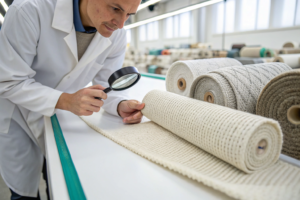
I've been in the textile business for over twenty years, and if there's one fabric that has never stopped fascinating me, it's denim. I remember visiting a denim mill in Japan about ten years ago. The master weaver there showed me a piece of selvedge denim that had been woven on a vintage shuttle loom. He held it up to the light and pointed to the subtle irregularities in the weave. "This is alive," he told me. "Every meter is slightly different. That's the beauty of real denim."
I thought about that moment recently when a client from a fast-fashion brand in Spain asked me why denim was so expensive compared to other woven cottons. She didn't understand why her customers were willing to pay $100 for a pair of jeans when they could get a pair of chinos for $40. I explained to her that denim isn't just another woven fabric. It's something completely different. The way it's woven, the way it's dyed, the way it ages—all of it creates a relationship between the wearer and the fabric that you don't get with anything else.
At Shanghai Fumao, we've been supplying denim to clients around the world for years. We've worked with premium denim brands in Japan, with fast-fashion chains in Europe, with workwear companies in the US. I've learned that denim occupies a unique place in the textile world. It's a woven fabric, yes. But it's a woven fabric that behaves like no other. In this article, I'm going to break down what makes denim so special—the weave, the dye, the aging, and why it has become the undisputed king of casual wear.
What Makes Denim Different from Other Woven Fabrics?
At first glance, denim looks like a simple cotton twill. But look closer. The structure, the dyeing process, and the way it ages set it apart from every other woven fabric. It’s not just a fabric. It’s a material that tells a story.
How Does the Twill Weave Make Denim Unique?
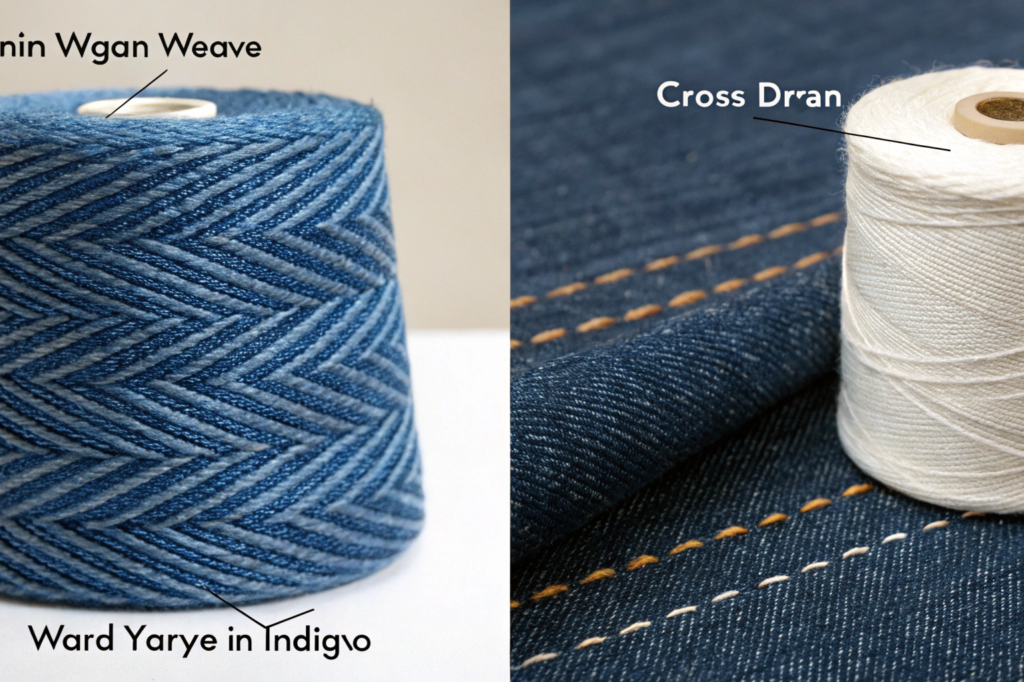
Denim is woven in a twill structure, almost always a 3x1 twill. That means the weft yarn passes under three warp yarns and over one. This creates the characteristic diagonal rib on the surface. But the real genius of the twill weave for denim is how it interacts with the dye.
Because the warp yarns are dyed and the weft yarns are undyed, the twill structure creates a fabric where the color is concentrated on the surface. The diagonal ribs are the dyed warp yarns. The valleys between the ribs are the undyed weft yarns. This is why denim has that subtle, dimensional appearance—the blue on the surface and the white underneath.
This structure also makes denim incredibly durable. The twill weave is tighter and more resistant to abrasion than a plain weave. That’s why denim was originally used for workwear. Miners, railroad workers, cowboys—they needed a fabric that could take abuse. Denim delivered.
I had a client from a workwear brand in Texas who wanted to understand why denim outperformed other cottons for their products. We did a side-by-side abrasion test. A plain weave cotton canvas wore through after 5,000 cycles on the Martindale machine. A 3x1 denim twill lasted 15,000 cycles. The twill structure distributes the wear across more surface area. That’s why jeans last for years. For a technical explanation of twill weaves, this textile education resource offers a guide to denim weave structures.
Why Is Indigo Dyeing So Important to Denim?
Indigo is the soul of denim. Unlike almost every other fabric dye, indigo doesn’t penetrate the fiber. It sits on the surface. When you dye a cotton yarn with indigo, you’re not changing the color of the fiber itself. You’re coating it with a layer of blue that can be worn away.
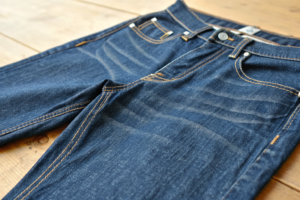
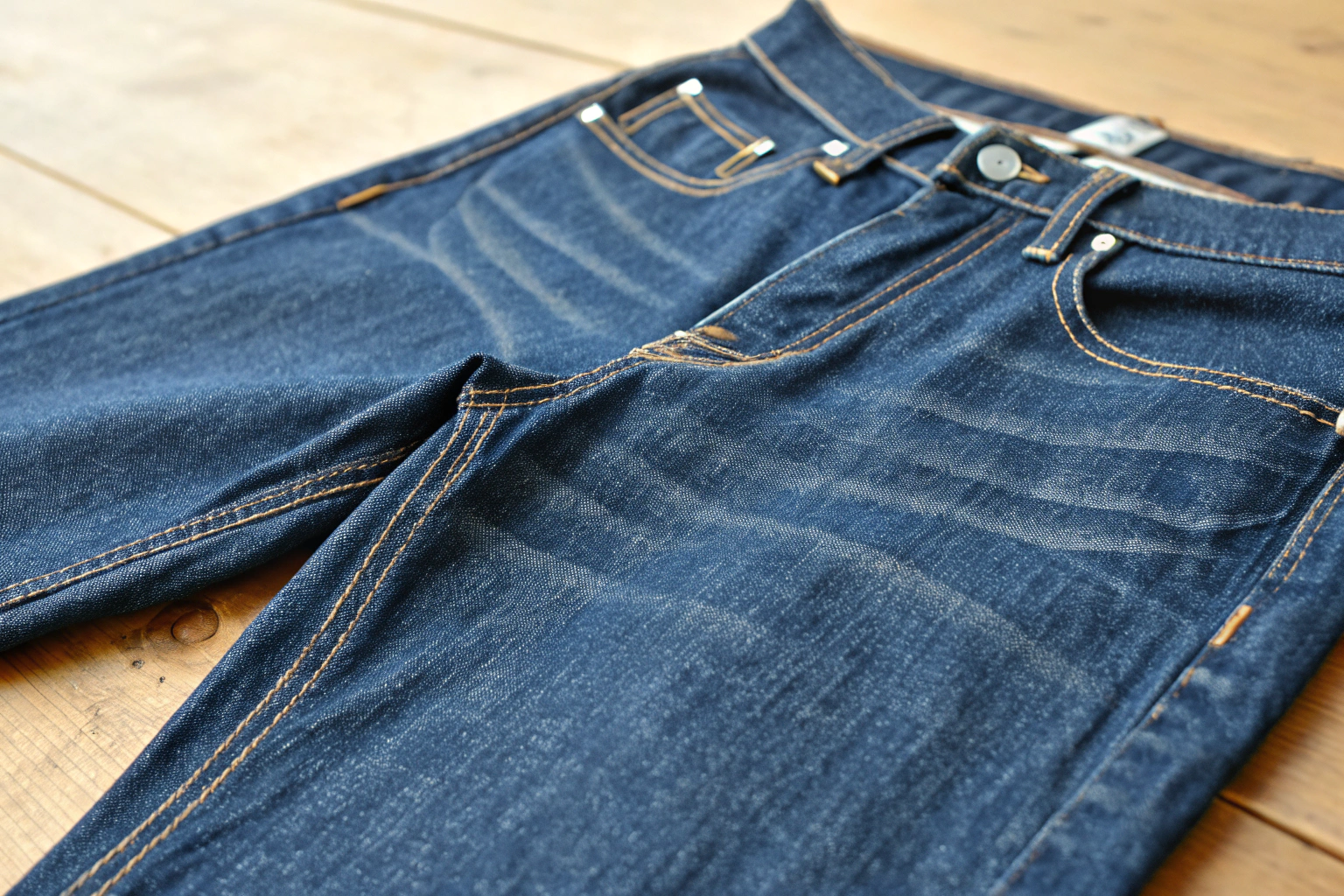
This is why denim fades. Every time you wear jeans, the indigo rubs off the high points—the knees, the thighs, the edges of the pockets. The white core of the yarn starts to show through. Over time, the jeans develop a unique pattern of fading that reflects how the wearer moves and lives. No two pairs fade the same way.
I remember a conversation with a denim designer in Japan who told me that he thinks of indigo as a living color. “It’s born blue,” he said. “But it dies white. The life of the jeans is the journey between those two states.” That’s the magic of indigo. It’s not a static color. It’s a process.
The indigo dyeing process itself is complex. Traditional rope dyeing involves dipping the yarn into indigo vats multiple times—sometimes 8, 10, or 12 dips—to build up the color. Each dip adds a layer of indigo. The more dips, the deeper the blue and the more the jeans will fade over time. For a deep dive into indigo dyeing techniques, this textile history resource offers a guide to traditional indigo dyeing.
How Does Denim Age Differently from Other Fabrics?
This is the quality that sets denim apart from every other woven fabric. Denim doesn’t just wear out. It evolves. It becomes more beautiful with age. A pair of well-worn jeans is a personal artifact. It tells the story of the person who wore them.
What Is Raw Denim and Why Do People Love It?
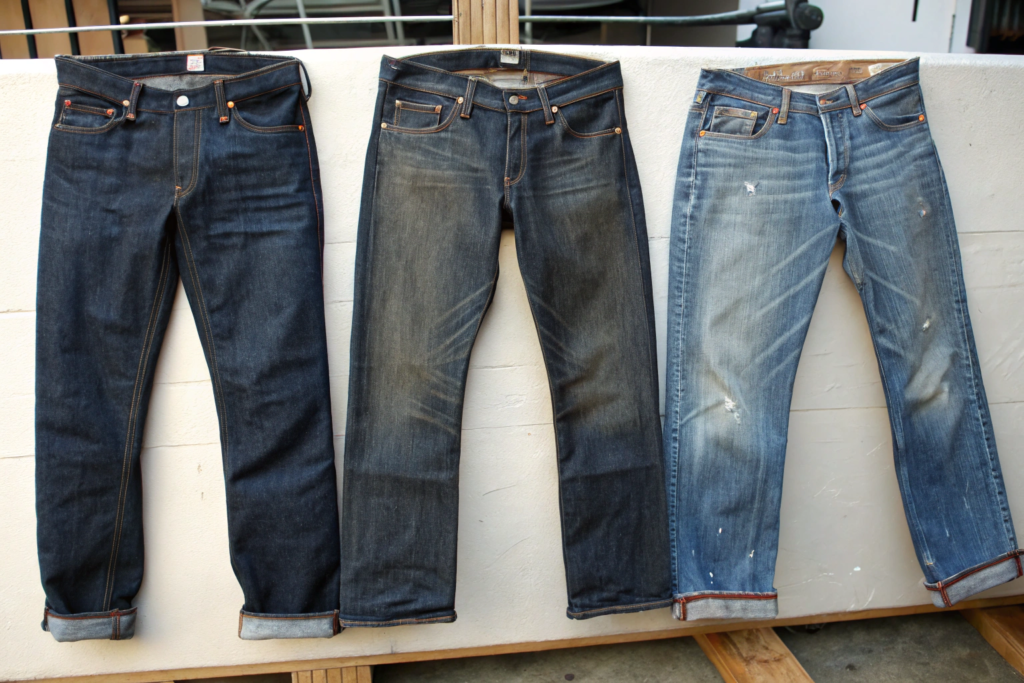
Raw denim—also called dry denim—is denim that hasn’t been washed after dyeing. It’s stiff, dark, and unforgiving at first. But over time, as you wear it, it molds to your body. The creases set. The indigo starts to fade at the stress points. After six months, a year, two years, the jeans become uniquely yours.
There’s a whole subculture around raw denim. Enthusiasts buy jeans that are too stiff to wear comfortably, then wear them every day for months without washing. They want to create the perfect fade pattern. They share photos online. They compare their “fadez.” It sounds obsessive, but it speaks to something deeper. Raw denim is one of the few garments that becomes more personal the more you wear it.
I had a client from a premium denim brand in the US who was launching a raw denim line. He sent me photos of his personal pair after two years of wear. The fading was incredible—whiskers on the thighs, honeycombs behind the knees, a wallet fade on the back pocket. He told me that his customers weren’t just buying jeans. They were buying a project. They were buying something that would become a part of them. For a guide to raw denim and fading, this denim culture resource offers an introduction to raw denim.
How Does Washing Change Denim?
Pre-washed denim is the opposite of raw. It’s been washed before it reaches the customer. The wash can be light—just enough to soften the fabric and remove some indigo—or heavy, with stones, enzymes, or bleach to create specific fade patterns.
Pre-washed denim is more predictable. You know what you’re getting. But it’s also less personal. The fading is done in a factory, not by your body. The relationship between the wearer and the fabric is different.
I remember a client from a mass-market brand who wanted to understand why their raw denim line wasn’t selling. We looked at their customer data. Their typical customer was a busy professional who didn’t have time to break in jeans for six months. They wanted jeans that looked lived-in from day one. The client switched to pre-washed denim for that line and sales increased by 40%. The lesson: raw denim is for enthusiasts. Pre-washed denim is for everyone else.
For a guide to denim washing techniques, this textile finishing resource offers an overview of denim laundry processes.
What Are the Different Types of Denim?
Denim isn’t one fabric. It’s a family of fabrics with different weights, different weaves, different finishes. The type of denim you choose completely changes the character of the garment.
What Is Selvedge Denim?
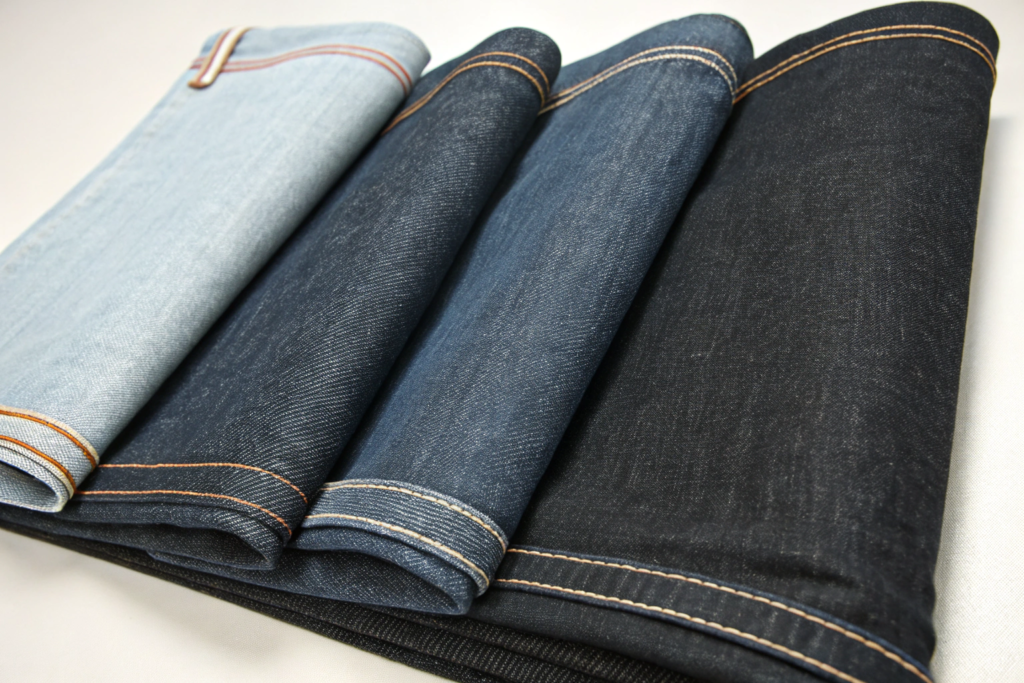
Selvedge denim is denim woven on shuttle looms. These are old machines—slow, inefficient, but capable of producing a denser, more tightly woven fabric than modern projectile looms. The characteristic of selvedge denim is the self-finished edge on the fabric, often with a colored thread.
Selvedge denim is prized by denim enthusiasts for its authenticity and durability. It’s more expensive than regular denim because it’s slower to produce. A shuttle loom might produce 10 meters of fabric per hour. A modern projectile loom can produce 100 meters. The difference shows up in the price.
I visited a selvedge denim mill in Okayama, Japan, about five years ago. The weavers were mostly older men who had been doing the job for decades. They inspected every meter by hand. They could hear a problem in the loom before it showed up in the fabric. The denim they produced was beautiful—dense, crisp, with a texture you could feel. The mill produced only a few thousand meters a month. Every meter was sold before it was woven. For a guide to selvedge denim, this denim resource offers a history of shuttle loom denim.
What Is Stretch Denim and Why Is It So Popular?
Stretch denim is denim that has been woven with a small percentage of elastane (spandex). Usually 1% to 3%. The elastane gives the fabric stretch and recovery. It makes jeans more comfortable, especially for women’s styles that fit close to the body.
Stretch denim has transformed the denim market. Twenty years ago, most jeans were 100% cotton. Today, stretch denim dominates. It’s more comfortable, it fits better, and it recovers its shape after wearing. The downside is that stretch denim doesn’t fade in the same way as 100% cotton denim. The elastane changes the abrasion characteristics. Enthusiasts often prefer 100% cotton. The mass market prefers stretch.
I had a client from a women’s denim brand in the US who was launching a new fit. They wanted a jean that was tight but comfortable. We developed a 98% cotton, 2% elastane denim with a 12 oz. weight. The fabric had enough cotton to fade beautifully but enough stretch to move with the body. The jeans sold out in two weeks. The client told me that the comfort factor was the number one reason customers gave in reviews. For a guide to stretch denim, this textile technology resource offers an explanation of elastane in denim.
How Is Denim Made Sustainable?
Denim has an environmental problem. Traditional denim production uses a lot of water, a lot of chemicals, and a lot of energy. Indigo dyeing, in particular, is water-intensive. But the industry is changing. Sustainable denim is becoming the standard.
What Is Waterless Denim Production?
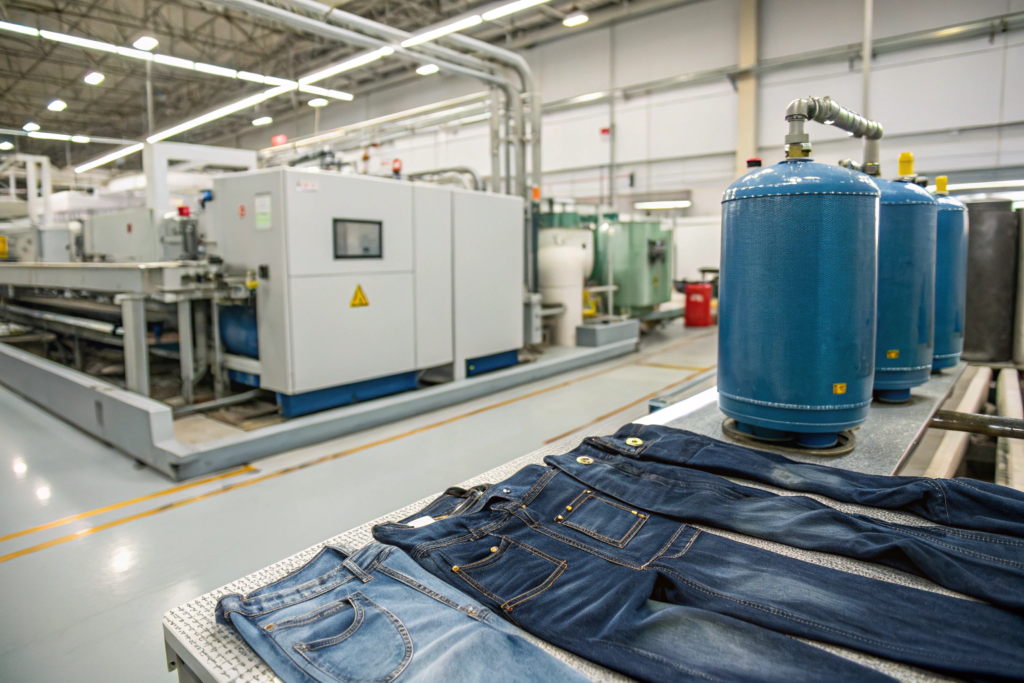
Waterless or low-water denim production uses technologies like foam dyeing, ozone finishing, and laser distressing to reduce water consumption. Traditional denim production can use 70 to 100 liters of water per pair of jeans. Waterless processes can cut that to under 10 liters.
Foam dyeing applies indigo as a foam instead of a liquid bath. It uses far less water. Ozone finishing uses ozone gas to bleach and fade denim instead of water and chemicals. Laser finishing uses lasers to create fade patterns, eliminating the need for stone washing or chemical sprays.
I visited a denim mill in Italy that had implemented foam dyeing. The mill manager showed me their water consumption data. They had reduced water use by 80% compared to traditional rope dyeing. The denim quality was excellent. The indigo penetration was more uniform. The mill was also using less energy because they didn’t have to heat massive dye baths.
For a guide to sustainable denim production, this environmental resource offers an overview of waterless denim technologies.
What Is Recycled Denim?
Recycled denim is made from post-consumer or post-industrial cotton waste. Old jeans are collected, shredded, and spun into new yarn. The new fabric is blended with virgin cotton or other fibers to maintain strength and durability.
Recycled denim reduces the environmental impact of cotton farming and textile waste. It’s a growing segment of the market. Some premium brands are now making jeans from 100% recycled denim. The fabric has a slightly different texture—a bit more neppy, a bit more irregular—which some people prefer.
I had a client from a sustainable fashion brand in Sweden who wanted to launch a line of recycled denim jeans. We sourced recycled cotton yarn from a supplier in India. The yarn was made from 100% post-industrial denim waste. We wove it into a 10 oz. stretch denim. The fabric had a beautiful, slightly mottled texture. The client’s jeans sold out immediately. Customers loved the story as much as the jeans. For a guide to recycled denim, this circular economy resource offers a primer on denim recycling.
Why Has Denim Become the King of Casual Wear?
Denim’s dominance in casual wear is not an accident. It’s the result of a unique combination of properties that no other fabric can match. Durability, comfort, versatility, and the ability to age beautifully—these qualities have made denim the fabric of choice for generations.
How Does Denim Balance Durability and Comfort?
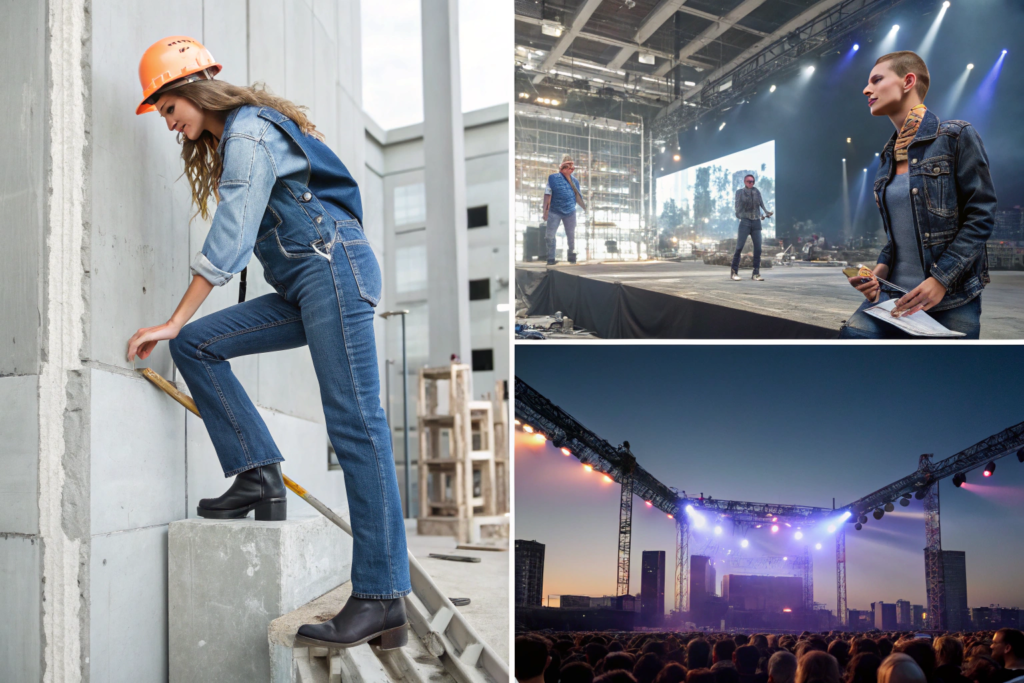
Denim is strong enough to work in but soft enough to lounge in. The twill weave provides durability. The cotton fibers provide breathability and comfort. And with the addition of elastane, modern denim is more comfortable than ever.
I remember a client from a workwear brand who tested denim against other fabrics for a line of utility pants. They tested canvas, ripstop, and denim. Denim scored highest in durability and second highest in comfort. The canvas was stronger but stiffer. The ripstop was lighter but less abrasion-resistant. Denim was the sweet spot. That’s why it’s been the standard for workwear for over a century.
For a comparison of workwear fabrics, this industrial textile resource offers a guide to choosing durable fabrics.
How Does Denim Adapt to Different Styles?
Denim is incredibly versatile. Dark, raw denim can be worn in a business casual setting. Light, distressed denim is perfect for weekends. Black denim has an edgy, urban feel. White denim is summer elegance. One fabric, infinite styles.
The same pair of jeans can be dressed up with a blazer or dressed down with a t-shirt. No other woven fabric has that range. Wool trousers are formal. Khakis are casual. Denim can be both. That’s why it’s become the default for casual wear around the world.
I had a client from a fashion brand in Paris who was launching a “denim-only” collection. They had denim jackets, denim shirts, denim trousers, denim dresses. The collection was a huge success. The client told me that they didn’t need any other fabric because denim could do everything. For a guide to denim styling, this fashion resource offers a history of denim in fashion.
Conclusion
Denim is not just another woven fabric. It’s something special. The 3x1 twill weave gives it durability and structure. The indigo dye gives it a living color that evolves with wear. The ability to be made in different weights, different finishes, and with stretch has made it incredibly versatile. And the growing focus on sustainability is making it better for the planet.
What I love about denim is that it’s a fabric with a soul. It starts as stiff, dark, uniform cloth. But over time, it becomes soft, faded, and uniquely yours. Every crease, every fade, every worn spot tells a story. That’s why people form attachments to their jeans that they don’t form to any other garment. That’s why denim has been the king of casual wear for over a hundred years, and why it will continue to be for a hundred more.
At Shanghai Fumao, we’ve been supplying denim to clients around the world for years. We’ve made heavy raw denim for enthusiasts. We’ve made lightweight stretch denim for mass-market brands. We’ve made sustainable denim with recycled cotton and waterless processes. We understand the fabric. We understand the passion. And we’d love to help you with your next denim project.
If you’re looking for denim—whether it’s classic raw, comfortable stretch, or sustainable recycled—let’s talk. Tell us what you’re making. Tell us what you need. We’ll help you find the perfect denim for your product.
Contact our Business Director, Elaine, to discuss your denim sourcing needs.
Email: elaine@fumaoclothing.com
Let’s make something that will only get better with time.